Are you a team member in a veterinary practice?
Are you a pet parent planning a trip with your furry pal?
Premier Pups Reviews: 2026 Buyer's Guide
You've probably done what most new puppy buyers do. You start with one quick search, then two hours later you're still scrolling through fluffy faces, polished listings, and promises that make the whole process look easy. One puppy stands out. You can already picture the bed by the couch, the first walk, the first ridiculous toy your family buys.
Then the doubt kicks in.
The site looks professional. The puppy is adorable. The reviews are all over the place. You're wondering whether this is a safe way to bring home a dog or whether you're about to get barked up the wrong tree.
That concern is healthy.
As a veterinary professional, I don't think online puppy sellers should be judged by cute photos or by a handful of glowing comments alone. I care about the parts buyers often don't see at first glance. Where the puppy came from. Who raised it. What health support exists after the puppy lands in your home. And whether you're prepared for what comes next, because buying a puppy is the easy part. Caring for one well is the long game.
The Search for the Perfect Puppy
A family often reaches out after they've already fallen for a photo. Emotion moves fast. Judgment slows down. That's normal.
The puppy search can feel strangely personal even before you've spoken to anyone. You see a Maltipoo curled up in a blanket or a Cavapoo looking straight into the camera, and suddenly the practical questions get fuzzy. Is this seller honest? Is the puppy healthy? Why do some reviews sound thrilled while others sound furious?
Those are the right questions to ask before you pay a deposit.
Practical rule: If a puppy listing makes you feel urgency before it gives you clarity, pause the process.
What matters most isn't whether a website is attractive. It's whether the business model gives you enough visibility into the puppy's background to make a sound decision. That's where many buyers get stuck. They read Premier Pups reviews hoping for a clear yes or no, but what they usually find is a tug-of-war between glowing praise and serious concern.
That split doesn't happen by accident. There's usually a reason behind it.
A good review may reflect a healthy puppy, smooth delivery, and a family that had a happy start. A bad review may reflect a puppy that developed medical issues, a frustrating contract dispute, or a buyer who realized too late that they never really knew where the dog came from.
Here's the key point. Polarized reviews don't just tell you people disagree. They often tell you the system itself creates uneven outcomes.
What Exactly Is Premier Pups
A buyer can speak with a company representative, pay online, and arrange delivery without ever seeing the place where the puppy was bred. That convenience is a big part of the appeal. It is also the point where many families lose visibility into the details that matter most.
Premier Pups presents itself as an Ohio-based online seller with a physical location in Johnstown. As noted earlier, it is a real registered business with Better Business Bureau accreditation. For a veterinarian, that fact has limited value on its own. Business registration confirms that a company exists. It does not confirm how any specific puppy was bred, raised, socialized, or screened before sale.
Broker, not breeder
The key distinction is operational. Premier Pups functions as a puppy broker. It sources puppies from third-party breeders and manages the marketing, customer communication, and transport process to the buyer.
That model changes what you can verify.
With a direct breeder, a careful buyer may be able to meet the dam, observe the housing conditions, ask about prior litters, review health testing, and get a clearer sense of how the puppy was handled during the first critical weeks of life. With a broker, much of that information is filtered through a sales process. Sometimes the records are adequate. Sometimes they are thin, delayed, or hard to verify independently.
For live animals, that gap matters. Early nutrition, sanitation, parasite control, vaccination timing, congenital issues, and stress during transport all affect what happens after the puppy arrives in your home.
Why the business model leads to split reviews
Polarized feedback often makes more sense once you separate the parts of the transaction.
What the buyer feels they are rating | What may actually shape the outcome |
|---|---|
The company | The company, the breeder, and the transport chain |
A pleasant purchase process | Good customer service and organized delivery |
A “healthy puppy” | Genetics, prenatal care, early husbandry, infection exposure, and the stress of transition |
A broker can run an efficient sales operation and still sell puppies with highly variable backgrounds. That is why one family posts glowing photos after a cheerful first week, while another is suddenly dealing with diarrhea, a heart murmur, parasites, respiratory illness, or a disagreement over who pays for treatment. I see that pattern often in practice. The first exam after purchase may look reassuring, but some problems do not show themselves until days or weeks later.
What a careful buyer should focus on
The practical question is not whether the website looks professional or whether the handoff feels organized. The practical question is whether you can trace the individual puppy back to the source well enough to judge risk.
Ask for the breeder's full name and location. Ask what health testing was done on the parents. Ask for the vaccination and deworming record, the name of the examining veterinarian, and the date of that exam. Ask whether you can review records before paying. Ask what happens if your own veterinarian finds a significant problem in the first few days.
If those answers are vague, incomplete, or hard to verify, the purchase is carrying more risk than many families realize. And that risk does not end at pickup. It becomes your medical, financial, and emotional responsibility as soon as the puppy comes home.
Unpacking Premier Pups Reviews
A family finds the puppy they have been watching online for weeks. The photos are charming, the payment goes through, the handoff feels organized, and everyone relaxes. Then the first month begins. That is when reviews often split, because the true test is no longer the website or delivery process. It is the puppy's health, behavior, recovery from transport, and the owner's readiness for what follows.
Public feedback on Premier Pups reflects that split. Earlier references to the company's Yelp profile and Instagram presence show the usual pattern. Some buyers are delighted with the puppy they brought home. Others describe veterinary problems, stressful transitions, or disputes about what was promised. From a clinical standpoint, both experiences can be true at the same time.
That is why star ratings alone are a poor tool for judging an online puppy seller.
Why some reviews are glowing
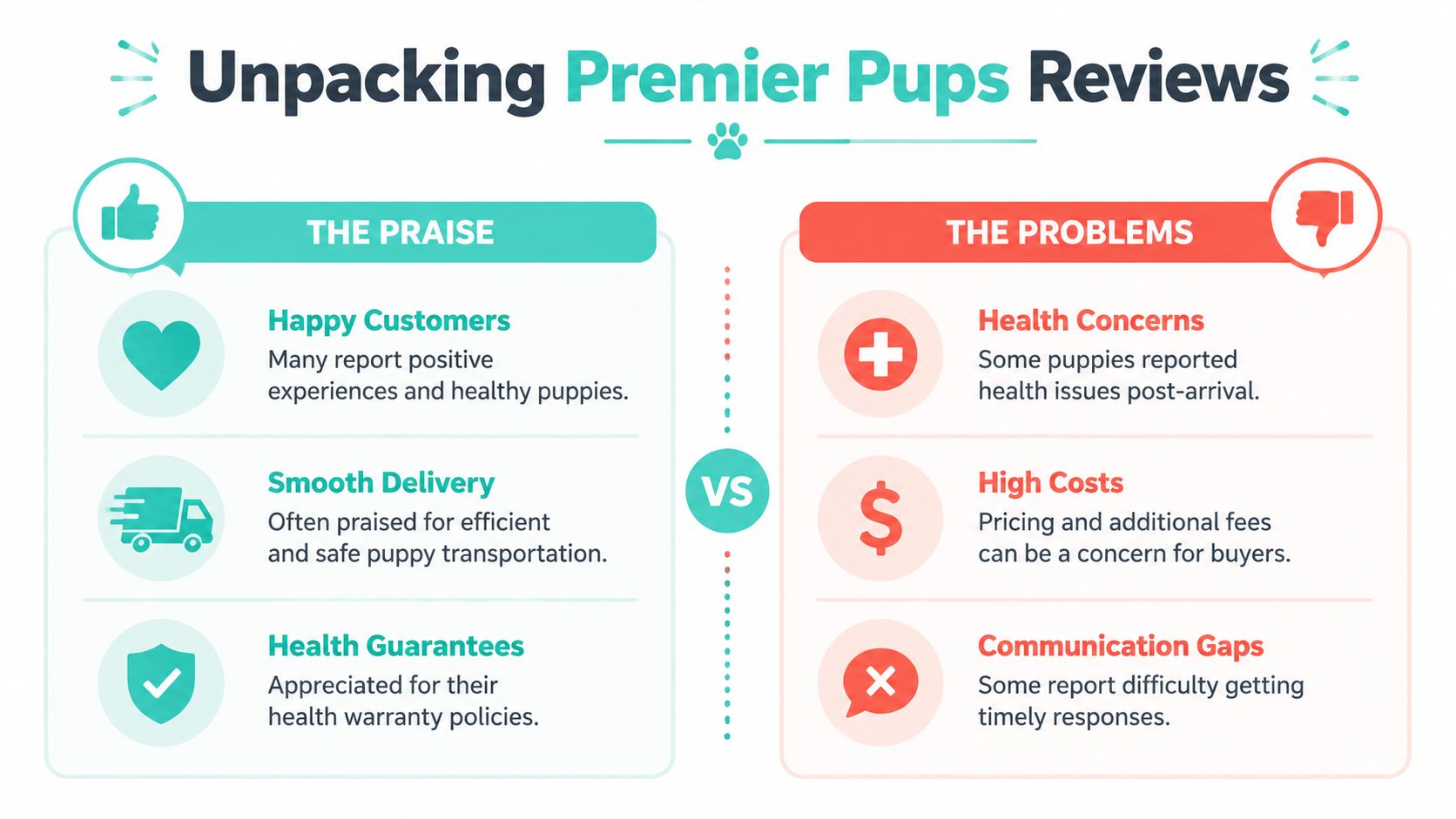
Happy reviews usually describe a puppy that looks bright, eats reasonably well, bonds fast, and gets through the first veterinary visit without obvious concerns. Buyers also tend to praise clear communication, organized pickup or delivery, and paperwork that gives them some confidence at the time of sale.
Those details matter. A smooth transaction lowers anxiety, and a puppy that appears healthy on arrival can make the decision feel justified.
Still, a good first impression has limits. It tells you how the puppy looked that day. It does not tell you enough about inherited disease risk, breeding practices, early parasite exposure, or how the puppy will handle transport stress over the next several days.
Why some reviews turn sharply negative
The negative reviews are often less about one dramatic event and more about timing. A puppy may arrive active and affectionate, then develop diarrhea, coughing, poor appetite, skin issues, or signs of stress after the excitement wears off. I warn clients about this often. Young puppies have very little reserve, and the move itself can push a borderline problem into plain view.
That does not prove every illness started with the seller. Travel, diet changes, disrupted sleep, and separation from the litter can affect even a well-started puppy. Families who will be arranging longer-distance pickup should also understand the health demands that come with transport and review practical guidance on pet transportation services for puppies and dogs before committing.
The harder truth is that brokers create variation. One puppy may come from a breeder with sound prenatal care, sensible parasite control, and decent socialization. Another may come from a source with thinner records and weaker early management. The buying experience can look nearly identical in both cases.
A normal exam at pickup does not cancel out genetic risk, incubating infection, or the physiologic stress of shipping a young puppy.
Why the feedback is so polarized
The broker business model explains much of the disagreement.
Reviews tend to reflect the outcome a family can see. They see a cute puppy, a courteous handoff, and the first few days at home. They do not see the full chain behind that puppy unless they have pushed hard for breeder identity, parental health testing, treatment records, and source verification. When that background is partly hidden, outcomes vary more than buyers expect.
That is also why review forums produce such strong arguments. One owner reports a beloved dog and feels the criticism is unfair. Another faces veterinary bills within days and feels misled. Both are responding to real experiences, but neither review by itself explains the underlying risk. The better question is why those experiences differ so much in the first place.
For online puppy purchases, the answer usually comes back to traceability, early care, and how much uncertainty a family is taking on before the puppy ever reaches home.
Red Flags for Any Online Puppy Seller
The concerns people raise about Premier Pups aren't useful only if you're shopping that specific company. They're useful because they teach you what to watch for with any online puppy seller.
One of the biggest warning signs is limited transparency. Advocacy groups have alleged that Premier Pups uses a network of “sister websites,” making it harder for consumers to connect a listing to the underlying breeder and USDA license, according to Stop Online Puppy Mills' page on Premier Pups. When a company's structure makes origin harder to trace, buyers lose one of the best tools they have for checking ethical sourcing.
Signs that should make you slow down
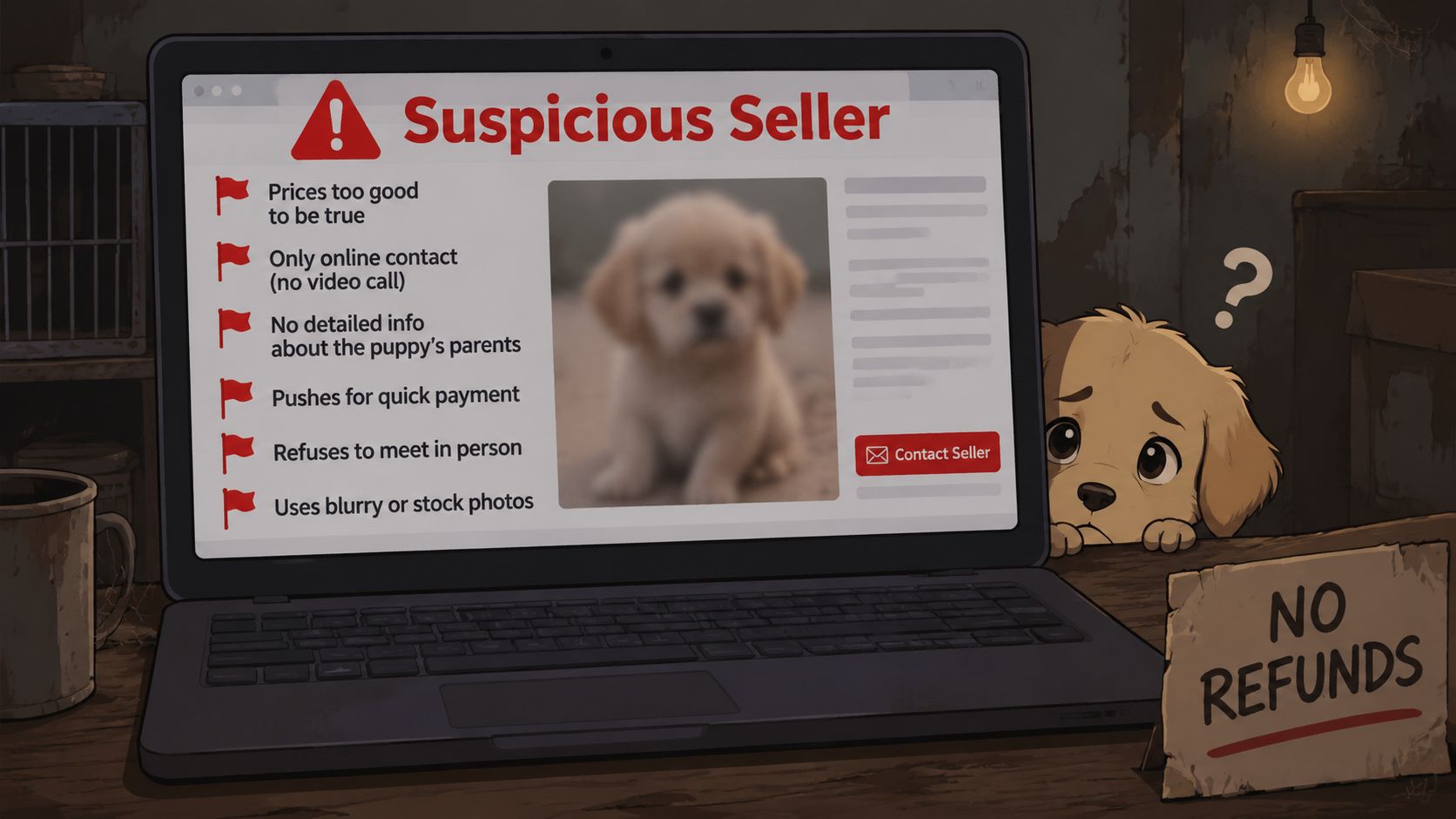
Not every red flag means a seller is automatically unsafe. But several together should make you step back.
You can't identify the breeder. If the seller won't provide the breeder's full name and license details, your ability to verify the puppy's origin is limited.
You can't see the puppy live. A live video call should not be a big ask. If a seller avoids it, that matters.
You never see the mother with the puppy. Photos alone don't tell you much. Seeing the dam with the litter gives useful context.
Pressure shows up early. “Another family is ready to pay today” is a common push tactic. Good sellers don't rush basic questions.
The photos look too polished or too generic. Reverse image search exists for a reason.
Transport details are vague. If you can't get a clear answer on who handles the puppy, where the handoff happens, and what the puppy experiences during travel, you're missing key welfare information.
Transport deserves more scrutiny than buyers give it
People focus heavily on the listing, then treat transportation as an afterthought. That's backwards. A puppy's trip affects stress, feeding, hydration, disease exposure, and adjustment after arrival. If you're trying to understand the practical side of that process, this guide to pet transportation services covers the questions owners should ask before any animal is moved.
A rough transport experience can turn a healthy puppy into a struggling one for the first days in a new home. That doesn't always create a long-term problem, but it can muddy the waters fast.
What usually works and what doesn't
A seller earns more trust when they answer detailed questions calmly and specifically. They lose trust when they redirect every concern back to branding, reviews, or limited-time availability.
If you need to chase basic information before purchase, you'll probably struggle even more if a health issue appears afterward.
That's true whether you're reading Premier Pups reviews or evaluating a completely different website. The pattern matters more than the logo.
Your Due Diligence Checklist Before You Buy
A family finds a puppy online on Friday, pays a deposit that night, and spends the weekend buying bowls, toys, and a bed. By the time the puppy arrives, they still do not know who bred it, what health testing was done on the parents, or how the puppy handled travel. I see the consequences of that sequence in practice. The purchase feels finished, but the risk assessment never happened.
That is the problem with the puppy broker model. A polished website can make a complex chain of breeding, housing, transport, and handoff look simple. Buyers need to slow that process down and verify each part of it before money changes hands.
The checks worth doing
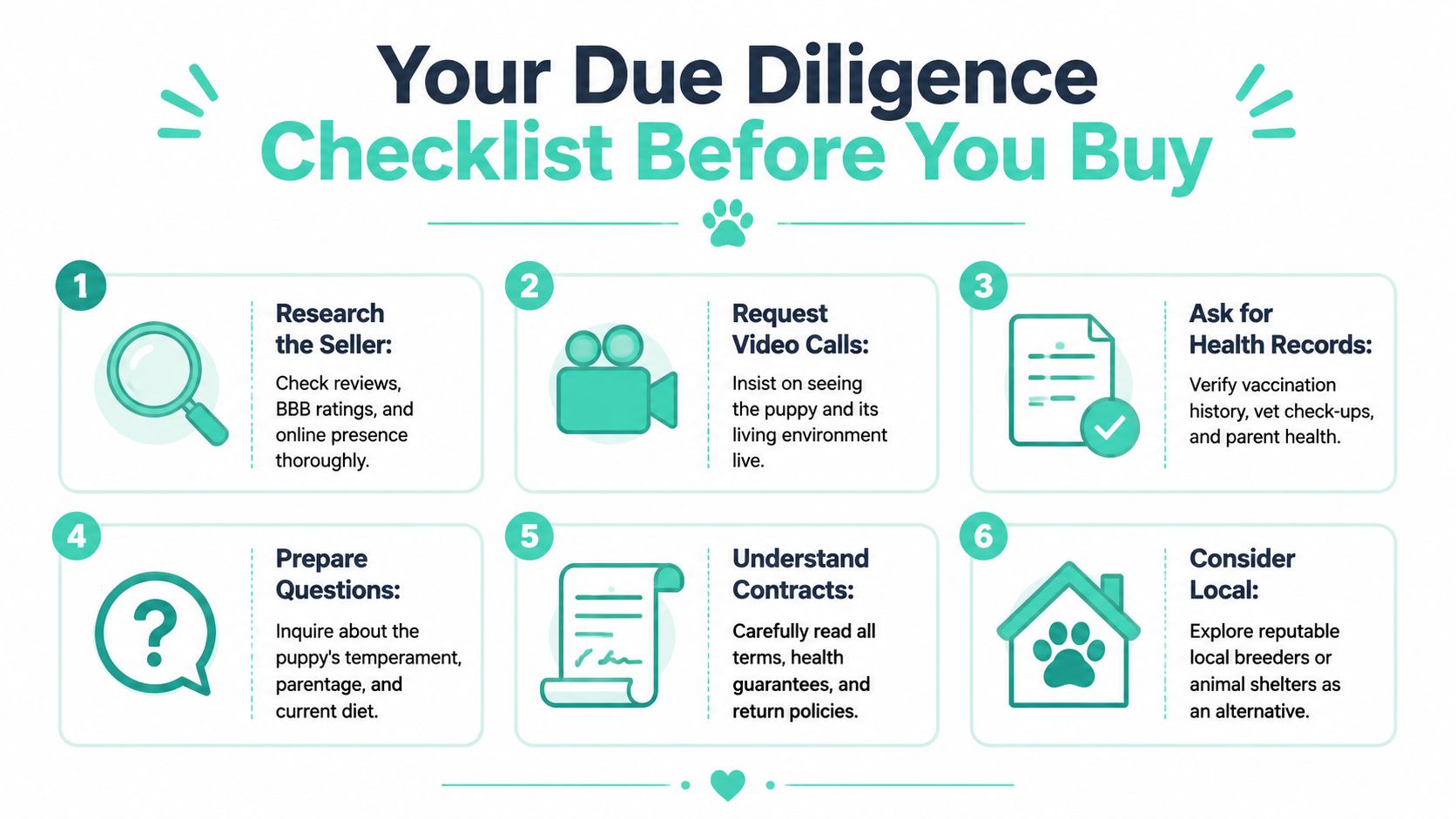
Get the breeder's exact identity
Ask for the breeder's full name, location, and any USDA licensing tied to that puppy. If the seller cannot clearly connect the puppy to a real breeder, stop there.Request a live video call
Watch the puppy walk, rest, respond to sound, and interact with the person caring for it. A live call helps you judge body condition, energy level, breathing, and the truth of the setting.Ask for parent health records
“Parents are healthy” is marketing language, not medical information. Ask what screening was done for that breed and request copies, not summaries.Read the contract like you may need to use it
Check the health guarantee, reporting deadlines, refund or replacement terms, and the documentation required from your veterinarian. Many buyers discover too late that a guarantee is narrow, time-limited, or difficult to claim.Confirm the puppy's current routine
Ask what food is being fed, how often meals are given, whether stool has been normal, what parasite prevention has been used, and how the puppy is sleeping. Sellers who know the puppy well answer these questions quickly and specifically.Verify the transport plan in detail
Ask who is physically moving the puppy, how long the trip is, where the puppy will be housed during transit, and what happens if there is a delay. Before paying a deposit, review the practical risks involved in shipping a puppy.
Problems after arrival are not always caused by poor breeding. Stress from transport, abrupt food changes, parasite exposure, and weak communication can all cloud the picture. That is one reason reviews of companies like Premier Pups split so sharply. Some buyers receive a puppy that adjusts well. Others are left sorting out illness, paperwork gaps, or warranty limits during the first few days of ownership.
Questions that separate solid sellers from slippery ones
A trustworthy seller gives direct answers, documents what they claim, and does not rush you.
Ask this | Strong response | Weak response |
|---|---|---|
Who bred this puppy? | Full identity and paperwork | “Our network handles that” |
Can I see the puppy live in its current setting? | Prompt live call | Delays or prerecorded clips only |
What health testing was done on the parents? | Specific tests and records | General reassurance only |
What does the health guarantee exclude? | Clear limits and deadlines | “You're covered” without detail |
What is the current feeding and parasite plan? | Brand, amount, schedule, products used | Vague or changing answers |
Use the seller's response style as part of your decision. If basic questions produce pressure, deflection, or sales language, expect more friction if a medical issue appears after pickup.
For a broader look at how online presentation affects trust, the Leaping Lemur Media blog offers useful perspective on evaluating digital credibility.
Your New Puppy and Your Veterinarian
The first veterinary visit after purchase is not a formality. It's one of the most important checkpoints in the whole process.
Book that exam promptly after the puppy arrives. A veterinarian should assess general condition, hydration, weight, heart and lung sounds, eyes, ears, skin, stool quality if concerns exist, and the overall transition plan. This visit is also where feeding, parasite prevention, vaccine timing, and behavior questions start to come together.
What the first exam really does
A first visit has two jobs. It checks for immediate concerns, and it establishes a baseline.
That baseline matters if the puppy develops symptoms later. It also helps owners avoid common mistakes, like abrupt food changes, overexertion, delayed parasite control, or assuming every loose stool means disaster. Some puppies need time and consistency. Others need treatment. Your veterinarian helps sort out which is which.
For owners trying to budget and plan routine care, this guide to puppy vaccinations and price can help frame the conversation before that first appointment.
Travel planning starts earlier than people think
Families often buy a puppy for home life, then later realize they want to travel internationally with that dog. That's where things get more technical.
For future international travel, a pet's health certificate must be completed and signed by a USDA-accredited veterinarian, and that accreditation is required so the vet is authorized to certify the pet for export, as explained in this USDA-endorsed pet health certificate guide.
That's not a detail to leave until the week before a flight. International travel can also involve strict timing. Some countries and airlines require the health certificate to be completed and officially endorsed within 10 days prior to departure, as outlined in this international health certificate timing overview. Some destinations may also require an import permit, and microchip timing matters because the microchip should be implanted before the main rabies vaccination for entry purposes, as noted in this guide to pet international travel requirements.
Healthy puppy care isn't only about the day you bring the dog home. It's about building records, routines, and veterinary support that still serve you years later.
Finding Your Fur-ever Friend Safely
If you've been reading Premier Pups reviews trying to find a simple verdict, you've probably noticed there isn't one tidy answer. The better question is whether you can verify enough about a specific puppy to feel comfortable with the risk.
That's the real fork in the road.
Online brokers can offer convenience and broad selection, but convenience should never outrun due diligence. If a seller can't show you the puppy's background clearly, can't answer direct questions, or makes you feel rushed, step away. There are other paths.
A responsible local breeder usually welcomes detailed questions and gives you a better chance to understand how the puppy was raised. Breed-specific rescue groups can be an excellent option if you're drawn to a certain type of dog but want a different route. Local shelters also deserve serious attention. Some of the best canine matches happen there, no fluff required.
If transport is part of your decision, it also helps to understand the broader practical and welfare questions around moving dogs. This guide on whether you can ship a dog is worth reading before you commit.
A good puppy match isn't just about finding the cutest face on a screen. It's about finding a healthy companion through a process you can defend with confidence. That's how you start off on the right paw.
If your clinic or family is preparing for international pet travel, Passpaw helps simplify the paperwork around pet health certificates and destination requirements. It's a practical tool for keeping travel documents organized, reducing avoidable mistakes, and making the process smoother for veterinarians and pet owners alike.

More articles
From regulatory changes to best practices for veterinarians and pet owners, our resources keep you ahead of the curve.