Are you a team member in a veterinary practice?
Are you a pet parent planning a trip with your furry pal?
Shipping a Puppy: A Safe Guide to Transporting Your New Friend
Bringing a new puppy into your home is one of life's great joys, but figuring out how to get them there can feel like a maze. Whether you're a first-time pet parent or a seasoned breeder, making sure that little fluffball has a safe and smooth journey is priority number one.
This guide is designed to be your roadmap. We'll walk you through everything, step-by-step, from those initial vet visits and navigating airline rules to getting the crate just right.
You’re definitely not alone in this. Pet travel has become a huge industry, mostly because so many of us can't imagine life without our furry family members. The global market for pet travel services was valued at USD 2.4 billion and is projected to hit USD 5.3 billion by 2034. That boom is fueled by the 70% of pet owners who see their pets as part of the family and want them by their side, no matter the distance. You can learn more about the growth of the pet travel industry and what it means for owners like you.
Shipping a puppy safely comes down to careful planning. It's really about four key milestones: choosing a transport method, getting a veterinary health check with all the right paperwork, prepping a travel-ready crate, and nailing down the day-of-travel logistics. Get these right, and your new puppy will arrive happy, healthy, and ready for cuddles.
Your Puppy Shipping Timeline
The secret to a stress-free experience for everyone involved—especially your puppy—is starting early. This isn't something you want to rush. The journey really begins weeks, or even months, before the actual travel day.
This visual breaks down the puppy shipping journey into three main stages: planning, health checks, and the big travel day.
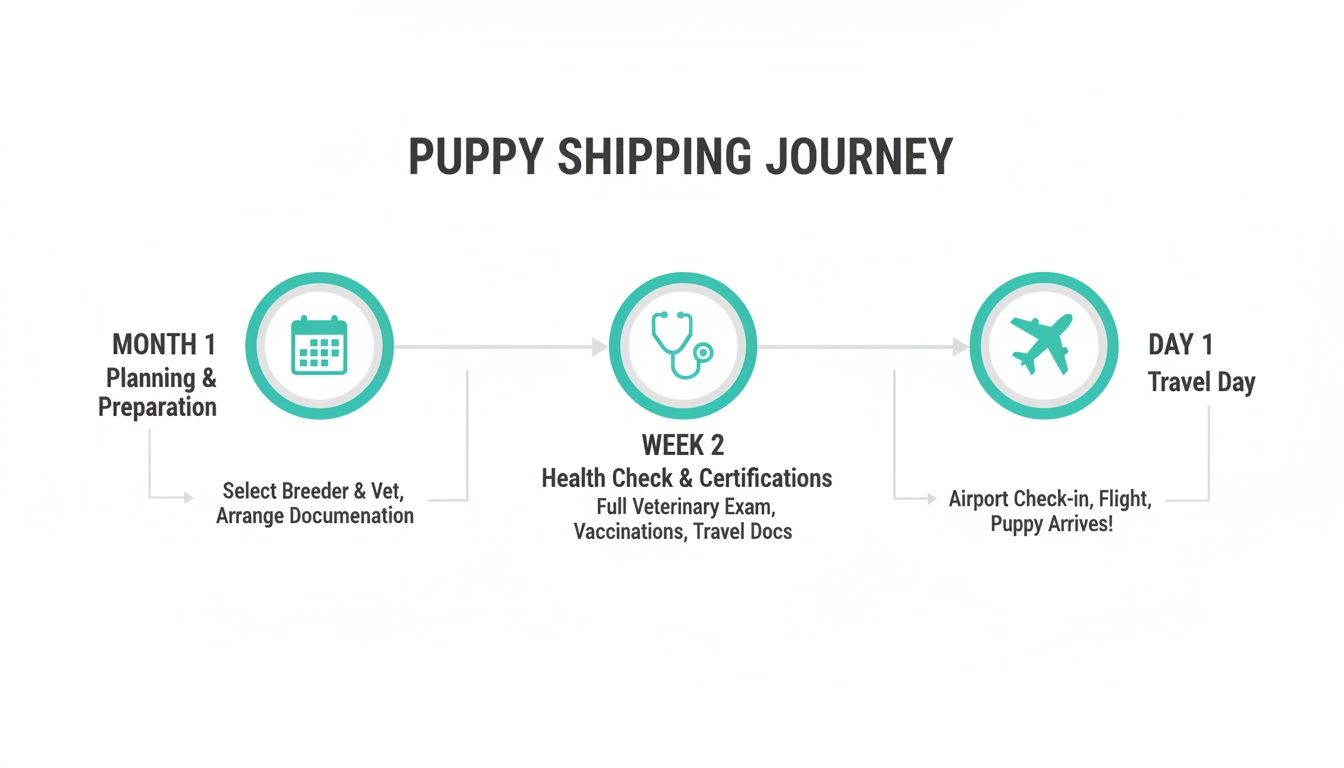
Seeing the steps laid out like this helps make the whole process feel more manageable. Each task builds on the last, creating a clear path to a successful trip.
A well-planned trip is a safe trip. The more you prepare in advance—from vet visits to crate training—the more comfortable and secure your puppy will feel on their travel day.
To give you a clearer picture, here’s a quick overview of what needs to happen and when.
Puppy Shipping Timeline At a Glance
This table breaks down the major phases, key tasks, and who's typically responsible for each one. Think of it as your high-level project plan for getting your puppy home safely.
Timeline Before Travel | Key Action Items | Who Is Responsible |
|---|---|---|
3+ Months | Research destination rules (especially for international). Select a breeder or rescue. Discuss travel options. | Pet Owner, Breeder/Rescue |
1-2 Months | Book travel arrangements. Purchase an airline-approved crate. Begin crate training. | Pet Owner |
30 Days | Schedule a veterinary health check. Ensure all vaccinations are current. Complete initial paperwork. | Pet Owner, Veterinarian |
10 Days | Finalize health certificate (CVI). Confirm all travel details with the carrier. Prepare travel comfort items. | Veterinarian, Pet Owner |
24-48 Hours | Prepare food and water. Pack all documentation. Confirm flight status. | Pet Owner, Breeder/Shipper |
Travel Day | Final potty break. Secure puppy in the crate. Drop-off at the airport or with the transport service. | Pet Owner, Breeder/Shipper |
Keep in mind, this is a general guide. International travel or specific airline rules might mean you need to start even earlier.
In the next sections, we'll dive deep into each of these phases. We'll cover the must-have health checks and paperwork, how to pick the perfect travel crate, and the pros and cons of different transport options. Our goal is to turn what feels like a stressful chore into a clear, confident plan.
Getting Ready for Takeoff: Health Checks and Paperwork
A healthy puppy is a happy traveler, and their journey starts long before they ever get near an airport. The first, most important step is a thorough health check with your veterinarian. This initial wellness exam does two things: it confirms your new buddy is fit for travel and kicks off the all-important paperwork trail.
Think of this phase as getting your puppy’s passport in order. It’s a partnership between you and your vet to make sure every health requirement is met, leaving no room for last-minute surprises. Getting this right lays the foundation for a smooth, stress-free trip.
The Veterinary Timeline and Vaccinations
When it comes to pre-travel vet visits, timing is everything. Airlines and destinations have very specific windows for health checks and vaccinations, so planning ahead is a must. Don't wait until the week before travel; start this conversation with your vet the moment you know a flight is in your puppy's future.
Before any travel, your puppy should be up-to-date on their shots. Understanding the associated puppy shot costs and schedules will help you budget and plan accordingly. Your vet will ensure every shot is current based on the puppy's age and where they're headed.
Here are the core health items you'll need to tackle with your vet:
Wellness Exam: The vet will perform a complete physical to check for any signs of illness and confirm the puppy is healthy enough to handle the stress of travel.
Vaccinations: Core vaccines like rabies, distemper, and parvovirus are usually needed. Some destinations might add extra requirements, like the Bordetella vaccine for kennel cough.
Parasite Treatment: Flea, tick, and deworming treatments are almost always required and must be done within a specific timeframe before the trip.
Understanding the Health Certificate (CVI)
The Certificate of Veterinary Inspection (CVI), often just called a health certificate, is the single most important document for your puppy's trip. This is an official form, completed by an accredited veterinarian, that states your puppy is healthy and meets travel requirements.
But the rules for a CVI can be tricky and vary a lot. For domestic travel within the U.S., a standard CVI issued within 10 to 30 days of the flight is usually fine. International travel, however, is a completely different ball game.
International destinations often have very specific and time-sensitive rules. Some countries ask for the health certificate to be endorsed by a government body like the USDA, and the entire process—from vet visit to final stamp—may need to be completed within a tight 10-day window before arrival.
Getting this paperwork perfect is a big deal. Dogs, including puppies, make up a staggering 58% of all pets shipped globally. But here's a scary statistic: industry estimates suggest that up to 40% of shipments are at risk of rejection because of incorrect or incomplete paperwork.
How Digital Tools Help Vets and Owners
For veterinarians, keeping up with the constantly changing rules for hundreds of destinations can be a ruff job. This is where modern platforms built for pet travel can help, allowing vet practices to manage the paperwork with far greater accuracy.
These tools provide real-time destination requirements, which helps ensure the CVI is filled out correctly the very first time. By creating accurate documents from the start, platforms like Passpaw slash the risk of human error and prevent those heart-stopping moments when a puppy's travel is at risk due to a simple paperwork mistake. Want to know more? Check out our complete guide on what a dog health certificate for travel really entails. This gives everyone involved the confidence that the journey will go off without a hitch.
Choosing the Right Travel Crate for Your Puppy
Think of your puppy's travel crate as their own private, first-class cabin. It’s not just a box; it's a safe, secure den that protects them during their entire journey. Picking the right one isn't just a good idea—it’s a strict requirement for shipping a puppy and vital for their comfort.
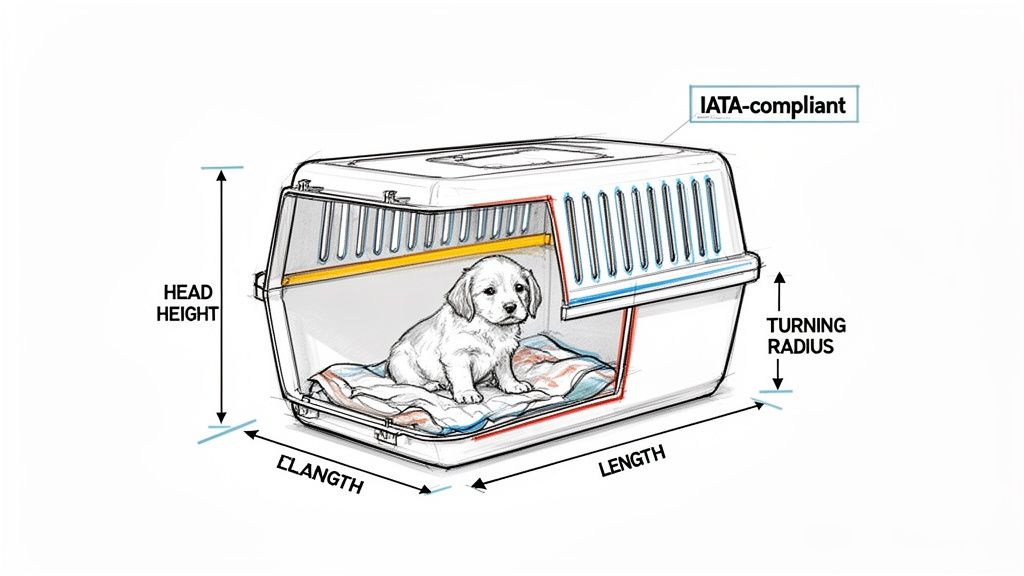
Airlines generally follow rules set by the International Air Transport Association (IATA), so your first job is to find an IATA-compliant crate. These are designed for safety, with sturdy construction, proper ventilation on multiple sides, and secure locking mechanisms that a clever puppy can't nudge open. Don't even think about using soft-sided carriers for cargo travel; they are a definite no-go.
Getting the Size Just Right
Finding the "paw-fect" size is a delicate balance. Your puppy needs enough room to comfortably stand up, turn around, and lie down naturally. But if the crate is too big, they could slide around and get hurt during turbulence or transport. A snug, but not cramped, fit actually helps them feel more secure.
Here’s how to get the right measurements:
Length: Measure your pup from the tip of their nose to the base of their tail (not the tip). Add a few inches to that number.
Height: While they're standing, measure from the floor to the top of their head or the tip of their ears, whichever is higher. Again, add a few inches.
Getting this right is important for your puppy's safety. For a deeper dive, understanding the official Dog Kennel Size Recommendations will make sure they have enough space without being at risk.
Prepping the Crate for Travel
Once you have the crate, you need to get it ready for the journey. This is about more than just putting your puppy inside; it's about making it a safe and comfortable travel space.
You’ll need to put "Live Animal" stickers on the outside—usually on the top and a few sides—so baggage handlers immediately know there’s precious cargo inside. You should also attach a pouch with your contact info, the destination details, and a copy of the health certificate.
Inside, you must attach food and water dishes to the door. This allows airline staff to give them refreshments without opening the crate. Line the bottom with something absorbent, like a puppy pad or shredded newspaper, just in case of accidents. A blanket that smells like home can also add a nice touch of comfort. You can find more details in our full guide on choosing an airline-approved pet travel carrier.
The Importance of Crate Training
A puppy who thinks their crate is a scary box is going to have a very stressful travel day. But one who sees it as their own cozy den will travel with a lot more confidence. That's why crate training is so important when shipping a puppy.
The goal of crate training is to create a positive association. Your puppy should willingly enter their crate and feel relaxed inside, seeing it as their personal safe space rather than a place of punishment.
Start this process weeks before the flight.
Introduce the Crate: Just place the crate in a common area of your home with the door open. Let your puppy explore it on their own time.
Make it Inviting: Toss their favorite toys, some tasty treats, and a soft blanket inside.
Feed Meals Inside: Start feeding your puppy their meals inside the crate with the door open to build that positive connection.
Gradually Close the Door: Once they're comfortable, close the door for just a few seconds at a time while you're in the room. Slowly increase the duration as they get used to it.
A little bit of patience and positive reinforcement goes a long, long way. Before you know it, your puppy will see their travel crate as their own little sanctuary, which makes their big travel day a much smoother and less frightening experience for everyone involved.
Alright, with your puppy's health certificate squared away and their crate ready for action, it’s time to tackle the main event: booking the trip. Deciding how your puppy will travel is easily one of the biggest choices you'll make, and your main options are flying via air cargo, flying in the cabin with someone, or using a professional ground transport service.
Each route has its own playbook of rules, costs, and advantages. The right choice really boils down to your puppy's size, your final destination, and what your budget looks like. Let's dig into these options so you can make a call you feel good about.
Flying High: Air Travel for Puppies
For long-haul domestic trips or any international journey, flying is almost always the fastest way to get from A to B. Airlines have been shipping pets for decades and have well-established procedures for doing it safely. But there are two very different ways a puppy can take to the skies: in a special cargo hold or right in the cabin with a passenger.
In-Cabin (Accompanied Baggage): If your puppy is small enough to fit comfortably in a carrier that slides under the seat in front of you, this is a fantastic choice. They get to stay with a person for the whole flight, which can be incredibly reassuring for a young animal.
Best for: Small breeds, young puppies who meet the airline's age rules, and owners who can fly with them.
Keep in mind: Airlines are very strict about carrier size and total weight. They also limit the number of pets allowed in the cabin on any given flight, so you should book these spots far in advance.
Air Cargo: For bigger puppies or situations where you can't travel with them, specialized air cargo is the standard. They travel in a pressurized, climate-controlled compartment that's completely separate from passenger luggage.
Best for: Larger breeds or any time the owner can't be on the same flight.
Keep in mind: This option is usually more expensive and comes with a list of airline-specific rules. Watch out for temperature embargoes (they won't fly pets if it's too hot or cold at the origin, connection, or destination airports) and breed restrictions. Always call the airline's cargo department and ask about these policies directly.
On the Road: Ground Shipping Your Puppy
If flying just isn't in the cards, professional ground transport is a solid alternative. It’s a great option for shorter distances or for brachycephalic (flat-faced) breeds that many airlines won't fly. A quality pet courier service provider will use climate-controlled vehicles and be staffed by pros who know how to handle animals on the road.
This method can be a lot less stressful for some puppies, as it avoids the noise and pressure changes of an airport. The journey will take longer, of course, but it's often a much calmer experience with regular potty breaks and one-on-one attention from the driver.
Key Takeaway: When you're looking into a ground shipper, you should ask for their USDA license number, proof of insurance, and a few references. A trustworthy company will be totally open about their vehicle setup, how often they stop for breaks, and how they plan to keep you updated during the trip.
Making the Final Choice
Ultimately, deciding on the best way to transport your puppy is a personal call. You have to weigh your puppy's temperament and size against the logistics of the trip. The demand for pet travel is booming—the market is projected to hit USD 5.9 billion by 2034. While more people are moving with their pets, real challenges remain. Transport costs can be a deal-breaker for 35% of owners, and complex quarantine rules can pile on significant expense. You can discover more insights about the booming pet travel services market and its hurdles.
No matter which path you take, booking early is key. Whether you're trying to snag one of those few in-cabin spots or getting on the schedule of a popular ground transporter, planning ahead is the best way to ensure a safe, smooth, and successful journey for your new best friend.
Managing Travel Day and Post-Arrival Care
The crate is ready, the paperwork has been triple-checked, and the big day is finally here. This is the moment all that planning leads up to. Staying calm and organized now will make a world of difference for your puppy's experience, creating a smooth send-off and a warm, welcoming arrival.
Think of today as the final leg of a marathon. You’ve put in the hard work, and now it’s time to cross the finish line with confidence. A simple, practical checklist is your best friend here, making sure nothing gets missed in the excitement.
Your Pre-Departure Checklist
Before you even think about leaving for the airport or meeting a ground transporter, a few last steps will set your puppy up for a comfortable trip. This is not the time to rush; give yourself more time than you think you’ll need.
A question people often ask is about feeding. As a rule of thumb, offer a light meal about four hours before travel. This helps prevent an upset stomach during the journey, which no one wants. You can and should, however, offer water right up until you leave.
Here’s a quick rundown of your final tasks before heading out:
Final Potty Break: Take your puppy out one last time right before they go into their crate for the trip.
Keep the Vibe Calm: Puppies are incredibly sensitive to our emotions. If you’re relaxed and positive, they’ll feel more secure.
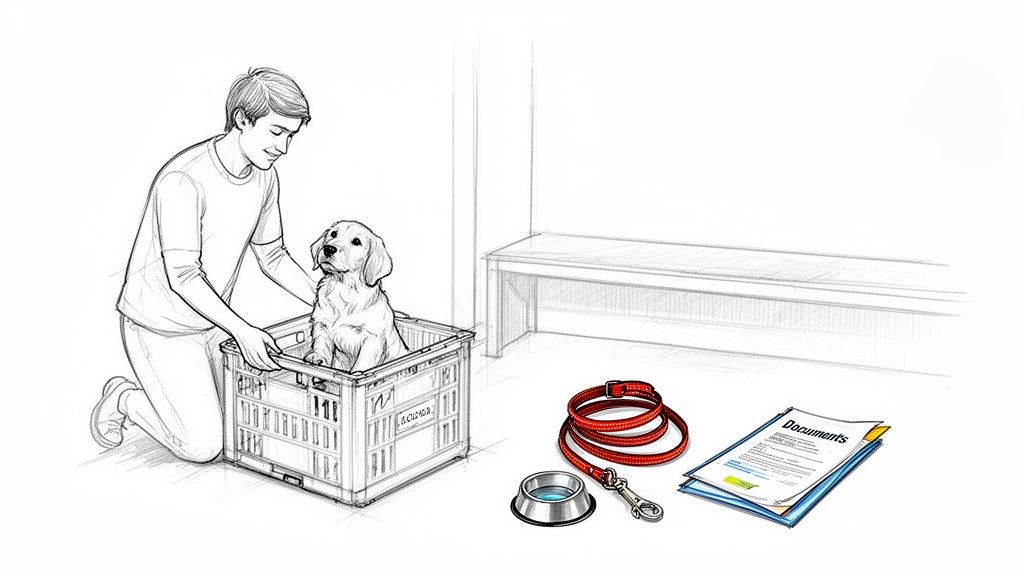
Pack the Essentials: Get a "go bag" ready. It should have their leash, a collar with ID tags, a small bag of their current food, and a blanket or toy that smells like home.
Gather All Documents: This is very important—do not pack original documents in your luggage. Keep the health certificate, vaccination records, and any other required paperwork with you at all times.
Navigating the Airport
Checking in a puppy, whether for cargo or in-cabin travel, is a different experience than a regular check-in. Plan to arrive early—at least two to three hours before a domestic flight and three to four hours for international. This buffer gives you plenty of time to handle the paperwork without feeling frantic.
Once you’re at the airline’s check-in or cargo counter, an agent will carefully review your puppy's health certificate and other documents. They'll also inspect the crate to ensure it meets all their safety standards. After everything gets the green light, they’ll direct you to the drop-off location. Saying goodbye is tough, but a quick, confident hand-off is always best for your pup.
The Happy Reunion and Post-Arrival Care
Once the plane lands, the journey isn’t quite over. Your puppy has just been through a whirlwind of new sights, sounds, and smells. How you handle the first few hours and days in their new home is key for helping them settle in. This is their first impression of their new life, so let's make it a great one!
Upon reunion, head straight to the designated pet pick-up area. For puppies shipped as cargo, this is usually at the airline’s cargo office. Have your ID and the flight details handy. The moment you get your puppy, the first order of business should be a potty break, followed by a small drink of fresh water.
The first 24-48 hours after arrival are a cool-down period. Your puppy needs a quiet, calm environment to adjust. Avoid overwhelming them with too many new people, places, or other pets right away.
Help your puppy settle into their new home by getting back to a routine as soon as possible. Stick to a schedule for feeding, potty breaks, and bedtime. Keep a close eye on their appetite and behavior for the first few days. It’s completely normal for them to be a bit tired or reserved at first. Give them plenty of love, reassurance, and quiet time to explore their new surroundings on their own terms. And if you have any questions about their health, our guide on what vaccinations dogs need is a great resource to keep bookmarked.
Common Questions About Shipping a Puppy
Shipping a puppy is a big deal, and it's totally normal to have a long list of questions. You want to make sure you have all your ducks—or, in this case, puppies—in a row before the big day. We've pulled together some of the most common things we hear from both pet owners and veterinarians to give you clear, straightforward answers.
Our goal is to tackle your concerns head-on and give you the confidence you need to manage the whole process. Let's dig in.
How Much Does It Cost to Ship a Puppy?
This is usually the first question on everyone's mind, and the honest answer is: it varies. A lot. The final price tag is a mix of several things, like the travel distance, the airline or transport service you pick, and the size and weight of your puppy and their crate.
For domestic travel within the same country, you can generally expect the cost to fall somewhere between $200 and $1,000. This range typically covers the transport fee and any associated handling charges.
International shipping is a whole different ballgame and, as you might guess, costs quite a bit more.
Base Costs: For international trips, prices often start around $1,000 and can easily climb into the thousands.
Additional Fees: This higher price accounts for a lot more, including customs clearance, potential broker fees, more complex vet work for import permits, and sometimes even quarantine fees, depending on where you're headed.
The best move is always to get detailed quotes from a few different carriers. It's the only way to compare what you're getting and find the right fit for your budget.
Is It Safe to Ship a Puppy by Air?
Yes, when you take all the right precautions, shipping a puppy by air is generally very safe. It happens every day, and airlines that handle live animals have specialized procedures in place to look after their furry passengers. They aren't just winging it; these are strict, established protocols.
The cargo holds where pets travel are pressurized and climate-controlled, just like the cabin you'd be in. Plus, the airline staff are trained to handle live animals with care, from the moment you check them in until they arrive.
The key to a safe flight is all in the prep work. A successful trip depends on picking a reputable, pet-friendly airline, getting a clean bill of health from your vet, and getting your puppy comfortable with their travel crate long before the travel day.
A puppy who sees their crate as a safe little den is going to have a much less stressful experience. Good crate training, backed by a vet's thumbs-up, is the foundation for a secure and comfortable journey.
What Is the Youngest Age a Puppy Can Be Shipped?
Age requirements are an important safety measure put in place to make sure a puppy is mature and healthy enough for the trip. These rules are not flexible and are enforced by airlines to protect the animals.
For domestic flights, most airlines require puppies to be at least 8 weeks old and fully weaned. This milestone helps ensure they are physically and developmentally ready for a short journey.
International travel has much stricter and often older age requirements.
Minimum Age: The minimum age for international flights is usually 12 to 16 weeks old.
Reasoning: This is almost always tied to rabies vaccination rules. Most countries want a puppy to be at least 12 weeks old to get their first rabies shot, and then there's often a waiting period (typically 21-30 days) before they're allowed to travel.
Because these regulations vary so much from one country to another, you must check the specific rules for both your airline and the import country.
How Can Digital Tools Help My Veterinarian?
Let's be honest: the paperwork involved in shipping a puppy, especially internationally, can be a massive headache. The rules are constantly changing, and one tiny mistake on a health certificate can cause huge delays or even get a pet turned away at the border. This is where modern software becomes a veterinarian's best friend.
Specialized platforms can automate the creation of health certificates, taking the guesswork out of the equation. They give vets the most up-to-date import requirements for thousands of destinations around the world.
This dramatically cuts down on the risk of human error and helps make sure every document is correct. For a busy vet clinic, this saves an incredible amount of time that would otherwise be spent digging through government websites. Ultimately, these tools help prevent those gut-wrenching travel delays and give everyone—from the vet to the owner—some much-needed peace of mind.
Ready to make your puppy's travel paperwork a walk in the park? Passpaw offers a simple, accurate solution for veterinarians and pet owners. Our platform helps you manage health certificates with ease, ensuring every detail is correct for a smooth and successful journey. Get started with Passpaw today and take the stress out of pet travel.
More articles
From regulatory changes to best practices for veterinarians and pet owners, our resources keep you ahead of the curve.