Are you a team member in a veterinary practice?
Are you a pet parent planning a trip with your furry pal?
A Pet Parent's Guide to Puppy Vaccinations Price
Trying to pin down the exact price for puppy vaccinations can feel a little like herding cats, but it’s actually more straightforward than you might think. For a puppy’s full series of first-year shots, you should plan on spending somewhere between $100 to $350 for the essential core vaccines.
If your pup is a social butterfly who'll need extra protection for things like doggy daycare, the total could climb to $500 or more once you add in those lifestyle-specific vaccines. It might seem like a lot upfront, but this is one of the most important investments you'll ever make in their long-term health and happiness.
Understanding Your Puppy's First Year of Shots
Bringing home a new puppy is a whirlwind of fluffy cuddles, endless play, and maybe a few mysteriously chewed-up socks. In the middle of all that fun, one of your first big to-dos is getting them vaccinated. These shots are key for protecting your little one from some really serious, and sometimes fatal, diseases.
Let’s be real, though—vet bills can feel a bit daunting. Knowing the typical puppy vaccination prices ahead of time helps you budget and takes a lot of the financial stress out of the equation. Think of it as the ultimate health insurance plan for your newest family member. It’s a small price to pay for a lifetime of worry-free adventures together.
Core vs. Non-Core Vaccine Costs
Not all vaccines are created equal, and their costs usually reflect their purpose. Your vet will map out a schedule based on two main types of shots: core and non-core (often called lifestyle) vaccines.
Core shots are the must-haves for every single puppy. Non-core vaccines, on the other hand, are recommended based on your puppy’s specific lifestyle and risks. Does your pup go to dog parks? Boarding facilities? These are the kinds of activities that might call for extra protection.
This flowchart gives you a quick visual breakdown of how the first-year costs can vary between the essential core vaccines and the more comprehensive non-core options.
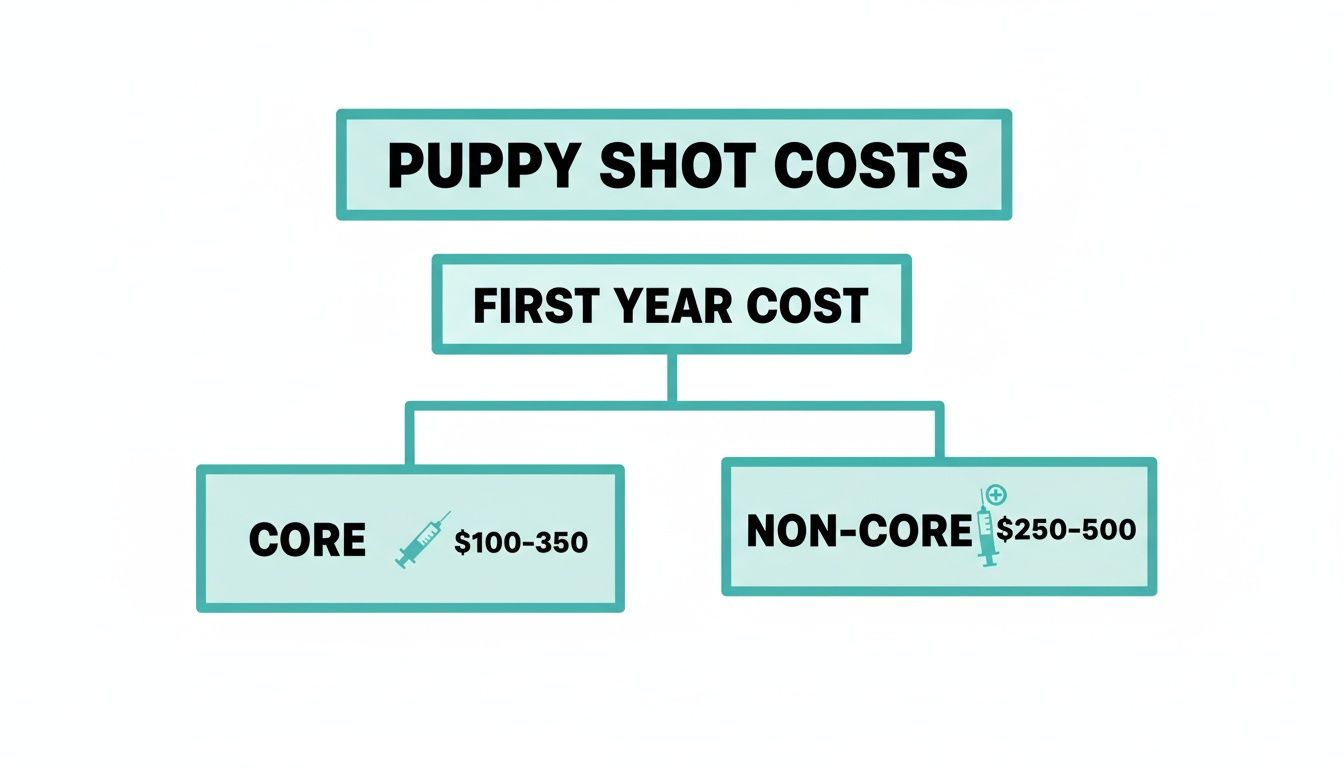
As you can see, sticking to the core schedule keeps the cost down, while adding those lifestyle-specific shots means a bigger investment in your pup's health. It’s a lot to keep track of, which is why a good record-keeping system is key. You can learn more about how to stay organized with our guide to making a printable puppy shot record.
A puppy's vaccination series is like building a suit of armor. Each shot adds another layer of protection, helping them stay well-defended against invisible health threats as they grow and explore the world.
To get a bit more specific, data shows that individual core vaccines like DHPP (Distemper, Hepatitis, Parainfluenza, and Parvovirus) and Rabies typically run between $20 to $60 per shot.
Over the course of that first year, these shots add up.
Quick Look at First-Year Puppy Vaccination Costs
Here's a simple table that breaks down the typical costs for a puppy's first year of vaccinations, separating the essential "core" shots from the optional "non-core" ones.
Vaccination Type | Typical First-Year Cost Range | Commonly Included Vaccines |
|---|---|---|
Core Vaccines | $100 – $350 | DHPP, Rabies |
Non-Core Vaccines | $250 – $500 | Bordetella, Lyme, Leptospirosis, Canine Influenza |
This gives you a clear picture of what to expect. If your adventurous pup needs protection against things like kennel cough or Lyme disease, adding those non-core vaccines will bring that first-year total into the $250 to $500 range. It all comes down to giving them the exact protection they need to live their best life.
Decoding the Vet Bill: Core vs. Lifestyle Vaccines
When your vet starts rattling off vaccine names like DHPP, it can feel a little like you’re trying to solve a puzzle made of alphabet soup. But to really understand puppy vaccination costs, you first have to know what you're paying for. That bill isn't just a random list of charges; it’s a breakdown of tailored protection for your new best friend.
Vets typically group vaccines into two main categories: core and non-core (often called lifestyle) vaccines. Thinking of them this way helps clear up the confusion around costs and empowers you to have a real conversation with your vet about what your puppy actually needs. It’s less about a one-size-fits-all checklist and more about building a personalized health plan.
Core Vaccines: The Must-Haves for Every Pup
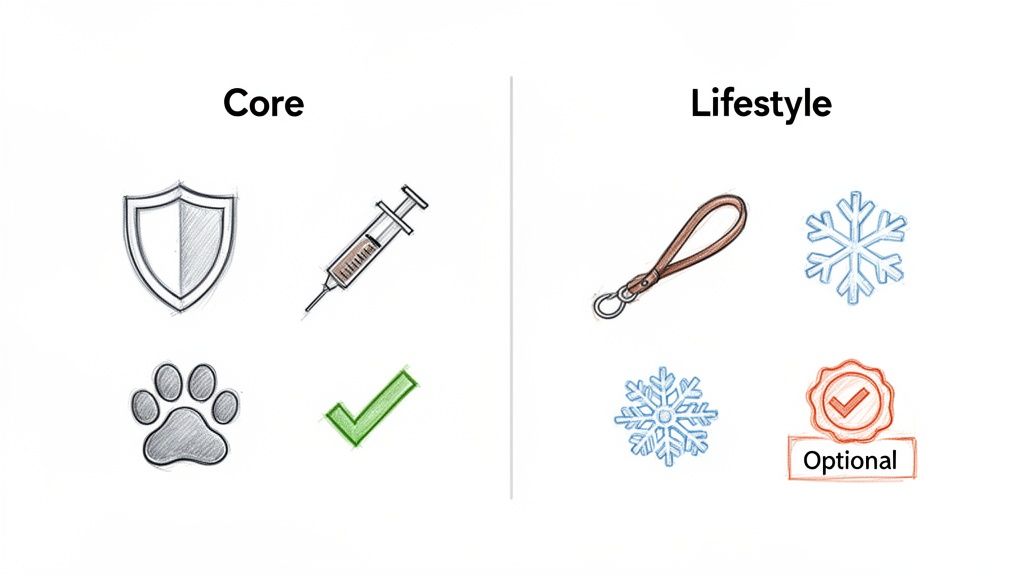
Think of core vaccines as the standard safety features in a car—like seatbelts and airbags. They are fundamental for safety.
In the same way, every puppy benefits from core vaccines, regardless of their lifestyle. They offer protection against widespread, dangerous, and often fatal diseases. These are the absolute essentials.
DHPP (or DAPP): This is a powerful combination vaccine. The letters stand for Distemper, Hepatitis (Adenovirus), Parainfluenza, and Parvovirus—all highly contagious diseases that can be devastating for a young pup.
Rabies: This is probably the most well-known vaccine, and for good reason. Rabies is a fatal virus that can spread to humans, which is why this shot is often required by law in most states. It’s an absolute must.
The cost for these individual shots usually lands somewhere between $20 and $60 per dose. Since puppies need a series of these boosters in their first year, this is where a good chunk of the initial vaccination cost comes from.
You wouldn't drive a car without airbags, right? It's the same idea here. Puppies need their core vaccines to navigate the world safely. They provide a fundamental baseline of protection that is simply not worth skipping.
Lifestyle Vaccines: The Optional Extras
Now, let's talk about lifestyle vaccines. If core shots are the standard airbags, then these are the optional add-ons, like getting snow tires for your car. You only really need them if you live in a snowy climate.
Likewise, lifestyle vaccines are recommended based on your puppy's unique environment, activities, and risk of exposure. Your vet will act as your pup’s personal health advisor, asking questions to figure out if these extra layers of protection make sense. For a deeper dive, check out our guide on what vaccinations dogs need for different situations.
Common lifestyle vaccines include:
Bordetella: Often called the "kennel cough" vaccine, this one is a no-brainer if your puppy will be hanging out with other dogs at daycare, boarding facilities, or the dog park.
Leptospirosis: This protects against a nasty bacterial infection found in contaminated soil and water. It's a bigger concern in areas with wildlife or standing water, and it can even spread to people.
Lyme Disease: If you live in a tick-heavy area, this vaccine is a critical tool for protecting your pup from this serious tick-borne illness.
Canine Influenza: Just like the human flu, this is a contagious respiratory illness. It’s a smart choice for social dogs who are in close contact with others.
Understanding this key difference—core vs. lifestyle—is the first step to making sense of your vet bill. The final price tag is a direct reflection of the protection your puppy receives, from the essential defenses to the specialized shields.
Factors That Influence Vaccination Prices
Ever wonder why your friend in another town paid a completely different price for the same puppy shots? The cost of puppy vaccinations isn't a fixed number; it’s more like a moving target, with a handful of key factors influencing the final bill. It's rarely about one vet being "cheaper" than another, but more a reflection of their unique operating costs and business models.
Getting a handle on these variables helps you see the real value behind the price tag. Once you know what goes into the cost, you can make a much more informed decision about your pup’s healthcare without feeling like you’re barking up the wrong tree.
Your Location Plays a Big Role
One of the biggest drivers of cost is plain old geography. A veterinary clinic in the heart of a major city like New York or San Francisco has massively different overhead costs—rent, utilities, staff salaries—compared to a clinic in a small, rural town.
These operational expenses are naturally factored into their pricing. This means the exact same rabies vaccine could cost significantly more in a major metropolitan area simply because the cost of doing business is higher. It’s a basic economic principle that directly impacts your final vet bill.
The Type of Clinic Matters
Not all veterinary facilities are the same, and their pricing structures reflect their unique missions. Knowing the difference can help you find care that fits your budget perfectly.
Private Veterinary Practices: These are your traditional neighborhood vet offices. They offer comprehensive, personalized care, which includes a full physical exam with each vaccination visit. The price reflects this one-on-one attention and the costs of running a full-service facility.
Low-Cost Clinics and Shelters: Often run by non-profits, these clinics are focused on providing essential services to the community at a reduced price. Their goal is public health, so they subsidize costs to make services like vaccinations more accessible. You might not get a full wellness exam, but you'll get safe, effective vaccines.
Mobile or Pop-Up Clinics: You’ve probably seen these set up at local pet stores or community centers. They're a convenient and often affordable option for basic services, as they have much lower overhead than a brick-and-mortar clinic.
The price difference between a private clinic and a low-cost shelter isn't a reflection of quality. It's a difference in business model. Both provide essential care, but a private vet offers a full-service experience, while a shelter focuses on accessible, high-volume preventative medicine.
Vaccine Brands and Combo Shots
Believe it or not, even the brand of the vaccine can affect the price. Just like with human medicine, different pharmaceutical companies produce vaccines, and vets choose which ones to stock based on their own research and experience. Some brands may cost the clinic more, which can then be passed on to the pet owner.
On top of that, many vets use combination vaccines, like the 5-in-1 DHPP shot. These combo shots often provide more "bark for your buck" by bundling protection against multiple diseases into a single injection. This is usually more cost-effective than paying for each vaccine individually and means fewer pokes for your puppy—a definite win-win! The specific rabies shot schedule can also vary, which you can explore further in our guide about how often dogs need rabies vaccinations. Choosing combo shots is a great way to manage the overall cost of puppy vaccinations.
Planning Vaccinations for Your Traveling Pooch
Got a bit of wanderlust and dream of bringing your pup along for the ride? When it comes to pet travel, early planning is everything. Vaccinations aren't just a matter of local health; they're a critical part of your dog’s "paws-port" to the world. Getting the timing right can save you from expensive, stressful, and even heartbreaking surprises at the border.
Many destinations have strict rules that go far beyond your vet’s basic wellness suggestions. By thinking about travel from the moment you plan your puppy’s first shots, you set yourself up for a much smoother journey down the road.
Creating Your Pup's Travel Timeline
Think of this as building a health passport for your four-legged companion, where each vaccine is an essential stamp. The real key here is timing. Many countries require specific waiting periods after certain shots are given, especially the rabies vaccine.
For instance, a common rule is that a pet cannot travel for at least 21 days after their primary rabies vaccination. Missing this window can lead to your trip being delayed or, even worse, your dog being quarantined. It’s not just about getting the shot; it’s about getting it at precisely the right time.
Planning for pet travel is a lot like packing for a long trip. You wouldn't wait until the night before to find your own passport. In the same way, waiting too long to line up your puppy's vaccinations with travel rules can leave you grounded.
Microchips and Health Certificates
Beyond the shots themselves, a couple of other critical items are tied to your pup’s health records that can affect the puppy vaccinations price when travel is on the horizon.
Microchip First, Vaccinate Second: Many countries, particularly in the European Union, suggest that a pet be microchipped before receiving their rabies vaccine. If the shot is given first, it could be considered invalid for travel, forcing you to start the process all over again.
The Cost of Health Certificates: An international health certificate is the official document showing your pet is healthy and meets your destination's entry requirements. A veterinarian has to complete this detailed paperwork, and the cost can run anywhere from $100 to over $1,000, depending on how complex the requirements are for that specific country.
These related expenses are a huge part of the overall financial picture. For veterinarians and pet travel agencies, understanding this full scope is vital. It helps you explain to clients the total investment required before they even get to the travel documentation phase, ensuring they are prepared for the real costs of compliant international pet transport. You can learn more about the real costs of pet travel documentation on dogster.com.
Ultimately, aligning your puppy's healthcare with your travel ambitions from day one is the best way to ensure a safe and seamless adventure. To get started, you can also review our guide on what vaccines dogs need to fly to prepare for your journey.
How to Save Money on Your Puppy's Healthcare
Giving your new puppy the absolute best start in life doesn't have to break the bank. While the puppy vaccinations price is an important part of responsible pet ownership, there are plenty of smart ways to manage these costs without cutting corners on their health. With a little bit of planning, you can keep your puppy—and your wallet—happy.
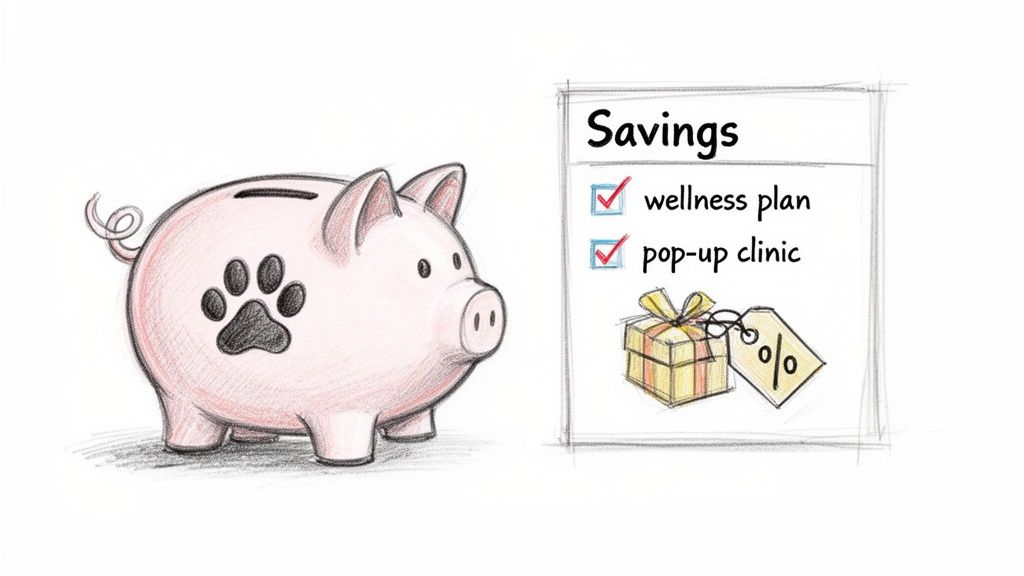
A great first move is to simply ask your veterinarian about "puppy packages." Many clinics bundle the essential first-year services, like the full vaccination series, deworming, and initial wellness exams, into a single, discounted package. This doesn't just save you money; it also makes scheduling a breeze and ensures you don't miss a single crucial appointment.
Explore Low-Cost Local Options
Beyond your regular vet, your local community is often a goldmine for affordable care. Keep an eye out for pop-up vaccination clinics. You'll often find them hosted by local pet stores, animal shelters, or even veterinary colleges. Because they have lower overhead, these events can offer the exact same safe and effective vaccines at a much lower cost.
Another fantastic option is to check with non-profit or city animal shelters. They frequently run low-cost clinics with the specific goal of making essential healthcare accessible to everyone in the community. The experience might be a little less personal than a private vet visit, but the quality of care and the vaccines themselves are top-notch.
Don't ever hesitate to ask for help. Your local animal shelter's entire mission is to keep pets healthy and in loving homes. They are often your best resource for information on affordable spay/neuter programs, vaccine clinics, and other community support.
Consider Wellness and Insurance Plans
If you're looking for more structured, predictable savings, a veterinary wellness plan might be the perfect fit. It's important to know these aren't the same as traditional pet insurance, which is designed for accidents and unexpected illnesses. Instead, a wellness plan is more like a subscription service for routine care.
You pay a set monthly fee that covers all the predictable expenses, including things like:
All necessary puppy vaccinations
Annual check-ups and exams
Routine parasite screenings
Flea, tick, and heartworm prevention
Some traditional pet insurance policies also offer preventative care add-ons or riders. These can reimburse you for vaccination costs, helping to spread out the expense over the year. By looking into all these options, you can make sure your puppy gets a "paws-itively" perfect start to a long, healthy life without causing a financial headache. It's all about finding what works best for your budget.
Your Top Questions About Puppy Shots, Answered
Let's be real—when you're juggling house training, redirecting sharp puppy teeth, and trying to find the one toy they won't destroy in five minutes, vaccination schedules can feel like a lot. It's totally normal to have questions.
Here are some straightforward answers to the things we hear most often from new puppy parents.
How Many Shots Does a Puppy Really Need in the First Year?
Think of it less as a single event and more like a series of important visits. Puppies get their immunity from their mom's milk, but that protection starts to fade right when they're most curious about the world.
That's why vets start their shots around 6-8 weeks old and continue every 3-4 weeks until they're about 16-20 weeks old. This usually means 3-4 rounds of the core DHPP combo vaccine, plus their rabies shot and any others your vet suggests based on your lifestyle (like Bordetella if they'll be going to daycare). Your vet will map out the perfect schedule for your little one.
Are Low-Cost Vaccine Clinics Actually Safe?
Absolutely. Licensed low-cost clinics and shelters provide the exact same safe and effective vaccines you'd get at a private veterinary hospital. They're a fantastic resource for the community.
The main difference is the experience. A visit to your regular vet is a full wellness exam—they're checking your puppy from nose to tail, listening to their heart, and answering all your questions. A low-cost clinic is built for efficiency; it’s focused on getting the vaccine administered quickly and safely. Both are great options, and the right choice really just depends on your budget and whether your puppy is due for a complete check-up.
Will My Pet Insurance Cover Puppy Vaccinations?
This is a great question, and the answer depends on your specific plan. Most standard accident and illness insurance policies don't cover routine care like vaccines. They're designed for the unexpected stuff, like if your puppy eats a sock.
However, many insurance providers offer wellness or preventative care add-ons for an extra monthly fee. These plans are built specifically to help you budget for things like puppy shots, flea and tick prevention, and annual exams. It's definitely something to look into when you're adding up the costs of a new furry family member.
Planning pet travel can be complex, but Passpaw makes getting the right health documents simple for vets and pet owners. Ensure your furry friend is ready for their next adventure by visiting https://passpaw.com.
More articles
From regulatory changes to best practices for veterinarians and pet owners, our resources keep you ahead of the curve.