Are you a team member in a veterinary practice?
Are you a pet parent planning a trip with your furry pal?
Pet transportation services: Safe, stress-free rides for your pet
Moving your pet from one home to another isn't as simple as booking a taxi. That’s where pet transportation services come in. These aren't just movers for your furry family member; they are special companies dedicated to handling the entire moving process, making sure your pet is safe, comfortable, and ready for the trip every step of the way.
Think of them as travel agents, logistics experts, and pet sitters all rolled into one, managing the journey whether it's across the state or around the globe.
Why Pet Transportation Services Are Essential

Let's be honest: moving with a pet can feel like trying to solve a puzzle with a thousand tiny, constantly changing pieces. Between confusing airline rules and a mountain of paperwork, the whole thing can become a massive headache. Professional pet transportation services step in to act as your expert guide, turning chaos into a calm, managed process.
At their core, these services operate on one simple principle: your pet’s safety comes first. They understand they’re not just shipping cargo; they’re caring for a cherished member of your family. This peace of mind is invaluable, especially when you're already juggling the stress of a big move.
More Than Just a Ride
It's easy to think of a pet transporter as someone who just drives your pet from point A to B. But that’s barely scratching the surface. A truly great transporter handles a surprisingly long list of important tasks.
They will:
Navigate Complex Rules: They're pros at understanding the specific import and export guidelines for different states and countries, which can be a tricky area for the average person.
Handle Documentation: They make sure every health certificate, vaccination record, and permit is filled out correctly and submitted on time.
Ensure Comfort: From climate-controlled vehicles to airline-approved travel crates, every detail is managed to keep your pet comfortable and secure.
Provide Updates: Good services keep you in the loop throughout the trip, so you’re never left wondering how your pet is doing.
This isn't a niche market anymore. The global pet transportation industry was valued at around USD 1,174 million in 2025 and is projected to hit USD 1,716 million by 2033. This growth shows just how much people are prioritizing their pets' well-being during travel.
The right pet transportation service transforms a potentially stressful ordeal into a well-managed experience, ensuring your pet arrives safely and you stay worry-free.
Consider this guide your roadmap for the entire process. We’ll break down everything you need to know, from the different kinds of transport out there to how to get your pet ready for the big day.
To get a broader sense of the logistics world, looking into general transfer service options can also offer a solid foundation on how these services operate. With the right info, you can make this journey a truly pawsitive one.
Choosing the Right Ride for Your Pet
When it comes to moving your furry family member, one size definitely does not fit all. The best way to get them from point A to point B really comes down to your pet’s health, your destination, and your budget. It’s a lot like picking a car for a road trip—you need the safest, most comfortable option for everyone on board.
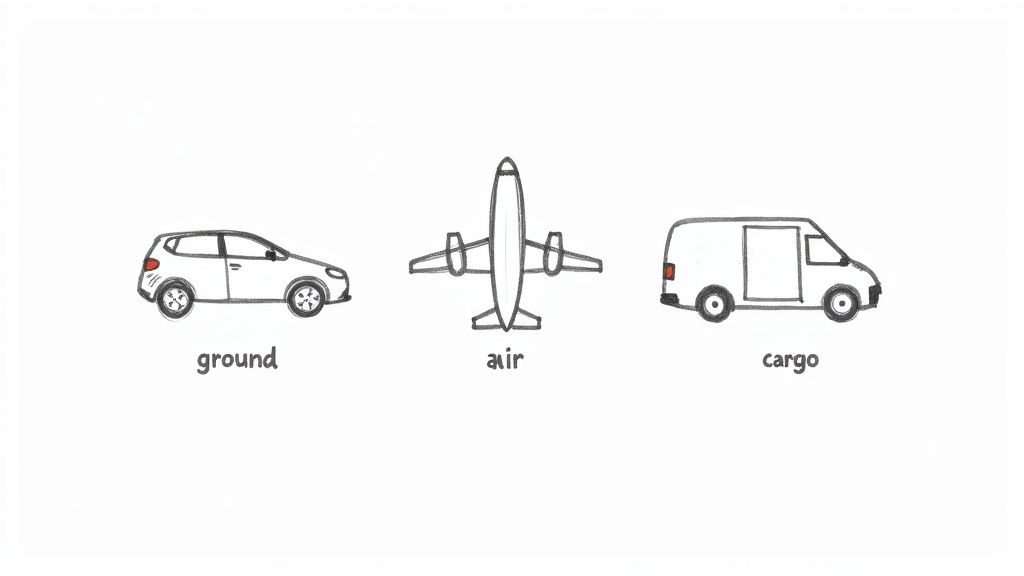
The first big decision is usually between ground and air travel. Each has its pros and cons, and figuring them out is key to selecting the purr-fect ride for your companion. Let's break down the main types of pet transportation services you'll encounter.
All Paws on Deck with Ground Transportation
Ground transportation is exactly what it sounds like: moving your pet by vehicle. This is almost always the go-to method for domestic moves or any trip that doesn't involve crossing an ocean. It’s a popular choice for good reason, especially for pets who might find flying a bit too ruff.
This option is a lifesaver for:
Brachycephalic (flat-faced) breeds: Pugs, French bulldogs, and Persian cats can have trouble breathing at high altitudes, making a road trip a much safer bet.
Anxious travelers: For some pets, the familiar feeling of a vehicle and a dedicated handler is far less stressful than the chaos of an airport.
Large pets: If you have a giant breed that's too big for airline crates or is over the weight limit, ground transport is the way to go.
Ground transport is a huge piece of the puzzle. In North America, which makes up about 40.6% of the global market, ground services account for a whopping 64.9% of all pet travel. Its popularity comes down to being cost-effective and generally less stressful for the animals.
Taking to the Skies: Air Travel Options
When you're dealing with long distances, especially for international moves, hopping on a plane is often the only realistic choice. Flying can be a safe and very efficient way to get your pet to their destination. Generally, there are two ways your pet can fly on a commercial airline.
In-Cabin Travel If your pet is small enough to fit comfortably in a carrier under the seat in front of you, they might be able to fly in the cabin. This is a fantastic option because it means you can be with them the whole time, offering comfort and reassurance. Just be aware that airlines are very strict about carrier size, pet breed, and how many animals are allowed on each flight.
Choosing the right carrier is a must for in-cabin travel. It needs to meet the airline's specific dimensions, have good ventilation, and keep your pet secure.
Cargo Travel For bigger pets, traveling as cargo is the standard way. Now, this doesn't mean they're just tossed in with the suitcases. Pets fly in a special, climate-controlled, and pressurized compartment. Professional pet shippers are experts at this, coordinating with airlines to make sure the process is safe and follows every rule. For more help on this, you can check out our guide on selecting the best airline travel pet carrier.
The Ultimate Convenience: Door-to-Door Services
For pet owners who'd rather leave it all to the experts, door-to-door pet transportation is the gold standard. A coordinator manages every single detail of the journey, from picking your pet up at your old house to delivering them safely to your new one.
This all-in-one service typically handles:
Booking all travel arrangements, whether by ground, air, or a combination.
Helping ensure all veterinary paperwork is complete and correct.
Providing a proper, airline-approved travel crate.
Managing airport check-in and customs clearance.
It’s the most expensive route, but it completely removes the logistical headache from your plate, freeing you up to focus on your own move.
To help you visualize the options, here's a quick comparison.
Pet Transportation Options at a Glance
This table offers a quick comparison of common pet transportation methods to help you decide which is best for your situation.
Transport Type | Best For | Key Considerations | Average Cost |
|---|---|---|---|
Ground Transport | Domestic travel, anxious pets, large breeds, flat-faced breeds. | Slower for long distances, requires a reputable handler. | $500 - $2,500+ |
Air (In-Cabin) | Small pets, owners who want to travel with their pet. | Strict airline size/breed restrictions, limited availability. | $125 - $250 (pet fee) + your ticket |
Air (Cargo) | Long-distance/international travel, medium to large pets. | Requires certain weather conditions, can be stressful for some pets. | $500 - $4,000+ |
Door-to-Door | Owners seeking a stress-free, all-inclusive solution. | Most expensive option, requires trusting a third party completely. | $2,000 - $10,000+ |
Ultimately, weighing the pros and cons of cost, convenience, and your pet’s specific needs will point you toward the best choice.
Navigating Pet Travel Paperwork and Regulations
Tackling the paperwork for pet travel can feel like you're trying to herd cats. With different rules for every destination, it's easy to get tangled up in a web of forms, deadlines, and requirements. But don’t worry—we’re here to help you get all your ducks (or dogs and cats) in a row for a smooth journey.
Think of these documents as your pet's passport and visa. Just like you need the right papers to cross borders, your furry friend needs a specific set of documents to show they are healthy and meet all local rules. Without them, your travel plans could come to a screeching halt.
The Cornerstone of Pet Travel: The Health Certificate
The most important document you'll need is the Certificate of Veterinary Inspection (CVI), usually just called a health certificate. This is an official form signed by an accredited veterinarian confirming that your pet is healthy, free from certain diseases, and fit to travel.
For domestic trips within the United States, most states suggest a CVI issued within 10 to 30 days of your travel date. For international journeys, this document is even more critical and often needs an official endorsement from a government body like the USDA. It’s the ultimate proof that your pet won’t pose a health risk to other animals at your destination.
A valid health certificate is a must-have for almost all forms of professional pet transportation. It’s the first thing airlines, transporters, and border officials will ask to see, so consider it your pet’s golden ticket.
Your Pet Travel Paperwork Checklist
Staying organized is the key to keeping your sanity. While every trip is unique, here are the core documents that most pet transportation services will ask you to have ready.
Up-to-Date Vaccination Records: Rabies is the big one, but other vaccinations might be needed depending on where you're headed. Make sure every shot is current and that you have a clear record from your vet showing when each one was given.
Proof of Microchipping: Many countries, and even some states, suggest pets have a microchip for identification. International destinations often specify a 15-digit ISO-compliant microchip, so it's a good idea to check that you have the right kind.
Import or Entry Permits: Some destinations, especially island nations like Australia or Japan, may require a special import permit. You often have to apply for these months in advance, so don’t leave this to the last minute.
Navigating these requirements can be tricky since they change all the time. For a deeper dive into what you might need, you can explore our guide to international pet travel requirements to get a clearer picture.
Why Every Destination Is Different
It’s important to understand that there is no one-size-fits-all list of rules. The requirements are set by the government of your final destination—not the airline or the pet shipper. Hawaii, for instance, has very strict rabies quarantine guidelines to protect its local ecosystem. Likewise, the European Union has its own set of rules, often requiring specific timelines for vaccinations and treatments.
This is where professional pet transportation services become so helpful. They are experts at keeping up with these constantly shifting regulations. They know what paperwork is needed, how to fill it out correctly, and when it needs to be submitted, saving you from costly and heartbreaking delays.
Before you do anything else, be sure to check the official government websites for your destination state or country months before you plan to travel. This will help you find the most current information.
Preparing Your Pet For a Pawsitive Journey
A smooth move for your pet starts long before travel day. Getting it right is a team effort, and it takes coordination between you, your veterinarian, and the pet transportation service you choose. When everyone works together, you can create a seamless, low-stress experience that sets your furry friend up for a happy arrival.
Think of it as a mission briefing before a big adventure. Everyone has a specific role, and when all the pieces are in place, the journey is much safer and more comfortable for the most important passenger.
The Owner's Role: Creating a Safe Space
Your most important job is to make your pet feel secure, and that begins with their travel crate. The crate should be a safe haven, not a scary box. This process, known as crate training, is one of the most powerful ways to reduce travel anxiety and should start weeks, or even months, before the trip.
Start by placing the crate in a common area of your home with the door wide open. Toss their favorite toys, blankets, or treats inside to encourage them to explore it on their own terms. The goal is to build a positive association, turning the crate into a familiar den rather than a place of confinement.
To make the journey even easier, try these simple steps:
Maintain Routines: In the days leading up to the move, stick to your pet’s regular feeding and exercise schedules as much as possible. Consistency is calming.
Manage Feeding: On travel day, give them a light meal about four to six hours before departure. This helps prevent an upset stomach during the trip. Always make sure they have access to water.
Stay Calm: Pets are very perceptive and feed off your energy. If you're calm and confident, it sends them a powerful signal that everything is going to be okay.
The Veterinarian's Part: Health and Documentation
Your veterinarian is your expert partner, making sure your pet is healthy enough for the journey and that all the paperwork is in order. A pre-travel health exam is a must. During this visit, the vet will confirm your pet is fit to travel and give any needed vaccinations or treatments.
This is also when they'll issue the all-important health certificate. This document is the backbone of your pet's travel portfolio, so it's very important that it's filled out perfectly and within the tight timelines required by your destination.
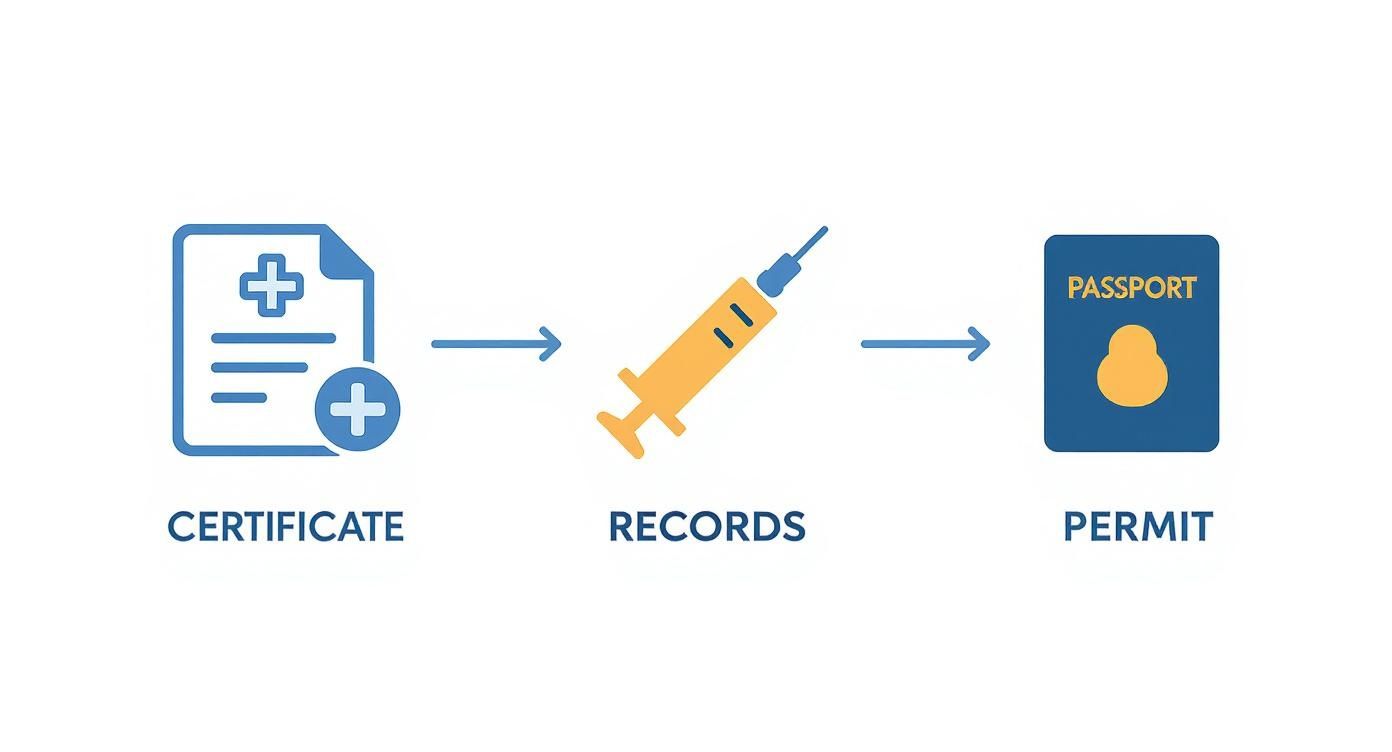
As you can see, the health certificate, vaccination records, and travel permits all fit together to create a complete travel profile for your pet.
Your vet’s role is more than just a quick check-up; they are the official gatekeepers who certify your pet’s health for travel, helping you meet the necessary guidelines.
The Transporter's Responsibility: Safety in Motion
Once your pet is on the road or in the air, the transporter takes over. A professional pet transportation service is responsible for providing a safe, secure, and comfortable environment for the entire trip. This is about so much more than just getting from point A to point B.
A reputable transporter will always ensure:
Climate Control: Vehicles are temperature-controlled to protect pets from extreme heat or cold.
Secure Carriers: They double-check that all crates are properly secured and meet strict airline or vehicle safety standards.
Regular Checks: For ground transport, drivers make frequent stops for water, potty breaks, and wellness checks.
Clear Communication: A good transporter keeps you in the loop with regular updates, giving you peace of mind.
This team approach helps make sure every last detail is covered. For more helpful tips, check out our complete guide on making pet travel a smooth experience. By working together, you can make sure your pet's journey is a truly pawsitive one.
How to Find a Trustworthy Pet Transporter
Choosing the company that will handle your pet's journey is probably the single biggest decision you'll make in this whole process. You’re not just hiring a delivery service; you’re trusting someone with a member of your family. Finding the right partner—one who puts safety and clear communication first—will give you priceless peace of mind.
Think about it like finding a great pet sitter. You wouldn't just hand over your leash to the first person you find online. You'd check their background, see what other people are saying, and ask a ton of questions. Applying that same level of care here is the key to finding a truly reliable pet transportation service.
This isn't just about good customer service; it's a rapidly growing professional field. The global pet travel services market is expected to reach USD 2.23 billion in 2025 and grow to USD 3.95 billion by 2032. With pet transport making up a huge part of that market, it's clear that specialized, professional care is what pet owners demand. You can explore more about these market trends from insights on the pet travel services market.
Look for Signs of Professionalism
The best pet transportation companies operate with high standards and are open about it. As you research potential shippers, keep an eye out for credentials that separate the pros from the amateurs. These are the tell-tale signs of a company that's serious about safety and industry best practices.
Here are a few things to check for:
USDA Registration: In the United States, companies transporting certain animals are often registered with the U.S. Department of Agriculture (USDA). This is a basic step that shows they are aware of federal animal welfare standards.
IPATA Membership: The International Pet and Animal Transportation Association (IPATA) is a global network of professional pet shippers. Members agree to follow ethical guidelines, making this a very strong signal of a reputable company.
Clear, Upfront Pricing: A trustworthy transporter will give you a detailed quote breaking down all the costs. If a price seems vague or just too good to be true, consider it a major red flag.
Do Your Homework and Ask for Proof
Never just take a company’s claims at face value. A little bit of digging can go a long way in making sure you’ve made the right choice. The internet is your best friend here, but don't forget to ask the company for information directly.
Start by reading recent online reviews on independent sites like Google or the Better Business Bureau. Look for consistent themes in what customers are saying—both good and bad. A single bad review isn't necessarily a dealbreaker, but a pattern of complaints about poor communication or safety issues should make you paws.
Don't be shy about asking for references. A confident, reputable company will be more than happy to connect you with previous clients who can share their firsthand experiences.
Essential Questions to Ask a Potential Transporter
Once you've narrowed down your list, it's time for an interview. Your questions should dig into their experience, safety protocols, and how they handle things when they don't go as planned. This is your chance to really see if they're the right fit for your pet’s specific needs.
Here are some critical questions to get you started:
What is your experience with my pet's breed? This is especially important for brachycephalic (flat-faced) breeds or animals with special health needs.
What is your plan for travel delays or emergencies? Ask what happens if a flight gets canceled or a vehicle breaks down. A good company will have a solid Plan B.
How will you provide updates during the trip? Will they send photos, texts, or give you a GPS tracking link?
Are your vehicles climate-controlled for ground transport? For your pet's safety, this is a must-have.
What kind of training do your animal handlers receive?
Using this checklist will help you confidently vet potential providers and find a partner who will treat your pet with the same care and attention that you would.
Your Pet Travel Questions, Answered
Thinking about moving a pet brings up a ton of questions. It's totally normal. Whether you're moving across the country or heading overseas, you want to know your best friend is in good hands. Let's tackle some of the most common questions we get about pet transportation services.
How Much Do Pet Transportation Services Usually Cost?
This is the big one, and the honest answer is: it varies. The final cost really depends on a few key factors: how far you're going, whether you choose ground or air travel, your pet's size, and the specific services you need.
For a domestic move by ground, you could be looking at anywhere from a few hundred to over a thousand dollars. If you're flying internationally, the price tag is usually higher, often running into several thousand dollars when you add up the flight, customs, and all the vet paperwork. The best move is always to get detailed quotes from a couple of reputable shippers to see what makes sense for you.
Is It Safe for My Pet to Travel in Airplane Cargo?
When it's handled by a professional shipper and a pet-friendly airline, the answer is yes, it's generally very safe. The cargo area where pets travel is pressurized and temperature-controlled, just like the passenger cabin. It's not just a baggage hold.
Good pet shippers are experts in airline guidelines and know exactly what's needed to keep your pet safe. That said, some flat-faced breeds like pugs or Persian cats (known as brachycephalic breeds) can have a tougher time with air travel due to breathing risks. For these pets, ground transport is almost always the safer bet.
The key to safe cargo travel is preparation and partnership. Working with a professional who knows the airline industry's pet policies helps ensure your pet is handled with the utmost care from check-in to arrival.
Should I Medicate My Pet for Travel?
It's a common thought, but most vets and professional transporters will strongly advise against sedating your pet for a trip. Sedatives can affect their ability to regulate body temperature and keep their balance, which can be a real risk when they're on the move.
A much better approach is to focus on crate training well in advance of the travel date. The goal is to make their carrier a familiar, comfortable, and safe space for them. Of course, always have a chat with your veterinarian. They know your pet’s health history and can give you the best advice for your specific situation.
What Happens if There Is a Travel Delay?
This is where the pros really show their value. Any good pet transportation service has backup plans baked into their process because they know that flights get delayed and traffic happens.
Here’s how they typically handle it:
For ground transport: They'll have pre-vetted, pet-friendly hotels or boarding facilities on their route where your pet can safely rest.
For air travel: They work directly with airline staff to make sure your pet is moved to a safe, climate-controlled area, given water, and cared for until the journey can resume.
When you're choosing a transporter, don't be shy about asking them this exact question. Hearing their plan for delays will give you real peace of mind that your pet will be safe and comfortable, no matter what bumps pop up along the way.
Managing all the documents and regulations for pet travel can feel overwhelming, but it doesn’t have to be. Passpaw is here to simplify the entire process. Our platform helps veterinary practices manage international health certificates with ease, ensuring every detail is correct for a smooth journey. Discover how we make pet travel compliance easier at https://passpaw.com.
More articles
From regulatory changes to best practices for veterinarians and pet owners, our resources keep you ahead of the curve.