Are you a team member in a veterinary practice?
Are you a pet parent planning a trip with your furry pal?
Can You Ship a Dog? A Guide to Safe Pet Travel
So, can you ship a dog? The simple answer is yes, absolutely! It's entirely possible to get your best friend from point A to point B, whether you're moving across the state or flying over an ocean.
But let's be clear: this isn't like mailing a package. Think of it more like arranging a VIP travel experience for a very important member of your family.
Your Guide to Shipping a Dog Safely
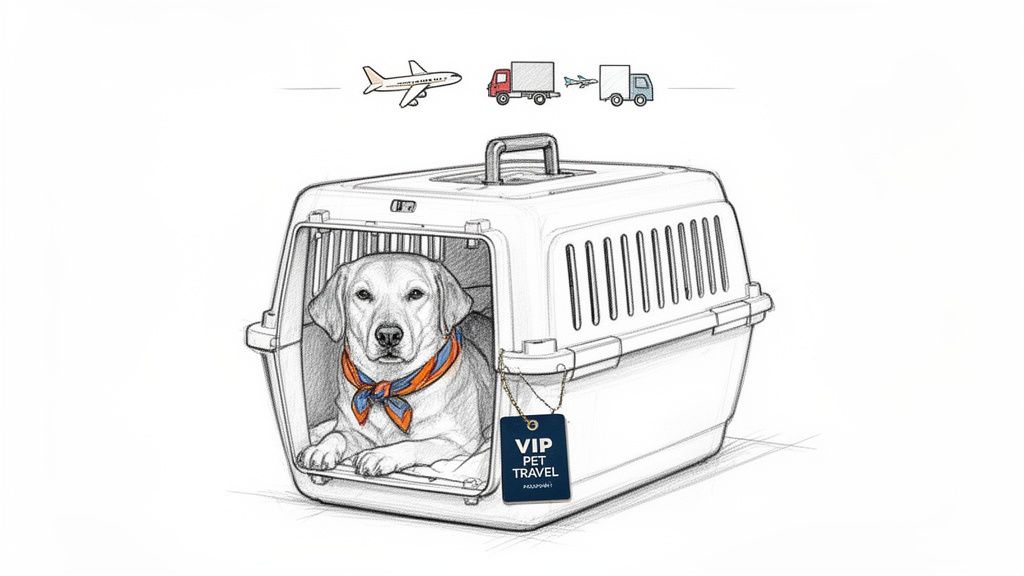
The whole idea of shipping your dog might seem a bit overwhelming at first, but thousands of pets travel safely every single year. The journey just requires some careful planning, the right health checks, and a bit of "paw-perwork" to make sure your dog arrives happy and healthy.
This isn't a niche need, either. The global pet transporting service market was valued at an impressive USD 573.3 million in 2025 and is on track to hit USD 873.4 million by 2035. That growth is all thanks to pet owners just like you, who refuse to leave their companions behind.
Understanding the Basics
Before you get lost in the details, it's a good idea to understand the main options. Every successful pet move starts with picking the right mode of transport.
Generally, you have two main choices:
By Air: This is usually the fastest way to go, especially for long-distance domestic moves or international travel.
By Ground: This option offers a more personal, door-to-door feel. It’s often a great fit for shorter distances or for dogs who might get anxious with air travel.
Each one has its own set of rules, benefits, and things to consider based on your dog's breed, size, and even temperament. Making the right call here is the first, and most important, step in the whole process. If you're weighing the pros and cons, our deep dive into professional pet transport services can help you sort it out.
To help you get a quick overview, here's a simple breakdown of the two main shipping methods.
Quick Guide to Dog Shipping Methods
This table offers a snapshot of air and ground transport to help you decide which path is right for your pet's journey.
Shipping Method | Best For | Key Considerations |
|---|---|---|
Air Travel | Long-distance domestic or international moves. | Weather delays, breed restrictions, and the stress of a cargo hold environment. |
Ground Travel | Shorter distances, anxious pets, or large breeds. | Can take longer, requires a reputable and insured provider for door-to-door service. |
Choosing the right method is the foundation of a successful move. From here, you can start building a detailed plan tailored to your dog's specific needs.
At the end of the day, a successful pet shipment isn't just about logistics. It’s about putting your dog's safety and comfort first. Every single detail—from a well-ventilated, properly sized crate to having all the right health documents in order—adds up to a stress-free trip for both of you.
Key Factors to Consider
No matter which way you decide to go, a few key factors will shape your planning. Getting a handle on these early will make everything else feel much more manageable.
Destination Rules: Every state and country has its own rulebook for letting pets in. This can include specific vaccinations, microchip requirements, and a lot of paperwork.
Your Dog’s Health: A veterinarian needs to give the official all-clear, confirming your dog is healthy and fit to travel.
Crate Training: Your dog’s travel crate should feel like a safe den, not a scary new box. Getting them used to it well ahead of time is a game-changer.
Knowing your options is the first step. Once you understand the basics of air and ground transport, you can start putting together a solid plan for your dog's big adventure.
Choosing Your Dog's Travel Method: Air Versus Ground
Alright, so you know it's possible to ship your dog. Now comes the big question: how should they travel? You’ve got two main choices—flying or going by ground—and they offer completely different experiences. Think of it as the difference between a quick commercial flight and a private, chauffeured road trip.
There's no single "best" answer. The right choice really comes down to your dog's size, breed, and personality, not to mention your destination and budget. Let's break down each option so you can figure out what makes the most sense for your furry family member.
High-Flying Hounds: The Air Travel Option
When you need to cover a lot of ground fast, especially for an international move, flying is usually the most practical route. Most dogs travel in a specialized, climate-controlled cargo hold that's pressurized just like the main cabin. For smaller pups, some airlines will even let them ride in an approved carrier right under your seat.
But flying isn't always a walk in the park. Airlines have very specific rules in place for safety, and that can create some hurdles for pet owners.
Breed Restrictions: Many airlines won't allow brachycephalic (flat-faced) breeds like Pugs, French Bulldogs, and Boxers to fly in cargo. This is often a safety measure due to their heightened risk of breathing issues.
Weather Delays: Airlines may pause pet travel during extreme heat or cold. This is to protect animals from dangerous temperatures while they're on the tarmac.
Crate Requirements: You can't just use any old crate. Airlines are very specific and typically suggest carriers that meet International Air Transport Association (IATA) standards.
Even with these rules, millions of pets fly safely every year. It’s a fast and reliable way to handle long journeys, but it definitely demands careful planning and a close read of the airline's policies.
Paws on the Pavement: The Ground Shipping Alternative
For moves within the country, or for dogs who just aren't cut out for flying, ground shipping is a fantastic alternative. Professional pet transport companies offer a much more personal, door-to-door service that can be a game-changer for anxious pets.
Ground transportation is all about comfort and continuous care. Instead of a busy airport, your dog gets a climate-controlled vehicle with a dedicated professional who plans frequent stops for potty breaks, exercise, and some one-on-one attention.
This method is a perfect fit for big dogs who might not meet airline size limits or for anyone who wants a higher level of personal care during the trip. Sure, the journey takes longer, but the trade-off is often a much calmer, more relaxed dog. If this sounds like the right path, it’s worth exploring the details of how to transport pets across the country.
In the end, whether you pick the speed of air travel or the personal touch of ground transport, the best decision always revolves around your dog's specific needs. Weigh the pros and cons of each, and you’ll be able to give your best friend a safe and comfortable trip to their new home.
The "Paw-perwork" for Shipping Your Dog
Alright, let's tackle what often feels like the most confusing part of shipping a dog: the paperwork. If you're feeling a bit lost in the maze of documents, you're not alone. But getting this right is essential for a smooth trip.
Think of this paperwork as your dog’s passport and visa all rolled into one. Every single trip, whether it's across state lines or across an ocean, calls for a specific set of documents. These papers show your dog is healthy and meets all the rules for where they're going. Without them, you could face serious delays, surprise costs, or your dog being turned away at the border. These rules are there for a good reason—to protect the health of animals and people everywhere.
The Core Documents You'll Need
While the specifics can change depending on your destination, a few key documents are almost always part of the plan. Getting these squared away should be your first step.
The most important piece of paper is the Health Certificate. This is an official form signed by an accredited veterinarian, confirming your dog is healthy, free of certain diseases, and fit to travel. For international journeys, this isn't just a simple piece of paper; it's often a complex document that may need a final stamp of approval from a government agency like the USDA.
Alongside the health certificate, you'll most likely need:
Proof of Rabies Vaccination: A valid rabies certificate is a must-have for most travel. Pay close attention to the timing here—some places want the vaccine to be given at least 30 days before the trip.
Microchip Details: Most countries now suggest an ISO-compliant microchip for identification. That chip number has to be on all of your official paperwork, so double-check that it's correct.
These documents work together to give officials a clear health snapshot of your dog, making it much easier to cross borders without a problem.
Navigating International Rules
This is where things can get tricky. Every country plays by its own rulebook, and those rules can change with little warning. For instance, traveling to the European Union often involves specific paperwork. Heading to the UK? Your dog may need a specific tapeworm treatment given within a tight 24-to-120-hour window before arrival. And Hawaii is known for its strict quarantine and pre-arrival testing protocols.
These aren't just small hurdles; they can stop a trip in its tracks. In fact, complex documentation and quarantine rules can contribute to travel delays. With an estimated 30% of initial paperwork attempts failing compliance checks, it's obvious that sweating the small stuff is important. You can find more details on these challenges in pet shipping services reports.
Navigating international pet travel is less about filling out forms and more about precise timing and execution. A single missed deadline or incorrect document can derail the entire process.
This is exactly why platforms like Passpaw exist. We help veterinarians and owners cut through the confusion by providing up-to-date requirements and making it simpler to create international health certificates. What could be a weeks-long headache becomes a much more manageable task. For a deeper dive, check out our complete guide on essential travel documents for pets.
If there's one piece of advice to take away, it's this: start early. For an international move, you should begin planning at least three to six months ahead of time. That gives you a comfortable buffer to handle all the vaccination, testing, and paperwork deadlines without that last-minute panic.
Choosing the Right Travel Crate for Your Dog
When you're shipping a dog, their travel crate is so much more than just a box. It’s their personal cabin, their safe space, and their den for the entire journey. Picking the right one isn't just a suggestion—it's absolutely critical for their safety, comfort, and a successful trip.
Airlines and professional transporters don't leave this to chance. They have specific rules, many of which are based on guidelines from the International Air Transport Association (IATA). These standards are all about keeping your pet secure and comfortable from departure to arrival. Think of it as giving your dog their very own first-class suite, complete with all the necessary safety features.
Meeting IATA Standards
An IATA-compliant crate is the gold standard for pet travel, especially by air. Even if you're using a ground shipper that doesn't strictly require one, choosing a crate that meets these standards is always a smart move. It means you're meeting some of the highest safety benchmarks out there, no matter how your dog is traveling.
Here’s what to look for in a compliant crate:
Sturdy Construction: The crate should be made of hard plastic or wood with a metal door. Soft-sided carriers or wire cages are a definite no-go for cargo travel.
Secure Locking: The door needs a secure, spring-loaded lock that can’t be nudged open by a curious nose. Many airlines also want to see metal nuts and bolts holding the top and bottom halves together, not flimsy plastic clips.
Proper Ventilation: The crate must have ventilation on at least three sides (four is even better for international flights) to keep fresh air flowing.
Solid Roof and Floor: The roof has to be solid (no escape hatches!), and the floor must be leak-proof to contain any accidents.
Getting the Size Just Right
This is one area where you absolutely cannot just "eyeball it." A crate that’s too small is cramped and unsafe, but one that's too big won’t provide enough stability if there's turbulence. You're looking for that sweet spot where the crate is large enough for your dog to stand up, turn around, and lie down comfortably in a natural position.
Don't guess when measuring your dog. Grab a soft tape measure and get the real numbers for their height (from the floor to the top of their head or ears, whichever is higher) and length (from the tip of their nose to the base of their tail). Add a few inches to those measurements, and you'll have the ideal crate dimensions.
Of course, the right crate is only half the battle; getting the paperwork correct is just as important.
Crate Training Before the Trip
Once you have the perfect crate, the next step is to convince your dog it’s a happy place. This process, often called crate acclimation, is your secret weapon for reducing travel anxiety. You’ll want to start weeks, or even months, before the trip.
Begin by placing the crate in a busy part of your home with the door wide open. Make good things happen there—toss in treats, feed meals inside, and fill it with their favorite toys or blankets. The goal is to build a positive association, turning the crate from a scary box into a familiar, comforting den. This prep work will make travel day a whole lot less "ruff" on everyone involved.
For more specific guidance, check out our in-depth article on choosing the best airline pet travel carrier.
Understanding Dog Shipping Costs and Timelines
Alright, let's talk about the two biggest questions on every owner's mind: how much does this cost, and how long does it take? The truth is, there’s no simple answer. Shipping your dog can range from a few hundred dollars for a straightforward trip on the ground to several thousand for a complex international flight.
Think of it like planning a custom vacation—every decision you make, from the destination to the mode of transport, shapes the final price tag.
Breaking Down the Costs
The total expense for shipping your dog isn't a single line item. It’s a combination of different services, fees, and requirements that all add up.
Here are the main factors that will influence what you pay:
Your Dog's Size and Weight: This is often the biggest variable. A Great Dane needs a much larger crate than a Chihuahua, and that crate takes up more space and weight on a plane or in a vehicle, driving up the cost.
Travel Distance and Destination: A cross-state journey is naturally going to be less expensive than a trip across an ocean. International destinations also add extra fees for things like customs, tariffs, and special import permits.
Mode of Transport: Flying and ground shipping are priced differently. Airlines often charge based on the crate's "dimensional weight" (a formula combining size and weight), while ground transport might be a flat rate or based on mileage.
Professional Services: Hiring a dedicated pet shipper will add to your total, but their fee covers managing all the logistics, booking the travel, and navigating the mountain of paperwork. For many, this is a price worth paying to avoid costly mistakes and headaches.
Challenges can arise for pet owners. Quarantine rules in places like Australia (up to 10 days for dogs) and high costs—international shipping can hit $2,000-$5,000 per dog—can be a concern for some owners. This is where platforms like Passpaw are making a difference by simplifying the complex paperwork process for vets and pet shippers. Discover more insights about the pet travel services market.
Planning Your Timeline
Just like the costs, the timeline for shipping a dog can vary wildly. A domestic trip might only need a few weeks of planning. An international move, however, is a marathon, not a sprint. You’ll want to get started anywhere from three to six months ahead of your travel date.
Why so early? This lead time is absolutely critical for scheduling vet appointments, getting vaccinations in the right order, and securing any government endorsements. Some countries even have requirements for blood tests that must be done months in advance. Waiting until the last minute is not a good idea here.
Most pet shipments go off without a hitch, but unexpected issues can pop up. If you see a weird update while tracking your pet's journey, knowing what a shipment exception means can help you figure out what's going on and address any problems quickly. Having a clear timeline from the start keeps you on track and prevents any last-minute, tail-chasing scrambles.
Common Questions About Shipping a Dog
The idea of putting your dog on a plane can spark a million questions. It’s completely normal to feel a bit anxious, and getting clear, straightforward answers is the best way to feel confident about the whole thing. We've rounded up some of the most common questions we hear from pet owners to help put your mind at ease.
Is It Safe for a Dog to Fly in Cargo?
For most healthy dogs, the answer is a reassuring yes. The cargo hold where pets travel isn't just some forgotten luggage compartment; it's pressurized and temperature-controlled, a lot like the main cabin. Airlines have special procedures in place for live animals, like loading them on last and taking them off first to keep their time on the tarmac to a minimum.
That said, it’s not a one-size-fits-all solution. Brachycephalic (flat-faced) breeds like Pugs, French Bulldogs, and Boxers often face airline restrictions. Their unique facial structure puts them at a higher risk for breathing problems at high altitudes. Your very first step should always be a chat with your veterinarian to get the green light that your dog is healthy enough for the journey. After that, double-check the airline's specific pet policies.
How Can I Prepare My Dog for Travel?
A little preparation goes a long way in making the trip a smooth one for your furry friend. The effort you put in beforehand can make all the difference on travel day.
Crate training is your best friend here. Weeks before the trip, introduce the travel crate as a happy place. Fill it with their favorite toys, treats, and a comfy blanket. The goal is to make it feel like their own private den, not a scary box.
Beyond getting them comfortable with the crate, here are a few other key tips:
Stay Calm: Dogs are experts at reading our emotions. If you're stressed, they'll be stressed. Projecting calm confidence will help them feel much more secure.
Keep Routines Normal: In the days leading up to the flight, stick to your dog’s usual schedule for feeding, walks, and playtime as much as you can.
Time Their Meals: A light meal a few hours before heading to the airport is much better than a full belly right before they travel.
Do a Final Check: Make sure all your paperwork is organized, the crate is clearly labeled with your contact details, and you’ve tucked in an item that smells like home.
Should I Hire a Professional Pet Shipper?
This really depends on how complex your move is. If you’re just flying from one state to another on a direct flight, you might feel totally comfortable handling the logistics yourself.
But for international travel? Hiring an expert is almost always a good call. These professionals are masters of the maze that is international pet shipping—from navigating obscure regulations to dealing with different airlines and complex paperwork.
A professional pet shipper takes the guesswork and stress out of the equation. They handle everything from finding the most direct, pet-friendly flights to ensuring every single import permit and health document is perfect for the destination country.
Yes, it's an extra cost, but the peace of mind can be priceless. It greatly cuts down the risk of making a tiny mistake that could lead to huge delays or, in a worst-case scenario, your pet being stuck in quarantine or denied entry.
What About Sedating My Dog for Travel?
We hear this question a lot, but the answer from veterinarians and airlines is almost always a firm no. Sedating a dog for air travel is generally not recommended and can be risky.
Sedatives can interfere with a dog's ability to regulate their body temperature and keep their balance, which is a big risk in the different environmental conditions at high altitudes. Instead of reaching for medication, the best approach is to focus on positive crate training to build their confidence. If you're really concerned about anxiety, talk to your vet well in advance about safe, natural calming supplements. For more general advice and additional resources on traveling with pets, you can find helpful guides online.
Navigating the world of pet travel can be complex, but you don't have to do it alone. At Passpaw, we simplify the documentation process for veterinarians and pet owners, ensuring every "i" is dotted and every "t" is crossed for international health certificates. Learn how Passpaw can help make your pet's next journey a success.
More articles
From regulatory changes to best practices for veterinarians and pet owners, our resources keep you ahead of the curve.