Are you a team member in a veterinary practice?
Are you a pet parent planning a trip with your furry pal?
How to Cool Dogs Down Safely and Quickly
Your dog is panting hard after a walk, the pavement still feels warm under your shoes, and you're trying to decide whether this is just a normal cool-down or the start of something more serious. That moment matters. The safest way to cool dogs down is to react quickly, but also to know when simple shade and water are enough, and when you're looking at true heatstroke.
The hard part is that overheating doesn't always look dramatic at first. A dog can seem “just hot” and still be sliding into trouble, especially after exercise, which is the most common trigger of heat-related illness in dogs in a review of veterinary records from over 900,000 dogs. That same study found exercise-induced heatstroke was just as likely to be fatal as heatstroke from being left in a hot car, which is why post-activity cooling is a welfare issue, not just an emergency move. Exercise-triggered heat illness in dogs
Recognizing Heat Stress in Dogs
A hot afternoon can fool people fast. A dog that's been chasing a ball, hiking, or even pacing in a yard may still be “working” to cool itself long after the fun is over. When the breathing gets noisy and the body looks unsettled, that's your cue to stop guessing and start checking.
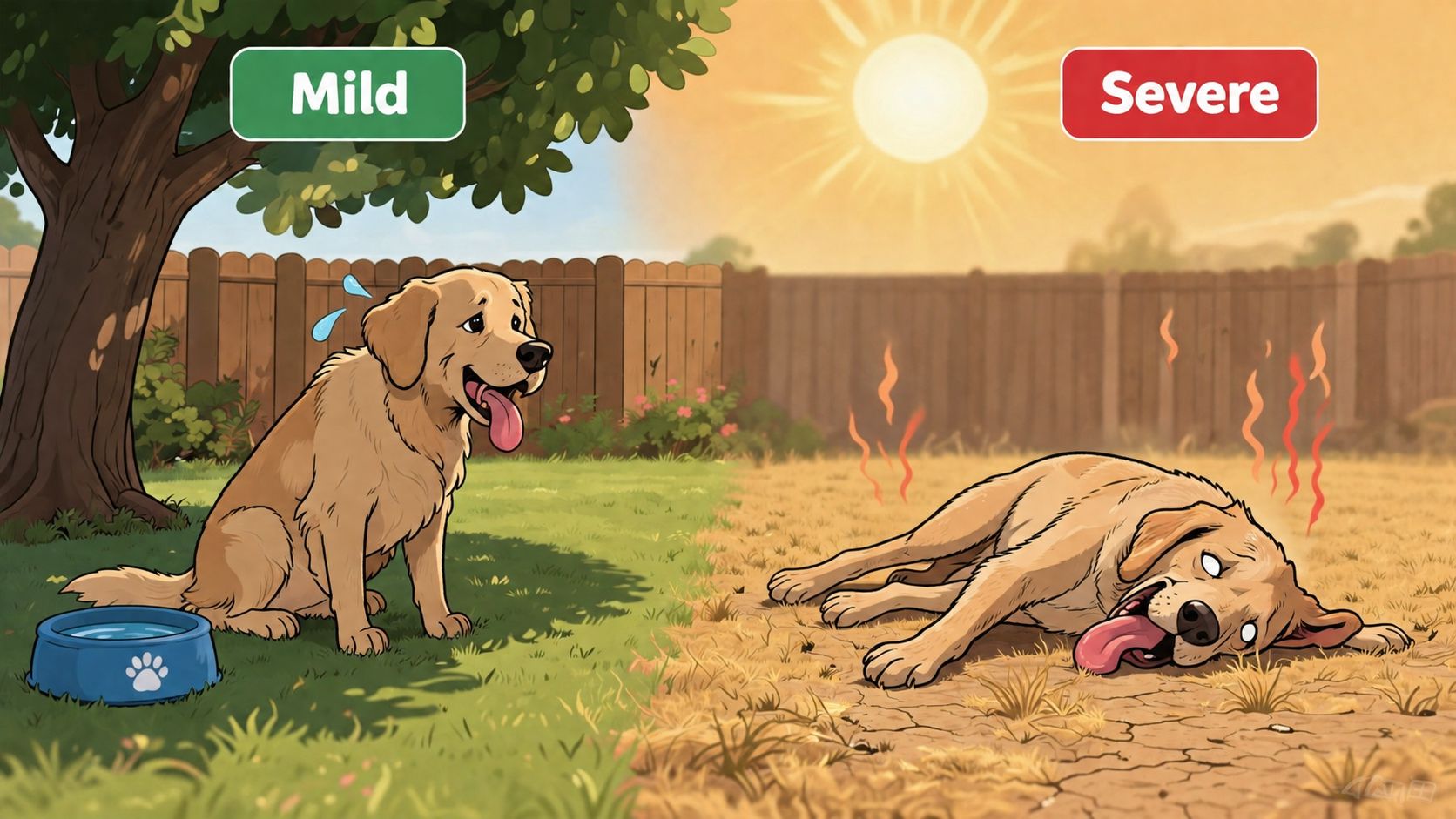
Early signs that deserve a pause
Some signs point to routine overheating, which means your dog needs shade, rest, and water right away.
Heavy panting that doesn't settle after a short rest.
Restless pacing or trouble getting comfortable.
Bright red gums or a very warm body.
Seeking cool surfaces like tile, dirt, or shaded concrete.
Slower response to your voice or hand signals.
Drooling more than usual, especially after exercise.
Signs that move this into danger
These are the red flags that make me think beyond simple cooling and toward urgent care.
Stumbling or acting uncoordinated.
Weakness or collapsing.
Vomiting.
Confusion or staring off.
Seizures.
Unresponsiveness.
If you want a quick way to sort risk, think in two buckets. Alert but uncomfortable usually means shade, water, airflow, and close watching. Wobbly, vomiting, collapsing, or not responding means you need to treat this like an emergency.
Breed and body shape matter too. Older dogs and flat-faced breeds can struggle even when they're just sitting in the heat, while younger dogs and male dogs were more likely to develop exercise-triggered illness in the large record review above. If you're comparing activity risk by breed, this hot-weather breed guide is worth keeping in mind.
Practical rule: If the dog is still trying to move and interact, you may have a narrow window for at-home cooling. If the dog is stumbling or fading out, don't wait for it to “settle.”
Immediate Cooling Techniques for Overheated Dogs
When a dog is hot but still conscious and responsive, the best move is rapid, water-based cooling. The strongest evidence I'd trust for first aid favors partial water immersion, which lowered core body temperature more effectively than isopropyl alcohol on paw pads or passive cooling after post-exercise hyperthermia. Partial water immersion study
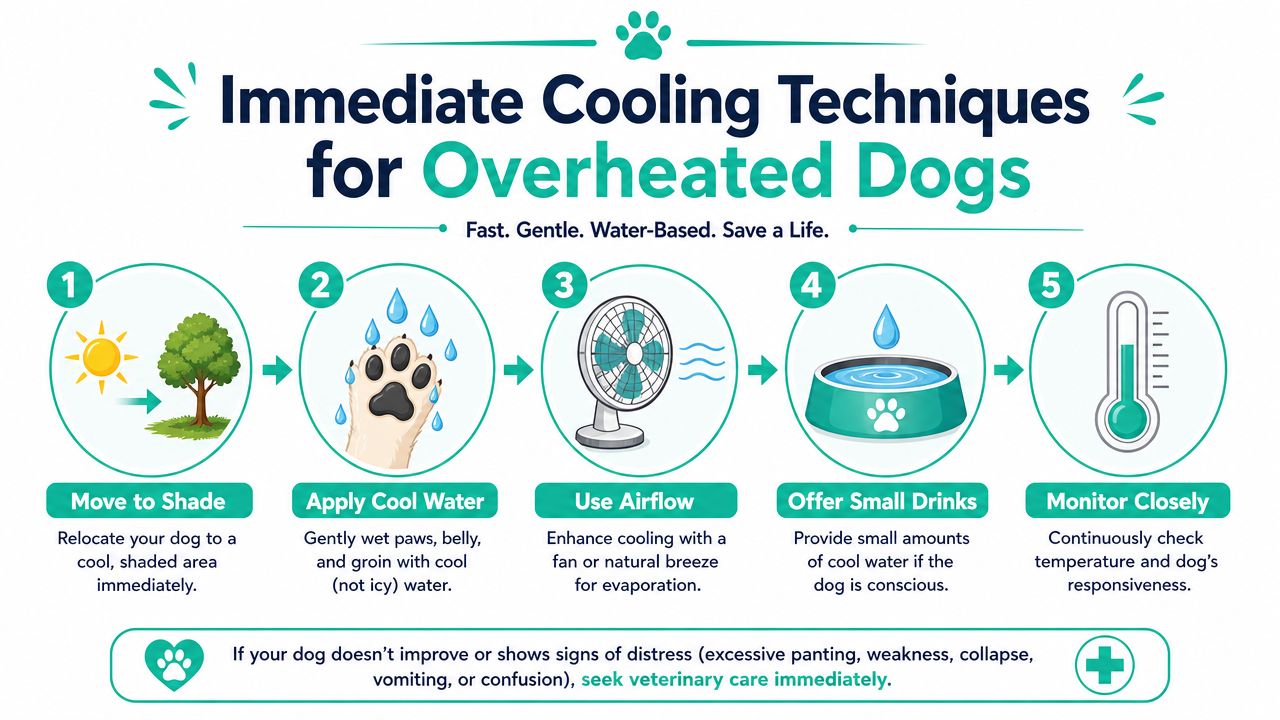
The fastest safe approach
Start with a cool, shaded place. Then move straight to active cooling, not just waiting for the dog to recover on its own.
Use cool water, not icy water. Soak the paws, belly, and groin with cool water. Ice-cold water can feel intuitive, but it's not the first choice I'd reach for in an overheated dog.
Add airflow right away. A fan, breeze, or air conditioning helps evaporation do its job. Without airflow, wet fur can hold heat instead of releasing it.
Keep the dog moving only as much as needed. You're cooling, not exercising. A beach trip gone wrong can turn around fast if you stop the activity and start cooling immediately.
Offer small drinks only if the dog is alert. Let the dog take a few sips, then pause. Don't force water into the mouth.
Watch the response continuously. If the dog brightens, steadies, and starts breathing more normally, keep cooling and reassess often.
When partial immersion makes sense
Partial immersion means wetting a larger surface area, not dunking an entire dog and hoping for the best. For a healthy young dog after a hard hike, this is often the most efficient method. If you're out on the trail, the hiking with dogs guide is a good reminder that the emergency usually starts before the car ride home.
For older dogs, flat-faced dogs, or dogs with other health issues, the safer approach is cooler-than-the-dog water plus strong airflow. They may not tolerate full immersion as well, so the goal is steady cooling without overloading the body.
Vet-style shortcut: If you have water and airflow, you already have the core of good first aid. The equipment matters less than doing the steps in the right order.
Cooling tools that actually help
Cooling mats can be useful, but they're not a substitute for active cooling when a dog is severely hot. A mat is fine for prevention or mild overheating. For real heat stress, water and airflow do the heavy lifting.
A simple home setup works too. A hose, shaded patio, fan, and clean towel can be enough to get a dog through the first critical minutes. The key is not the brand name, it's whether the setup lowers heat fast without trapping it.
Mistakes to Avoid When Cooling Dogs
The most common well-meaning mistake is soaking a hot dog and then putting the dog somewhere with poor airflow. That can backfire badly. In low-ventilation spaces, wet fur can create a sauna effect, which makes the dog hold onto heat instead of shedding it. Cooling dogs with heat stroke
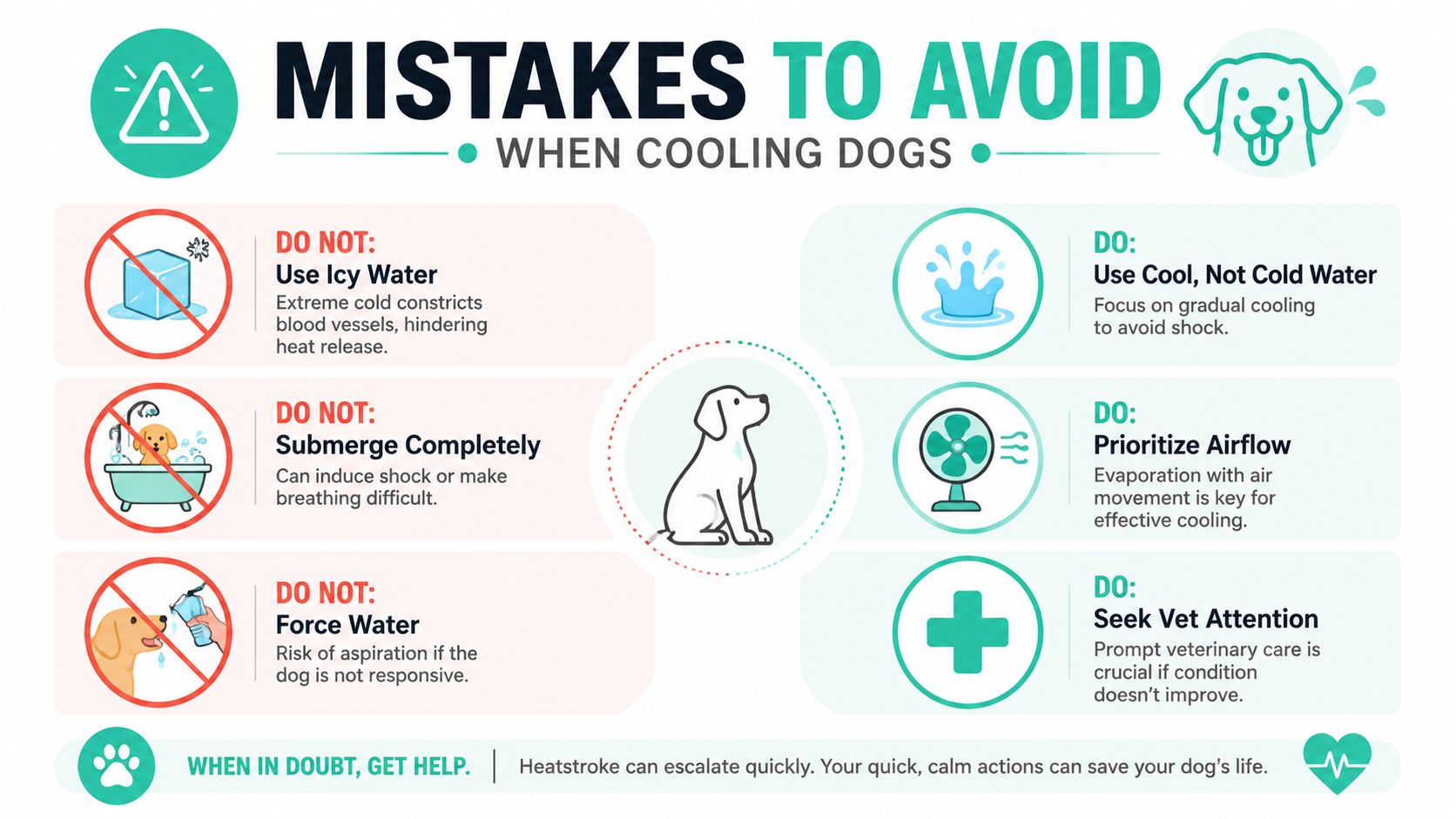
The biggest missteps
Using icy water without airflow. Cooling has to move heat away from the body. Water alone isn't the whole answer.
Submerging a fragile dog completely. Older dogs or medically delicate dogs may struggle with that much stress.
Forcing water into the mouth. If the dog is not fully responsive, that raises the risk of aspiration.
Wrapping and waiting. A wet towel can help only if air is moving across it.
Assuming all overheating is the same. Routine heat stress and heatstroke need different urgency.
The safer correction
Use cool, not icy, water, then add airflow. If a dog is still bright and responsive, keep the cooling active and watch the response. If the dog isn't improving quickly, or the signs are getting worse, stop trying to manage it alone and move to veterinary care.
Many guides tend to get too casual. They'll mention shade, towels, and water, but skip the part about airflow or blur the line between routine overheating and true heatstroke. That gap matters, because the wrong setup can leave a dog hotter instead of cooler.
If you're ever tempted to force a dog into a crate after wetting them down, don't. Low-airflow confinement can turn a rescue attempt into a heat trap. If you need a refresher on avoiding dangerous handling choices, this sedation safety guide is a useful reminder that stressed dogs need careful, calm handling.
Emergency Thresholds and When to Seek Veterinary Care
A hot dog doesn't need to be “failing” before you call for help. If your dog is collapsing, vomiting, seizuring, or not acting like itself, that's enough reason to stop home care and contact a veterinary team right away. The goal is to avoid waiting for a body to declare an emergency in a louder way.
If you can take a temperature safely, do it once, then move on. A rectal thermometer is the standard at-home option, but don't delay cooling just to get a number. If the dog is struggling, the number matters less than the behavior.
Call the vet urgently if you see
Collapse or weakness that doesn't clear fast.
Vomiting after overheating.
Seizures.
Trouble standing or walking.
Confusion, glazed eyes, or unresponsiveness.
Rapid worsening even after you start cooling.
If you're unsure, call anyway. A short, clear call is better than a long delay.
When you phone, say three things fast. Tell them the dog's current symptoms, what cooling steps you've already used, and whether the dog is improving or getting worse. If you measured a temperature, share it. If not, don't waste time apologizing, just describe the dog's behavior clearly.
For transport, keep cooling going if the dog can tolerate it. Use shade, airflow, and cool water as needed, and get moving. The safest next step is the one that gets the dog into hands that can monitor temperature, circulation, and organ stress closely.
Prevention Strategies for Travel and Daily Life
Keeping a dog cool is much easier when you build for heat before it arrives. That means thinking about home, travel, and outages as separate problems, because each one needs a slightly different setup. Practical advice from owners and carers often comes down to the same basics, frozen water bottles, fans with directed airflow, portable water, and giving the dog a choice about where to rest. Practical cooling ideas for dogs without AC

At home
Start with airflow. A fan only helps if it moves cooler air across the dog, not just stirs warm air in a sealed room. Open a room with tile or another cool floor, keep water close by, and make sure your dog can move between warm and cooler spots.
A few simple additions help. Frozen water bottles wrapped in a towel can give a dog a nearby cool surface, and a cooling mat can support rest between walks or play sessions. If your home gets strong sun, close blinds during peak heat so the room doesn't turn into an oven.
On the road
Travel is where dogs get into trouble quickly. Bring portable water, a bowl, and something that gives shade once you stop. For road trips, the Essential advice for RV pets guide is a solid companion resource for planning stops, ventilation, and rest.
Keep the car routine simple.
Ventilate the cabin before loading the dog.
Use sunshades where they help.
Stop often enough for water and rest.
Never leave a dog unattended in a parked vehicle.
During outages and heat waves
When the AC goes out, a dog needs options, not just hope. Set up a fan, keep cold water moving into the bowl, and let the dog choose the coolest floor or room. Choice matters because dogs often regulate themselves better when they're not forced to stay in one warm spot.
Breed and body shape matter here too. Flat-faced dogs, older dogs, and heavily coated dogs can need more support to stay comfortable. That doesn't mean they can't go out, it means the plan has to be tighter.
Travel paperwork and temperature planning
If you're crossing borders with a pet, heat management should sit alongside paperwork on your checklist. For international travel, the U.S. State Department says to check how close to departure the veterinary exam, vaccinations, and tests need to be scheduled, and to call the right embassy in Washington, DC to confirm entry rules. U.S. State Department pet travel guidance
The UK government says an animal health certificate for a dog, cat, or ferret has specific validity windows for EU entry and later travel, and EU rules can also require a waiting period after rabies blood testing. UK animal health certificate rules EU pet travel rules If you're headed into the U.S., CDC rules for dogs include age, microchip, health status, and import form requirements. CDC dog entry rules
Documenting Symptoms and Communicating with Your Vet
Good notes make a real difference in a heat case. Write down the time you first noticed trouble, what the dog was doing right before it started, and every cooling step you used. A photo or short video of breathing, gait, or collapse can be more useful than a guess over the phone.
A simple log should include the start time, symptoms, temperature if you took one, and what improved or didn't after cooling. Keep it short enough that you'll consistently use it. If you want a clean way to organize that kind of record for future emergencies, dog health records are worth keeping on hand.
When you call the clinic, lead with the dog's current state, not the backstory. Say whether the dog is standing, walking, vomiting, or responsive, then list the cooling steps in order. That gives the veterinary team the fastest possible read on urgency.
The main takeaways are simple. Move fast, use cool water with airflow, avoid trapping heat, and treat collapse or vomiting as urgent. If you keep those four points straight, you'll handle most overheating cases better than the average panic-driven response.
A CTA for Passpaw.

More articles
From regulatory changes to best practices for veterinarians and pet owners, our resources keep you ahead of the curve.