Are you a team member in a veterinary practice?
Are you a pet parent planning a trip with your furry pal?
Top 10 Best Hot Weather Dog Breeds for Travel in 2026
Sun-Kissed Pups: Finding Your Perfect Hot Weather Pal
Dreaming of a move to a sunnier coast, a desert city, or a tropical base abroad often starts with flights, housing, and paperwork. Then a key question lands at your feet. Will your dog cope well in the heat, and will travel itself be manageable?
That matters more than many owners expect. A dog can be lovable, adaptable, and still be a poor match for a hot destination or a long international trip. Heat tolerance, coat type, size, exercise needs, and stress during transport all shape how smooth that move will be. The best hot weather dog breeds are not just the ones that look sleek in the sun. They are the ones that can handle warm conditions with sensible care and fit the practicalities of travel crates, airline handling, arrival checks, and destination rules.
From a pet travel compliance point of view, some breeds are easier to plan for. Small dogs may fit cabin rules more easily. Lean, short-coated breeds often cope better once they arrive in warm climates. On the other paw, highly active dogs can still overdo it in heat, and rare breeds may need more careful document prep because local officials are less familiar with them.
Below are ten breeds that stand out for hot weather living, with the travel trade-offs owners and veterinarians should think about before wheels up.
1. Chihuahua
The Chihuahua earns its place on this list for one reason. It was shaped by a hot environment, not forced into one later.
Originating from Mexico, the breed is widely recognized for handling warm conditions well because of its small size, short coat, and thin skin. Chihuahuas have been documented since the 19th century, and the American Kennel Club standardized the modern breed in 1904. They typically stand 6 to 9 inches tall and weigh 2 to 6 pounds, which helps with cooling and makes them easier to move through airports, hotel stays, and final arrival checks (American Breeder on hot climate breeds).
Why Chihuahuas travel well
Their portability is the biggest practical win. In my experience, small companion breeds usually create fewer travel-day problems than large dogs, especially when owners need to move fast between check-in, security, ground transport, and temporary lodging.
For owners headed to Mexico, Central America, the Caribbean, or Southeast Asia, a Chihuahua is often easier to keep cool in transit than a larger dog. You can monitor hydration closely, keep the carrier shaded, and limit time in exposed loading or waiting areas.
That said, tiny does not mean worry-free. Chihuahuas can become stressed quickly, and owners sometimes underestimate how fast a small dog can overheat in a parked car, sunny queue, or non-air-conditioned transfer.
Practical rule: treat a Chihuahua like a heat-capable dog, not a heat-proof dog.
A smart prep step is reviewing required vaccines early, especially if the trip includes multiple countries or an extended stay. This guide to dog vaccination requirements for travel is a useful place to start.
2. Vizsla
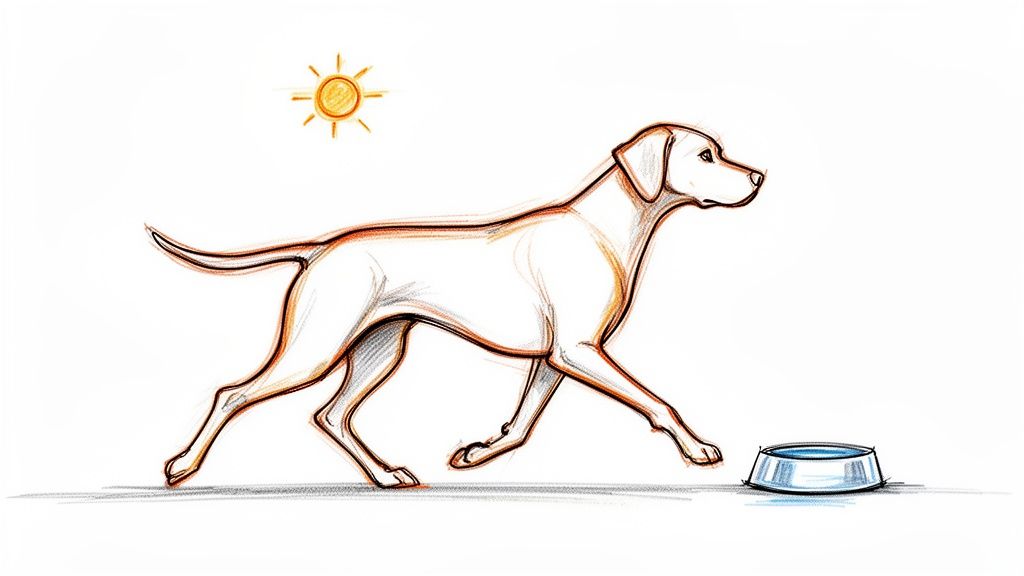
The Vizsla is a good hot-weather choice for people who want an athletic dog, not a lap-sized travel companion.
This breed’s short, sleek coat and lean build make warm climates more manageable than they are for heavily coated sporting dogs. Vizslas often suit active owners relocating to places where early morning exercise and evening activity are realistic year-round, such as Southern Europe, Australia, or parts of the American South and Southwest.
The travel catch with Vizslas
Vizslas are capable, but they are not low-maintenance. That is the trade-off.
A Chihuahua can settle into small spaces more easily. A Vizsla usually needs structure, routine, and planned outlets for energy. If an owner is moving internationally for work and expects the dog to cope with long indoor stretches, delayed deliveries, and unfamiliar boarding setups, this breed can get restless fast.
What works:
Cool-hour exercise: Walks and runs should happen early or late, not during peak afternoon heat.
Routine protection: Keep feeding, potty breaks, and rest times consistent during relocation.
Transit downtime planning: Pack enrichment items for hotel stops and waiting periods.
What does not work:
Improvised exercise plans: Hoping the dog will “burn off energy later” often backfires.
Long sun exposure after arrival: Even heat-suited breeds can overdo it when excited in a new environment.
Owners who plan hiking-heavy relocations should think beyond the flight itself. This practical guide to hiking with dogs is helpful for mapping activity around climate and terrain.
3. Rhodesian Ridgeback
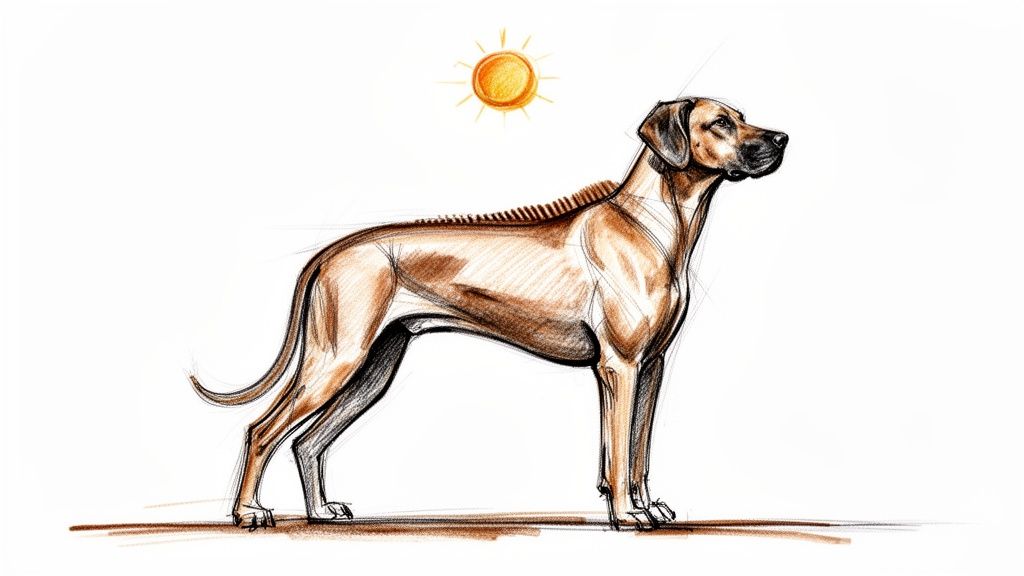
If you want a large dog built for hot conditions, the Rhodesian Ridgeback is one of the strongest candidates.
This breed traces back to southern Africa, and that history shows in its practical strengths. Verified breed data notes that Rhodesian Ridgebacks are among African-origin sighthounds optimized for hot climates, with a coat pattern that supports airflow and can reduce core temperature during exertion in very high heat (GCDogTraining on hot climate breeds).
Strong in heat, harder in logistics
Owners need to be realistic about this. Ridgebacks handle heat well, but they are not easy-move dogs.
Their size changes everything. Ground transport needs more room. Crate planning matters more. Housing options shrink in some cities. Some destinations and landlords also look more closely at large breeds, regardless of temperament.
For families relocating to hot parts of the Middle East, Australia, Southern Africa, Texas, or Arizona, a Ridgeback can be a great fit if the daily setup matches the dog. That means shade, secure outdoor access, climate-controlled rest, and enough room to stretch out after travel.
Large-breed travel fails most often when owners focus on flight booking first and crate, vehicle, and housing suitability second.
A lighter lifestyle can still work if the owner plans around open spaces and sensible exercise windows. For destination planning, dog-friendly beach access rules can be worth checking before arrival, especially in coastal hot-weather markets where outdoor routines matter.
4. Italian Greyhound
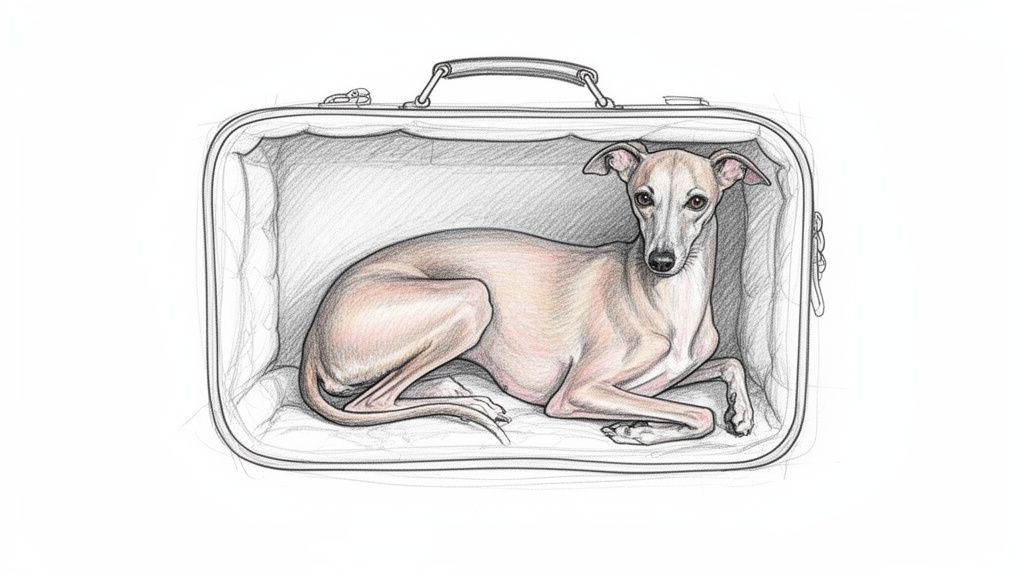
The Italian Greyhound is one of the easiest hot-climate companions to move internationally, provided the owner respects how delicate the breed can be.
These dogs are small, fine-boned, and lightly coated. That combination helps in warm weather and makes daily transport simpler, whether the trip involves taxis, ferries, apartment elevators, or temporary lodging during a relocation.
Best for owners who travel light
Italian Greyhounds suit digital nomads, business travelers, and expats who want a dog that does not demand a large exercise footprint. They are often a sensible match for Mediterranean, Caribbean, and Southeast Asian moves where indoor cooling is available and outdoor activity can be timed carefully.
The trap is assuming “small and warm-climate friendly” means rugged. It does not.
Italian Greyhounds usually need:
Well-padded carriers: Rough handling and cramped setups are poor matches.
Stable temperature control: Heat is easier for them than cold, but extremes in either direction can cause stress.
Quiet recovery time after transit: They often need decompression more than high-energy breeds do.
Owners who hop between short-term stays should sort lodging details before confirming transport. A beautiful route is of little use if the final property is a bad fit. This guide to dog-friendly lodging helps narrow down practical options.
A good real-world fit is the owner moving between warm urban hubs who needs a portable dog with relatively modest outdoor demands. A poor fit is the household that wants a rough-and-ready beach dog with nonstop outdoor time.
5. German Shorthaired Pointer
The German Shorthaired Pointer often shows up on best hot weather dog breeds lists because of its short coat and athletic build. That is fair, but this breed needs a big asterisk.
It can do well in warm climates. It can also run itself into trouble if owners treat heat tolerance as a free pass.
Verified background on this underserved angle notes that recent AVMA reporting points to rising heatstroke incidents in warm-adapted breeds, including popular active dogs such as German Shorthaired Pointers, because high drive can lead to overexertion in temperatures above 35°C without strong hydration habits (Cadet Pet on hot climate breed trends).
Good heat breed, high-management traveler
That matters during relocation. GSPs are often happiest with active families moving to outdoor-friendly places in Southern Europe, Australia, South Africa, or warm parts of North America. But the move only works if the owners have an actual exercise plan.
A GSP does not benefit from “we’ll figure it out after arrival.” That usually turns into frustration, leash pulling, poor settling in hotels, and too much activity during the hottest hours.
What works in practice:
Morning and evening exercise blocks
Reliable water access before and after activity
Outdoor space that allows movement without midday strain
Consistent routine during the moving period
What does not work:
Heavy exertion after flights
Long waits on tarmac-side ground transfers
Assuming a short coat alone solves heat risk
This breed can thrive in hot climates. It needs owners who know when to hit pause instead of full fetch.
6. Pharaoh Hound
The Pharaoh Hound is one of the most naturally heat-ready dogs in this group. Its look tells the story before the paperwork does. Fine coat, lean frame, and a body built for hot, dry conditions.
For owners moving to Mediterranean, North African, or Middle Eastern settings, the breed makes a lot of sense from a climate perspective. It generally handles warmth better than heavier-coated or bulkier breeds that struggle to shed heat.
Rare breed means more prep
The main challenge is not usually weather. It is planning.
Rare breeds often create extra friction because front-desk staff, local officials, housing contacts, and even some veterinary teams may be less familiar with them. That does not automatically make travel difficult, but it does mean owners should build in more time for document checks, identity consistency, and destination-specific review.
For Pharaoh Hounds, practical prep usually includes:
Early health certificate planning
Clear microchip and vaccination records
A carrier or crate setup that protects from both overheating and stress
Sensitive handling during long travel days
This is also a breed where owner expectations matter. Pharaoh Hounds are elegant and heat-suited, but many are sensitive dogs. A chaotic move with loud cargo areas, repeated handoffs, or abrupt routine changes can be hard on them.
For breeders, enthusiasts, and experienced owners, they can be an excellent hot-climate match. For first-time international movers who want a low-fuss process, there are easier choices on this list.
7. Basenji
The Basenji is one of the most interesting travel breeds on this list because it combines hot-climate suitability with a very particular temperament.
Its roots trace to central Africa, and it is often overlooked in mainstream hot-weather breed roundups. Verified background on this gap specifically highlights Basenjis as one of the breeds tied to an underserved issue in pet travel content, namely how hot-weather breed traits intersect with microchipping, rabies titers, parasite rules, and destination-specific import steps (ManyPets on hot climate breeds).
Independent dog, careful handling
Basenjis can be excellent for warm environments, especially where owners want a clean, lightly coated dog without heavy grooming needs. They may suit relocations to parts of Africa, the Middle East, Australia, or Southeast Asia.
Still, they are not push-button pets. Basenjis tend to be clever, independent, and sometimes escape-minded. From a travel angle, that means the smallest gaps in routine can turn into the biggest hassle.
With Basenjis, secure handling matters as much as climate planning.
Useful travel habits for this breed include:
Secure carriers and transfer points: Doors, zippers, and handoffs should be checked twice.
Behavior-aware vet prep: A veterinarian who understands independent breeds can flag stress points early.
Structured enrichment after arrival: Basenjis often settle better when they have predictable activity and mental work.
A good real-world fit is the experienced owner moving to a warm city and prepared to manage independence. A poor fit is the owner who wants a highly biddable travel companion and assumes small-to-medium size means easy compliance.
8. Ibizan Hound
The Ibizan Hound is a strong choice for owners relocating to hot coastal or Mediterranean-style climates and wanting a dog with athletic ability but less bulk than a giant breed.
This breed’s short coat and lean frame usually make warm conditions easier to manage than they are for heavier hunting dogs. In practical terms, Ibizan Hounds often fit well in Spain, Italy, Greece, the Gulf region, and other places where daily life revolves around timing outdoor activity around heat.
Best for space, not for chaos
An Ibizan Hound usually does best when the owner can offer safe room to move. That can be a secure yard, reliable access to larger exercise spaces, or a well-planned routine in a dog-friendly area. They are not ideal for a relocation where the dog will spend long stretches in cramped temporary lodging with no outlet.
That is the big trade-off. The breed handles warmth well, but relocation stress climbs when exercise drops and the environment becomes unpredictable.
Owners should focus on:
Secure outdoor options after arrival
Calm handling during transport transitions
Steady exercise rhythm once settled
Veterinary support if travel anxiety shows up
This is a particularly good breed for active individuals moving to warm places with outdoor culture. It is less appealing for people who want a compact, city-easy dog or who expect the dog to adapt to frequent last-minute changes.
9. Weimaraner
The Weimaraner can live well in warm climates, but it sits in the middle of this list for a reason. It is capable, not effortless.
Its short coat helps, and many active owners are drawn to the breed when moving to warmer regions with outdoor lifestyles. But a Weimaraner’s success depends heavily on the owner’s judgment. This is not a dog that should be tested by midday hikes, poor hydration habits, or cramped transport arrangements.
Warm-climate fit depends on lifestyle
For owners relocating to Southern Europe, Australia, or warm suburban areas with room to run, a Weimaraner can do well. For dense urban moves with limited outdoor access, the breed may become a handful quickly.
The usual travel issues are not just heat. They are size, stimulation needs, and separation-related stress. A dog that arrives under-exercised and overstimulated can make the first week rough for everyone.
A practical setup for a Weimaraner includes:
Large enough transport arrangements
Exercise only during cooler parts of the day
Water and shade at every outdoor stop
A realistic settling-in plan, not just an arrival date
If an owner already knows the breed well, warm climates can be a very good match. If the owner is choosing based mostly on looks and short coat, that is where trouble usually starts. Silver coats are lovely, but they do not fill an exercise schedule.
10. Miniature Pinscher
The Miniature Pinscher is a compact, confident option for warm-climate travel. It has a very short coat, small frame, and enough portability to make everyday movement easier than it is with medium or large breeds.
For digital nomads, retirees, and owners relocating between apartments in Southeast Asia, the Caribbean, or Mediterranean destinations, this breed often fits the logistics well. Small dog, smaller gear footprint, easier cooling management.
Small size helps, attitude still matters
Min Pins are not shy little ornaments. They tend to be alert, lively, and very aware of everything around them. That can be fun at home and a bit spicy during travel.
The practical advantage is straightforward. A small dog is easier to carry through hot transfers, easier to settle in climate-controlled spaces, and easier to monitor closely for stress. The practical downside is that some Miniature Pinschers become vocal, fidgety, or impatient in unfamiliar settings.
For travel days, the best approach is simple:
Keep water constantly available
Use a spacious, climate-controlled carrier
Build in regular rest stops on longer ground trips
Handle documents early so the final week stays calm
This breed often works well for owners who want a portable hot-weather companion with more spark than a typical toy dog. It works less well for people who expect every small dog to be naturally relaxed on the road.
Top 10 Hot-Weather Dog Breeds Comparison
Breed | 🔄 Travel complexity (planning & behavior) | ⚡ Transport efficiency (portability & logistics) | ⭐ Heat tolerance (suitability for hot climates) | 📊 Expected relocation outcome (impact) | 💡 Ideal use cases / key tip |
|---|---|---|---|---|---|
Chihuahua | Moderate, stress-sensitive and fragile; early docs recommended | Very high, extremely portable, cabin-friendly | High, adapted to heat but dehydrates quickly | Good if hydration, AC, and careful handling arranged | Apartment dwellers and frequent flyers, keep water accessible and prepare docs early |
Vizsla | High, separation anxiety and behavioral assessment advised | Moderate, athletic medium size needs space | High, efficient thermoregulation with short coat | Good with structured exercise and behavioral support | Active owners relocating to warm regions, schedule exercise around travel |
Rhodesian Ridgeback | High, large-breed logistics and breed-specific regulations | Low, requires large vehicle or professional shipping | Very high, thrives in extreme heat, even high temperatures | Very good when shipped with experienced handlers and early planning | Families in rural hot climates, verify destination regulations and carrier capacity |
Italian Greyhound | High, very fragile and anxiety-prone; strict climate control needed | Very high, extremely portable but needs padded carriers | High, excellent heat tolerance but vulnerable to stress | Fair–Good if padded, climate-controlled transport and anxiety management used | Frequent travelers and expats, use well-padded carriers and pre-travel calming plans |
German Shorthaired Pointer | High, very high energy; risk of heat stress if overexercised | Moderate, medium-large size; needs room for movement | Good, short coat but activity increases overheating risk | Good with exercise scheduling and destination space | Active families, ensure destination permits ample outdoor activity |
Pharaoh Hound | High, rare breed requiring specialized documentation and vets | Moderate, medium size, low grooming needs | Very high, evolved for desert climates | Good when breed-specific requirements addressed early | Breed enthusiasts relocating to Mediterranean/Middle East, begin health certificates well in advance |
Basenji | High, independent, escape-prone; limited vet familiarity in some regions | Moderate, small-medium but needs secure containment | High, well adapted to African heat | Variable, successful with secure housing and experienced veterinarians | Owners of unique breeds, plan secure travel enclosures and document behavioral needs |
Ibizan Hound | High, strong hunting instinct and high exercise needs | Moderate, athletic medium size; needs secure transport | High, Mediterranean adaptation with efficient cooling | Good if exercise routines and secure spaces maintained | Active outdoor owners, confirm destination exercise opportunities and secure areas |
Weimaraner | High, very high energy and separation anxiety; monitoring required | Low, large size needs spacious transport | Moderate, short coat but prone to overheating with intense activity | Good when destination offers space and exercise management | Active families with outdoor space, coordinate exercise schedule with travel timeline |
Miniature Pinscher | Moderate, small but travel-anxious and injury-prone | Very high, compact and highly portable | High, minimal coat supports heat tolerance | Good if hydration, climate control, and padding provided | Digital nomads and frequent flyers, use climate-controlled carriers and frequent breaks |
Your Pre-Travel Checklist for a Smooth Move
Relocating with a dog to a hot climate can go smoothly, but only if breed choice and travel planning line up. Owners often focus on one and ignore the other. That is where avoidable problems creep in.
The first step is matching the dog to the destination, not just to your wishlist. A Chihuahua or Italian Greyhound may be ideal for apartment living and frequent travel. A Rhodesian Ridgeback, Weimaraner, or German Shorthaired Pointer may suit a family better, but only if housing, exercise windows, and transport setup all support a larger, more active dog. A Basenji, Pharaoh Hound, or Ibizan Hound may be excellent in heat, yet still demand more behavioral planning than many owners expect.
Veterinarians and pet travel professionals should also look beyond basic breed lists. Heat tolerance is only part of the picture. Other practical questions are:
Can this dog travel in the most climate-controlled option available?
Does the owner understand the breed’s stress triggers?
Will the destination support safe exercise at cooler hours?
Are the health records, vaccine history, and identification details consistent?
Does the owner have a realistic arrival plan for the first week?
For pet owners, the simplest rule is this. Do not wait until flights are booked to think about heat management. By then, your room for adjustment is much smaller. Start with destination climate, travel method, lodging, and routine. Then choose the breed or make plans around the dog you already have.
For veterinarians, clear communication helps more than long lectures. Owners respond well to concrete instructions. Advise them on hydration, shaded rest, timing of outdoor activity, crate or carrier suitability, and the likely stress points for that specific breed. If the dog is highly active, sensitive, rare, or large, say so early. A little bluntness before travel can prevent a lot of chaos after landing.
One last point deserves repeating. Even the best hot weather dog breeds still need protection. Short coats, lean bodies, and warm-climate ancestry help, but none of them replace water, shade, sensible exercise timing, and careful transit planning. Heat-tolerant dogs are better equipped for warm places. They are not invincible.
Pick the dog that fits the move. Plan the move around the dog. That is the most reliable way to keep the process cool, calm, and a little less ruff.
Passpaw helps veterinary teams, pet owners, and travel professionals manage the messy side of pet relocation with less guesswork. If you need a clearer way to handle health certificates, changing destination requirements, and client communication for international pet travel, Passpaw gives you one place to organize the process and keep every document moving in the right direction.

More articles
From regulatory changes to best practices for veterinarians and pet owners, our resources keep you ahead of the curve.