Are you a team member in a veterinary practice?
Are you a pet parent planning a trip with your furry pal?
Hiking With Dogs: A Guide to Pawsome Adventures
Hitting the trails with your dog can be one of the best parts of pet ownership. But a great hike doesn't just happen—it starts with smart prep to make sure your pup is physically and mentally up for the challenge. This is about more than just grabbing a leash; it's about checking in with your vet, getting your dog in shape, and knowing their limits.
Preparing Your Pup for the Trail
Before you even think about the trailhead, a bit of prep work is in order. A safe hike is a fun hike, and that foundation is built at home. This means getting a green light on your dog's health and slowly building their fitness to prevent injuries and ensure they have just as much fun as you do.
The Pre-Hike Vet Check
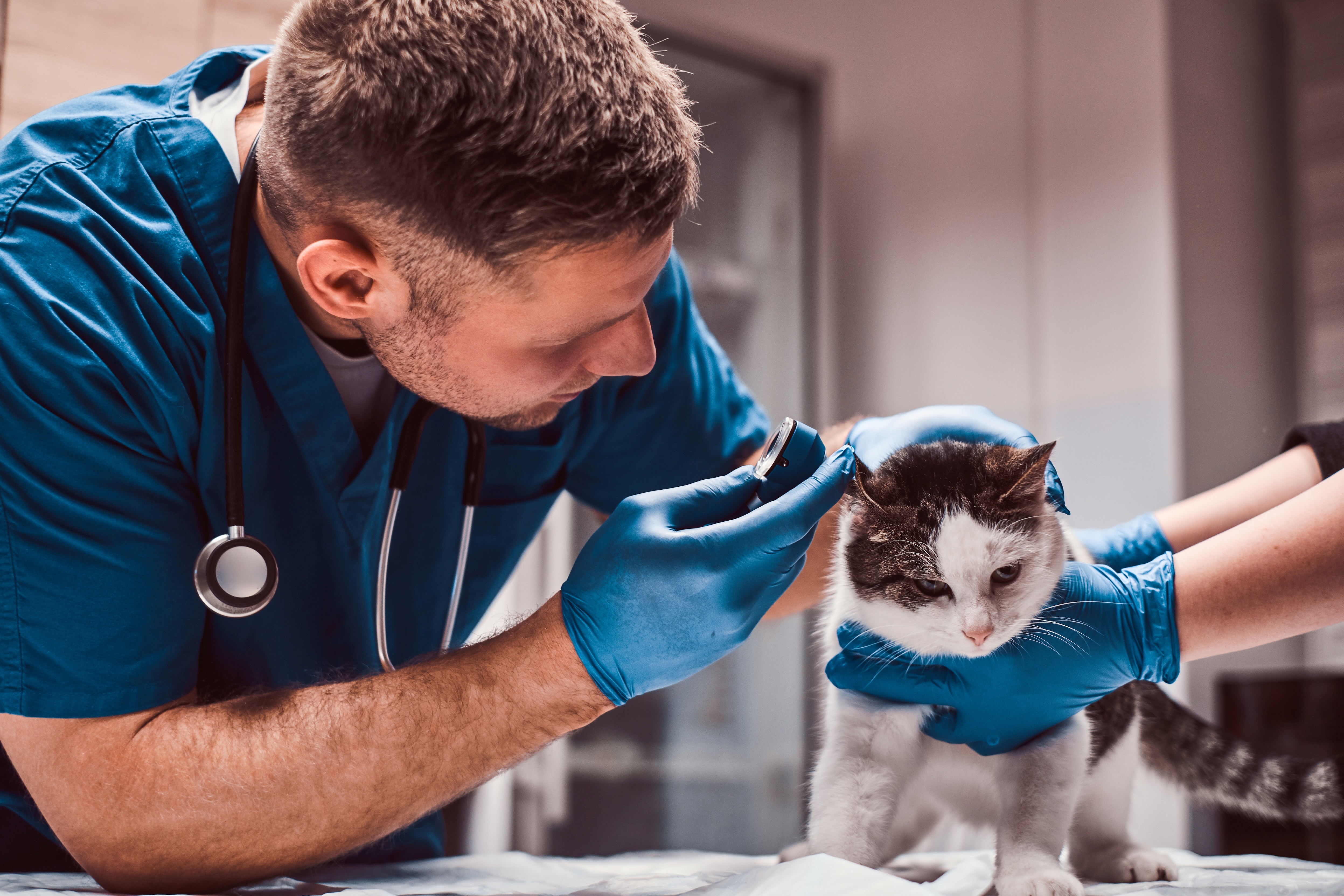
Your first stop should be your veterinarian's office for a trail-readiness check-up. This visit is important for confirming your dog is healthy enough for the physical demands of hiking. Your vet will check their heart, lungs, and joints to catch any issues that could become serious on a steep climb.
This is also the perfect time to talk about preventative care. Depending on where you plan to explore, your vet might suggest specific protections against common trail hazards.
Vaccinations: Make sure your dog is up-to-date on all core shots. Your vet may also suggest others, like one for Leptospirosis, a bacteria found in puddles, streams, and other water sources your dog might be tempted to drink from.
Parasite Prevention: Trails are hotspots for fleas, ticks, and heartworm-carrying mosquitoes. A reliable, vet-approved preventative is a must-have.
A quick vet visit provides peace of mind and is a great first step before you head outdoors. To get a better handle on what your dog might need, take a look at our guide on essential dog vaccinations.
Building Your Dog's Stamina
You wouldn't run a marathon without training, and your dog shouldn’t tackle a 10-mile trek without proper conditioning. The key is to start slow. Begin by gradually increasing the length and intensity of your daily walks.
From there, start introducing different terrain. Move from flat sidewalks to grassy parks, and then to small, hilly paths. This helps strengthen their muscles and, just as importantly, toughens up their paw pads for the rough ground you'll find on the trail. Always watch for signs of tiredness, like heavy panting or lagging behind, and let your dog set the pace.
Regular exercise is great for canine health, especially since many dogs are considered overweight or obese. Hiking is a fantastic way to help your dog maintain a healthy weight and improve their fitness.
Conditioning for Different Dogs
Every dog is different, and their fitness plan should reflect that. A young, high-energy Border Collie is going to have a very different training plan than a senior Pug.
Always consider your dog’s age, breed, and current fitness level. For instance, short-nosed (brachycephalic) breeds can have a hard time breathing on tough, uphill climbs. Older dogs, on the other hand, might need shorter, less demanding hikes to protect their joints. This tailored approach is what makes hiking a safe and enjoyable activity for any dog.
Essential Dog Hiking Gear Checklist
You wouldn't hit the trail without the right boots and a pack, and the same thinking applies to your dog. Gearing them up properly is one of the most important parts of planning. It’s what keeps them safe and comfortable and ensures you’re ready for whatever the trail throws your way. It's time to get this paw-ty started!
Packing for your pup isn’t just about a leash and a water bowl. It's about being prepared for the unexpected, which is the key to turning a potentially stressful situation into a minor, manageable one.
Core Gear for Control and Comfort
Let's start with the must-haves. These are the key pieces of your dog’s hiking kit, focused on keeping them secure, comfortable, and under your control in an unpredictable environment.
A Well-Fitting Harness: A standard collar is fine for a walk around the block, but a harness gives you far better control and safety on uneven terrain. Look for one with a back clip to avoid putting pressure on your dog's throat. A front clip can also be a great tool for dogs that tend to pull. Just make sure it fits snugly without chafing or limiting their movement.
A Sturdy 6-Foot Leash: This is your most important safety tool. A standard 6-foot leash is perfect for managing your dog around other hikers, wildlife, and potential hazards. Retractable leashes are not a good idea on the trail—they offer very little control and can easily snap or get tangled.
Of course, before you even think about gear, you have to be sure your dog is physically up for the adventure. This quick flowchart walks you through the initial decision-making process.
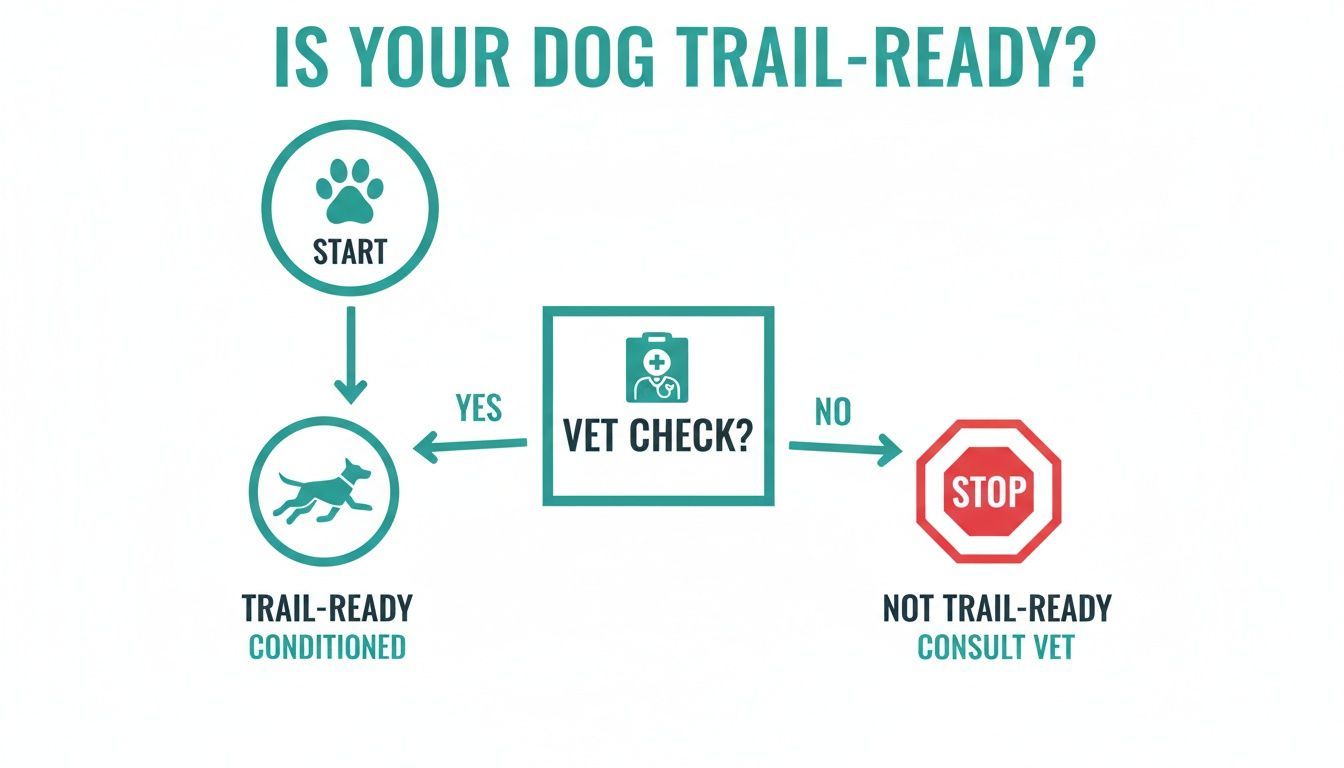
As you can see, a vet check is the first step. Only after getting the green light and working on conditioning should you start assembling your gear.
Your Dog's Trail-Ready Gear Pack
To make sure you don't forget anything, here's a quick-reference checklist covering all the essentials.
Category | Essential Items | Pro Tip |
|---|---|---|
Control | Well-fitting harness, 6-foot non-retractable leash | A harness with a handle on the back is great for helping your dog over obstacles. |
Hydration | Extra water, collapsible bowl | Freeze a portion of their water bottle before you leave for cool water later in the hike. |
Nutrition | High-energy treats or kibble | Pack more food than you think you'll need, just in case you're out longer than planned. |
Safety | Dog-specific first-aid kit, ID tags | Add a small bell to their collar to alert wildlife (and other hikers) to your presence. |
Cleanup | Poop bags | Tie a used bag to the outside of your pack until you find a trash can. Never leave it on the trail. |
Paw Protection | Dog booties or paw wax | Introduce booties at home first so your dog gets comfortable wearing them. |
This checklist covers your bases for most day hikes, ensuring you're prepared for common situations.
Hydration and Nutrition on the Move
Just like us, active dogs need plenty of fuel and water. Dehydration is a serious risk, particularly on warm days or challenging trails. The golden rule? Carry more water than you think you’ll need—for both of you.
A collapsible silicone bowl is a fantastic lightweight, space-saving option for water breaks. For fuel, pack some high-energy dog treats or even their regular kibble to keep their energy from crashing. For those longer treks, don't forget about your own needs; having some of the best freeze-dried food for backpacking on hand is a smart move for both convenience and nutrition.
Must-Have Safety and Cleanup Items
You've got the basics for control and fuel covered. Now, what about when things go wrong? Being prepared for minor injuries and knowing your cleanup duties is what separates a good hiking partner from a great one.
A dedicated doggy first-aid kit isn't a luxury; it's a very good idea. You can buy a pre-made one or build your own with essentials like antiseptic wipes, gauze, self-adhesive wrap, and tweezers for splinters or ticks.
And, of course, always pack poop bags. Lots of them. Following Leave No Trace principles means packing out everything you pack in, and that includes all dog waste. Leaving it on the side of the trail is not just messy; it’s harmful to the local ecosystem and water sources.
Some dogs, especially those with sensitive paws or those hiking on rocky, hot, or icy terrain, can really benefit from protective booties. Have your dog wear them around the house first to get used to the feeling.
If you're planning on extending your hike into an overnight adventure, your gear list will need to expand. For more tips on that, be sure to check out our complete guide on camping with dogs.
Choosing the Right Dog-Friendly Trails
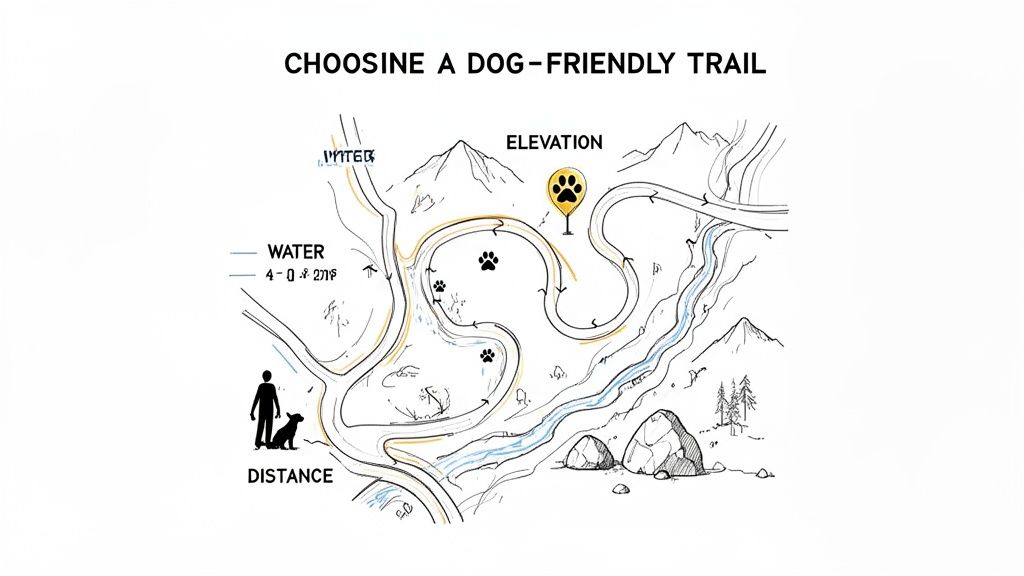
Finding the perfect trail isn't just about seeing a "Dogs Allowed" sign. It's about matching the hike to your dog's unique abilities. A trail that a young Border Collie would conquer with ease could be a serious challenge for a senior Basset Hound. Getting this right is the key to avoiding a situation where the hike is too tough for your four-legged partner.
It's no surprise that hiking with dogs has become so popular. Many people walk their dogs regularly, but a casual neighborhood stroll is worlds apart from a rugged mountain trail where your dog's paws are exposed to rough terrain and extreme temperatures.
Finding Trails That Welcome Paws
First things first: you need to confirm where dogs are actually welcome. Don't just assume. Many national parks, for instance, have strict rules, sometimes limiting dogs to parking lots or a few paved paths. On the other hand, national forests and state parks are often more accommodating. Always check the official park or trail website for the most current rules before you pack up the car.
Luckily, a few quick searches can save you a lot of guesswork. Great resources for finding dog-friendly routes include:
Trail Apps: Most popular hiking apps have a "dog-friendly" filter. Use it. It’s the fastest way to get a list of local options.
Official Park Websites: These are your source for leash laws, restricted areas, and seasonal closures.
Local Hiking Groups: Online communities and forums are fantastic for getting firsthand reports and real-world recommendations from other dog owners.
Matching the Trail to Your Dog
Once you have a list of potential spots, it's time to dig into the details. A trail's description tells a story about the experience you and your dog are about to have.
Look well beyond the total distance. A flat, two-mile walk along a river is a completely different physical test than a two-mile scramble up a rocky incline. If you're looking for specific ideas for scenic, dog-vetted paths, check out this guide to the Top 10 Dog Friendly Hikes in Colorado.
The most important part of planning is honestly looking at the trail against your dog's physical limits. Consider their age, breed, and fitness level. A short-legged Corgi might struggle with large rock steps, while a thin-coated Vizsla will get cold faster at high elevations.
Key Factors to Evaluate
Before you commit to a trail, you need to think like a trail scout. Looking at these key factors will help ensure the day is safe and enjoyable for everyone.
Terrain: What's the path actually made of? Is it soft dirt, sharp rock, or rough sand? Hot pavement or jagged rocks can burn or cut paw pads in a hurry.
Elevation Gain: A steep, steady climb will tire a dog out much faster than a flat trail of the exact same length. Don't underestimate the impact of "up."
Water Availability: Does the trail cross streams or run along a lake where your dog can safely drink? If not, you are their only water source, and you'll need to carry enough for both of you.
Thinking through these details ahead of time is what makes for fun, memorable adventures instead of frustrating or dangerous ones. You can find more tips and trail ideas in our deep dive into dog-friendly hiking trails.
Getting Trail Etiquette and Safety Right
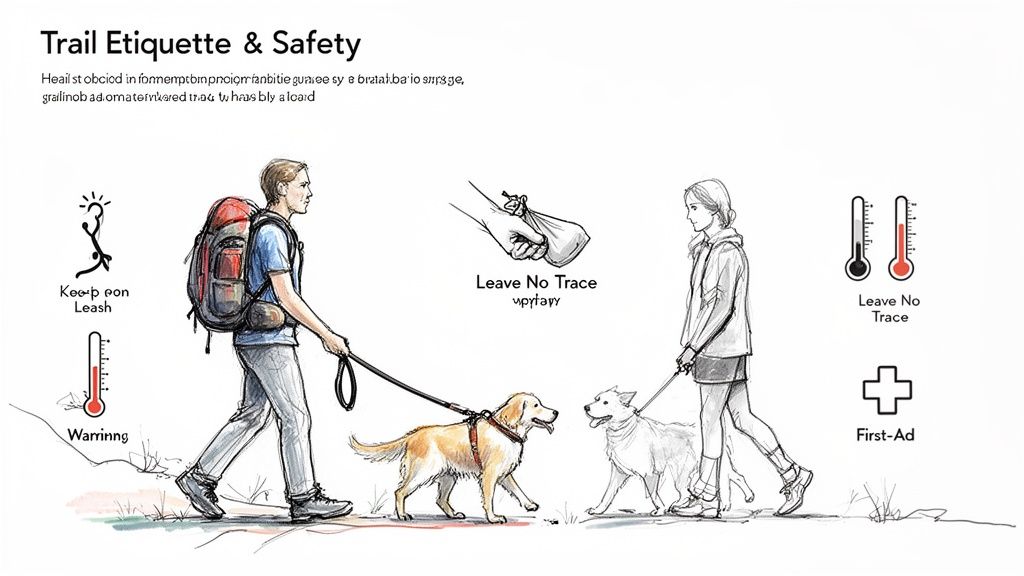
Being a good trail citizen is probably the most important part of hiking with your dog. It’s not just about being polite; it’s about making sure the trail is safe and enjoyable for everyone—that includes you, your pup, other hikers, their pets, and all the local wildlife.
Stick to Leave No Trace
The golden rule of the outdoors is to leave it better than you found it. When you have a dog with you, this comes with one very specific responsibility: you have to pack out all dog waste. Every time. This is not a drill, it's a doo-ty.
It's tempting to think of it as “natural,” but it’s actually a pollutant. Dog waste can contaminate water sources and spread diseases that are harmful to the native animals who call that trail home. So, always have poop bags on hand, and be prepared to carry the used ones all the way back to a proper trash can.
Nail Your Leash Etiquette
Even if your dog has a recall that’s the envy of the dog park, keeping them on a 6-foot leash is the smartest move for most trails. A leash keeps your dog from surprising other hikers, getting into a scuffle with another dog, or taking off after a squirrel and getting lost.
It’s also just a matter of respect. Not everyone is a dog person, no matter how friendly your pup is. On trails with blind corners or narrow ledges, an off-leash dog can quickly become a hazard. It's a good idea to look up the local rules, but many experienced hikers recommend using a leash even when it's not strictly required.
A tired dog is a good dog, but a leashed dog is a safe trail citizen. Keeping your pup close protects them from unexpected dangers and helps other hikers feel comfortable sharing the path.
How to Handle Trail Encounters
You’re going to run into other people out there. How you manage those moments says a lot. The second you spot other hikers—especially if they have kids or their own dog—step to the side of the trail and have your dog sit. It’s a simple move that gives everyone plenty of room and shows you’re in control.
Different encounters call for slightly different plays:
Horses: Riders on horseback always get the right of way. Horses can spook easily around dogs, so move well off the trail (preferably on the downhill side), keep your dog calm and quiet, and let them pass completely before you move on.
Other Dogs: Never let your dog rush up to another dog, even in a friendly way. Call out from a distance and ask the other owner if it’s okay for them to meet.
Wildlife: This is their home. Don’t let your dog chase or bother any animals you see. This is where a solid "leave it" command really pays off.
Keep an Eye Out for Distress
Your dog can’t use their words to tell you they’re tired or overheating, so you have to watch their body language. On a warm day, heat exhaustion is a real danger that can sneak up fast.
Stop and take a break if you notice any of these warning signs:
Heavy, frantic panting that doesn't calm down with rest
Thick, sticky drool
A bright red tongue and gums
Wobbling, stumbling, or general unsteadiness
If you see these signs, your hike is over for the moment. Find shade, get them to drink some cool (not ice-cold) water, and wet a bandana or towel to lay on their neck, belly, or groin. A little awareness goes a long way in keeping a great day from turning into a scary emergency.
Handling Cross-Border Hikes and Travel
Thinking about a hike that takes you and your dog across a state line, or even into Canada? This is where your planning needs to get serious. It seems simple enough, but crossing borders with a pet brings up a whole set of rules that can shut down your trip before it even starts.
It's easy to think a quick hop over the border to a trail is no big deal. But to the authorities, any animal crossing a state or international line is often seen as an importation. That means they might need proof your dog is healthy and won’t pose a risk to local animals. This isn't just red tape; it's an animal health measure.
Understanding the Paperwork
The document you'll hear about most is the Certificate of Veterinary Inspection (CVI), often just called a health certificate. This is an official form your accredited veterinarian fills out after a full exam. It confirms your dog is free from contagious diseases and current on key vaccinations, especially rabies.
Don’t get caught in a documentation bind. Rules can be surprisingly specific and vary from one place to another. Starting the process early with your vet is the single best way to make sure your cross-border hike goes smoothly.
The exact requirements can feel like a moving target. For instance:
Some states may ask for a CVI issued within 30 days of your arrival.
International trips, even a day hike into Canada, often have more hoops to jump through, like getting an endorsement from a federal agency like the USDA.
Certain areas might require specific parasite treatments, which have to be given and documented by your vet on a strict timeline before you travel.
This is precisely why you can't just "wing it." Being turned away at a border crossing because of a missing or incorrect form is a huge headache, and it’s completely avoidable with a little prep.
Your Vet Is Your Co-Pilot
Trying to figure out these rules can feel overwhelming, but you're not in it alone. Your veterinarian is your most important partner in this process. Go ahead and schedule a travel consultation way ahead of your hike—think weeks for domestic travel and several months for anything international.
Bring your full itinerary to the appointment. This allows your vet to research the specific entry rules for every state or country on your route. They’ll check that your dog's vaccinations are up to snuff and help map out a timeline for the necessary exams, treatments, and paperwork. To get a clearer picture of what's involved, you can learn more about the vet health certificate process in our detailed guide. A little bit of planning here makes the whole journey far less stressful.
Common Questions About Hiking With Dogs
Even the most seasoned hikers have questions when bringing a four-legged friend along. Let's clear up a few of the most common ones so you can hit the trail with confidence.
How Far Can My Dog Realistically Hike?
This is the million-dollar question, and the honest answer is: there's no magic number. It completely depends on your individual dog.
I've seen young, athletic Border Collies happily trot for a 10-mile day. On the other hand, for a senior pug or a young puppy, a gentle 1-mile loop might be the perfect adventure.
The best way to figure it out is to start small and observe. Take your dog on short, easy hikes and watch them closely for signs of tiredness—like heavy panting, slowing their pace, or starting to lag behind.
As their fitness and stamina build, you can gradually add distance and a bit more challenge. The real goal is a fun, safe outing together, not hitting a specific mileage target.
What Are the Most Important Commands for Hiking?
Solid obedience is your most important piece of safety gear. If you only have time to practice a few things, focus on the commands that keep your dog and everyone else on the trail safe.
"Come" or "Here": Your recall should be rock-solid. This is your go-to safety net for calling your dog away from wildlife, other hikers, or unexpected hazards.
"Leave It": This is key for stopping your dog from eating discarded trail snacks, mysterious plants, or something much worse.
"Wait" or "Stay": Incredibly useful for pausing at trail crossings, letting others pass safely, or navigating a tricky section of the path without your dog pulling ahead.
Get these commands down cold in a familiar park before you're surrounded by the exciting smells and distractions of a new trail.
The most important safety feature you have on any hike isn't a piece of gear; it's your dog's training. A reliable recall is key to keeping your dog, other hikers, and wildlife safe.
What Should I Do If My Dog Gets Injured?
First things first: stay calm. A panicked owner can make a bad situation worse. Check on your dog from a safe distance, remembering that even the friendliest dog might snap if they're in pain and scared.
This is where your dog-specific first-aid kit comes in. For minor issues, you can use it to stop bleeding with gauze or clean out a small cut.
For anything more serious, your job is to stabilize your dog and get them to a vet. Before you even leave home, you should have the number and address of the nearest emergency vet clinic programmed into your phone. If your dog can't walk, you need a plan and the ability to carry them out.
Planning pet travel, even for a hike across state lines, can get complicated quickly. Passpaw simplifies the entire process by helping veterinarians manage health certificates and travel documents, ensuring all requirements are met accurately and on time. Learn more about how to make pet travel compliance easier at https://passpaw.com.
More articles
From regulatory changes to best practices for veterinarians and pet owners, our resources keep you ahead of the curve.