Are you a team member in a veterinary practice?
Are you a pet parent planning a trip with your furry pal?
A Vet-Approved Guide to Safely Sedate a Dog
When you hear the word "sedation," it's easy to jump to conclusions. But sedating a dog isn't about "knocking them out." It’s a carefully planned medical step, taken by a veterinarian, to make a dog calm, sleepy, and less aware of a stressful or painful situation.
It’s a tool used to ensure safety and dramatically reduce stress during necessary events like vet exams, grooming, or travel preparations.
When Vets Recommend Sedating a Dog
No pet owner likes seeing their dog in distress. The thought of using medication can feel a little scary, but sometimes, it’s truly the kindest and safest path fur-ward for everyone involved.
The decision to sedate a dog is never made lightly. It’s not a substitute for training but a crucial tool for specific situations where a dog's well-being is the number one priority. This controlled state of calm makes essential care possible for dogs who are simply too frightened, anxious, or in pain to be handled safely.
Medical and Diagnostic Procedures
This is probably the most common reason for sedation. A busy, noisy vet clinic can send a dog's anxiety through the roof, making even basic procedures feel ruff.
Radiographs (X-rays): Getting a clear X-ray means the dog has to be perfectly still. For an injured or scared animal, sedation is a gift—it allows for proper positioning without causing more pain or stress.
Minor Surgeries: Think about procedures like removing a small lump, stitching a wound, or performing a deep ear cleaning. Sedation keeps the dog comfortable and still, allowing the vet to work with precision and safety.
Grooming and Nail Trims: For some dogs, the hum of clippers or the restraint needed for a nail trim is terrifying. When positive reinforcement and gentle handling aren't enough, mild sedation can turn a traumatic ordeal into a peaceful nap.
Managing Severe Anxiety and Phobias
Sometimes, a dog's fear is so overwhelming it becomes a danger to themselves or others. In these moments, sedation is a form of compassionate care.
Dogs with intense phobias—like those related to thunderstorms or fireworks—can become destructive or try to escape, putting themselves at risk of injury. A vet might prescribe an oral sedative to be given at home before a predictable event to help them cope. This isn't a long-term solution, but a way to manage acute, high-stress situations.
The need for this kind of stress management is growing. The global animal sedative market is projected to climb from USD 240.7 million in 2025 to USD 432.7 million by 2035, with dogs making up a massive 40% of that demand.
A veterinarian's goal is to minimize fear, anxiety, and stress for their patients. Sedation is a powerful tool that, when used responsibly, allows them to provide necessary care while protecting a dog's emotional well-being.
Facilitating Pet Travel Preparations
Getting a dog ready for a trip, especially an international move, often involves a series of vet visits and exams. For an already nervous dog, this can be incredibly overwhelming. If you're facing a move, our guide on relocating a dog is a great resource.
A vet might suggest mild sedation to complete the thorough physical exam needed for an international health certificate. This ensures the dog stays calm, which allows for an accurate assessment without making their anxiety worse. This is where platforms like Passpaw really shine, by organizing all the complex paperwork ahead of time. A more efficient process means fewer stressful, last-minute vet appointments, which helps lower the overall stress for both the pet and the owner.
The Essential Pre-Sedation Health Checkup
Before your vet even considers reaching for a sedative, they’ll perform a thorough health checkup. Think of it as a safety briefing before a flight—it’s a non-negotiable step designed to ensure everything goes as smoothly and safely as possible for your dog.
This isn't just a quick once-over. It’s a detailed assessment to make sure your pup is a good candidate for sedation and to tailor the medication plan specifically to them. This is one of the most important parts of the plan to sedate a dog safely.
To help you understand the initial decision-making process, this flowchart shows how vets determine if sedation is the right path for a stressed dog.
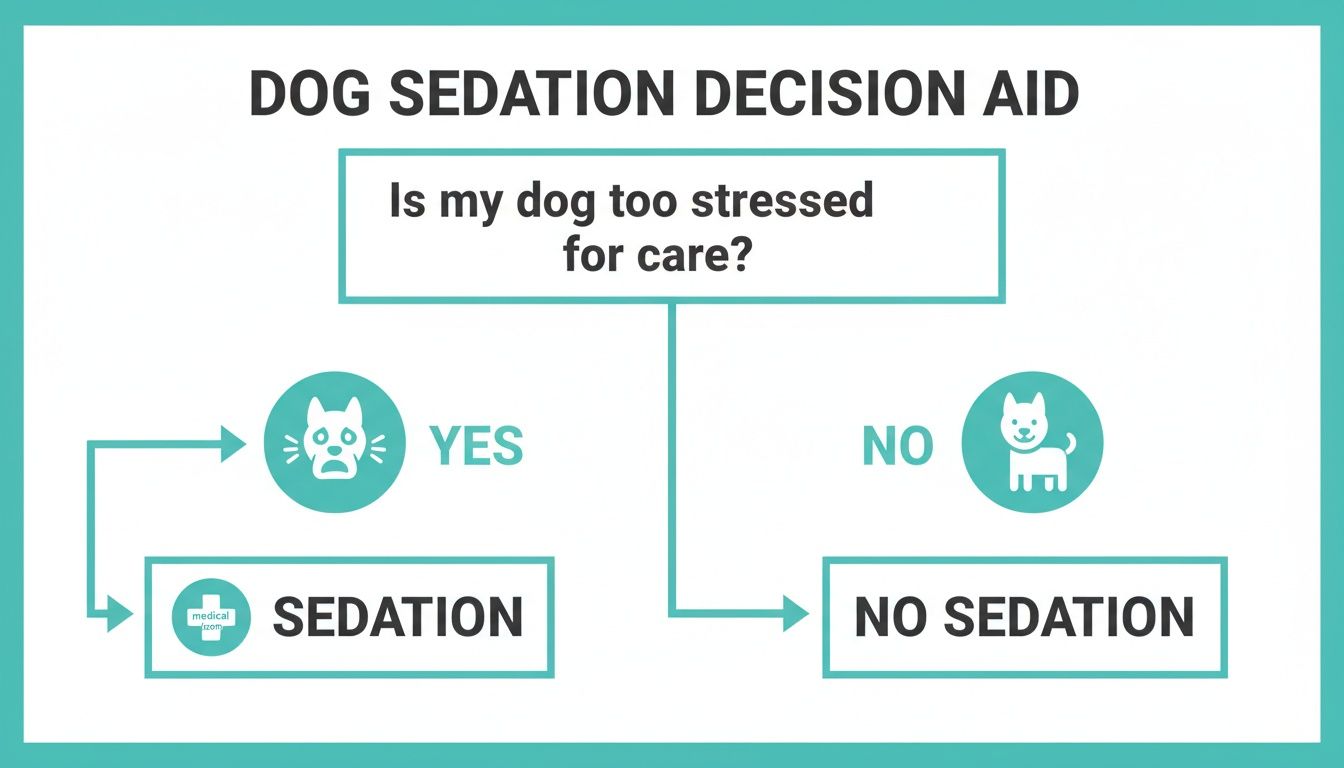
The key takeaway is clear: sedation is a medical tool reserved for situations where a dog's stress levels prevent necessary or safe care.
The Hands-On Physical Exam
The first step is always a physical exam. Your vet will use their hands and a stethoscope to get a clear picture of your dog's current health. This is far more than just a friendly pat on the head; it’s a systematic check of their vital systems.
Your vet will:
Listen to the heart and lungs: They’re checking for any murmurs, irregular heartbeats, or abnormal lung sounds that could indicate an underlying condition.
Check vital signs: This includes temperature, pulse, and breathing rate to establish a baseline for your dog's normal state.
Assess gum color and hydration: Pale gums or poor skin elasticity can signal issues like anemia or dehydration, which should be addressed before sedation.
This hands-on approach helps your vet catch potential issues that might not be obvious otherwise. It’s all about creating a complete health profile before moving forward.
Understanding the ASA Score
During the exam, your vet will assign your dog an ASA score. The ASA (American Society of Anesthesiologists) score is a simple grading system from I to V that classifies a patient's overall health and risk level.
ASA I: A normal, healthy patient.
ASA II: A patient with mild systemic disease that is well-controlled.
ASA III: A patient with severe systemic disease that is not life-threatening.
ASA IV: A patient with severe systemic disease that is a constant threat to life.
ASA V: A very sick patient not expected to survive without the procedure.
This score is a critical piece of the puzzle. It helps the veterinary team choose the safest drugs and determine the level of monitoring your dog will need. A young, healthy dog (ASA I) getting a nail trim will have a very different sedation plan than an older dog with heart disease (ASA III).
The ASA score isn't just a number; it's a vital communication tool. It ensures the entire veterinary team understands your dog's health status at a glance, allowing them to provide the safest, most personalized care possible.
The importance of this health status assessment is significant. A major UK study of over 157,000 dogs found that pre-procedure health was a major predictor of risk. Dogs with higher ASA scores had a much greater chance of complications; for example, ASA III dogs faced 4.8 times the risk compared to their healthier counterparts. This is why this check is so critical.
The Role of Pre-Sedation Blood Work
Depending on your dog’s age, health history, and ASA score, your vet will likely recommend pre-sedation blood work. While it might seem like an extra step, the information it provides about your dog’s internal health is invaluable.
Blood tests specifically check the function of the liver and kidneys. These organs are the body’s processing plants—they are responsible for breaking down and clearing sedative medications from your dog’s system. If they aren’t working properly, the drugs could last longer than expected or have stronger effects.
Knowing your dog's vaccination status is also important for their overall health profile; you can check out our guide on essential dog vaccinations to learn more.
This blood work acts as a final safety check, ensuring your dog's body is ready to handle the medication. It's all part of the commitment to making the decision to sedate a dog as safe as it can possibly be.
Understanding Different Types of Dog Sedatives
When it comes to sedating a dog, it helps to understand the options your veterinarian might bring up. Think of your vet as a specialist who creates a custom "recipe" of medications tailored specifically to your dog's health, temperament, and the situation at hand.
This is absolutely not a do-it-yourself menu, but knowing the basics can take a lot of the mystery out of the process. Sedatives generally fall into two buckets: oral medications you might give at home, and injectable ones used at the clinic for a much faster and more controlled effect.
Oral Sedatives for At-Home Use
For predictable events like a vet visit or a nail trim for a pup who’s known to get anxious, your vet may prescribe an oral medication. You'll often give them to your dog an hour or two before heading to the clinic.
The goal isn't to knock them out, but to have them arrive already feeling calm. This makes the entire experience less stressful from the get-go. It's far easier for the vet team to handle a relaxed dog than one who is already on high alert—a real game-changer for pets with situational anxiety.
A few commonly prescribed oral sedatives include:
Trazodone: An anti-anxiety med that works by increasing serotonin in the brain, which helps bring on a sense of calm. It's a popular choice for situational anxiety.
Gabapentin: Originally used for seizures and pain, Gabapentin also has a great calming effect, especially when used with other sedatives. It's very helpful for dogs who are both anxious and in pain.
Alprazolam (Xanax®): This is a type of medicine that can be a lifesaver for dogs with moderate to severe panic, like you might see during a thunderstorm.
Your vet’s prescription is created just for your dog. The dose, timing, and specific medication are all based on their weight, health profile, and anxiety level. Never give your dog another pet's prescription or try to guess the dosage.
Injectable Sedatives for In-Clinic Use
When a procedure calls for a deeper or more immediate level of sedation, your veterinarian will turn to injectable medications. These are given as a shot, either into the muscle (IM) or a vein (IV), and they get to work much quicker than pills. This method gives the vet precise control over both the depth and duration of the sedation.
Injectable sedatives are necessary for any procedure that requires the dog to be completely still—think taking X-rays, stitching a wound, or doing a deep ear cleaning. The vet team can monitor your dog's vitals closely as the medication takes effect and throughout the entire time they're sedated.
Your vet will almost always use a combination of drugs to get the best results with the lowest possible dose of each. It's both safer and more effective. Some common injectable options are:
Acepromazine: A classic tranquilizer that gives mild to moderate sedation. It calms a dog down but offers no pain relief, so it’s usually paired with a pain medicine.
Dexmedetomidine: A powerful sedative that also provides pain relief. One of its biggest advantages is that it can be reversed with another injection (atipamezole), which means a quick and smooth recovery once the procedure is finished.
Butorphanol: An opioid that delivers both sedation and pain relief, making it a fantastic choice for procedures that are expected to be uncomfortable.
Midazolam: A medicine similar to Alprazolam but in an injectable form. It’s often used in a drug cocktail to boost sedation and curb anxiety.
Choosing the right combination is both an art and a science, and this is where your vet's experience is crucial. They'll look at your dog’s ASA score, the specific procedure, and any underlying health issues to build the safest plan. This tailored approach ensures your dog gets exactly what they need—no more, no less—for a safe and low-stress experience. It is definitely not a one-size-fits-all situation.
What to Expect During the Sedation Appointment
Bringing your dog in for a sedation appointment can be nerve-wracking. We get it. Handing over your furry family member isn't easy, but understanding what happens in the treatment area can give you some much-needed peace of mind.
This isn’t just a quick shot and a nap. It’s a careful, multi-step process managed by a professional team dedicated to your dog's safety from the moment they arrive until they’re back in your arms.
Arrival and Final Checks
When you arrive, the veterinary team will perform a few final but crucial checks. Even with a recent pre-sedation exam, they'll do a quick look-over to ensure nothing has changed. They’ll also get one last, precise weight—this is non-negotiable for accurate drug dosing.
The team will also review the plan with you one more time. This is the perfect moment for you to ask any last-minute questions and confirm you're clear on the post-sedation care instructions.
Creating a Calm Environment
Once your dog is brought to the treatment area, the team’s priority shifts to creating a calm, quiet space. They know the clinic can be overstimulating, so they'll often move your dog to a separate room, away from the daily clinic noise.
This isn’t just about being kind; it's a critical safety step. A calm dog may require a lower dose of medication for sedation to be effective, and a lower dose is generally safer. The team uses low-stress handling techniques, speaks in quiet tones, and moves slowly to keep your dog feeling secure.
Creating a tranquil atmosphere is the first step in a successful sedation. A dog that feels secure will drift off to sleep more smoothly, making the entire procedure safer and more effective.
Sedative Administration and Continuous Monitoring
After your dog is relaxed, the veterinarian will administer the sedative. This is usually an injection into a muscle (IM) or vein (IV), which allows for a controlled and rapid effect. You can expect your dog to become drowsy over several minutes—it's a gentle drift-off, not an abrupt "lights out."
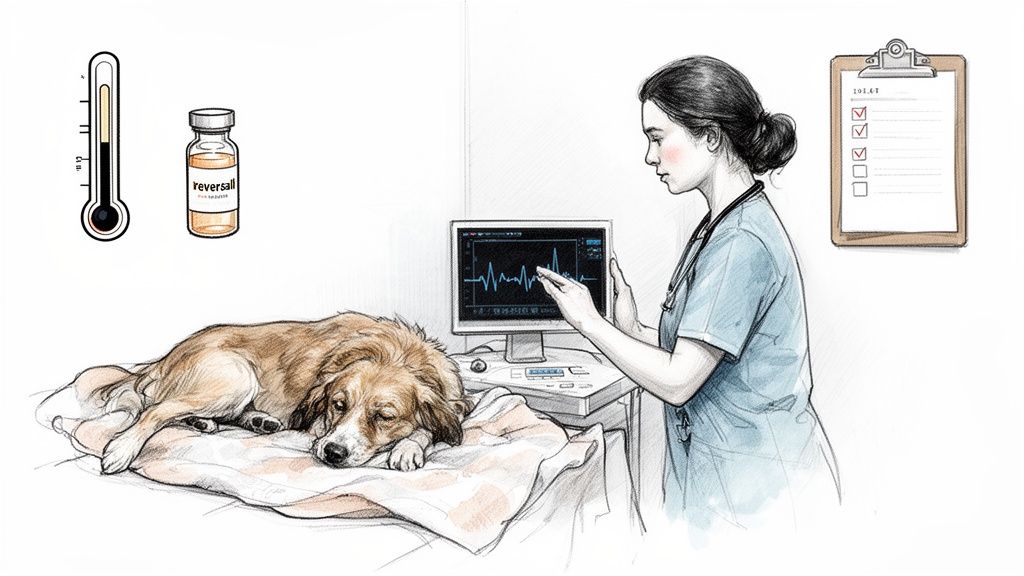
Now, the most important work begins: continuous monitoring. A dedicated veterinary nurse or technician will be by your dog's side for the entire duration, keeping a close watch on every vital sign.
They meticulously track:
Heart Rate and Rhythm: Using a stethoscope or an electrocardiogram (ECG) to ensure the heart is beating steadily.
Respiratory Rate: Watching the chest rise and fall to confirm breathing is deep and regular.
Body Temperature: Sedation can cause a dog's temperature to drop, so they are often kept on warming blankets.
Oxygen Levels: A small device called a pulse oximeter, usually clipped to the tongue or ear, measures blood oxygen saturation.
This constant vigilance is absolutely essential for safety. A massive global study of over 55,000 dogs found that a staggering 81% of anesthetic-related deaths occur after the procedure, highlighting why this intensive monitoring is so critical. You can explore the full study for more insights on anesthetic safety in dogs on pubmed.ncbi.nlm.nih.gov.
The Power of Reversal Agents
For certain sedatives, like Dexmedetomidine, vets have an incredible tool in their toolkit: reversal agents. These are injectable medications that can quickly and safely counteract the sedative's effects.
Once the procedure is complete, the vet can give the reversal agent, and your dog will start to wake up within just a few minutes. Think of it as an "undo" button for sedation. This leads to a much smoother, faster, and more predictable recovery, getting your pup back on their paws and home with you sooner. This option adds a powerful layer of safety and control, which is why these reversible drugs are a staple in modern veterinary medicine.
Caring for Your Dog After Sedation
Once the procedure’s done and your vet gives you the go-ahead, your role as the recovery nurse begins. Bringing a groggy, wobbly pup home calls for a bit of preparation and a whole lot of TLC. The next few hours are all about creating a safe, comfortable space for them to shake off the lingering effects of the sedative.
Your primary job is to keep them safe from injury, make sure they're comfortable, and help them get back to their normal, tail-wagging selves as smoothly as possible. A few simple steps can make all the difference.
Creating a Safe Recovery Zone
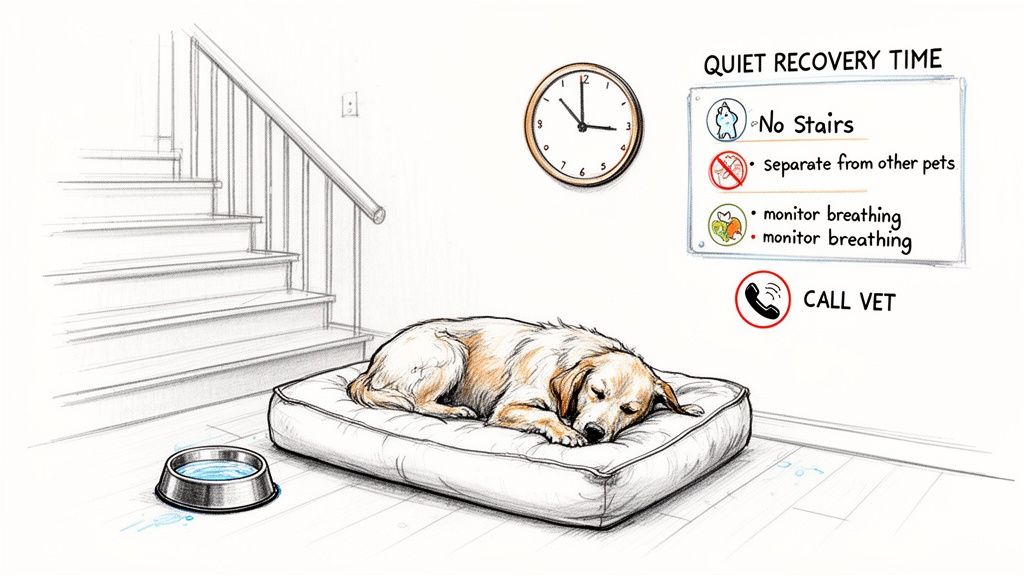
For the first few hours, expect your dog to be uncoordinated and very sleepy. Their balance will be off, turning everyday things like stairs and furniture into genuine hazards. Your first task is to set up a safe, quiet recovery den on the floor.
This space should be:
Away from stairs and furniture: Block off any access to stairs and prevent them from attempting to jump on the couch or your bed. An accidental tumble could cause real harm.
In a quiet part of the house: Keep them away from the normal hustle and bustle. Loud noises and lots of activity can be confusing or stressful for a disoriented pup.
Separate from other pets and kids: Even the most patient dog can be irritable or unpredictable while groggy. Give them their own space to rest without being bothered.
A comfy bed or even just a pile of blankets on the floor works perfectly. If your dog is crate-trained, their crate can be a fantastic, secure den for recovery. Our guide on travel crates for dogs has some great tips on making a crate a comfortable space, which applies just as well at home.
Food, Water, and Potty Breaks
Your vet will give you specific instructions for food and water, but here are some general rules of thumb. Most dogs can have a small amount of water a couple of hours after arriving home.
When it comes to food, think small. Sedatives can sometimes trigger nausea, and a full-sized meal might just lead to vomiting. It’s best to offer about a quarter of their normal meal and see how they handle it. If they keep it down, you can offer another small meal a few hours later.
Potty breaks absolutely require your supervision. Your dog will be unsteady on their feet, so you'll need to support them with a leash or harness. Don't let them wander the yard alone until they've fully regained their sea legs.
Recovery Tip: Don't be alarmed if your dog seems to have a "hangover" for up to 24 hours. Lingering grogginess, some mild unsteadiness, and being extra sleepy are all completely normal parts of the process.
Watching for Post-Sedation Red Flags
While most dogs recover from sedation without any issues, it’s important to know what to look for. Keep a close eye on your pup for the first 12-24 hours.
Contact your veterinarian immediately if you notice any of these warning signs:
Prolonged, extreme grogginess: If your dog is still very out of it and difficult to wake up more than 8-12 hours after coming home.
Vomiting more than once: A single episode of vomiting can happen, but repeated vomiting is a definite cause for concern.
Pale gums: Gums should be a healthy pink. If they look pale or white, it can be a sign of poor circulation.
Difficulty breathing: Any labored breathing, wheezing, or excessive panting warrants an immediate call to your vet.
Inability to stand or walk: If their coordination doesn't start improving after a few hours and they remain unable to support their own weight.
Your vet wants to hear from you if you're worried. When you need to sedate a dog, it's always better to be safe than sorry. A quick phone call can provide much-needed peace of mind or get your pet the help they need right away.
Using Sedation for Pet Travel: What You Must Know
The idea of sedating a dog for travel, especially by air, is a conversation that comes up a lot. While it might seem like a kind way to help an anxious pup handle a long flight, it’s a practice that comes with significant—and frankly, dangerous—risks.
Let’s be crystal clear: most airlines and the American Veterinary Medical Association (AVMA) strongly advise against sedating dogs for air travel. This isn't just a casual suggestion; it's a serious safety warning. When a plane reaches high altitudes, the changes in air pressure and lower oxygen levels can have a concerning effect on a sedated dog.
The Risks of In-Flight Sedation
Sedatives naturally lower a dog's heart rate and breathing. At 30,000 feet, where the air is thinner, this effect is amplified. A sedated dog’s body may struggle to get enough oxygen, which can lead to serious respiratory or cardiovascular problems. It’s a dangerous gamble.
Another major concern is their ability to react. If the crate shifts during turbulence, an alert dog can brace themselves. A sedated dog can’t, which dramatically increases the risk of injury. They also can’t regulate their body temperature as effectively, making them vulnerable to overheating or becoming too cold in the cargo hold.
The AVMA’s position is firm: “In-flight sedation can increase the risk of heart and respiratory problems.” Airlines often won't even accept a dog that appears sedated, as it's impossible for their staff to know if the dog is sleeping peacefully or is in medical distress.
When Is It Okay to Sedate a Dog for Travel?
So, if in-flight sedation is off the table, does that mean sedatives have no place in travel prep? Not at all. The conversation just shifts from sedating during travel to using medication for specific, supervised events before the trip.
This is where a vet might responsibly prescribe a mild sedative or anti-anxiety medication. Think about these scenarios:
The Pre-Travel Vet Exam: An extremely anxious dog may need to be mildly sedated to safely undergo the thorough examination required for their travel paperwork. A calm dog allows for an accurate assessment of their heart, lungs, and overall health.
Car Sickness and Anxiety: For a long road trip, a veterinarian might prescribe medication to help a dog who suffers from severe motion sickness or panic attacks in the car.
The key difference here is that these situations happen on the ground, under direct supervision, and without the added stress of high altitude. It’s about using medication to make necessary steps easier, not to cope with the flight itself.
This is also where planning ahead becomes your best friend. Navigating the complex world of pet travel paperwork can be incredibly stressful, often leading to last-minute rushes that make owners consider risky options. Using a platform that streamlines the process, like Passpaw, can significantly reduce that pre-travel stress. When you're organized, you reduce the need for stressful vet visits, which is better for everyone. To get a handle on the paperwork involved, you can learn more about the vet health certificate for travel in our detailed guide.
Ultimately, the goal is a safe and smooth journey. The best way to prepare an anxious dog for travel is through positive reinforcement and crate training—not medication during the flight.
Got Questions About Sedating Your Dog?
Deciding whether to sedate your dog brings up a lot of questions. It’s completely normal to feel cautious. We’ve gathered some of the most frequent concerns we hear from pet owners to give you clear, straightforward answers.
"Can I Just Use Benadryl to Sedate My Dog?"
This is one of the most common questions we get, and the short answer is no. While it’s true that Benadryl (diphenhydramine) can make some dogs drowsy, it's not a reliable or safe choice for true sedation. In some dogs, it can even do the complete opposite and cause hyperactivity.
More importantly, Benadryl offers zero pain relief. You should never give your dog any over-the-counter medications without direct guidance from your veterinarian. Your vet has access to prescription options that are far safer and more effective for your dog’s specific situation.
How Much Does It Cost to Sedate a Dog?
There’s no single price tag for sedation; the cost can vary quite a bit based on a few key factors.
Your Dog's Size: Larger dogs naturally require a higher dose of medication, which will affect the cost.
Type of Sedatives Used: The specific drugs chosen for the sedation plan will influence the price.
Level of Monitoring Required: A light sedation for a quick nail trim is very different from a deep sedation that involves pre-procedure bloodwork and a dedicated technician monitoring your pet's vitals.
Your Geographic Location: Veterinary costs simply differ from one region to another.
The best way to avoid any surprises is to ask your vet for a detailed estimate before you agree to the procedure. This lets you focus on what matters most—your dog's well-being.
Are There Any Natural Alternatives to Sedation?
Absolutely! For dogs with mild to moderate anxiety, exploring non-medical options is a fantastic place to start. These are especially useful for managing predictable, situational stress, like car rides or thunderstorms, without the need for medication.
Some great alternatives to discuss with your vet include:
Calming pheromone diffusers, like Adaptil, which mimic the comforting pheromones mother dogs produce.
Nutritional supplements that contain calming ingredients like L-theanine.
Pressure wraps (like a ThunderShirt) that provide a gentle, constant pressure, which has a calming effect on many dogs.
And never underestimate the power of positive reinforcement training. Working with a certified professional can do wonders for building a dog’s confidence and rewiring their response to fearful situations over time.
Navigating the complexities of pet travel can feel overwhelming, but the right support makes all the difference. Passpaw is a platform designed to help veterinary practices manage the intricate paperwork for international health certificates. This streamlines the entire process, making it smoother for your vet clinic and far less stressful for you and your pet. Find out how we can simplify your next big adventure at https://passpaw.com.
More articles
From regulatory changes to best practices for veterinarians and pet owners, our resources keep you ahead of the curve.