Are you a team member in a veterinary practice?
Are you a pet parent planning a trip with your furry pal?
Dog Health Records: Your Complete Guide for Care & Travel
You're often asked for your dog's records at the worst possible moment. A new clinic wants the vaccine history before they'll book a visit. A boarding kennel needs proof of rabies. An airline asks for travel paperwork you thought your regular file already covered.
That's when many owners realize their “system” is a drawer, a few email attachments, and one crumpled certificate from the last visit.
Good dog health records aren't just paperwork. They're a working history of your dog's care. When they're complete and easy to access, they help your veterinarian make faster decisions, reduce repeat questions, and keep routine care from turning into a scavenger hunt. When travel enters the picture, those same records stop being a nice-to-have and become the leash that keeps the whole process under control.
Why Your Dog Health Records Matter More Than Ever
You usually find out how good your dog's records are when something changes fast. A new clinic asks for past lab work before adjusting medication. A specialist wants imaging from two years ago. Border officials or an airline need exact vaccine dates, microchip details, and supporting forms that match line for line.
In practice, the quality of the record often shapes the quality and speed of care. A well-kept file helps the next veterinarian spot patterns, confirm what has already been tried, and avoid repeating tests or prescribing around a past drug reaction. Gaps create delays. Conflicting dates create bigger problems, especially if the dog is traveling.
A record is more than a vaccine card
A useful record answers ordinary clinical questions without guesswork. Which preventives has the dog received, and when? Was the limp discussed before? Did the last dental procedure include extractions? Does the microchip number in the chart match the certificate the owner plans to use for travel?
Data from the Dog Aging Project, covering more than 27,000 dogs, shows that common health issues span several body systems rather than fitting into one neat bucket. Dental disease, injuries, osteoarthritis, and gastrointestinal infections all show up prominently in owner-reported histories. That detail is important because a dog's care history needs to read as one connected timeline, not a stack of unrelated documents.
I tell owners to treat the file as active clinical data. Vaccination certificates matter, but so do medication reactions, chronic skin flare patterns, weight trends, diagnostics, and documents such as proof of rabies vaccination for travel or boarding.
Practical rule: If a veterinarian who has never met your dog can review the file and understand the case in ten minutes, the record is doing its job.
The stakes rise when travel enters the picture
Travel raises the standard from “good enough for routine care” to “accurate enough for inspection.” A local clinic may be able to clarify a missing detail by phone. An airline desk agent or border officer usually will not. If the microchip number is missing, the vaccine date is recorded incorrectly, or a supporting lab report does not match the certificate, the issue can stop the trip.
That is why I encourage owners and clinics to manage records as a living dataset. Each new vaccine, treatment, test result, and address change should update the file in a way that is easy to retrieve and verify later. The same discipline also supports better digital workflows in veterinary and pet health systems, including tools like Diagnoo for scaling digital health solutions. A current, organized record helps with care today and keeps future travel compliance from turning into a last-minute document chase.
The Anatomy of a Complete Dog Health Record
A complete file starts with identification, but it shouldn't stop there. The best dog health records combine basic identity details, treatment history, preventive care, and any documents tied to special situations like breeding, boarding, or travel.
Here's the core structure I recommend every owner and clinic use.

Start with identification and signalment
This is the anchor for the whole file. If these details are incomplete or inconsistent, everything downstream gets harder.
Expert specifications state that a companion animal's medical file should include unique identifiers such as microchip ID, species, breed, age, weight, and sex, with treatment records documenting drug names, dosages, and routes of administration. Those records should also be retained for at least 3 years for continuity of care and auditability, according to the medical records standards guide from CVBC.
At minimum, keep:
Dog identity details including name, species, breed, color, sex, spay or neuter status, date of birth or age estimate
Unique ID numbers such as microchip, tattoo, or other permanent identifier
Current body weight and a dated weight history if your clinic provides one
Owner contact details plus one backup contact
Primary veterinary clinic information and emergency clinic details
If your dog's microchip was scanned years ago and never rechecked, ask your clinic to verify it at the next visit. A wrong number in the chart creates more trouble than no number at all.
Build the medical history like a timeline
The next layer is the part many owners think they already have, but often don't. A stack of invoices is not the same as a usable history.
Include:
Vaccination records with product name, date given, and veterinary signature where applicable
Surgery and procedure reports such as spay or neuter, mass removal, dental extractions, orthopedic work, or endoscopy
Medication history with drug name, dose, route, frequency, and duration
Allergies and adverse reactions to drugs, food, vaccines, or environmental triggers
Diagnostic records such as bloodwork summaries, imaging reports, cytology, biopsy, or fecal testing
Problem list for chronic issues like arthritis, skin disease, dental disease, seizures, heart disease, or gastrointestinal sensitivity
A short discharge note can be more useful than a long invoice. Ask for the clinical summary, not just the receipt.
The best record doesn't just prove a visit happened. It shows what the team found, what they did, and how the dog responded.
Preventive care deserves its own lane
Preventive care gets lost easily because it's repetitive. That's exactly why it needs structure.
Keep a dedicated log for:
Rabies vaccination and supporting proof, especially if you may need proof of rabies vaccination for future travel or boarding
Heartworm prevention dates
Flea and tick prevention dates
Deworming history when relevant
Dental care records including cleanings, extractions, and home-care recommendations
This is also where modern digital systems help. In veterinary settings that handle larger case loads or more complex workflows, tools built for structured records and process management can reduce errors. For teams thinking beyond paper charts, Diagnoo for scaling digital health solutions is worth reviewing as one example of how healthcare information can be organized more consistently.
Add the documents that support the story
Some records aren't needed at every appointment, but they matter when they matter.
A good support file may include:
Document | Why it matters |
|---|---|
Dental chart | Helps track extractions, periodontal disease, and follow-up care |
Lab reports | Useful when trends matter more than one result |
Specialist letters | Clarifies diagnoses and treatment plans |
Behavior notes | Important for handling, anxiety, bite history, or sedation planning |
Travel documents | Needed when crossing borders or meeting airline rules |
If you collect these pieces steadily, your dog's record stops being a paper pile and starts working like a proper clinical history.
Organizing Records for Easy Access
You're checking in for a flight, the agent asks for rabies proof and the last health certificate, and the document is technically "on your phone" but buried in screenshots, email attachments, and three different apps. I see versions of this problem far more often than truly missing records. The record exists. The trouble is getting the right document, in the right format, fast enough to use it.
That is why organization deserves the same attention as the medical details themselves. A dog's health record should function like a living dataset you can search, update, and present on demand, not a stack of papers you hope will cover the question being asked.
Paper binders still work well for many households
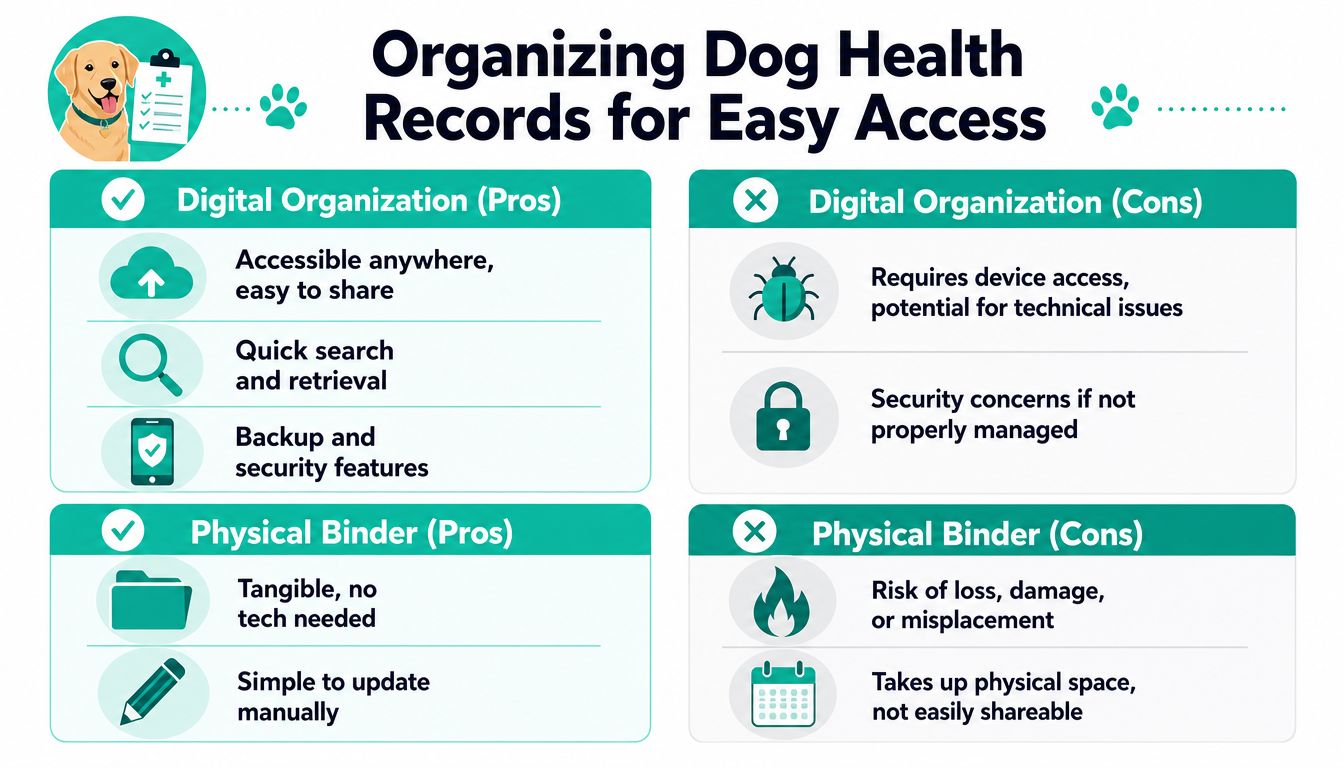
A paper system still has real strengths. It is easy to review at a glance, simple to update after an appointment, and useful for owners who prefer printed copies at the clinic, kennel, or border inspection point.
Set it up so someone else could use it without your help. Separate sections for vaccines, medications, lab work, surgeries, preventive care, and travel usually cover the basics. I also recommend a front section for high-demand documents: rabies certificate, microchip information, current medication list, and the most recent visit summary.
The trade-off is speed. Paper is harder to share with a new clinic, easier to misplace, and vulnerable to water, wear, and last-minute forgetting.
Digital files are faster, but only if they are tidy
Digital storage is usually the better master archive because it supports quick search, backup, and sharing. That matters when a specialist wants prior lab work, a boarding facility asks for vaccine dates, or an airline requests documents in advance.
Poor naming habits ruin that advantage. If files are saved as “scan001” or “receipt,” retrieval slows down at the exact moment you need clarity.
A workable folder structure looks like this:
Identification for microchip and registration records
Vaccines for dated certificates
Preventive care for heartworm, flea, and tick history
Medical history for exam notes, diagnoses, and treatment plans
Procedures for surgery and dental records
Travel for certificates, permits, and endorsements
Use one naming format and stick to it. 2026-06-14_Rabies_Certificate sorts cleanly, reads clearly, and saves time later.
Keep one offline copy on your phone or laptop before any trip. Airport Wi-Fi is unreliable, and border staff will not wait while you recover a password.
A hybrid system usually works best
For many households, the most reliable setup is a digital master file plus a small printed packet of high-use records. That gives you searchability, backup, and something you can hand over immediately when a clinic receptionist or airline desk agent asks for proof.
Organized records also make trend tracking possible. As noted earlier in the article, Dog Aging Project findings highlight recurring issues owners often need to follow over time, including dental disease and other repeat health concerns. That kind of pattern is hard to spot if records are scattered across texts, portals, and paper folders.
If you are refining your setup, it helps to review practical veterinary record-keeping requirements. Good organization reduces repeat calls, missed dates, and document problems that only show up when travel or urgent care puts the record under pressure.
Navigating Special Requirements for Travel
Travel is where dog health records stop being routine administration and become a date-driven project. A file that's good enough for normal care may still be unusable for border entry if one signature is missing, one date falls outside a required window, or one supporting test isn't ready.
For international trips, owners often assume the rabies certificate is the main hurdle. Sometimes it is. Often it isn't.
The certificate is only one part of the puzzle
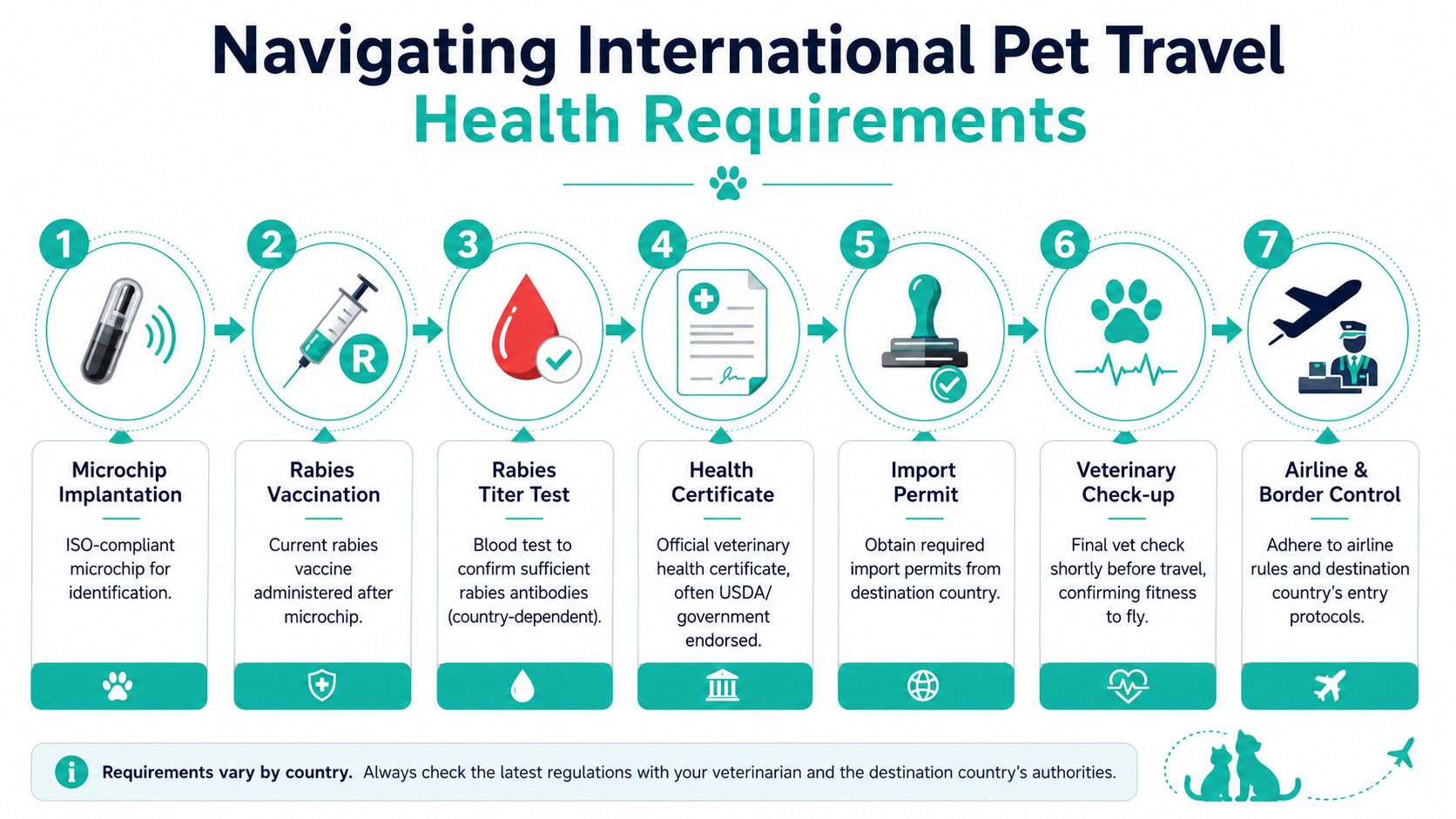
The international health certificate is the document generally recognized by name, but timing drives everything around it. An international health certificate is valid for a maximum of 10 days from the date of issue by an accredited veterinarian. If the dog doesn't depart within that window, a new exam and certificate are required, and the document typically needs endorsement by a USDA APHIS office before travel, as outlined in this guide to the international pet health certificate process.
That single fact changes how I advise clients. You can't treat the certificate like an early checklist item and “get it done” weeks ahead. It has to be coordinated with the actual departure date.
Many destinations also expect official review after the veterinarian signs the form. In practice, owners should verify whether their route requires veterinary international health certificate steps and endorsement planning well before booking the final appointment.
Travel rules often go beyond vaccination
Some countries require more than proof that a rabies vaccine was given. They may require proof that the vaccine worked.
For international travel, many countries require a rabies antibody titer test to show the pet was effectively immunized, not just vaccinated, according to this overview of pet international travel requirements. That test result needs to be ready before travel dates are confirmed, which makes it one of the most important planning points in the entire record set.
A practical travel file may need:
Permanent identification details that match every other document
Rabies vaccination proof with dates and clinic information
Rabies antibody titer result if the destination requires it
Preventive care history if parasite treatment logs are reviewed
International health certificate
Import permit or destination-specific approvals where applicable
A paper folder can hold these items, but the owner still needs to confirm whether the timing and sequence meet the destination rule.
Border officials don't evaluate effort. They evaluate whether the documents match the requirement on the day of entry.
Breed and transport method can affect risk planning
Travel health rules aren't just administrative. They also reflect animal welfare concerns.
CDC risk-factor analysis found that brachycephalic dogs had an adjusted odds ratio of 3.88 for death or illness during transport compared with non-brachycephalic breeds. The same analysis reported an adjusted odds ratio of 5.74 for dogs transported as checked baggage and 2.41 for dogs transported as cargo, compared with other transport methods, in the CDC transport risk dataset.
That doesn't mean every brachycephalic dog or every cargo movement is unsafe. It does mean the medical record should clearly document the dog's breed, health status, and travel fitness, and the owner should plan with their veterinarian and carrier carefully. Flat-faced dogs often need closer scrutiny well before the travel week.
What works and what doesn't
What works:
Starting early so test results and signatures aren't rushed
Matching identifiers exactly across microchip, vaccine, and certificate records
Using one travel folder for all border-facing documents
Checking airline and country rules separately because they may not match
What doesn't:
Assuming last year's travel file is still valid
Booking the final vet visit before confirming timing windows
Relying on a vaccine receipt instead of the proper certificate
Treating travel prep like a one-appointment errand
Travel paperwork rewards calm planning. Last-minute improvisation rarely ends well.
From Static Files to Dynamic Travel Compliance
Traditional dog health records are historical. They tell you what happened at the last visit, what vaccine was given, and which medication was dispensed. That's useful, but it doesn't answer the more difficult travel question. Does this dog meet the entry rule for this country on this date?
That gap has become much more obvious.
A folder can store records, but it can't validate them
A major gap exists between static health records and dynamic travel compliance. One source notes that 70% of owners plan to travel with pets, while many guides still miss the need for real-time validation against changing country-specific rules for microchips, blood tests, and vaccine timing, as discussed in this article on keeping pet records organized for modern travel needs.
That's the core problem. A neat binder may prove you're organized, but it can't tell you whether the microchip format, test order, or timing window meets the current destination rule.
The better model is a living dataset
In practical terms, a dynamic system does three things that old-school folders don't do well:
Tracks dependencies so one missing step is visible before it blocks the rest
Flags timing issues when a document is too early, too late, or nearing expiration
Connects teams and owners so everyone works from the same current file
This is especially useful for veterinary practices that handle several travel cases at once. Without a process layer, staff members end up rebuilding timelines by hand, searching email chains, and checking the same requirements repeatedly.
Good travel prep isn't just record storage. It's record validation, date control, and communication.
What this shift looks like in real life
For owners, it means asking a different question. Not “Do I have the papers?” but “Are my records current, complete, and matched to the destination?”
For clinics, it means moving from reactive document printing to guided workflows. Systems built around a pet travel planner reflect that change. They treat records as active inputs tied to route, date, and destination conditions rather than passive files sitting in a chart.
That's a healthier way to think about dog health records in general. Even outside travel, a living record supports better follow-up, cleaner handoffs, and fewer avoidable surprises.
Your Action Plan for Perfect Pet Paperwork
A problem usually shows up at the worst time. A new clinic asks for vaccine history before an urgent visit. A boarding facility wants proof of prevention dates. An airline or border official rejects a certificate because one detail does not match the microchip record. Good paperwork prevents those last-minute failures.
Start with the record set you would struggle to replace quickly. Build from there, then maintain it after each visit so the file stays usable instead of becoming another stack of stale documents.
Build a record set you can trust
Request the full medical record from your veterinary clinic. Ask for visit notes, vaccine certificates, medication history, procedure reports, and recent lab results.
Audit identity details line by line. The dog's name, date of birth or age, breed, sex, color, and microchip number should match across every document.
Create one master system. A binder works well for originals. A digital folder works well for search and sharing. A hybrid setup gives you both.
Separate routine care from travel paperwork. Daily care records and time-sensitive certificates serve different jobs and should not be mixed into one pile.
Keep preventive care on a single timeline. Rabies, heartworm, flea, and tick dates need one clear home, not scattered reminders and receipts.
File records the day they arrive. Delayed filing is how owners lose lab reports, signed certificates, and discharge instructions.
Check travel rules early if a trip is even possible. Many countries require a rabies antibody titer test, and the timing often affects when travel can happen, as noted earlier in the article.
Set up a practical signing process. If family members, clinics, or service providers need to approve forms, it helps to know how to esign documents in Google Docs so paperwork does not sit unsigned.
Keep the file current
Review the record after every appointment. Update phone numbers and addresses after a move. Replace unreadable scans. Keep the final signed copy of any official certificate, not just the draft.
In practice, this is what turns dog health records into a living dataset. You can confirm what is current, spot what expires next, and send the right document without searching through old emails or paper folders.
If you're preparing for international pet travel and want a simpler way to manage the moving parts, Passpaw helps veterinary teams and pet owners organize travel documents, track requirements, and keep the process on schedule.

More articles
From regulatory changes to best practices for veterinarians and pet owners, our resources keep you ahead of the curve.