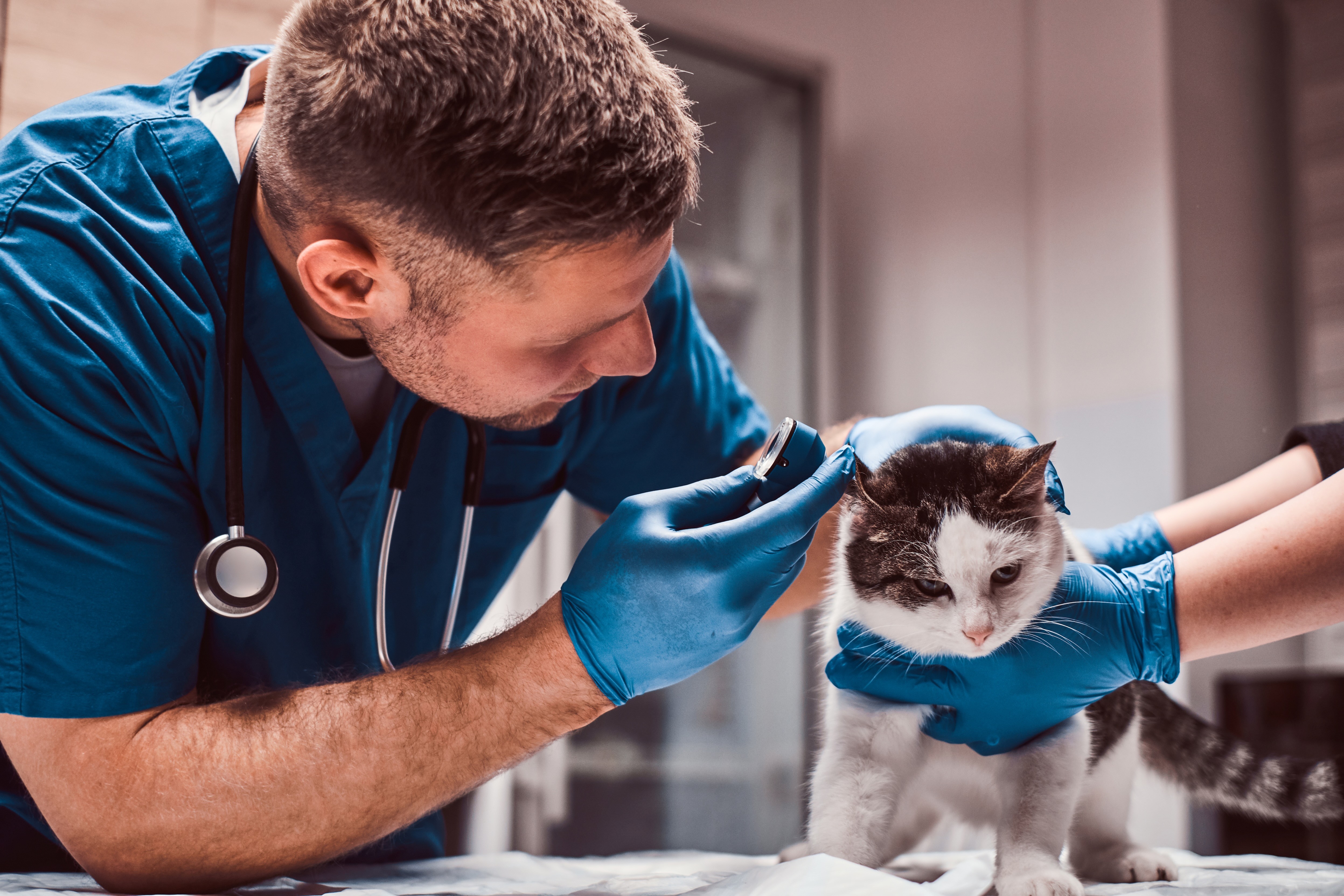
Are you a team member in a veterinary practice?
Are you a pet parent planning a trip with your furry pal?
Compliance Document Management System for Pet Travel
It's Monday morning, and your practice has three international pet trips to prepare for this week. The rabies certificate is in an email, the microchip reading arrived by text, and someone saved the health certificate as final-final.pdf. Before anyone can check the paperwork, they have to find it.
When Pet Paperwork Outgrows a Shared Folder
A compliance document management system is a shared case file that keeps each pet's documents, dates, responsible people, and progress together. Think of it as a leash for the paperwork, keeping the important pieces attached to the right animal.
For practice managers, veterinarians, and pet shippers, the problem isn't usually a shortage of storage. It's uncertainty about which document is current, which task is waiting, and who's supposed to act next.
A folder can hold a certificate. It won't necessarily tell the receptionist that the owner still needs to send a readable vaccination record, or tell the shipper that the certificate hasn't finished the required official process.
Start with the case, not the software
Give each animal a case record with a clear owner and a visible next action. Keep the owner's contact details, planned route, departure information, and supporting records together rather than scattering them across separate conversations.
If you're starting with basic shared storage, FaxZen's guide to set up a shared network folder is useful for the access and folder setup. The extra work is deciding how your team will distinguish drafts from reviewed records and stop outdated files from being sent.
Our guide to travel document storage can help you think through where those records belong. Storage is the starting point, though, not the whole workflow.
Practical rule: A colleague covering the case should be able to find the next action without asking the person who started it.
Know what the system can and can't do
The useful questions are practical:
Linked records: Can staff connect the certificate to the correct identity, vaccination, and supporting evidence?
Repeat-work checks: Can they catch missing information before another round of emails?
Staff time: Can they resolve exceptions faster, rather than upload more files?
Software can organize evidence and reminders. It doesn't replace the veterinarian's judgment, and it can't promise that a border authority will accept a file.
Start with the record map below. You can use it on a live case today, before making any buying decision.
The Records a Travel File Must Keep Together
A rabies certificate can sit in the file, dated and signed, and still fail at review because nobody compared its chip number to the one in the clinical record. The certificate may be issued, yet staff can confuse its entry deadline with the longer travel window that follows it.
Build the record map around linked fields rather than attachment names. Every date that matters needs a meaning, a related document, and a named owner. The payoff shows up during exceptions: when a number or date looks wrong, the conflict sits side by side with the field it should match, so a colleague can spot it in seconds instead of digging through scans.
Separate entry deadlines from later validity
For an animal health certificate used to enter the EU from Great Britain, the GOV.UK animal health certificate guide specifies 10 days after issue for entry, counting the issue date as day 1, with onward EU travel and re-entry to Great Britain supported for up to 6 months, subject to the applicable conditions.
One certificate, two different clocks. A single field called "expiry" blurs them together.
Store the issue date, the first-entry deadline, and the later permitted travel window as separate fields. Label each one clearly enough that an owner reading the file never treats later validity as permission to delay the first crossing.
Pet travel records and the dates they depend on
Record | Fields to keep linked | Timing rule | Status to show |
|---|---|---|---|
Animal health certificate, GB to EU | Issue date, destination, pet identity | Entry within 10 days after issue, issue date counts as day 1; onward EU travel or GB re-entry up to 6 months when the conditions allow | Draft, veterinarian completed, official endorsement pending, endorsed, entry deadline approaching |
First rabies vaccination | Microchip number, chip date, chip location, vaccine date, ISO 11784/11785 compliance where required | Dog, cat, or ferret at least 12 weeks old; wait at least 21 full days; day 1 is the day after vaccination | Vaccine recorded, travel-ready date set |
Rabies blood test, certain commercial GB imports | Vaccine date, sample date, lab, result versus 0.5 IU/ml | Chip before vaccination; sample at least 30 days after the primary course; EU-approved lab; 3 calendar months after the sample | Result in, earliest travel date set |
Official endorsement for GB entry | Official veterinarian signature, stamp, and date | Pet enters within 10 days of issue; a non-official vet contacts the local authority | Official endorsement pending, endorsed |
The blood-test row is route-specific, not a requirement for every travelling pet. For certain commercial imports, the GOV.UK commercial import information note specifies sampling at least 30 days after the primary vaccination course, testing at an EU-approved laboratory, a result of at least 0.5 IU/ml, and a 3-calendar-month wait after sampling.
Some fields need a human check that no folder or platform can perform. The practice and the owner still confirm that the chip scans cleanly and meets the ISO 11784/11785 standard where the destination requires it.
Keep corrections connected to their evidence
When a wrong value gets fixed, keep the original upload alongside it. Identify the corrected field and record who checked the replacement, so the file shows a history rather than a silent swap.
Doczen's guide to building tamper-evident audit trails offers useful context for preserving that change history. The practical aim is straightforward: any staff member opening the file should see why the current value is trustworthy and which document it came from.
Use your practice's veterinary record-keeping requirements when deciding how these travel fields connect to the clinical record.
This week, open a live case and check whether each field exists as usable information, not just text buried inside a scan. If a colleague can spot a mismatched chip number and trace which timing rule set each deadline, the map is doing its job. Destination instructions change, so recheck the map before each departure and treat it as a working setup for your team.
Controls That Catch Mistakes Before the Border
A folder of PDFs can show what staff uploaded. A useful compliance document management system should also show which requirement version they used, who reviewed it, and what changed.
The SAI360 Compliance Benchmark Report identifies staying current with changing regulations as a leading compliance challenge for 2025 and reports that 54% of compliance leaders struggle to identify required documentation for each product and jurisdiction, while 53% struggle to assemble evidence quickly for audits or inquiries.
These aren't veterinary-specific findings. They do help frame a useful buying question: can staff explain a document decision, rather than merely retrieve the document?

Put checks at the handoffs
Sequence destination tasks. Give chip verification, vaccination review, laboratory work, and examination their own due dates. Identify the prerequisite that must be complete before staff book or release the next task.
Check incoming files. Flag a conflicting pet name, unreadable scan, or missing date when the document arrives. If a scan can't be read reliably, request a clearer copy rather than treating an automated guess as confirmed information.
Attach a short evidence note. For each required field, retain the official instruction used, its effective date when available, the date staff checked it, and the reviewer. Preserve the rule version used for that case instead of replacing it when guidance changes.
Record exceptions. When a veterinarian overrides a warning, keep the reason and supporting evidence. An override should be a visible decision, not a hidden way to turn a warning green.
Assemble the submission packet. Gather the certificate and relevant supporting records into a clearly identified release set. Keep a record of what was sent.
Protect the records behind the checks
These controls need a dependable foundation: a case file per animal, version history for uploads, role-based access, due-date reminders, and secure storage.
Ask how the system preserves reviewed records, identifies who changed a value and when, and limits viewing or editing to the people who need access. Include recovery and export in your evaluation so the practice can retrieve usable records if staff access or software arrangements change.
For a practical review process, use the same checks in your documentation verification procedure. Staff shouldn't have to invent a different standard whenever a new colleague takes over.
Can we show why this field was accepted for this pet's planned travel date?
If official instructions conflict, assign a reviewer and hold the affected task while staff seek clarification. A green dashboard isn't a substitute for resolving an unanswered question.
One Dog and a Timeline from Chip to Certificate
Say Milo is leaving Great Britain for a destination that requires his first rabies vaccination to be followed by a waiting period. His owner has booked travel, but the practice hasn't yet confirmed the earliest date he can go.
The coordinator starts with identity. At the appointment, the team reads Milo's chip and records its number, the date it was read, and its location on him.
Turn the waiting period into a task
The GOV.UK rabies vaccination guidance says a dog, cat, or ferret must be at least 12 weeks old before a first rabies vaccination, followed by at least 21 full days after the initial vaccination course before travel, with day 1 being the day after vaccination.
In Milo's example, vaccination day is the starting event, not the first completed waiting day. The coordinator records the actual vaccination date and checks the calculated travel-ready date against the planned journey.
The system shouldn't mark Milo ready just because a rabies attachment exists. It should keep that task open until the applicable waiting period has finished and the record has been reviewed.

Resolve the mismatch before releasing the packet
Milo's owner uploads the vaccination record. The chip number on the upload doesn't match the number in the case file, so the coordinator pauses preparation rather than choosing whichever number looks more plausible.
The conversation can be short:
Coordinator: The vaccination record and case file show different chip numbers. Can we reread Milo's chip and check the original clinical entry?
Veterinarian: Confirm the reading first. Then correct the mistaken field against the verified record and note the reason.
Coordinator: I'll retain the earlier upload and request a corrected vaccination record if that document contains the error.
That's a check and correction, not another form for its own sake. Nobody should alter the underlying certificate merely to make the numbers agree.
The examination and certificate appointment still need to fit the applicable entry window. The coordinator checks the planned entry date before confirming the appointment with the owner, rather than assuming the vaccination-ready date settles the whole journey.
For the shipper, an outstanding official stamp should remain visible as endorsement pending wherever that official process applies. The packet stays held until the responsible reviewer confirms completion.
Milo's lesson is simple: a date is a task with a starting event and a counting rule, not just something printed on an attachment.
Time Back for the Clinic and the Shipper
In a survey of 75 veterinary practitioners conducted between August 2024 and January 2025, the Federation of Veterinarians of Europe found that 64% said their administrative workload had doubled in recent years, while 29% reported a smaller increase. The same survey reported that prescribing and dispensing documentation can take 10 or more hours per week for some veterinarians, and respondents identified veterinary management software, administrative support, and document automation as leading solutions.
That survey concerns veterinary administration broadly, not time saved by pet-travel software. For travel work, the question is narrower: how much staff effort goes into finding and resolving the items that stop a case?

The survey finding behind that headline is specifically that administrative workload had doubled. Don't treat it as a measured result for certificate preparation or for any particular tool.
Measure the awkward cases
Exception-handling time is the active staff time needed to identify, investigate, and resolve a problem. A missing signature might be spotted immediately but remain unresolved while staff work out who can provide it.
Separate active work from waiting time. Otherwise, a delayed owner reply can make an efficient staff process look slow, while repeated phone calls disappear inside a broad “case open” period.
Use a proposed one-month baseline before changing tools.
Measures that show whether the paperwork got lighter
Measure | What to count | Baseline | A better month |
|---|---|---|---|
Minutes per certificate | Active staff time from first upload to a complete packet | This month's average | Less hunting and fewer after-hours touches |
Exception time | Minutes to find and resolve a missing stamp, an early date, or a name clash | Time now spent in email | Flagged when the file is uploaded, then resolved with fewer handoffs |
Ready before departure | Share of cases finished before the travel window | Last month's share | Fewer same-day rushes |
Returns for correction | Certificates sent back for a fix | Count per month | A lower count after the checks |
Include how the work feels
A hospital's feedback about Passpaw describes health certificates changing from one of the most time-consuming parts of its day to a process that feels efficient, organized, and stress-free. That's a useful account of staff experience, not proof that every practice will get the same result.
Pair staff comments with your case log. Ask whether colleagues are doing less repeat typing, whether clients receive clearer requests, and whether unfinished cases still follow staff home.
Keep judgment visible: Automation should remove copying and chasing, not the examination or the veterinarian's sign-off.
Choose a metric and record it for a month before selecting a tool. You'll have a much stronger test than a feature checklist: whether the next missing item takes less effort to resolve.
How to Set Up the Workflow Without Extra Chaos
Start with a narrow rollout rather than moving the entire archive. Staff need a process they can follow during a busy clinic session, not a new filing project that competes with patient care.
For entry into Great Britain using a pet health certificate, the GOV.UK certificate guidance requires an official veterinarian's signature, stamp, and date, with entry within 10 days of issue; if the attending veterinarian isn't an official veterinarian, they must contact the local authority about completing the required process.
That handoff belongs in the workflow before anyone marks the packet finished.

Assign the handoffs before adding automation
List the trips you handle. The practice manager or shipping lead should select familiar routes for the pilot, such as pets leaving Great Britain or entering with an official health certificate. Leave unfamiliar destinations out of the initial setup.
Name the case coordinator. Give a technician or shipper responsibility for collecting records and following up on open tasks. Keep examination and medical certification with the veterinarian.
Add the linked fields. The coordinator enters chip details, vaccination dates, applicable laboratory results, certificate issue information, and endorsement status. The reviewing clinician checks the clinical evidence rather than relying on data entry alone.
Assign physical identity checks. The practice and client remain responsible for confirming that the microchip is readable and meets ISO 11784/11785 where required. Record who will arrange that check and where the confirmed result belongs.
Use visible progress labels. The coordinator updates the case through draft, veterinarian completed, official endorsement pending, endorsed, and entry deadline approaching, using only the stages relevant to that route. Don't let “uploaded” stand in for “reviewed.”
Decide how signatures and submissions move. The veterinarian and coordinator should agree where signing occurs, who sends the packet to the relevant authority, and who checks the returned documents. Match the process to the authority involved rather than assuming every destination uses the same channel.
Review a small pilot. For a proposed pilot, have the coordinator and veterinarian review the first ten live cases for false warnings, missed dates, and unclear ownership. Test whether a covering colleague can continue a case without rebuilding its history.
Test the process before expanding it
IamVera.AI's guide to workflow tools for case filings provides useful context for mapping document handoffs. Apply that thinking to the documentation life cycle, from collection through review, submission, return, and storage.
Software can arrange tasks, but a person still confirms the pet. Begin with a proposed two-week pilot and expand only when staff can follow the handoffs without extra chasing.
Choose the Lightest Setup for the Next Departure
Start with trip volume and staff capacity. A small caseload doesn't automatically need a dedicated platform, but it still needs someone responsible for checking the paperwork.
Setup options by trip volume
Team situation | Setup to start with | What a person still checks |
|---|---|---|
A few certificates a year | Written checklist and one shared case folder | Dates and chip numbers checked against the record map |
Several international trips each month | Workflow tool that keeps tasks, document checks, and the certificate packet together | Exceptions and sign-offs, with the veterinarian owning the medical judgment |
Test a real case, not a polished demonstration
For a busier workflow, our Passpaw self-service platform covers treatment planning, document validation, and certificate generation. We validate every uploaded document against the destination's current rules, track each country's published requirements, and adjust tasks when those requirements change.
During an evaluation, use a case from your practice to inspect the linked fields, travel-ready date, and endorsement status. Also check whether staff can retrieve the rule version used for the decision.
Try the setup on your next two departures and compare active minutes and corrections with your baseline. Choose the lightest arrangement that makes the next deadline and missing item clear, while leaving medical judgment with the veterinarian.
Passpaw offers document validation and coordinated certificate tasks to help your team manage pet-travel paperwork without replacing its own checks. Visit Passpaw to explore a workflow for your next departures, and bring a real case so you can test how it handles dates, mismatches, and unfinished handoffs.

More articles
From regulatory changes to best practices for veterinarians and pet owners, our resources keep you ahead of the curve.