Are you a team member in a veterinary practice?
Are you a pet parent planning a trip with your furry pal?
Documentation Verification for Pet Travel: A Friendly Guide
You're staring at a stack of pet travel papers on the kitchen table, and none of them look like they belong together. One form has a clinic stamp, another has a date that feels too close to your trip, and somewhere in the pile is the one page that your airline, vet, and destination all seem to care about. It can feel less like trip planning and more like trying to match up a litter of tiny pawprints.
That feeling is normal. When a dog or cat crosses a border, every paper becomes a clue, a little pawprint in the trail that says who your pet is, what care they've had, and whether the paperwork lines up with the journey ahead. The goal isn't to drown you in forms. It's to make sure the pet, the veterinarian, the airline, and the destination authority are all looking at the same story.
Why Pet Travel Papers Can Feel Like a Puzzle
The first time people gather pet travel papers, they usually expect one neat certificate and end up with a folder full of moving parts instead. A rabies record points to vaccine timing, a health certificate points to the pet's current status, and endorsements or extra test results can depend on the destination. That's a lot to keep straight when you're also booking flights, packing crates, and trying to keep your pet calm.
Why so many pieces exist
Different countries ask for documentation because they want a clear picture of animal health, recent care, and travel history. In plain terms, the papers help protect animal health, public safety, and your pet's welfare during the trip. They also help the people at the other end of the journey decide whether the documents in front of them belong to this pet, for this trip, at this time.
Practical rule: if a paper can answer “who is this pet, what happened to them, and when did it happen,” it probably matters.
That's why the pile can look messy even when everyone involved is doing their job right. Each document is a little clue, and the full set only makes sense when you line up the clues in order. A pet travel packet isn't just paperwork, it's a trail of pawprints that helps the whole route stay on track.
For a broader look at the kinds of travel papers owners often gather, this overview of pet travel documents is a useful companion read.
A nervous owner usually worries about the wrong thing first, like whether the stack looks complete enough. The better question is whether the right document is present, current, and tied to the right pet. Once that clicks, the process stops feeling random and starts feeling like a checklist with a purpose.
What Documentation Verification Actually Means
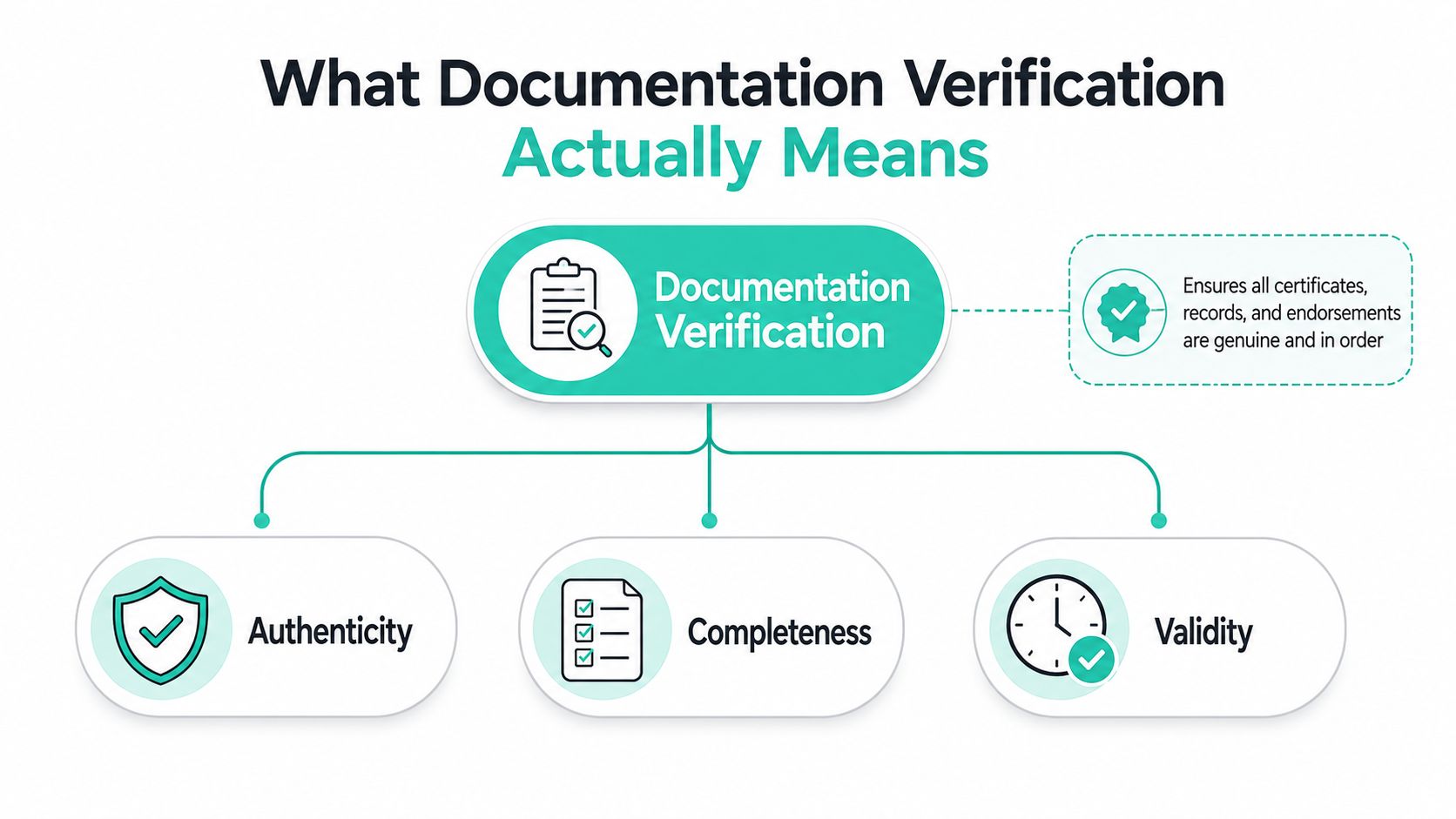
Documentation verification is the check that confirms a paper is real, complete, and still valid for the trip. In pet travel, that means looking at a health certificate, vaccination record, test result, or endorsement and asking simple questions. Is it authentic, are all the needed details there, and does it still fit the travel window?
The venue bouncer version
A helpful analogy is a bouncer at the door of a venue. The bouncer doesn't care about drama, just whether the ID looks genuine and matches the person standing there. In pet travel, the government veterinarian, airline staff, or destination authority is doing the same sort of check, only the “ID” might be a rabies certificate or an international health certificate.
The people in the workflow each have a job. The pet owner gathers records and keeps track of timing. The local veterinarian examines the pet and completes the medical paperwork. The USDA-accredited veterinarian or other authorized vet signs the forms that need special approval, while the USDA endorsement office or destination authority reviews what was submitted. The airline checks that the paperwork matches travel rules, and the destination animal health authority decides whether the set is acceptable for entry.
Why the details matter
The same paper can be almost right and still fail. A missing signature, an expired date, or a mismatch between the microchip number and the certificate can throw off the whole packet. That's why documentation verification is less about “do we have a form” and more about “does this form belong to this pet, and does it still line up with the trip?”
A clean workflow prevents last-minute scrambling. It also keeps the vet team, the owner, and the travel authority from passing around half-finished forms like a ball of yarn with one thread missing. When everyone knows what they're checking, the process gets a lot less scratchy.
The Key Documents That Usually Need Verification
Pet travel usually turns on a small set of documents that work together. One paper proves the pet's identity, another proves vaccination status, another shows a vet has examined the animal, and sometimes a destination asks for extra test results or extra sign-off. The point is not to collect every paper ever created for the pet. It's to gather the ones that prove the pet is ready for that specific trip.
What each paper is supposed to show
A rabies vaccination certificate shows when the vaccine was given, which product was used, and who administered it. A health certificate shows the pet was examined and deemed fit to travel within the required window. A USDA endorsement or equivalent approval shows the paperwork has been reviewed by the authority that needs to sign off. A microchip registration record helps tie the paper trail to the correct animal, and destination-specific test results, such as a rabies titer result, may show that an added requirement has been met.
The safest way to read a travel packet is as a set, not as separate forms sitting in a folder.
Document | Issued By | What It Verifies |
|---|---|---|
Rabies vaccination certificate | Veterinarian or clinic | Vaccine timing, product details, and that the pet was vaccinated |
International health certificate | Veterinarian | Current health status and travel readiness |
USDA endorsement | USDA or equivalent authority | The form has been reviewed and approved where required |
Microchip registration record | Microchip registry or clinic | The pet's identity is tied to the paperwork |
Destination-specific test result | Approved lab or vet path | A rule from the destination has been met |
Some destinations ask for more because they protect a disease-free status or have extra rules for incoming animals. That doesn't mean the paperwork is unusual, just that the receiving country wants a fuller pawprint trail before the pet lands.
If you want to compare how travel paperwork is organized in a different regulated setting, regulated shipping documentation with Ship Restrict shows how structured document sets can keep a shipment from stalling. The same idea applies here, even if the cargo has whiskers.
The tricky part is that no single paper proves everything. One form may confirm identity, another may confirm health, and another may confirm timing. That's why a vet team often treats the packet like a bundle of puzzle pieces, each one checked against the others before anyone calls it finished.
How the Verification Workflow Unfolds
The easiest way to understand the workflow is as a relay race. The owner starts with the baton, the vet checks it, the endorsement office reviews it, and the airline or border authority checks it again before departure. If one handoff is late or incomplete, the whole trip can slow down.
From research to appointment
It starts with destination rules. The owner or travel coordinator checks what the country wants, then books the vet visit with enough time to get the right exam, forms, and any lab work done. If a rule depends on a result or signature that has a narrow window, timing becomes part of the checklist, not an afterthought.
From vet visit to endorsement
At the clinic, the veterinarian confirms the pet's details, reviews the supporting records, and fills out the certificate. That's where mismatched microchip numbers, missing vaccine details, or an old form usually get caught. If an endorsement is needed, the packet then moves to the approving office, where the review has to happen before the travel window closes.
From approval to departure
Once the papers are endorsed, the owner keeps the originals and any backup copies together in an easy-to-reach folder. The airline or transport team can then compare the packet against the booking and crate details before departure. The handoff works best when every person knows exactly what the next person will look for.
For practices that want a more organized handoff, Passpaw's documentation specialist guidance is a helpful reference point for how teams can coordinate the pieces without chasing the same information twice.
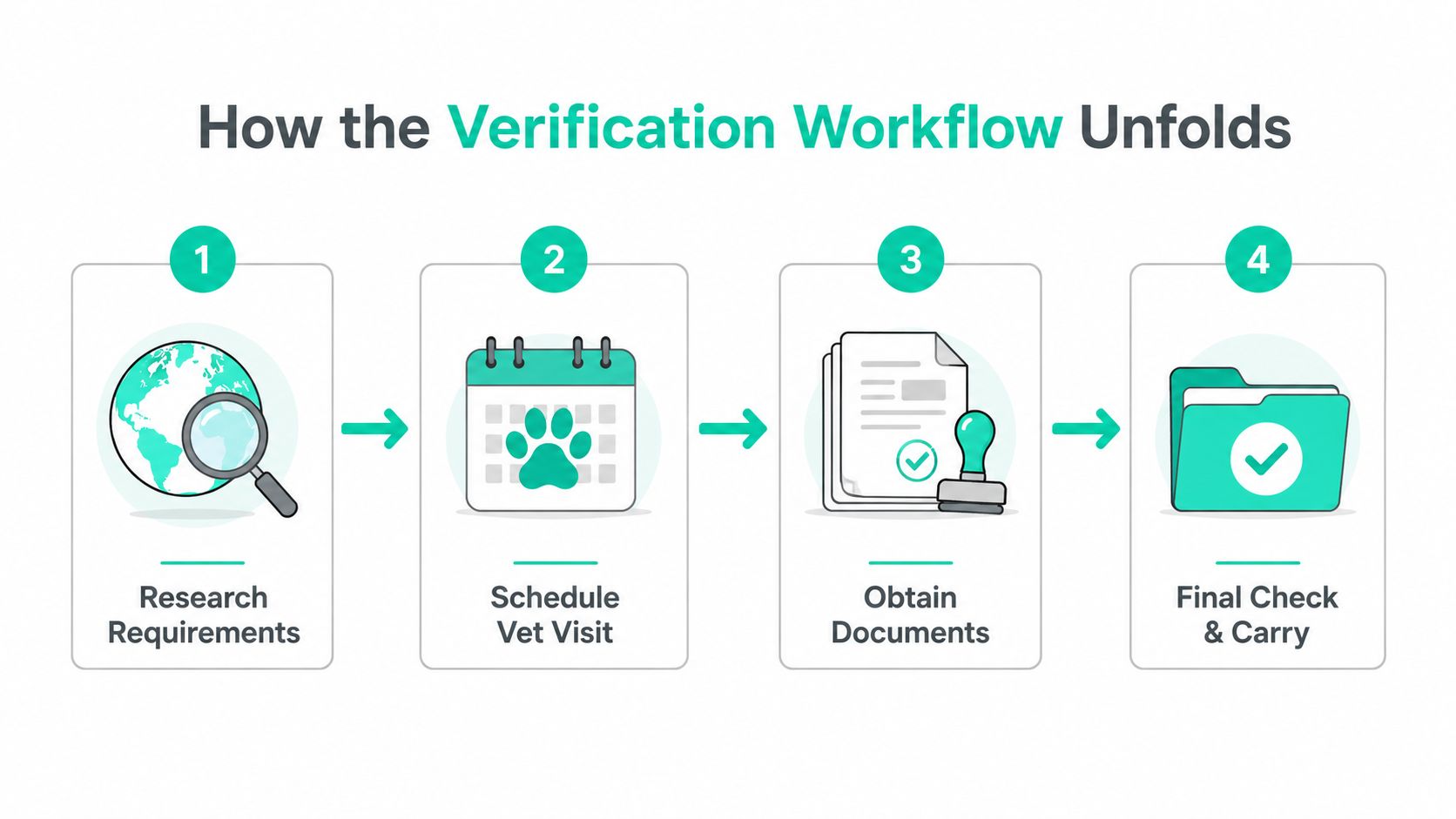
The whole process feels smoother when each checkpoint is clear. Research comes first, then the vet visit, then document review and approval, then the final carry folder. Miss one baton pass, and the trip can get delayed before the pet even leaves home.
Common Mistakes That Trip Up Pet Travelers
Most pet travel problems don't come from one huge failure. They come from small misses that hide in plain sight, like an expired vaccine, a form with one blank field, or a document image that looked fine on a phone screen but won't hold up in review. Even careful owners get caught here because travel rules change and old templates linger in inboxes.
The oversights that show up again and again
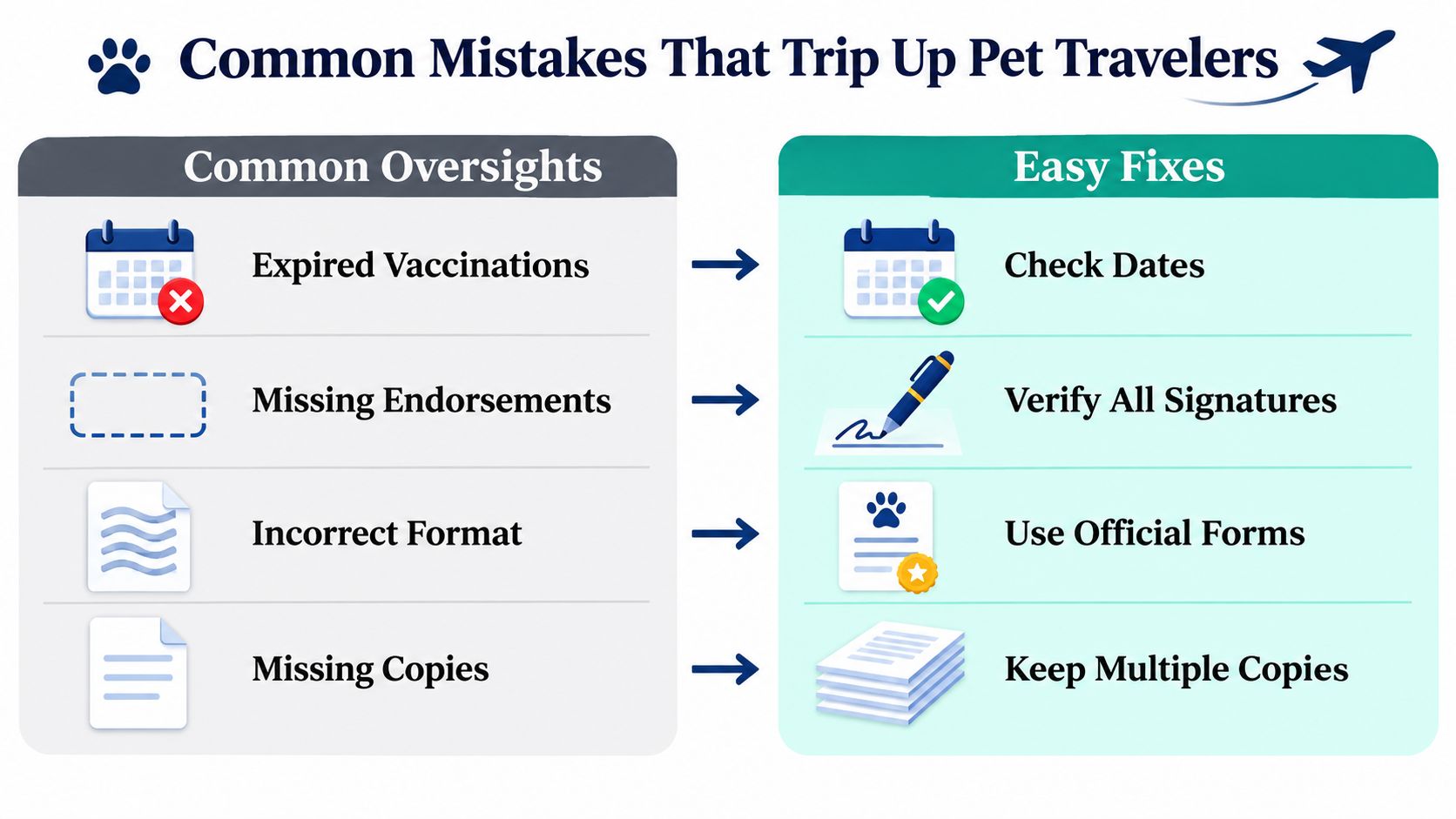
An expired vaccination is a classic snag because the date looked fine when it was first booked, then slipped past the travel window. A missing endorsement can happen when a form moves through the clinic but never reaches the approving office in time. An incorrect format creates trouble when someone uploads a screenshot or a cropped image instead of the right file type. A missing copy leaves the owner with nothing to show when the original is in another bag.
Why those mistakes keep happening
These errors usually come from process drift, not carelessness. A family may save an older version of a form, a clinic may update its template, or the destination may ask for a different order of documents than last time. That's why a tidy folder can still fail if the contents don't match the current rules.
Stripe's document rules are a good reminder of how picky image quality can be in verification workflows. Their guidance says scans or copies must be PDF files taken directly from the original document, pictures of physical documents must be unprocessed JPEG or PNG files, screenshots aren't acceptable, and images can't be cropped, low quality, or missing pages with key information. That's a pretty useful model for pet travel too, because a blurry photo of the right page is still the wrong page if nobody can read it.
A document that looks “good enough” to the eye can still fail a check if the fields don't line up.
The best fix is not more panic, it's better sequencing. Check dates early, use the official form, and make sure every signature and page is present before anyone starts packing treats and carriers. Small habits save a lot of tail-chasing.
A Practical Verification Checklist for Every Trip
A strong checklist keeps the paperwork from sprawling across the table like a nest of leashes. The easiest version groups tasks by timing, so you know what belongs in the planning stage, what gets finished close to the appointment, and what must be checked right before travel. That way, the folder doesn't become a mystery box at the last minute.
Confirm months before travel
Research the destination rules: Different countries ask for different documents, and some need extra steps before the trip starts.
Book the vet appointment early: The vet needs time to review records, complete forms, and, if needed, arrange follow-up steps.
Finalize weeks before travel
Attend the vet visit with all records: Bring vaccine history, microchip details, and any previous certificates so the clinic can match the pet to the paperwork.
Review every field before submission: Make sure names, dates, chip numbers, and signatures all line up.
Send any forms for endorsement on time: Endorsements can take time, so waiting until the last minute can squeeze the travel window.
Verify right before departure
Check expiry dates again: Dates can shift fast, especially if the trip was booked early.
Make copies of everything: Keep a backup set in case the originals get separated from the travel bag.
Pack the originals where they're easy to reach: The people checking the pet may want the actual packet, not a memory of where it was stored.
For owners who want a simple place to keep the set organized, this guide to travel document storage is a practical companion to a paper checklist.
The big win is clarity. When each item has a reason attached to it, the process feels less like busywork and more like protecting the trip from avoidable hiccups. A tidy packet is a happy packet, and a happy packet usually means fewer pre-flight whisker twitches.
How Digital Tools Make Verification Easier
Paper folders work, but they're easy to outgrow when a clinic handles many travel cases. Digital tools can pull destination requirements into one place, flag missing fields before submission, and keep the owner and clinic on the same page without endless back-and-forth. The aim isn't to replace the veterinarian. It's to cut the repetitive checking that steals time and invites errors.
What the right tool actually does
A good platform can validate uploaded documents in real time, compare the file against the pet's information, and surface mismatches before someone sends the packet onward. It can also prioritize tasks by travel date, which matters when one form has to land before another. That kind of workflow is especially useful when the clinic is juggling multiple trips and multiple destination rules at once.
Passpaw is one option that fits that model. It helps veterinary teams manage travel documents, align supporting uploads with destination requirements, and keep owners informed during the process. For teams that want a broader planning view, Passpaw's travel planner shows how document tasks can be organized around the trip instead of around scattered emails.
Why automation helps without taking over
Automation shines when the task is repetitive and detail-heavy. It can't replace the clinical judgment of a vet, but it can help make sure the right form is in the right place at the right time. That means fewer missed fields, fewer status questions from owners, and less rework for the clinic team.
The best digital setup doesn't make the vet less involved, it makes the vet's work easier to finish cleanly.
That's the key benefit here. A well-run system supports the people doing the checks, so the paper trail stays readable even when the travel schedule is busy. When the process is smoother, the pet gets one less stressful stop on the road.
Bringing It All Together
Pet travel documentation works best when you treat it like a coordinated route, not a stack of random forms. The owner gathers the clues, the vet confirms the details, and the approving authority checks that the packet still fits the journey. When that handoff is clean, the pet's papers read like a clear trail of pawprints instead of a mystery scavenger hunt.
The most common problems are usually predictable. Dates slip, signatures go missing, file formats get messy, and old versions of forms hang around longer than they should. Once you know those weak spots, you can catch them early and save yourself a lot of stress at the counter, at the clinic, and at the gate.
Digital tools can make the process calmer without taking the expertise out of it. They help teams keep records together, spot mismatches sooner, and keep pet owners in the loop so nobody's guessing about the next step. If you're also comparing travel costs and routes, even a search for cheap cruises can remind you how much planning goes into any trip, especially one with a pet attached.
Start early, keep copies of everything, and ask your vet team when a requirement looks fuzzy. A well-prepared pet is a happier travel companion, and a tidy document packet makes the journey feel a lot less ruff.
If your clinic needs a calmer way to manage pet travel paperwork, Passpaw helps organize destination requirements, validate uploaded documents, and keep owners informed as the packet moves forward. Visit Passpaw to see how a clearer document workflow can make pet travel feel less like a pile of forms and more like a well-marked path.

More articles
From regulatory changes to best practices for veterinarians and pet owners, our resources keep you ahead of the curve.