Are you a team member in a veterinary practice?
Are you a pet parent planning a trip with your furry pal?
7 Brachycephalic Cats Breeds: Health and Care Guide
An owner may choose a cat for its round eyes, soft expression, and gentle personality, then discover that the care plan involves more than food, play, and a litter tray. A shortened muzzle can affect breathing, heat tolerance, eye comfort, dental space, grooming, and even the way you prepare for travel. That doesn't mean every flat-faced cat is unwell. The degree of brachycephaly varies between individuals, and a veterinary assessment matters more than appearance alone.
In this guide to brachycephalic cat breeds, you'll meet seven cats with flat or relatively short facial structures, from the classic Persian to the curly-coated Selkirk Rex. You'll learn what to watch at home, how daily routines can reduce avoidable stress, and why health records matter when a cat crosses a border. For international trips, always check current carrier rules, destination requirements, and veterinary advice before booking. Policies can change, and one cat's safe plan may not suit another.
1. Persian Cats and Respiratory Considerations
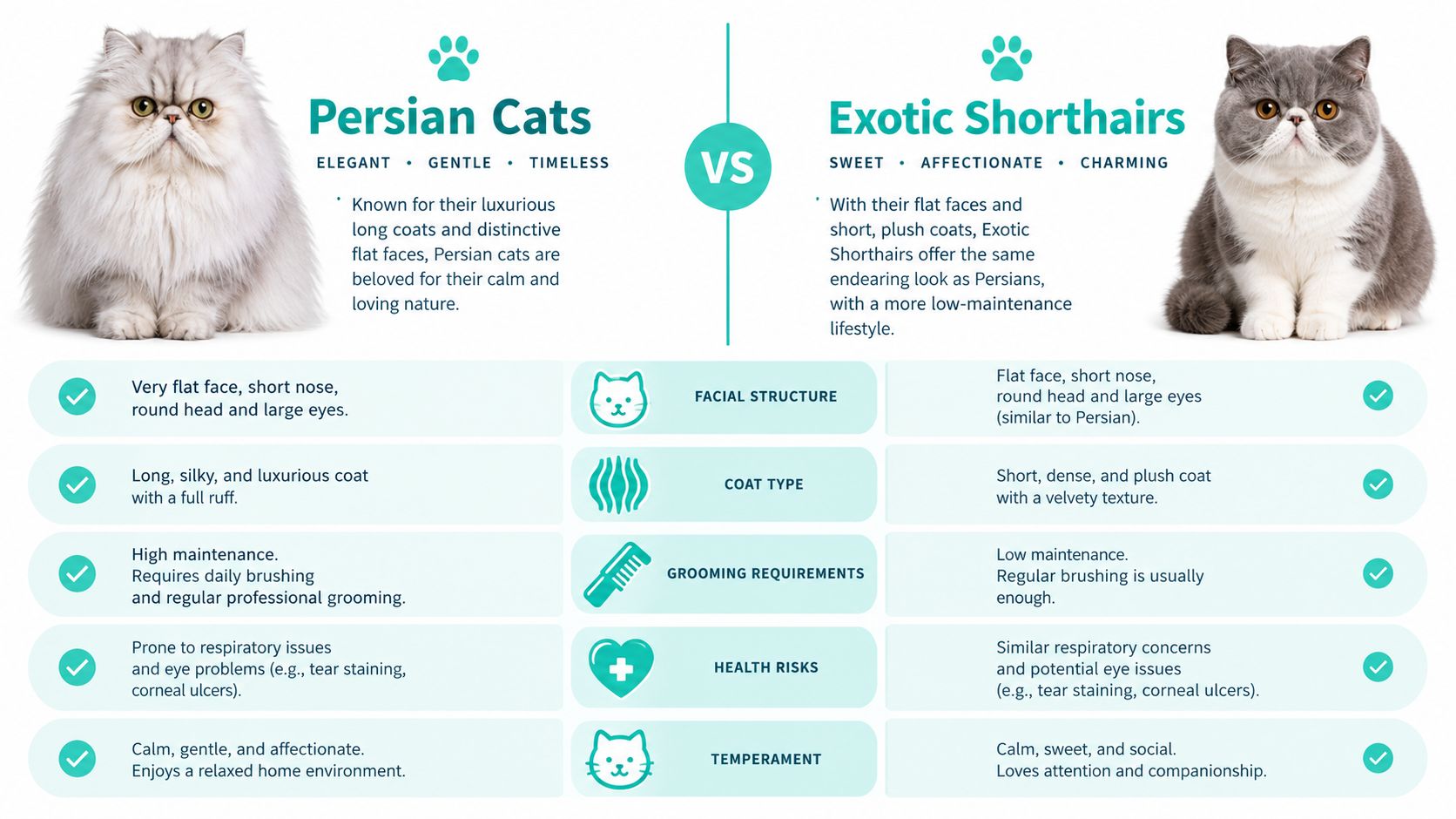
Persian cats are among the clearest examples of a brachycephalic breed. Their round heads, large eyes, short snub noses, and long coats create a distinctive look, but the same facial structure can influence airway space, eye protection, dental alignment, and grooming. The TICA Persian breed profile describes the ideal head as round, with a snub nose positioned between the eyes. That appearance is attractive, but it should never be the only selection criterion.
Persians also have one of the strongest breed-level evidence bases in feline health. A UK VetCompass study of 3,325 Persian cats found that 64.9% had at least one recorded disorder. The most common recorded problems included haircoat disorder at 12.7%, dental disease at 11.3%, overgrown nails at 7.2%, and eye discharge at 5.8%. The report also recorded kidney disease as the most common cause of death at 23.4%, followed by cancer at 8.5%. These figures come from the PLOS ONE study of Persian cats, and they show why routine monitoring deserves a place in the care plan.
Daily care and travel planning
Brush the coat regularly, inspect the facial folds gently, and watch for changes in breathing, appetite, eye comfort, or grooming behavior. A Persian that suddenly stops cleaning itself, develops persistent discharge, or becomes less tolerant of play needs veterinary attention.
Practical rule: A quiet cat isn't automatically a comfortable cat. Ask your veterinarian whether the cat's breathing, eyes, teeth, and weight fit a healthy individual plan.
Before travel, arrange a veterinary examination early enough to address problems instead of merely documenting them. Ask the veterinarian to record respiratory findings, eye treatments, relevant cardiac information, vaccinations, and any medication. Check the current carrier and destination rules for flat-faced cats, arrange temperature-controlled transport and accommodation, and carry medical records with an emergency contact.
For additional background on how a shortened muzzle can affect travel, read Passpaw's guide to snub-nosed cats. A home with good air quality and sensible grooming routines may also benefit from comparing 2026 pet allergy air purifiers.
2. Exotic Shorthairs and the Short-Coat Trade-Off
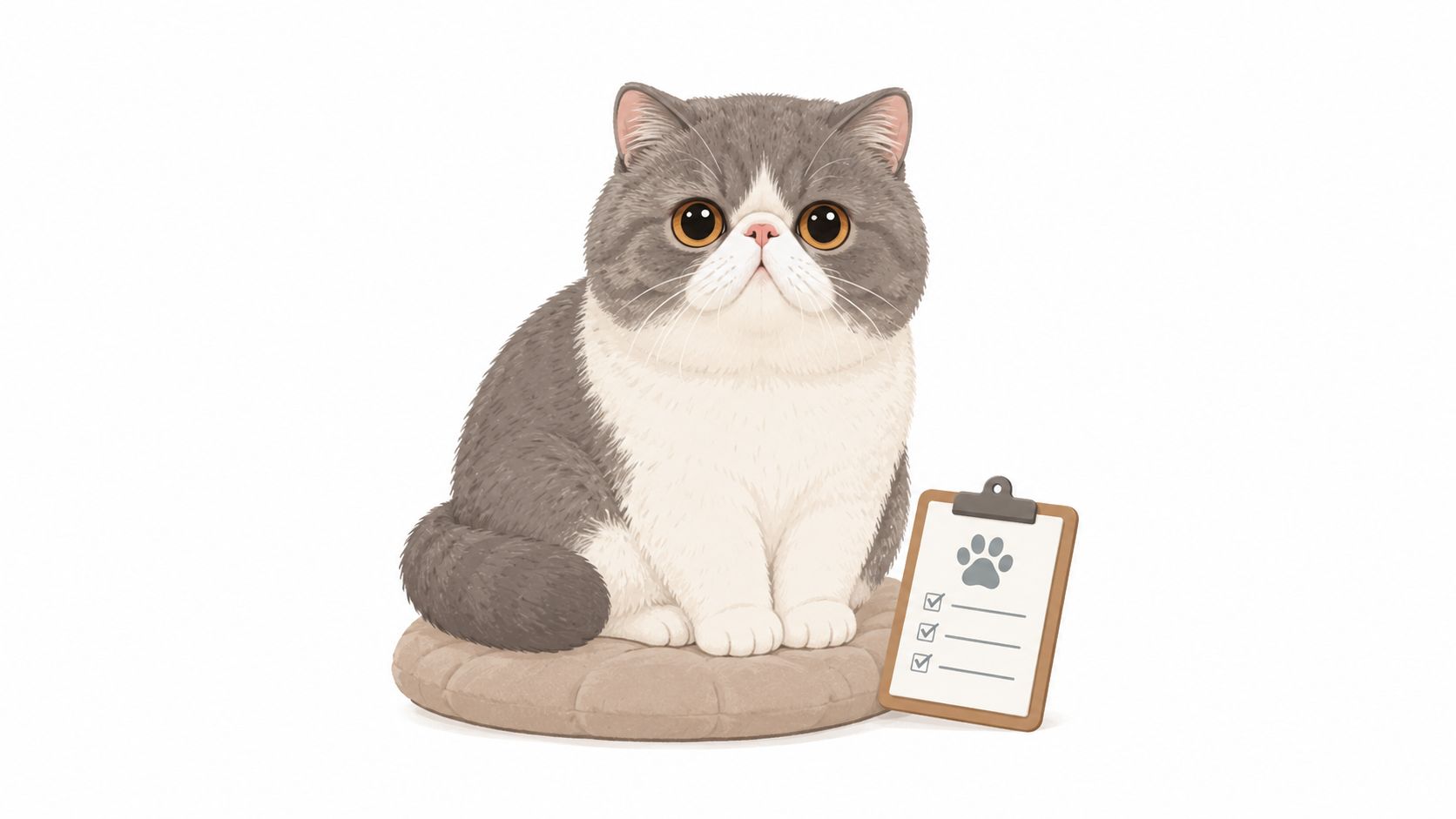
The Exotic Shorthair has the rounded face and gentle appearance many people associate with the Persian, paired with a short, plush coat. That coat can make brushing and mat control more manageable, but it doesn't remove the facial health questions linked to brachycephaly. A shorter coat changes grooming workload. It doesn't automatically change the shape of the nostrils, nasal passages, eyes, or dental space.
The breed is a useful reminder that low-maintenance coat care isn't the same as low-maintenance health care. Owners should still look for noisy breathing, repeated sneezing, nasal discharge, eye irritation, difficulty eating, and reduced tolerance for activity. A comparative clinical study of 194 brachycephalic cats and 1,003 non-brachycephalic cats found higher odds of several owner-observed signs in brachycephalic cats, including snoring, sneezing, nasal discharge, dyspnea, and respiratory noise. The study reported odds ratios of 6.89, 6.52, 8.26, 5.32, and 6.68, respectively, with significantly higher clinical severity scores. See the comparative clinical study in Veterinary Surgery for the full findings.
Make the easier coat work for you
Use the simpler coat routine to spend more time on facial and dental observation. Look at the eyes in good light, check whether the nostrils appear irritated, and notice whether the cat sleeps comfortably or wakes after noisy breathing. Don't dismiss persistent snoring as a harmless breed feature without asking a veterinarian.
For a trip, confirm the current policy for Exotic Shorthairs specifically, rather than assuming a rule for Persians applies in exactly the same way. Obtain a health certificate that reflects respiratory and eye status, schedule the veterinary examination according to the destination's timing rules, and choose a cool, quiet accommodation at the other end.
A calm carrier routine can make the journey less stressful. Passpaw's cat crate-training guide can help owners and veterinary teams discuss preparation before the certificate appointment. Keep the final travel file together, including examination records, vaccination evidence, treatments, destination instructions, and contact details.
3. Himalayan Cats and Long-Coat Demands
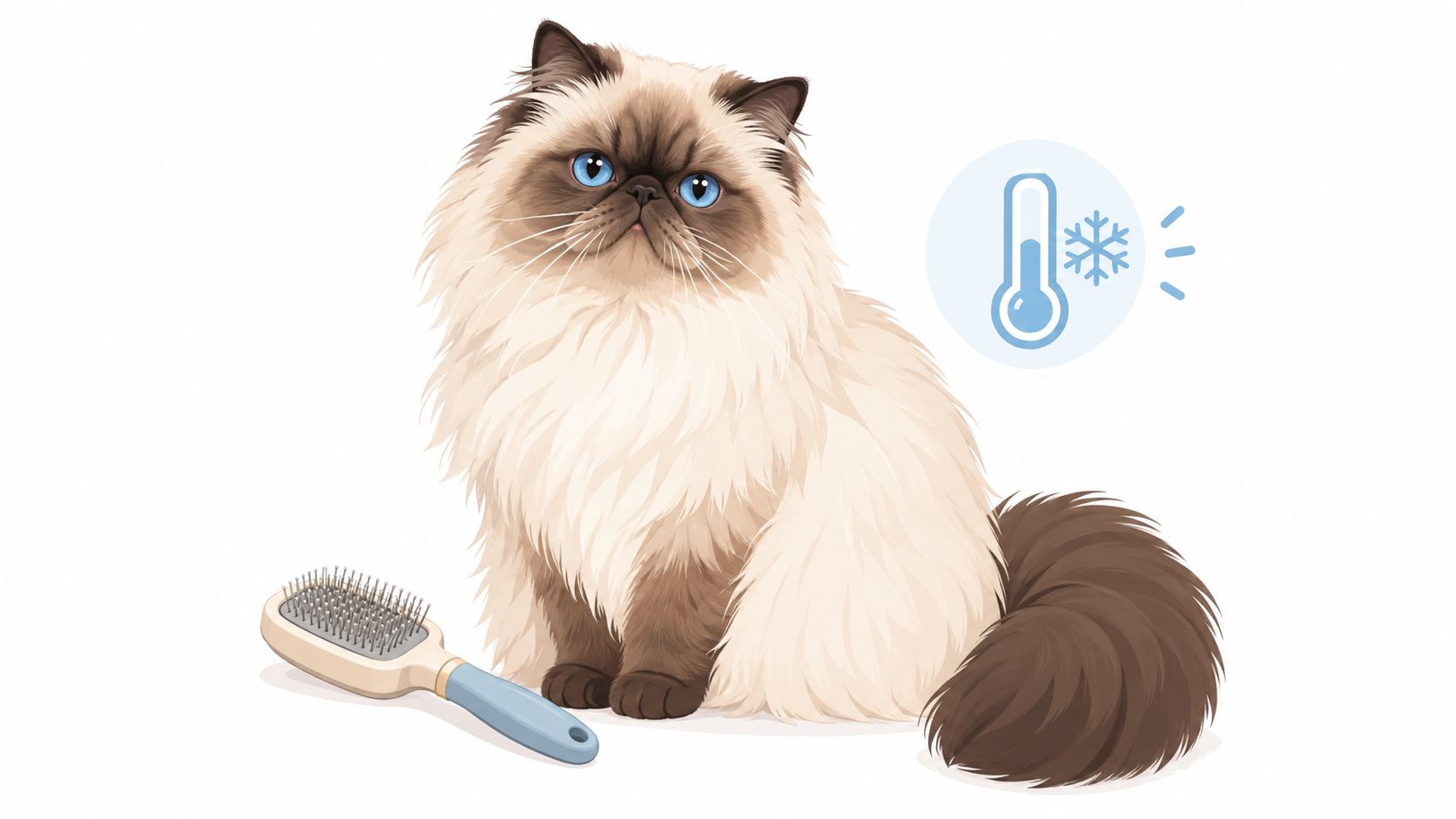
Himalayan cats combine a Persian-type facial structure with a color-point coat pattern and striking blue eyes. Their appearance can be dramatic, but their long coat adds another layer to daily care. Mats can pull at the skin, trap moisture, and make heat management harder, so grooming isn't just a beauty routine. It supports comfort and helps the owner notice changes early.
The facial structure deserves the same attention given to other flat-faced cats. Breed-focused imaging and pathology research has linked increasing brachycephaly in Persians with exophthalmos, stenotic nares, and displacement of the fourth maxillary premolar. A separate MRI study found a higher proportion of cerebellar crowding or herniation in Persians than in other breeds. These findings are discussed in the research review on feline brachycephalic anatomy. They don't diagnose an individual Himalayan, but they support a careful, function-first approach to Persian-type facial structure.
Grooming, eyes, and transport
Brush the coat on a consistent schedule, paying attention to the chest, armpits, belly, and areas behind the legs. Clean the face only as advised by your veterinary team, and seek help for squinting, rubbing, persistent discharge, or a visible change in the eye.
Travel preparation should start with a health discussion, not with a ticket purchase. Ask the veterinarian to document respiratory fitness, eye health, current treatments, and any findings that could affect transport. A pre-travel grooming appointment can reduce matting, but avoid creating stress with an unfamiliar, extensive grooming session immediately before departure.
Flat-faced cats need a travel plan built around the individual, not a generic breed label.
Confirm carrier and destination rules well in advance. Climate-controlled ground transport may be more suitable than a stressful journey involving heat, delays, or uncertain ventilation, depending on the cat's health and the route. Keep a complete paper and digital record, and use real-time document validation where available to check that the required information is present before departure.
4. British Shorthairs and the Subtle Facial Challenge
British Shorthairs don't usually have the same extreme facial profile as Persians or some Exotic Shorthairs. Their broad, round appearance can still lead owners to group them with flat-faced cats, but the individual cat's nose, nostril openings, breathing pattern, and overall structure matter more than the breed name. Some have a moderate short-muzzled appearance, while others have a more open, balanced profile.
That difference changes the conversation. An owner shouldn't assume that every British Shorthair has a breathing disorder, but shouldn't ignore symptoms because the face looks less extreme either. Watch how the cat responds to play, warm rooms, handling, and travel stress. Open-mouth breathing, repeated distress, collapse, or a sudden drop in activity calls for prompt veterinary assessment.
Look beyond the round cheeks
A pre-travel health review can include respiratory observation, heart assessment, weight, eyes, teeth, and general fitness. Ask the veterinarian which findings should appear in the certificate and whether additional screening is sensible for that individual cat. Complete records are especially useful when a carrier, destination authority, or receiving clinic needs a clear picture of the cat's current health.
Choose transport that limits heat and unnecessary handling. A familiar carrier, a quiet holding area, and temperature-controlled accommodation can make the journey easier, but these measures don't replace a veterinary decision about whether travel is appropriate.
The RSPCA explanation of brachycephalic cats describes the basic mechanism clearly. The skull is shortened, but the soft tissue in the mouth and throat remains in a smaller space, which can restrict airflow. That mechanism explains why a cat with only a moderately shortened muzzle may still need individual attention.
For veterinary practices, a task-based document workflow can help keep cardiac notes, respiratory findings, certificate timing, and destination requirements aligned. The goal is simple: make the record clear enough for the next professional to understand the cat, not just the breed.
5. Burmese Cats and Moderate Short-Muzzled Features
Burmese cats are social, sleek, and strongly bonded to their people. Their facial structure is generally more moderate than the classic Persian profile, with a rounded head and a shorter muzzle. That doesn't make respiratory or travel planning irrelevant. It means the owner should assess function without assuming that every Burmese faces the same level of risk.
A Burmese that breathes at rest and plays comfortably may have a different care plan from one that snores, tires quickly, or struggles in warm conditions. The VIN discussion of brachycephalic cats and owner perceptions reports that 69.6% of owners of brachycephalic cats said these cats suffer more than other cats, while 73.4% said they have more problems than others. Those findings reflect owner awareness, not a diagnosis for every Burmese, so a veterinarian still needs to assess the individual.
Prepare the record, not just the carrier
Before an international move, ask for a health review that covers breathing, heart health, vaccinations, weight, and any previous treatment. Check the current requirements for every country on the route, especially if the cat will change planes or remain in transit. The timing of certificates and examinations can differ, so don't rely on an old document from a previous trip.
Keep the journey calm and cool. A familiar blanket, a secure carrier, and a quiet environment may help, while your veterinary team can advise on safe preparation for stress. Don't give sedatives unless a veterinarian has specifically recommended a plan for that cat and route.
For clinics coordinating several destinations or clients, Passpaw's companion animal health resource provides a relevant starting point for discussing health information and travel documentation. Good records help the owner, the issuing veterinarian, and the receiving team work from the same facts.
6. Selkirk Rex Cats and Curly-Coated Care
Selkirk Rex cats stand out because of their curly or wavy coats and rounded facial appearance. The coat may look like permanent kitten fluff, but curls still need inspection. Some cats need help with mats, ear cleanliness, skin condition, and grooming around the face. Their coat can also make it harder to spot irritation until the owner handles the cat gently and checks the skin.
Facial structure remains the more important health question. A Selkirk Rex with a moderately shortened muzzle may breathe comfortably, while another individual may show noisy breathing or poor heat tolerance. Research on brachycephalic cats connects more extreme facial shortening with structural changes such as stenotic nares, an elongated soft palate, compressed nasal turbinates, narrowed nasal openings, and altered tear drainage. These findings appear in a 2026 review of feline brachycephaly, which also reports owner-questionnaire differences in respiratory signs between brachycephalic and non-brachycephalic cats.
Pair coat checks with breathing checks
Run your hands through the coat gently, inspect the ears without pushing anything into the canal, and ask your veterinarian about cleaning products or grooming frequency. Red skin, odor, discharge, repeated head shaking, or pain during grooming should not be treated as a quirky coat feature.
Before travel, document respiratory and cardiac findings, ear health, current treatments, and the condition of the skin and coat. Arrange grooming early enough to avoid a last-minute stressful appointment, and check whether professional grooming is available at the destination. Temperature-controlled accommodation matters because a dense or curly coat can complicate comfort in warm conditions.
A travel platform can help a practice organize breed-relevant notes without treating them as automatic diagnoses. Record what the veterinarian observed, then connect those findings to the destination's current requirements.
7. Bombay Cats and Panleukopenia Planning
Bombay cats are known for a sleek black coat, a rounded face, and a compact, expressive appearance. Their athletic look can make owners underestimate the importance of respiratory observation, especially when the cat appears energetic at home. A moderate facial structure still deserves an individual assessment, particularly before a stressful journey or a move to a different climate.
The health record should cover more than breathing. Confirm that vaccinations are current and documented, including protection against panleukopenia where it forms part of the veterinarian's preventive plan and the destination's requirements. Don't assume that a verbal vaccination history will satisfy a carrier or border authority. The certificate needs to contain the information required for that route, with dates and identification details checked carefully.
Travel documentation and temperature control
Ask your veterinarian to review respiratory fitness, cardiac health, previous treatments, and vaccination status. Research the current rules for every destination and carrier, because acceptance, examination timing, and vaccination requirements can vary. A cool, stable environment is preferable to temperature swings, long waits in exposed areas, or hurried transfers.
The Passpaw guide to the distemper vaccine for cats can support a conversation about feline vaccination documentation. Your veterinarian remains the right person to decide which vaccines and examinations fit the cat's health, age, history, and destination.
Use a secure carrier, keep copies of the records, and make sure the emergency contact information is easy to find. If a cat develops breathing distress, weakness, collapse, or marked overheating, seek urgent veterinary help rather than continuing the journey.
7 Brachycephalic Cat Breeds: Health & Care Comparison
Breed | Care Complexity 🔄 | Resource Needs ⚡ | Health & Travel Impact 📊 | Ideal Use Cases & Key Advantages ⭐ | Quick Tips 💡 |
|---|---|---|---|---|---|
Persian Cats: Flat-Faced Elegance | Very high, daily brushing, eye cleaning, frequent grooming sessions | High, grooming services, regular vet checks, climate-controlled environment | Significant respiratory & eye risks; often restricted on airlines; higher vet costs. ⭐ (1/3) | Indoor companion, show/breeding; extremely affectionate, calm appearance | Obtain full health certificates early; arrange climate-controlled travel; document respiratory/cardiac status |
Exotic Shorthair: No‑Fuss Persian Alternative | Moderate, weekly brushing, occasional eye care | Moderate, less grooming time/cost than Persian; vet monitoring still needed | Shares brachycephalic risks; travel restrictions common; lower grooming burden. ⭐⭐ (2/3) | Good for owners wanting Persian look with lower grooming; indoor family cat | Verify airline policies; schedule pre-travel vet check 1–2 weeks prior; document eye health |
Himalayan Cats: Long‑Coated Elegance | Very high, daily de-matting, professional grooming often required | Very high, grooming, temperature control, frequent vet care | Severe respiratory & grooming-related complications; highly restricted for air travel. ⭐ (1/3) | Show/breeding, indoor households that can commit to grooming | Pre-travel professional grooming; provide detailed respiratory certification; use climate-controlled transport |
British Shorthair: Subtle Brachycephalic | Low–moderate, regular brushing, routine care | Low–moderate, routine vet checks, weight management | Moderate health impact; less extreme brachycephaly; better airline acceptance. ⭐⭐⭐ (3/3) | Family-friendly, hardy indoor cat; lower grooming needs than long‑haired breeds | Prioritize cardiac screening; document fitness for travel; monitor weight and heat exposure |
Burmese Cats: Subtle Facial Structure | Low, minimal grooming, regular routine care | Low–moderate, cardiac screening, vaccinations | Moderate risks (cardiac tendencies, some respiratory susceptibility); generally better travel acceptance. ⭐⭐⭐ (3/3) | Highly social, bonded companions; suitable for active families and relocation | Obtain echocardiogram if breeding or traveling; keep vaccinations current within 10–14 days of travel |
Selkirk Rex: Curly‑Coated Brachycephalic | Moderate, specialized coat care, ear inspections | Moderate, grooming expertise, possible dermatology/ear care | Moderate health impact; grooming and ear issues plus some respiratory risk; relatively fewer airline bans. ⭐⭐ (2/3) | Unique appearance for families seeking distinctive pet; adaptable indoor companion | Pre-travel grooming and ear check; document absence of infections; plan for professional groomer at destination |
Bombay Cats: Dark‑Coated Brachycephalic | Low, short coat, routine care | Low–moderate, robust vaccination needs, cardiac checks | Moderate risks (panleukopenia sensitivity, HCM, respiratory infections); travel OK with proper documentation. ⭐⭐⭐ (3/3) | Sleek, social indoor cat with low grooming; good for families and training | Ensure panleukopenia vaccination records; obtain cardiac certification; maintain warm, stable environment |
Choose With Care, Not Just by the Face
A useful way to compare brachycephalic cat breeds is to ask three practical questions. How pronounced are the facial features? A Persian or Himalayan may have a more obvious shortened muzzle, while a British Shorthair or Burmese may show a subtler profile. What daily care can the household provide? Persians and Himalayans need substantial coat and face care, Exotics reduce coat work but still need health monitoring, and curly-coated breeds such as Selkirk Rex cats need a grooming routine suited to their coat.
The third question is the most important. What does a veterinarian find in this individual cat? A breed label can guide awareness, but it can't measure nostril openness, breathing effort, eye comfort, dental crowding, heart health, weight, or heat tolerance in one specific animal. Some flat-faced cats may live comfortably with attentive care, while others need closer monitoring or treatment. The Cats Protection guidance on brachycephalic cats emphasizes this more balanced view. Not every cat shows obvious respiratory distress, but the overall facial design can raise lifetime risks involving breathing, eyes, teeth, skin, and heat.
Watch for warning signs that need prompt veterinary attention:
Breathing distress: Open-mouth breathing, breathing difficulty at rest, blue-tinged tissues, or collapse is an emergency.
Reduced tolerance: Sudden tiring, reluctance to move, or distress after mild activity needs assessment.
Eye changes: Squinting, light sensitivity, pawing, or persistent discharge may signal pain or injury.
Mouth problems: Drooling, difficulty chewing, dropping food, or obvious oral pain can point to dental disease.
Skin and coat changes: Red, moist, smelly folds or a sudden failure to groom deserve veterinary review.
Travel adds another layer. Check current carrier rules and destination requirements before booking, ask the veterinarian whether the cat is fit for the planned route, and build in time for certificates, vaccinations, examinations, and corrections. Passpaw can help veterinary practices organize health certificates, validate documents, prioritize tasks by travel dates, and keep clients informed as requirements change.
The responsible choice isn't the flattest face or the most dramatic expression. Choose the cat whose health, comfort, and welfare can be supported throughout ordinary life, not just admired in a photograph.
Passpaw helps veterinary practices and pet owners organize international health certificates, validate travel documents, prioritize time-sensitive tasks, and communicate through the application process. If you're planning travel with a flat-faced cat, visit Passpaw to see how the platform can support a clearer, more organized documentation workflow.

More articles
From regulatory changes to best practices for veterinarians and pet owners, our resources keep you ahead of the curve.