Are you a team member in a veterinary practice?
Are you a pet parent planning a trip with your furry pal?
Companion Animal Health: A Complete Guide for Pet Owners
Maya's morning looks ordinary until she notices Biscuit's stiff stretch beside the back door. Her eight-year-old beagle takes a moment to loosen his hips, then trots toward the car for his routine wellness visit, nose working through the cool air coming from the cracked window. At the clinic, the receptionist greets him by name, and Biscuit responds with a hopeful tail wag that says he has already forgiven everyone for the scale.
That small appointment captures the heart of companion animal health. It isn't one dramatic rescue or one perfect decision. It's a rhythm of meals, movement, vaccines, parasite prevention, dental care, observation, and regular veterinary support layered over many years.
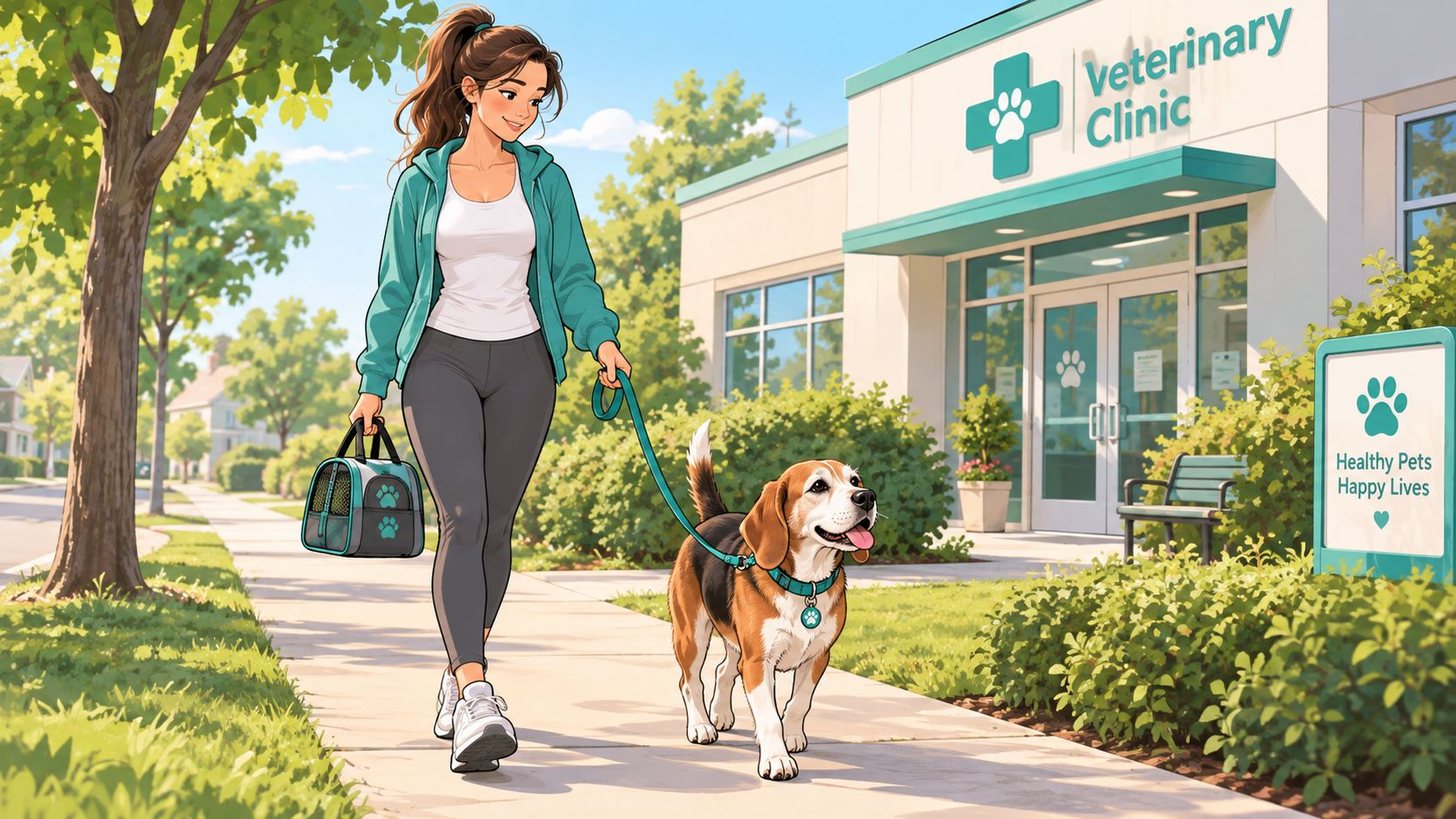
While Biscuit waits, Maya thinks about his day. He'll have a measured breakfast, an evening dental chew, and a burst of post-dinner zoomies around the living room. The details seem small, but together they help protect his comfort and independence.
The useful questions are just as practical. How do you keep this rhythm going as a pet ages? Which preventive habits matter most? And how can everyday health care also prepare a dog or cat for travel, when certificates, vaccines, microchips, and parasite rules suddenly become part of the journey?
A Day in the Life of a Well-Cared-For Pet
Small observations carry useful information
At the examination room, the veterinarian asks Maya questions that sound simple. Is Biscuit eating normally? Does he hesitate on stairs? Has his thirst changed? Does he chew on one side of his mouth? These details help create a picture of his normal behavior, which makes subtle changes easier to spot later.
Biscuit's stiff morning stretch could be harmless after sleep, or it could be worth watching as he grows older. In a U.S. cohort of 43,517 companion dogs, owner-reported intervertebral disc disease had a lifetime prevalence of 1.2%, representing 520 dogs in that group (PubMed research on canine intervertebral disc disease). The number is a useful reminder that uncommon conditions still matter in clinical practice, especially when a dog shows pain, weakness, or a change in walking.
Practical rule: Your pet's ordinary behavior is a health record in motion. Notice changes before they become emergencies.
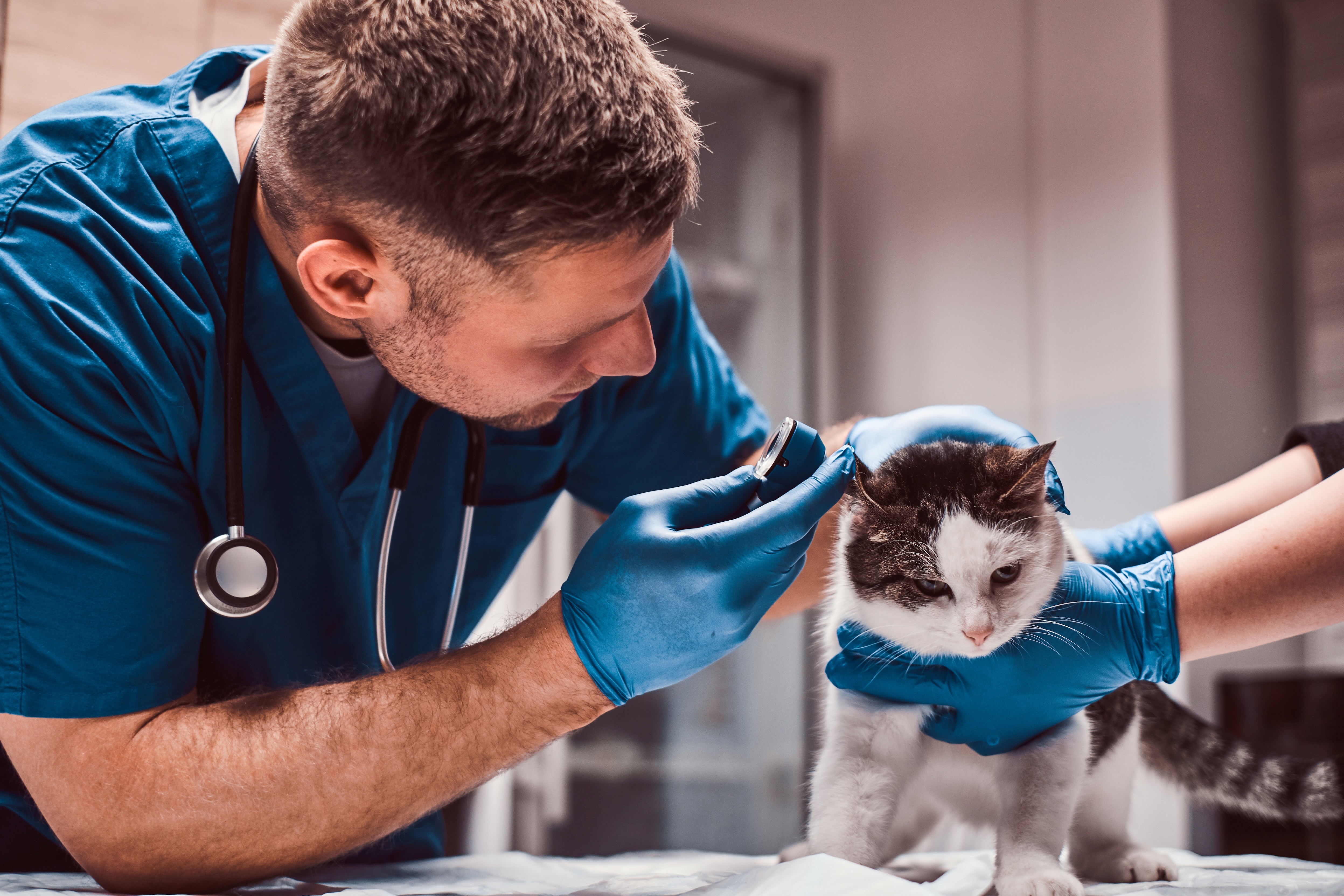
Maya tells the veterinarian that Biscuit still enjoys his walks but takes longer to settle afterward. The vet checks his gait, joints, heart, lungs, abdomen, skin, ears, and mouth. Nothing about the visit feels dramatic, and that's precisely the point. A calm baseline gives both of them something to compare with in the future.
Wellness lives between appointments
At home, companion animal health depends on routines owners can maintain. Maya measures Biscuit's food instead of filling the bowl by guesswork, checks his coat after walks, follows his preventive plan, and makes tooth care part of the evening rather than waiting for bad breath to become impossible to ignore.
The same principle applies to cats, although their routines may be quieter. A cat hiding more often, jumping less, drinking differently, or avoiding the litter box deserves attention even if she still looks tidy and composed. Cats are excellent at keeping their own counsel, which can make owner observation especially valuable.
A well-cared-for pet isn't protected from every illness. Rather, the owner has built a pattern that makes problems easier to notice, treatment easier to plan, and daily life more comfortable. That pattern is what prevention looks like over a lifetime.
Why Preventive Care Now Leads the Pack
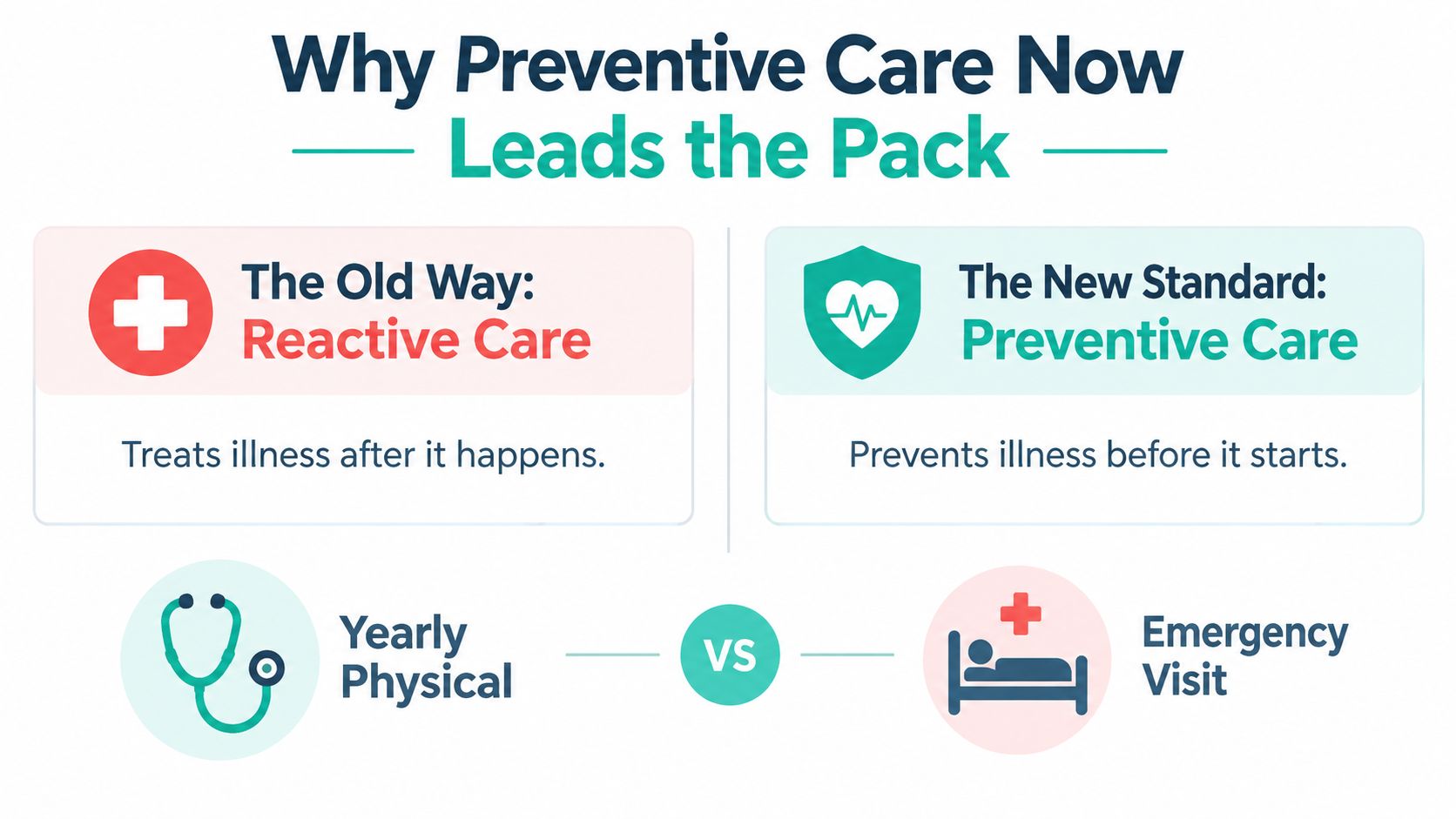
A wellness visit is the veterinary version of a routine physical. It gives the veterinarian a chance to find early clues, discuss risks, and adjust care before a pet needs urgent treatment. Waiting until a crisis appears is more like skipping ordinary health checks and going straight to the emergency room.
Pets are also living longer, so they have more time to develop conditions that need ongoing management. Industry reporting says average life expectancy for U.S. dogs rose from 10.5 years in 2002 to 11.8 years in 2016, an 11.4% increase, and reports increases of as much as 230% in some nations (HealthforAnimals report on global pet health trends). Longer lives are welcome news, but they make routine screening, dental care, weight management, and monitoring for chronic disease more important.
Prevention is a sequence, not a single appointment
A preventive plan usually combines several actions:
Regular examinations: The veterinarian checks for changes that may not be obvious at home.
Risk-based screening: Age, breed, species, lifestyle, and previous illness shape which tests are useful.
Daily management: Food portions, exercise, oral care, and parasite control influence health between visits.
Record keeping: Clear vaccine and medical records help the practice make safer decisions, especially before travel.
Early attention can also reduce stress. A pet with a developing dental problem may tolerate a planned conversation and examination better than a pet arriving in pain and unable to eat comfortably. A dog with a new heart sound can be assessed calmly, while a sudden breathing crisis leaves fewer choices and more fear for everyone.
Companion animal health has become a major economic segment, with the global market estimated at about USD 25.46 billion in 2025 and projected to reach USD 56.41 billion by 2033, implying a 10.6% CAGR from 2026 to 2033 (Grand View Research companion animal health market analysis). The same industry summary places the market at around USD 19.2 billion in 2022 and projects USD 26.9 billion by 2027, reflecting sustained spending on veterinary medicines, vaccines, diagnostics, and preventive care.
For owners, the lesson isn't that every test or product is necessary. It's that veterinary care now supports pets through longer, more complex lives. Resources on pet healthcare for aging animals can also help families think about comfort, function, and quality of life as a pet's needs change.
The Four Habits That Keep Pets Thriving
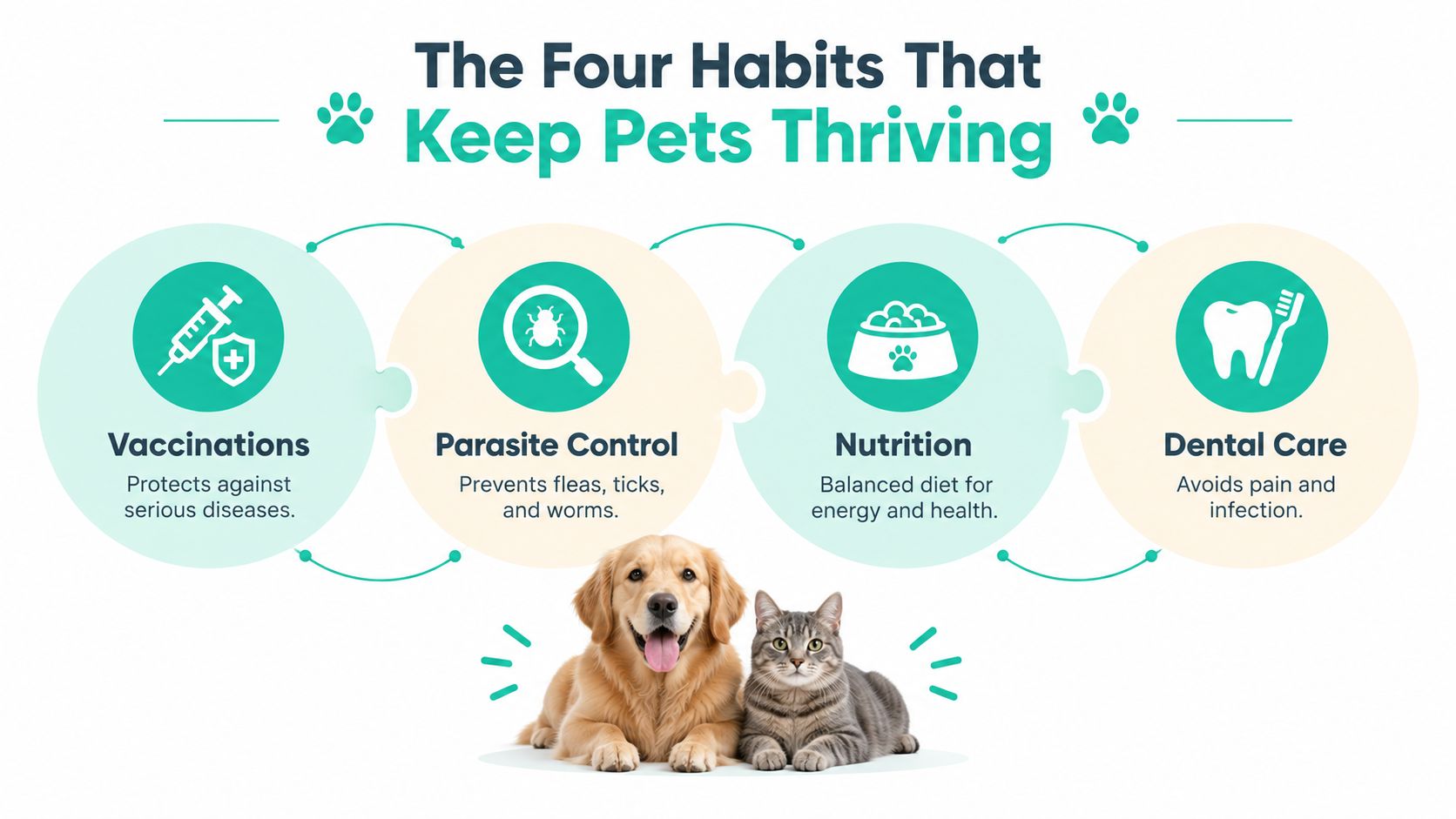
Vaccination, parasite control, nutrition, and dental care work best as a connected system. Treating them as four unrelated chores makes it easier to skip one, yet each habit supports the others.
Vaccination creates the foundation
Dogs and cats typically receive core vaccines against serious infectious diseases, with schedules shaped by age, lifestyle, local risk, and the product used. Puppies and kittens need a series of visits while their early protection develops, followed by booster planning with the veterinarian. Adult boosters don't follow one universal timetable, so owners should rely on the medical record and the practice's recommendation rather than an old reminder from another pet.
A booster isn't just a repeat injection chosen at random. It's part of a protection plan that may change when a pet boards, travels, attends group activities, or encounters wildlife. A plain-language explanation of booster shots for dogs can help owners understand why timing matters.
Parasite control needs consistency
Fleas, ticks, intestinal worms, and heartworm risk vary by location and lifestyle, but parasites don't read calendars. Indoor pets can still encounter risks through other animals, people, soil, mosquitoes, or brief outdoor trips. Ask the veterinarian which preventive products fit your pet, local exposure, health status, and household.
Nutrition starts with body condition
A food bag can tell you how a product is formulated, but your pet's body tells you whether the feeding plan is working. Run your hands over the ribs, look at the waist from above, and ask the veterinary team to show you how to assess body condition.
Free-feeding can provide more energy than a pet needs, especially when treats, chews, table scraps, and reduced activity enter the picture. Measured portions and regular review are more useful than choosing food by marketing language alone.
Dental care protects comfort
Daily tooth brushing is the most effective home dental intervention. If daily brushing isn't realistic, brushing several times each week is still a practical goal, provided your pet accepts it safely and the veterinarian confirms the technique.
Professional dental cleanings under anesthesia allow the team to examine and treat areas that home care can't reach. Think of the cleaning as a reset button, not a replacement for brushing. A parasite-free dog with painful dental disease is still struggling, and oral discomfort can affect eating, mood, and daily interaction.
These habits also reveal why dog and cat care can't always use the same script. Cats often need a gentler route into the same preventive rhythm.
The Cat Care Gap and How to Close It
Dogs often arrive at the clinic because walks, boarding, training, or visible symptoms bring owners into regular contact with veterinary care. Cats can be harder to assess. They hide illness, dislike unfamiliar handling, and may associate the carrier with the clinic long before the car leaves the driveway.
The difference is visible in veterinary-visit patterns. A global review reports that dogs average 1.5 veterinary visits per year, while cats average 0.7, and says only about 40% of U.S. dog and cat owners visit a veterinarian once a year (Global State of Pet Care review).
Metric | Dogs | Cats |
|---|---|---|
Average veterinary visits per year | 1.5 | 0.7 |
The gap isn't proof that cat owners don't care. Many believe an indoor cat has little exposure to disease, or they wait until a visible problem appears. A heavy carrier, a stressful car ride, and a difficult examination can reinforce that delay.
Make the first step easier
Start carrier training at home. Leave the carrier open in a familiar room, add a soft blanket, and allow your cat to investigate without being pushed inside. Short practice sessions can make the carrier less alarming than bringing it out only on appointment day.
Ask whether the clinic uses feline-friendly handling. Quiet rooms, gentle restraint, towel support, careful scheduling, and patience can change the experience. Some practices also offer mobile, concierge, or cat-focused services, which may suit nervous patients.
At a cat wellness visit, expect more than a vaccine conversation. The veterinarian should discuss appetite, water intake, litter-box habits, mobility, grooming, behavior, weight, oral health, and age-related screening. Keep vaccine details organized with a resource such as this cat vaccination record guide.
Preventive conversations can include diet and digestive comfort too. Owners considering cat probiotics should discuss the product with their veterinarian, particularly if a cat has ongoing vomiting, diarrhea, weight loss, or another medical concern. A supplement shouldn't distract from finding the cause of a symptom.
The aim isn't to make cats behave like small dogs. It's to design care around feline behavior, then give cats the same opportunity for early support.
What Really Happens at the Vet
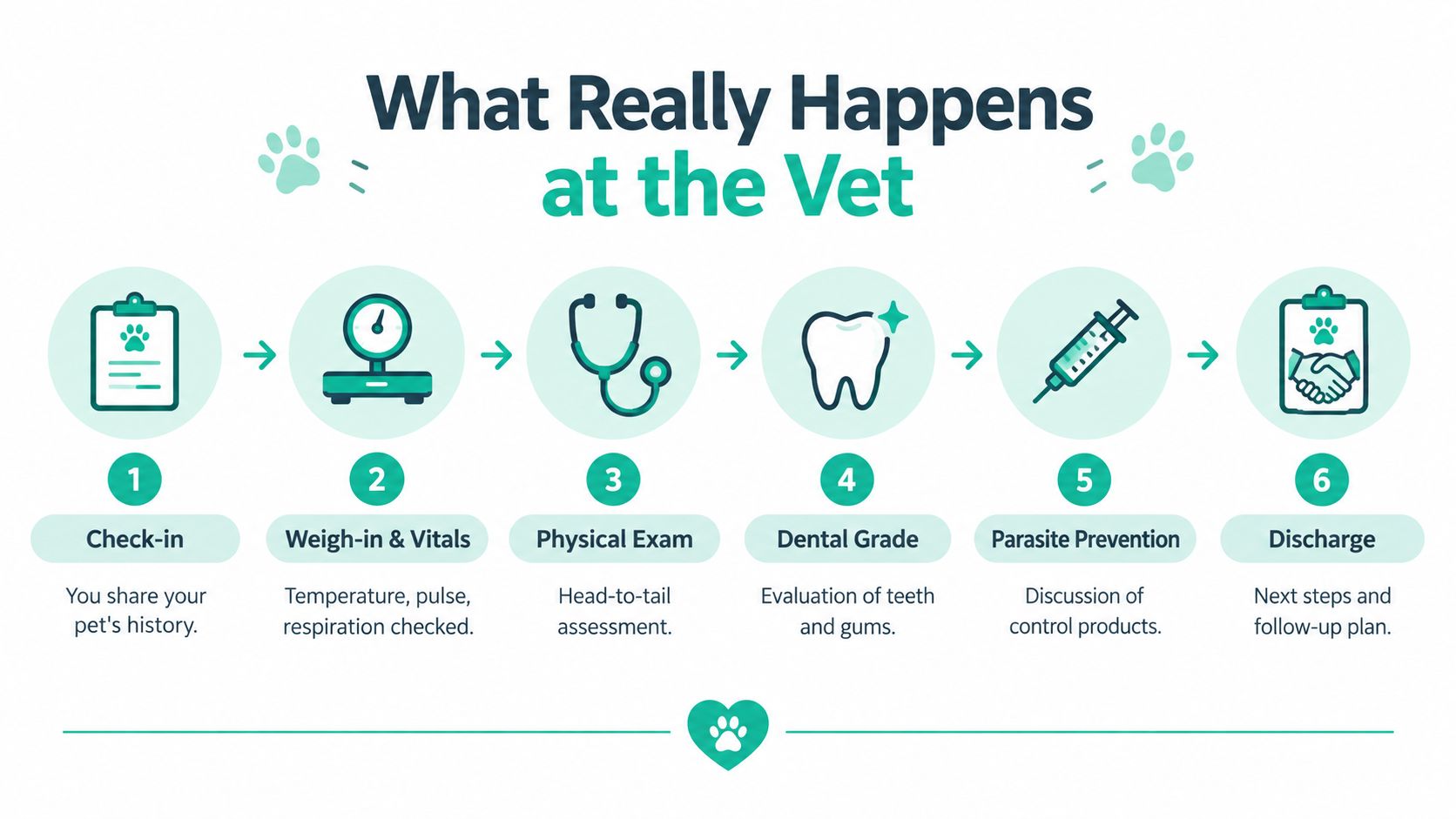
A routine appointment begins before the veterinarian enters the room. At check-in, the team confirms the reason for the visit, updates contact details, and asks about appetite, water, stool, urine, sleep, movement, medications, and behavior. Your observations matter because you see the pet in the setting where normal behavior is easiest to judge.
Next comes weight and basic vital signs, followed by a head-to-tail examination. The veterinarian listens to the heart and lungs, feels the abdomen, checks joints and muscles, examines the skin and ears, and looks closely at the mouth. A dental grade helps describe the condition of the teeth and gums, while parasite screening and laboratory testing may be recommended when the history, age, lifestyle, or examination supports it.
The schedule changes with the patient
Young puppies and kittens often need appointments every three to four weeks until sixteen weeks, while adult pets commonly receive annual examinations and senior pets may be seen every six months. These intervals are general examples, not a substitute for an individualized plan, because species, breed, medical history, lifestyle, and local disease risk all matter.
A general practice handles routine preventive care and many common illnesses. Urgent care is appropriate when a pet needs prompt attention outside ordinary scheduling, while specialty referral may be needed for advanced imaging, surgery, oncology, neurology, or another focused service.
The conversation is part of the examination
The final part of the visit should leave you with clear next steps. That might include a vaccine plan, a dental recommendation, bloodwork, a diet adjustment, activity restriction, or a follow-up appointment. Ask what changes should trigger a call and which signs mean you shouldn't wait.
A bite also deserves prompt guidance, especially when rabies vaccination status or the identity of the biting animal is uncertain. For general information about what to do after a dog bite, use a reliable health resource and contact medical or veterinary professionals for advice suited to the incident.
Keeping one primary veterinarian involved over time helps the team recognize your pet's baseline. You don't need to remember every detail yourself. Bring questions, medication labels, videos of unusual behavior, and any home notes that could make the visit more useful.
Pets, People, and One Health
One Health describes the connection between animal health, human health, and the environment. In a household, the idea is practical rather than abstract. The way you give medication, clean bowls, handle waste, and control parasites can affect more than one species.
Antimicrobial resistance is a clear example. A nationwide U.S. laboratory study found carbapenem-resistant Enterobacterales in companion dogs and cats at low prevalence, but the finding matters because companion animals can carry resistance genes that complicate treatment and raise One Health transmission concerns (PubMed study on carbapenem-resistant Enterobacterales in companion animals).
That doesn't mean owners should panic. It means antibiotics deserve care and context.
Use testing when appropriate: Culture and susceptibility testing can help guide treatment before a veterinarian escalates to last-line antibiotics.
Follow the prescription: Give medication exactly as directed, and ask the practice what to do if your pet vomits or misses a dose.
Clean thoughtfully: Wash bowls, bedding, hands, and surfaces when illness makes extra hygiene sensible.
Manage waste: Pick up feces promptly and dispose of it safely.
Control parasites: Flea and tick prevention protects the pet and reduces household exposure.
Companion animals are also part of public health surveillance, yet the evidence base for antimicrobial resistance in pets remains fragmented. A 2026 WOAH-linked review says companion animals are under-represented in coordinated AMR surveillance, with gaps involving organisms such as ExPEC, MRSP, and possible dog-to-human spread (WOAH-linked AMR review). The UK government has also said there is no national system for monitoring AMR in healthy cats and dogs and launched a surveillance pilot in 2026.
Common zoonotic concerns, including leptospirosis, toxoplasmosis, and salmonella, are manageable topics when owners receive clear advice. Ask your veterinarian about vaccines, food handling, litter hygiene, handwashing, and risks specific to children, older adults, or immunocompromised household members.
Travel-Ready Pets Start with Everyday Health
Travel paperwork works best when it grows out of ordinary preventive care. A pet whose vaccine records are clear, microchip information is consistent, and parasite plan is current is easier to prepare than a pet whose history is scattered across old emails and clinic systems.
Rules depend on the destination, route, species, and travel date. For travel from Great Britain to the European Union, an animal health certificate must be issued by a veterinarian, and it is valid for EU entry for 10 days after issue. The pet must also wait at least 21 full days after the first rabies vaccination before travel (UK guidance on getting an animal health certificate).
Start with the destination, not the suitcase
Country requirements can include specific vaccine records, identification rules, parasite treatments, laboratory tests, and endorsement steps. The European Union, for example, can require dogs to receive treatment for the tapeworm Echinococcus within a destination-defined travel window. Because details vary, owners should check the official rules well before departure and ask a veterinarian who handles travel cases.
For U.S. export situations, dogs traveling to or returning from a high-risk rabies country need the CDC form called the Certification of U.S.-Issued Rabies Vaccination. A USDA-accredited veterinarian must complete it, and it must be endorsed before the dog leaves the United States (USDA APHIS guidance for accredited veterinarians).
The certificate exam isn't a paperwork-only appointment. The veterinarian assesses whether the pet is fit to travel and verifies that records, identification, and destination requirements align. A microchip should be checked against the medical record, and vaccine timing should be reviewed before the certificate window begins.
Use a simple preparation list
Confirm the destination rules: Check official government requirements for every country and transit point.
Verify identification: Make sure the microchip number matches the records and can be read.
Schedule early: Give the veterinarian time to complete examinations, testing, treatments, and endorsements.
Organize records: Carry printed vaccine documents and keep digital copies available.
Track deadlines: Write down rabies, treatment, certificate, and endorsement dates.
A guide to the veterinary health certificate process can help owners understand why timing matters. The safest approach is to treat travel readiness as a continuation of everyday care, not a last-minute administrative sprint.
Bringing It All Together for a Happier Pet
Maya doesn't need a perfect routine to support Biscuit. She needs a repeatable one. Vaccination, parasite control, measured nutrition, and dental care reinforce each other, while regular examinations help the veterinary team adjust those habits as Biscuit's age, activity, and health change.
The same mindset works for cats, even when the practical route looks different. A calm carrier introduction, a cat-aware clinic, and careful observation at home can make preventive care more achievable. The goal is not to force every pet into the same schedule. It's to give each animal a reliable path to early attention.
Travel readiness belongs in that same path. Clear health records, accurate identification, and timely vaccine planning reduce confusion when a trip is approaching. A well-maintained dog health records system can also make it easier to share important information with a new clinic, boarding facility, or travel veterinarian.
One Health adds another layer of responsibility. Safe medication use, waste disposal, parasite prevention, and sensible hygiene protect the household as well as the pet. Good ownership reaches beyond the food bowl.
Start small: Book the overdue wellness visit, request a copy of the vaccine record, arrange a dental assessment, or microchip a pet who doesn't have reliable identification.
Choose one action this week and put the next action on your calendar. Daily brushing matters because it happens repeatedly, not because one heroic session can repair months of neglect. Companion animal health is a partnership between you, your veterinarian, and the wider community, with Biscuit's happy tail as a rather persuasive co-signer.
Passpaw helps veterinary practices manage international pet travel health certificates, destination requirements, deadlines, document checks, and client communication in one cloud-based workflow. If you're preparing a pet for a trip, visit Passpaw to explore a more organized way to keep travel health tasks connected to everyday care.
More articles
From regulatory changes to best practices for veterinarians and pet owners, our resources keep you ahead of the curve.