Are you a team member in a veterinary practice?
Are you a pet parent planning a trip with your furry pal?
Your Guide to the Distemper Vaccine for Cats
The distemper vaccine for cats is one of the most important things you can do for your furry friend. It’s a core vaccine, which means vets see it as absolutely essential for all cats, whether they’re indoor couch potatoes or outdoor adventurers. This isn’t just routine care; it’s a powerful shield against a tough and often fatal virus called Feline Panleukopenia.
Why Your Cat Needs the Distemper Vaccine
Feline distemper, officially known as Feline Panleukopenia Virus (FPV), is a highly contagious and serious illness. The name itself—"panleukopenia"—literally means a drop in all white blood cells. That’s exactly what the virus does: it wages an all-out war on a cat's immune system.
Think of your cat's body as a well-guarded fortress, with white blood cells as the soldiers on patrol. The panleukopenia virus is like a saboteur that sneaks in and wipes out the entire army, leaving the fortress completely defenseless against other invaders like bacterial infections.
This viral assault is incredibly swift and targets the body's fastest-growing cells, hitting three critical areas the hardest:
Bone Marrow: This is the factory making all those soldier cells. The virus shuts down production, causing a huge drop in white blood cells and crippling the immune system.
Intestinal Tract: FPV attacks the lining of the gut, leading to severe, often bloody, vomiting and diarrhea. This causes extreme dehydration and weakness.
Developing Kittens: If a pregnant cat gets infected, the virus can attack the developing kittens' brains. This can cause a lifelong condition called cerebellar hypoplasia, which affects their balance and coordination.
A Quick Summary
To put it all in perspective, here's a quick look at what makes this virus so dangerous.
Feline Panleukopenia at a Glance | |
|---|---|
Aspect | Description |
Common Name | Feline Distemper |
Scientific Name | Feline Panleukopenia Virus (FPV) |
Primary Target | Rapidly growing cells (bone marrow, intestines, fetal tissue) |
Key Symptom | Severe drop in white blood cells (panleukopenia) |
Transmission | Highly contagious through bodily fluids and contaminated environments |
Environmental Survival | Can survive for up to a year on surfaces |
Mortality Rate | Up to 90% in unvaccinated kittens |
Prevention | Core vaccination |
This table highlights why prevention isn't just important—it's critical. The virus is simply too tough and too deadly to take any chances.
The Wildfire Effect of Feline Distemper
What makes panleukopenia especially scary is how resilient it is. The virus can survive in the environment for up to a year, and it’s resistant to many common household cleaners. It can easily hitch a ride into your home on shoes, clothing, or hands, putting even strictly indoor cats at serious risk.
The virus spreads like wildfire through a feline population and is especially lethal for kittens. For unvaccinated little ones, the death rate can be as high as 90%. This is precisely why veterinarians consider the FPV vaccine a non-negotiable part of every cat's health plan.
Vaccination isn't just about protecting your own cat; it's about contributing to community immunity. Every vaccinated cat helps build a firewall that stops the virus from spreading and protects the most vulnerable felines in your area.
A Growing Commitment to Feline Health
Thankfully, pet owners are more proactive about preventative care than ever. The global market for cat vaccines, including the distemper shot, was valued at around USD 1.34 billion in 2023 and is expected to keep growing. This isn't just a market trend; it shows a worldwide understanding that vaccines are a simple, cost-effective way to prevent a lot of suffering.
When you weigh the seriousness of panleukopenia against the safety and effectiveness of the vaccine, the choice is clear. Think of it this way: just as health certificates are a key passport for your pet’s safety when traveling, core vaccines are their passport to a long and healthy life. If you're planning a trip, our guide to international pet travel requirements can help you navigate the necessary health documents to keep them safe on the journey.
Your Cat's Vaccination Timeline
Figuring out your cat’s vaccination schedule can feel a little confusing at first, but it’s pretty straightforward once you understand one key thing: a kitten’s needs are different from an adult cat’s. A well-timed vaccination plan is the best way to build a powerful, lasting defense against feline panleukopenia, giving them a head start on a long, healthy life.
Think of a kitten's first shots as building a fortress, brick by brick. Newborn kittens get temporary protection from their mother’s milk, thanks to something called maternally derived antibodies (MDAs). These antibodies are fantastic bodyguards for the first few weeks of life, but there's a catch—they eventually fade away and can actually block a vaccine from working properly if it's given too early.
To get around this, veterinarians give a series of shots over several weeks. This strategy ensures that just as the mother's protection starts to wear off, the kitten's own immune system is being trained to step up and take over. It’s all about timing it just right to close any gaps in their defenses.
The Kitten Vaccination Series
The journey to full immunity starts when a kitten is just a tiny fluffball. This initial series of the distemper vaccine is one of the most important things you can do for their health early on.
Here’s what that schedule usually looks like:
First Shot: Kittens get their first distemper vaccine between 6 to 8 weeks of age. This lays the first "brick" in their protective wall.
Booster Shots: After that, they’ll need boosters every 3 to 4 weeks to reinforce their developing immunity.
Final Kitten Booster: The series wraps up when the kitten is about 16 to 20 weeks old. This last shot is critical because by this age, any leftover maternal antibodies are gone, allowing the vaccine to work at full strength.
Sticking to this schedule is very important. Missing a booster shot can create a dangerous window of vulnerability right when a kitten is most at risk. It’s a small commitment for a lifetime of protection.
This timeline shows just how quickly panleukopenia can take hold in an unprotected cat.
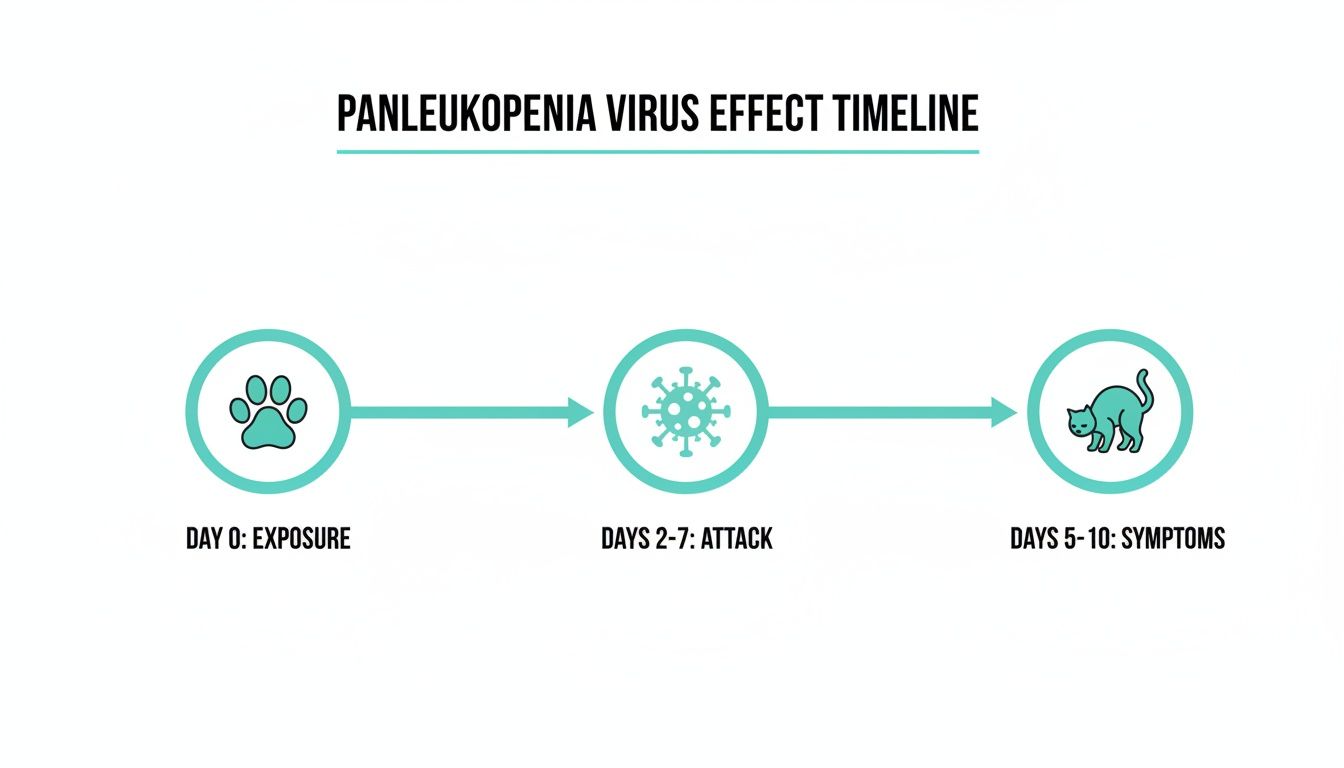
As you can see, the time from exposure to severe illness is frighteningly short, which is exactly why getting them vaccinated on schedule is so important.
Vaccination for Adult Cats
Once your cat has made it through their kitten series, the goal shifts from building immunity to maintaining it. They're not off the hook forever; they just need less frequent tune-ups.
About a year after finishing the kitten series, an adult cat will need another booster. This shot helps solidify their long-term immune memory, locking that protection in for the long haul.
After the one-year booster, the plan for the distemper vaccine usually changes to a booster every 1 to 3 years. The right frequency depends on a few things, like the specific vaccine used, your cat's lifestyle, and your vet's recommendation.
An indoor-only cat who never meets other felines might be fine on a three-year schedule. On the other hand, a cat who goes to boarding facilities or has a busy social life might be better off with more frequent boosters. Your vet will help you figure out the best plan for your individual cat.
Here’s a quick comparison of the timelines for kittens versus adult cats.
Typical Feline Distemper Vaccination Schedules
Cat's Age | Recommended Action | Key Consideration |
|---|---|---|
Kittens (6-20 weeks) | Initial series of shots every 3-4 weeks. | The goal is to build a strong immune foundation as maternal antibodies fade. |
Young Adults (1 year) | A single booster shot one year after the kitten series. | This dose locks in the long-term immunity established during kittenhood. |
Adults (Over 1 year) | Regular booster shots every 1-3 years. | The frequency is based on individual risk, lifestyle, and vet recommendations. |
Keeping good vaccination records is a bigger deal than you might think, especially if you ever plan to travel with your cat. Many countries ask for proof of current vaccinations for entry. If you're curious about what documents your trip might require, our guide explains how to get a pet passport. Good records ensure your cat is not only healthy but also ready to go wherever you do.
Understanding How the Vaccine Works
Ever wonder what’s actually happening inside your cat’s body after they get a vaccine? It’s not magic, but it is some pretty clever science. Think of the distemper vaccine as a personal trainer for your cat's immune system, teaching it how to win a fight before the real battle even starts.
To get the job done, veterinarians rely on one of two main types of vaccines. Each uses a slightly different teaching method, but the goal is always the same: building a strong, lasting defense to protect your cat from the panleukopenia virus. Knowing the difference can help you feel more confident about the protection your cat is getting.
Modified-Live Virus (MLV) Vaccines
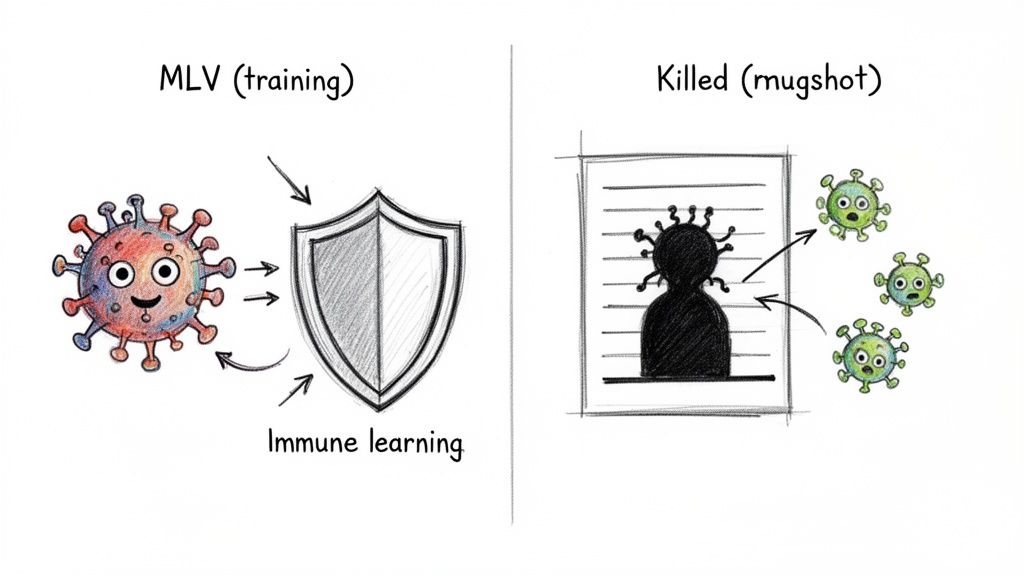
The most common choice for feline distemper is the Modified-Live Virus (MLV) vaccine. You can think of it as a very realistic training exercise for the immune system. This vaccine contains a real version of the panleukopenia virus that has been weakened in a lab so it can no longer cause disease.
When this weakened virus is introduced, the immune system kicks into high gear. It learns to spot the invader, builds an army of antibodies, and creates a "memory" of the attack—all without the danger of a real infection. It's this hands-on training that creates such a strong and fast immune response.
Because they mimic a natural infection so well, MLV vaccines tend to provide longer-lasting immunity. They are a powerful tool, especially for young kittens who need to build a solid defense from the ground up.
The real advantage of an MLV vaccine is that it creates a full immune response. It teaches the body to fight off the virus quickly and effectively, providing a strong shield that often lasts for years.
While this method is very reliable, it isn't the perfect fit for every single cat. For instance, veterinarians usually avoid using MLV vaccines in cats with weakened immune systems or in pregnant queens, just to be on the safe side.
Killed (Inactivated) Vaccines
The other option is the Killed (inactivated) vaccine. Instead of a live training exercise, this approach is more like showing the immune system a mugshot of the bad guy. The vaccine contains a version of the panleukopenia virus that has been completely killed, so it's not infectious and can't multiply at all.
Even though the virus is inactivated, the immune system still recognizes its structure as a threat. It learns what the enemy looks like and prepares antibodies to fight it, building a defense plan for any future encounters. It's a different teaching style, but it still gets the job done.
Here’s a simple breakdown of how these two vaccine types compare.
Feature Comparison | Modified-Live Virus (MLV) Vaccine | Killed (Inactivated) Vaccine |
|---|---|---|
How It Works | A weakened, live virus trains the immune system. | A killed, non-infectious virus shows the immune system what to fight. |
Immune Response | Very strong and fast, mimicking a natural infection. | Good, but often needs an added ingredient (adjuvant) to boost it. |
Duration of Protection | Often provides longer-lasting immunity. | May need more frequent boosters over the cat's lifetime. |
Primary Use Case | The standard choice for most healthy kittens and adult cats. | A safer option for pregnant cats or those with weakened immune systems. |
Since the immune response to a killed vaccine can sometimes be less strong than with an MLV, these vaccines often contain an adjuvant. This is simply an ingredient added to get the immune system’s attention and encourage a stronger reaction to the "mugshot."
Killed vaccines are an excellent alternative for specific situations where a live virus isn't a good idea. Ultimately, your veterinarian is the best person to decide which type of distemper vaccine is the purrfect fit for your cat’s individual health and needs.
What to Expect After the Vaccination
After your cat gets their distemper shot, their immune system kicks into high gear to start building that important protection. Think of it as their body running a training exercise after learning how to fight a new threat. It’s completely normal for your cat to show a few mild signs that their body is responding correctly.
For the most part, any reactions are minor, brief, and nothing to worry about. Knowing what's normal can give you peace of mind while your furry friend’s defenses get stronger. The good news is, most cats sail through their vaccinations without a single issue.
Common and Mild Reactions
Most of the time, post-vaccination signs are just the immune system saying, "Got it, I'm on it!" These responses are almost always mild and fade on their own within a day or two. Don't be surprised if your cat seems more interested in napping than playing for a little while.
Here are the most common things you might notice:
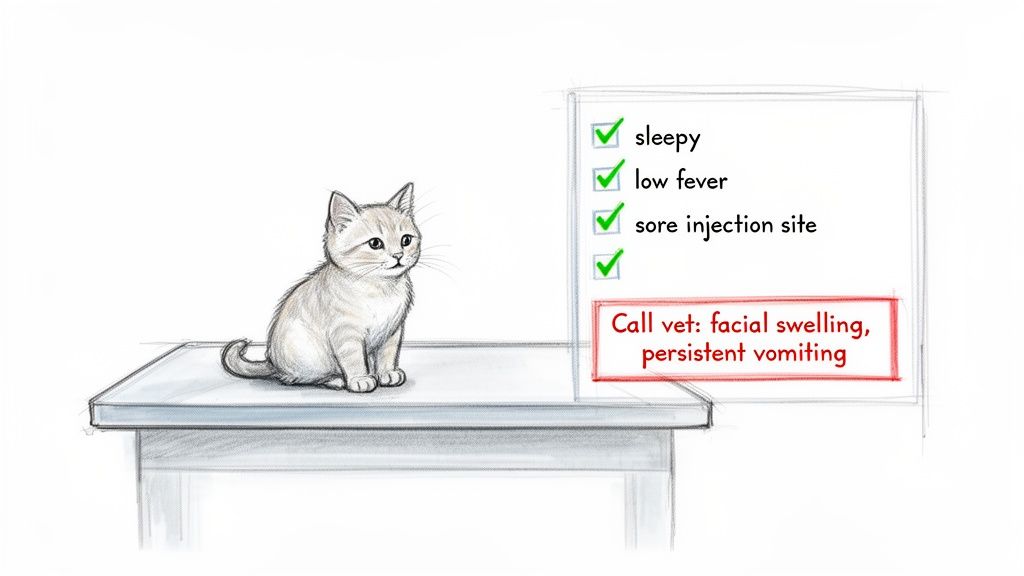
Lethargy: Your cat might be sleepier than usual. A good long nap is a classic response as their body dedicates energy to building immunity.
Mild Fever: A slight, temporary fever is a clear sign the immune system has been activated and is learning to recognize the virus.
Soreness at the Injection Site: The spot where the shot was given—usually around a shoulder or leg—might be a little tender. Your cat might flinch if you touch the area or seem a bit reluctant to be picked up.
Reduced Appetite: Some cats might turn their nose up at their next meal. This is typically short-lived, and their appetite should bounce back quickly.
These reactions are perfectly normal and show the distemper vaccine for cats is doing its job. Just give them a comfy spot to rest, make sure fresh water is available, and let them have some quiet time. They’ll be back to their pawesome selves before you know it.
When You Should Call the Vet
While serious reactions are very rare, it’s good to know the signs that could point to a bigger problem. Your veterinarian is always your best resource if you have any concerns after a vaccination.
Trust your gut. If something feels off or you're worried about how your cat is acting after their shot, a quick phone call to your vet clinic is always the right move for reassurance and professional advice.
Get in touch with your vet if you see any of the following, as they could indicate an allergic reaction or another issue that needs prompt attention:
Persistent Vomiting or Diarrhea: A single episode isn't usually a cause for alarm, but ongoing stomach upset should be checked out.
Facial Swelling: Any puffiness around the face, muzzle, or eyes is a classic sign of an allergic reaction.
Hives or Itchy Skin: Look for raised bumps on the skin or if your cat starts scratching uncontrollably.
Difficulty Breathing: Any wheezing, coughing, or labored breathing is an emergency and needs immediate veterinary care.
Collapse or Severe Weakness: If your cat can't stand or seems extremely weak, this is a medical emergency.
Again, these types of reactions are uncommon, but being prepared helps you act fast. By keeping an eye on your cat and knowing the difference between a normal immune response and a potential problem, you can confidently handle the post-vaccination period.
Vaccine Records for Boarding and Travel
Getting your cat the distemper vaccine isn't just about protecting them from a nasty virus—it's also their ticket to the wider world. Whether you're planning a trip or just need to board your cat for a weekend, having the right paperwork is key. Think of your cat's vaccination record as their health passport. It’s the official proof that they’re healthy and won't pose a risk to other animals.
Keeping these records organized isn't just good housekeeping; it’s your key to smooth sailing. Boarding kennels, catteries, and even some groomers won’t let your cat in the door without up-to-date proof of vaccination. This isn't them being difficult—it’s a crucial policy to protect every animal in their care from contagious diseases like panleukopenia.
Without these documents, you could face last-minute cancellations, leaving you scrambling for pet care at the worst possible time. Having everything in order saves a ton of stress and makes sure your cat is welcome wherever they need to go.
What Makes a Vaccine Record Official
When it comes to proving vaccination status, a sticky note on the fridge just won't cut it. To be considered valid for travel or boarding, a vaccine record needs specific details that show a licensed professional gave the shot correctly. It's the difference between a casual reminder and an official document.
A proper record is your cat’s pass for hassle-free adventures. Here’s what it should include to be taken seriously by airlines, boarding facilities, and international authorities:
Complete Vaccine Details: The record has to list the specific vaccine given (e.g., FVRCP), along with the manufacturer and the vaccine's serial or lot number.
Date of Administration: The exact date the shot was given is critical for proving it’s current.
Veterinarian's Signature: The signature of a licensed veterinarian (or their official clinic stamp) is what makes the document authentic.
Clinic Information: The name, address, and phone number of the veterinary clinic should be clearly printed on the form.
Your Cat's Information: The record must identify your cat by name, breed, age, and a basic physical description.
This level of detail is what assures any organization that the record is legitimate and can be trusted.
The International Health Certificate
Traveling to another country with your cat is a whole other level of paperwork. This is where the international health certificate comes in. This is a formal document from a USDA-accredited veterinarian stating that your cat is healthy enough to travel and has met all of the destination country's health and vaccination requirements.
Proof of the distemper vaccine is a key part of this certificate. You'd be hard-pressed to find a country that will allow a cat across its borders without a current panleukopenia vaccination. Getting this document ready can be a detailed process, so it's wise to start well ahead of your travel date.
Think of an international health certificate as your pet's visa. It bundles their health status, vaccination history, and other required treatments into a single official package, approved by vets and sometimes government authorities. Forgetting this can bring your travel plans to a screeching halt.
Every country plays by its own rules, so working closely with your veterinarian is the best way to ensure every box is checked. They can help you navigate the specific requirements for your destination and make sure your cat's health certificate is filled out perfectly. For a deeper dive into the paperwork your trip might require, check out our detailed guide on travel documents for pets.
Ultimately, keeping a neat, organized file with all your cat’s health records is one of the best habits you can have as a pet owner. It’s not just for travel—it’s very helpful in an emergency and makes routine vet visits that much simpler. A little organization goes a long way in making life less stressful for both you and your cat.
Common Questions About the Distemper Vaccine
As we wrap up, you might still have a few questions. That’s completely normal. When it comes to our cats' health, being well-informed is the best way to feel confident about the decisions you're making.
Let's walk through some of the most common questions veterinarians hear from cat owners about the distemper vaccine. Think of this as tying up the loose ends and making sure you have all the pieces of the puzzle.
Is Feline Distemper the Same as the FVRCP Shot?
This is a great question, and it’s one we get all the time. The answer is a little bit "yes and no."
The FVRCP vaccine is a combination shot, often called the "3-in-1" or "4-in-1" vaccine for cats. It's a very efficient way to protect against several major diseases all at once.
The "P" in FVRCP stands for Panleukopenia, which is the clinical name for feline distemper. So, when your cat gets an FVRCP shot, they are definitely getting their distemper vaccine. The other letters cover highly contagious upper respiratory viruses:
FVR stands for Feline Viral Rhinotracheitis (a type of herpesvirus).
C stands for Calicivirus.
So, while distemper is a core part of the FVRCP vaccine, the shot itself gives much broader protection. It's a practical way to cover the most critical viral threats in one simple injection.
Does My Indoor Cat Really Need This Vaccine?
The answer you'll hear from pretty much every veterinarian is a firm yes. It's easy to think an indoor-only cat lives in a protective bubble, but the panleukopenia virus is remarkably tough and sneaky. It can survive for up to a year in the environment and resists many common disinfectants.
This means the virus can easily hitch a ride right into your home on everyday items like:
Your shoes and clothing
Hands that have petted another cat
A contaminated pet carrier or other objects
Because the virus is so resilient and the disease is so severe, the risk of accidental exposure is considered too high to skip this core vaccine. Protecting every cat helps build community immunity, keeping all felines safer.
Even a quick trip to the vet's office or a curious sniff by an open window could potentially lead to exposure. Since panleukopenia is so deadly, vaccination is truly the only reliable way to keep your indoor cat safe from this particular threat.
What Are Vaccine Titers and Can They Replace Boosters?
A vaccine titer is a simple blood test that measures the level of antibodies your cat has for a specific disease. In theory, it tells you whether their immune system still "remembers" how to fight off an infection from a previous vaccine.
While titers can be a useful tool, they aren't typically used to replace booster shots for most healthy cats. They're more often considered in very specific situations—for example, a cat with a known history of vaccine reactions or one with a weakened immune system where avoiding any unnecessary procedure is a top priority.
Interpreting the results can also be tricky, as there isn't always a universally agreed-upon antibody level that guarantees 100% protection. Your vet might use a titer to help guide their decision-making, but for the average cat, following the recommended 1-to-3-year booster schedule is still considered the standard for ensuring continuous, reliable protection.
Keeping all your cat's health records organized makes these conversations with your vet so much easier. This is crucial for other vaccinations, too; for example, if you need to provide proof of rabies vaccine for boarding or travel, having those documents ready is essential.
At Passpaw, we understand that keeping your pet's travel documents in order is just as important as their health. Our platform simplifies the creation of international health certificates, making it easier for vets and pet owners to ensure every detail is correct for a smooth journey. Learn more at https://passpaw.com.
More articles
From regulatory changes to best practices for veterinarians and pet owners, our resources keep you ahead of the curve.