Are you a team member in a veterinary practice?
Are you a pet parent planning a trip with your furry pal?
Snub Nosed Cats
You're holding a Persian kitten, admiring the round face, huge eyes, and tiny upturned nose. She's purring in your lap, and the thought of health problems feels far away. Yet that charming expression comes from a shortened skull shape that can affect breathing, eyes, teeth, reproduction, and even travel plans. Snub-nosed cats can be loving, playful companions, but their appearance deserves careful medical attention, not just admiration.
The kindest approach isn't to fear a flat face. It's to understand the anatomy behind it, watch for early warning signs, adapt daily care, and plan veterinary support before a small problem becomes an emergency. With good observation and thoughtful routines, you can help your cat stay comfortable while appreciating the personality beneath that distinctive look.
Understanding What Makes a Cat Snub-Nosed
A family visits a shelter and meets a kitten with a very short muzzle. Her eyes seem large because the face around them is compact, and her nose sits high between rounded cheeks. The family falls in love, quite reasonably. Before adoption, though, they should also look at how freely she breathes, whether her eyes are comfortable, and how easily she moves during gentle play.
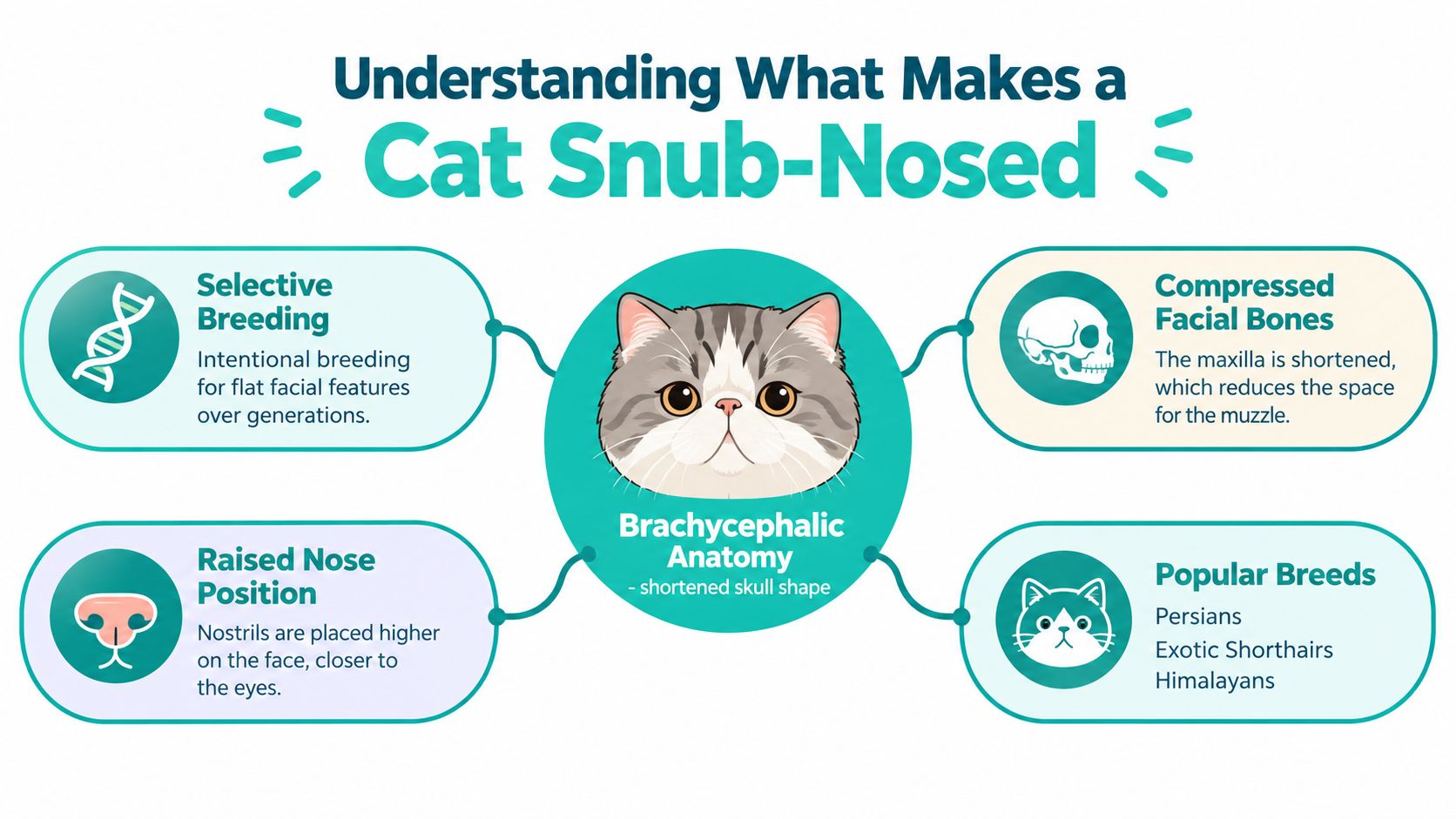
Veterinarians use brachycephalic to describe a shortened skull shape. In everyday language, that often means a flattened face, shortened muzzle, and raised nose. The outside appearance can vary, but the internal spaces for the nose, throat, eyes, and teeth may also change as the skull becomes shorter.
Persian cats are among the oldest and most recognizable snub-nosed lineages in modern cat fancy. The Cat Fanciers' Association's Persian breed history describes early Persian cats with a round head, short face, snub nose, and cobby body. Cat fanciers have selectively bred for shorter noses and rounder heads since the late 1800s.
The face tells only part of the story
A short muzzle doesn't automatically tell you how severely a cat is affected. Two Persians may look similar in a photograph but have very different nostril openings, airway space, eye exposure, and tolerance for heat or activity. That's why the quiet cat who seems fine at rest still deserves a proper examination.
The facial shape develops through inherited traits and selective breeding. Over generations, breeders chose features people found appealing, including a rounder head and shorter nose. The result is a familiar silhouette, but shortening the skull can leave normal soft tissues crowded inside a smaller space.
Look for these visible clues:
Shortened muzzle: The nose and mouth sit close together instead of extending forward.
Flattened profile: The face appears broad and compressed from the side.
Large, exposed eyes: The eye openings may look prominent because the surrounding bones are shaped differently.
Raised nose: The nostrils sit higher on the face and may appear narrow.
Compact jaw: Teeth can have less room to align normally.
These traits don't define a cat's personality. They do, however, tell you to pay attention to comfort, breathing, eye health, and grooming from the beginning.
Popular Snub-Nosed Cat Breeds and Their Traits
When identifying snub-nosed cats, start with three features rather than coat color: the profile, the muzzle length, and the position of the nose. A long-haired cat with a short, broad face may be a Persian or Himalayan. A similar face covered by a short, plush coat may point toward an Exotic Shorthair.
Persian
The Persian is the classic long-haired flat-faced cat. Her coat can be luxurious, but that beauty comes with daily maintenance. Gentle combing helps prevent mats, while regular checks around the eyes and nose can catch discharge, damp skin, or irritation early.
Persians are often calm and affectionate, but individuals vary. Don't assume a quiet temperament means a cat has no health needs. A relaxed Persian may still have narrowed nostrils, dental crowding, or eye exposure that warrants veterinary monitoring.
Exotic Shorthair
The Exotic Shorthair has the Persian's rounded facial type with a shorter, dense coat. That can make grooming simpler, but it doesn't remove the concerns linked to the underlying skull shape. Owners should still watch breathing, eyes, teeth, and tolerance for warm or humid conditions.
Their plush coat can hide skin moisture and eye discharge, so run your fingers gently through the fur during routine handling. This turns grooming into a small health check rather than a purely cosmetic task.
Himalayan
The Himalayan combines a Persian-like coat and facial structure with color-point markings. Many are affectionate indoor companions, yet their longer fur can require consistent brushing and careful cleaning around the face.
Use behavior as part of identification and care, not as proof of health. A cat who avoids vigorous play may just be gentle, or she may be limiting activity because breathing feels difficult. Note changes from her usual habits and mention them at appointments.
Choose the individual, not only the breed label
Breed names offer useful context, but facial severity differs between cats. Ask to see how the cat breathes while resting and after calm movement. Listen for persistent noisy breathing, and inspect whether the nostrils look open enough for comfortable airflow.
A responsible decision also includes questions about veterinary history, eye problems, dental care, and any previous breathing assessment. The sweetest face in the room still needs a body that can function comfortably. That's the purr-fectly practical part of choosing a companion.
The Health Challenges Facing Flat-Faced Felines
A cat may look comfortable while resting, yet struggle when warmth, excitement, or activity increases the demand for oxygen. The shortened skull affects more than facial appearance. It can reduce room for normal airflow, eye protection, tooth alignment, and, in breeding cats, safe delivery.
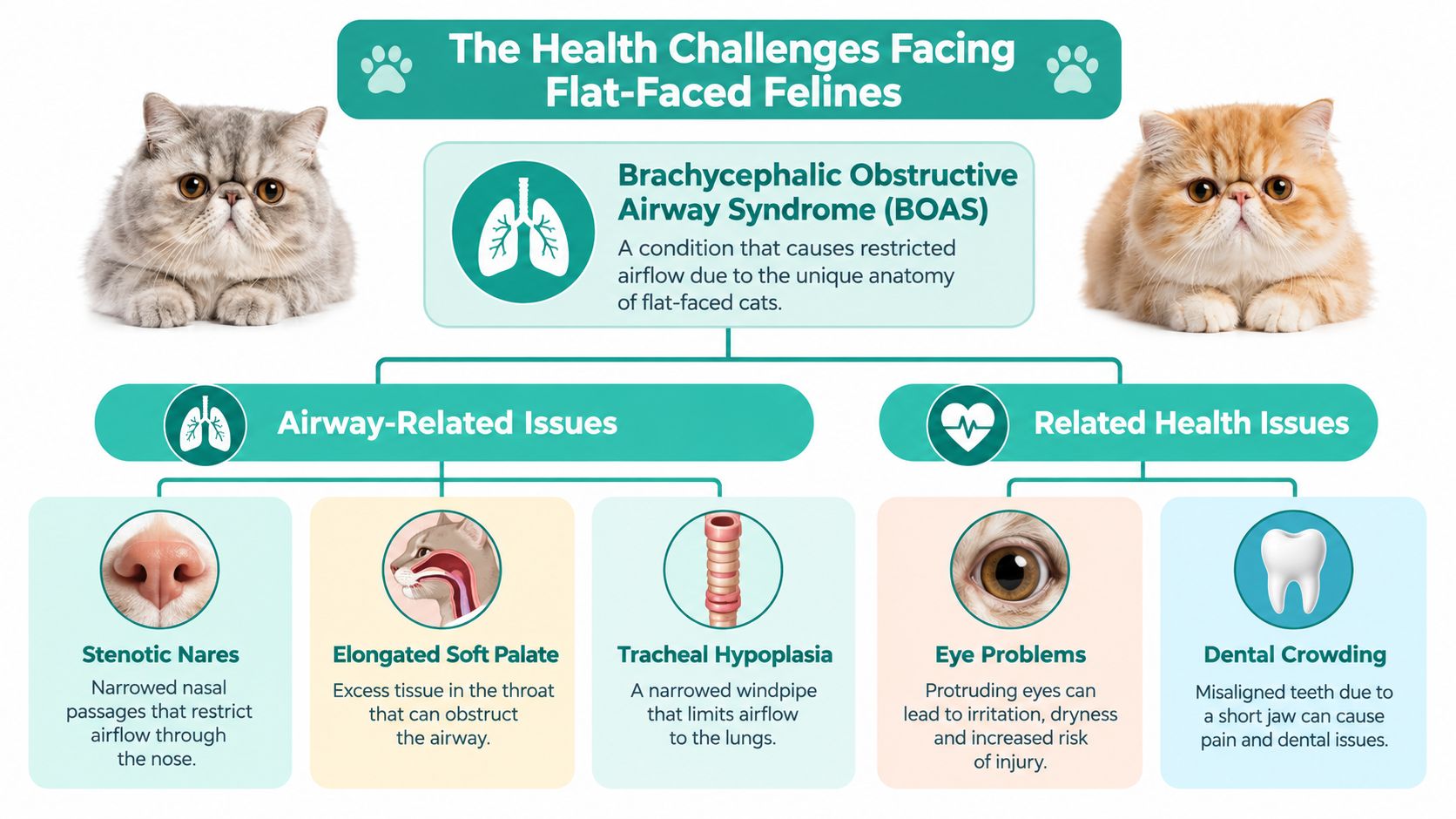
In a brachycephalic cat, soft tissues occupy a smaller nasal and throat passage. The airway works like a narrow hallway: even modest crowding creates more resistance as air moves through it. This can contribute to brachycephalic obstructive airway syndrome, or BOAS, as described in this veterinary overview of brachycephalic airway syndrome in cats.
Breathing and airway crowding
Mild signs can include snoring, noisy breathing, or breathing through an open mouth. Greater obstruction may cause poor tolerance for exercise, collapse, or fainting after activity. Familiarity can make these sounds easy to dismiss, but long-standing noise is still worth discussing with a veterinarian.
Narrow nostrils may result from bone shape or from a redundant skin fold where the nostril floor meets the lip. The University of Illinois veterinary explanation of BOAS notes that stenotic nares can be the main abnormality in some cats. Under anesthesia, a veterinarian may consider corrective ala-vestibuloplasty when anatomy is restricting airflow.
Eyes, teeth, and birth complications
Prominent eyes have less natural protection from dryness, trauma, and corneal injury. In a referral population, ulcerative keratitis occurred in 36% of brachycephalic cats compared with 15% of non-brachycephalic cats. The brachycephalic group also showed more central or paracentral ulcers and corneal sequestra, according to the published study on ulcerative keratitis in brachycephalic cats.
A shortened jaw can crowd or misalign teeth, making oral checks part of routine health care. A Persian cat study reported 12.7% had haircoat disorder, 11.3% had dental disease, 7.2% had overgrown nails, and 5.8% had eye discharge, as summarized by the Royal Veterinary College's Persian cat health summary.
Pregnancy and birth can also carry added risk. A UK emergency-care study found brachycephalic queens had 3.27 times the odds of dystocia, or difficult birth, compared with non-brachycephalic queens, according to the Journal of Small Animal Practice research. Discuss an individual cat's anatomy and breeding risks with a veterinarian before pregnancy.
Owners planning care, transport, or future trips can also review Passpaw's companion animal health guidance alongside veterinary advice.
Essential Daily Care for Your Snub-Nosed Companion
Daily care should feel like a calm routine, not a medical project. A few quiet checks can reveal changes before your cat is in pain or struggling to breathe.
Start with the face. Use a soft, damp cloth recommended by your veterinary team to clean ordinary discharge from the skin around the eyes. Don't scrub the cornea, use human eye drops, or pull at dried material. Redness, squinting, cloudiness, swelling, or a sudden increase in discharge deserves professional advice.
Turn grooming into observation
Long-haired Persians and Himalayans need regular combing to reduce mats. Work gently around the armpits, belly, collar area, and facial folds. A mat can pull at the skin and trap moisture, while rough handling can make future grooming stressful.
During brushing, check:
Eyes: Look for squinting, cloudiness, redness, or a change in discharge.
Nose: Notice crusting, narrowing, or a new change in airflow.
Mouth: Watch for drooling, difficulty eating, or a preference for soft food.
Coat and skin: Feel for mats, damp folds, sores, or odor.
Nails: Inspect them regularly, especially if your cat doesn't scratch often.
Persian cats with more extreme brachycephaly can also face a higher risk of hydrocephalus. Signs may appear from the first few weeks to the first year after birth and can include seizures, a dome-shaped head, abnormal breathing, and failure to thrive, as outlined in PetMD's Persian cat health information. These signs require prompt veterinary attention.
Make breathing easier at home
Keep the room cool and well ventilated, particularly during warm or humid weather. Avoid encouraging strenuous play when your cat is breathing heavily, and let her rest after excitement. Maintaining a healthy body weight matters because extra weight can add strain to an already crowded airway.
Offer food in a way that lets your cat eat without pressing her face awkwardly into a deep bowl. A shallow, stable dish may be more comfortable, but your cat's appetite and eating pattern should guide changes. If she drops food, chews strangely, paws at her mouth, or stops eating, arrange an examination.
Keep a simple record of breathing sounds, eye changes, appetite, activity, and grooming. Passpaw's cat vaccination record resource can also help you keep essential veterinary information organized, especially when more than one caregiver looks after your cat.
Practical rule: A familiar daily pattern makes subtle changes easier to spot. If your cat's breathing, play, eating, or eye comfort changes, don't dismiss it as part of her face.
When to Seek Veterinary Care for Breathing Issues
A snub-nosed cat may snore softly while asleep, yet breathing that becomes louder, more frequent, or harder deserves attention. The sound itself matters less than comfort and function. A cat who eats, grooms, rests, and moves normally is different from one who struggles to recover after ordinary activity.
Watch for changes from your cat's usual pattern. Mild, occasional noise without other changes can be recorded and discussed at a routine visit. Contact your veterinarian sooner if gentle play leaves her tired, if she pauses repeatedly, or if she breathes with her mouth open.

Monitor or call
Use this guide to judge urgency, not to replace an examination:
Situation | Appropriate response |
|---|---|
Occasional snoring without other changes | Mention it at the next appointment and monitor for progression |
Noisy breathing while awake or at rest | Schedule a veterinary assessment |
Reduced tolerance for play or repeated pauses | Arrange care promptly |
Mouth breathing, collapse, fainting, or severe distress | Seek emergency veterinary care immediately |
Respiratory distress can make a cat stretch her neck, hold her elbows away from her body, breathe rapidly, or repeatedly change position without settling. Keep the environment cool, handle her as little as possible, and call an emergency clinic for instructions. Do not force her into a carrier while she is panicking, and do not assume that temporary improvement means the danger has passed.
What a veterinarian may recommend
The examination may include the nostrils, mouth, eyes, chest, and body condition. Depending on the findings, further testing can help distinguish obstruction involving the nostrils, soft palate, or throat from lung disease or another problem.
If narrowed anatomy is interfering with airflow, corrective surgery may be recommended. Procedures can address restricted nostrils or other obstructive tissue. The decision depends on the cat's signs, examination results, anesthesia assessment, and expected welfare benefit.
A quiet cat is not always a comfortable cat. Cats often hide breathing difficulty until they can no longer compensate.
Early assessment preserves more options. Cooling, weight control, and limiting exertion may support comfort, but home care cannot open a severely narrowed airway. Signs may progress from snoring and noisy breathing to poor exercise tolerance, collapse, or fainting, so prompt veterinary advice matters when the pattern changes.
Traveling with Your Flat-Faced Friend
Travel planning for a snub-nosed cat starts with the airline, not the suitcase. A carrier may accept cats in the cabin but refuse brachycephalic cats as checked pets or reject them entirely. American Airlines' pet travel policy states that major carriers don't accept brachycephalic cats as checked pets because of respiratory risk. The U.S. Department of Transportation also notes that some airlines refuse brachycephalic breeds entirely and that health certificates may be required within 10 days of travel.
Build the plan before booking
Use a simple sequence:
Ask the airline directly: Confirm breed acceptance, cabin rules, carrier dimensions, route restrictions, transit conditions, and whether a connection changes the policy.
Speak with your veterinarian: Ask whether your cat is fit for the proposed journey and discuss breathing, stress, heat, and motion concerns.
Check destination rules: International routes may require a health certificate, vaccination records, identification details, endorsements, or other country-specific documents.
Match the appointment to the travel window: A certificate issued too early may expire before departure, while a late appointment can leave no time to fix errors.
Carry copies: Keep the original documents secure and bring accessible copies for check-in, transit, and arrival.
IATA states that most airlines require a health certificate for transported animals. Rules can differ between departure, transit, and destination countries, so a document that satisfies one authority may not satisfy another.
Reduce stress during the journey
Choose the cabin when the airline permits it and your veterinarian considers it suitable. Use an airline-approved carrier with good airflow, keep your cat away from heat, and avoid unnecessary handling before departure. Never give a sedative unless your veterinarian has prescribed and explained it for this specific journey.
Passpaw's guide to traveling with a cat by plane can help owners think through breed restrictions and travel documents. Passpaw provides a cloud-based workflow for international pet health certificates, including document validation, task prioritization, and communication between veterinary practices and clients.
Travel can be safe for some cats, but it isn't automatically safe because a cat has flown before. Reassess the plan if your cat develops breathing problems, eye pain, illness, or poor heat tolerance before departure.
Being the Best Advocate for Your Snub-Nosed Cat
Advocacy begins with seeing the whole cat. The round face may be the feature that first captures your attention, but comfortable breathing, clear eyes, healthy eating, and relaxed movement matter more than an extreme look.
Keep your care plan practical:
Observe daily: Notice changes in breathing, activity, appetite, grooming, eye comfort, and sleep.
Schedule preventive examinations: Ask your veterinarian to assess the airway, eyes, teeth, weight, and skin.
Manage the environment: Keep your cat cool, avoid forced exertion, and provide calm places to rest.
Prepare for emergencies: Know which clinic you'll call if mouth breathing, collapse, or severe distress occurs.
Organize travel early: Confirm airline acceptance and destination paperwork before buying tickets.
Transport gently: Use a secure, well-ventilated carrier and reduce heat, handling, and excitement.
Research also links facial shape with eye exposure and nasal anatomy. In Persian cats, more severe brachycephaly was associated with larger extra-orbital parts of the eyeballs and a lower height of the naso-osseal aperture, according to the study of Persian skull and eye anatomy. That connection explains why facial appearance can have practical consequences, while also reminding us that individual examination matters more than a label.
A cat with breathing noise isn't being dramatic, and an owner who asks questions isn't overreacting. You're gathering information your veterinary team can use. For travel, gradual carrier practice can make handling less frightening, and Passpaw's crate-training guidance for cats offers a practical place to begin.
Snub-nosed cats can bring enormous affection and plenty of comic charm into a home. They also need owners who notice small changes, seek help early, and choose comfort over appearance whenever the two conflict. That's how you become the steady human your flat-faced companion can count on.
Passpaw helps veterinary practices and pet owners organize international pet health certificates, validate documents, prioritize tasks by travel dates, and communicate throughout the application process. If you're planning a journey with a Persian, Himalayan, Exotic Shorthair, or another flat-faced companion, visit Passpaw to make the documentation side of travel easier to manage.

More articles
From regulatory changes to best practices for veterinarians and pet owners, our resources keep you ahead of the curve.