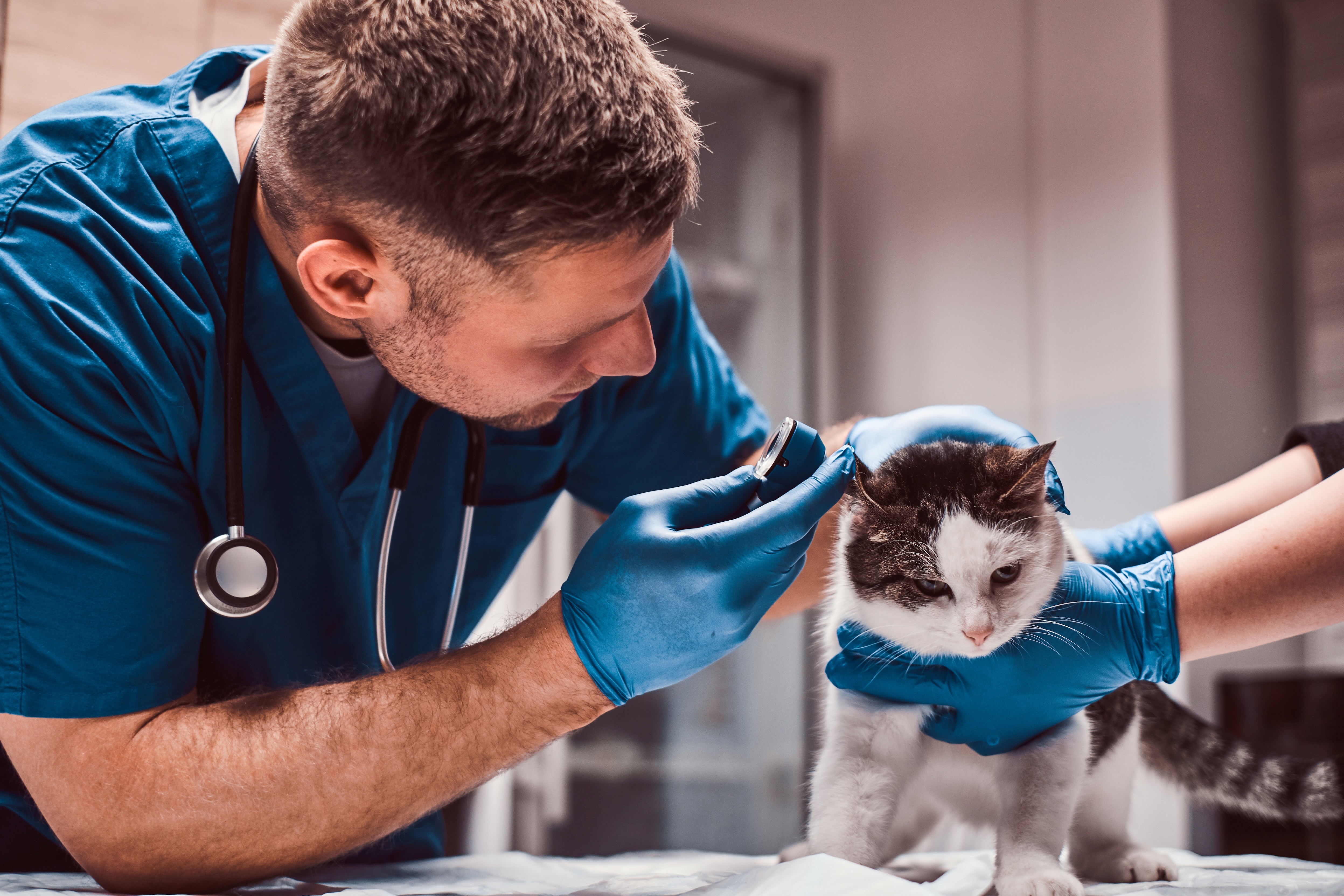
Are you a team member in a veterinary practice?
Are you a pet parent planning a trip with your furry pal?
7 Best App Tracking Options for Pet Travel
A pet owner preparing for international travel may be checking vaccination records and destination rules while a veterinary team handles forms, deadlines, document reviews, and client updates. Everyone needs to know what's complete, what's missing, and what needs attention next. Yet “best app tracking” can mean very different things. It might describe mobile event analytics, shipment updates, screen-time reports, hiring software, or a workflow system for cases such as health certificate applications.
The useful starting point is intent. Are you tracking what users do inside an app, the progress of a form, the use of a phone, a job candidate, or a package?
The right tracker should match the process being tracked.
The seven options below compare those meanings through a pet travel lens, so veterinary practices, pet travel providers, and owners can choose a tool that fits the journey instead of chasing a broad label.
1. Mobile app analytics and event tracking tools
Mobile app analytics tools record actions that happen inside an app. A team might track an account creation, a document upload, a button tap, or a completed request. Products such as Mixpanel and Amplitude are commonly associated with this event-level approach, where the focus is user behavior rather than the status of an individual case.
For a veterinary practice, this could answer questions such as:
Form engagement: Do clients open the travel questionnaire?
Document behavior: Do users begin uploading records but stop before finishing?
Feature use: Do staff use a task view or rely on email instead?
Journey patterns: Which steps commonly happen before a client requests help?
That information can support product improvement. A practice using a client portal might learn that owners visit the destination information page but rarely reach the document-upload screen. The team could then simplify the page or make the next action clearer.
Useful for improving the app experience
Analytics tools are strongest when the question is, “What are people doing inside the software?” They can help product teams understand paths, identify points where users leave, and compare behavior across features. A reporting dashboard, such as the WebinOne reporting dashboard, can also help teams turn activity into a view that's easier to review.
The limitation is important. Event tracking may show that a user clicked “upload document,” but it won't necessarily tell a veterinary coordinator whether the health certificate case is ready for review. It measures interaction with the interface, not the complete operational state of a form or case.
For broader research and feedback about pet travel workflows, a pet travel survey tool may be more suitable than relying only on in-app events. Analytics can be helpful, but it's usually a supporting layer when the need is keeping each application moving.
2. Mixpanel
Mixpanel fits the mobile analytics category, but it deserves separate attention because teams often search for it directly when they want event tracking. Its basic question is simple: which actions do users take, and in what order? A pet travel service could define events for opening a travel checklist, entering a pet's details, uploading a vaccination record, inviting a veterinary practice, or reviewing a message.
That setup can make an app journey easier to understand. Suppose many owners start a destination questionnaire but don't submit it. Mixpanel-style analysis could help a product team inspect the sequence of actions around that point. The team might discover that users need clearer instructions, more visible progress information, or a better way to save unfinished work.
Where Mixpanel helps
Mixpanel is a good match for teams improving a digital product. It can help answer questions such as:
Which feature gets used most often? A practice may want to know whether clients use document sharing or messaging more frequently.
Where do users pause? An unfinished upload flow may need clearer guidance.
Do users return? Repeated visits can indicate that people use the app during a longer preparation process.
That's useful for product decisions, but it doesn't replace an operational tracker. A coordinator needs to see the status of a particular pet's application, the assigned task, the missing document, and the relevant travel date. A general event analytics tool may record the actions without presenting them as a case-management workflow.
The privacy environment also makes interpretation more careful. Apple introduced App Tracking Transparency in iOS 14.5 on April 26, 2021, changing cross-app tracking from an opt-out model to an explicit opt-in prompt. Under that framework, apps must ask permission before accessing the IDFA, and users who decline can't be tracked through that identifier, as described in this history of Apple's App Tracking Transparency rollout.
For pet travel, Mixpanel is most useful when the question concerns app experience and behavior, not whether a health certificate application is ready.
3. Amplitude
Amplitude is another example of product analytics built around user actions. It can help a team study how people move through a mobile or web application, from the first screen to a completed task. In a pet travel setting, the tracked actions might include creating a pet profile, selecting a destination, viewing requirements, uploading a record, or sending a question to a veterinary team.
The appeal is clarity. Instead of relying on guesses, a product manager can examine which screens people visit and which actions tend to happen before a successful completion. A client portal team might compare two versions of a document page and see which one leads to more completed uploads. That doesn't prove why users behave differently, but it gives the team a place to investigate.
Analytics isn't case tracking
Amplitude-style analytics answers, “How are users interacting with this product?” It doesn't automatically answer, “What does this individual application still need?” Those questions overlap, but they aren't interchangeable.
Consider an owner traveling with a dog. The owner may open the destination guide several times, read a message, and upload a document. Analytics can record those events. A workflow system should also show whether the document passed review, whether another task remains, and whether a staff member needs to follow up.
This distinction matters because privacy signals are incomplete and vary by measurement method. One 2026 benchmark reported global ATT opt-in at about 27%, compared with 21% in 2022, with regional figures of 31% in the U.S., 22% in the EU, and 38% in Japan, according to Adjust's 2026 mobile app report summary. Teams should therefore avoid treating user-level mobile signals as a complete picture of every customer journey.
Amplitude can still support thoughtful product decisions. It's especially valuable for improving onboarding, navigation, and feature adoption. For a veterinary practice, though, the best app tracking choice depends on whether the practice needs behavior insight or case visibility. If the priority is the latter, analytics should sit behind the workflow rather than serve as the workflow itself.
4. Application status and workflow tracking tools
Application and workflow tracking tools follow the progress of a form, request, or case. That makes them a natural fit for international pet travel, where a veterinary team and owner may need to coordinate destination details, supporting records, reviews, deadlines, and communications.
The central object isn't a tap or a screen. It's the application itself. Staff should be able to see what has been submitted, what remains open, who owns the next task, and which cases need attention first. Owners need a clear view of progress without sending repeated messages just to ask whether anything has changed.
A better fit for health certificate cases
A pet travel application may involve several connected steps:
Collecting details: Capture the destination, travel timing, pet information, and contact details.
Checking documents: Review vaccination records and other supporting materials.
Managing tasks: Assign follow-ups and connect them to the case.
Updating clients: Tell owners what's complete and what they need to provide.
Preparing the packet: Bring the required information together for submission.
A platform such as pet travel documentation tools is designed around that type of work rather than around general app engagement. Passpaw's published product information describes a cloud-based workflow for international pet health certificates, including ongoing application status visibility, destination requirements, task lists connected to deadlines, client engagement, and task completion before a submission packet is generated. Those features align the tracker with the actual case.
Practical rule: If the thing you need to find has a pet name, a destination, a deadline, and a document list, use a case or workflow tracker.
The trade-off is that workflow tools may offer less depth for product analytics. They won't necessarily tell a software team which screen has the highest engagement. For veterinary practices, that's often an acceptable trade. The immediate need is usually not to study clicks. It's to keep the right application visible and moving.
5. Applicant Tracking Systems for hiring
An Applicant Tracking System, or ATS, follows people through a recruitment process. It stores applications, organizes resumes, records interview stages, assigns hiring tasks, and shows whether a candidate is new, under review, shortlisted, or inactive.
The similarity to pet travel tracking is easy to see: both systems use records, owners, and status changes. Their purpose differs. An ATS is designed for job candidates, while a pet travel system follows a case involving an animal, a destination, and required health documents.
A veterinary practice might use an ATS to recruit a veterinary technician, receptionist, practice manager, or travel coordinator. A recruitment team could move someone from application review to interview scheduling and then to an offer. Tools for recruitment agencies, such as OperatorCompliance for recruitment agencies, support that hiring workflow.
For a deeper look at the software category, see this guide to application tracking system software.
Why the distinction matters
The phrase “application tracking” covers more than one type of record. A pet owner searching for a tracker could find hiring software, and a practice manager could assume an ATS will handle any application. Its fields, permissions, messages, and reports are configured for recruitment.
An ATS may ask:
Which role did the candidate apply for?
Has the interview taken place?
Who should review the resume?
What hiring stage comes next?
A pet travel workflow asks questions tied to the journey:
Which destination is involved?
Which document is missing?
Has the record been reviewed?
What task is tied to the travel date?
The difference is like using a kennel roster to manage a health certificate. Both contain names and statuses, but only one is arranged around the work that must be completed for travel.
An ATS can help build the team supporting pet travel. It could assist with hiring someone who coordinates international certificates. It should not be the primary tool for tracking those certificates.
Read the noun before choosing the software. A candidate points toward an ATS. A pet travel case calls for application and workflow features built around forms, documents, tasks, and client updates.
6. Device and screen-time app usage trackers
Device and screen-time trackers measure how a person uses a phone or tablet. They can show time spent in apps, notification activity, the pattern of phone usage, or limits set for certain categories. Families may use these tools to help children build healthier phone habits, while individuals may use them to understand where their attention goes during the day.
For a pet owner preparing for travel, this category has a narrow but real use. An owner might check whether they're spending too much time scrolling and not enough time gathering the pet's records. A reminder or app limit could encourage a focused block for checking destination instructions, contacting the veterinarian, or reviewing a document list.
That's a personal productivity use, not a case-management use.
What this tracker can and can't show
A screen-time tool might tell you that a travel app was open. It won't normally tell a veterinary practice whether the owner uploaded the correct document, whether a task was reviewed, or whether the application needs staff attention. It tracks device activity, not the business meaning behind that activity.
A simple example makes the difference clear. An owner may leave a pet travel app open while answering a phone call. The device tracker records app use, but a workflow system should record whether the owner completed the requested step. Conversely, an owner might read an email on a laptop rather than use the mobile app. Screen-time data could miss the work entirely, while the application status should still update.
Privacy also deserves a calm, practical approach. People should understand what a device tracker records and who can see it, especially when a parent, employer, or service provider is involved. A veterinary practice generally needs consented client communication and application updates, not a record of how long someone looked at a phone.
Choose this category when the goal is managing personal device habits. Don't choose it as the main answer to a pet travel question that asks, “What's the status of this health certificate application?”
7. Package and shipment tracking apps
Package tracking apps follow a shipment as it moves through a carrier network. They may display statuses such as label created, accepted, in transit, delayed, out for delivery, or delivered. For pet travel, that can matter when a practice or owner sends physical documents, supplies, or other items connected to a trip.
A shipment tracker answers a logistics question: Where is the package? It doesn't answer a document question: Has the application been completed and reviewed?
That distinction is easy to miss during a busy travel process. A veterinary team might print a document packet and send it to a destination or service provider. A package app can show whether the envelope left the facility. It can't confirm that the right form was included, that a signature was completed, or that the receiving authority accepted the certificate.
Use shipment tracking as a supporting layer
Shipment tracking becomes useful after the workflow identifies what needs to be sent. For example, a coordinator might finish the document preparation, create a shipping label, and then share the carrier status with the owner. Resources about a USDA shipping label for pet travel can help explain that part of the process, while warehousing and shipping support represents the broader logistics category.
A pet owner may see “in transit” and assume the travel process is complete. The veterinary practice still needs a separate way to monitor the case itself. The shipment can arrive while another document task remains open, or a delivery can be delayed even though the digital application is ready.
Use this category when the question is about physical movement. It's a useful companion for shipping, but it's not a replacement for application status tracking.
Top 7 App Tracking Comparison
Item | Implementation 🔄 (Complexity) | Resource requirements ⚡ (Effort / Cost) | Expected outcomes 📊 (Results / Impact) | Ideal use cases 💡 | Key advantages ⭐ |
|---|---|---|---|---|---|
Mobile app analytics / event tracking tools (e.g., Mixpanel, Amplitude) | Moderate, SDK integration, event schema & instrumentation | Moderate, developer time, analytics tooling subscription | Rich event-level metrics, funnels, retention, real-time dashboards | Product analytics, feature adoption, A/B testing | High-fidelity user behavior insight; scalable event analysis |
Mixpanel | Moderate, SDK + event planning and tracking | Low–Moderate, paid tiers; analyst time | Detailed funnels, cohort and event segmentation | Mobile product teams tracking in-app flows | Robust funnel and retention tools; flexible querying |
Amplitude | Moderate, SDK + taxonomy and tracking governance | Low–Moderate, subscription costs; analytics staff | Behavioral cohorts, path analysis, product intelligence | Growth/product teams measuring user journeys | Strong behavioral modeling and product analytics features |
Application status / workflow tracking tools (forms/cases like health certificate applications) | Low–Moderate, workflow design, form setup, approvals | Low, admin users, minimal dev for customizations | Clear application status, case progress, audit trails | Permit/certificate processing, case management (e.g., pet travel certificates) | Purpose-built for status tracking and approvals; user-facing transparency |
Applicant Tracking Systems (ATS) for hiring | Low, pipeline/configuration, integrations with job boards | Moderate, HR users, possible integration costs | Streamlined candidate lifecycle, reporting on hiring metrics | Recruitment, hiring workflows, candidate management | Recruitment-specific features (resumes, interview scheduling, compliance) |
Device / screen-time "app usage" trackers for phones | Low, often OS-built or lightweight app install | Low, device permissions; minimal ongoing cost | Time-per-app metrics, daily/weekly usage summaries | Personal screen-time monitoring, parental controls | Simple, privacy-focused usage metrics; minimal setup |
Package / shipment tracking apps | Low, carrier API integrations or label scanning | Low–Moderate, integration with carriers, update feeds | Real-time shipment status, ETA, delivery confirmations | E‑commerce order tracking, logistics visibility for customers | Clear delivery status and notifications; customer-facing tracking |
Choose the Tracker That Matches the Journey
The phrase best app tracking only becomes useful after you define the object being tracked. Mobile analytics tools such as Mixpanel and Amplitude focus on app behavior. They help product teams understand events, journeys, and feature use. Device trackers focus on personal phone habits. ATS software follows job candidates through hiring stages. Shipment apps follow packages through delivery networks.
For veterinary practices and pet owners handling international travel, application and workflow tracking is usually the closest match when the goal is to follow a health certificate case. The work involves forms, documents, tasks, destination information, deadlines, and updates between clients and veterinary teams. A workflow view can keep those details connected instead of scattering them across email threads, spreadsheets, and carrier pages.
Passpaw is relevant in that context. Its website, Passpaw, presents a cloud-based platform for managing international pet health certificate applications. The published product information describes status tracking from any device, destination requirements, task lists tied to country-specific deadlines, client engagement, and monitoring of task completion before preparing a submission packet.
A short selection check can prevent the wrong purchase:
Name the object: Are you tracking app events, a pet travel case, a candidate, phone use, or a shipment?
Identify the people: Does a product team need analytics, or do a veterinary coordinator and pet owner need shared updates?
Check the records: Does the process involve forms, documents, reviews, and case history?
Define the next action: Should the system highlight a feature issue, a missing document, a hiring stage, or a delivery status?
Match the workflow: Choose software whose statuses and tasks reflect the process.
Privacy-aware measurement also matters for analytics teams. A 2026 industry summary reports ATT opt-in at about 27% globally, while another independent summary cites a figure of about 50% and notes that developer adoption has continued to grow, as discussed by App Store Spy's mobile tracking overview. The difference shows why teams should understand how a measurement is defined and avoid assuming that user-level attribution is complete.
For pet travel, the practical takeaway is simple: pick the tool that keeps the right task visible at the right time. If the task is a health certificate application, start with a workflow tracker. That choice can help the veterinary team and owner stay focused on the pet's journey, with fewer places for an important detail to get lost.
Passpaw helps veterinary practices and pet owners manage international health certificate applications, destination requirements, document tasks, and client updates in one cloud-based workflow. Visit Passpaw to see how it can support clearer application tracking for your next pet travel case.

More articles
From regulatory changes to best practices for veterinarians and pet owners, our resources keep you ahead of the curve.