Are you a team member in a veterinary practice?
Are you a pet parent planning a trip with your furry pal?
Pet Transporter Jobs: Your Guide to a New Career
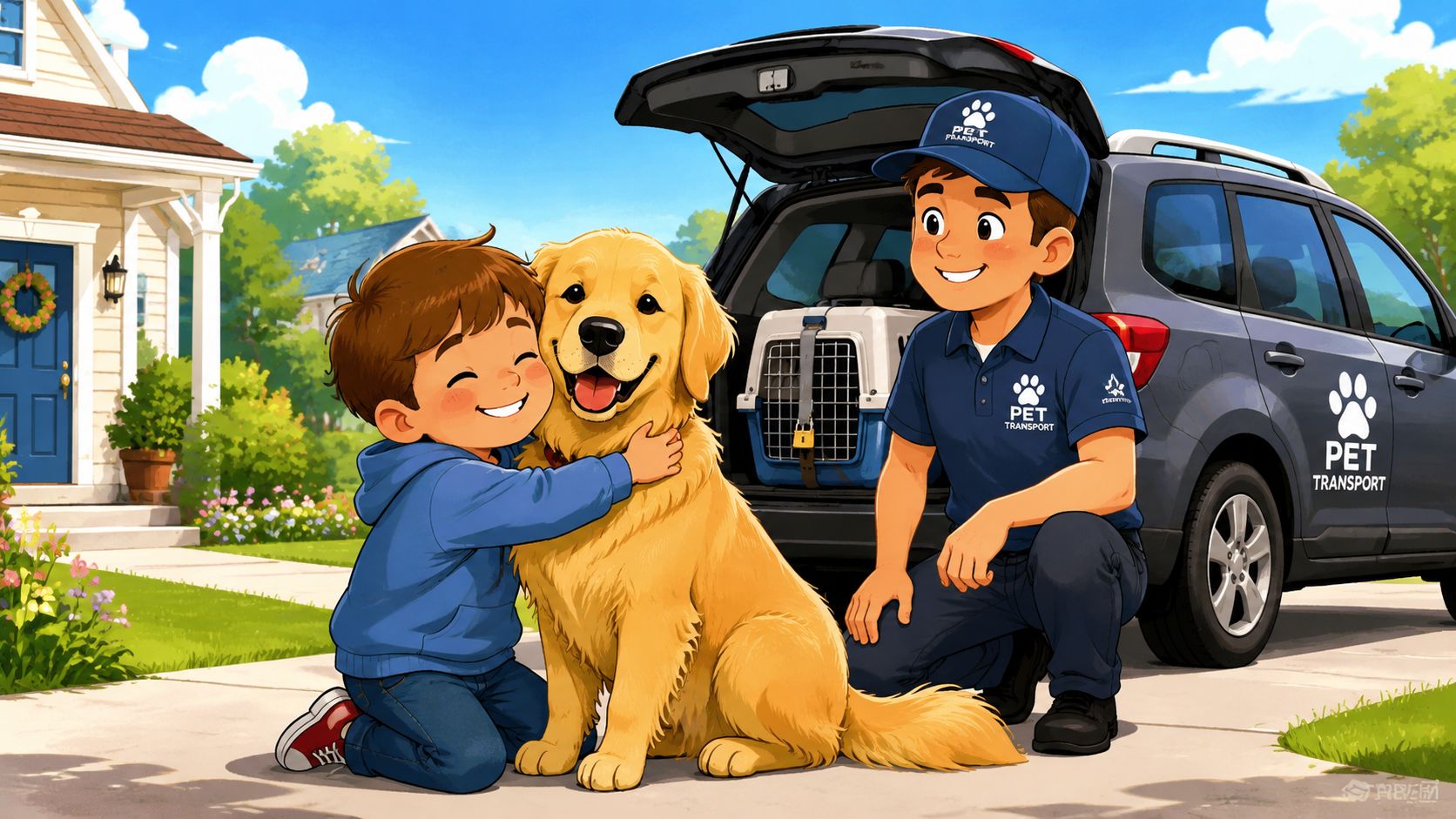
If you're looking at pet transporter jobs right now, there's a good chance you're picturing the rewarding part first. A dog gets out of the vehicle, spots its family, and goes from nervous to tail-wagging in seconds. A cat that started the trip tucked into the back of a carrier settles into a new home by evening. That part is real, and it's one reason people stay in this work.
But the job isn't just about loving animals. It's about staying calm when a route changes, keeping paperwork straight, reading stress signals in pets, and communicating clearly with owners who are trusting you with a family member. The people who do well in this field don't just drive. They plan, document, reassure, and solve problems.
Is a Pet Transporter Job Right For You
Pet transporter jobs appeal to animal lovers, but affection alone won't carry you through a long day. You need patience, stamina, and the kind of mindset that can handle both a nervous terrier and a worried client in the same hour.
This is also a real market, not a side gig with a cute label. The U.S. pet transportation services industry was estimated at $2.2 billion in 2026 and included 22,134 businesses in 2025, which points to a large field with many smaller operators rather than a handful of giants, according to IBISWorld's pet transportation services industry overview.
What the job actually feels like
On a good day, you're part handler, part dispatcher, part customer service rep. You load safely, double-check instructions, manage timing, and keep animals comfortable without making the trip feel chaotic.
On a harder day, a pickup runs late, a pet refuses water, or the owner's documents don't match what they told you on the phone. That's when the difference between a casual driver and a professional starts to show.
Practical rule: If you like predictable desk work and hate last-minute changes, pet transporter jobs may feel rough. If you stay steady under pressure, you'll have a stronger fit.
A quick self-check
Ask yourself these questions before you apply:
Do you stay calm around anxious animals? Some pets travel beautifully. Others vocalize, pace, drool, or shut down.
Can you handle routine without getting sloppy? Rechecking latches, bowls, tags, and notes matters every single trip.
Are you comfortable talking to clients? Owners often want updates, clear ETAs, and reassurance.
Can you think in systems? Routes, records, feeding windows, and handoff details all have to line up.
Will you treat this as a profession? The strongest candidates don't present themselves as "just drivers."
A lot of newcomers rush to update their resume before they've clarified what kind of role they want. A better first step is this approach to better resume results, which helps you define your strengths before you start selling them.
It also helps to look at how established providers describe the work. Reviewing different animal transport companies and service models can give you a realistic picture of routes, client expectations, and specialization paths.
Core Responsibilities and Required Skills
A pet transporter's real job shows up at 6 a.m. when the dog refuses the crate, the owner is nervous, and a weather delay just changed your route. In that moment, nobody needs a basic driver. They need someone who can assess the animal, adjust the plan, document the change, and keep the trip safe.
That is why the strongest people in this field work as pet travel specialists. Driving is one part of the assignment. The rest is animal care, compliance, timing, communication, and clean recordkeeping.
What the work looks like day to day
Every trip starts with preparation. Confirm the animal's identity, feeding instructions, medications, emergency contacts, crate setup, and handoff details before pickup. Check the vehicle the same way every time: temperature control, crate security, cleaning supplies, water, leads, backup restraints, and enough margin for delays.
Once the trip begins, your attention shifts to the pet. Stress signs can be subtle. Excess panting, drooling, whining, repeated repositioning, shutdown behavior, or unusual quiet all mean you may need to stop, reassess, and update the owner. Good transporters do not wait for a small welfare issue to become a bigger one.
Daily responsibilities usually include:
Vehicle readiness: Clean transport area, secured carriers, working climate control, and backup supplies.
Animal monitoring: Watching body language, stress levels, hydration, and comfort during the trip.
Routine care: Water checks, approved breaks, sanitation, and handling that keeps arousal low.
Documentation: Matching names, tags, instructions, release details, and transport notes.
Client communication: Confirming pickup, sharing ETA changes, and reporting problems early.
Route coordination: Adjusting for traffic, weather, pet condition, and timing restrictions at pickup or delivery.
A clear understanding of how pet transport services are structured in real operations helps new hires see why dispatch, care standards, and documentation matter as much as mileage.
Skills that employers notice quickly
Calm behavior matters. So does judgment.
Owners are handing over a family animal, often under stressful circumstances. Employers know they can teach parts of the process, but they cannot easily fix someone who gets careless, flustered, or vague with details.
The soft skills that carry the most weight are:
Skill | Why it matters in the field |
|---|---|
Patience | Loading, toileting, and settling animals often takes longer than the schedule suggests. |
Observation | Early stress signals are easier to address than a full panic response. |
Communication | Clear updates reduce owner anxiety and prevent handoff mistakes. |
Problem-solving | Delays, incorrect paperwork, and access issues happen on regular runs. |
Professional judgment | You need to know when to continue, when to pause, and when to escalate a concern. |
Hard skills that raise your value
Here, people move beyond "I can drive long distances" and start looking hireable for serious transport work.
The hard skills that separate stronger candidates include:
Defensive driving
Safe crate loading and securement
Basic canine and feline handling
Sanitation and biosecurity habits
Accurate recordkeeping
Route planning with rest and care windows
Comfort using travel apps, GPS tools, digital forms, and status updates
Working knowledge of travel document workflows
Technology matters more than many newcomers expect. Many operators now use mobile checklists, route tracking, photo confirmation, client messaging, and digital records to reduce errors and protect the business if a dispute comes up later. If you can handle animals well and stay organized inside those systems, you become much more useful than someone who only offers driving time.
That is the trade-off in this field. Kindness gets owners to trust you. Consistency, compliance habits, and operational discipline keep you working.
Getting Qualified with Training and Certifications
You don't need a formal degree to break into this field. What you need is evidence that you're safe, prepared, and coachable. Hiring managers want fewer unknowns, especially when the cargo barks, meows, or panics.
The smartest path is to build qualifications in layers. Start with what's essential, then add training that makes you more useful on real assignments.

Start with the basics employers check first
These aren't flashy, but they matter most at the start:
Driving record: If your record is weak, fix what you can and be ready to explain it.
Reliable vehicle access: For contractor-style roles, the vehicle can be part of your candidacy.
Insurance proof: Employers and platforms often need to see it before assigning work.
Availability and route flexibility: Weekend and longer-distance willingness can make you easier to place.
If you're missing one of these basics, another certificate won't hide it.
Add training that improves real-world handling
The best next step is practical training you can use on day one. In my experience, the most valuable courses are the ones that change how you respond under pressure.
Look for training in areas like:
Pet First Aid and CPR so you know how to react when something feels off
Animal behavior and handling so you can read stress signals early
Defensive driving because a smooth trip is safer than a fast one
Business and logistics skills for scheduling, updates, and route discipline
Training matters most when it changes your habits. A certificate that sits in a folder won't help if your loading routine is sloppy.
Learn the paperwork side early
Many new transporters fall behind in this aspect. They focus on animals and vehicles, but not on the document chain that supports the move.
If you want to move from driver to specialist, get comfortable with:
Area | What you should be able to do |
|---|---|
Health paperwork | Recognize what needs to be present and what looks incomplete |
Travel timelines | Track steps in the right order instead of reacting late |
Client intake | Gather correct details the first time |
Vet coordination | Communicate clearly when a clinic is part of the workflow |
Record retention | Keep files organized and easy to retrieve |
That combination makes you easier to trust with higher-stakes assignments.
Build proof, not just confidence
A simple way to package yourself is to keep a professional file. Include your driving documents, insurance details if relevant to the role, training certificates, and a short list of situations you've handled well. Shelter transport, rescue volunteering, kennel work, and client-facing service all count if you explain them properly.
Pet transporter jobs don't always go to the person with the biggest personality. They often go to the person who looks prepared, sounds steady, and has done their homework down to the last leash.
Navigating Pet Travel Compliance and Safety
A trip can look fine at pickup and still fail before handoff. The crate is clean, the pet is calm, the route is set, then a clinic sends the wrong date, an owner misspells a surname, or a destination requires one more document than anyone expected. That is the point where a basic driver gets stuck and a pet travel specialist earns their keep.
Compliance work raises your value because it prevents bad trips before they start. Local, interstate, and international moves follow different rules, and paid animal transport brings its own handling, recordkeeping, and operating requirements. Serious operators know the route is only one part of the job. The file has to be right too.
Why strong compliance habits matter
The best transporters I know do not wait for problems to appear at departure. They catch them during intake, while there is still time to fix them without stressing the pet or the client.
That means checking scope first. Ask where the pet is going, who is arranging veterinary paperwork, what timeline applies, and what the receiving party expects to see. One unclear answer early can create hours of delay later. In higher-stakes moves, it can stop the trip altogether.
The working rule is simple. If a detail affects entry, timing, identity, or animal welfare, verify it.
The documents that usually create friction
The packet changes by trip, but the same pressure points show up again and again: health certificates, vaccination records, import permits, owner and consignee details, crate specifications, and timing windows tied to exams or endorsements. Once a veterinary clinic, airline, or destination authority joins the process, the margin for error gets smaller.
For a practical overview of the paperwork categories involved, review this guide to travel documents for pets.
Use a repeatable review process:
Match names exactly. Pet, owner, and consignee names need to line up across every document.
Check dates against the trip plan. A correct document issued at the wrong time can still be unusable.
Confirm task ownership. Know whether the owner, clinic, broker, or transporter is responsible for each item.
Keep one record set. Scattered screenshots, texts, and inbox threads cause preventable mistakes.
Log changes as they happen. Verbal updates disappear fast on a busy transport day.
That is how you move from "I drive pets" to "I manage pet travel."
Safety is more than careful driving
Animal safety starts before the wheels move. Carrier fit, ventilation, temperature control, loading order, tether points, cleaning supplies, medication notes, and emergency contacts all matter. So does how equipment is secured in the vehicle. A shifting crate or loose gear can turn a routine brake stop into an avoidable incident. My Safety Manager's securement guide is a useful reference for tightening up that part of your process.
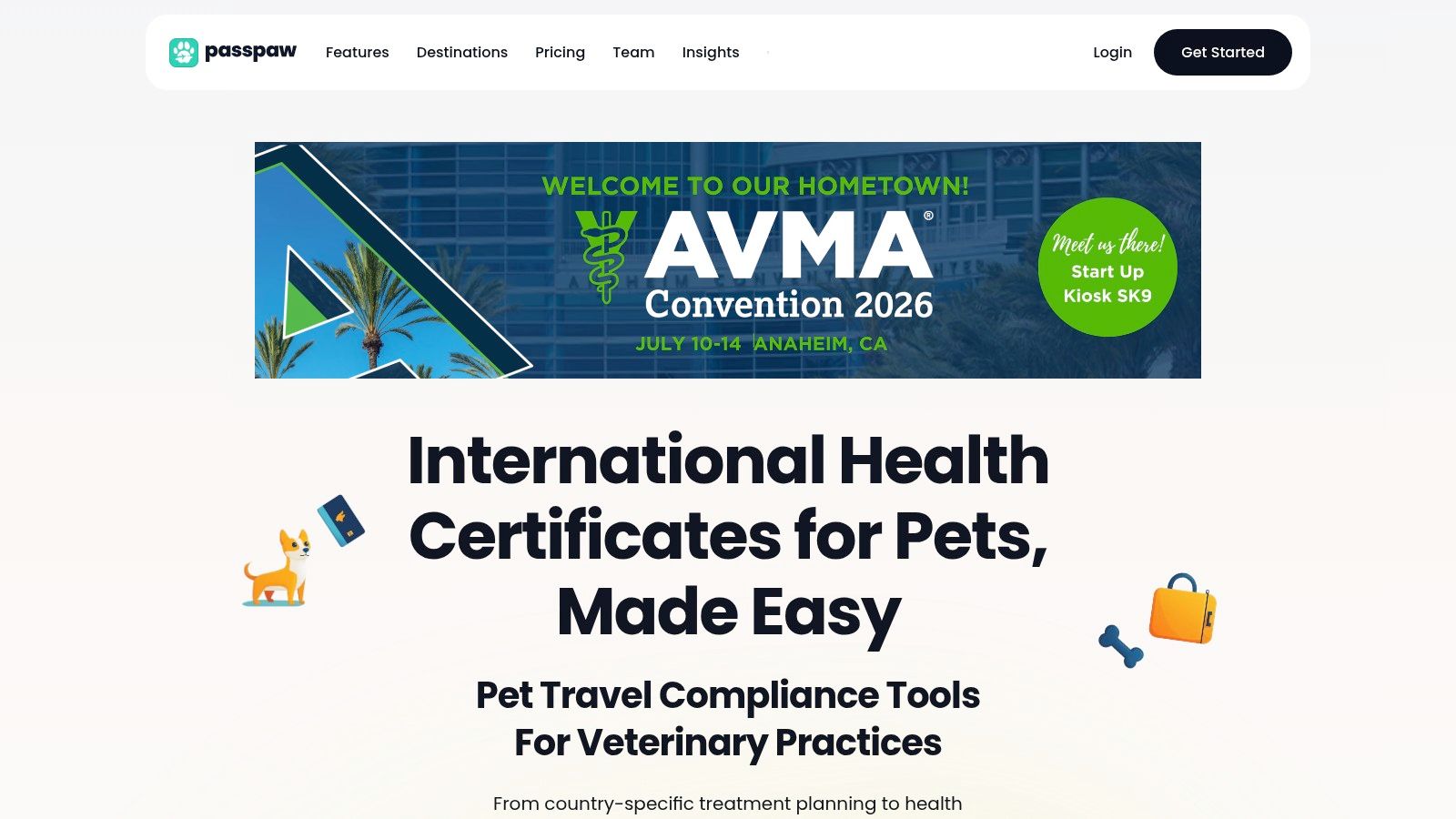
Admin safety matters too. Clean records reduce handoff mistakes, help clinics answer questions quickly, and give owners clearer updates. Many operators now use digital systems instead of handwritten notes and long email chains. Passpaw is one example of a tool used to manage international pet health certificate workflows, track document status, and keep communication organized between veterinary teams and pet owners. If you can work confidently inside systems like that, you stand out. Employers notice candidates who can handle both animals and documentation without creating extra cleanup for the team.
The transporter who catches a missing endorsement, a date conflict, or a crate issue before departure protects the pet, the schedule, and the client relationship.
Habits that keep trips under control
Some shortcuts feel efficient in the moment and cause trouble later.
Weak approach | Better approach |
|---|---|
Relying on memory | Use a trip checklist and mark each item complete |
Waiting for clients to send whatever they have | Ask for specific documents and review them early |
Assuming the clinic handled the details | Confirm what was issued, what is pending, and what still needs review |
Treating safety as a loading task | Monitor securement, temperature, stops, and handoff conditions through the full trip |
Keeping records in different apps and threads | Maintain one organized trip file with current versions only |
Reliable transporters finish routes. Trusted specialists prevent avoidable failures. In this field, compliance discipline and comfort with digital tools are often what separate the two.
Building Your Resume and Finding Job Openings
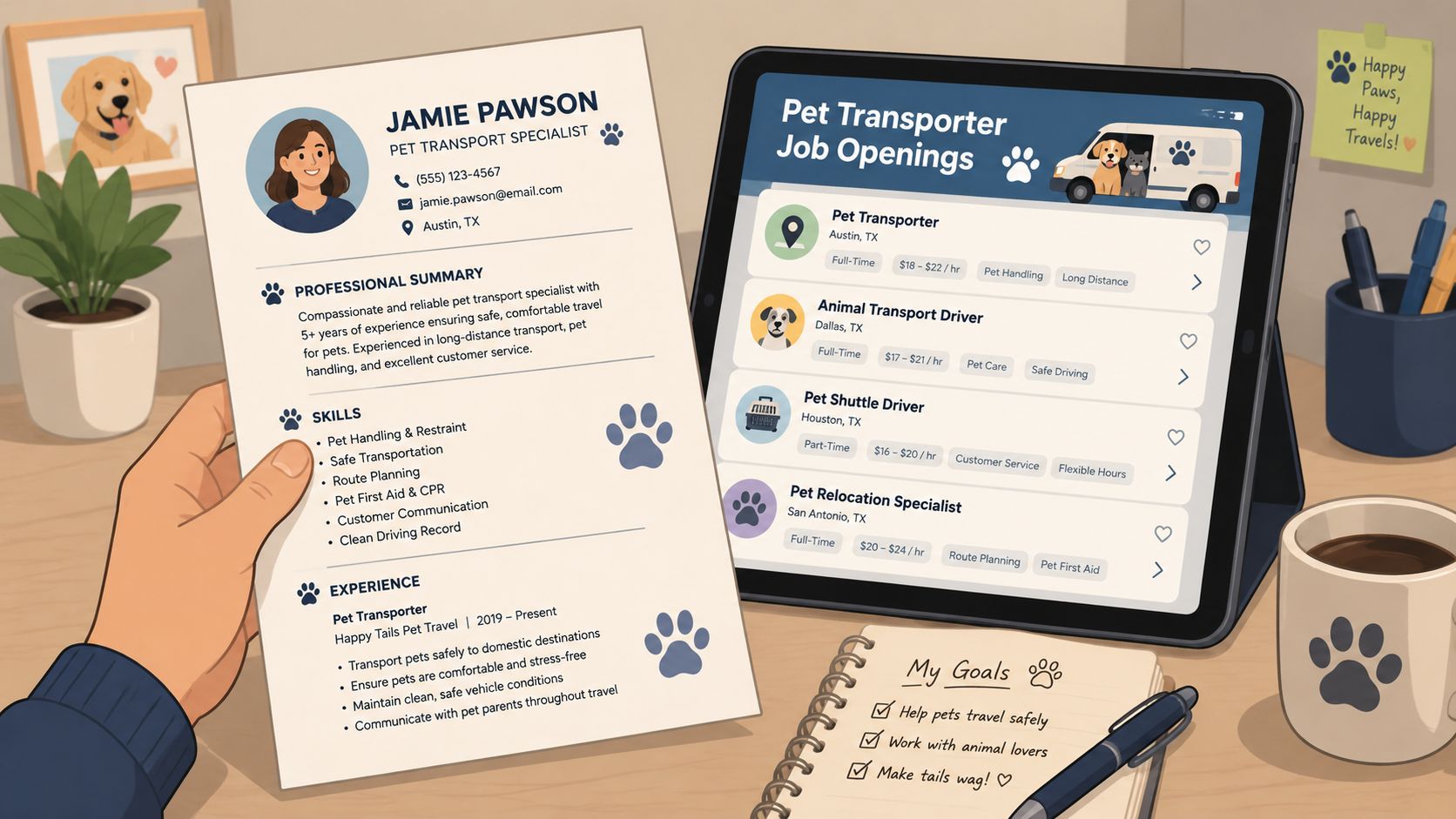
A strong resume for pet transporter jobs shouldn't read like a generic delivery application. It should show three things fast. You can be trusted with animals, you can stay organized on the road, and you can deal with people professionally.
That doesn't mean you need years of pet transport experience. It means you need to frame your past work in a way hiring managers can use.
How to translate your background
A surprising number of good candidates undersell themselves. Shelter volunteering, kennel work, rideshare driving, dispatching, veterinary reception, hospitality, and customer service can all support your application.
Try translating experience like this:
Shelter or rescue work: Emphasize animal handling, stress awareness, and cleanliness standards.
Delivery or driving roles: Highlight safe driving, punctuality, route discipline, and client handoffs.
Front desk or support roles: Focus on scheduling, documentation, and calm communication.
Vet clinic exposure: Mention familiarity with records, instructions, and working around medical workflows.
If you've learned digital document systems or pet travel admin tools, list that under skills. It signals that you're aiming beyond basic transport and toward specialist work.
Show the employer how you think
Resume bullets are stronger when they describe judgment, not just tasks. Compare these two styles:
Weaker bullet | Stronger bullet |
|---|---|
Transported pets to destinations | Managed pet pickups and drop-offs with route coordination, owner updates, and welfare checks throughout travel |
Worked with animals | Handled animals calmly in unfamiliar environments and adjusted approach based on stress signals |
Completed paperwork | Maintained organized trip records and verified travel details before dispatch |
For roles that involve international clients or cross-border coordination, this career advice for international job applications can help you present experience more clearly.
Where to look for openings
Start with businesses that already work around pet movement and care. Good places to search include:
Pet shipping and relocation companies
Pet courier and ground transport services
Veterinary practices with travel support
Breeders, rescues, and specialty animal service firms
Platforms that connect drivers with pet transport trips
Exploring different kinds of pet courier services and operator models can also help you decide whether you want employee work, contractor-style route bidding, or a niche specialty.
Set expectations around pay and workload
One pet transport platform reports average payouts of $300 to $700 for local trips under 100 miles, $700 to $1,400 for trips from 100 to 500 miles, $1,400 to $2,800 for 500 to 1,500 miles, and $2,200 to $4,500+ for trips over 1,500 miles. The same source says active drivers complete 4 to 8 trips per month and earn about $2,500 to $5,000 monthly, with some premium corridors reaching $6,000 to $9,000 per month, according to GoGo Pets' driver earnings and route model.
Those numbers show the work can be viable. They also show why scheduling, route selection, and paperwork readiness matter. A route you can't execute cleanly isn't worth chasing, no matter how fetching the payout looks.
Acing the Interview and Starting Your Journey
Most pet transport interviews aren't really testing whether you like animals. Hiring managers assume that part. They're trying to find out whether you'll stay dependable when things get messy.
A typical interview often moves into scenarios quickly. That's good news, because scenario questions give you a chance to show how you think.
Questions you're likely to hear
You may get questions like:
What would you do if a pet showed signs of distress during a trip?
How would you handle a late pickup that affects the rest of your route?
What would you do if an owner gave unclear or conflicting instructions?
How do you keep records organized while you're on the road?
Why do you want pet transporter jobs instead of general delivery work?
The strongest answers don't sound dramatic. They sound methodical.
What a strong answer sounds like
If you're asked about a distressed pet, avoid trying to sound heroic. A better answer is calm and practical. You'd say that you'd assess the animal's behavior, reduce environmental stress where possible, review the trip instructions, document what you're seeing, and contact the appropriate person promptly rather than guessing.
A hiring manager trusts specific process more than big emotion. Calm beats performative every time.
If the question is about delays, talk about communication order. Who would you notify first? How would you update the client? What details would you record? That kind of answer tells the interviewer you'll protect both the pet and the schedule.
The mindset that gets you hired
What employers want is simple:
Reliability they don't have to chase
Good judgment around animals
Clean communication
Respect for process
A willingness to keep learning
You don't need to know everything on day one. You do need to show that you understand the job is bigger than the steering wheel.
Pet transporter jobs can become a real career when you treat them that way. The best people in this field combine compassion with systems, patience with paperwork, and animal care with professional discipline. That's the sweet spot.
If you're building that kind of career, Passpaw is worth knowing as part of the modern pet travel workflow. For transporters who work alongside veterinary teams or support international moves, familiarity with organized health certificate and travel document systems can help you operate like a specialist, not just a driver.
More articles
From regulatory changes to best practices for veterinarians and pet owners, our resources keep you ahead of the curve.