Are you a team member in a veterinary practice?
Are you a pet parent planning a trip with your furry pal?
A Guide to Pet Transport Services for a Safe Journey
When you're moving, the last thing you want to worry about is how your pet will get there. Whether it's a cross-country move or an international relocation, the logistics can feel overwhelming. That’s where pet transport services come in.
Think of them as a specialized travel agency and logistics manager, all rolled into one, just for your animal. They handle every single detail of your pet's journey, from booking the safest route to making sure they're comfortable and cared for every step of the way.
What Are Pet Transport Services and How Do They Work?
Moving is stressful enough on its own. Add a beloved pet to the mix, and the anxiety can skyrocket. You're not just moving boxes; you're moving a member of your family. This is exactly why professionals exist—to take that massive weight off your shoulders.
It's a lot like planning a trip for a child. You wouldn't just put them on a plane and hope for the best. You'd sort out their tickets, pack their bags with everything they need, and make sure a trusted adult is watching them from start to finish. Pet transporters do the same for your furry, feathered, or scaled companions, managing details that go way beyond a simple car ride.
Why You Might Need a Professional
Plenty of situations call for more than what you can handle on your own. A professional service becomes a lifeline in scenarios like these:
Long-Distance Domestic Moves: Driving thousands of miles with a nervous cat or a large dog isn't just difficult—it can be unsafe for everyone involved.
International Relocation: Moving to another country means navigating a maze of paperwork, from specific health certificates and import permits to strict quarantine rules that vary by destination.
Airline Travel Complexity: Airlines have very strict and often confusing rules about everything from approved breeds and crate sizes to temperature limits for animal safety.
Peace of Mind: Let's be honest—sometimes you just want the assurance that comes from knowing an experienced pro is managing every single detail.
More and more pet owners are turning to the pros. The global pet travel services market recently grew to $2.4 billion, a clear signal that people are treating their pets like the family they are and won't settle for anything less than the best care.
A professional pet transport service isn't just about moving an animal; it's about managing a journey. They are experts in logistics, animal welfare, and the detailed rules of pet travel, helping to create a smooth experience for both you and your pet.
The Core of the Service
At its heart, a pet transport company coordinates the entire trip from point A to B. This includes finding the most direct and safest route, arranging ground transportation to and from the airport, and handling all the necessary documents.
These experts know which airlines have the best track records for pet safety and how to avoid potential issues before they happen. To get a better sense of everything involved, from vet visits to packing, check out this great guide on how to travel with pets. It’s a helpful starting point.
Navigating the Necessary Travel Paperwork
When you're in the middle of a big move, the last thing you want is a mountain of paperwork—especially when it's for your pet. Tackling the documents for pet transport services can feel like a puzzle, but getting it right is one of the most important steps for a smooth trip. For airlines and border officials, the right paperwork isn't just a suggestion; it's a must.
Think of your pet's travel documents as their own personal passport and visa. Just like people, pets need official papers showing they're healthy and meet all the entry rules for their destination. Without the correct forms, your travel plans can come to a sudden stop.
The Cornerstone: The Health Certificate
At the heart of all this paperwork is the health certificate, often called a Certificate of Veterinary Inspection (CVI). This is an official document signed by an accredited veterinarian, confirming your pet is healthy, free of contagious diseases, and up-to-date on all needed vaccinations.
This certificate is your pet’s official green light for travel. It tells authorities and airline staff that a qualified professional has examined your pet and cleared them for the journey. The timeline for this is super specific—it's often required within 10 days of travel—so close coordination with your vet is key.
For certain trips, especially those going overseas, this document needs an extra layer of approval. This is an important step that can't be skipped for moves abroad, and you can get the full rundown in our guide on how to get a USDA-endorsed pet health certificate.
Domestic vs. International Paperwork: A Tale of Two Journeys
The amount of paperwork for your pet really depends on where you're headed. Moving across state lines is a whole different ballgame than moving across an ocean.
Domestic Travel (Within the Same Country): For moves inside the U.S., you'll generally just need a standard health certificate and proof of a current rabies vaccination. Still, rules can vary a bit from state to state, so it’s always smart to double-check what's needed for your new home.
International Travel (To a Different Country): This is where things can get tricky. Every country has its own unique, and often very strict, set of rules. You'll almost always need much more than just a basic health certificate.
For instance, many countries may require:
An import permit issued directly by their government.
A specific type of microchip (usually ISO-compliant).
Proof of other vaccinations or treatments (like for tapeworms).
A government endorsement (like one from the USDA in the U.S.) on the health certificate.
Navigating international pet travel is a bit like being a detective. You have to uncover every single rule for your destination, from blood tests required months in advance to specific quarantine periods on arrival. It's exactly why starting the process as early as possible is so important.
This timeline gives you a great visual overview of the major stages you'll go through when arranging your pet's transport.
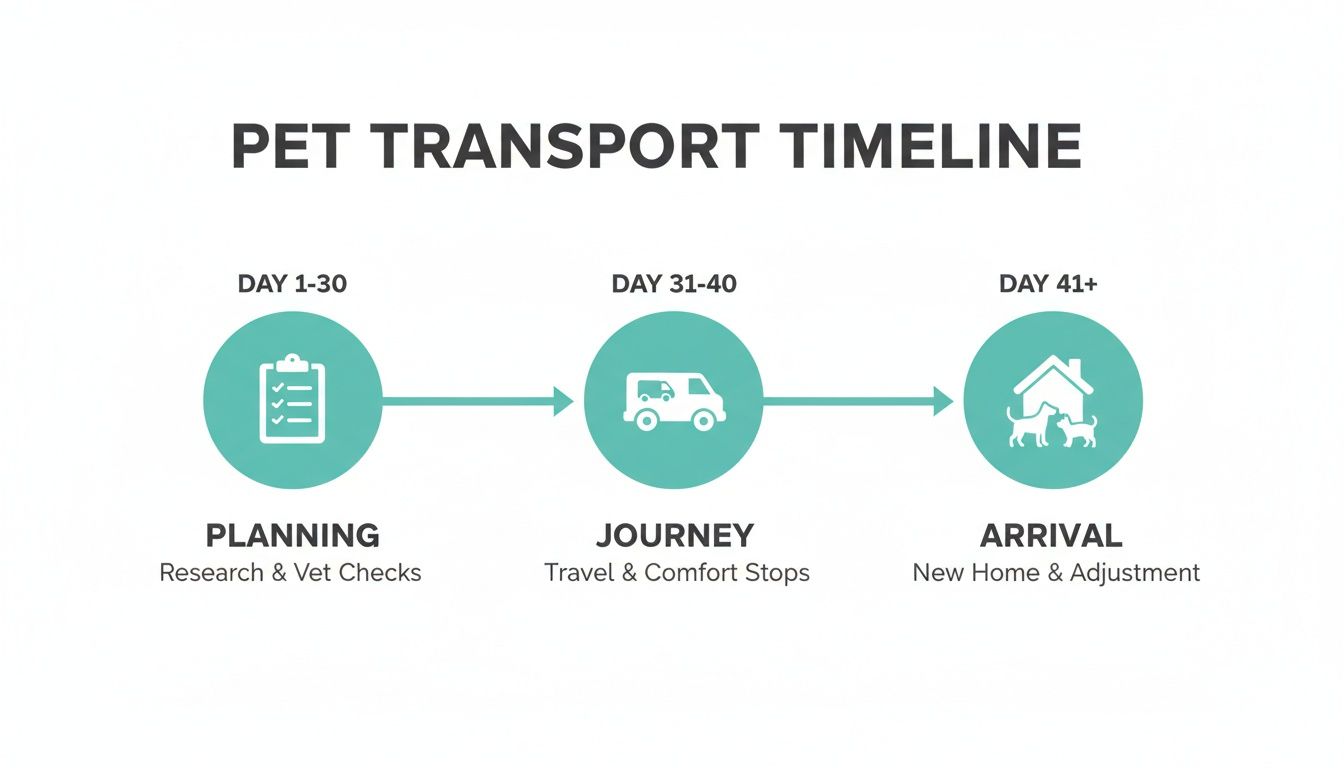
As you can see, the planning phase is by far the most involved. It really drives home the need to sort out all the paperwork and vet visits long before the actual travel day.
Your Ultimate Paperwork Checklist
To keep things from getting too ruff, use this checklist as your guide. But always, always confirm these details with both your transport provider and the official authorities at your destination.
Health Certificate (CVI): Book that vet appointment within the required window (usually 5-10 days before travel).
Vaccination Records: Make sure all shots, especially rabies, are up-to-date and you have the records to prove it.
Microchip Information: Check that the chip is registered with your current contact info and is the right type for your destination.
Import Permit (If International): Apply for this far in advance. Processing can take a while.
Government Endorsement (If International): Work with your vet to get that necessary stamp of approval from the USDA or an equivalent agency.
How to Choose a Reputable Pet Transporter
Handing your pet over to a stranger for a long journey is a huge deal. Let's be honest, it's nerve-wracking. You’re not just moving them from point A to point B; you’re trusting someone with a member of your family. Choosing the right pet transport services is a decision that deserves serious homework to avoid a complete cat-astrophe.
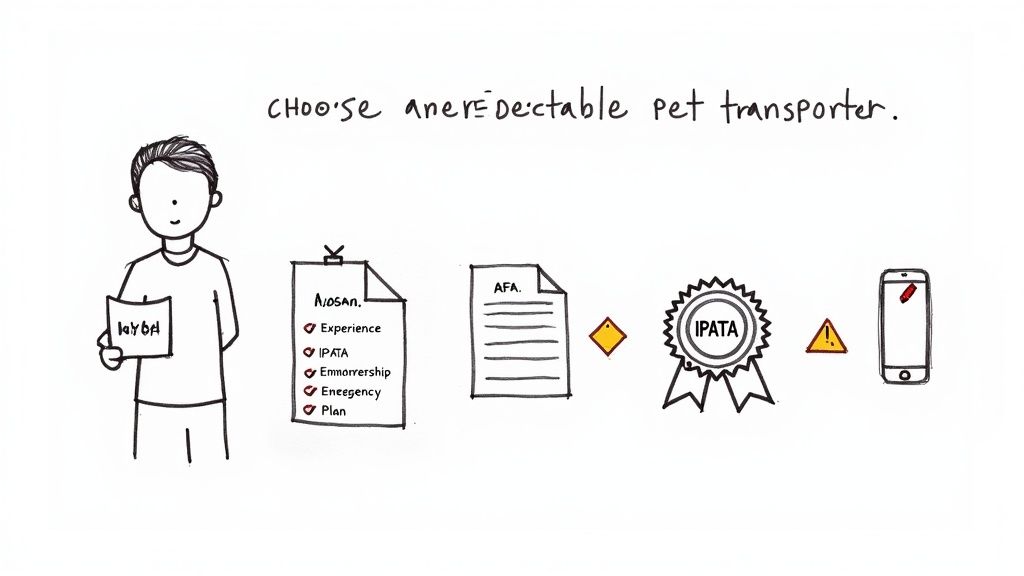
Think of it like hiring a babysitter for your kid. You wouldn't just pick the first name you find online without asking tough questions, checking references, and making sure they're qualified. That same level of care is essential when you're selecting a professional to manage your pet's trip.
Key Questions to Ask Potential Providers
Before you sign any dotted lines, you need to come prepared with a list of important questions. A good, reputable company will be happy to answer them and should sound confident in their process. If they get dodgy or seem annoyed by your questions? That’s your cue to walk away.
Here’s a solid starting list for your interview:
How long have you been in business? Experience is everything in this line of work. Seasoned pros have seen it all and know how to avoid problems before they even start.
Are you a member of IPATA? The International Pet and Animal Transportation Association (IPATA) is the gold standard. Membership shows a real commitment to ethical transport and high standards for animal welfare.
Can you provide proof of insurance? Ask to see their USDA license (for U.S. companies) and liability insurance. This is your safety net if something unexpected happens.
What is your emergency plan? What happens if a flight gets canceled or a pet gets sick mid-journey? They need to have a clear, rehearsed plan. A solid answer shows they’re prepared for real-world issues.
How will you keep me updated during the trip? You shouldn't have to spend the whole trip biting your nails. A good service will offer regular updates via text, email, or a tracking portal so you know where your pet is and how they're doing.
Checking Reviews and Doing Your Detective Work
Online reviews are a great place to start, but you have to dig a little deeper than the star rating. Look for detailed stories on Google, Yelp, and social media. Pay special attention to what people say about communication, how the pet was doing upon arrival, and how the company handled any hiccups.
And don't just read the glowing five-star reviews. An occasional negative review can tell you a lot—not just about what went wrong, but how the company responded. Did they step up and try to make it right? That’s what matters.
A great pet transporter understands they are moving a beloved family member, not just cargo. Their communication, transparency, and attention to your pet's individual needs should reflect that at every step of the process.
It’s also a smart move to ask for references from past clients, especially people who moved a similar pet or took a similar route. A company that’s proud of its work will have no problem connecting you with happy customers. For more tips on planning a domestic move, check out our guide on how to transport pets across the country.
Red Flags to Watch For
While you're looking for all the right signs, it’s just as crucial to spot the red flags. Some are subtle, but others are giant, waving warnings.
Be very wary of any company that:
Offers an unusually low price. If a quote seems way too good to be true, it probably is. Rock-bottom prices often mean they're cutting corners on safety, using poor equipment, or have hidden fees waiting for you.
Lacks a professional contract. Any legitimate business will give you a detailed contract that spells out the services, costs, and terms. Never move forward on just a verbal agreement.
Communicates poorly. Vague answers, taking forever to get back to you, or just an unprofessional vibe are all major warning signs. In this business, clear and timely communication is what gives you peace of mind.
Asks for payment via wire transfer or cash apps only. Reputable companies offer secure payment options like credit cards, which give you a layer of consumer protection.
Understanding the Costs of Pet Transport Services
When you start looking into professional pet transport services, one of the first questions you'll probably ask is, "How much is this going to cost?" It's a fair question, and the answer isn't just a random number. The final price tag is a carefully calculated sum based on several key factors that all contribute to your pet’s safety and comfort.
Think of it like booking a flight for yourself. A last-minute ticket for a long international flight with extra legroom will cost a lot more than a short domestic trip you booked months ago. The same logic applies to your pet's journey, just with a few extra furry considerations.
The Main Drivers of Pet Transport Costs
The total expense can vary quite a bit, but it almost always comes down to a combination of these core components. Each piece of the puzzle adds to the final quote you'll get from a transport company.
Distance and Destination: This one’s the most straightforward. A short, 300-mile ground trip will naturally cost less than a 3,000-mile flight across the country or an international move to another continent. The farther they go, the more it costs.
Your Pet's Size and Weight: Bigger pets need more space and a larger, heavier travel crate. This directly impacts both ground and air travel costs, since pricing is often tied to the crate's volume and weight. A Great Dane's ticket will cost more than a Chihuahua's.
Mode of Transportation: Your choice between ground and air travel is a major cost influencer. Ground transport is often the more economical option for shorter, domestic moves. For long-distance and international relocations, air travel is usually the only practical choice.
Service Level: A basic airport-to-airport service will be less expensive than a full-service, door-to-door package. The premium option often includes chauffeuring your pet to and from the airport, handling check-in, and managing customs clearance on your behalf.
The price of a pet transport service reflects the big logistical effort and professional expertise required to move a living animal safely across state or international borders. You're not just paying for a ride; you're investing in peace of mind.
Other Essential Expenses to Factor In
Beyond the transporter's fee, there are several other costs you'll need to account for. These aren't always included in the initial quote but are a necessary part of the process, so it’s best not to be caught by surprise.
Veterinary Visits: At a minimum, you'll need one vet visit for a health certificate. International travel often requires multiple appointments for specific tests, treatments, or parasite prevention on a strict timeline.
Travel Crate: Your pet has to travel in an IATA-compliant crate, which is specifically designed to be safe and secure for air travel. These can range from $75 to over $400, depending on your pet’s size and the crate's quality.
Government and Airline Fees: For international moves, you might have to pay for import permits, customs duties, or even quarantine stays at your destination. Airlines also have their own fees for handling live animals, which vary by carrier.
Understanding these variables is key to planning your budget without any shocks. For a deeper dive into what you can expect, you can learn more about the details of pet transportation costs in our dedicated guide. When you get a quote, make sure you ask exactly what is and isn't included so there are no surprises on the final bill.
Preparing Your Pet for a Positive Journey
A successful move for your pet starts long before the actual travel day. Just like you wouldn't leave packing for a big trip until the last minute, a little prep work can make all the difference in giving your pet a comfortable, low-stress experience. It’s all about setting them up for success.
Think of it as building a little bubble of comfort that your pet can take along for the ride. The goal is to turn a potentially scary new experience into something familiar and manageable.

Making the Crate a Happy Place
If there’s one thing you can do to get your pet ready, it’s this: crate training. For any professional pet transport service, the travel crate isn't optional—it's essential for safety. Your mission is to help your pet see their crate not as a cage, but as their own personal safe space.
Start this process weeks, or even months, before you move. Just leave the crate in a common area of your home with the door wide open. Encourage your pet to check it out by tossing their favorite treats, toys, or even their meals inside. You're building a positive association, turning a strange box into a familiar den.
You'll know you're on the right track when you find your pet napping or just hanging out in the crate on their own. This is the single most important step for a calm journey.
Nutrition and Hydration Before Travel
Figuring out food and water before the trip is a bit of a balancing act. You want them to be comfortable, but traveling on a full stomach can lead to motion sickness and messes. Nobody wants that.
Feeding Schedule: Most experts suggest a light meal about four hours before pickup. This gives them plenty of time to digest and have a potty break before they get settled in.
Hydration: Keeping your pet hydrated is key, but you don't want them chugging a huge bowl of water right before getting in the crate. Let them drink as normal, then limit access right before it's time to go. Most travel crates have dishes that the transporter can fill during rest stops.
No New Foods: Travel day is definitely not the time to introduce new foods or treats. Stick with their regular diet to avoid any surprise stomach upset.
The goal is to keep your pet's routine as normal as possible in the days leading up to the move. Consistency in feeding, exercise, and affection helps minimize anxiety and reinforces a sense of security during a time of change.
The Question of Sedation
It's a question we hear all the time from loving pet owners: "Should I sedate my anxious pet for the trip?" While it comes from a good place, the overwhelming consensus from veterinarians and professional transporters is a firm no.
Sedatives can be risky during travel. They can throw off a pet's balance, slow their breathing, and affect their ability to regulate body temperature—especially during flights where air pressure and temperatures change. The American Veterinary Medical Association (AVMA) strongly advises against sedating pets for air travel unless it's absolutely medically necessary and supervised. For more great insights into your pet's well-being on the move, you can find helpful advice in our comprehensive guide to pet travel.
Instead of sedation, focus on these much safer alternatives:
Pheromone Products: Calming sprays and diffusers can work wonders.
Anxiety Vests: These apply gentle, constant pressure, which is very soothing for many animals.
Herbal Remedies: Talk to your vet about pet-safe calming supplements.
Honestly, great crate training is the most effective—and safest—way to reduce travel stress. A pet who feels secure in their crate is far better off than one who is sedated. This preparation is the kindest thing you can do for a paw-sitive travel experience.
Your Top Pet Transport Questions, Answered
Deciding to use a professional pet transport service is a big step, and it's totally normal to have a few questions. When it comes to a member of your family, you want to know every last detail. We've put together answers to the most common queries we get from pet owners, giving you that last bit of clarity for a smooth, worry-free journey.
Is It Safe to Fly My Pet in Cargo?
Yes, it absolutely is—as long as you're working with a reputable pet shipper and a pet-friendly airline. The cargo area where pets travel is pressurized and climate-controlled, just like the passenger cabin. It’s a common myth that it's just a dark, cold baggage hold; in reality, it's a space designed specifically for live animals.
Professional shippers are picky. They only partner with airlines that have proven, pet-safe programs and follow strict animal welfare rules. They also make sure your pet’s crate is IATA-compliant, which is a key part of keeping them safe in the air.
How Far in Advance Should I Book a Pet Transport Service?
The sooner, the better. For a domestic move within the same country, you’ll want to book at least 4-6 weeks ahead of time. This gives everyone enough breathing room to schedule vet appointments and for the transporter to lock in a spot for your pet.
International travel is a different ballgame. You need to start planning at least 3-6 months before you intend to leave. That longer timeline is important for handling complex health requirements, getting import permits, and securing a spot on the plane, since airlines limit how many animals can fly at once.
What Is the Difference Between a Pet Shipper and an Air Nanny?
Think of a pet shipper as a full-service logistics expert. They manage the entire move from start to finish, whether it’s on the ground or in the air. They're the ones tackling all the tricky paperwork, booking the transport, and coordinating with airlines and government officials so you don't have to.
An air nanny, on the other hand, is an individual who flies with a small pet in the passenger cabin. This is only an option for pets who are small enough to fit in a carrier under the seat and works best for simple, direct flights.
Can I Put Toys or Bedding in My Pet's Travel Crate?
When it comes to the travel crate, simple and safe is the way to go. Most transporters suggest just a thin blanket or an old t-shirt that smells like you for a bit of comfort. Bulky beds, hard toys, or anything that could potentially be a choking hazard are a definite no-go during travel.
The main goal is to create a safe, uncluttered space. It's always a good idea to double-check the specific rules with your transport company before the big day. They know exactly what the airlines will and won't allow. For a broader look at pet travel, you can also explore these comprehensive resources for traveling with pets, which cover all sorts of different journey-related topics.
Planning a move with your pet has its complexities, but it doesn't have to be a headache. Passpaw offers a simple, digital way for veterinarians and pet owners to manage all the necessary health certificate documentation with ease. Learn how Passpaw can simplify your pet's next move.
More articles
From regulatory changes to best practices for veterinarians and pet owners, our resources keep you ahead of the curve.