Are you a team member in a veterinary practice?
Are you a pet parent planning a trip with your furry pal?
Animal Transport Companies: Find Safe, Trusted Pet Movers
When you're facing a move, whether across the country or around the globe, figuring out the logistics for your pet can be one of the most stressful parts of the puzzle. This is where a professional animal transport company becomes your best friend.
These specialists do more than just book a flight; they manage the entire journey, from handling complex airline rules and customs paperwork to ensuring your pet is comfortable and safe on the ground. Think of them as your pet's personal travel agent and logistics coordinator, all rolled into one.
Finding Your Trusted Pet Shipper
Partnering with the right pet shipper can make all the difference, turning a potentially chaotic experience into a smooth, managed process. A good company will handle every detail, taking the weight off your shoulders so you can focus on the human side of the move.
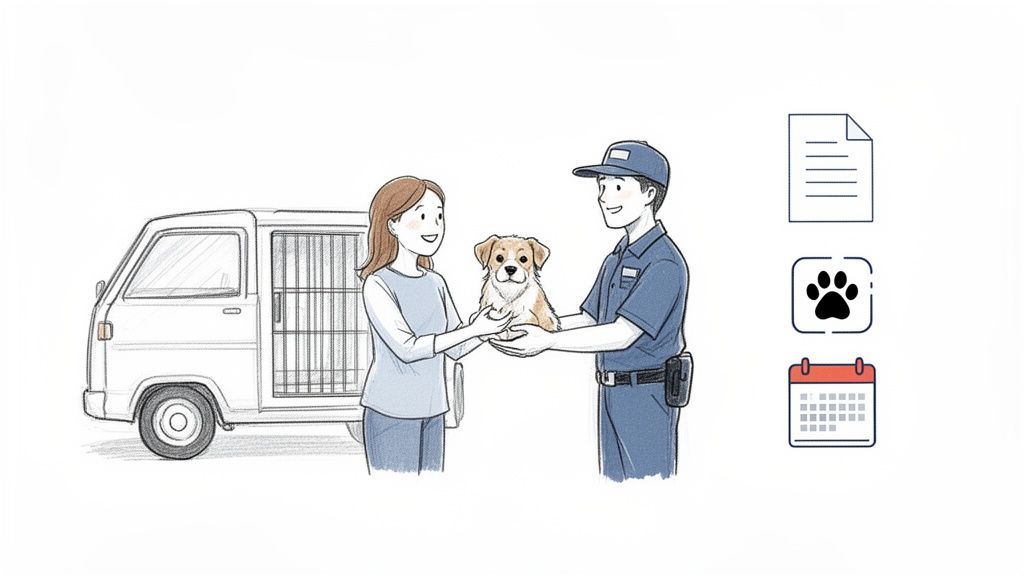
For instance, an experienced shipper knows which airlines have the best track record with live animals and will book routes that minimize stress and layover times. They don't just find a spot; they find the right spot.
Here’s a look at what top-tier shippers typically handle:
Airline & Route Booking: They arrange pet-friendly flights that fit your pet's personality and health needs, avoiding extreme temperatures and long waits.
Documentation Management: This is huge. They're pros at managing health certificates, import/export permits, customs forms, and making sure everything is in order.
Crate Selection & Prep: They'll guide you in choosing the perfect airline-approved crate and help with getting your pet used to it before the trip.
Customs Clearance: A seasoned pro knows how to handle international rules, which can prevent frustrating delays or unexpected quarantine periods.
Door-to-Door Coordination: Many offer a complete service, picking up your pet from your old home and delivering them safely to your new one.
Leaning on an expert helps you sidestep common but costly mistakes, like showing up with the wrong travel crate or missing a critical vaccination deadline. A great partner provides updates along the way, so you're never left wondering where your pet is or what's happening next.
Quick Checklist For Evaluating A Pet Transport Company
When you start looking at potential companies, it's easy to get overwhelmed. Use this quick checklist to compare your options and focus on the key things that show a reliable, professional operation.
Attribute | What To Look For | Why It Matters |
|---|---|---|
Credentials & Affiliations | Membership with IPATA (International Pet and Animal Transportation Association) or USDA registration. | This confirms they follow industry standards and best practices for animal welfare. |
Experience & Reviews | A long track record with real, detailed client testimonials and reviews. | Proven reliability is everything. You want a team that's seen it all and knows how to handle the unexpected. |
Technology & Tracking | Real-time GPS tracking, a client portal for updates, and clear communication channels. | Modern tech provides peace of mind, allowing you to follow your pet's journey and stay informed. |
Support & Responsiveness | A dedicated contact person, clear communication plans, and ideally, 24/7 emergency support. | When you have a question or concern, you need answers fast. Good support is a must-have. |
This table should be your first stop when shortlisting providers. Once you've narrowed it down, you can dig deeper with phone calls and quote requests.
"I always tell my clients to ask about backup plans. What happens if there's a flight delay, a missed connection, or a medical issue? A pro will have a solid answer." – Seasoned Pet Relocation Specialist
From my own experience, it's a good idea to discuss potential extra fees for these "what if" scenarios upfront. Knowing the plan for delays or alternate routes can save you a world of worry later on.
A Real-World Scenario
Picture this: a family in Miami needed to get Winston, their senior Siamese cat, to their new home in Seattle. They were worried about his anxiety and the summer heat.
They chose a shipper that specialized in climate-controlled ground transport and offered live tracking. The result? Winston traveled comfortably, the family could see his location the whole way, and the smooth handoffs at both ends meant the journey was two days shorter than they'd anticipated. Winston arrived calm and collected, ready to explore his new digs.
For a deeper dive into what goes into these moves, check out our complete guide on pet transport services.
Every pet's journey is unique. A young puppy's needs are far different from those of a senior dog with health conditions. Make sure you check each company's profile carefully, ask for references, and find a partner whose expertise matches your pet's specific needs.
With a little homework, you can confidently find a top-tier transport company. Your pet's big adventure deserves the best co-pilot you can find.
How To Properly Vet Animal Transport Companies
Picking an animal transport company can feel like a huge decision, and honestly, it is. You're not just looking for the best price; you're looking for a partner you can trust with a member of your family. A little bit of homework now will save you a world of stress later.
The right company doesn't just move a pet from Point A to Point B. They prioritize safety, communicate clearly, and have the credentials to prove they know what they’re doing. Let's walk through how to find that purrfect match.
Look for Credentials and Professional Affiliations
First things first, check their credentials. This isn’t just about ticking boxes; it’s a clear sign of their commitment to professional standards and animal welfare. Think of it as finding a board-certified specialist for your pet's big move.
Two of the most important ones to look for are:
USDA Registration: In the U.S., any company transporting animals for business should be registered with the United States Department of Agriculture (USDA). This means they are accountable to federal guidelines designed to keep animals safe during travel.
IPATA Membership: The International Pet and Animal Transportation Association (IPATA) is a global network of professional pet shippers. Members are held to a code of ethics and have to stay on top of ever-changing animal transport rules worldwide. Seeing that IPATA logo is a very good sign.
An IPATA membership signals that a company is serious about ethical and professional pet shipping. It’s a great way to narrow down your list right from the start.
The demand for these services is growing fast. The global pet travel services market was valued at USD 2.51 billion in 2023 and is only getting bigger, driven by a greater focus on pet safety. With more options comes a greater need to be careful in your search.
Ask the Right Questions Beyond Price
Once you’ve confirmed a company has the right credentials, it’s time to dig a little deeper. A price quote is just one small piece of the puzzle. How they answer detailed questions about their process will reveal their true level of expertise and care.
Don’t be afraid to get specific. Their answers—or their hesitation to answer—will tell you everything you need to know.
Here are a few key questions I always recommend asking:
Backup Plans: "What happens if a flight is delayed or canceled? Do you have staff or partner facilities who can care for my pet during an unexpected layover?"
Breed-Specific Experience: "I have a [your pet's breed]. What’s your experience with this breed, and are there any special precautions you take?" This is a must-ask for brachycephalic (flat-faced) breeds like Bulldogs or Persian cats.
Communication Plan: "How and how often will I get updates during the trip? Do you offer any real-time tracking?"
Staff Training: "What kind of training does your staff have in animal handling and safety?"
A truly professional shipper will welcome these questions. If a company gets defensive or seems annoyed by your questions, that’s a major red flag. Transparency is a sign of a trustworthy provider.
Understanding a bit about their logistics can also be telling. Learning what route optimization is can give you a better sense of how a company plans the safest and most efficient journey for your pet.
Scrutinize Their Online Presence
In this day and age, a company's website and reviews are their digital storefront. A professional, well-maintained online presence is a basic requirement. You're looking for a site that is transparent, informative, and easy to use.
Here’s what to look for and what to watch out for:
A Professional Website: Does the site clearly list their services, credentials (like their USDA number or IPATA affiliation), and contact info? A vague website with no physical address is a definite warning sign.
Honest and Detailed Reviews: Check third-party sites like Google or Yelp. Don't just glance at the star rating; read the actual comments. A pattern of complaints about poor communication or last-minute price hikes should be taken seriously.
Be Wary of Perfection: While you want good reviews, a flawless record full of generic, gushing comments can sometimes be a bit suspicious. Real, authentic reviews often mention specific details about the pet, the journey, or the staff members who helped them.
By combining these three steps—checking credentials, asking tough questions, and reviewing their public reputation—you can confidently choose a transport company you can trust. If you're focused on ground travel, you might also want to learn more about the different types of pet courier services available.
Navigating The Paperwork And Timelines For Pet Travel
You’ve picked a great animal transport company. Now for the fun part: the paperwork. This is where things can get complicated fast, with a maze of forms, tight deadlines, and critical vet visits. Getting just one detail wrong can mean expensive delays or, in the worst-case scenario, your pet not being able to travel at all.
The secret to keeping everything on track is to start early and stay organized. Every single step has a deadline, whether the pet is moving across the country or around the world. Your transport partner will be your guide, but understanding the key milestones yourself will give you major peace of mind.
The Core Documents Every Pet Traveler Needs
While every country has its own rulebook, a few key documents are pretty much universal. Think of them as the pet’s passport. Your transport coordinator will help you verify everything, but it's smart to know what they are.
Here are the big three:
Microchip Record: For any international travel, the microchip should be an ISO-compliant, 15-digit chip. It usually has to be implanted before the rabies vaccination. This is a key first step for most countries.
Rabies Vaccination Certificate: This document needs to show the vaccination date, the specific vaccine product used, and your veterinarian's signature. The timing of this vaccine is everything for international moves and can dictate your entire schedule.
Veterinary Health Certificate: This is the official sign-off from an accredited veterinarian, confirming the pet is healthy and fit to fly. The valid time on these is notoriously short—often just 10 days before travel—making that final vet visit an incredibly time-sensitive appointment.
For a deeper dive into the specific forms you might encounter, check out our guide on essential travel documents for pets.
Mapping Out Your Pet Travel Timeline
In pet relocation, timelines are everything. Missing one deadline creates a domino effect that can push a pet's travel date back by weeks, sometimes even months. Let’s break down what this looks like in two common scenarios.
A typical domestic move, say from California to New York, is fairly straightforward. You can usually start planning 4-6 weeks out. The main thing you're waiting on is the health certificate, which needs to be issued within 10 days of the flight.
International moves? That’s a whole different ballgame. They are far more complex and require a much longer runway.
For an international move, especially to a country with strict biosecurity like Australia or Japan, you should start the process at least 6 months ahead of time. This gives you enough buffer for specific vaccinations, blood tests, import permits, and potential quarantine bookings.
This timeline gives you a bird's-eye view of the whole vetting process, from checking credentials to reading reviews.
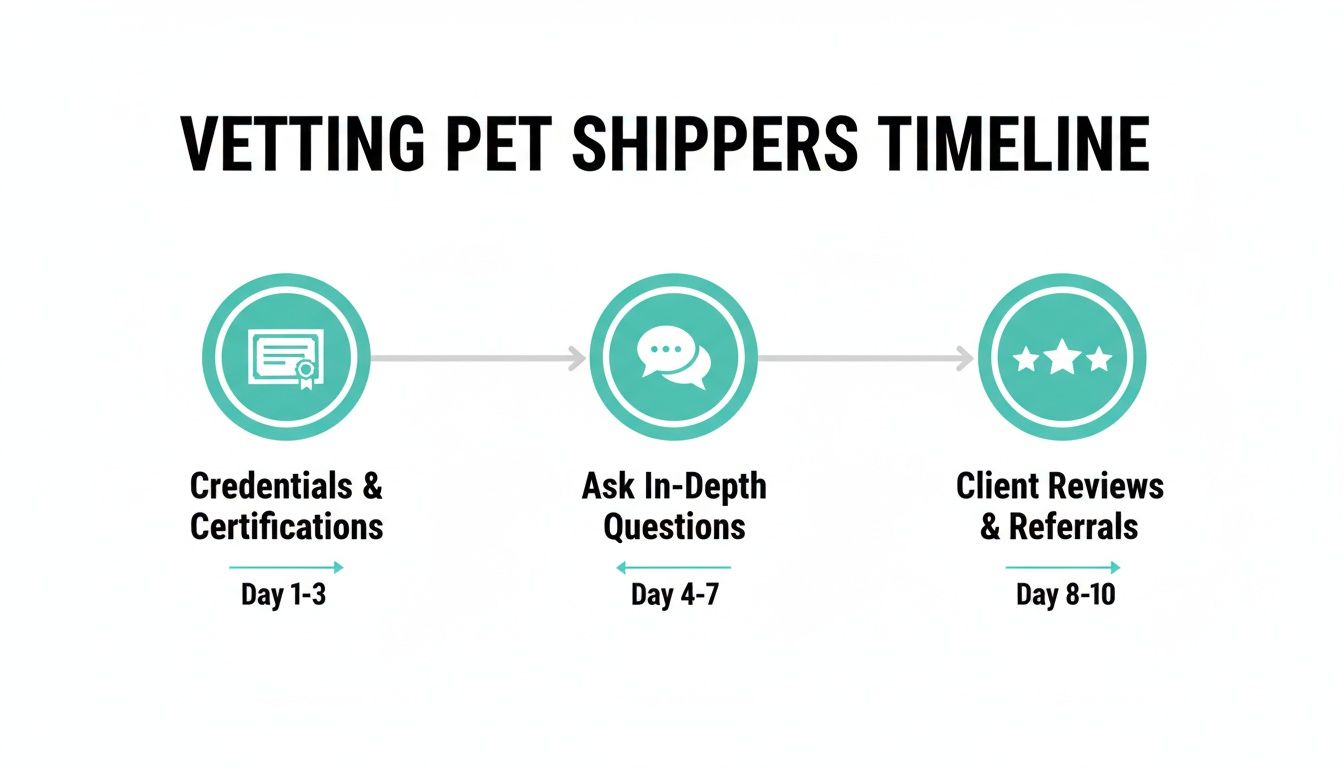
As the graphic shows, it’s all about a step-by-step approach. You have to confirm the company has the right credentials before you invest any more time digging deeper.
A Sample Timeline For An International Move
Let's walk through a real-world example: moving a dog from the USA to the United Kingdom. This requires careful planning. Here’s a simplified timeline, working backward from a travel date of July 1st.
January (6 Months Out):
First, confirm the dog has an ISO-compliant microchip.
Next, check that their rabies vaccination is up to date. If not, get it done immediately.
Start reaching out to animal transport companies for quotes to find your agent.
April (3 Months Out):
Work with your shipper to get the pet’s flight booked.
Buy an airline-approved travel crate and start crate training. You want the pet to see it as a safe, comfortable space.
June 21st (10 Days Out):
Time for the final vet visit. The accredited veterinarian does a health check and fills out the international health certificate. The clock is officially ticking.
June 23rd (Within a week of travel):
The completed health certificate may need to be sent to the USDA for its official endorsement. Your transport company will almost always handle this step, using a courier to make sure it's done fast and without error.
June 29th (2-3 Days Before Flight):
The endorsed documents arrive back from the USDA.
Your shipper submits copies of all the final paperwork to the airline.
July 1st (Travel Day):
The transport company picks up the pet along with all original, endorsed documents and handles the entire check-in process at the airport.
This example really shows how tightly linked every step is. A small delay, like the USDA endorsement getting stuck, could derail the entire trip. This is where platforms built for vet practices, like Passpaw, make a huge difference. They help vets manage these complex workflows by keeping documents organized, tracking deadlines, and validating information in real-time. When the clinic and the animal transport companies are in sync through a shared system, the risk of human error drops dramatically, ensuring every pet has a smooth, compliant journey.
Understanding The Costs Of Professional Pet Transport
Let's talk money. When you're planning a move with your pet, the cost is obviously a huge piece of the puzzle. But it's rarely a simple, single price tag.
Hiring a professional animal transport company isn't just about buying a ticket; you're investing in your pet's safety, comfort, and a genuinely stress-free experience for your whole family. The quote you receive isn't just a number pulled from a hat—it's a carefully calculated sum based on several key factors that are unique to your pet's journey.
Once you understand what goes into the pricing, you can compare quotes with confidence. You’ll be able to see the real value behind the numbers and choose a partner based on their service quality, not just the bottom line. It’s less about finding the cheapest option and more about finding the best value for your furry (or feathered) friend.
What Drives The Final Price
So, what exactly affects the total cost? It’s a lot like booking your own travel—distance, timing, and even the "class of service" all come into play. A short, cross-country trip for a cat will have a very different price tag than an international move for a Great Dane.
The biggest cost drivers usually boil down to these four things:
Travel Distance & Destination: A ground trip across a few states will be priced very differently from a transatlantic flight. International moves also bring in customs fees, tariffs, and sometimes mandatory quarantine costs that can significantly add to the total.
Your Pet's Size and Weight: This is a big one. Larger pets need bigger, heavier crates. That means they take up more space and weight on an aircraft, which directly translates to higher airline cargo fees.
Mode of Transport: Flying is often faster, but it can be more expensive than climate-controlled ground transport, especially for bigger pets or for moves within the same country.
Time of Year: Believe it or not, the season matters. Summer heat waves or winter storms can lead to airline restrictions for live animals, forcing shippers to find more complex (and sometimes pricier) routes to keep your pet safe.
Comparing Sample Pet Transport Costs
To give you a clearer picture, let's look at some ballpark figures. Remember, these are just estimates, since every move is unique. They're here to show you how different factors can swing the price.
For a much more detailed breakdown specific to your situation, we highly recommend checking out our complete guide on the cost of shipping pets.
Here's a quick look at what you might expect for different scenarios.
Sample Pet Transport Cost Estimates
Travel Scenario | Estimated Cost Range (USD) | Key Cost Factors |
|---|---|---|
Small Cat, Domestic Ground (e.g., Chicago to Denver) | $500 - $1,200 | Vehicle space, travel time, shared vs. private transport. |
Medium Dog, Domestic Air (e.g., New York to Los Angeles) | $1,200 - $2,500 | Airfare, airline-approved crate, vet certificates, airport fees. |
Large Dog, International Air (e.g., USA to UK) | $4,000 - $8,000+ | International air cargo rates, customs clearance, import permits, USDA endorsement fees. |
Two Cats, International Air (e.g., USA to Australia) | $6,000 - $12,000+ | All international factors plus mandatory quarantine fees, which can be substantial. |
These estimates help illustrate the wide range of possibilities when budgeting for your pet's move.
This isn't a niche service anymore. The global pet transport market was valued at USD 721.64 million in 2022 and is expected to hit over USD 1.3 billion by 2032. This growth is happening because more and more owners see their pets as true family members and are willing to invest in getting them to their new home safely. You can dive deeper into this growing market on thebrainyinsights.com.
Uncovering Potential Hidden Costs
A transparent quote from a reputable company should be all-inclusive, but it's always smart to ask about potential extra charges so you aren't caught off guard. Think of it like checking for extra baggage fees before you head to the airport.
A professional pet shipper will be upfront about all potential costs. Their goal is to prepare you for the journey, not to surprise you with unexpected bills. If a quote seems too good to be true, it probably is.
Make sure to ask your potential shipper about these common "add-ons" or variable fees:
Customs Duties or Taxes: Some countries have taxes on pets arriving from abroad.
Quarantine Fees: If your destination has a mandatory quarantine period, the cost for your pet's stay is almost never included in the initial shipping quote.
After-Hours or Weekend Fees: If your pet needs to be picked up or dropped off outside of standard business hours, there might be an additional charge.
Boarding Fees: Unexpected flight delays or cancellations could mean your pet needs an overnight stay at a professional boarding facility.
Talking through these possibilities upfront gives you a realistic budget and a clear financial picture. It’s the best way to make sure your pet's journey is a smooth, positive experience from start to finish.
Preparing Your Pet For A Comfortable Journey
Once you've sorted out the logistics with the transport company, it’s time to focus on the real VIP: your pet. A little prep work goes a long way in making their travel day less stressful and a lot more comfortable. By taking a few key steps in the weeks leading up to the move, you can turn what could be a scary experience into just another adventure for your furry family member.
A well-prepared pet is a much happier traveler, plain and simple. The goal here is to make everything—from the travel crate to the new sights and sounds—feel as familiar and safe as possible. Think of it as setting your pet up for success.
This preparation is a key part of what professional animal transport companies do. They don't just pick up your pet and go; they guide you through getting them ready for the trip.
Crate Training Is Not Negotiable
If you do only one thing to prepare your pet, make it this: positive crate training. Their travel crate needs to feel less like a cage and more like their own personal safe space. The whole idea is to build a strong, positive association with the crate, connecting it with comfort, treats, and rest.
You'll want to start this process at least 3-4 weeks before the travel date.
Introduce It Slowly: Just place the crate in a room where your family hangs out, leaving the door open. Let your pet sniff it out and explore on their own terms. No pressure.
Make It Cozy: Toss in their favorite blanket, a familiar toy, or even an old t-shirt that smells like you. This makes it feel like home.
Use Positive Reinforcement: Start by tossing treats inside. Feed them their meals in the crate. And whenever they wander in on their own, shower them with praise.
The goal is for your pet to enter the crate willingly and feel relaxed inside. A pet that is comfortable with their crate will experience significantly less stress during transit. This small investment of time pays off big time on travel day.
It also helps to understand the bigger picture of how your pet is kept safe. Professionals follow strict protocols, like the general cargo securement rules, to ensure your pet’s crate is completely secure from pickup to drop-off.
Diet, Hydration, and Health Checks
Your pet’s physical well-being is just as critical as their mental calm. A few simple adjustments to their feeding routine and a final wellness check can make all the difference.
A light meal 4-6 hours before pickup is the standard recommendation. This helps prevent motion sickness or an upset stomach while making sure they aren’t traveling hungry. Of course, keep fresh water available right up until it's time to go. The transport team will handle water during the journey itself.
This intense focus on animal welfare is a huge reason the pet transport industry continues to grow. Projections show the market expanding from USD 0.74 billion in 2025 to USD 1.16 billion by 2030. This growth is all about better logistics and a stronger demand for safe, humane transport options for our animals.
Special Care For Certain Breeds
Some pets just need a little extra attention. Brachycephalic (flat-faced) breeds—think Bulldogs, Pugs, and Persian cats—are much more sensitive to changes in air quality and temperature.
Professional animal transport companies know this and have specific procedures in place. They’ll often require larger crates to ensure better airflow and may only book flights with guaranteed climate control in the cargo hold. If you have a flat-faced pet, make sure you bring this up with your transport specialist right from the start.
The Ultimate Pre-Travel Checklist
Departure day can feel a bit chaotic. Keeping a simple checklist handy will help you stay calm and make sure nothing important gets missed in the shuffle.
Final Potty Break: Take your dog for one last good walk right before the transport team is scheduled to arrive.
Light Meal: Confirm your pet had their light meal about four hours ago. Remove any uneaten food from the crate.
Secure The Crate: Give the crate door a final check to make sure it latches securely and all the hardware is tight.
Attach Documents: Put copies of the health certificate and other travel info into a waterproof pouch and attach it firmly to the crate.
Comfort Items: Make sure a familiar blanket or non-shredable bedding is inside, but take out any toys that could become a choking hazard.
Following these simple steps helps ensure a smooth handover and a comfortable start to your pet's trip. Remember, a calm owner often means a calm pet, which makes saying "see you soon" a much more positive experience for everyone.
Your Top Questions About Animal Transport Companies, Answered
Planning a move with a pet brings up a ton of questions, and that's completely normal. You want to know every last detail about your best friend's journey. To give you some peace of mind, we've gathered the questions we hear most often about working with professional animal transport companies.
Getting solid, straight answers is the first step to a stress-free move for the whole family—furry, scaled, or feathered members included.
Is It Really Safe For My Pet To Fly In The Cargo Hold?
Yes, it is—as long as a professional pet shipper is managing the move. We get it, the term "cargo hold" sounds intimidating, but the reality for pets is a world away from where the suitcases go.
Airlines use dedicated, separate compartments for live animals. These spaces are pressurized and temperature-controlled, just like the main passenger cabin. A reputable animal transport company won't just book a spot; they'll ensure your pet travels in an airline-approved crate and that every airline safety rule is followed, dramatically lowering any risk. They're also pros at coordinating the logistics to make sure your pet spends as little time as possible waiting on the tarmac.
How Far In Advance Should I Book A Pet Shipper?
Honestly, it's never too early to get the ball rolling, especially if you're headed overseas. A good head start is the single best way to make the whole process go smoothly.
For international moves: We can't stress this enough—start the process 3 to 6 months ahead of your travel date. This timeline is needed for dealing with complex requirements like import permits, rabies blood tests, and the very specific vaccination schedules some countries require.
For domestic moves: You've got a bit more breathing room here. A window of 4 to 6 weeks is usually plenty of time to get vet visits sorted, book a spot with a transporter, and pull together all the paperwork without that last-minute panic.
Booking early doesn't just secure your spot; it also helps you avoid rush fees. It’s the ulti-mutt way to prepare.
The biggest mistake we see is people waiting too long to start. An early start gives you, your vet, and your shipper plenty of time to navigate any unexpected hiccups that might pop up.
Should I Sedate My Pet For The Flight?
This question comes up all the time, but the answer from every expert in the field is a firm no. Nearly all veterinarians and every major airline strongly advise against sedating pets for air travel.
Here's why: sedatives can affect a pet's natural ability to regulate their body temperature and keep their balance, which can be a risk at high altitudes. A groggy, disoriented pet is also more likely to get stressed out or even injured. The safest and most effective strategy is positive crate training in the weeks leading up to the flight. This teaches your pet to see their travel crate as a safe, cozy space, which is the best way to keep them naturally calm.
What’s The Difference Between A Pet Shipper And A Freight Company?
This is a key distinction. While they both move things from point A to point B, their expertise couldn't be more different. A general freight company is great at shipping boxes and furniture, but a professional pet shipper specializes only in the safe, humane transport of live animals.
Think of it this way: you wouldn't ask your movers to handle a medical procedure, would you? Pet shippers have incredibly deep, specialized knowledge of animal welfare, constantly changing airline pet policies, international health regulations, and breed-specific needs. They provide a complete, end-to-end service, from talking to your veterinarian to handling complex customs clearance. A freight forwarder just doesn't have that animal-first focus. For your pet's safety and your own sanity, always go with a dedicated specialist.
Juggling all these moving parts—from veterinary paperwork to flight bookings and customs—is a massive undertaking. Passpaw simplifies that critical first step by helping veterinary practices manage and validate international health certificates with total confidence. By ensuring every document is accurate and ready right from the start, we help create a smooth handoff between vets, pet owners, and the transport teams who will safely guide your best friend home. Learn how we can help at https://passpaw.com.
More articles
From regulatory changes to best practices for veterinarians and pet owners, our resources keep you ahead of the curve.