Are you a team member in a veterinary practice?
Are you a pet parent planning a trip with your furry pal?
How to Manage Workflow for Smoother Pet Travel
Friday afternoon is a poor time to discover that an international pet travel certificate is missing one key document. The phones are ringing, a kennel cough vaccine still needs recording, and a client is worried because her flight to Lisbon leaves Monday. Meanwhile, the receptionist is chasing a rabies titer result, the veterinarian is checking an export form, and nobody is quite sure who owns the next step.
That kind of pressure makes how to manage workflow a practical question, not a software question. Veterinary teams need a clear way to see each file, assign each handoff, catch missing information, and keep clients informed without turning the clinic hallway into a command center. Passpaw is one example of a tool that can support that work, but the strongest results start with process clarity.
Why Pet Travel Workflows Get So Tangled
By closing time, the clinic has a stack of half-finished travel certificates. One file has the pet's microchip number but no matching scan record. Another has a rabies certificate but no lab result. A third is waiting for a veterinarian's review, although the receptionist thought the form had already moved forward.
Pet travel work breaks down because every case carries its own combination of destination rules, travel dates, microchip details, vaccines, laboratory documents, and endorsement steps. A process that works for one country may not fit another. The same task can require different timing, different evidence, or a different reviewer depending on the destination.
Normal clinic work makes the problem worse. Consultations, urgent cases, phone calls, medication requests, and boarding questions compete with paperwork that often has a fixed deadline. When the team handles each travel case from memory, small gaps become delayed handoffs. The client sees silence, while staff members spend time searching inboxes and asking who last touched the file.
Practical rule: If nobody can answer “who owns this task now?” within a few seconds, the workflow has a visibility problem.
Workflow thinking makes the hidden sequence visible. The file should show who received the client inquiry, who confirmed the pet's identity, who checked the rabies record, who is waiting for the lab, who reviews the export document, and what must happen next. That visibility helps the team separate a genuine regulatory question from a simple ownership gap.
A useful primer on streamlining workflow for solo businesses also applies to small veterinary practices. The principle is straightforward: reduce avoidable coordination, make responsibilities clear, and give each piece of work a defined path.
Start by looking for the gaps that create repeat calls and last-minute panic. Passpaw's guide to documentation gaps is relevant here because missing or unclear records often cause more disruption than the certificate form itself. The answer isn't to hurry every task. It's to make the next task obvious.
Map the Real Process Before You Touch Any Tool
Don't open a workflow builder first. Open a whiteboard, a shared document, or a blank sheet of paper and write down what happens from the first client question to document pickup.
Use the international certificate process as the running example. List every handoff, including:
Client inquiry: A client asks whether the practice can support travel to a destination.
Appointment booking: The team schedules the relevant examination and records the intended travel date.
Veterinary examination: The veterinarian confirms the pet's health information and identifies missing requirements.
Rabies certificate entry: A staff member records the vaccine details and checks that the information matches the patient record.
Microchip verification: The team confirms that the chip can be read and that its number matches the documents.
Lab result receipt: Someone receives, files, and reviews the required laboratory result.
USDA endorsement submission: An assigned person prepares the submission and checks that the package is ready.
Client document pickup: The team releases the completed documents and explains what the client should carry.
For each line, write four answers: Who owns it? What triggers it? How long should it take? What must the next person receive? Don't use vague owners such as “the clinic” or “front desk.” Name a role, such as travel coordinator, veterinarian, or client service lead.
Find the gap behind the complaint
“Travel cases always lag” isn't a diagnosis. A map can turn that complaint into a specific failure, such as no one owning the lab-result chase, duplicate entry of the pet's microchip number, or a missing trigger for the pre-endorsement review.
The map should also show waiting states. A case may be waiting for a client upload, a lab result, a veterinarian decision, or an endorsement slot. Those are different problems and need different responses. A shared status such as “in progress” hides too much.
Teams working with older systems may benefit from the broader process-mapping ideas in BPMN mapping for legacy enterprises, especially when several systems and departments share one process. You don't need a complex diagram for a small practice. You do need a truthful one.
Only after the map is clear should the team decide what belongs in software. Passpaw's documentation guidance can help organize the information that must travel with each case. The tool should reflect the process, not dictate it.
Knowing When Automation Actually Helps
A clinic handling international pet travel can automate the steady parts of intake and follow-up, while keeping judgment with trained staff. Repetitive work, stable inputs, and clear rules are good candidates. Incomplete documents, changing destination requirements, and unusual clinical details need human review.
Use completed cases and exceptions to judge performance, not the number of automated actions. A practical benchmark describes 90% to 98% success as mature automation, while 60% to 75% is early or experimental. The benchmark and methodology appear in this workflow automation effectiveness guide.
Task Category | Automation Maturity | Typical Success Rate |
|---|---|---|
Appointment reminders and client nudges | Mature when inputs are consistent | 90% to 98% |
Deadline tracking and task sequencing | Mature when travel dates are recorded correctly | 90% to 98% |
Document checklist creation | Mature for structured destination data | 90% to 98% |
Reading unusual or incomplete certificates | Experimental | 60% to 75% |
Final judgment on an ambiguous certificate | Human-led | Not suitable for a fixed success-rate target |
These ranges are design thresholds, not promises for every practice or destination. Incomplete intake data can send a case down the wrong path, and unclear destination rules should trigger escalation rather than silent approval.
Automate the predictable layer
Pet travel validation combines routine steps with professional judgment. Requirements may be documented, yet certificates arrive in different formats, destination rules change, and exceptions are common. Automate deadline tracking, requirement lists, missing-document reminders, and status notifications first. That gives the veterinary team fewer routine chases while keeping the certificate review grounded.
Automatic approval for every certificate is a poor target. A veterinarian or trained travel coordinator should review conflicting dates, unreadable records, uncertain microchip information, and unusual laboratory evidence. The workflow should flag those cases clearly, not bury them in a cheerful green status.
If your intake rules are stable but the team lacks the technical capacity to build them, you can find custom workflow automation. Custom work still depends on reliable inputs, so define the exception route before commissioning it. Decide who receives a case when the system cannot make a safe determination, what evidence that person reviews, and how the decision returns to the case record.
For a practical comparison of systems that organize case records and process support, review Passpaw's documentation tools overview. In Passpaw, use automation to surface missing information and deadlines. Keep the final call with the person qualified to assess the certificate.
Building the Workflow Inside Passpaw
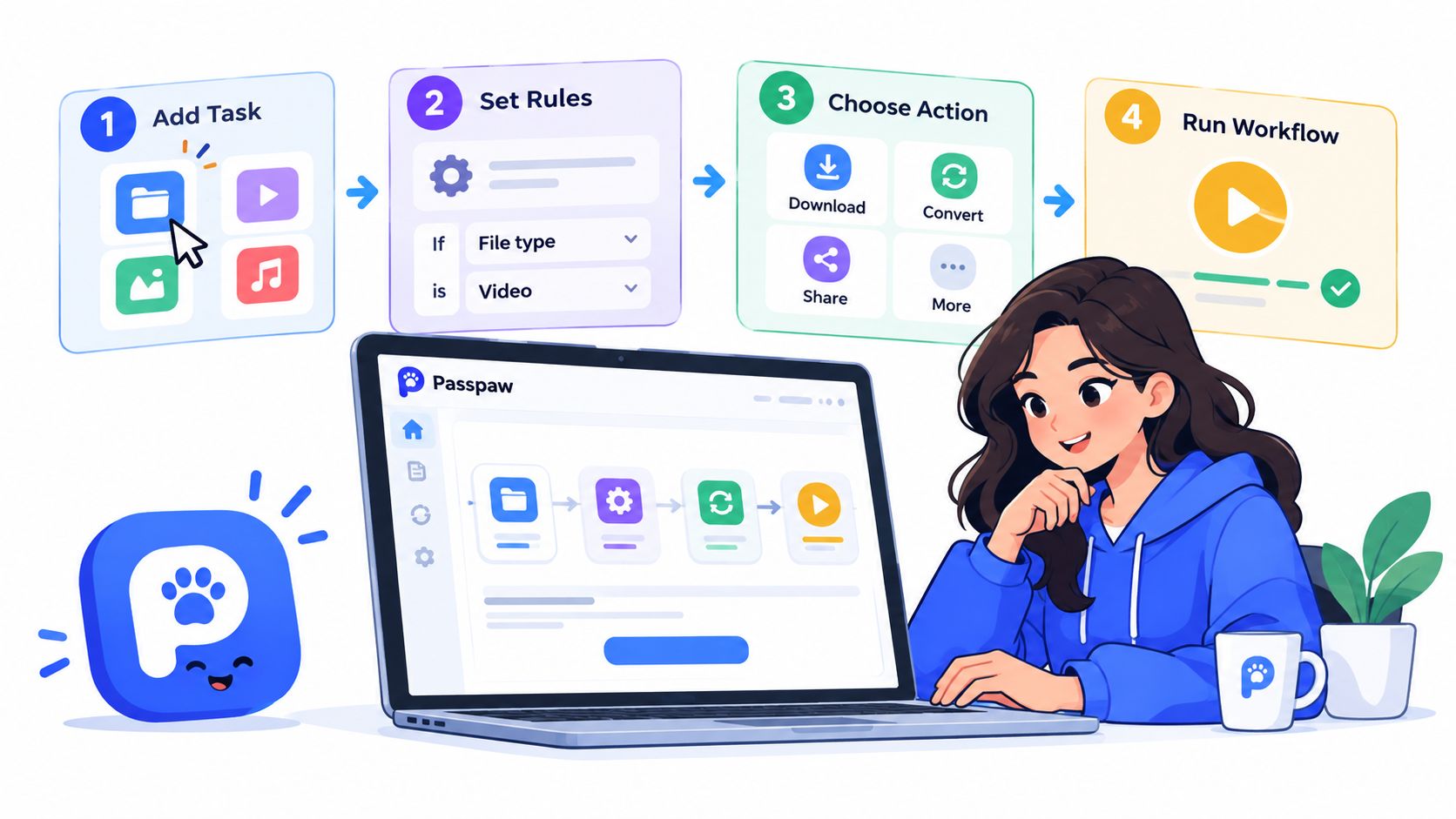
Start with the certificate template and the information the practice must collect. Create or import the relevant pet travel certificate structure, then identify the fields that should be required before the case can move forward. That might include the destination, travel date, pet identity details, microchip information, rabies record, and laboratory evidence where applicable.
Next, define the trigger. In many practices, the workflow should begin when a client books an international health certificate appointment or submits a travel request. The trigger needs enough information to create a useful case. If the travel date is missing, the team can't sensibly prioritize deadline-sensitive work.
Let the travel date drive the sequence
Date-based prioritization is the operational heart of the setup. The travel date can drive countdown tasks so the team sees when to confirm rabies information, chase a titre result, prepare a USDA endorsement submission, and send the client a reminder. That order matters because a late discovery can force several people to redo work at once.
Set the required fields before launch. Decide which role reviews each document, which missing items pause the case, and where an exception goes. A missing upload shouldn't sit in a general queue. It should create a visible task for a named person.
Client communication belongs inside the same flow. Send the portal invitation, request missing documents, and provide status updates without making the client call the clinic for every change. Keep messages short and use bullet points for required actions. Veterinary communication guidance recommends checklists or bullets instead of long paragraphs because clients and staff can follow clear next steps more easily, as described in this veterinary client communication guidance.
Start with one destination
Don't launch every destination rule at once. Choose one country the practice handles often, test the intake fields and exception paths, and review real cases with the team. Once the process behaves consistently, expand the template and rules.
The same principle applies to client communication. Veterinary automation guidance recommends beginning with reminders, forms, and post-operative follow-ups, assigning a team champion, explaining the change to clients, and checking system integration before expanding. Those recommendations appear in this guide to veterinary client communication automation. A careful rollout keeps the workflow useful instead of turning the clinic into a test kennel.
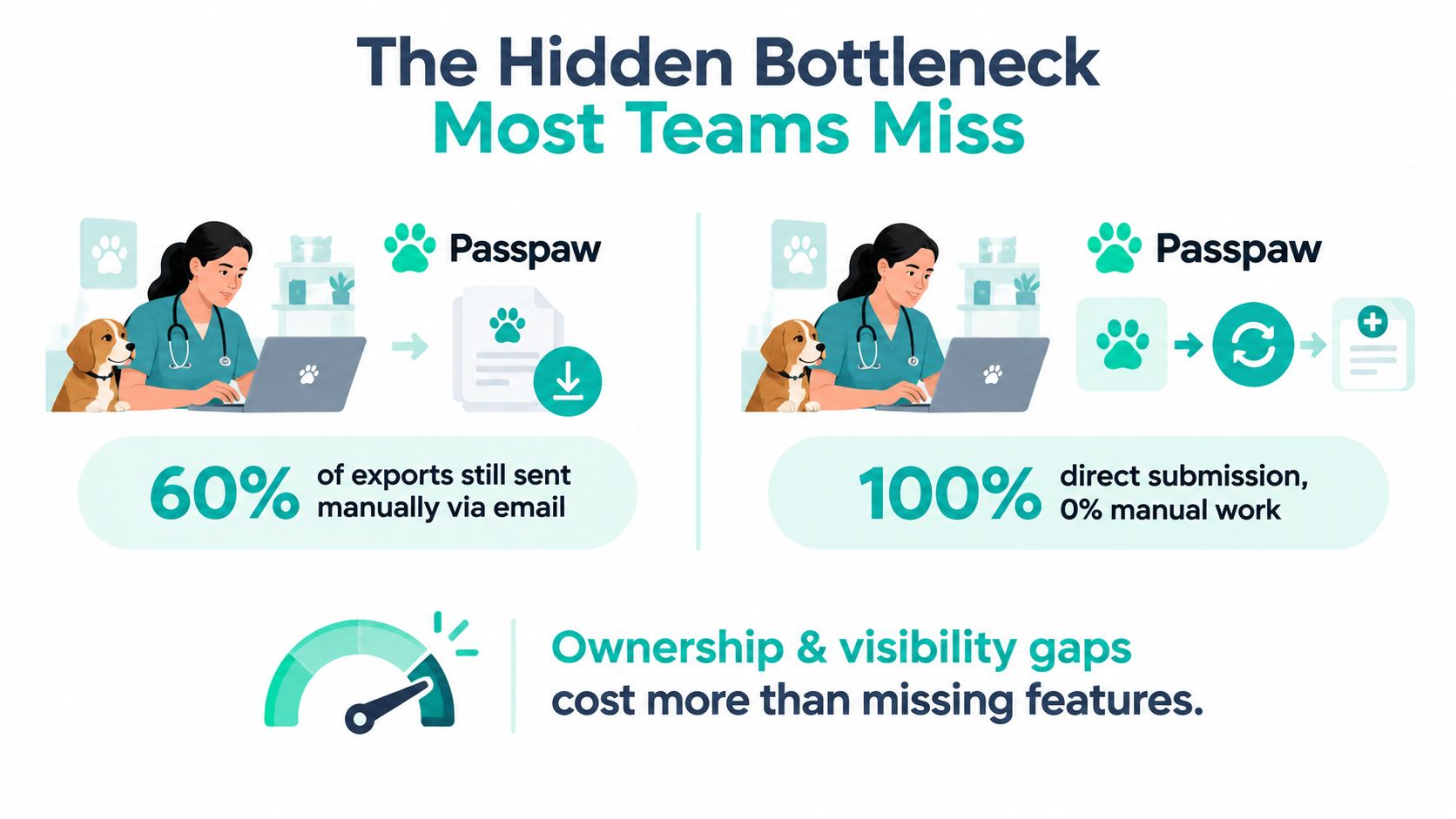
The Hidden Bottleneck Most Teams Miss
Buying a workflow tool doesn't automatically assign responsibility. A practice can configure certificate automation and still lose time because nobody owns the review before endorsement.
Consider a common situation. The receptionist assumes the veterinarian will catch a missing export detail. The veterinarian assumes reception has already checked it. The client receives a document that gets rejected, then discovers the problem close to the flight. Passpaw may have organized the case, but the process still fails if the pre-endorsement review has no named owner.
That is an ownership gap, not necessarily a feature gap.
A visible task without a responsible person is only a more attractive version of an unanswered email.
Make ownership impossible to misunderstand
For every handoff, assign one accountable role. Other people can contribute, review, or approve, but one person must be responsible for moving the task forward or escalating it.
A practice may not need another application to fix this. It could assign one person to chase lab results, another to perform the pre-endorsement review, and a third to confirm client pickup. A shared channel or status board can then show whether the case is waiting on the client, the lab, the veterinarian, or the endorsement process.
This isn't an argument against Passpaw or other workflow systems. Tools amplify a clear process. They create more noise when the underlying process has unclear ownership, duplicate entry, and no escalation route. The right question isn't “What feature are we missing?” It's “Who is on the hook for this file right now?”
Audit the handoffs before adding more automation
Review a sample of current travel files and ask:
Ownership: Can the team name the person responsible for every open task?
Visibility: Can someone see where each case is stuck without searching email?
Escalation: Does a missed deadline create a clear next action?
Review: Does a human check ambiguous documents before submission?

If the answers are weak, fix those gaps before buying another tool. Better visibility may feel less exciting than a new automation feature, but it's often what gets the pet's paperwork moving.
Habits and Metrics That Keep It Running
A workflow stays healthy through routine review, not launch-day setup. During the first month, keep the operating rhythm simple, and make every metric justify its place.
Use a short operating rhythm
Daily five-minute standup: Review each open travel file, its owner, and its next action. Track turnaround from booking to USDA submission.
Weekly rejected-document review: Examine returned or corrected documents without blaming individuals. Track how often certificates need correction.
Monthly country audit: Review the destinations the practice supports and confirm that the team has a clear process for each. Track client satisfaction with the travel paperwork experience.
Quarterly owner check: Confirm that every handoff has a named owner and backup. Track staff hours reclaimed per month, using the same measurement each time.
These meetings should expose repeat problems while they remain small. A rejected document can point to a confusing field, missing client instructions, or an unclear review step.
Use a simple Passpaw dashboard for case status and a sticky-note board during the daily huddle. The dashboard holds the record. The board gives a busy veterinary team quick visibility without requiring several systems to be opened.
For daily sequencing, Passpaw's task prioritization guide offers a practical reference. Prioritize by travel date, missing dependency, and rework risk, rather than by the latest client call.
Retire metrics that don't change decisions
If a metric does not prompt a decision within a quarter, remove or replace it. Veterinary practices do not need a large analytics program to manage international pet travel paperwork. They need a small set of measures that lead to action, such as assigning an owner, changing an intake field, updating a client message, or reviewing a destination rule.
Workflow health depends on habit. Keep the map current, review exceptions, and make ownership visible before the next Friday afternoon rush.
Passpaw helps veterinary practices organize international pet travel cases with destination and date-based task lists, document collection, validation, status tracking, and client communication in one workflow. Visit Passpaw to see how it can help your team replace scattered handoffs with a clearer path from travel request to completed paperwork.

More articles
From regulatory changes to best practices for veterinarians and pet owners, our resources keep you ahead of the curve.