Are you a team member in a veterinary practice?
Are you a pet parent planning a trip with your furry pal?
Do Dogs Ears Pop on Airplane What to Expect and How to Help
Yes, dogs can feel ear pressure changes similar to humans during takeoff and landing. Commercial aircraft cabins are typically pressurized to the equivalent of about 6,000 to 8,000 feet above sea level, but dogs can't pop their ears on purpose, so discomfort may appear as head shaking or whining and is usually temporary.
You're sitting beside your dog as the engines rumble, the carrier shifts gently under your seat, and your pup gives you a worried look. Then comes the head shake. Is it stress, motion, or those mysterious airplane ears?
The answer is often a little of the flight environment, with pressure changes playing a part. Dogs may not produce a clear “pop” the way a person might, but their middle ears still respond when cabin pressure changes. Most dogs handle the sensation without lasting trouble, though some need extra comfort during the busiest parts of the journey.
The useful question isn't only, “Do dogs ears pop on airplane trips?” It's also, “What can I do when my dog seems uncomfortable?” You'll learn how cabin pressure works, why dogs can't equalize it voluntarily, which signs to watch, and what belongs in your takeoff and landing plan. Consider this your calm, practical guide for keeping your pup's ears and nerves as settled as possible.
"Introduction Do Dogs Feel Ear Pressure When Flying"
Takeoff is often the first moment a pet parent notices something unusual. Your dog may yawn, lick their lips, shift around in the carrier, or shake their head just as the aircraft climbs. That reaction can look alarming, especially if you're already listening closely to every whimper.
Yes, dogs can feel ear pressure on an airplane. Cabin pressure changes during ascent and descent create a pressure difference across the eardrum similar to the sensation people call airplane ear. Dogs may show that feeling through behavior rather than an obvious popping sound, as described in veterinary guidance about dogs and ear pressure on planes.
The sensation is usually brief because the ear continues to adjust as the surrounding pressure settles. Still, “usually temporary” doesn't mean you should ignore your dog's body language. A pup who keeps pawing at one ear long after the flight needs a closer look than a pup who shakes their head once during descent.
A calm plan helps: focus your attention on takeoff and landing, offer familiar comfort, and judge your dog's condition after the aircraft is back on the ground.
What the next flight may look like
The pressure change itself is only one piece of the experience. A dog may also be responding to engine noise, restraint, unfamiliar smells, travel fatigue, or the general strangeness of being in an aircraft. That's why one sign, such as restlessness, doesn't prove that ear pressure is the only cause.
This guide separates the moments that need action from the moments that can wait. During ascent and descent, you'll focus on comfort and observation. After landing, you'll check whether your dog settles normally or continues to show signs that deserve veterinary advice.
You don't need to become an aviation expert or an ear specialist before your dog can travel. You just need to know what pressure does, what dogs can't do voluntarily, and how to spot a pup who needs a little extra help. With that map in hand, the whole journey feels less like a ruff surprise.
"How Cabin Pressure Creates That Popping Feeling"
During takeoff, the aircraft climbs and the cabin pressure shifts. During landing, the plane descends and the shift happens in the opposite direction. Your dog's ears respond to both changes, even if your pup cannot tell you what feels odd.
Your dog's middle ear works a little like a small balloon inside a room. As the room's air pressure changes, the air inside the balloon may expand or compress until the two sides become more balanced. The ear is living tissue, not party décor, but the comparison makes the pressure difference easier to understand.
Commercial aircraft cabins are commonly pressurized to the equivalent of about 6,000 to 8,000 feet above sea level. That lower pressure is suitable for flight, yet it still differs from the pressure on the ground. The quickest changes occur as the aircraft climbs after takeoff and descends before landing, so ear-related behavior may appear during those phases. This cabin-pressure range is described in canine travel science guidance.
The pressure shift in simple steps
The aircraft changes altitude. As the plane climbs or descends, cabin pressure changes.
The outer ear responds first. Cabin air reaches the outside of the eardrum immediately.
The middle ear catches up. Air behind the eardrum may briefly remain at a different pressure.
The ear equalizes passively. The Eustachian tube allows air to move between the middle ear and the back of the nose and throat.
People can support this adjustment by swallowing, yawning, chewing, or deliberately using a Valsalva maneuver. Dogs may swallow or yawn on their own, but they cannot follow an instruction to equalize their ears on cue. Their ears depend mainly on natural movement through the Eustachian tubes.
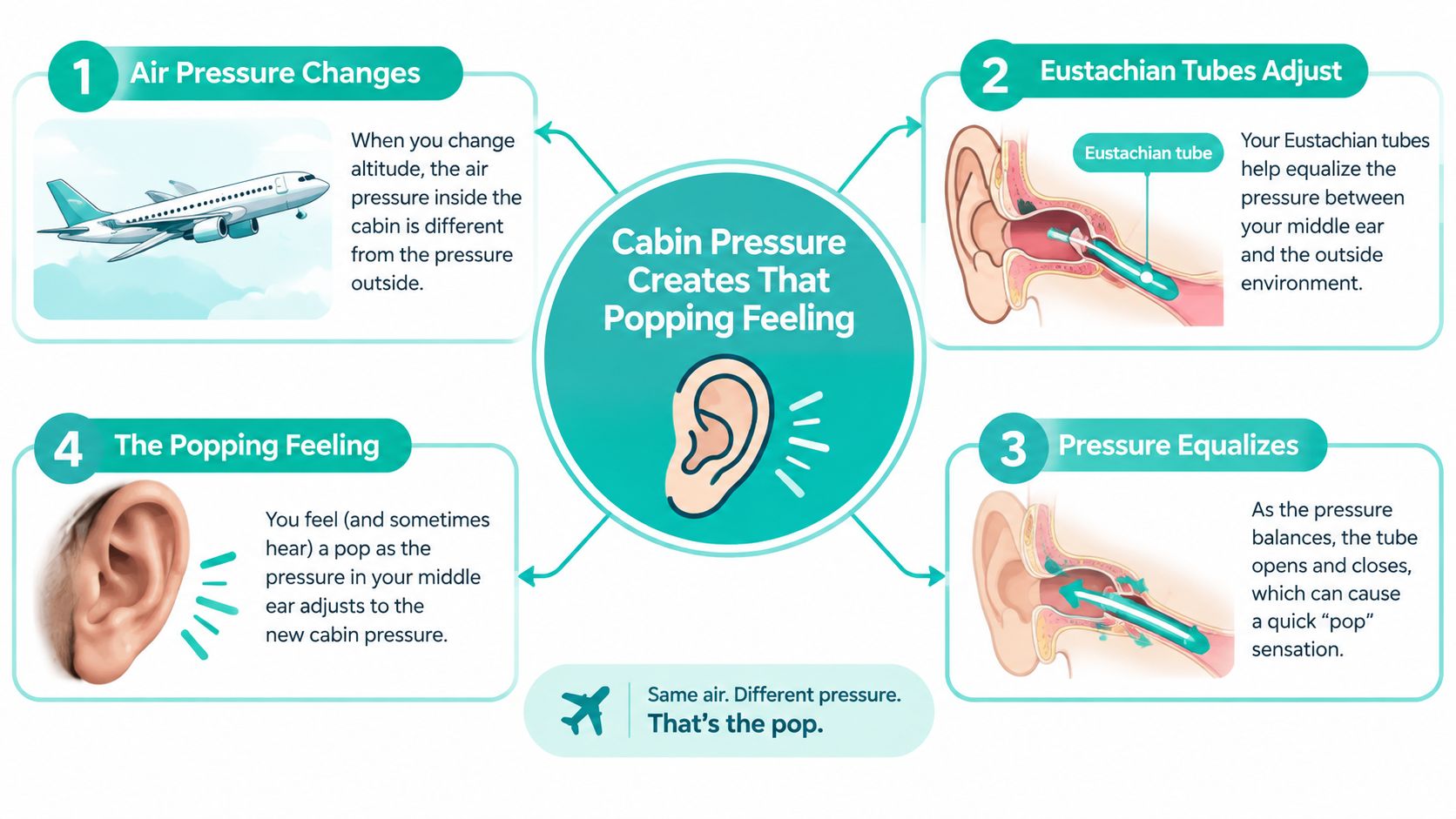
The key idea: Your dog's ears can adjust to changing cabin pressure, but your dog cannot choose to “pop” them the way a person can.
Why timing matters
A faster pressure change gives the air in the middle ear less time to balance. That timing may make descent feel harder for some dogs, especially if ear or sinus problems already slow normal adjustment.
Some pups sleep through the whole process. Others become fidgety or vocal. A response can reflect the dog's ear health, how quickly the pressure changes, and how they handle engine noise, restraint, unfamiliar smells, and travel fatigue.
Use takeoff and landing for calm observation and familiar comfort. After landing, check whether your dog settles normally. Ongoing pawing, repeated head shaking, or clear distress deserves more attention than a single restless moment.
Pressure also belongs in the travel plan. If you are researching manifest cargo for dogs, consider where your dog will wait, how the carrier will be handled, and how comfort will be monitored. This guide to what happens in a plane's cargo hold explains why cargo travel differs from placing a dog in an ordinary unpressurized compartment.
"Why Dogs Experience Pressure Differently Than Humans"
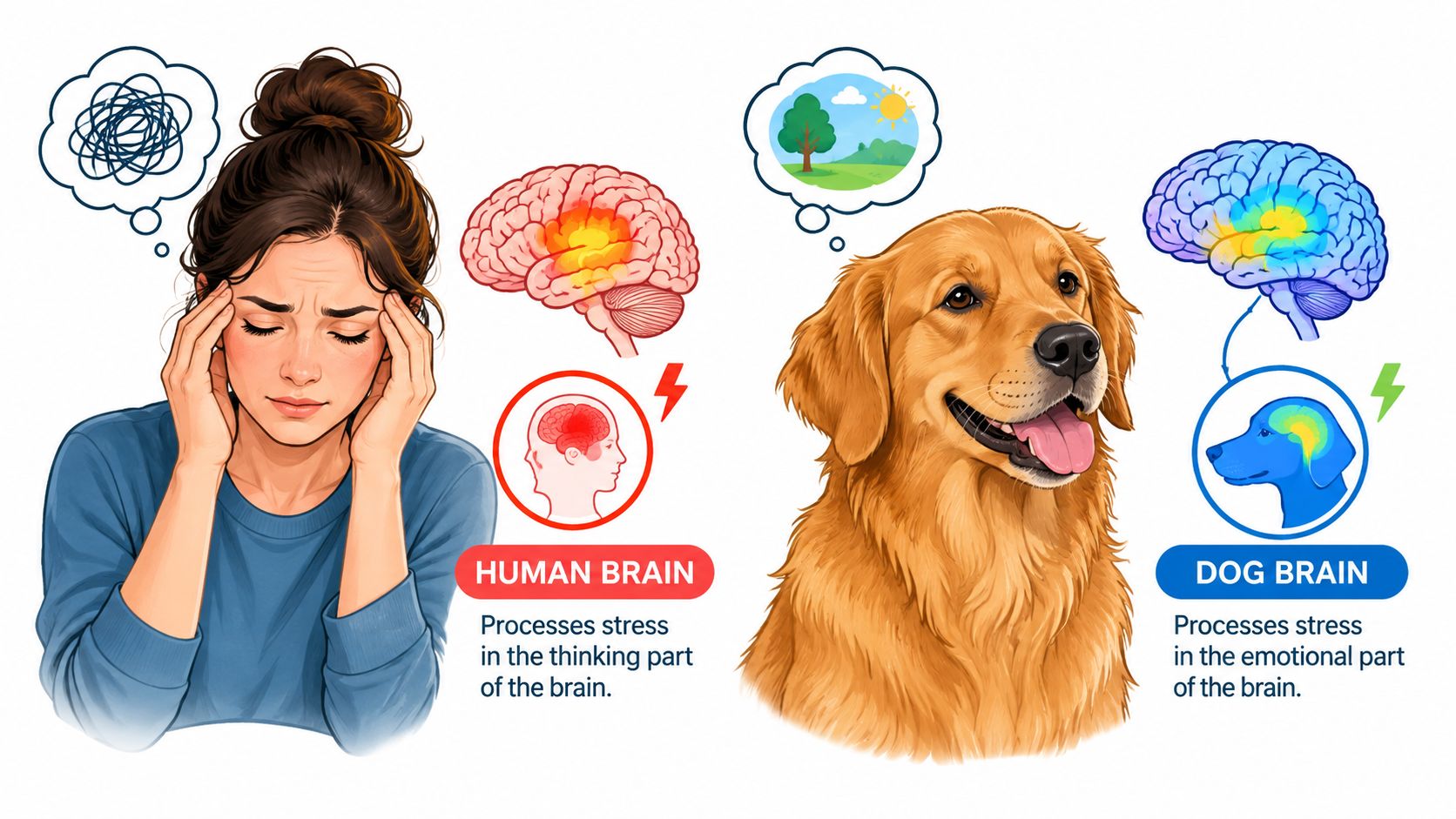
Humans have a useful advantage: we know what airplane ear feels like, and we can deliberately respond. A passenger may swallow repeatedly, yawn, chew gum, or use a Valsalva maneuver to help equalize pressure. Your dog may swallow or yawn naturally, but can't follow a conscious instruction to make the ears adjust.
That difference explains why dogs may look uncomfortable without giving you a clear sign of a “pop.” The pressure still affects the same general area, but the dog's response comes through body language rather than a spoken report or purposeful maneuver.
The descent can feel more demanding
Rapid descent can make pressure equalization harder because the surrounding cabin pressure changes quickly. One travel-science source describes descent rates reaching about 1,500 to 2,000 feet per minute, and notes that dogs with blocked ears or sinuses may be more vulnerable when pressure equalization is slower. This guide to dogs flying on airplanes also identifies brachycephalic anatomy as a possible factor.
Brachycephalic dogs, such as dogs with notably shortened muzzles, may already have less efficient airflow through the nose and upper airway. That doesn't mean every flat-faced dog will struggle, but it's a reason to discuss air travel with a veterinarian before booking.
Cabin and cargo pressure
Pets transported as live animals in cargo generally travel in a pressurized area rather than a fully unpressurized hold. U.S. rules allow an exception for aircraft flying below 8,000 feet, but commercial aircraft generally keep live-animal cargo areas pressurized in flight, as explained by veterinary travel information about animals in aircraft cargo areas.
That means pressure alone doesn't automatically make cabin travel safe and cargo travel unsafe, or the reverse. Location, temperature, handling, noise, airline rules, the dog's health, and the total journey all matter. The pressure pattern is generally similar enough that takeoff and landing remain the main windows to watch in either setting.
The phases that matter most
The most noticeable pressure-related behavior tends to appear while the aircraft is climbing or descending. Once the plane reaches a steadier cruising phase, the pressure is no longer changing as quickly, so a dog who was fussy may settle.
Think of takeoff and landing as your observation windows. You don't need to hover over your dog every second, but you should be ready to offer familiar comfort and note whether the behavior eases once the aircraft levels out or arrives at the gate.
"Signs Your Dog May Feel Ear Discomfort on a Plane"
A dog may show ear discomfort through a tiny change rather than a dramatic reaction. Watch for what happens, when it starts, and how quickly your pup returns to normal. A head shake during descent may fit the pressure pattern. The same behavior after landing could point to moisture, irritation, or another ear concern.
Pressure-related signs can include head shaking, pawing at an ear, whining, and temporary discomfort, according to veterinary advice about dogs' ears on planes. These clues need context. A nervous dog may whine without ear pain, while another dog may become very still instead of vocal.
Watch the flight clock
Record the exact phase of flight when a behavior appears:
During takeoff: Note whether your dog reacts as the aircraft climbs.
During cruising: A new sign during the steadier middle portion may be less closely tied to changing pressure.
During landing: Pay attention as the aircraft descends, when pressure changes again.
After landing: Check whether the behavior stops within 15 minutes of landing, as your dog rests and reconnects with familiar surroundings.
The timing matters more than counting every head movement. One brief shake during descent tells you less than repeated behavior that begins during descent and continues well after arrival.
Observe without adding stress
During takeoff and landing, watch through the carrier opening if airline rules allow it. Keep your voice calm, and avoid repeatedly touching or manipulating the ears. Extra handling can make it harder to tell whether your dog is uncomfortable or just reacting to the unfamiliar situation.
Note whether your dog changes position, presses against the carrier, licks their lips, tilts the head, or pulls away when you approach the ear. These observations are more useful when paired with duration and flight phase. A sign that fades during the flight or soon after landing is different from one that remains, worsens, or focuses on one ear.
Write down the time, behavior, ear affected if clear, and recovery point. This simple record can help a veterinarian assess the episode if it happens again. Broader preparation is available in this companion animal health resource, which can also help you organize travel-health notes.
"Simple Ways to Help Your Dog Stay Comfortable During Flights"
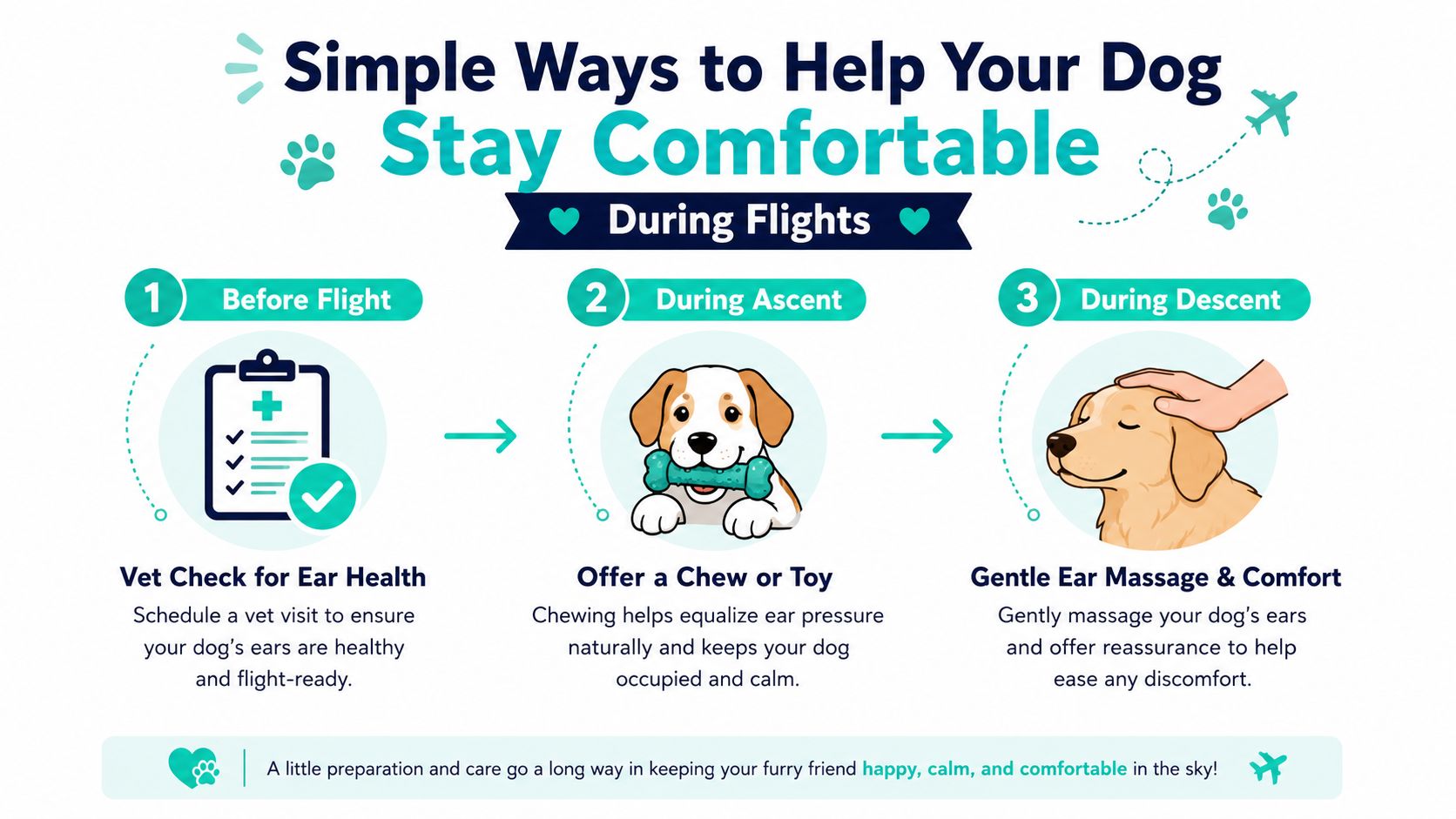
The best comfort plan follows the flight clock. Prepare before leaving home, support your dog during ascent, and pay especially close attention during descent. Pressure changes are fastest during takeoff and landing, the phases most often linked with ear discomfort, head shaking, or signs of barotrauma in dogs, according to guidance on whether flying can hurt a dog's ears.
Before you leave home
Start with health, not gadgets. Ask your veterinarian to check your dog's ears if your pup has a history of ear infections, congestion, sinus trouble, allergies, or discomfort during travel. A dog with blocked ears or sinuses may have more difficulty equalizing pressure, so postponing travel can be sensible if your veterinarian thinks your dog isn't feeling well.
Pack the familiar items your airline allows, such as a comfort object, a small reward, and water for appropriate travel breaks. Avoid giving medication or sedatives unless your veterinarian has specifically advised you about your dog's situation. You can read more about travel medication questions in this guide to dog sedatives for travel.
Carrier fit matters too. A carrier that allows your dog to sit, turn, and rest comfortably can reduce physical and emotional strain. For measuring guidance, consult Passpaw's pet carrier guide for air travel.
During ascent
Keep your dog's surroundings steady. Speak softly, avoid sudden movements, and offer a familiar toy if airline rules and your dog's setup allow it. Chewing and swallowing may support natural ear adjustment, although you shouldn't force food or place anything inside the ears.
If your dog safely accepts small treats, offering one at an appropriate moment may encourage swallowing and provide a pleasant distraction. Water can also help when available and permitted. For a practical way to carry water during the wider journey, you might explore HYDAWAY adventure dog gear, while still following airline instructions about liquids and feeding.
During descent
Descent deserves your closest attention. Watch for head shaking, whining, pawing, or sudden restlessness, then keep your response simple. Use a calm voice, offer gentle reassurance, and let your dog settle rather than repeatedly reaching into the carrier.
A light touch around the head may comfort some dogs, but don't massage the ear canal or press on a painful area. If your dog dislikes handling, your quiet presence is the better choice.
A quick phase-by-phase checklist
Flight phase | Your priority | What can wait |
|---|---|---|
Before flight | Check health, prepare the carrier, pack familiar comfort items | Detailed troubleshooting of every possible behavior |
Ascent | Stay calm, offer an approved toy or small reward, observe | Inspecting the ears closely |
Cruise | Let your dog rest and keep the environment predictable | Assuming every movement means ear pain |
Descent | Watch closely, offer quiet comfort, note any unusual reaction | Making major changes in the carrier |
After landing | Check whether your dog settles and returns to normal | Ignoring symptoms that continue |
The goal isn't to make your dog perform a human ear-popping trick. It's to make the pressure transition less stressful while giving your pup time to adjust.
"When Ear Discomfort Needs Veterinary Attention"
Temporary fussiness and persistent ear trouble don't look exactly alike. A dog who shakes their head during descent, then relaxes after landing, may have reacted to the changing pressure. A dog who continues pawing at one ear, cries whenever the ear is approached, or seems unable to settle needs a more careful response.
Usually short-lived
A brief episode may include head shaking, yawning, mild whining, or restlessness during ascent or descent. If your dog drinks, rests, engages normally, and stops focusing on the ears after landing, you can continue observing without assuming the worst.
Write down the timing. “Started during descent and eased after landing” gives your veterinarian more useful context than “seemed odd on the plane.” It also helps you compare future trips without relying on memory.
Worth a veterinary call
Contact a veterinarian if signs continue after the flight or become more intense. Pay particular attention to:
Persistent pawing or head shaking: Ongoing attention to the ears is different from a short reaction during descent.
Continued whining: Vocalization that doesn't ease with rest deserves a professional opinion.
Balance changes: Stumbling, marked head tilting, or unusual difficulty walking shouldn't be dismissed as ordinary airplane nerves.
Discharge or strong sensitivity: These signs can point to an ear problem that pressure alone doesn't explain.
A clear decline in comfort: If your dog won't settle, eat, drink, or interact as usual, ask for guidance.
Don't put drops, cotton swabs, or household remedies into the ear unless a veterinarian tells you to. The visible part of the ear doesn't show everything happening deeper inside, and poking around can make irritation worse.
Because live-animal cargo areas are generally pressurized, prolonged symptoms after cargo travel shouldn't automatically be blamed on an unpressurized hold. Give your veterinarian the complete story, including the travel location, timing, handling, and any signs before the flight.
"Helping Your Pup Fly With Happier Ears"
The short answer to “do dogs ears pop on airplane trips?” is yes, dogs can feel the pressure change, but they don't usually produce a neat, human-style pop. Their ears adjust passively, and their discomfort may show as head shaking, pawing, whining, yawning, lip licking, or restlessness.
Your job is less about fixing the pressure and more about preparing, observing, and offering sensible comfort. A familiar routine can make the journey feel less mysterious for both of you.
Your next-flight checklist
Before booking: Ask your veterinarian whether your dog's ears, sinuses, airway, and general health are suitable for the planned trip.
Before leaving: Choose a properly fitted carrier and pack familiar, airline-approved comfort items.
During ascent: Keep your voice steady and offer an approved toy, treat, or water when appropriate.
During descent: Watch more closely, since pressure is changing fastest in this phase.
After landing: Check whether your dog returns to normal. Persistent pain-like behavior, balance changes, discharge, or strong sensitivity deserves veterinary attention.
Flat-faced breeds, dogs with blocked ears or sinuses, and pups with previous travel problems may need a more individualized plan. Your veterinarian can help you decide whether flying is sensible and what comfort measures fit your dog's health history.
A little preparation can turn a tense trip into a manageable one. Your dog may never give you a tiny “pop,” but with the right plan, you can help those ears and that tail stay on friendlier terms with the sky.
If you're planning an international trip, visit Passpaw to explore tools for organizing pet health certificates, travel documents, deadlines, and veterinary communication. Getting the paperwork in order early gives you more time to focus on your dog's comfort during takeoff, landing, and every step between.

More articles
From regulatory changes to best practices for veterinarians and pet owners, our resources keep you ahead of the curve.