Are you a team member in a veterinary practice?
Are you a pet parent planning a trip with your furry pal?
Dog Sedative for Travel: A Vet-Approved Guide
You've booked the trip. The crate is in the living room. Your dog already knows something's up because the suitcase came out, and now you're searching for a dog sedative for travel and hoping for one simple answer.
That's usually the moment when owners feel torn. They want their dog calm, safe, and accepted for travel. They also don't want to make a mistake that turns a stressful day into a dangerous one. New vet techs see the same pattern from the other side of the exam room: a worried client asks for “something to knock him out,” when what the dog really needs is a travel plan.
Travel medication can help, but only when it's used for the right reason and in the right setting. The biggest problem isn't just medical risk. It's the gap between what owners think will help and what airlines, cargo handlers, and veterinary guidance allow.
Planning Travel with an Anxious Pup
A common scenario goes like this. An owner has a friendly dog who does fine at home, but pants in the car, vocalizes in a carrier, or shakes when routines change. The owner isn't trying to cut corners. They're trying to be kind. They assume a sedative is the humane option.
That instinct makes sense. If your dog looks distressed, you want relief fast. But travel anxiety doesn't behave like a light switch. A medication that makes a dog sleepy isn't always making that dog feel safe. And for air travel, the practical side matters just as much as the medical side.
Before anyone reaches for a pill bottle, I tell them to zoom out and build the whole travel picture:
Travel type matters: Car, cabin flight, cargo flight, and international entry all create different stressors.
Your dog's baseline matters: A senior dog, a flat-faced breed, and a young healthy retriever are not equal travel candidates.
The timeline matters: Good travel prep starts before departure day, not in the parking lot.
If you're still organizing the basics, this essential guide for dog owners planning trips is a useful starting point for the broader checklist. For families managing a longer move or relocation, practical planning around routes and transport options also helps, especially when you're trying to transport pets across country without turning the trip into a tailspin.
What owners are usually asking
The question isn't always, “What sedative should I buy?” They're asking a bundle of smaller questions:
Will my dog panic?
Will the airline allow this?
Will the medication work?
What if it makes things worse?
How do I avoid a disaster on travel day?
Don't treat travel medication as the whole plan. It's one tool inside a larger process that includes crate prep, timing, paperwork, and airline policy.
That process is what keeps a worried pup from becoming a stranded one.
The Myth of Sedation for Safe Travel
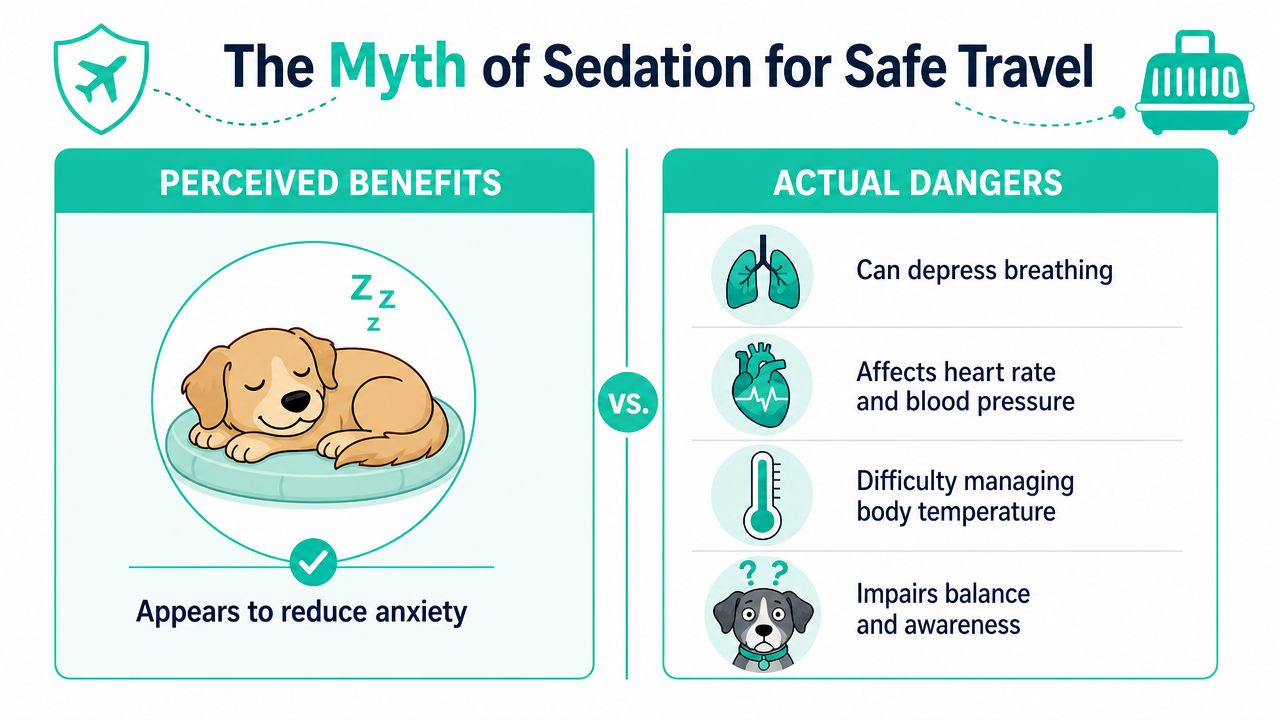
The biggest myth in pet travel is that sedation equals safety. It doesn't. In many cases, it creates a new problem while failing to solve the original one.
Why the quick fix often backfires
Sedation can make a dog look calmer because movement drops. That's not the same as lowering fear. A tranquilized dog may still experience the noise, handling, crate confinement, and unfamiliar smells of travel. The difference is that the dog may be less able to respond normally.
Many owners find themselves caught in what I think of as the compliance gap. They ask for a sedative, obtain one, and assume they've solved the problem. Then check-in staff stop everything. Airlines frequently refuse travel for sedated dogs, a regulation often missed in travel planning, resulting in wasted medication purchases and unexpected trip disruptions according to Tailwind Global Pet's discussion of sedatives and airline policy.
That point deserves more attention than it gets. Owners often focus on whether a drug might help behavior. Airlines focus on whether the pet appears sedated. Those are not the same conversation, and they collide at the counter.
What true sedation can do in transit
Heavy tranquilization creates trade-offs that matter in transit:
Balance can suffer: A dog may struggle to steady itself in a crate during loading and unloading.
Awareness drops: The dog may not react normally to stress, noise, or position changes.
Breathing and temperature control can be affected: Those aren't small issues during travel.
Check-in risk increases: Even if the dog seems “just sleepy,” staff may interpret that as sedation.
A dog that looks quiet isn't always a dog that feels calm.
That's why I steer owners away from the idea of “knocking the dog out.” It sounds humane. In practice, it can be rough on the dog and useless at the airport. A plan that calms anxiety while preserving normal function is usually the safer path.
Anxiolytics vs Sedatives The Real Difference
The easiest way to explain this is simple. Sedatives are closer to an off switch. Anxiolytics are closer to a dimmer switch. One mainly suppresses activity. The other aims to lower anxiety while leaving the dog able to breathe, balance, and respond more normally.
That distinction matters most in air travel. Veterinary guidelines and the Australian Veterinary Association explicitly recommend avoiding sedation for air transport because it impairs vital reflexes. They instead favor anxiolytic medications like trazodone or alprazolam, which reduce anxiety without causing dangerous immobilization, as outlined in the AVA policy on medication of dogs and cats for air transport.
The practical difference in the exam room
When an owner says, “I need him asleep,” I usually translate that into, “I need him less distressed and easier to handle.” Those are different goals.
A heavily sedated dog may become floppy, unsteady, or less responsive. That can look calm to an owner. To a veterinarian, that may mean the dog is not functioning well for travel. An anxiolytic approach is different. The dog may still be awake, still aware, and still able to stand and adjust position, but less panicked. That's the sweet spot.
Sedatives vs Anxiolytics for Travel
Characteristic | Heavy Sedatives (e.g., Acepromazine) | Anxiolytics (e.g., Trazodone, Alprazolam) |
|---|---|---|
Primary effect | Reduce movement and responsiveness | Reduce anxiety and fear response |
How the dog may appear | Very sleepy, subdued, less reactive | Calmer but usually still interactive |
Air travel fit | Poor choice for routine air transport | Often preferred when a vet decides medication is appropriate |
Key concern | Immobilization without true emotional relief | Need for proper timing and an at-home trial |
Safety goal | May suppress function too much | Preserve normal breathing and basic responsiveness |
Best use mindset | Not a routine “travel fix” | Part of a broader travel plan |
What this means for owners and vet teams
For owners, the takeaway is straightforward. Don't shop for the strongest option. Shop for the safest strategy.
For new vet techs, this is one of the most important counseling moments in travel medicine. Clients often use the word “sedative” loosely. Clarify what they mean. Ask whether they're traveling by car or plane, whether the dog has used the medication before, and whether they've checked airline rules. That conversation saves a lot of grief and more than a few ruff departures.
Common Anti-Anxiety Prescriptions for Dogs
When medication is appropriate, the goal is usually anxiety control, not heavy sedation. The exact choice depends on the dog's health, travel setting, and past response to medication.
Gabapentin and timing that actually matters
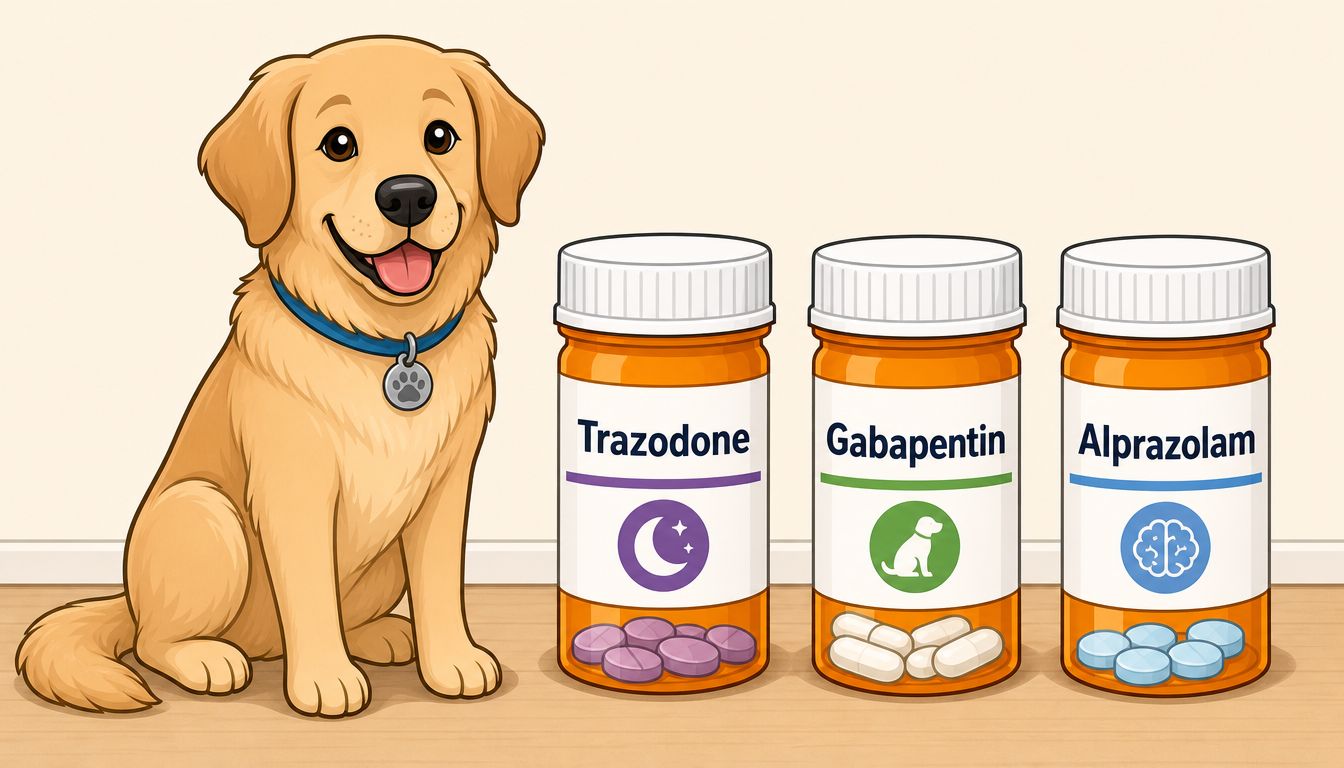
Gabapentin is a common option in practice for situational anxiety. Timing matters because a late dose often looks like a failed drug when it's really a failed schedule. Gabapentin should be given one to two hours before travel, and vets strongly recommend a trial dose a few days to a week before the trip to confirm effectiveness and check for any negative side reactions, based on veterinary travel guidance summarized by Ferndale Kennels.
That trial run is not optional in my book. It tells you whether your dog becomes comfortably calmer, gets wobbly, or surprises everyone by becoming more agitated instead of less.
Alprazolam and trazodone in real-world use
Alprazolam is often used for situational anxiety because it works on fear rather than merely making the dog inactive. In plain terms, it's used to soften the emotional spike around the trigger.
Trazodone is another common choice in practice. It's frequently used when a dog needs a gentler reduction in arousal rather than a hard shutdown. Some dogs do very well with it. Some need a different option. That's exactly why testing ahead of time matters.
What a good trial run looks like
A home test dose should happen on a boring day, not a chaotic one. You want to observe the dog, not the holiday packing frenzy.
Watch for:
Desired effect: The dog settles more easily, startles less, and remains able to walk and rest normally.
Too much effect: Marked wobbliness, excessive sleepiness, trouble standing, or a dog that seems “out of it.”
Wrong effect: Restlessness, whining, pacing, or paradoxical hyperactivity.
Practical effect: Can the dog still enter the crate, reposition comfortably, and respond to you?
Practical rule: If a medication creates a dog that you wouldn't feel good about watching in a crate without hands-on help, it's probably not the right travel plan.
Over-the-counter options are not always simple
Owners often ask about Benadryl and melatonin because they're familiar. Benadryl, which is diphenhydramine, is described as approximately 1 mg per pound of body weight every 8 hours for short-term use for mild drowsiness or car sickness support, and melatonin is generally considered safe for situational anxiety when used in the correct dose with a home trial first, according to Bond Vet's overview of travel calming options.
Even with over-the-counter products, I don't recommend guessing. “Natural” and “available without a prescription” don't mean “right for this dog on this trip.”
Beyond the Pill Non-Drug Calming Strategies
Medication works best when it supports training and environment, not when it replaces them. Some dogs need a prescription. Many dogs need a better routine around travel cues first.
Start with conditioning, not chemistry
Dogs usually fear the cluster of events around travel, not just the movement itself. The suitcase appears. The crate comes down from storage. The owner gets tense. The car ride ends somewhere unfamiliar. That whole chain can be softened with practice.
Useful building blocks include:
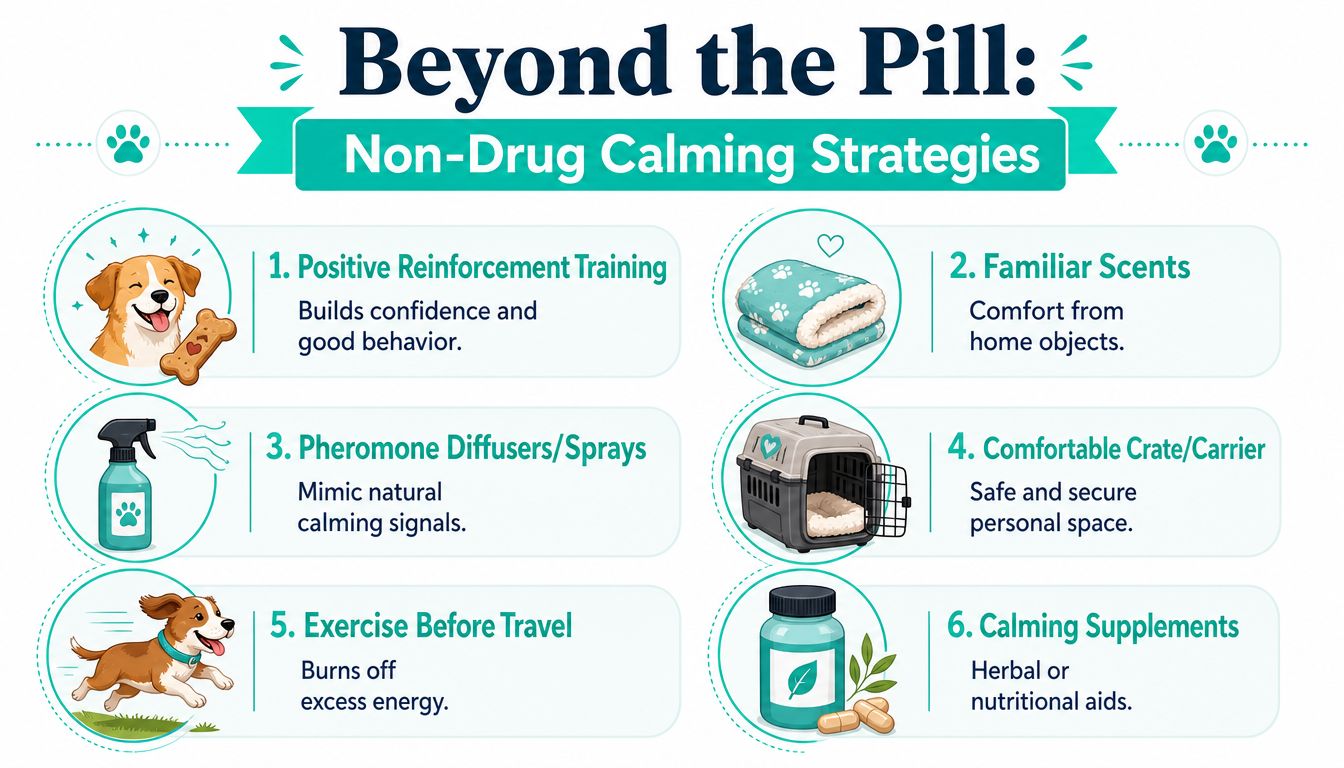
Crate comfort: Feed meals in the crate, leave the door open at first, and build positive time inside.
Travel cue practice: Pick up the keys, move the suitcase, or walk to the car without always leaving.
Short repetitions: Small car rides that end in something pleasant can help reset expectations.
Familiar scent items: A blanket or T-shirt from home can make the crate feel less foreign.
If the crate itself is part of the problem, choosing the right setup matters. This guide to travel crates for dogs helps owners sort through fit, ventilation, and practical travel use.
Calming aids that can support the plan
Compression wraps, pheromone sprays, familiar bedding, and structured exercise can all help. Some owners also ask about supplements such as L-theanine. These aren't magic, but they can lower the emotional temperature enough to help the dog cope.
Medication may still have a role. For example, alprazolam is most effective when given 30 to 60 minutes before a travel trigger and is often preferred over acepromazine because it treats anxiety without deep sedation that impairs breathing, according to Pets in Transit's discussion of travel anxiety medication. The practical lesson is that the best medication strategy usually pairs with non-drug prep instead of replacing it.
A steadier recipe for travel day
Here's the combination I see work most often:
A prepared crate
A dog that has practiced short confinement
Exercise before departure
A familiar scent item
A medication plan, if needed, that has already been tested at home
That approach is a lot less dramatic than “give something strong and hope for the best.” It's also much kinder to the dog.
Navigating Airline and International Travel Rules
Medical advice and travel rules overlap, but they aren't identical. A medication may be reasonable from a behavioral standpoint and still create trouble at check-in, during document review, or at destination entry. That's where many travel plans come undone.

Airline rules are not interchangeable
Owners often assume one airline's pet policy will resemble another's. That's risky. The details that matter include whether the dog travels in cabin or cargo, whether the carrier asks about medication, what crate standards apply, and how health documentation is reviewed.
I tell clients to verify the policy in writing if possible and to ask the question plainly: “What is your rule on pets that have received calming medication or sedation before check-in?” Don't rely on memory, social media advice, or a friend who flew last year.
If your dog takes routine medication, it also helps to review general tips for traveling with meds so nothing gets packed in a way that creates confusion during the trip.
International travel adds a paperwork clock
Cross-border pet travel usually involves more than one moving part. The pet may need an international health certificate, vaccine documentation, parasite treatment records, timing windows, and destination-specific forms. If one piece is off, your dog may not travel on schedule.
Key checkpoints include:
Country rules: Requirements change by destination.
Exam timing: Travel certificates often have narrow validity windows.
Medication disclosure: Be ready to discuss what your dog is taking and why.
Airline alignment: Your paperwork and your airline plan must match.
For owners trying to understand the paperwork side, a primer on the vet health certificate for travel can make the process much less foggy.
The trip doesn't succeed because one document exists. It succeeds because the crate, the dog, the medication plan, and the paperwork all line up on the same day.
That's the part many people underestimate. Travel medicine is logistics wearing a stethoscope.
Partnering with Your Vet for a Safe Journey
A do-it-yourself approach is tempting because travel prep already feels expensive and time-sensitive. But when owners self-select a dog sedative for travel, they often miss the central question: is the drug calming the dog safely, or just making the dog easier to look at?
That question matters because acepromazine often fails to reduce physiological stress during air transport. A controlled study found no statistically significant reduction in stress markers compared with non-sedated dogs, and the drug may immobilize a dog without addressing anxiety, potentially worsening panic while preventing normal movement and body temperature regulation, as reported in this study on air transport and acepromazine.
What a strong pre-travel visit should include
A good travel consult isn't just a refill request. It should include the dog, the route, the crate plan, and the paperwork timeline.
That visit should cover:
Health review: Age, breed, airway concerns, heart status, and any prior drug reactions.
Travel specifics: Car or plane, cabin or cargo, duration, and destination.
Medication testing: Which drug to try, when to trial it, and what side effects mean stop.
Documentation: Health certificates, vaccine records, and identification details.
For practices shipping pets or supporting clients with complex travel plans, even the shipping paperwork matters. The USDA label side alone can confuse first-time travelers, which is why this guide to the USDA shipping label is worth reviewing before departure week.
What owners and vet teams each need to do
Owners need to be honest about the dog's behavior. “He's fine once we get moving” and “he screams in the crate for twenty minutes” are very different starting points.
Vet teams need to ask sharper questions:
Has this dog ever taken the medication before?
Is the owner calling it a sedative when they really mean an anti-anxiety medication?
Has the airline been contacted directly?
Is this dog a poor candidate for the planned trip?
The safest plan is usually not the strongest drug. It's the clearest process.
That's true medicine. It's also good client service. A calm dog, an informed owner, and a realistic travel plan make for a much smoother takeoff.
Passpaw helps veterinary teams and pet owners manage the travel side that often causes the most stress: document accuracy, destination requirements, and timing. If you're preparing a pet for domestic or international travel and want fewer paperwork surprises, visit Passpaw.
More articles
From regulatory changes to best practices for veterinarians and pet owners, our resources keep you ahead of the curve.