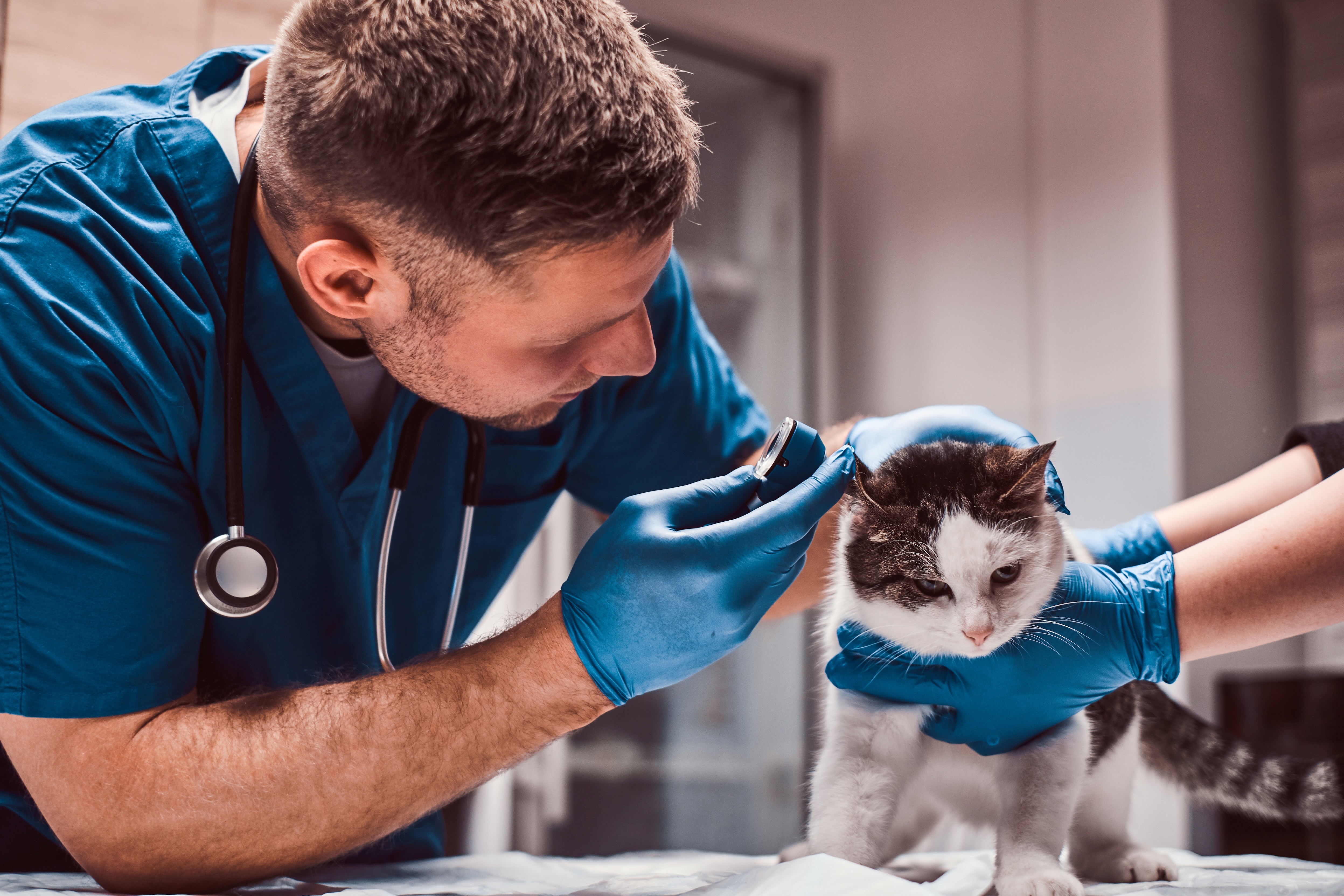
Are you a team member in a veterinary practice?
Are you a pet parent planning a trip with your furry pal?
Your Guide to the Vet Health Certificate for Pet Travel
Taking your pet on a trip can be an amazing experience, but it comes with its own special to-do list. At the very top of that list should be getting a vet health certificate. Think of it as your pet's official passport—an essential document that shows they're healthy and ready for the journey.
What Is a Vet Health Certificate and Why Do I Need One?
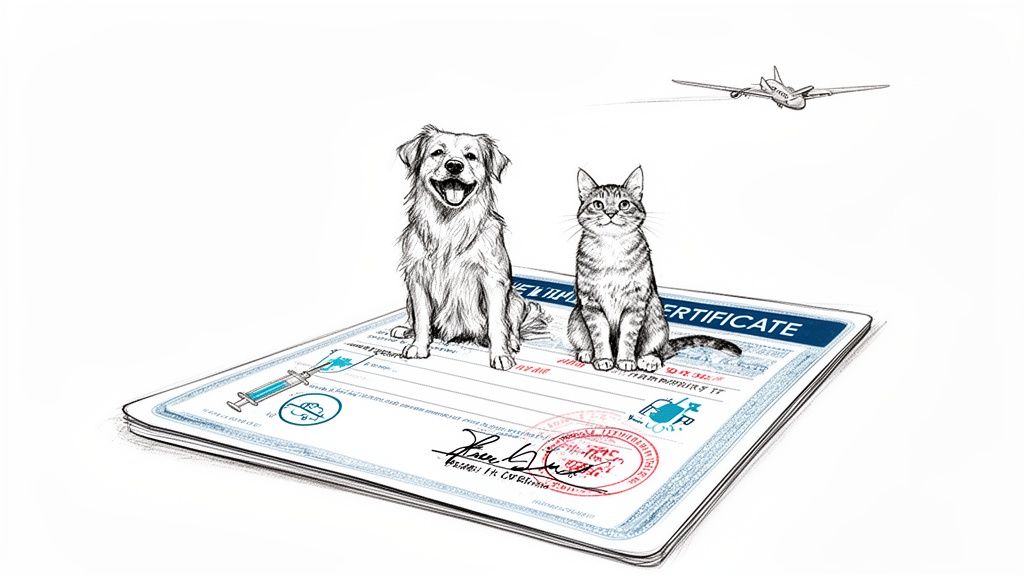
So, what exactly is this certificate? It’s an official document signed by a licensed veterinarian after a full health check. During this exam, the vet makes sure your pet is free from contagious diseases, has all their needed vaccinations, and is generally fit to travel.
This piece of paper is more than just a formality. It’s your pet’s ticket to board a plane or cross a border, and it’s a key part of being a responsible pet owner.
The Purpose of the Certificate
The main reason for a health certificate is to help prevent the spread of animal diseases across state and international lines. Just like humans need passports, pets need their health status checked to protect local animal populations and public health.
A vet health certificate acts as a universal language for animal health. It tells officials everywhere that your pet has been professionally examined and meets the health standards for entry.
Without this proof, you could run into serious trouble. Airlines might not let your pet fly, or worse, border agents could deny entry. In some situations, your pet could even face a long and expensive quarantine. This isn't just red tape; it's a vital system for keeping animals everywhere safe.
Who Needs a Vet Health Certificate?
You'll almost certainly need a health certificate if you're traveling with your pet in any of these situations:
Flying Commercially: Nearly every airline asks for a health certificate for pets, whether they’re in the cabin with you or traveling as cargo.
Crossing State Lines: Many states ask for a Certificate of Veterinary Inspection (CVI)—another name for a health certificate—for any animal coming in.
International Travel: This is a big one. Every country has its own import rules, and a vet health certificate is almost always a non-negotiable part of the paperwork.
This usually applies to dogs and cats, but it can also be needed for birds, rabbits, and other pets. The rule of thumb is simple: if your trip is more than just a short drive to a nearby town, you should plan on getting one.
Getting this document sorted out is the most important first step to making sure your pet’s travel plans go off without a hitch. For a closer look at the details, you can read our complete guide on the veterinary health certificate and what it involves.
What’s Actually on a Vet Health Certificate?
Think of a vet health certificate less like a simple permission slip and more like a detailed health passport for your pet. It’s a standard, official document that tells a story about your pet’s health, showing officials that they are safe to travel.
Let’s break down exactly what information goes onto the form. Getting these details right from the start is the key to avoiding last-minute headaches at the airport or border.
The Anatomy of the Certificate
At its heart, a health certificate answers a few key questions: Who is this pet? Who owns them? Are they healthy and up-to-date on their vaccinations? Every field on the form is designed to provide a clear, verifiable answer.
This isn’t just for show; it’s a serious declaration of your pet’s fitness for travel. Think of it as a detailed travel resume for your furry friend—it has to be perfect.
Accuracy is everything. A single mistake, like a mixed-up number in a microchip or a missing vaccination date, can cause big problems and bring your travel plans to a screeching halt.
Here’s a quick-reference guide to the essential information you’ll find on nearly every pet health certificate.
Key Information on a Vet Health Certificate
Data Category | Description & Common Items | Why It Matters |
|---|---|---|
Pet Identification | Your pet's name, breed, color, sex, age, and—most importantly—their unique microchip number. | This is how officials confirm the pet in front of them is the same one on the paperwork. The microchip is a permanent, important link between your pet and their health records. |
Owner Information | Your full name, current address, and phone number. The owner's name should match your own travel documents (like your passport) exactly. | Officials need to know who is responsible for the animal. Mismatched names can be a red flag and may cause serious delays during check-in or at customs. |
Vaccination Records | Proof of a current rabies vaccination is the big one and is almost always needed. Other shots might be needed depending on where you're headed. | Rabies control is a global public health priority, and this confirms your pet isn't a risk. For more on this, check out our guide on the rabies vaccine certificate. |
Parasite Treatments | Details on recent treatments for fleas, ticks, and internal parasites (like tapeworms) are very common, especially for international travel. | This is all about preventing the spread of pests and diseases across borders, protecting local animals and ecosystems. |
Health Examination | A formal statement from the veterinarian confirming they examined the pet and found them healthy and free of any obvious contagious diseases. | This is the vet’s professional stamp of approval, declaring that your pet is physically fit to handle the stress of travel and won't pose a health risk. |
Having this information organized and ready for your vet appointment will make the entire process run much more smoothly.
The Role of the Accredited Veterinarian
Here’s an important detail: not just any veterinarian can sign off on a travel health certificate. The exam and signature must come from a USDA-accredited veterinarian. This isn't the same as a standard DVM license. It means the vet has completed extra federal training on animal health rules and is officially authorized to certify pets for travel.
Their signature is more than just a scribble; it's a professional endorsement that all the information is correct and the pet meets the destination’s specific entry rules. This responsibility is a heavy one. With growing pet populations and a serious shortage of veterinarians—projections show the U.S. may need thousands more vets by 2030—the pressure on clinics is immense. This industry-wide strain makes having an efficient, error-proof process for handling travel paperwork more important than ever.
Navigating Country-Specific Rules and Critical Timelines
Once you’ve wrapped your head around what a vet health certificate is, the next reality sinks in: no two journeys are the same. Prepping for a quick domestic flight is a walk in the park compared to an international move. This is where the real planning begins.
Think of it like our own travel. A drive to the next state just needs your driver’s license. A trip to Europe? That means a passport and sticking to specific visa rules. Pet travel is exactly the same. Every country, and even some U.S. states like Hawaii, has its own set of rules you have to follow to the letter.
Destination Rules Are Key
Ignoring a destination’s specific rules is the fastest way to get your travel plans grounded before they ever take off. A health certificate that’s perfectly fine for one country could be completely useless for another. We’re not just talking about different forms; we’re talking about entirely different health checks, vaccine protocols, and even microchip standards.
You'll run into a lot of common variables, including:
Specific Forms: Many countries require you to use their official, often bilingual, health certificate.
Vaccination Requirements: Rabies is almost always needed, but some places will ask for proof of other vaccines or specific antibody tests.
Parasite Treatments: It’s common for countries to require specific flea, tick, and deworming treatments within a very tight timeframe before the pet arrives.
Microchip Standards: Most countries now prefer an ISO 11784/11785 compliant microchip—a 15-digit international standard.
The only way to know for sure is to check the official government websites for your destination country. This is your single source of truth for import rules. For a deeper dive, check out our guide on navigating international pet travel requirements.
The APHIS Endorsement Explained
If you’re traveling with a pet from the United States to another country, you’ll get very familiar with APHIS. That’s the Animal and Plant Health Inspection Service, a branch of the U.S. Department of Agriculture (USDA).
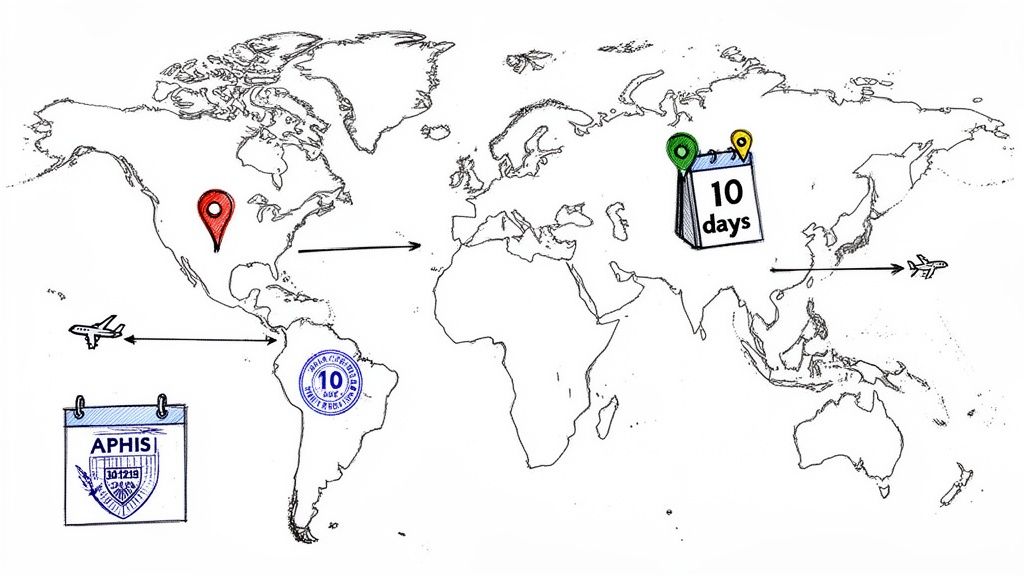
Think of the APHIS endorsement as the final, official government stamp of approval. After your accredited vet fills out and signs the international health certificate, it usually has to go to APHIS for review. APHIS officials check that the certificate is accurate and follows the destination country's rules.
This endorsement is what makes your paperwork internationally recognized. Without that official APHIS seal or digital signature, your pet’s health certificate may not be accepted for international travel. It’s a key step that adds another layer to your timeline, so you have to factor in processing and shipping times.
While there's a global push for electronic vet health certificates to make this easier, a 2023 OECD report noted that a lack of standardization between countries still causes headaches. This often means vets have to manually tweak forms to meet the specific requirements of countries and for the APHIS endorsement. You can explore these findings on the challenges in digital certificate adoption on OECD.org.
Why Your Timeline Is Everything
If there’s one thing that causes the most stress with a vet health certificate, it’s the timeline. Many destinations have an incredibly strict window for when the health exam must be done and the certificate issued.
For many countries, that window is just 10 days before your arrival.
Let’s be clear about what that means. If you're landing in your destination on July 20th, the vet exam and the signing of the certificate must happen on July 10th or later. Doing it on July 9th could make the entire certificate invalid.
This tight turnaround leaves zero room for error. A tiny mistake, a missed signature, or a shipping delay with your APHIS endorsement can derail the whole trip. It’s not a friendly suggestion; it’s a hard deadline that makes or breaks your travel plans. Don’t let a timing miscalculation turn your exciting adventure into a travel "cat-astrophe."
Common Mistakes That Can Ground Your Pet's Travel Plans
Getting a pet health certificate seems straightforward on the surface. But a single, simple error can lead to heartbreaking results—like being denied boarding at the airport or facing an unexpected quarantine.
Think of this as your guide to sidestepping a travel disaster. By understanding the most common pitfalls, you can turn travel anxiety into confident, proactive planning. Let's look at the frequent mistakes that can ground your pet’s travel plans before they even take off.
Incorrect or Mismatched Dates
This is one of the most frequent and frustrating errors. As we've covered, many countries and airlines require the health certificate to be issued within a very specific timeframe, often just 10 days before arrival.
A certificate dated too early is immediately invalid. If your vet signs the form 11 days before your flight instead of 10, that document is useless. This tight window leaves absolutely no room for error, so double-checking your travel dates against the certificate issue date is essential.
Missing or Unreadable Information
Imagine a border agent trying to read a form with a coffee stain over the microchip number or a signature that’s just a scribble. An incomplete or unreadable vet health certificate is as good as no certificate at all.
Every single field on the form must be filled out clearly and accurately. Common culprits include:
Missing Microchip Numbers: The microchip is your pet’s unique ID. If it's not on the form, officials have no way to verify the pet’s identity.
Vague Pet Descriptions: "Brown dog" isn't going to cut it. The form needs the specific breed, age, sex, and any distinct markings.
Unclear Signatures or Dates: All signatures and dates must be perfectly readable. A smudged date could call the entire document's validity into question.
A complete and cleanly filled-out document tells officials that the process was handled professionally. Any missing or messy information creates doubt, which almost always leads to delays or rejection.
Before you leave the vet's office, take a moment to review the certificate yourself. Make sure every box is filled, every number is correct, and everything is easy to read.
Using the Wrong Form for Your Destination
This is a classic rookie mistake. You can't just use a generic health certificate for every destination. Many countries require their own specific, often bilingual, health certificate form.
Think of it like trying to use a U.S. driver's license as a passport in Japan—it simply won’t work. Using a standard domestic CVI (Certificate of Veterinary Inspection) for international travel is a guaranteed way to be turned away.
To avoid this, follow these steps:
Identify the Destination: Pinpoint the exact country or state you are traveling to.
Find the Official Form: Visit the USDA APHIS Pet Travel Website or the destination country's official government site to download the correct, most current form.
Provide It to Your Vet: Bring the right form to your accredited veterinarian to ensure they are working with the correct document from the very beginning.
This simple bit of homework prevents a major headache and ensures you’re on the right track from day one. Don't assume your vet will automatically know which form to use; being a proactive partner in the process is your best strategy.
How Digital Tools Can Simplify the Certificate Process
After wading through the maze of strict timelines and country-specific rules, you’ve probably realized that getting a vet health certificate the old-fashioned way can be a real headache. That administrative drain on veterinary teams and pet owners is exactly why modern digital platforms now exist.
These cloud-based tools were built to solve the biggest pain points directly. They slash human error, give back hours of administrative time, and offer some much-needed peace of mind for everyone involved. It’s the difference between trying to navigate a maze blindfolded and following a clear, well-lit path.
Moving Beyond Manual Paperwork
The traditional method for issuing a pet health certificate often means juggling paper forms, manually double-checking requirements, and making one phone call after another. Not only is this process slow, but it's also filled with opportunities for mistakes—a single misplaced decimal or an incorrect date can render the whole document useless. Digital solutions take this chaotic workflow and turn it into something structured and automated.
Imagine a system that does the heavy lifting for you. Instead of you hunting for the latest rules on a government website, the platform pulls the most current destination requirements automatically. Rather than manually typing in a 15-digit microchip number and just hoping it’s right, the system can check the information as it's entered.
This shift is more than a convenience; it’s becoming a necessity. The animal healthcare market, which includes services like issuing a vet health certificate, is a massive industry. With veterinary services making up a huge part of that, the demand from a booming global pet population is creating a major bottleneck. Digital platforms help practices handle this surge, especially since many vets report rising caseloads.
The Core Benefits of a Digital Workflow
Switching to a digital-first approach provides clear wins over the old-school paper chase. It transforms a stressful, reactive process into one that’s proactive and collaborative.
Drastic Reduction in Human Error: Automated data entry and real-time checks catch common mistakes before they become trip-ending problems. This ensures every vet health certificate is spot-on.
Significant Time Savings: By automating repetitive tasks like filling out forms and looking up rules, veterinary staff get hours back in their day. This frees them up to focus on what matters most: caring for their furry patients.
A Shared, Transparent Process: Digital platforms create a single source of truth for both the clinic and the pet owner. Everyone can see the certificate’s status, what’s left to do, and what information is needed next.
The goal of these tools is simple: to make the process so smooth that getting a vet health certificate feels like just another simple step in your travel plans, not the biggest hurdle.
How It Works in the Real World
Let's compare the two approaches. In a manual workflow, a pet owner might call the clinic, which then has to research the rules, find the right form, and book several appointments. Information gets passed back and forth over email or phone, creating plenty of chances for miscommunication.
With a digital platform like Passpaw, the whole process is unified.
Centralized Information: The pet owner can enter their travel dates and destination details directly into the system.
Automated Checklists: The platform instantly generates a clear checklist for both the owner and the vet team based on the specific country’s requirements.
Real-Time Collaboration: Everyone can track progress, upload documents, and communicate within a single, organized space.
This connected approach turns a series of disjointed, stressful steps into a single, manageable journey. It’s all about replacing frantic, last-minute scrambles with calm, confident preparation, making sure every pet is ready for their next adventure.
Your Step-By-Step Workflow for a Perfect Certificate
Trying to line up all the requirements for a pet health certificate can feel like a tall order. But it doesn’t have to be a source of stress. With a clear, organized game plan, both pet owners and veterinary teams can turn this complex job into a series of simple, manageable steps.
This roadmap, with perspectives for both the owner and the clinic, helps make the entire journey feel organized and achievable.
The flowchart below shows just how much simpler things get when you move from a clunky, paper-based system to a modern digital one.
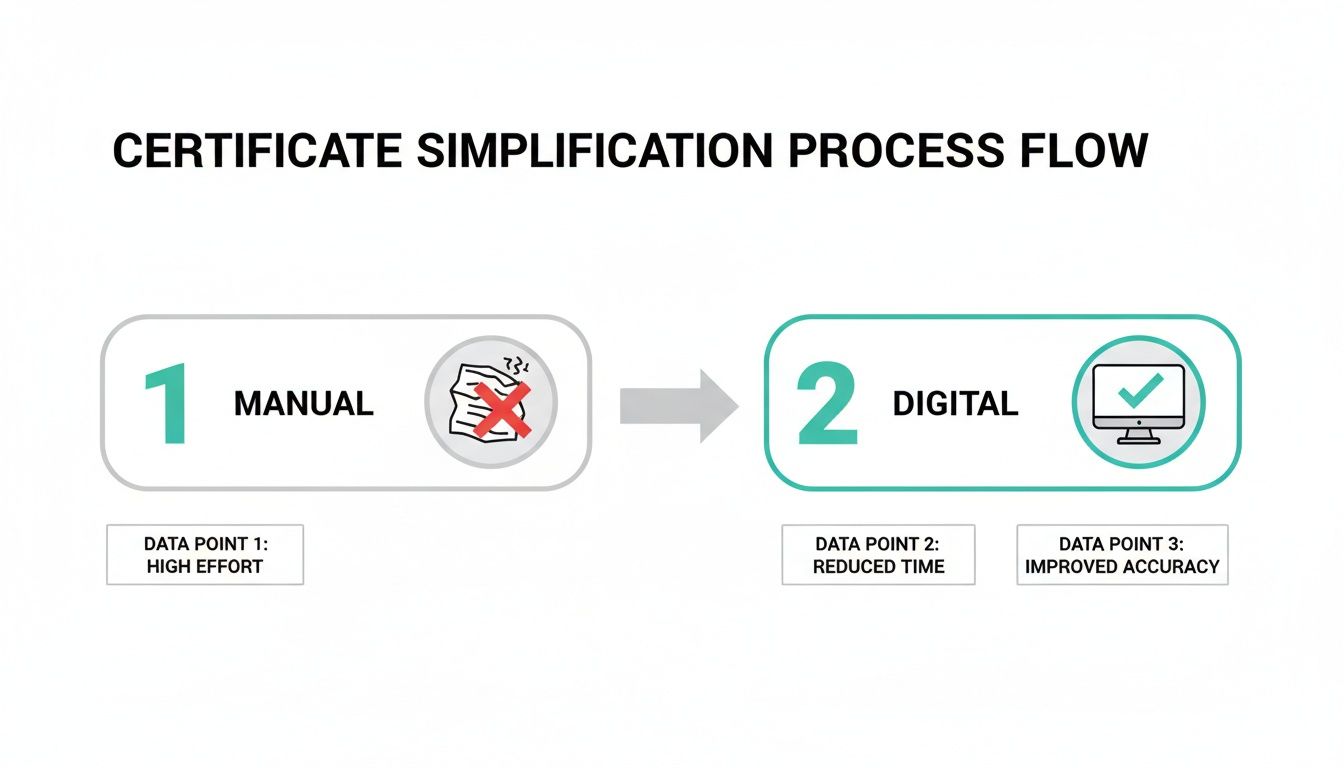
It's all about moving from manual chaos to digital clarity. When you use tools designed for the job, you cut down on errors and stress by automating and organizing the work.
The Pet Owner's Checklist
As the pet owner, your part of the journey starts well before your travel date. Being proactive is the secret to a smooth, headache-free process.
Research Your Destination Early (2-6 Months Before Travel): This is your most important first step. Go directly to the source: the USDA APHIS site or the official Ministry of Agriculture website for your destination. Find out exactly what they require.
Schedule a Travel Planning Visit (2-4 Months Before Travel): Book an appointment with your USDA-accredited veterinarian specifically to discuss your travel plans. This isn't the final exam; it's a strategy session. Bring the research you gathered.
Organize Your Pet’s Records (Ongoing): Get all your pet’s documents together in one spot. We’re talking microchip registration, rabies certificate, and the full vaccination history. A digital folder on your computer or phone is perfect for this.
Book the Final Health Exam (1 Month Before Travel): Schedule the official exam within the required time frame, which is often 10-30 days before you arrive at your destination. Double-check this window with your vet to ensure it matches the country's rules.
Final Document Check (Day of Vet Appointment): Before you walk out of the clinic, stop and review the finished health certificate. Make sure your name, your pet’s microchip number, and all the dates are 100% correct.
The Veterinary Team's Workflow
For vet practices, a solid, repeatable workflow is the key to providing great service without burning out your team. It’s about ensuring everything is done correctly and keeping everyone’s stress levels low.
Confirm Travel Details with the Client: The moment an owner calls about travel, get the exact destination and travel dates. This information drives everything else you'll do.
Verify Pet Records and Requirements: During that initial planning visit, pull up the pet's records. Check the microchip and vaccination status against the destination’s rules you’ve confirmed. This is when you’ll spot any missing tests or treatments that need to get on the calendar.
Create a Timeline and Checklist: Give the pet owner a clear, written timeline of everything they need to do. Include deadlines for blood tests, specific treatments, and that final exam.
Schedule the Final Health Exam: Book the appointment for the official health certificate exam, making sure it falls within the strict time frame required by the destination. Put reminders on the calendar for both the clinic and the client.
A well-defined workflow transforms the clinic's role from reactive to proactive. By guiding the client through each milestone, you reduce the risk of last-minute emergencies and help ensure every "i" is dotted and every "t" is crossed.
When both pet owners and veterinary staff follow these steps, you start working together like a well-oiled machine. This team approach turns the process of getting a health certificate from a chaotic scramble into a clear, predictable plan, making sure every pet is ready for their next adventure.
Frequently Asked Questions About Vet Health Certificates
Even with the most careful planning, it’s natural to have a few last-minute questions about your pet’s health certificate. We get it. This process can feel like a puzzle, and a few pieces might still seem out of place.
To help clear up any lingering confusion, we’ve put together answers to the questions we hear most often from pet owners just like you.
How Long Is a Vet Health Certificate Valid?
This is one of the most critical, time-sensitive questions out there. A health certificate isn't good forever, and its expiration date depends entirely on where you’re headed.
For most domestic trips inside the United States, a vet health certificate—often called a Certificate of Veterinary Inspection (CVI)—is usually valid for 30 days from the day your vet signs it. This gives you a decent window.
International travel, however, is a different story. The rules are much stricter. Many countries demand the certificate be signed and issued within a very narrow timeframe, often just 10 days before your pet lands. Miss that window by even a day, and the certificate may be worthless. Always, always check the official government pet import website for your destination country to confirm their exact requirements.
What Is the Difference Between Domestic and International Certificates?
It's easy to assume a health certificate is just a health certificate. But when it comes to travel, there's a world of difference between the one you need for a trip to another state versus one for another country.
Here’s how they break down:
Domestic Certificates (CVIs): These are for travel between states. They’re generally much simpler, focusing on confirming your pet is healthy and up-to-date on its rabies vaccine. An accredited vet can issue one, and that’s usually the final step.
International Health Certificates (IHCs): These are for crossing borders, and they are far more involved. They often use specific, multi-page forms from the destination country, sometimes in another language. Most importantly, after your vet signs it, the certificate must be sent to a government body like APHIS for an official endorsement.
Think of a domestic certificate like a driver's license for your pet—it’s good for getting around the country. An international certificate is like a passport and visa rolled into one—it requires multiple official approvals before it's valid for travel abroad.
Do I Need a Paper Copy or Is a Digital One Okay?
In a world of digital tickets and mobile boarding passes, it’s a fair question: can I just show the certificate on my phone? While things are slowly moving in that direction, for now, you should carry the original, signed paper copy.
Airlines and border officials almost always require the physical document. For international travel, this means the paper copy with your vet's real ink signature and the official, embossed APHIS seal or stamp. A picture on your phone is great to have as a backup, but it likely won't be accepted as the real thing.
Don't risk the nightmare of being turned away at the check-in counter or in customs. Keep that original hard copy safe and sound with your passport and other travel documents.
Navigating travel paperwork for your pet can be a lot to handle, but you don't have to do it alone. Passpaw offers a simple, cloud-based solution that automates workflows, checks information in real-time, and helps ensure every detail is perfect. Take the stress out of pet travel by visiting https://passpaw.com to see how we can help your practice and your clients.
More articles
From regulatory changes to best practices for veterinarians and pet owners, our resources keep you ahead of the curve.