Are you a team member in a veterinary practice?
Are you a pet parent planning a trip with your furry pal?
What Is a Booster Shot for Dogs? A Complete Owner's Guide
You open your email and see a reminder from the vet: your dog is due for a booster shot.
If you're a new dog owner, that message can raise a few immediate questions. Didn't my puppy already get vaccinated? Is a booster the same thing as the original shots? Does my dog really need it if they seem perfectly healthy?
Those are good questions. I hear them all the time in practice.
The short answer is this: a booster shot for dogs is a follow-up vaccine dose that helps keep protection strong over time. It isn't “extra” in the casual sense. It's part of how a vaccine plan is meant to work.
And if you ever plan to board your dog, enroll in daycare, or travel internationally, staying current on boosters matters for more than routine wellness. It can affect whether your paperwork moves smoothly or turns into a last-minute scramble.
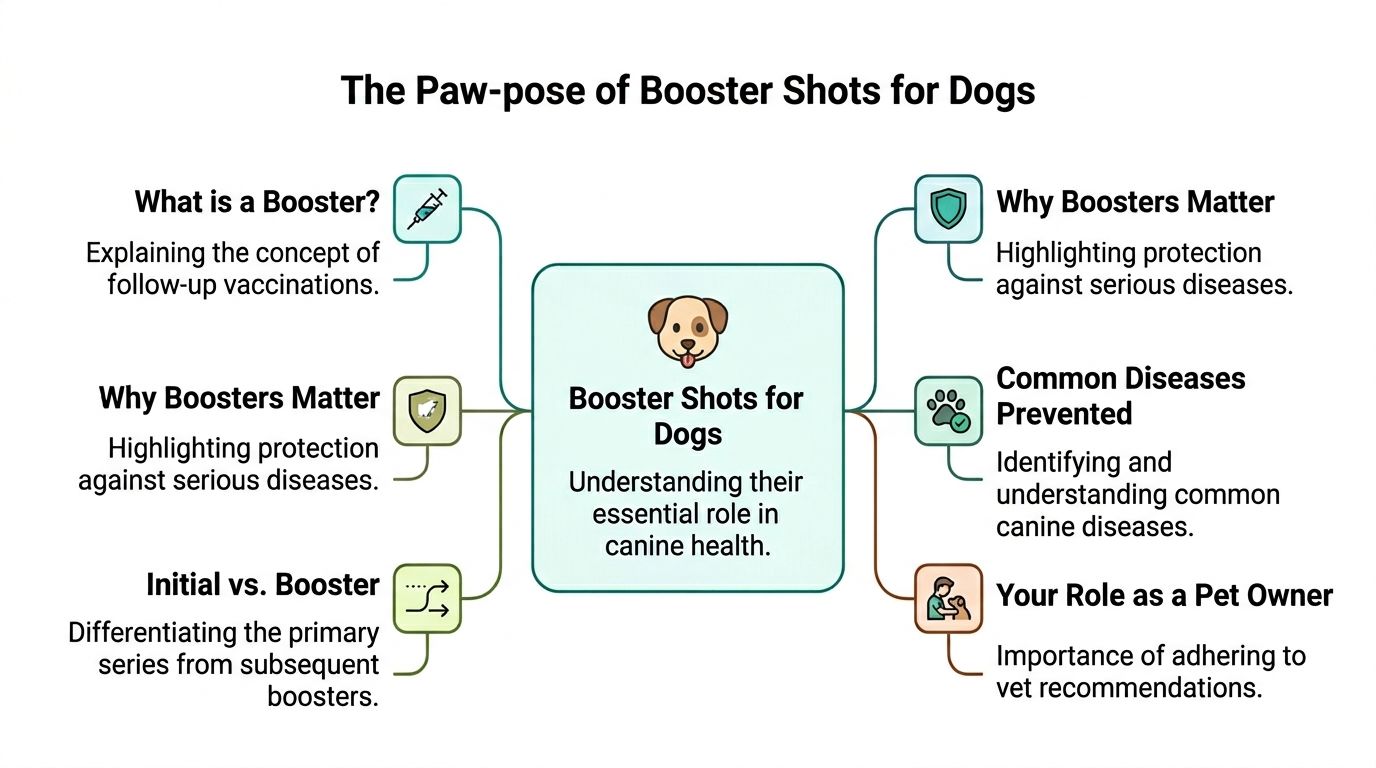
The Paw-pose of Booster Shots for Dogs
A lot of owners first ask what is a booster shot for dogs when they get that one-year reminder after puppy vaccines.
That timing can feel odd. Your dog got several shots as a puppy, so why come back again?
Think of immunity like a rechargeable battery
Your dog's immune system has memory. Vaccines teach that system what a dangerous germ looks like, so the body can react fast if the actual disease shows up later.
A simple way to picture it is a rechargeable battery.
Puppy vaccines start the charge: They introduce the immune system to major diseases.
The one-year booster tops it off: It reinforces that protection after the puppy period.
Later boosters maintain the charge: They help keep immune memory strong over the long term.
That “top-off” matters because the early puppy series has a built-in challenge. Puppies usually receive vaccines every 2 to 4 weeks from about 6 to 16 weeks of age, but maternal antibodies can interfere with those early shots. Boosters given later help overcome that interference. Duration-of-immunity research also shows that core viral vaccines like DHPP can protect for at least 3 years after the 1-year booster, with some studies showing protection for over 7 years (Zoetis Petcare on booster shots for dogs and cats).
Here’s a helpful visual summary:
Why the first shots aren't always the finish line
Puppy vaccines are essential, but they aren't a one-and-done event. Young immune systems are still learning, and the protection built by those early doses needs reinforcement.
That’s why boosters are part of the plan, not an afterthought.
Practical rule: Puppy vaccines build the foundation. The booster helps lock that protection in.
For many owners, confusion comes from the word “booster” itself. It sounds optional, like an add-on. In veterinary medicine, it usually means the next scheduled dose needed to maintain protection.
What boosters are trying to prevent
The main goal is to protect dogs against serious infectious diseases that can spread quickly and cause severe illness. Some affect the gut. Some attack the lungs or nervous system. Some, like rabies and leptospirosis, matter for public health too.
If you want a broader overview of the vaccines that fit into this plan, this guide on what vaccinations dogs may need is a useful next read.
The big idea is simple. A booster is your dog's immune reminder. It helps the body stay ready, rather than trying to build a defense from scratch when exposure happens.
A Guide to Common Canine Vaccine Boosters
Not every booster protects against the same disease, and not every dog needs every non-core vaccine.
In practice, I usually explain them in two buckets: core vaccines and lifestyle vaccines.
The core boosters most dogs discuss with their vet
Core vaccines protect against diseases considered important for nearly all dogs. According to AAHA guidance, these include parvovirus, distemper, adenovirus, and rabies, and in many regions leptospirosis is now also treated as core because of rising urban relevance and its ability to spread to humans (AAHA canine vaccination guidelines facts).
Here’s the plain-language version of what those names mean:
Distemper: A serious viral disease that can damage the respiratory and nervous systems.
Adenovirus: Linked with infectious hepatitis and can affect the liver.
Parvovirus: Causes severe vomiting and diarrhea, especially dangerous in puppies.
Parainfluenza: A respiratory virus often included in combination vaccines.
Rabies: A fatal zoonotic disease and one of the most closely tracked vaccines.
Leptospirosis: A bacterial infection that can affect the kidneys and liver, and people can catch it too.
Many dogs receive several of these in one combination vaccine, often labeled DHPP or DA2PP.
If that alphabet soup makes your eyes cross, you're not alone. This breakdown of the DHPP vaccine helps decode the name and what it covers.
The boosters that depend on your dog's lifestyle
Some vaccines are recommended based on exposure risk.
A dog who mostly stays home has a different risk profile than one who goes to daycare, boards often, visits groomers, or meets lots of dogs on walks and trips.
Common examples include:
Bordetella: Often discussed for boarding, grooming, daycare, and group settings.
Lyme vaccine: Considered in areas where tick exposure is a concern.
Canine influenza: More relevant in some communities or outbreak settings.
Common Dog Booster Vaccines at a Glance
Vaccine | Protects Against | Typical Booster Frequency |
|---|---|---|
DHPP or DA2PP | Distemper, adenovirus, parvovirus, parainfluenza | 1 year after puppy series, then every 3 years for most core components |
Rabies | Rabies virus | 1 year after initial vaccine, then every 3 years for qualifying products |
Leptospirosis | Leptospira bacteria | Annual booster |
Bordetella | Kennel cough-related respiratory infection | Often every 6 to 12 months depending on risk |
Lyme | Lyme disease | Annual if recommended by your vet |
A booster plan should match the dog's real life, not just a generic calendar.
A quiet homebody Labrador and a globe-trotting Frenchie don't always need the exact same schedule. That's why a booster conversation works best when your vet knows your dog's routines, travel plans, and social habits.
Understanding Your Dog's Booster Schedule
Most modern vaccine schedules follow a pattern, but they're still personalized.
The pattern is easier to understand when you stop thinking of vaccines as “annual shots” and start thinking of them as disease-specific schedules.
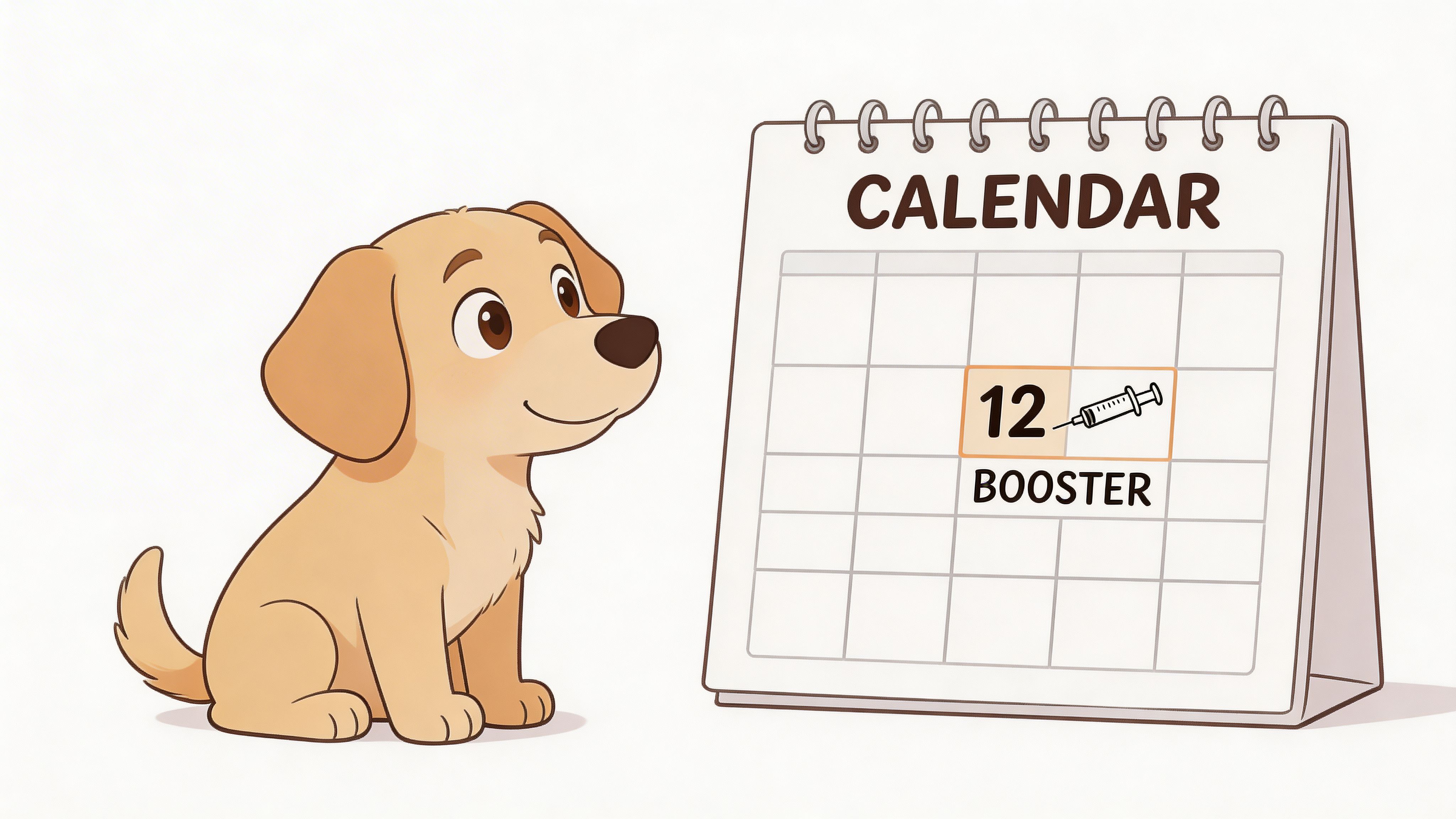
The usual timeline
For many dogs, the schedule looks something like this:
Puppy series: Vaccines are given every 2 to 4 weeks through the early months.
One-year booster: This reinforces protection after the puppy series.
Ongoing adult boosters: Many core vaccines move to a longer interval after that.
That last point surprises people most. AAHA guidelines, widely adopted in the US and UK, support a 3-year interval for core vaccine boosters after the 1-year shot. Research also found that over 95% of dogs maintained adequate antibody levels against key diseases like parvovirus for years, making annual revaccination for those specific pathogens unnecessary (research summary on long-term canine immunity).
Why some vaccines are every 3 years and others aren't
Not all vaccines last the same amount of time.
Core viral vaccines often provide longer-lasting protection. Some non-core vaccines, especially those tied to bacterial disease or frequent exposure, need more frequent boosting.
A vet may recommend a shorter interval when a dog:
Boards often: Shared-air spaces raise exposure risk.
Travels regularly: Different destinations can bring different disease concerns.
Lives in a higher-risk region: Local disease patterns matter.
Has a changing lifestyle: A new daycare routine can change vaccine needs.
The rabies question comes up a lot
Rabies schedules often cause the most confusion because owners may hear “one-year vaccine” and “three-year vaccine” and assume those are completely different diseases or rules.
They aren't. The details depend on the product used and local requirements. If you want a plain-English overview, this article on how often dogs need rabies vaccination is a helpful reference.
Your dog's vaccine schedule should fit their age, health, and lifestyle. It shouldn't be copied from the dog next door.
Older dogs, dogs with medical issues, and frequent travelers may all end up with slightly different plans. That's normal. Good vaccine medicine isn't cookie-cutter. It's customized.
Potential Side Effects and When to Call the Vet
Most dogs do very well after a booster shot.
Some are a little sleepy afterward. Some have mild soreness where the vaccine was given. A few act like they've had a long day at the dog park and just want a quiet nap.
Mild reactions that are usually short-lived
These are the kinds of post-vaccine signs owners commonly notice:
Sleepiness: Your dog may be less bouncy for the rest of the day.
Tenderness: The injection area can feel sore.
Slightly reduced appetite: Some dogs eat a bit less for a short time.
Mild warmth or feeling “off”: A small immune response can make them seem subdued.
Those mild signs often reflect the immune system doing its job. Rest, water, and a calm evening are usually all that's needed.
Signs that deserve a call to the vet
Serious reactions are uncommon, but owners should know what to watch for.
Call your veterinarian promptly if your dog develops:
Facial swelling
Hives
Persistent vomiting
Trouble breathing
Marked weakness or collapse
Those signs can suggest a more significant vaccine reaction, and they shouldn't be brushed off as “just being tired.”
A helpful bit of reassurance is that reported adverse events are rare, representing a very small fraction of doses administered.
Simple aftercare at home
After a booster appointment, I usually tell owners to keep the evening boring in the best possible way.
Skip the marathon fetch session: Let your dog take it easy.
Offer water and dinner as usual: No fancy nursing required unless your vet says otherwise.
Watch, don't hover: Quiet observation is enough.
If your dog seems mildly tired, that's usually expected. If your dog seems distressed, swollen, or has trouble breathing, call your vet right away.
Booster visits are routine, but your concern is never silly. If something feels off, pick up the phone. We'd always rather answer an early question than hear you waited too long.
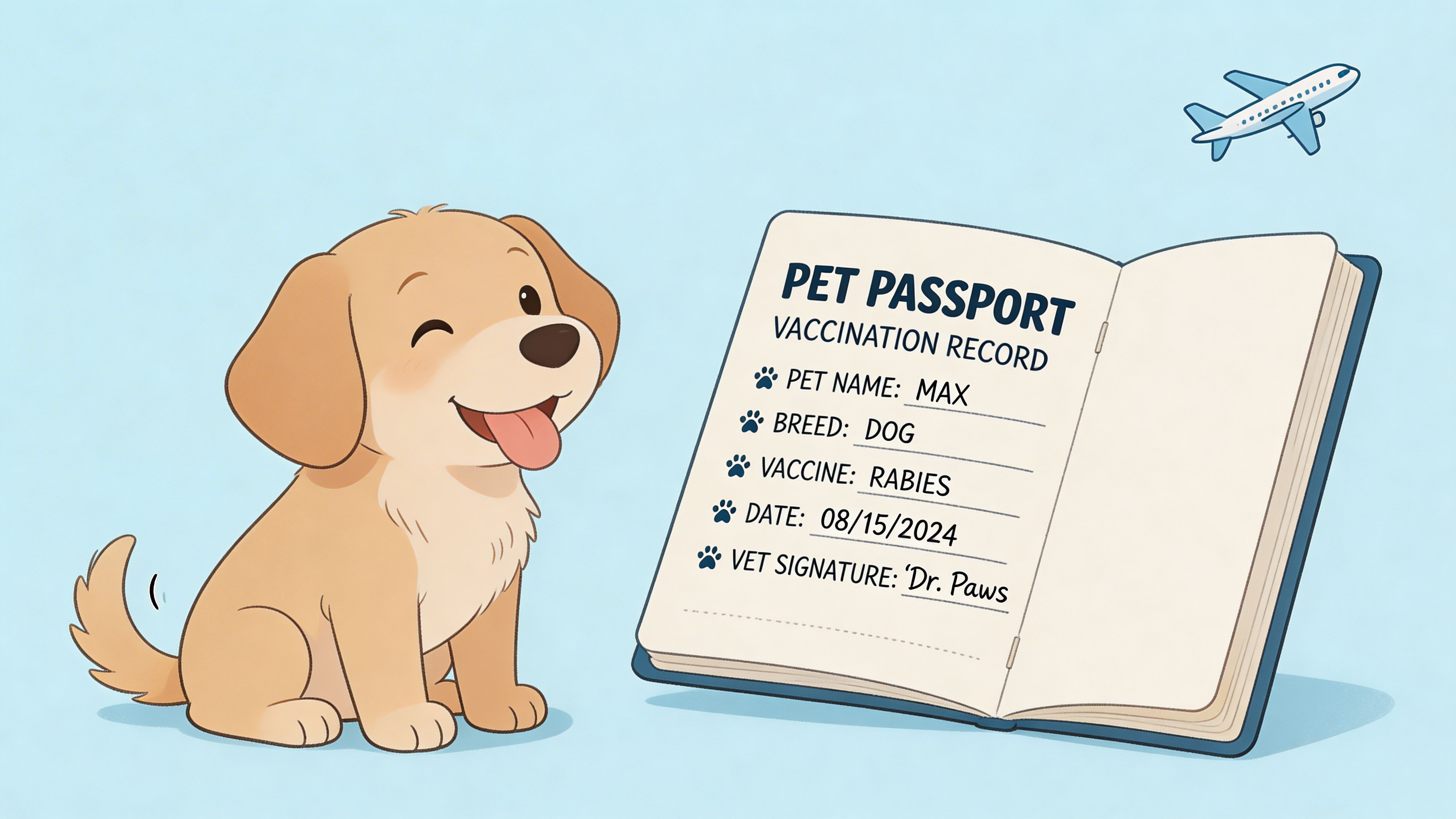
Booster Shots and Your Pet's Passport
A booster can feel routine until travel enters the picture.
Then it becomes part of a paper trail. Dates matter. Product details matter. Titer results matter. A missing booster history can create a headache faster than a beagle can sniff out unattended snacks.
Why travel changes the conversation
For routine home life, a slightly delayed reminder may mean calling your vet and rescheduling.
For international travel, vaccine timing can affect eligibility for health paperwork and entry processing. Rabies is usually the biggest issue, but it isn't the only one owners need to organize.
One extra layer is the rabies antibody titer test, often called FAVN. For some destinations, it's used to show that the dog has mounted an adequate immune response. When required for travel, the result often needs to be above 0.5 IU/mL, and a valid titer can sometimes help bypass booster requirements or reduce quarantine time in destinations such as the EU, UK, and Australia (VCA explanation of booster vaccines and rabies titer testing).
The records matter as much as the vaccine
The records matter as much as the vaccine. Often, many owners get tripped up by this. The vaccine may have been given correctly, but the documentation may be incomplete, hard to read, or not easy to use across borders.
If you're preparing paperwork for another country, resources on Vaccine Records and Document Translation can help you think through how to present records clearly when translation is needed.
Helpful habits include:
Check vaccine dates early: Don't wait until the month of travel.
Confirm the exact vaccine history: Brand, date, and lot details may matter for official forms.
Ask about titers well in advance: Some destinations build travel rules around them.
Keep digital and printed copies: One copy in your inbox and one in your travel folder can save stress.
Travel planning works better when you start before you think you need to
Owners often focus on flights, carriers, and airline rules first. The medical timeline should really start earlier.
If you're learning the broader process, this guide on how to get a pet passport is a solid place to start.
A current booster isn't just a health detail when you travel. It's part of your dog's mobility plan.
That shift in mindset helps. You aren't only keeping your dog protected. You're also protecting your trip from avoidable paperwork problems.
Keeping Your Pup Healthy and Ready for Adventure
Booster shots are one of those routine parts of dog care that don't feel exciting, but they make a big difference over time.
They help maintain protection against serious disease. They give your vet a chance to adjust the plan as your dog's life changes. And if travel is on the horizon, they support the recordkeeping that keeps plans moving instead of stalling.
A good booster plan is personal
The best schedule is the one that fits your actual dog.
A senior dog who rarely leaves the neighborhood may need a different approach than a young dog who boards, hikes, and travels. That doesn't mean one owner is more responsible than the other. It means veterinary advice works best when it's specific to the individual.
Organization is part of preventive care
A lot of stress around boosters doesn't come from the medicine. It comes from scrambling for dates, records, and appointment availability.
Keep a simple system:
Save every vaccine record: Paper folder, phone photo, or both.
Set reminders before due dates: Not after.
Tell your vet about lifestyle changes: New daycare, travel plans, and moves all matter.
If your dog spends time outdoors, boards during trips, or uses a kennel setup at home or while traveling, practical planning helps in other ways too. Guides on dog kennel size recommendations can be useful when you're making your dog's environment safer and more comfortable.
The true value of boosters
I don't think of boosters as a chore. I think of them as maintenance for a long, active life.
They support the ordinary moments, the muddy walks, the road trips, the family visits, the airport pickups, and the happy return home. That's a pretty good payoff for a quick appointment and a small poke.
Your dog won't thank you with words. But they might thank you with a wag, a nap on your foot, and many more healthy years of adventure.
If you're managing vaccine records and travel requirements for an upcoming trip, Passpaw helps simplify the pet travel paperwork process for veterinary teams and pet owners, so booster dates, health documents, and destination requirements are easier to keep organized.
More articles
From regulatory changes to best practices for veterinarians and pet owners, our resources keep you ahead of the curve.