Are you a team member in a veterinary practice?
Are you a pet parent planning a trip with your furry pal?
7 Common Application Deadlines for Pet Travel
You've booked a flight, told the airline your pet is coming, and then discovered that the vaccination record, rabies titer test, microchip details, health certificate, government endorsement, and airline forms all follow different clocks. That's a common problem because pet-travel timelines vary by destination, the pet's history, the route, and the authority reviewing each document. The final certificate window may be short, but the work behind it can begin months earlier.
The useful way to think about common application deadlines is as a planning calendar, not a single date. The seven windows below show which tasks can run together, which depend on earlier steps, and where a veterinary practice should add breathing room without treating any timeline as universal. Always confirm current requirements with the destination authority, airline, and veterinarian. Practices can also use this guide to filling out PDF forms when clients need help preparing paperwork, while Passpaw helps organize tasks, validate documents, prioritize work by travel date, and keep owners informed.
1. Early Action Deadlines
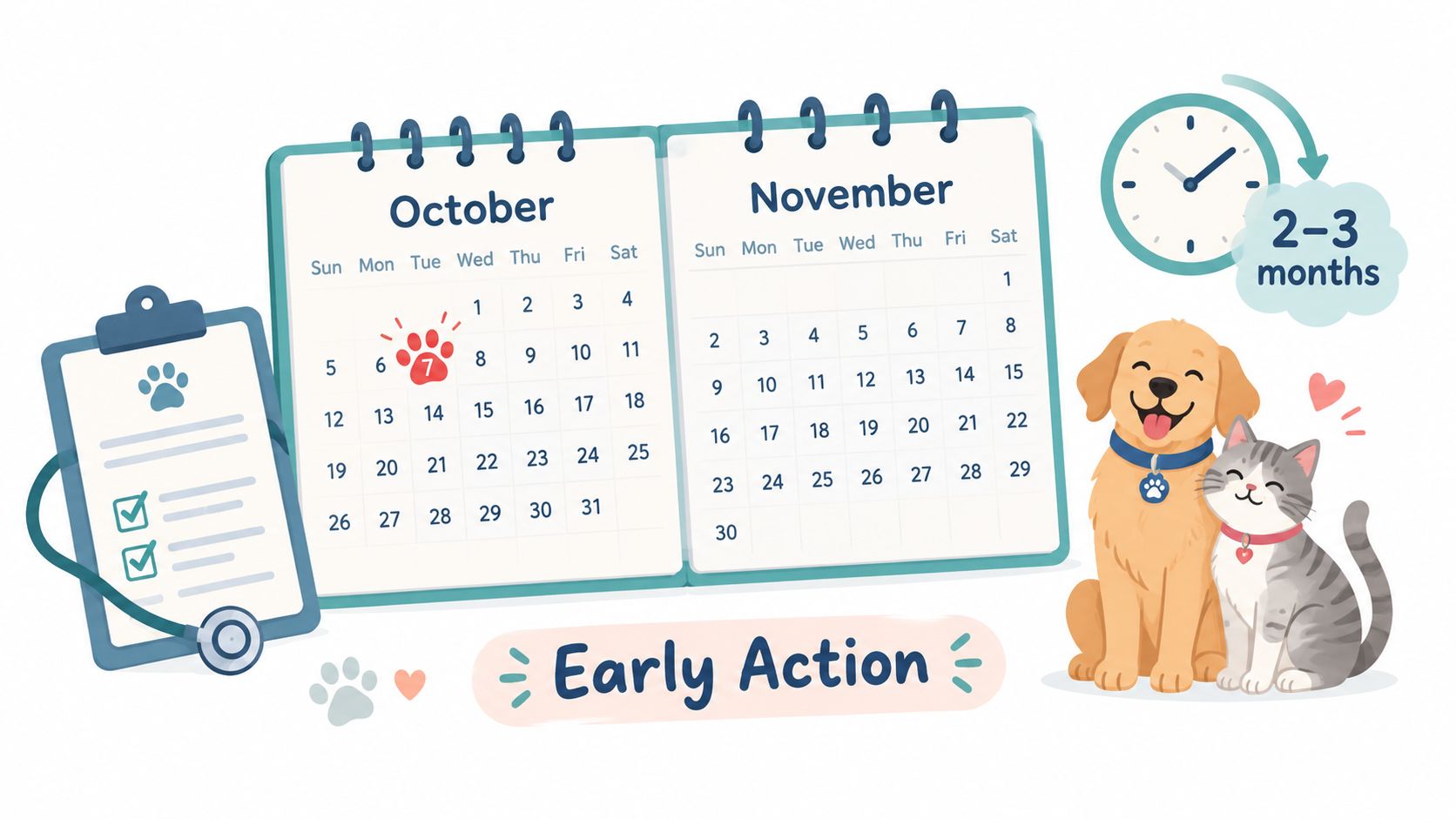
A family may know its destination months before departure, while a breeder may have an international handoff date already set. Use that lead time to open the pet-travel file, confirm requirements, and leave room for corrections before the final certificate window becomes tight.
For pet travel, an early action plan means starting the dependencies early, not issuing the health certificate too soon. Confirm the destination, entry date, route, transit countries, and airline first. Then check whether the pet needs a new vaccination, rabies titer testing, an import permit, quarantine, or a particular certificate format. Some tasks can run together, while others depend on earlier records, test results, or approvals.
Use early time for dependencies
Set the travel date as the anchor, then work backward from each requirement's validity period. A veterinary appointment, laboratory result, permit review, and owner follow-up may need separate calendar entries. Add extra time where a test must be completed before another document, or where a government office reviews the file after the practice submits it.
A practical early-action routine includes:
Create dated reminders: Add the travel date, testing milestones, document reviews, and owner follow-ups to Passpaw.
Recheck requirements: Confirm destination rules at intake and again before travel, since forms and transition rules can change.
Reserve capacity: Hold veterinary appointment time and government submission time before the calendar becomes crowded.
Keep owners updated: Send regular status messages showing what is complete, what is pending, and what the client must provide.
Early planning gives the practice options when records are incomplete, results arrive late, or an authority requests a correction. It also lets the veterinarian and owner decide where a buffer belongs instead of placing every task against the departure date. Keep the calendar alert and ready, like a well-trained terrier before the door opens.
2. Regular Decision Deadlines
For most routine relocations, a standard backward-planned timeline is sufficient. The owner has a confirmed destination and travel date, while the case allows time for ordinary veterinary and government processing. Corporate transfers, planned international adoptions, and overseas family assignments often fit this path.
Pet travel has no single shared calendar. The useful comparison is the planning principle: set the journey as the anchor, then turn each destination requirement into an earlier working date. A routine case still needs room for missing records, laboratory delays, permit review, and owner corrections.
Put dependencies before convenience
Start with the requirements that can hold up the rest of the file. Confirm the microchip and vaccination record, identify required testing, and check whether the destination requires an import permit or preapproval. Schedule clinical work around those rules, then prepare the health certificate and supporting records for the correct authority review.
Some milestones can run together. Staff can check records while an owner supplies missing details, and appointment planning can begin while the practice confirms permit requirements. Other steps depend on earlier completion. A test may need to precede certification, and a government review may begin only after the practice submits a complete file.
Passpaw can help the practice:
Validate documents as they arrive: Find missing fields and inconsistent details before final review.
Schedule clinical work early: Match vaccinations and examinations to destination rules rather than the owner's preferred date.
Send automatic updates: Keep owners informed without requiring staff to write every message manually.
Use destination templates: Keep country-specific steps visible instead of burying them in a general checklist.
Add a review buffer before submission. It gives the team time to correct names, dates, identification numbers, and supporting records without pushing every task against departure. The right buffer depends on the destination, authority workload, and file quality, so set it case by case. A tidy calendar keeps the process on a steady paw.
3. Rolling Admission Deadlines
Rolling intake means files arrive year-round and must be prioritized by travel date, destination, urgency, and dependencies. This model suits relocation services, breeders with changing export schedules, and families facing an unexpected move. It offers flexibility, but each file still needs a clear place in the calendar.
Set the queue around hard milestones rather than arrival order. A case with a near departure date may need attention before an earlier submission if the later file has fewer dependencies. At the same time, a file waiting on testing, an import permit, or authority review cannot always move faster through practice effort alone.
Run the queue by dependency
Record the submission time, then identify what is missing and which task must happen first. Staff can review the file while the owner supplies details, but certification may depend on completed testing, and an authority may require a complete package before review begins. Keep those relationships visible so a flexible intake does not become a vague promise.
A practical rolling workflow includes:
Travel-date sorting: Rank cases by the next firm milestone, including examination, certification, departure, or authority submission.
Dependency flags: Mark tasks that cannot start until records, testing, permits, or approvals are complete.
Capacity checks: Review open files as workload changes and revise expected completion dates promptly.
Escalation rules: Flag cases needing senior review, authority contact, or a decision about route feasibility.
Owner updates: State what the practice is waiting for, who owns the next action, and what could affect timing.
Keep processing expectations current on the practice website, intake materials, and client portal. If the queue tightens, update the estimate instead of leaving owners to rely on an old target.
Due College describes decisions often returning within four to six weeks, and earlier submission can matter when available places fill. In pet travel, the comparable pressure is limited working capacity before departure. A priority service can shorten internal queue time, but it cannot control an airline, government authority, or destination rule. Add a case-specific buffer where those outside decisions remain unresolved. A well-ordered calendar keeps every file moving at a steady paw.
4. Expedited and Priority Processing Deadlines
An urgent case usually begins with a fixed travel problem, not an ideal workflow. An owner may accept an international job with little notice, a military family may receive sudden deployment orders, or an emergency may require pet evacuation. Start by placing the departure date on the calendar, then work backward through the milestones that can run together and those that depend on earlier records, tests, or approvals.
Contact the relevant authority or consult its current guidance first, followed by the airline where appropriate. Confirm whether the required certificate can still be issued for the route, whether testing or permits make the schedule unworkable, and which event starts each validity period. The APHIS 7001 health certificate guide supports the form workflow, but it does not replace current route requirements.
Set priority without skipping safeguards
Passpaw can label a file for priority handling, alert the team when a document is completed, and show the owner the next missing item. Assign one person to coordinate the veterinarian, client, authority, and airline. That prevents a time-sensitive case from disappearing into a shared inbox.
Some tasks can proceed in parallel. While the team gathers records and checks airline requirements, the veterinarian can assess whether the examination and certificate steps remain feasible. Testing, permits, and authority review may still depend on earlier results, so record those dependencies rather than treating every task as simultaneous.
A senior veterinarian should review the finished package before submission, especially after any departure from the usual sequence.
Practical rule: Escalate the file quickly, but never promise an outcome controlled by a government authority, destination, or airline.
Use short status checks to catch missing records, rejected uploads, or changes to the travel plan. Document exceptions and communications, and agree on a fallback if the date fails, such as rescheduling, a route change, or alternate care. Add a case-specific buffer wherever an outside decision remains unresolved. An expedited service can reduce administrative waiting, but it cannot shorten biological or regulatory lead times. The goal is a fast, accurate decision about what remains possible, with no rushed promises.

5. Destination-Specific Cutoff Deadlines
Destination rules determine which deadline controls the itinerary. The familiar ten-day window is only one checkpoint. U.S.-origin pets entering the EU, UK, Japan, Australia, and much of Asia commonly need a USDA-endorsed health certificate dated within ten days of arrival, while airlines may apply their own certificate-age rule. Practices should verify the current requirement through guidance on the USDA health-certificate window.
For UK travel, the animal health certificate is valid for travel within ten days after issue. Eligible pets also need tapeworm treatment 24 to 120 hours before entry, according to UK government pet-travel guidance. Exam, issuance, endorsement, treatment, departure, and arrival are separate milestones. A date that satisfies one rule may fail another.
Build the route calendar first
Start with the destination, transit points, airline, and entry method. Then record which events can run together and which depend on an earlier result. Record the following separately:
Certificate issuance: confirm the date that starts the destination's validity window.
Treatment: schedule any medication or tapeworm treatment inside the permitted entry window.
Endorsement: allow time for authority review where endorsement is required.
Departure and arrival: test the full sequence against both airline and destination rules.
Recheck: review requirements again as travel approaches.
The correct starting point varies by route. It may be the veterinarian's issue date, endorsement, or another authority event, so use current destination guidance rather than a general template. The international pet travel requirements guide can support the initial review, but it should not replace route-specific confirmation.
Rules may also shift during a transition. APHIS states that new non-commercial EU health certificates are scheduled to become effective October 1, 2026, with older certificates scheduled to remain endorsable through September 30, 2026. Commercial certificates are scheduled to switch on October 17, 2026, according to APHIS guidance for relevant European destinations. Add a case-specific buffer whenever authority review, treatment timing, or a rule transition remains unresolved.
6. Microchip Registration Deadlines
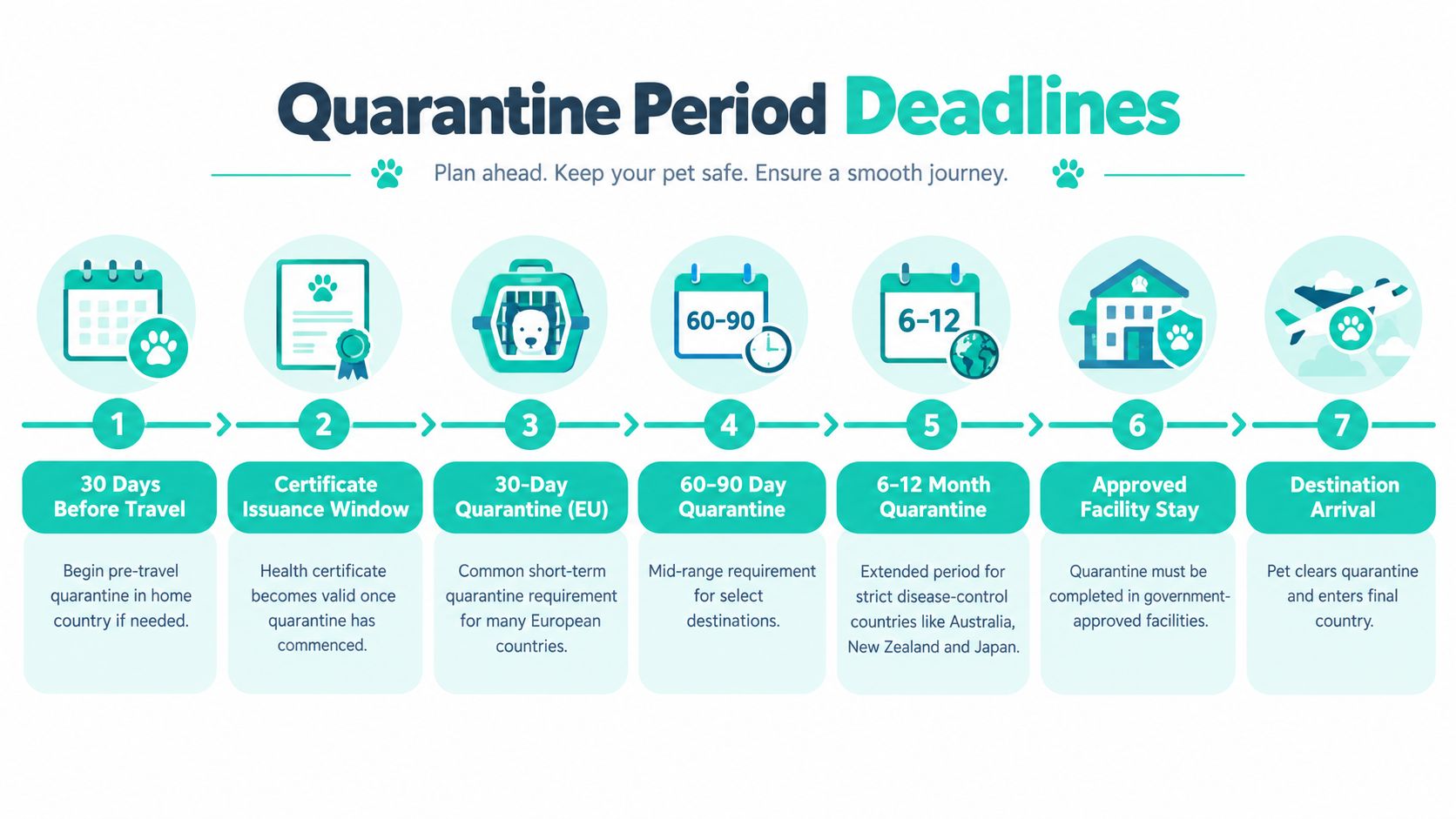
A microchip can exist without making a pet travel-ready. Before certificate work begins, the practice should scan the pet, record the number exactly, verify registration details, and confirm that the destination accepts the chip and registry. Treat this as an early dependency, not a final paperwork check.
The timing depends on the case. A newly adopted pet may need implantation before other planning can proceed. An imported pet may carry a chip listed in a local database that does not meet the destination's requirements. A long-time family pet may have an outdated address or phone number, creating a mismatch across travel records. These issues can run alongside other preparation, but unresolved identification details can hold up later certification.
Set a clear identification gate
At intake, compare the scanned number with the medical record and owner paperwork. If the chip cannot be read, a typed number is not enough. Ask the veterinarian to determine the next step, then confirm the current destination rule before scheduling dependent work.
Use this checkpoint sequence:
Scan at the first visit: Compare the reading with every existing record.
Check registration status: Confirm the database and ownership information.
Resolve mismatches early: Correct names, numbers, and contact details before certificate preparation.
Collect proof: Save registry confirmation with the application file.
Set a dependency alert: Keep the microchip task visible until the certificate workflow passes final review.
Owners often need a simple explanation of why the chip matters. Passpaw's guide to ISO-compliant microchips can support that conversation, while destination acceptance still requires current route-specific confirmation.
Build a small case buffer when scanning, registration, or database corrections remain unresolved. Once the identity record matches the pet and paperwork, later steps have a stable reference point. If it does not, one incorrect digit can send the rest of the file barking up the wrong tree.
7. Quarantine Period Deadlines
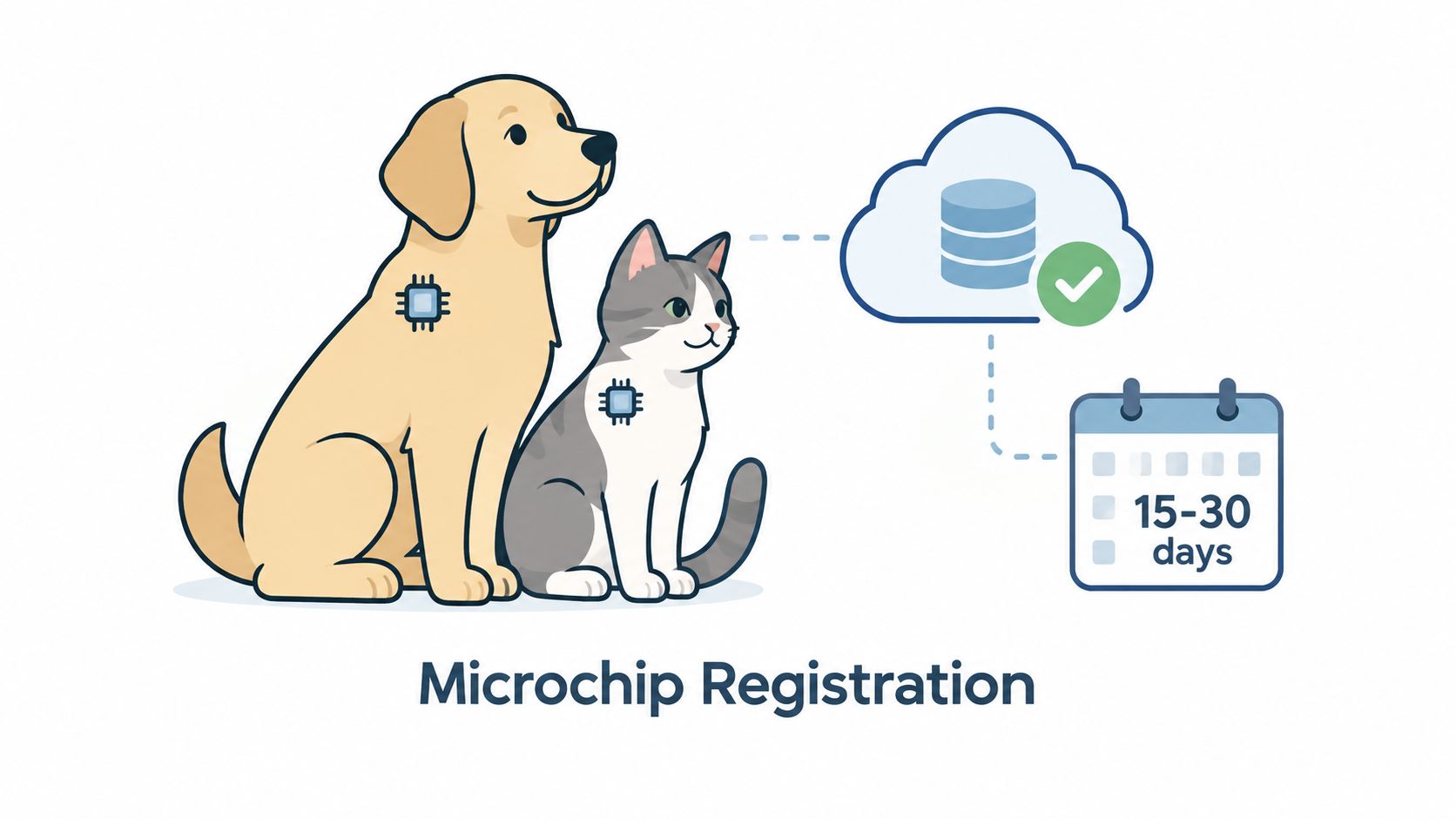
A certificate appointment may be available, yet the pet's travel date can still be unrealistic. Quarantine requirements may involve steps before departure, an approved facility, or a stay after arrival. Confirm those conditions before fixing the certificate schedule. The certificate is one part of a longer movement plan.
For an island destination, the owner may need to reserve an approved quarantine facility before other arrangements can be finalized. An international placement may also require a care plan for the pet during the required stay. If the route changes, quarantine dates and facility arrangements may change even when the medical records do not.
Put quarantine on the same calendar
Begin with the destination and intended entry date. Work backward to mark the quarantine start, required testing or treatment, certificate issuance, and any facility booking deadline. Some tasks can run together, such as researching facilities while the clinic reviews medical records. Others depend on earlier confirmation, including certificate timing when the authority requires a specific quarantine arrangement.
Keep each milestone separate in the case record. A completed certificate does not, by itself, confirm permission to travel.
The certificate is one milestone. It isn't the whole journey.
As noted earlier, a shared case calendar can keep quarantine dates beside document tasks and make the work order clear to the practice and owner. The Hawaii animal quarantine guide provides destination-focused background. Confirm the current rule with the relevant authority for the specific route.
Before booking appointments, record these decisions:
Quarantine location: Establish whether it occurs before departure, after arrival, or at an approved facility.
Reservation responsibility: State who books the space and save the confirmation in the case file.
Date dependencies: Check whether route, origin, species, or vaccination history changes the schedule.
Care during the stay: Plan feeding, medication, records, and owner communication.
Fallback plan: Agree on what happens if departure is delayed or arrival must be revised.
Add a buffer when facility availability, authority review, or route details remain uncertain. Do not treat one timeline as universal. A vet can complete medical work while the owner handles reservations, but the case should not be marked ready until both sides align.
Quarantine can be stressful for owners. Clear dates, named responsibilities, and update points replace vague reassurance with a workable plan.
7-Point Comparison of Common Application Deadlines
Item (Typical) | 🔄 Implementation Complexity | 🧰 Resource Requirements | 📊 Expected Outcomes / Key Advantages | ⚡ Speed / ⭐ Effectiveness | 💡 Ideal Use Cases / Tips |
|---|---|---|---|---|---|
Early Action Deadlines (Typical: October–November) | Moderate, requires early sequencing of vaccines/tests and stakeholder coordination | Extra advance staff time, client communications, scheduling windows | Reduces last‑minute errors; smoother workflow; improved client satisfaction | Moderate ⚡, ⭐⭐⭐ | Ideal for planned international moves; set automated reminders and reconfirm 4 weeks before travel |
Regular Decision Deadlines (Typical: Dec–Jan; year‑round for spring/summer) | Low–Moderate, standard vet workflows and one revision cycle | Routine clinic time, standard documentation & processing | Cost‑effective, aligns with most country processes; predictable results | Moderate ⚡, ⭐⭐⭐ | Best for routine relocations; use real‑time validation and schedule vaccinations immediately |
Rolling Admission Deadlines (Typical: ongoing) | Moderate–High, needs continuous queue management and dynamic scheduling | Robust tracking/automation (e.g., Passpaw), staff training | Greater flexibility; evens workload across year; reduces seasonal bottlenecks | Variable ⚡, ⭐⭐⭐ | Suits unpredictable or emergency travel; publish current processing times and use automation |
Expedited / Priority Processing (Typical: 1–3 weeks before travel) | High, compressed timelines increase coordination and risk of errors | Significant staff resources, senior vet review, expedited fees, fast agency contact | Enables last‑minute travel but higher error risk and costs | High ⚡, ⭐⭐ | For emergency departures or sudden job moves; use priority checklists and immediate authority confirmation |
Destination‑Specific Cutoff Deadlines (Typical: varies; commonly 30–90 days) | High, legal, country‑specific rules that cannot be negotiated | Up‑to‑date country research, destination templates, embassy/ag agency contact | Ensures regulatory compliance; prevents denied entry when followed | Low ⚡, ⭐⭐⭐⭐ | Mandatory for strict countries (Australia, NZ, etc.); maintain a country requirements database and set early alerts |
Microchip Registration Deadlines (Typical: 15–30 days before certificate issuance) | Low, administrative prerequisite but essential to verify early | Microchip appointment, registry fees, 5–15 business‑day registration time | Enables certificate issuance and pet ID verification; standardizes records | Moderate ⚡, ⭐⭐⭐ | Check microchip and registry at intake; register immediately and collect confirmation paperwork |
Quarantine Period Deadlines (Typical: 30–90 days; can extend 6–12 months) | Very High, long, regulated processes and approved facility coordination | Approved quarantine facilities, extended costs, long‑term care planning | Major timeline extension; critical for entry to some countries; high impact on feasibility | Very low ⚡, ⭐⭐⭐⭐ | Required for destinations with strict disease control; identify facilities early and add quarantine to overall timeline |
Build a Buffer Before Your Pet's Boarding Call
The safest calendar starts with the destination and entry date, not the blank certificate form. From there, work backward through quarantine requirements, testing, treatment windows, microchip checks, certificate issuance, authority endorsement, airline review, and the owner's final travel documents. Some tasks can run in parallel, such as checking the airline rules while the practice verifies the destination template. Others depend on an earlier event, such as preparing a final certificate before the identification and required clinical records are confirmed.
The ten-day rule deserves special care because it can create a hard failure when arrival slips outside the permitted window. The USDA endorsement timing guide explains why the practical problem isn't generating a document. The team must sequence several clocks and allow room for route changes, authority review, airline checks, and owner delays.
A strong intake review should capture:
The exact route: Include transit countries, entry points, and airline requirements.
The pet's history: Record microchip details, vaccinations, testing, and prior travel.
The authority steps: Identify permits, endorsement, approved forms, and submission channels.
The hard dates: Add treatment, certificate, quarantine, departure, and entry milestones.
The communication plan: Tell the owner what the practice is waiting for and what happens next.
Review the destination requirements again before departure. Guidance can change, forms can move into transition periods, and processing conditions can vary when paperwork is incomplete. Teams that use visual deadline tracking tips can make the calendar easier to scan, while Passpaw adds task prioritization, document validation, workflow automation, and client communication in one operational view.
Owners should still confirm current requirements with their veterinarian, airline, and relevant authorities. Practices should avoid treating any general timeline as a guarantee. A well-built buffer won't make every route simple, but it gives the team time to spot the missing paw print before the pet reaches the airport.
Passpaw helps veterinary practices organize pet-travel files around travel dates, validate documents, prioritize urgent tasks, automate workflow steps, and keep owners informed. Visit Passpaw to make certificate, endorsement, quarantine, and airline milestones visible in one place.

More articles
From regulatory changes to best practices for veterinarians and pet owners, our resources keep you ahead of the curve.