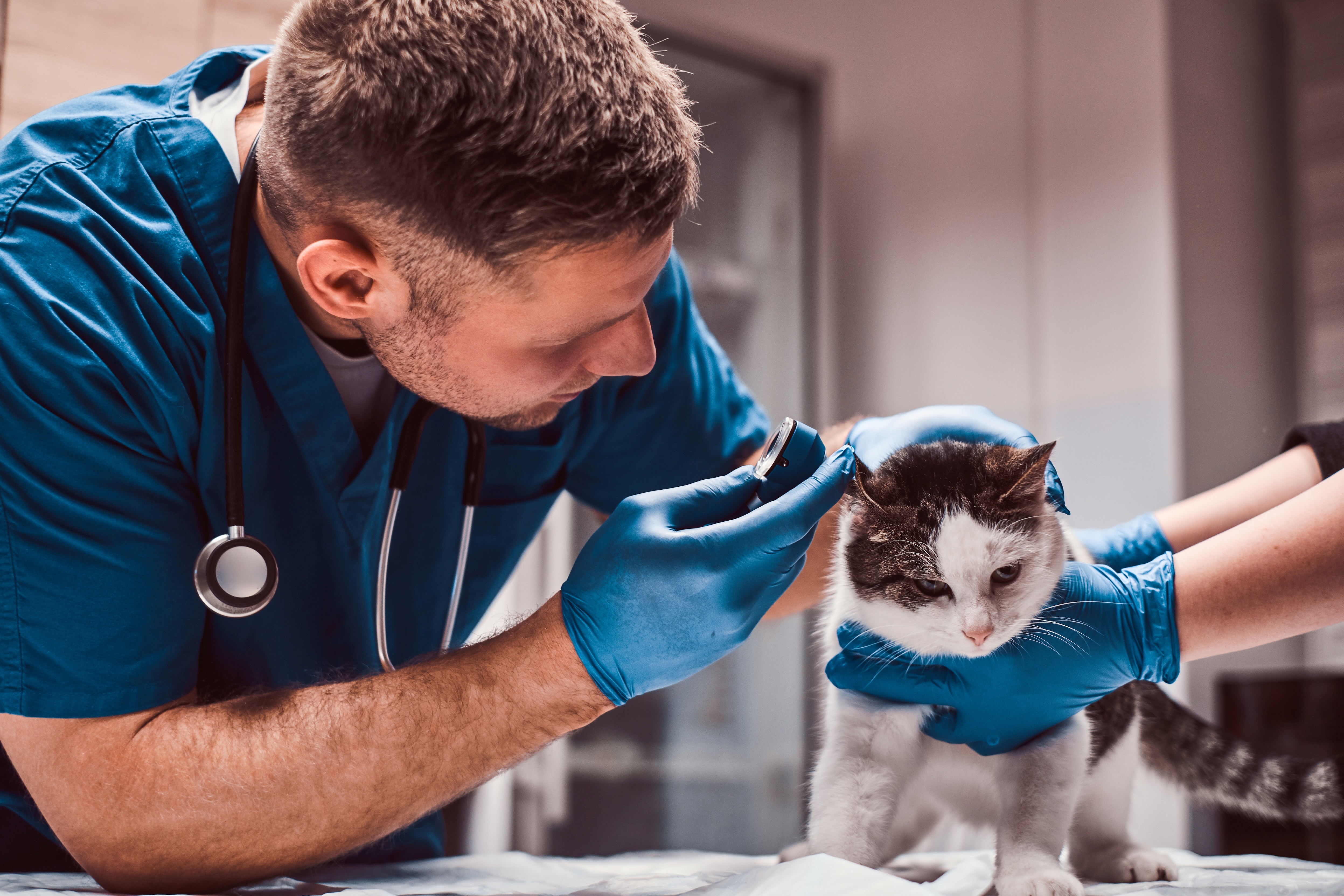
Are you a team member in a veterinary practice?
Are you a pet parent planning a trip with your furry pal?
Your Guide to the APHIS 7001 Health Certificate for Pet Travel
Planning a trip with your pet? The APHIS Form 7001 health certificate is a super important document for your furry friend's journey. Think of it as their passport, confirming they're healthy and ready to fly.
What Is the APHIS 7001 Health Certificate?
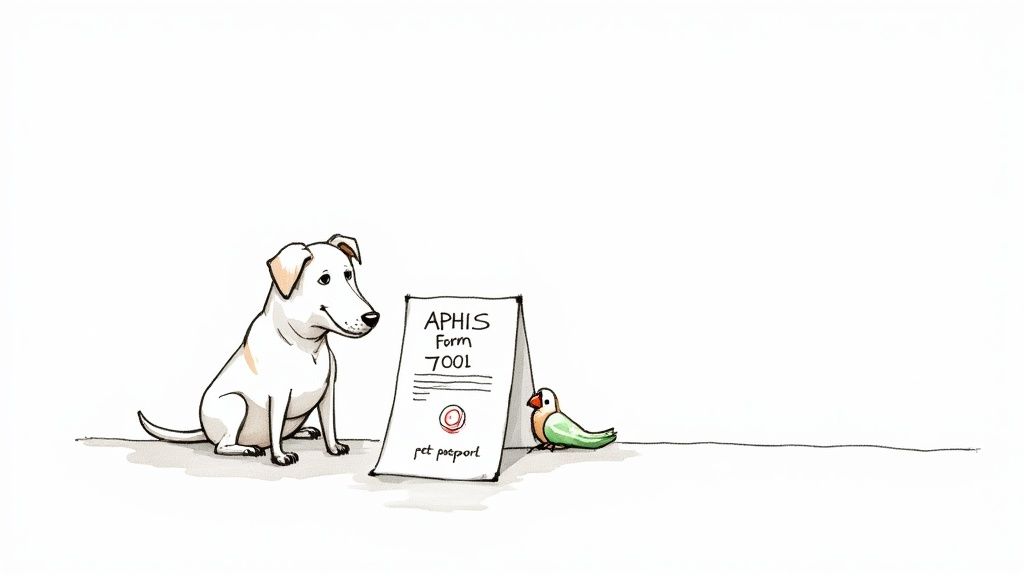
Think of the APHIS 7001 as an official thumbs-up from a vet. It’s a standard form that tells airlines and border officials one simple thing: your companion is in good health and isn't carrying any contagious diseases.
This form is often a must-have for most international trips and even for some domestic flights.
To get a better handle on the APHIS 7001, here’s a quick summary of what it covers and why it’s so important.
APHIS Form 7001 At a Glance
Feature | Description |
|---|---|
Official Name | United States Interstate and International Certificate of Health Examination for Small Animals |
Primary Purpose | To help prevent the spread of animal diseases across state and international borders. |
Who Issues It? | Must be filled out and signed by a USDA-accredited veterinarian. |
Key Information | Includes pet's identity (breed, age, microchip), vaccination records (especially rabies), and a statement of good health. |
When It's Needed | Often required for international travel and many domestic flights within the United States. |
Endorsement | Usually needs an official endorsement (a stamp and signature) from a USDA-APHIS office after the vet signs it. |
This table shows how the form acts as a reliable snapshot of your pet’s health, making the process more predictable for everyone involved.
The Purpose Behind the Paperwork
At its heart, the APHIS 7001 is all about protecting public and animal health. By checking that your pet is healthy and up-to-date on vaccinations, countries can help prevent the spread of diseases like rabies across their borders.
This form streamlines what could otherwise be a confusing process. It creates a universal standard that everyone—from your vet at home to the customs agent at your destination—can understand. It's a specific, travel-focused medical record, and understanding broader medical record documentation standards can help explain its role.
Who Can Issue This Certificate?
Here's a key detail: you can't get this form from just any veterinarian. Only a USDA-accredited veterinarian is authorized to fill out and sign an APHIS 7001.
These vets have special training to understand the complex rules of animal travel, both in the U.S. and abroad. They know exactly what's needed to get it right.
In short, the form serves three main functions:
Verifies Identity: It confirms your pet's details are correct, from their breed and age down to their microchip number.
Confirms Health: It officially states that your pet is free from signs of infectious or contagious diseases.
Documents Vaccinations: It provides proof of all required vaccinations, with a major focus on the rabies vaccine.
Getting this document right is key to making sure your pet’s journey is as smooth and stress-free as paws-sible. If you'd like to learn more, check out our deep dive into getting a pet health certificate for travel.
When Is the APHIS 7001 Form Required for Travel?
Figuring out when you need an APHIS 7001 health certificate can feel like a puzzle. The simplest answer is this: if your pet is leaving the United States for another country, this form is almost always a part of your travel plans.
Think of it as the main document for international pet travel. It’s the gold standard that most countries recognize and often ask for before they’ll welcome your furry friend. Even if your destination has its own special health form, they may still ask for the APHIS 7001 as a backup, confirming your pet's health by U.S. standards.
International Travel: The Main Event
The main purpose of the APHIS 7001 is for any pet traveling from the U.S. to another country—whether it's a dog, cat, or another small companion animal. This isn't just about paperwork; it's a global effort to prevent the spread of animal diseases, ensuring that pets arrive healthy and pose no risk to local animals.
It’s no surprise that North America makes up a large part—around 38%—of the global pet travel health certificate market. This is mainly driven by the common use of the APHIS 7001 for international trips. It reflects high pet ownership rates—where over 70% of U.S. households have pets—and a culture of traveling with companions.
The APHIS 7001 acts as your pet’s official health passport for global travel. It's the key that unlocks entry into most countries by providing a standardized, government-backed statement of health and vaccination status.
Domestic Flights and Airline Rules
This is where things can get a little tricky. While the APHIS 7001 is mainly for international and interstate travel, you might find yourself needing one for a simple flight from New York to California. Why? It often comes down to individual airline policies.
Many airlines require a recent health certificate for all pets traveling in the cargo hold, and sometimes even for those in the cabin. They do this for a few key reasons:
Consistency: It gives their staff a single, uniform document that they know how to read and check quickly.
Liability: It shows the airline did its part to make sure the animal was fit for travel before the flight.
Peace of Mind: It helps ensure a safe environment for all animals traveling on the plane.
Because the APHIS 7001 is a federal form, it’s often the go-to document for airlines, even if a simple state-level certificate might be enough. To avoid any last-minute surprises at the airport, always check your airline's specific pet travel policy. The rules can vary a lot, and it's always better to be over-prepared. For a deeper look into what's needed for trips abroad, you can also explore our guide on international pet travel requirements.
A Step-By-Step Guide to Getting Your Certificate
Figuring out the paperwork for your pet's trip can feel overwhelming, but it doesn't have to be a "ruff" experience. Getting an APHIS 7001 health certificate is a straightforward process. If you follow these steps, you can help make sure your companion has everything they need for a smooth journey.
The whole thing revolves around one key person: a USDA-accredited veterinarian. This isn't just any vet. They have special federal training and are authorized to handle the tricky requirements of animal travel. Finding one is your very first move.
Step 1: Find a USDA-Accredited Veterinarian
Before you do anything else, you need to find a vet who is officially accredited by the USDA. Your regular vet, no matter how great they are, can't sign this form unless they have this accreditation. The good news is the USDA has an online lookup tool that makes it easy to find an accredited vet near you.
Seriously, this step is a must. If you submit a form signed by a non-accredited vet, it will be rejected, and your travel plans could be thrown into chaos.
Step 2: Schedule the Health Examination
Once you've found the right vet, it's time to book the appointment. And timing is everything. Most airlines and countries ask that the health certificate be issued within 10 days of your travel date. You'll need to schedule the exam within this tight window, but try not to leave it until the last possible second.
When you call to book, make it very clear that you need an exam for an APHIS 7001 health certificate for travel. This lets the clinic know to set aside enough time and get the specific paperwork ready.
Step 3: Gather Your Pet's Documents
To make the vet visit go as smoothly as possible, you’ll need to bring a few key documents with you. Think of it as putting together your pet's travel portfolio.
Here’s what you should have on hand:
Proof of Rabies Vaccination: This is a big one. Make sure the certificate is current and includes all the details, like the vaccine manufacturer, lot number, and the date it was given.
Other Vaccination Records: Bring the records for any other shots your pet has had.
Microchip Information: If your pet has a microchip, you'll need the number and the date it was put in.
Your Travel Itinerary: Your vet needs to know where you're going and when so they can check that all the destination's rules are met.
The process might seem like a lot of moving parts, but this flow chart helps show how it all comes together.
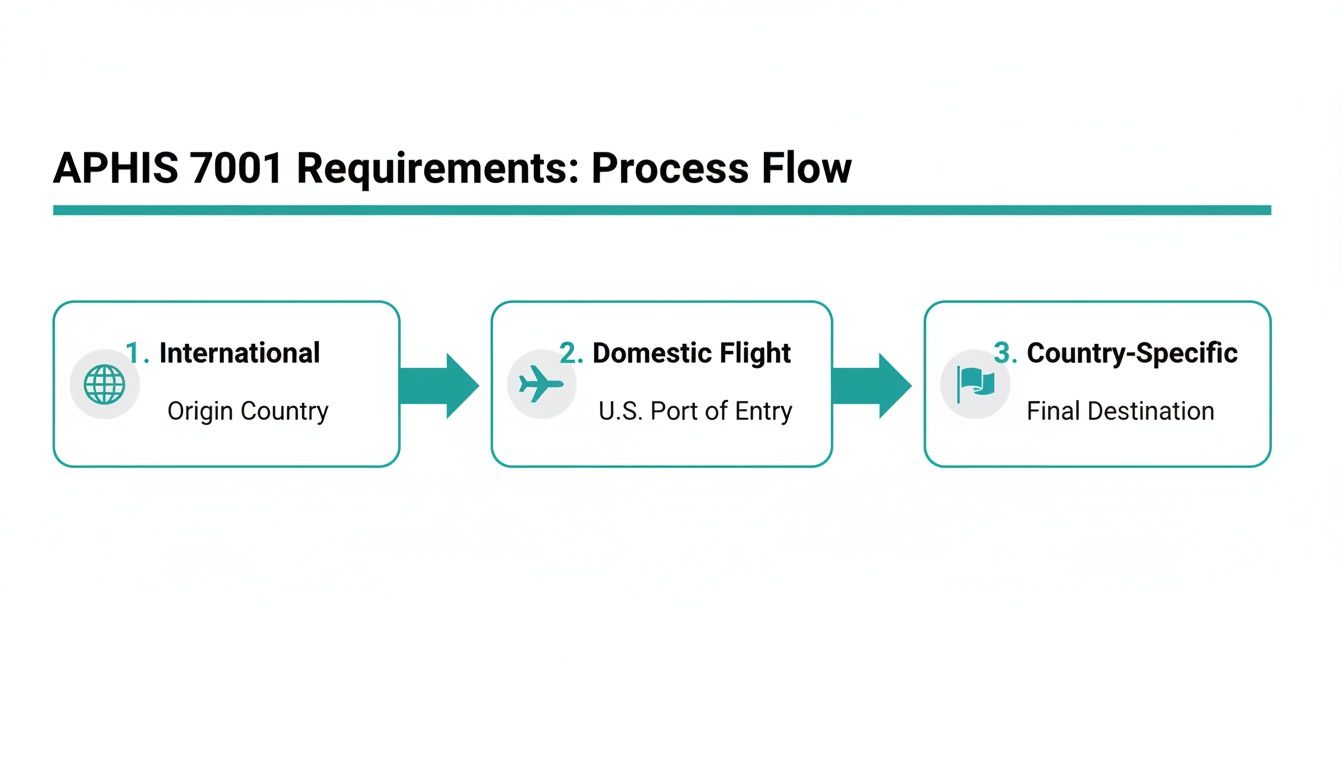
As you can see, the APHIS 7001 often serves as the core document, whether you're traveling internationally or just meeting specific airline or state requirements.
Step 4: The Vet Completes the Form
During the appointment, your accredited vet will give your pet a thorough check-up to confirm they are healthy and free from any contagious diseases. They'll then carefully fill out the APHIS Form 7001, putting all the important information from your pet’s records onto the official form.
Before your vet signs it, take a moment to double-check every single detail with them. A simple typo in your pet's name or a wrong digit in the microchip number can cause major headaches down the line.
Step 5: Obtain the USDA Endorsement
This is the final seal of approval. After your vet signs the form, it usually has to be sent to a USDA Animal and Plant Health Inspection Service (APHIS) office for endorsement. This is where a federal official reviews all the paperwork and applies a special raised seal or stamp, making the document official for travel.
To dive deeper into this important final step, check out our guide on how to get a USDA-endorsed pet health certificate.
Common Mistakes Pet Owners Make and How to Avoid Them
Getting an APHIS 7001 health certificate can feel like a high-stakes scavenger hunt. A small misstep can unfortunately lead to major travel delays or, in a worst-case scenario, your pet being denied entry. Let's walk through the most common pitfalls so you can sidestep them entirely.
One of the biggest tripwires is using the wrong veterinarian. Your family vet might be the best in town, but if they aren't USDA-accredited, their signature on the form is not considered valid for this purpose. This one detail can bring your entire travel plan to a grinding halt before it even gets off the ground.
Timing is another common slip-up. The rules can be strict, with many countries requiring the health exam to happen within 10 days of travel. If you wait too long to book the appointment or miscalculate the dates, your certificate could be out of date before you even pack your bags.
Inaccurate or Incomplete Information
On this form, the details are everything. A simple typo in your name, one wrong digit in your pet’s microchip number, or an incomplete address can create a mismatch with your passport or flight itinerary. That’s an instant red flag for airline staff and border officials.
Before you walk out of the vet's office, pause and review every single field on that form. Really.
Check Names and Addresses: Make sure the owner's information on the certificate is an exact match to what's on your passport and plane tickets.
Verify Pet Details: Double-check your pet's name, breed, age, and especially the microchip number. Confirm it's the right number and that it's scannable.
Confirm Vaccination Dates: Are all the dates, especially for rabies, recorded clearly and correctly? Any mix-up can cause problems.
Think of the APHIS 7001 as an official document, because that's what it is. Every piece of information should be precise and easy to verify. Taking five extra minutes to proofread can save you hours of panic at the airport.
Not Researching Destination Rules First
Assuming the APHIS 7001 is a golden ticket for every country is a risky gamble. Many destinations have their own unique import rules, like specific parasite treatments, blood tests, or their own special health forms that you have to use instead of or in addition to the 7001.
It's a "ruff" realization to discover you needed a completely different form after you've already had the 7001 endorsed by the USDA. Always, always check the official pet import requirements for your destination country well in advance. The USDA APHIS website has a search tool with country-specific guidelines, which is the perfect place to start. This one proactive step helps you get the right paperwork done, the right way, the first time.
Modern Tools to Make the Health Certificate Process Less Painful
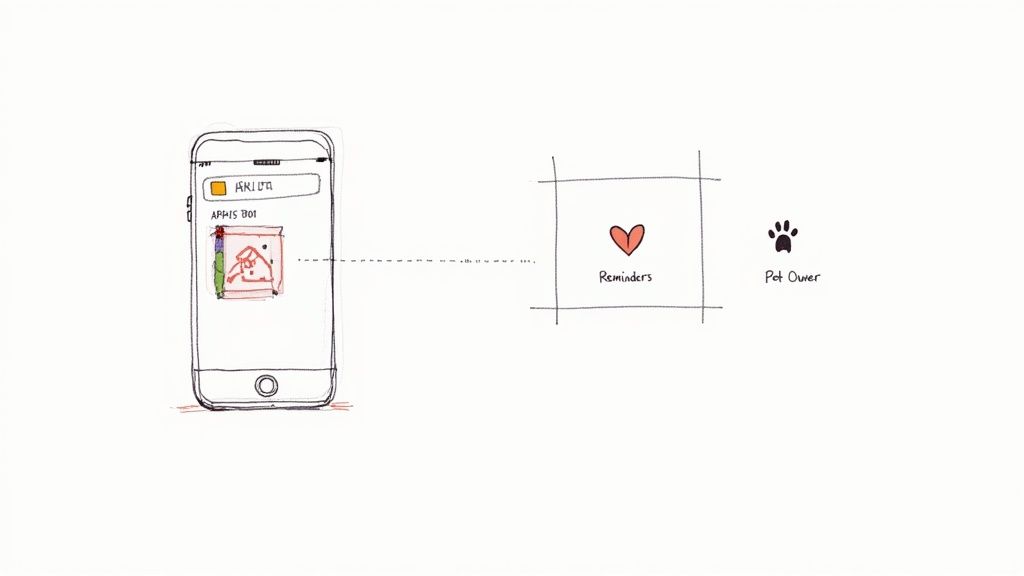
Let's be honest: chasing down paper forms to get an APHIS 7001 health certificate can feel like a thing of the past. Thankfully, technology is finally catching up and making this complex process much easier for both pet owners and veterinarians.
Modern platforms are designed to take the guesswork out of pet travel. Think of them as a central hub where all your pet's travel documents—vaccination records, microchip details, health certificates—can be stored, managed, and shared securely. No more frantic digging through folders for a crucial piece of paper.
Bringing Pet Travel into the Digital Age
This shift toward digital tools is all about making the process smoother and, most importantly, reducing the chance of human error. Instead of relying on manual checklists and sticky notes, these platforms offer automated help that keeps everyone on the right track.
A digital approach gives you a few key advantages:
Centralized Document Management: Every health record, certificate, and travel detail is kept in one secure, easy-to-access place.
Automated Reminders: Get timely alerts for key deadlines, like when to schedule the final vet exam or when to submit forms for USDA endorsement.
Clearer Communication: It helps the connection between you and your vet, making sure everyone has the latest information without confusion.
The whole point of these modern tools is to transform a stressful, paper-heavy process into a clear, manageable workflow. By organizing everything, they help ensure every single box is checked correctly and on time.
How Digital Platforms Help Everyone Involved
These platforms aren't just for pet owners. They create a much more efficient system for veterinary practices, too. Vets can manage travel paperwork for multiple pets at once, track progress, and send clients updates without getting bogged down in endless phone calls. For an in-depth look at organizing your pet's journey, our pet travel planner offers more great tips.
This efficiency is a win-win. It saves the vet clinic time and cuts down on the risk of costly mistakes that could derail a trip. For pet owners, it brings peace of mind, knowing that a dedicated system is handling all the tricky details.
Ultimately, these tools help ensure your completed APHIS 7001 certificate is accurate and submitted correctly. To make sure your documents get where they need to go, it's helpful to understand how organizations distribute information to regulatory authorities securely and efficiently. This focus on security and efficiency is key to a stress-free travel experience, letting you focus on the adventure that awaits you and your furry co-pilot.
Common Questions About APHIS Form 7001
Got a few questions still bouncing around? You’re not alone. The whole APHIS 7001 health certificate process can feel a bit tangled at first, but we’ve pulled together the most common questions to give you straightforward answers. Let's clear up those final details so you can move forward with confidence.
How Long Is the APHIS 7001 Health Certificate Good For?
This is probably the most important timing question we get. As a general rule, an APHIS Form 7001 is valid for 30 days from the date your accredited veterinarian signs it. That seems like a pretty generous window.
But here’s the catch. You have to follow the rules of your destination. Many countries and airlines are much stricter, often requiring the certificate to be issued no more than 10 days before you land. Always let the destination country's requirements be your guide.
The "10-day rule" is a common sticking point in international pet travel. Missing this deadline is one of the top reasons for travel plans going sideways. Before you even book the vet appointment, confirm the exact timing with both your airline and the destination country.
Can My Regular Vet Fill This Out?
It's a common question, but the answer is "only if they are USDA-accredited." The APHIS Form 7001 isn't just another vet form; it's an official federal document. Only veterinarians who have gone through specific training and received accreditation from the USDA can fill it out and sign it.
This is a firm rule. If a non-accredited vet signs the form, the USDA endorsement office will reject it. The very first thing you should do is confirm your vet has this specific credential.
Do I Need This Form for Travel Inside the United States?
The answer to this is "it depends." The APHIS 7001 was designed for international travel, but it sometimes comes up on domestic trips, too.
Here’s when it might be needed:
Airline Policies: Some airlines ask for a health certificate for all pets, especially if they're traveling in cargo. They often default to the APHIS 7001 because it's a standard form their staff recognizes.
State-Specific Rules: A few states—Hawaii is the best-known example—have very strict animal import rules to protect their local environment. The APHIS 7001 is often part of their required entry paperwork.
The best strategy is to never assume. Check the policies for your airline and the state animal health office where you're headed. A little prep work saves a lot of headaches at the airport.
What’s the Difference Between a Vet “Issuing” and the USDA “Endorsing” the Form?
This two-step process trips a lot of people up, but the difference is key. Think of it like getting a passport.
Issuing the Certificate: This is Step One. Your USDA-accredited veterinarian examines your pet, fills out the APHIS Form 7001 with all the required details, and signs it. At this point, you have a completed form, but it's not yet officially recognized by other governments.
Endorsing the Certificate: This is the final, official stamp of approval. You send the completed and signed form to a USDA APHIS office. There, a federal official reviews every detail. If it's all correct, they apply an official seal or stamp. This endorsement is what makes the certificate an official travel document.
Without that final USDA stamp, the form is just a piece of paper. The endorsement is the government's seal of approval that officially clears your pet for travel.
Juggling pet travel paperwork can be a headache, but you don’t have to figure it all out on your own. Passpaw gives you a simple, digital home to manage all your pet’s travel documents, stay connected with your vet, and keep track of those critical deadlines. Take the stress out of your next adventure and make the journey smooth for your best friend. Learn more at Passpaw.
More articles
From regulatory changes to best practices for veterinarians and pet owners, our resources keep you ahead of the curve.