Are you a team member in a veterinary practice?
Are you a pet parent planning a trip with your furry pal?
ISO Compliant Microchips: A Pet Parent's Guide to International Travel
When it comes to international pet travel, a tiny piece of tech plays a massive role: the ISO compliant microchip. Think of it as a universal passport for your pet, making sure their unique ID can be read by a standard scanner almost anywhere in the world. This global standard is the key to modern, safe international pet travel.
What Are ISO Compliant Microchips?
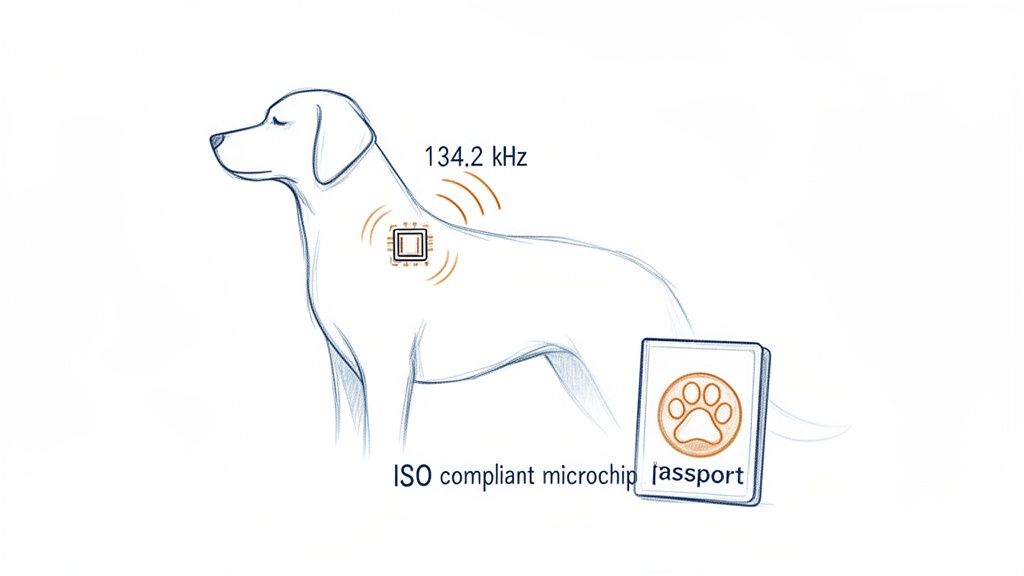
The best way to understand an ISO compliant microchip is to compare it to a universal phone charger. You can take it to nearly any country, plug it in, and it just works. Older, non-compliant chips are like carrying around a bag full of different adapters—you might have the right one, or you might find yourself out of luck at a critical moment.
This tiny device, no bigger than a grain of rice, provides enormous peace of mind. It’s a simple solution to a complex problem: how to make sure a pet can be identified consistently across international borders.
The Universal Language of Microchips
The whole system is built on standardization. For a microchip to be considered "ISO compliant," it has to meet two very specific technical standards set by the International Organization for Standardization.
It must send out a signal at a frequency of 134.2 kilohertz (kHz). This is the globally agreed-upon radio frequency for animal identification.
It must have a unique 15-digit identification number that contains no letters.
A chip has to meet both of these rules to be truly ISO compliant. This is a crucial detail for any pet owner or veterinarian preparing for international travel. A chip with the right frequency but the wrong number of digits (or vice versa) can cause serious delays at the border.
Adopting these standards has become a necessity. ISO-compliant microchips are now the global benchmark, especially as regions like Europe and Asia have fully standardized their systems. The 134.2 kHz frequency now accounts for 46.6% of the global pet ID microchip market, a share driven almost entirely by its requirement for international travel.
An ISO compliant microchip is the first and most critical step for a smooth international journey. It helps ensure that no matter where a pet travels, their unique ID number can be read, linking them to their vital health documents and owner information.
ISO vs. Non-ISO Microchips at a Glance
To make it even clearer, here’s a quick comparison between the globally accepted ISO standard microchips and the older, non-standard versions.
Feature | ISO Compliant Microchip | Non-ISO Microchip |
|---|---|---|
Frequency | 134.2 kHz | 125 kHz or 128 kHz |
ID Number Format | 15 digits (all numeric) | 9 or 10 digits (can be letters and numbers) |
Global Readability | High; readable by standard scanners worldwide | Low; requires a specific or universal scanner |
Travel Suitability | Needed for most international travel | Often not accepted at international borders |
This table shows why sticking with the ISO standard is so important—it’s all about ensuring compatibility when it matters most.
Why This Matters for Your Pet’s Journey
When a pet lands in a new country, a border official will scan them to check their identity. The number that pops up on the scanner must match the number on all official travel documents, like the international health certificate.
This is where ISO compliance becomes so important. If the official’s scanner can't read the chip, the paperwork is essentially worthless, no matter how perfectly it was filled out. This simple technical snag can cause immense stress, costly delays, or even quarantine for the pet and owner.
For veterinarians using platforms like Passpaw to manage travel documents, checking that a pet has a scannable, ISO compliant microchip is the first step. If you're new to the process, it's helpful to understand the steps involved in how to get a pet passport.
Why Microchip Compliance Is More Important Than Ever
Not long ago, taking a pet on an international flight was rare. Today, our pets are joining us on overseas moves and extended vacations more than ever. This has pushed ISO compliant microchips from a niche concern into an absolute must-have for safe and successful travel.
As more pets cross borders, countries have naturally strengthened their regulations to protect animal health and public safety. What this means is that a universal, scannable identification system isn’t just a good idea anymore—it's often required for entry into many nations.
The market data tells the same story. The global veterinary microchips market, which is led by ISO-compliant systems, is booming. It was valued at USD 686.3 million in 2023 and is projected to hit USD 0.82 billion by 2025—that's a 19.4% jump in just two years.
The Story Behind the Numbers
Those numbers aren't just abstract figures; they reflect a fundamental shift in how we view our pets. They show a collective commitment to keeping them safe, especially when taking them far from home. A compliant microchip is the single most important, permanent link to a pet's owner and their health records, no matter where they are in the world.
This trend directly impacts veterinary practices. When clients plan an international trip, their first call is often to their trusted veterinarian. Suddenly, your team is on the front lines, navigating the complex paperwork for international health certificates.
For a veterinary practice, the rise in microchipped pets is more than just a procedural update. It represents a growing need for efficient, error-free workflows to manage the increasing demand for international travel documentation.
This is where purpose-built tools become essential. Platforms like Passpaw are designed to help clinics manage this new reality by organizing the entire travel certification process. By providing a clear system for checking ISO compliant microchips, tracking vaccination deadlines, and generating accurate documents, Passpaw lets your team serve globetrotting clients without getting buried in administrative work. It makes sure every detail, starting with that crucial microchip, is right from the start.
A Growing Service Area for Vets
Offering support for international travel is no longer a fringe service; for many clinics, it's becoming a core part of modern veterinary care. Being prepared is key. This means having the right scanning equipment on hand and, just as importantly, well-defined internal processes that your whole team can follow.
By embracing this shift, veterinary practices can offer immense value to their clients, turning what could be a deeply stressful process into a smooth journey. It’s all about being ready to confidently answer that call when a client says, "We're moving to Paris, and we need your help."
How to Verify a Pet’s Microchip Is ISO Compliant
Confirming your pet has an ISO-compliant microchip is a crucial first step for any international trip. But how do you actually check? The good news is that the process is simple and doesn't require any technical expertise on your part.
The most reliable method is to have a veterinarian or shelter professional scan your pet with a universal microchip scanner. These devices are built to read multiple frequencies, including the 134.2 kHz frequency used by all modern, ISO-compliant chips. Don’t hesitate to ask your vet to perform a quick scan during a routine check-up, especially if you know travel is on the horizon.
When the scanner finds the chip, it will display a number. This is the moment of truth.
Cracking the Code: The 15-Digit Number
The number that appears on the scanner is your single most important clue. An ISO-compliant microchip will always follow a very specific format.
Look for a 15-digit number. This is the universal standard for compliant chips.
Ensure it contains only numbers. You shouldn’t see any letters or other characters.
If the scanner displays a 9- or 10-digit number or a code with letters, you're almost certainly looking at a non-compliant chip. These older chips operate on a different frequency (typically 125 kHz) and won't be picked up by the standard scanners used at most international ports of entry.
Think of the 15-digit ISO number as a universal key. If your pet's chip doesn't have it, their identity can't be confirmed by border officials, and their travel documents are essentially useless at that moment.
Getting this simple check done early can save you a mountain of stress. It’s far better to discover a microchip issue months before a trip than at the airline counter.
Pro Scanning Tips for a Successful Read
Sometimes, a scanner might not detect a chip on the first try. This doesn't automatically mean the chip is faulty or missing. Microchips can occasionally move a short distance from where they were originally implanted between the shoulder blades.
If a chip isn't found right away, here’s the proper technique:
Scan Slowly: The scanner should be moved over the pet’s entire body in a slow, S-shaped pattern. Start at the neck and work down the back and sides.
Check Common Spots: Pay extra attention to the shoulders, chest, and even down the front legs, as these are common places for chips to settle.
Use a Quality Scanner: Make sure your vet is using a modern, universal scanner capable of reading multiple frequencies.
Once you have that number, your next task is to see what information is connected to it.
Using Online Microchip Lookup Tools
With the 15-digit number in hand, you can use an online lookup tool. The American Animal Hospital Association (AAHA) offers a universal pet microchip lookup tool that queries the databases of most major pet recovery services.
This lets you verify that the chip is registered and, most importantly, that your contact information is correct. While this lookup doesn’t confirm ISO compliance on its own, it’s a critical step to ensure your pet can be identified and returned to you if they get lost. For a complete overview of what else is needed, you can learn more about international pet travel requirements in our detailed guide.
By following these simple steps—scanning for the 15-digit number and checking its registration—you can confidently determine if your pet’s microchip is ready for the world stage.
What to Do When a Pet’s Microchip Is Not Compliant
Finding out a pet’s microchip isn’t compliant for international travel can feel like hitting a major roadblock. It’s a stressful discovery, but thankfully, there are clear, vet-approved solutions to get things back on track. The key is to act quickly and well ahead of your travel date.
A non-compliant chip isn’t a dead end. Instead, it’s a decision point with a few safe and effective paths forward. Each option helps a pet get properly identified, clearing the way for a smooth journey.
The process starts with a scan. If the scanner picks up a 15-digit number, the next step is to confirm the pet’s details in a registry. If the chip can't be read or doesn't have the right number format, you’ll need to choose one of the solutions below.
Option 1: Implant a Second, Compliant Microchip
The most common and recommended solution is to have your veterinarian implant a second, fully ISO compliant microchip. While implanting a second chip might sound unusual, it's a completely safe and standard procedure.
The new chip will have the correct 15-digit number and operate on the universal 134.2 kHz frequency. Your pet can have two microchips without any issue—the original chip is simply left in place, and the two won't interfere with each other. The new ISO chip becomes the official identifier for all international travel paperwork.
This approach offers total peace of mind, but there’s one critical rule to follow: the ISO compliant microchip should be implanted before the pet’s rabies vaccination. If the vaccine comes first, it could be an issue for some travel authorities, possibly forcing you to restart the process.
Option 2: Replace the Existing Microchip
In rare cases, a vet might suggest removing the non-compliant chip and replacing it with a new one. This is far less common because removal is a more involved procedure than implantation.
This option is typically only considered if the old chip has moved to a spot where it could cause discomfort or interfere with a medical procedure. Your veterinarian is the only one who can determine if this is a necessary or appropriate course of action for your pet.
A Critical Reminder: No matter which option you choose, the new microchip number must be registered immediately with your current contact information. An unregistered chip is useless for identification.
Option 3: Travel with a Personal Scanner
A third option is to carry your own microchip scanner that can read your pet's non-compliant chip. The idea is to offer it to border officials if their universal scanner fails. However, this is a risky strategy with major drawbacks.
No Guarantee of Acceptance: Border officials are not required to use your personal device and may refuse.
Potential Delays: This approach almost always leads to longer inspections, extra questions, and potential travel hold-ups.
Risk of Entry Being Denied: If officials cannot verify the microchip with their own equipment, they may have the right to deny your pet entry into the country.
Because of these uncertainties, carrying a personal scanner is not a recommended strategy. It injects a level of risk into a process that demands certainty. For a stress-free journey, especially to strict destinations like the UK, ensuring full compliance beforehand is the only reliable choice. Our guide on bringing dogs into the UK offers more detail on these requirements.
Ultimately, working with your veterinarian to implant a second ISO compliant microchip is the safest and most reliable way to resolve a compliance issue, ensuring your pet is ready for their global adventure.
Recording Microchip Data Accurately in Passpaw
Once you’ve scanned and confirmed a pet has a working ISO compliant microchip, the job’s not quite done. Now comes the part where precision is everything: getting that data recorded perfectly. A single misplaced digit can cause just as much chaos at the border as a non-compliant chip.
This is where a tool like Passpaw helps your team build a reliable, error-free record, making sure every travel document rests on a solid foundation. Think of it as the digital version of "measure twice, cut once." A few extra moments spent on verification will save you and your client from hours of frantic calls and potential travel nightmares.
The Core Data Points for Your Records
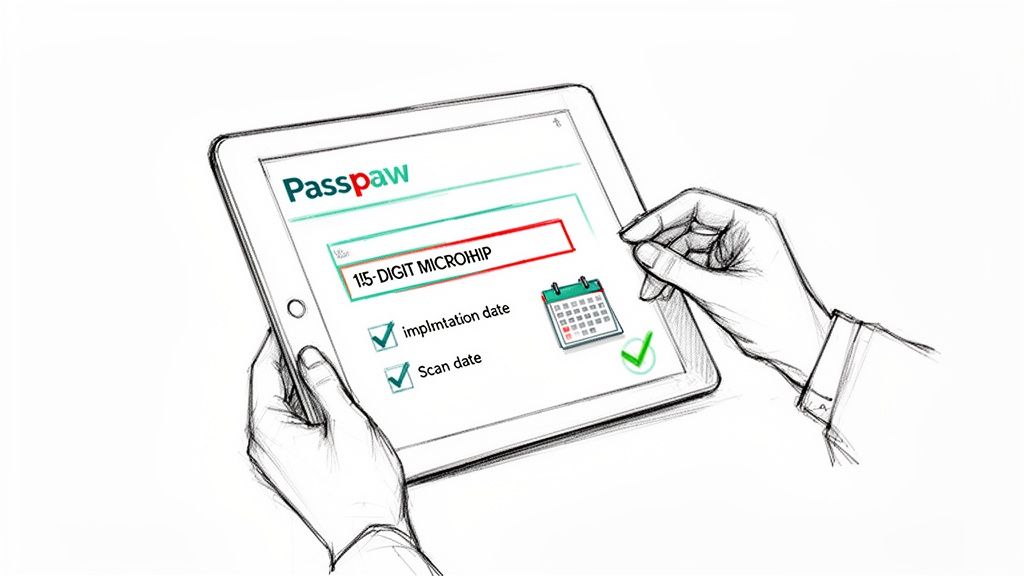
When you're creating or updating a pet’s profile in Passpaw for an international trip, there are three key pieces of microchip information. These details form the bedrock of the pet’s identity on all official health certificates.
The 15-Digit Microchip Number: This is the big one. The full, 15-digit number needs to be entered exactly as it reads on the scanner.
Implantation Date: You must record the exact date the ISO compliant microchip was implanted. This date is critical because it needs to come before the pet’s rabies vaccination.
Scan Date: This is the date your practice most recently scanned the chip and confirmed it was present and working properly.
Getting this right from the start is the single best thing you can do to prevent headaches down the road. It’s what separates a smooth process from a stressful one.
Best Practices for Error-Free Data Entry
A simple typo in that 15-digit number can easily invalidate an entire travel packet. To sidestep this common but costly mistake, build a solid "scan-and-verify" workflow into your practice.
Scan, Don't Type: Whenever you can, use a scanner that inputs the number directly into the patient's record. This is the fastest way to eliminate human error.
Bring in a Teammate: A two-person check is a simple but powerful tool. Have one person read the number aloud from the scanner while another confirms it on the screen.
Print and Confirm: After entering the data, print a summary and have the pet owner physically review and sign off on the microchip number. This creates another layer of verification and shared responsibility.
Having this information neatly structured in a pet's profile means every document you generate automatically pulls the correct, verified details. No more manual data entry, and no more last-minute scrambles.
By standardizing how you enter this data, you turn a major point of failure into a source of confidence. An accurate digital record is the cornerstone of a successful international health certificate.
Using Passpaw to Support Client Compliance
Your job isn’t over once the chip is documented. The pet owner still has one more crucial step: registering the chip with their current contact information. An unregistered chip is like a key with no door to unlock—it’s essentially useless if the pet gets lost.
This is where Passpaw can become a fantastic communication partner for your clinic.
Automated Reminders: Use the platform’s communication tools to send automated emails or texts reminding the client to register their new ISO compliant microchip.
Educational Templates: Create simple templates that include links to major pet recovery registries and clear, step-by-step instructions on how to complete the registration.
Centralized Document Hub: Encourage clients to upload their microchip registration confirmation right into their pet’s Passpaw profile. This keeps every single travel-related document together in one secure, accessible place.
By helping your clients nail this final step, you ensure the microchip can do its job: keeping their pet safe and identifiable, no matter where in the world they go. If you want to see how these tools can improve your clinic’s workflow, you can learn more about the features Passpaw offers to support both your team and your traveling clients.
Your Final Checklist for a Compliant Journey
Getting a pet ready for an international trip can feel like a massive undertaking, but making sure their microchip is compliant doesn't have to be a headache. Let's pull everything together into one final checklist.
Think of this as the final pre-flight check for your furry co-pilot. Getting these details right from the start is the surest way to prevent any stressful surprises at the airport or customs. A bit of focused preparation now paves the way for a smooth and wonderful trip later.
The Essential Compliance Steps
Before you even think about packing the toys and treats, run through these crucial actions. This checklist is essential for both pet owners and the veterinary teams preparing the travel documents.
Scan with a Universal Scanner: First things first—confirm the microchip is actually there and readable. A universal scanner is designed to read multiple frequencies, including the 134.2 kHz standard required for ISO-compliant microchips.
Verify the Number Format: Once you get a read, look closely at the number on the scanner's display. It must be a 15-digit number containing no letters. That's the unmistakable signature of an ISO-compliant chip.
Update Registration Details: A microchip is worthless if it leads to outdated information. Log in to your pet's microchip registry and make sure your name, current phone number, and address are all correct. This is absolutely critical if you and your pet ever get separated.
Confirm Destination Requirements: Every country plays by its own rules. Well before your travel date, double-check the specific microchip and entry regulations for your destination country. Don't assume anything.
A compliant microchip is the very foundation of your pet's travel paperwork. It's the one thing that uniquely links your pet to their health records, their vaccinations, and most importantly, to you.
By working through this list methodically, you can be confident that you’ve covered the single most important step for international travel. For veterinary teams using Passpaw, recording these details accurately in the platform ensures every health certificate you generate is correct, saving valuable time and preventing costly errors down the line.
Your Pet Microchip Questions, Answered
We’ve covered a lot of ground on ISO-compliant microchips, but you probably still have a few questions. That’s completely normal.
Here are some quick, clear answers to the most common queries we hear from both pet owners and veterinary teams. Think of it as a final "paws" for thought before the big trip.
Can a Pet Have Two Microchips?
Absolutely. It might sound a bit odd, but giving a pet a second microchip is a very common and perfectly safe fix when the original chip isn't ISO compliant.
A vet simply implants the new, compliant chip, and the old one is left right where it is. They don’t interfere with each other at all. When it comes time for the travel paperwork, just be sure to record both chip numbers. The health certificate should clearly note which number is for the ISO-compliant microchip, as that’s the one travel officials will be looking for. It's a standard, reliable solution.
What Happens If a Pet’s Microchip Moves?
It’s pretty common for a microchip to move a little from its original spot between the shoulder blades. We call this migration, and it’s completely harmless. The only real issue is that it can make the chip a little trickier to find with a scanner.
If a scanner doesn't pick up the chip on the first pass, the next step is to scan the pet’s entire body—slowly and methodically. Chips can sometimes end up on the side of the neck, down by the chest, or even partway down a front leg. Making a full-body scan a standard part of any pre-travel checkup is a great way to ensure the chip is found and its number is recorded correctly on all documents.
A migrating chip isn't a broken chip. Taking a moment for a thorough scan gives everyone peace of mind, knowing the pet's permanent ID can always be found.
Does a Microchip Registration Ever Expire?
The chip itself is built to last a lifetime; it never expires or needs to be charged. What does need your attention is the contact information linked to it in the registry. A chip is only as useful as the data behind it.
It's up to the pet owner to keep that information current. Before any trip, make a habit of logging into your microchip registry to double-check that your address and phone number are up to date. This simple step is critical for your pet's safety, ensuring you can be reached quickly if you get separated, no matter where you are in the world.
Managing all the details of international pet travel is a complex job, but the right tools make it infinitely easier. Passpaw is built to guide veterinary practices through the entire process, making sure every microchip is verified, every document is perfect, and every pet is ready for a safe journey. Explore Passpaw today and see how we can help your clinic and clients.
More articles
From regulatory changes to best practices for veterinarians and pet owners, our resources keep you ahead of the curve.