Are you a team member in a veterinary practice?
Are you a pet parent planning a trip with your furry pal?
Smart Client Communication Management for Vets
The most popular advice about client communication management is also the least complete: reply faster. Speed matters, but a fast answer that misses a document, hides a deadline, or leaves the client unsure about the next step only moves confusion down the road. In international pet travel, the actual service is not an empty inbox. It's a coordinated communication process that tells the right person what changed, what's due, and what happens next.
A pet travel application can involve destination rules, examinations, certificates, endorsements, corrections, and a fixed departure date. That's too much to manage through memory and scattered email threads. Practices need communication that behaves more like a well-run clinical workflow, with clear ownership, useful reminders, documented decisions, and human attention where the case becomes complicated.
Rethinking Responsiveness in Veterinary Care
A quick reply feels productive. The team clears a message, the client receives an answer, and everyone moves on. But reply time alone doesn't show whether communication worked. A client can receive a response within minutes and still misunderstand which document is missing, whether a certificate is valid for the planned journey, or who needs to take the next action.
Recent North American survey data shows the gap between what owners value and what they receive. 87% of pet owners consider useful reminders important, yet 42% report not receiving them. The same research found that 83% value easy access to pet health records, but only 36% say they have shared or accessed records with their current veterinarian (Veterinary Practice News reports the pet parent research findings). The lesson isn't that practices should send more messages. It's that messages should arrive at the moments when they help the client make a decision.
Replace inbox clearing with useful milestones
For a travel case, useful communication might be triggered by:
A new case opening: Confirm the destination, travel date, pet identity, and the person responsible for supplying documents.
A missing item: Name the exact document, explain why it matters, and show who owns the next action.
A changing requirement: Tell the client what changed and whether it affects the planned timeline.
A delayed review: Give a plain-language status update, a revised expectation, and a contact route for questions.
A deadline approaching: Explain the consequence of inaction instead of sending a vague reminder.
This approach also protects clinical conversations. Clients need to know which situations require urgent veterinary attention rather than a routine administrative message. A clear resource about when to call the vet can help practices point owners toward appropriate care decisions without turning a document workflow into a substitute for clinical advice.
Practical rule: A good message answers three questions, what changed, what should the client do, and when should they expect the next update?
A practice can use email, a portal, phone calls, or in-app chat. The channel matters less than the handoff between channels. If a client sends a question by email, calls the front desk, and receives a portal notification that doesn't reflect either conversation, the practice has created three versions of the case. A structured veterinary client communication workflow gives the team one timeline to follow and gives the client a clearer experience.
The best operational measure is therefore not “How quickly did we reply?” It's “Did the client receive the right information before the next decision point?” That shift takes communication off the treadmill and puts it on a useful track.
Bridging the Perception Gap with Standardized Workflows
Even experienced teams can leave a client with a different understanding of an appointment or travel requirement than the team intended. The problem usually isn't carelessness. Staff members work from different habits, use different phrases, and make assumptions about what the client already knows. Those small variations become costly when a case changes hands.
A five-year analysis of Partners for Healthy Pets survey data, reported by the American Veterinary Medical Association in 2025, illustrates the problem. For canine visits, 95% of veterinary staff said dental examinations were typically included, while only 77.2% of clients believed a dental examination had occurred during their dog's most recent checkup, a gap of 17.8 percentage points (American Veterinary Medical Association analysis of communication gaps). The finding isn't about dental care alone. It shows why a team can't assume that delivering information means the client understood it.
Build a workflow that supports people
Communication training has also been uneven. A survey of veterinary practitioners in the United Kingdom and United States, conducted in 2012–2013 and published in 2015, received 1,774 responses from 6,000 invitees, an overall response rate of 29.6%. Among respondents, 98% agreed that communication skills were as important as, or more important than, clinical knowledge. Yet only 41% had received formal communication training during veterinary school, while 47% had received training after graduation. Postgraduate preparation appeared more useful, with 61% saying it had prepared them well or very well to discuss pet health, compared with 35% for veterinary-school preparation (the published veterinary communication skills survey).
These figures support a practical conclusion. A warm, skilled employee remains valuable, but the system shouldn't depend on one person's memory or communication style. Standardized workflows give every team member a reliable starting point.
A useful travel workflow should include:
Named ownership: Assign each case to a person or queue, not “the front desk.”
Required fields: Capture destination, travel date, pet details, document status, and the next action.
Confirmation points: Record when the client received and acknowledged an important instruction.
Escalation rules: Route clinical questions, unclear requirements, and deadline risks to the right person.
Change tracking: Keep the original requirement and the updated requirement visible, with the date of change.
Handoff notes: Make the next step clear for the next shift or staff member.
The process should feel supportive rather than stiff. Templates should use plain language, and staff should be able to add a personal note when the situation calls for it. Resources on cross-team communication solutions can help practices think through ownership, visibility, and handoffs beyond the individual inbox.
The same principle applies to documentation. A written veterinary documentation process can turn a good conversation into a repeatable team action. When the workflow records what was requested, who owns it, and when follow-up is due, important details are less likely to slip through the kennel door.
Designing a Deadline-Driven Communication Timeline
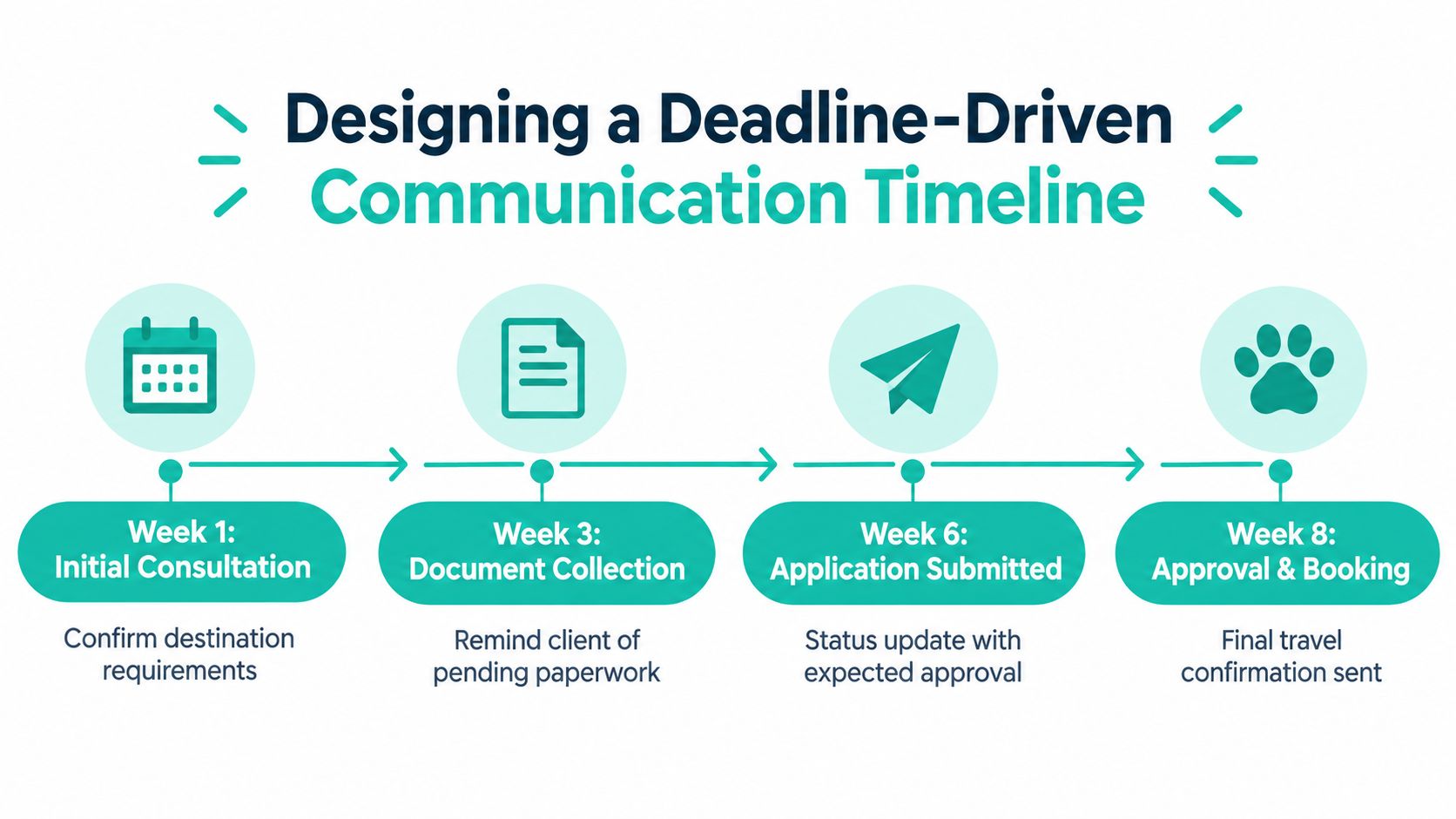
International pet travel cases can take a few weeks to many months, depending on the destination country's rules. USDA APHIS advises owners to contact an accredited veterinarian as soon as they know they will travel, which gives the practice time to open a case, confirm the itinerary, and identify dependencies before the departure date becomes urgent (USDA APHIS explains when to contact an accredited veterinarian).
Start with the travel date, then work backward. Don't begin with the date a client happens to send an email. That date is an intake event, not the organizing principle.
Map the case around consequences
A practical timeline has four layers:
The fixed date: Record the intended departure and any relevant booking details. Use it to calculate reminders and identify cases that need early review.
The required milestones: Add examinations, document collection, certificate preparation, endorsement, corrections, and final confirmation as separate events.
The client actions: For each milestone, specify exactly what the owner must provide, approve, schedule, or confirm.
The exception route: Decide what happens when a document is incomplete, a requirement changes, or a review takes longer than expected.
A signed health certificate may have a limited validity period before travel. USDA APHIS gives 30 days as an example, but the exact period depends on the destination. The certificate may also require USDA endorsement, and incomplete submissions or incorrect information can delay that process until corrections are made (USDA APHIS overview of the pet travel process). A message saying “your documents are in progress” doesn't give the owner enough information to act.
Set a visible service level
In a survey of 76 hospitals, 67% specified an expected turnaround time for secure messages, and nearly every organization with a stated policy required a response within three business days (survey of secure-message response policies). A veterinary practice can adapt that principle to administrative travel work. For example, it might acknowledge a new document request within one business day and resolve routine questions within three business days, while making clear that urgent clinical concerns use another route.
Show the client and the team the same status:
Received: The request is logged and assigned.
Waiting for client: A named document or answer is needed.
Under review: The practice or relevant authority is checking the submission.
Correction needed: The case cannot progress until a specific issue is fixed.
Ready for next step: The client knows what to expect and when.
Automation should handle predictable events, not judgment. Send a reminder when a document remains missing, a status update when a submission moves forward, and an escalation alert when the travel date approaches without a required milestone. Route unusual or high-risk cases to a named staff member who can explain the situation in human terms.
Taming the Inbox with Structured Message Templates
Digital messaging looks efficient until every message arrives as a paragraph containing several questions, missing context, and an unclear request. Then a staff member has to read for the destination, find the travel date, identify the pet, check the document history, and work out what should happen next. The client may think they sent one simple message. The practice receives a small investigation.
Research on secure messaging found that asynchronous communication can improve information flow and work organization, but lengthy, complex, ambiguous, or unsuitable messages can increase staff burden. A large Vanderbilt cohort showed how quickly usage can expand: after portal deployment, messaging represented 39.8% of outpatient interactions by 2010, up from 12.9% in 2008 (the Vanderbilt messaging cohort study). The figures come from human healthcare, but the workflow lesson applies directly to busy veterinary teams.
Turn conversations into usable fields
A travel message template should gather information in a way that helps the next person act. Keep the prompts short:
Pet identity: Name, species, and the record used for the case.
Destination: Country, transit points when relevant, and final location.
Travel date: The planned departure date and whether it has changed.
Request type: New application, missing document, correction, question, or status request.
Blocked item: The exact document or decision preventing progress.
Client action: What the owner needs to send, schedule, confirm, or clarify.
Staff action: The person or queue responsible for the next review.
The template should also classify the message. A question about an endorsement document belongs in an administrative queue. A pet showing concerning symptoms needs clinical triage and shouldn't sit behind routine paperwork.
Automate the predictable, route the unusual
Event-driven notifications work well for simple changes. If the client uploads a document, the system can confirm receipt. If a required item is missing, it can name the item. If the itinerary changes, it can prompt a requirements review. If the case has conflicting information, it should stop the automatic sequence and send the case to a person.
A virtual assistant or an external administrative service may help with routine intake, but delegation doesn't remove the need for veterinary oversight. Practices exploring administrative support can review what it means to hire a virtual dental receptionist as a comparison point, then apply the same caution to pet travel work. The right support reduces repetitive handling. It shouldn't make clinical judgments or send unclear commitments to clients.
Templates also need a human escape hatch. Let staff edit the explanation, add context, and call the owner when written communication is likely to create more confusion. A library of client communication examples can help teams write consistent updates without making every message sound like it came from a robot.
Keeping Clean Records for Team Continuity
A travel case can move between a veterinarian, technician, receptionist, practice manager, and external authority. If each person keeps part of the story in a personal inbox or memory, the owner becomes the case file. Asking the client to repeat the destination, timeline, or missing document is frustrating, and it can create conflicting instructions.
The AVMA telehealth guidelines state that all interactions should be captured in the medical record. They also call for clear expectations about communication between visits and attention to how client and patient information is collected, stored, and protected (AVMA veterinary telehealth guidelines). Practices should apply their own procedures and local requirements, but the operational principle is straightforward: a message that affects care or case progress needs a reliable home.
Record the decision, not just the contact
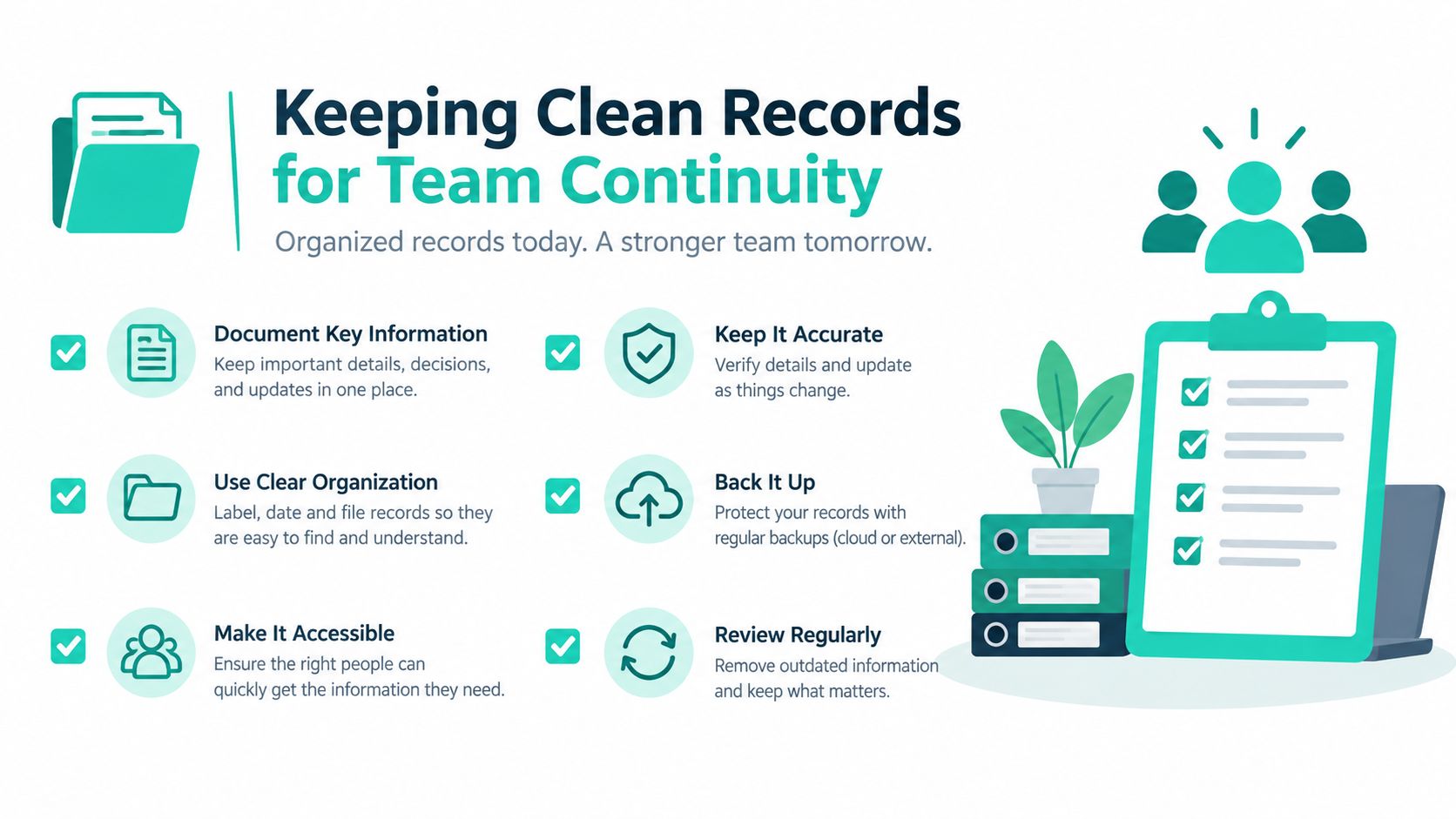
A useful communication note should let another team member understand the case without replaying the entire conversation. Record:
Date and channel: Note whether the contact was a call, email, portal message, in-person conversation, or document update.
Participants: Identify the client, staff member, and any other relevant party.
Purpose: State why the communication happened.
Information given: Separate clinical guidance from administrative travel instructions.
Client decision: Record what the owner accepted, declined, supplied, or still needs to confirm.
Next action: Name the owner, staff member, due date, and escalation route.
Attachment or reference: Link the relevant document or identify where it is stored.
Use consistent labels so staff can scan the history. For example, “TRAVEL REQUIREMENT,” “CLIENT ACTION,” and “CLINICAL NOTE” are easier to find than a series of long narrative entries. Keep corrections visible rather than deleting the history, and make sure access follows the practice's privacy procedures.
A clean record isn't about creating paperwork for its own sake. It gives the next person a safe handoff, helps the client receive a consistent answer, and shows which commitments remain open. The AVMA's ethics principles also emphasize clear sharing of clinical findings, recommended tests, risks, prognosis, and estimated service costs, while describing records as integral to care and confidential under applicable rules (AVMA principles of veterinary medical ethics). A well-organized veterinary record-keeping process helps keep medical and travel information distinct while preserving the full case history.
Putting It All Together for Smooth Pet Travel
Consider a hypothetical client, Maya, preparing to take her golden retriever from the United States to Portugal. She contacts the practice soon after booking the trip. Instead of replying with a general list of instructions, the team opens a case, records the destination and travel date, and confirms that Maya will provide the pet's existing records and travel information.
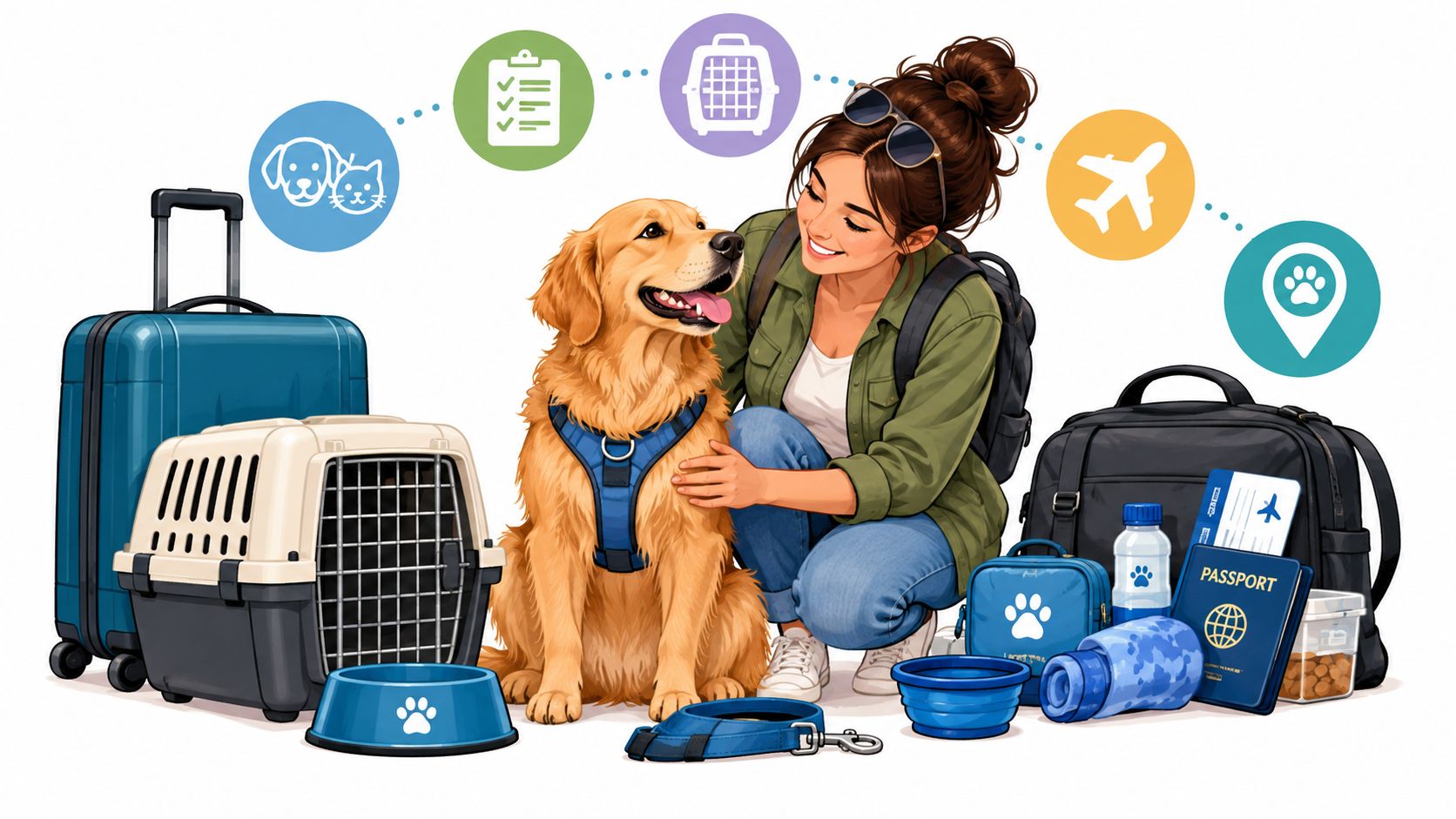
The first message gives Maya a clear starting point. It lists the information the practice has received, names the documents still needed, identifies the staff member managing the case, and explains when she'll receive the next update. The team doesn't promise approval before the requirements have been reviewed. It promises visibility.
A case moves through events
When Maya uploads one document but misses another, the system records the upload and sends a targeted request for the missing item. The message doesn't say “paperwork incomplete.” It names the document, explains that the application can't move to the next review until it arrives, and offers a way to ask a question.
The veterinarian reviews the clinical components, while the assigned administrative team member tracks the travel-document milestones. If the itinerary changes, the case is flagged for a requirements review instead of proceeding under outdated assumptions. If an external review takes longer than expected, Maya receives a status message with the current stage and the next planned update.
Deadline-driven communication earns its keep. USDA APHIS advises owners to contact an accredited veterinarian as soon as they know they will travel. APHIS also notes that a signed health certificate may have a limited validity period, such as 30 days, before travel, depending on the destination, and that endorsement can be delayed when submissions contain incomplete or incorrect information (USDA APHIS guidance for owners traveling internationally with pets). Maya shouldn't have to discover those risks by chasing the practice after silence.
The team sees one case, not scattered threads
At each stage, staff can see the same case status, client responses, uploaded documents, open questions, and next action. A platform such as Passpaw can collect pet and itinerary details, request documents, send deadline reminders, support direct client communication, and adjust requirements and timelines when itinerary information changes. The practice still supplies professional judgment and human support, but the system carries the repetitive coordination work.
The result isn't a promise that every application will be simple. International requirements can change, external reviews can take time, and some cases need careful explanation. The improvement comes from making uncertainty visible early, assigning responsibility clearly, and giving the client a useful update before anxiety turns into phone tag.
That's the practical meaning of client communication management in veterinary care. It isn't a race to send the first reply. It's a team-led process that connects each message to a real event, deadline, document, or decision, keeping the pet and the paperwork moving in the same direction.
Passpaw helps veterinary practices manage international pet-travel applications with structured intake, document requests, deadline reminders, progress updates, and direct client communication. Visit Passpaw to see how a clearer communication workflow can give your team and pet owners a calmer path from first request to travel day.

More articles
From regulatory changes to best practices for veterinarians and pet owners, our resources keep you ahead of the curve.