Are you a team member in a veterinary practice?
Are you a pet parent planning a trip with your furry pal?
Ark Rescue Dogs: A Complete Guide to Adopting from Abroad
You've got the approval email, the dog is real, and now the hard part starts. That's the moment most adopters feel excited, then instantly buried under questions, because bringing Ark rescue dogs home isn't just “yes, we want one.” It's paperwork, vet timing, transport planning, and a few places where one small mistake can stall the whole trip.
First Things First What Ark Rescue Dogs Actually Means
The acronym ARK trips people up fast. It sounds like one rescue, one process, one clean path home, but the term is used by multiple unrelated groups, including Animal Rescue Konnection in Massachusetts, Animal Rescue & K9 Charities in Connecticut, ARK Animal Rescue Konsortium in Florida, and ARK Animal Rescue in Kefalonia, Greece. That matters because the dog you're adopting might be domestic, international, fostered, or sitting in a shelter with very different rules attached to it.
If your application gets approved, the next move is simple. Slow down and ask for the rescue's exact legal name, location, transport partner, and adopter requirements in writing. That's not bureaucracy for fun, it's how you avoid mixing up donation pages, medical forms, airport paperwork, or even the wrong country's import rules.
Practical rule: never pay or book transport until you know exactly which ARK you're dealing with and who is responsible for each handoff.
A legitimate rescue should be able to tell you where the dog is, who has custody, what paperwork already exists, and what still needs to happen before travel. If they can't answer that clearly, treat it as a warning sign. The wrong acronym can turn into the wrong veterinarian, the wrong export certificate, or a very expensive delay.
For a broad planning view on the moving process itself, start with pet travel basics for moving abroad, then come back to the rescue's own documents. Your first 48 hours after approval should be about confirmation, not celebration spending. Get the adopter agreement, ask for the dog's exact name and date of birth, request scan copies of medical records, and confirm who issues the export documents. If the rescue is vague, keep asking. A dog deserves a clean handoff, not a guess and a prayer.
Vet Prep, Microchips, and the Vaccination Timeline
The medical clock starts the day the rescue approves the match. Don't wait for travel booking before you book the vet, because the order of the steps matters just as much as the steps themselves. The chip comes first, then rabies vaccination after the chip is read, then any required blood test, then the remaining routine vaccines and the final certificate visit.
For ARK rescue dogs, the cleanest approach is to treat the first veterinary appointment like a paperwork launch, not a quick booster visit. Bring the rescue's records, ask for digital copies, and make sure every document matches the dog's name exactly. If the dog is young, like a six-month-old from a Greek island rescue, your vet may need to coordinate timing carefully so you don't waste a certificate window before travel is ready.
What the vet should do in order
Start with microchip implantation if the dog doesn't already have one, or have the chip scanned and recorded if it does. Then the rabies shot gets logged against that chip number, because the identifier is what ties the dog to the vaccination record. If the destination requires a titer test, that goes after the rabies step and before the final travel certificate, not before.
The cleanest file is the one where every page can be traced back to one chip number, one dog, and one travel date.
The practical mistakes are boring but common. People book flights first, discover the vaccination timing is off, and then scramble for a new appointment. Others show up without scanned copies of the rescue record, which forces the clinic to rebuild the file from scratch. Avoid that mess. Make one folder with photos, PDFs, chip number, vaccine dates, and the rescue's contact details.
If you want a deeper primer on chips that usually pass inspection cleanly, read ISO compliant microchips for pet travel. A good vet team will also tell you what to expect at each visit, which forms they'll sign, and whether the final health certificate needs a narrow signing window before departure. That sequence is the difference between calm planning and last-minute panic.
Country by Country Rules for Bringing Dogs Home
The destination country sets the rulebook, not the rescue group. That's why two adopters can start with the same dog in Greece and still end up with very different paperwork, waiting periods, and arrival steps. The right question is never just “Can I adopt?” It's “What does my country accept, and what does it reject?”
The broad differences are easy to see, but they're still easy to get wrong. Some countries accept standard microchipping and basic rabies documentation, while others want extra verification, a titer result, or treatment timing that lines up with arrival. The safest move is to check official government guidance for your country before you book anything.
Key Entry Requirements by Destination | Microchip | Rabies Titer | Waiting Period | Extra Treatment |
|---|---|---|---|---|
UK | Check official rules | Sometimes required depending on route and origin | Often tied to vaccine timing | Tapeworm treatment may apply |
EU | Check official rules | Sometimes required depending on origin status | Can apply after vaccination | Route and document details matter |
US | Check official rules | Depends on risk and origin | Check current federal guidance | Entry paperwork can vary |
Canada | Check official rules | Depends on origin and purpose of travel | Verify timing before booking | Treatment rules may differ |
Australia | Check official rules | Often part of a stricter pathway | Usually the most timing-sensitive | Quarantine-related steps are common |
If you're comparing options, supported countries for pet travel planning is a useful starting point, but the final word should still come from the destination authority. Don't rely on rescue forum summaries for this part.
The biggest trap is assuming one valid document works everywhere. It doesn't. A paper that is fine for one route can be rejected for another, even if the dog is the same and the vet is the same. Keep the rule set tied to your destination, not to the story you read in a Facebook group.
For travelers to the UK and EU, check the arrival conditions early because timing can drive everything else. For the US and Canada, confirm the current import path before the vet visit so the clinic doesn't certify the wrong format. Australia is the one to treat with extra caution because the process is usually more rigid and less forgiving of improvisation.
Best practice: choose the destination rules first, then build the dog's medical calendar around them.
The Export Health Certificate and What It Actually Covers
The export health certificate is the document that turns a rescued dog into a travel-ready dog. It's also where many adoptions stall, because people confuse it with the import permit, the airline form, or the rescue's own health record. They're not the same thing, and mixing them up creates rejected paperwork and wasted appointments.
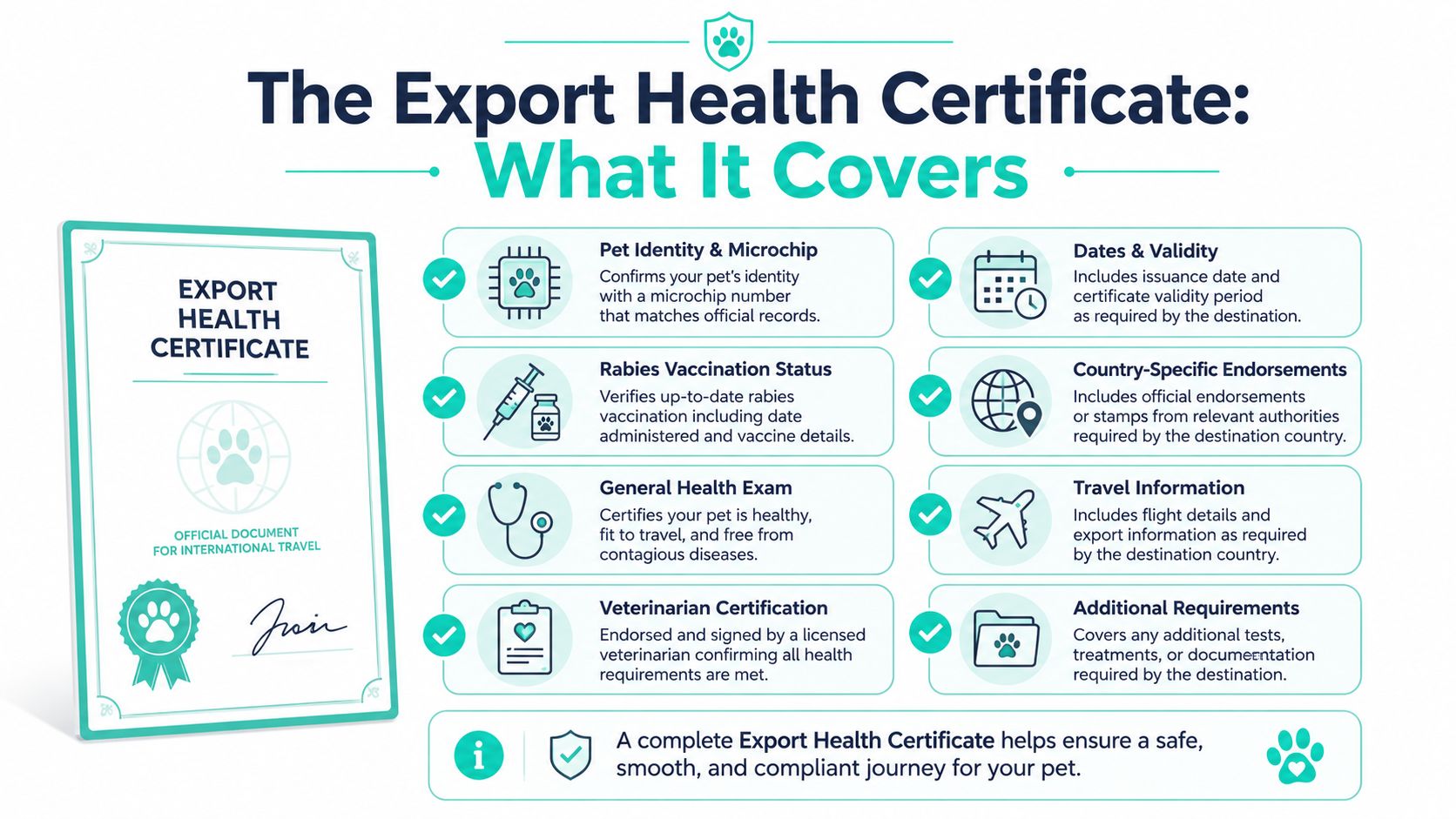
A proper certificate usually ties together the dog's identity, chip number, vaccination status, recent exam, and any country-specific endorsements. The issuing vet has to be authorized for that route, and the signature date has to fit the travel window exactly. If the flight slips, the certificate can stop being valid, which is why last-minute booking changes cause so much stress.
What to lock in before the final vet visit
Book the final appointment as late as the rules allow, not early out of convenience. That gives you the best shot at staying inside the travel window if the dog's flight changes. Keep scanned copies of every signed page, because a lost original at check-in is the kind of problem you only want to hear about in someone else's story.
Use what an export certificate actually is as your mental model, then match the certificate to the destination rules, not the other way around. If you're price shopping for the final sign-off, Compare Export Vets pricing can help you see that this appointment is a specialized service, not a normal vaccine visit. That distinction matters because the right vet, the right date, and the right form sequence save far more trouble than a cheap rushed stamp.
The clean handoff is simple. The rescue provides the animal history, the vet confirms the dog is fit for travel, and the certificate binds those facts to the travel date. If any one piece changes, stop and recheck the whole stack.
Getting From There to Here Transport Options and Logistics
One family can fly a dog in-cabin with a courier, while another books manifested cargo for the same Greece-to-UK route. The paperwork may overlap, but the day-of-travel experience doesn't. In-cabin travel keeps the dog closer to a person, cargo often works better for a larger animal or a route with tighter airline controls, and ground transport makes sense when borders and distance allow it.
The smart choice depends on the dog, not the dream version of the trip. A smaller dog that fits airline rules may travel more calmly in the cabin with a courier, while a bigger dog may need cargo because that's the feasible route. Ground transport can be gentler when the route is workable, but it's slower and needs its own route planning.
Three real trade-offs
In-cabin with courier: Best when the dog is small enough and the airline allows it. The dog stays closer to a person, which many adopters like.
Cargo flight: Better for routes and dogs that don't fit cabin rules. It depends heavily on airline procedures and kennel handling.
Ground transport with courier: Useful when borders and distance make it practical. It can feel less rushed, but it's not always the fastest choice.
Practical rule: ask who physically hands off the dog at each stage. If nobody can explain that chain clearly, don't book.
The arrival side matters too. Customs pickup, any quarantine step, and the first night at home need to be planned before the dog lands. Don't assume the hard part ends when the plane does. Dogs coming off a long trip are often tired, confused, and ready for quiet, not a house tour and a party.
For a useful operational perspective on shipping and handoff planning, international pet supply distribution tips is a smart side read because the same logistics mindset applies. Ask every transport company these questions before you pay: Who supervises the dog on transfer day? What kennel size do you use? What happens if the flight changes? How do you coordinate with the destination pickup point? Good transport is boring in the best way. The dog gets there, and nobody improvises.
How Veterinary Practices Use Passpaw to Manage the Whole Journey
A clinic handling five international rescue transfers a month can drown in spreadsheets fast. One email thread has the rescue, another has the adopter, a third has the airline, and somewhere in the middle sits a chip number that no one wants to retype for the third time. That's where a workflow platform like Passpaw earns its keep, because it turns a messy chain into a repeatable file with checks, deadlines, and fewer dropped balls.
The practical win is simple. A practice uploads the destination rules, assigns tasks by travel date, and validates documents as they come in, instead of waiting for a frantic end-stage review. If a rabies certificate is expired or a page is missing, the team sees it early, not at the airport desk.
That changes the client experience too. Adopters get clearer updates, staff spend less time chasing documents, and the file doesn't depend on one person remembering every detail from memory. For practices and travel coordinators, planning your overseas relocation is a useful reminder that international moves work best when every moving part is tracked, not trusted to luck.
The before-and-after difference is obvious. Before, the clinic is juggling emails and spreadsheets. After, the team has one live process, one timeline, and one place to catch mistakes before they become boarding-day drama.
Your 30-60-90 Day Plan From Approval to Arrival
Days 1 to 30, get the medical file in order. Book the vet, confirm the chip, line up rabies timing, and collect every rescue record in digital form. Days 31 to 60, finish the certificate work, choose transport, and confirm the destination rules one more time. Days 61 to 90, lock the travel date, prep arrival logistics, and keep the first home setup quiet and simple for the dog.
The two biggest mistakes are rushing the first appointment and assuming the travel date won't move. Keep your checklist tight, your documents backed up, and your expectations calm. Rescue travel rewards people who plan like adults and pack like pros.
A CTA for Passpaw.

More articles
From regulatory changes to best practices for veterinarians and pet owners, our resources keep you ahead of the curve.