Are you a team member in a veterinary practice?
Are you a pet parent planning a trip with your furry pal?
What is a Health Certificate for a Dog? Your 2026 Guide
A health certificate for a dog is an official document issued by a veterinarian that confirms your dog is healthy and meets travel requirements. In practice, it usually needs to be issued within 10 to 30 days before entry depending on the destination, and airlines often want it dated no more than 10 days before travel.
If you're reading this with flights open in one tab, vaccine records in another, and your dog staring at the suitcase like they already know they're coming, you're in the right place. This paperwork can look fussy at first. It isn't random, and it isn't meant to trip you up.
A dog health certificate is really your pet's travel clearance. It tells airlines, border officials, and receiving authorities that a licensed veterinarian examined the dog, reviewed the records, and documented the details needed for that trip. For domestic travel, that might mean a Certificate of Veterinary Inspection (CVI). For international travel, it may mean an international health certificate and additional country-specific steps.
The good news is that this process is manageable when you work in the right order. A little planning now saves a lot of tail-chasing later.
Your Ticket to Travel Your Dog's Health Certificate
You confirm the flight, reserve a pet-friendly hotel, and start packing. Then the airline or destination asks for a health certificate, and the trip suddenly depends on one veterinary document being accurate, current, and accepted by everyone reviewing it.
That document is what turns a dog's medical record into travel clearance.
What the certificate actually does
A dog health certificate is an official veterinary document completed after an exam and record review. It confirms that your dog appears fit for travel and that the medical details on the form match the requirements for that trip. In the United States, owners will often hear terms like Certificate of Veterinary Inspection for interstate travel and APHIS Form 7001 in some international cases. This overview of health certificates for pet travel explains how those terms are used.
For owners, the certificate answers a simple question from an airline, state official, or border agent: "Has a licensed veterinarian recently examined this dog and documented the required information?" For the veterinary team, it is more exacting than that. The form has to match the dog's identification, vaccine history, destination rules, and timing requirements. A healthy dog can still be delayed if one of those pieces is wrong.
A usable health certificate connects the dog, the records, the exam, and the trip details on one document.
Why it matters more than owners expect
Many owners assume the certificate is the last box to check. In practice, it sits at the end of a chain of decisions that have to line up correctly. The exam date has to fall within the accepted window. Vaccine dates have to support the destination's rules. Names, breed, age, and microchip details have to match the records exactly.
That is where pet owners and veterinary practices often run into the same problem from different sides. Owners need clear instructions and correct timing. Clinics need a reliable way to gather travel details, verify requirements, and prepare documents without repeated back-and-forth. Modern certificate workflow tools, including platforms such as Passpaw, help practices organize that process and reduce the avoidable errors that create travel-day surprises.
The certificate matters because it is reviewed by people who were not in the exam room. If the paperwork is clear and complete, the trip usually moves forward. If it is vague, inconsistent, or issued at the wrong time, the problem shows up at check-in or at the border, when there is very little room to fix it.
Decoding the Document What a Vet Certificate Includes
Owners usually see the finished form a day or two before travel. Clinic staff see the parts that have to line up before that form is safe to issue.
Identification comes first
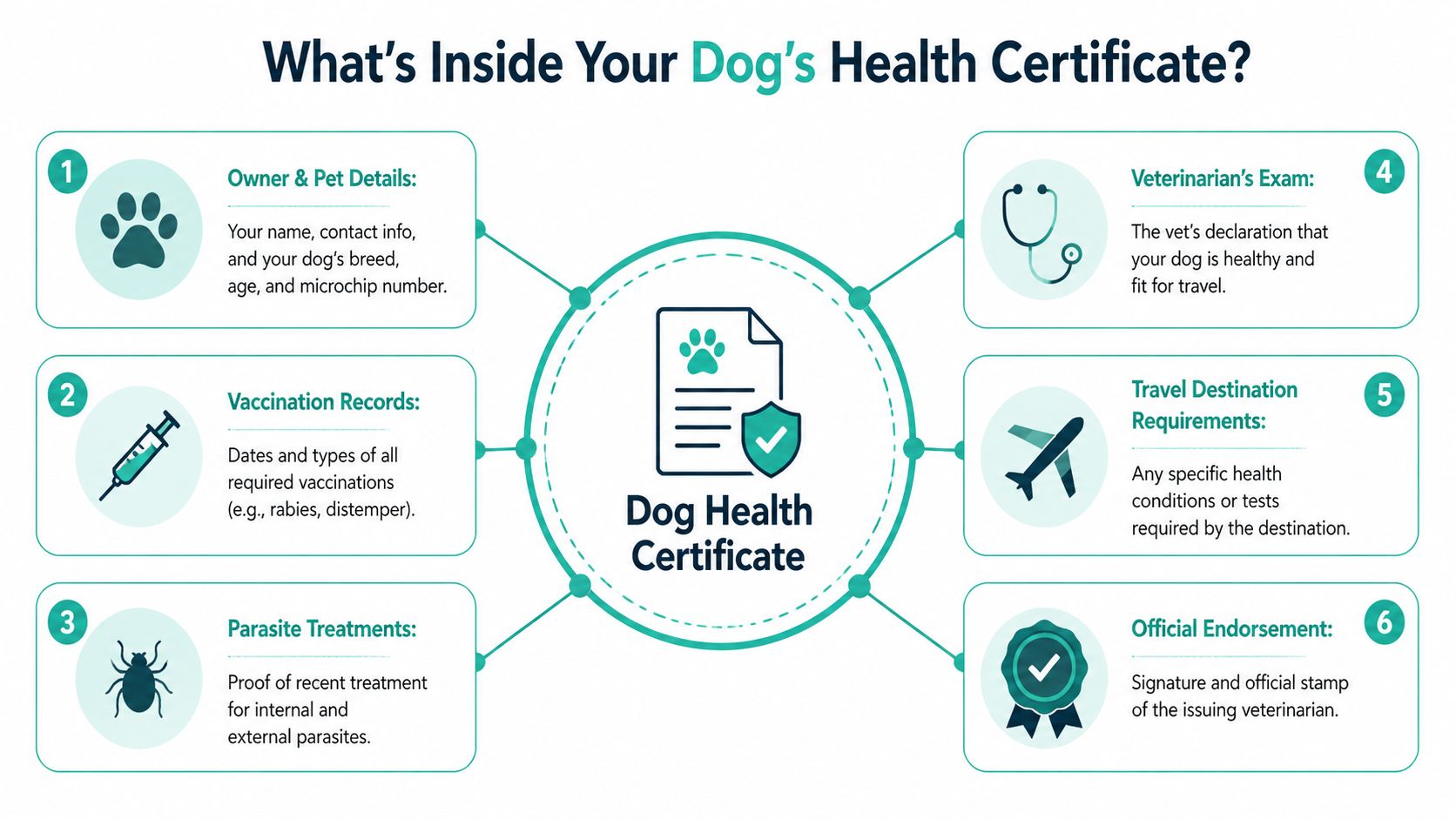
Every health certificate starts with identification. The document usually lists the dog's name, breed, age, sex, color, weight, and microchip number, plus the owner's name and contact information, as outlined in this explanation of what a pet health certificate includes.
Those details do real work. They tie the dog in the exam room to the medical record, the vaccine history, and the travel booking. If the trip depends on a microchip, the number on the certificate has to match the scanner and the prior records exactly.
Small errors matter here. A nickname instead of the registered name, an outdated owner phone number, or one transposed chip digit can trigger delays that are frustrating to fix close to departure.
The medical exam and record review
The certificate also documents that a licensed veterinarian examined the dog and found no signs that would make travel unsafe or noncompliant. In practice, that means the vet is not just glancing at the pet. The exam supports a legal statement.
The form may include:
Date of examination
General health findings
Current vaccination history
Microchip verification, if required for the trip
Parasite treatments, test results, or laboratory work if the destination asks for them
This is the point where preparation saves time. If records are scattered across two or three clinics, the appointment often slows down while the team verifies dates and product names. If everything is in one place, the certificate can usually be prepared with fewer corrections.
For rabies-related travel requirements, many owners also need a current certificate of rabies vaccination alongside the health certificate.
Signatures, dates, and issuing authority
A certificate is only useful if the right veterinarian signs it, on the right form, at the right time. For regulated travel situations, especially international travel, that often means a USDA-accredited veterinarian must issue the document.
Behind the scenes, veterinary workflow often breaks down. The medical part may be straightforward, but the administrative part is exacting. Staff have to confirm the destination form, pull complete records, check timing windows, and make sure nothing is missing before the veterinarian signs. Practices that use structured certificate tools, including platforms such as Passpaw, can organize those steps more consistently and cut down on last-minute rework.
A good health certificate reads clearly to someone who has never met the dog. That is the standard to aim for.
Not All Trips Are the Same Domestic vs International Certificates
A client books an exam on Tuesday for a Friday flight and says, "We're only bringing one dog. We just need the usual paperwork." Whether that plan works depends almost entirely on where the dog is going.
Domestic and international trips are not different only in distance. They follow different rule sets, different forms, and different approval paths. For a short U.S. flight, the certificate may be relatively straightforward. For an overseas move, the certificate is often just one part of a larger file that has to match the destination country's requirements exactly.
Side by side comparison
For travel within the United States, the document is often a Certificate of Veterinary Inspection, or CVI. For travel abroad, the clinic may need an international health certificate, a country-specific form, government endorsement, or all three. If you want the terminology sorted out first, this guide explains whether a CVI is the same as a health certificate.
Requirement | Domestic Travel (USA) | International Travel |
|---|---|---|
Basic document | Often a CVI | Often an international health certificate or destination-specific equivalent |
Main focus | State entry and airline requirements | Country entry rules, airline rules, and return requirements |
Complexity | Usually simpler | Usually more detailed and less forgiving |
Vet role | Exam, records review, certificate issuance | Exam, records review, certificate issuance, plus destination-specific compliance |
Timing pressure | Important | High, especially if tests, treatments, or endorsements are required |
Common confusion | Whether one is needed at all | Which form applies, who must sign it, and how far in advance each step must happen |
The practical difference is this. Domestic travel usually asks, "Is this dog healthy enough to travel, and does the paperwork satisfy the carrier or state?" International travel asks that too, then adds, "Was every required step done in the correct order, on the correct timeline, and on the correct form?"
International travel adds more than one checkpoint
International cases are where schedules break down. Owners often focus on the flight date. Clinics have to work backward from the destination country's entry rules.
Some countries require a specific microchip standard. Others require rabies vaccination to be given before microchipping counts for travel. Some require parasite treatment within a narrow window before arrival. Others require USDA endorsement after the veterinarian completes the certificate. A dog can be healthy, fully vaccinated, and still not have acceptable travel documents.
That is why international certificates create more administrative work inside the practice. Staff are not only preparing a medical document. They are checking country instructions, confirming form versions, matching treatment dates, and making sure the veterinarian signs the right paperwork at the right point in the process. Clinics that use structured certificate workflows, including platforms such as Passpaw, usually handle these cases with fewer last-minute corrections because the process is organized before the appointment gets rushed.
What owners and clinics should decide early
The first decision is which authority controls the trip. For domestic travel, that is often the airline and the destination state. For international travel, it is the destination country first, then the airline, and sometimes U.S. re-entry rules as well.
The second decision is timing. A domestic certificate may be manageable on a short timeline if records are complete and the route is simple. An international certificate often is not. Delays usually come from missing records, treatments done outside the allowed window, or forms discovered too late.
The safest approach is to treat international travel as a document process, not just a vet visit. That mindset helps owners book earlier, and it helps veterinary teams build a workflow that supports travel compliance instead of scrambling to fix paperwork after the exam.
How to Prepare for Your Dog's Health Certificate Appointment
Two weeks before a flight is when many owners realize travel paperwork is a separate job from routine veterinary care. The dog may be healthy, vaccinated, and ready to go, but the appointment can still fail if the clinic does not have the right records, dates, or certificate pathway in front of them.
Preparation fixes most of that.
Start with the trip details
Bring the destination, travel date, and airline requirements into focus before you book. The practical question is not whether your dog can get a health certificate. The practical question is which certificate, issued by which veterinarian, within which time window, will be accepted for this trip.
That distinction matters in the exam room. I have seen perfectly good appointments turn into delays because the owner booked a standard visit before confirming whether the route required USDA accreditation, microchip matching, or a specific treatment timeline.
If you are unsure, call the clinic with the basic facts first: where the dog is going, when the dog is leaving, and whether this is domestic or international travel. Clinics that use structured certificate systems, including tools such as Passpaw, can often screen those details before the visit and tell you what records or timing problems need attention.
Bring records the veterinarian can verify
Saying your dog is current on vaccines does not help much if the certificate requires exact dates, manufacturer information, or proof that a microchip was scanned before vaccination. Travel documents depend on records that can be checked, not memory.
A useful appointment packet usually includes:
Vaccination records with dates and product details.
Microchip number and registration information if the destination ties the certificate to the chip.
Travel itinerary with departure date and destination.
Lab results, parasite treatment records, or prior medical notes if the destination asks for them.
Owner information exactly as it should appear on the certificate.
If records are scattered across more than one clinic, gather them before the appointment. Veterinary teams can help interpret paperwork, but they should not have to rebuild a travel file from scratch while your certificate window is closing.
Book a certificate appointment, not a general exam
Travel paperwork takes more than a quick physical exam. The clinic may need extra time to review records, confirm eligibility, complete official forms, and explain what happens after the veterinarian signs.
Ask two direct questions when scheduling. Does the clinic issue travel health certificates for your route? Is the veterinarian handling the case accredited or otherwise authorized if that trip requires it?
That call can save days.
It also helps the practice run the case correctly. Front-desk screening, clear record collection, and certificate-specific workflows reduce last-minute corrections for owners and reduce preventable staff stress inside the clinic. That service side matters. A dog owner experiences one appointment. The clinic is managing forms, timing rules, signatures, and follow-up behind the scenes.
Come prepared, and the appointment is usually straightforward. Arrive with partial records and vague travel plans, and even a very capable clinic may have to postpone issuance.
Mistakes to Avoid When Getting a Pet Health Certificate
The problem usually starts the week before travel. A family has flights booked, the dog looks healthy, and everyone assumes the certificate will be a quick formality. Then the clinic reviews the file and finds a missing microchip number, a rabies record that does not match the chip record, or a timing issue that cannot be fixed in one visit.
That is how trips get delayed.
The mistakes clinics see repeatedly
These problems come up often because owners are trying to solve a paperwork process with medical assumptions.
Assuming any veterinarian can sign any travel form: Some certificates require a veterinarian with specific accreditation or authorization.
Scheduling at the wrong time: Too early can make the certificate expire before travel. Too late leaves no room to correct record problems.
Confusing a rabies certificate with a health certificate: Both may be required, but they serve different purposes.
Bringing incomplete trip details: Missing destination information, owner details, treatment dates, or microchip data can stop issuance.
Focusing only on departure: Return rules can be stricter than outbound rules.
Each of these errors is preventable, but only if someone checks the whole travel route and the supporting records together.
One sequence that causes real trouble
For some U.S. dogs returning from high-risk rabies countries, the order of events matters as much as the documents themselves. The CDC states that the microchip must be implanted before the rabies vaccination for the certification sequence to count, and dogs arriving without the required pre-travel documentation may be denied entry or placed in quarantine, depending on the case, under CDC dog importation guidance for health professionals.
That catches owners off guard because the dog may be healthy, vaccinated, and current on routine care. The issue is the record chain. If the microchip was placed after the rabies vaccine, the clinic may not be able to validate that route on the paperwork side.
A healthy dog is not always a travel-ready dog.
What works better
Review the trip early enough to catch sequence problems, missing records, and destination-specific forms while there is still time to fix them. Match the microchip number across every related document. Check the return leg, not just the outbound flight.
From the practice side, this is why organized document handling matters. Clinics that use clear intake steps and document management best practices for veterinary teams are better positioned to catch errors before they become airport problems.
The last appointment before travel can confirm readiness. It cannot always repair months of incomplete records.
How Veterinary Practices Can Simplify Health Certificates
For clinics, health certificates are one of those services that look straightforward from the outside and become very manual once the file opens. Staff members chase records, verify dates, interpret destination rules, answer repeat client questions, and try not to miss anything that could derail a trip.
Why manual workflows struggle
The hard part isn't the exam. It's the coordination.
A team member may be checking vaccine dates while another is waiting on a microchip number, and the client is emailing screenshots of airline instructions that don't match the destination country's requirements. That kind of workflow invites delays and transcription errors, especially when clinics manage travel cases alongside routine appointments and urgent care.
Paper-heavy systems also make it harder to standardize communication. Clients want to know what they still owe, what has been approved, and what comes next. If those updates live across inboxes, sticky notes, and scanned attachments, things slip.
Where software helps
Specialized document platforms can help a clinic offer travel certificates more cleanly. Tools in this category can centralize records, track deadlines, flag missing items, and keep the client informed without relying on one person to remember every step.
One example is document management best practices for veterinary teams, which reflects the broader shift toward structured digital workflows. A platform such as Passpaw is designed for pet travel document management, including real-time validation against destination requirements, task prioritization by travel date, and client communication inside one workflow.
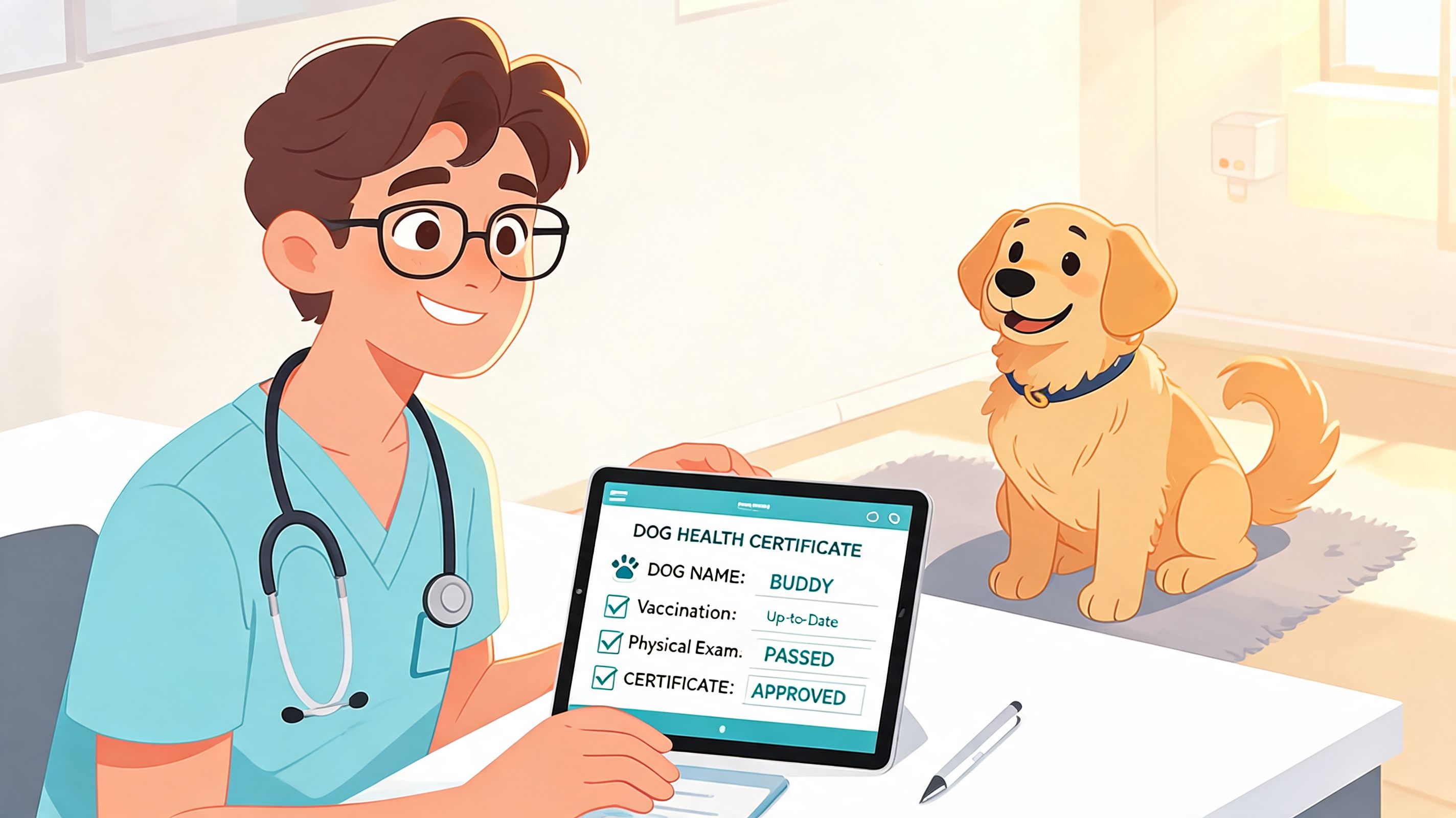
That doesn't replace veterinary judgment. It supports it. For busy practices, that's often the difference between treating health certificates as disruptive paperwork and treating them as a repeatable service line.
Your Top Questions About Dog Health Certificates Answered
How long is a dog health certificate valid?
It depends on the destination and the carrier. Verified guidance states that certificates may be valid anywhere from 10 days up to 6 months prior to travel depending on destination rules, while airlines often require a much tighter travel window. That's why the "validity" question should always be answered against the exact trip, not in the abstract.
Can I use a digital copy?
Sometimes digital handling is part of the process, but owners should not assume a screenshot on a phone will satisfy every checkpoint. Some routes and authorities still expect the completed travel documents exactly as issued. Ask the issuing clinic what you must carry on the day of travel.
What if my travel date changes?
Call the issuing clinic right away. A date change can affect whether the exam still falls within the accepted window and whether any destination-specific timing still works. This is one of the most common reasons owners need paperwork reviewed again.
Do puppies need health certificates too?
If the puppy is traveling on a route that requires one, age doesn't remove the paperwork requirement. The bigger issue is whether the puppy is old enough to meet vaccine and destination rules. Young dogs can run into timing problems when a trip is scheduled before required vaccines have had enough time to count.
How can clinics make FAQ content more useful?
For veterinary practices and pet travel providers, a strong FAQ page reduces repetitive calls and helps clients arrive better prepared. If you're building that kind of resource, this guide on how to boost SEO with better FAQs is a practical reference for structuring clear answers around real client questions.
A dog health certificate can feel complicated at first, but the process gets much easier when the records, timing, and destination rules are handled in the right order. If your clinic or travel service needs a cleaner way to manage pet travel paperwork, Passpaw offers a cloud-based workflow for organizing documents, validating requirements, and keeping clients informed throughout the certificate process.

More articles
From regulatory changes to best practices for veterinarians and pet owners, our resources keep you ahead of the curve.