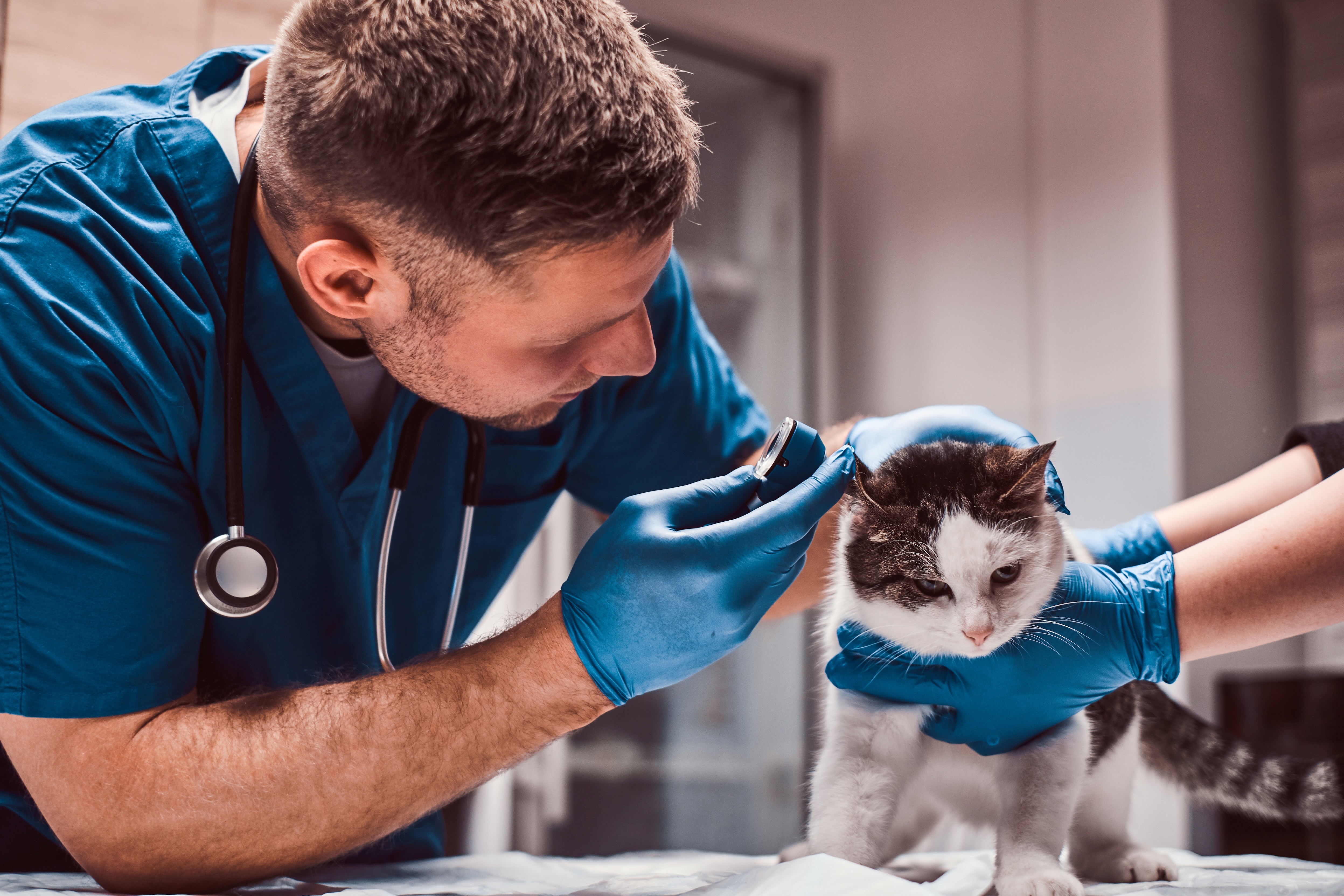
Are you a team member in a veterinary practice?
Are you a pet parent planning a trip with your furry pal?
Health Certificates for Pet Travel: A Guide to Smooth Journeys
Planning a trip with your furry co-pilot is exciting, but let's be honest—the paperwork can feel like a maze. The most important piece of that puzzle is the health certificate for pet travel. Think of it as your pet's official passport, proving they're healthy, vaccinated, and ready to explore new places safely.
Your Pet Travel Adventure Starts Here
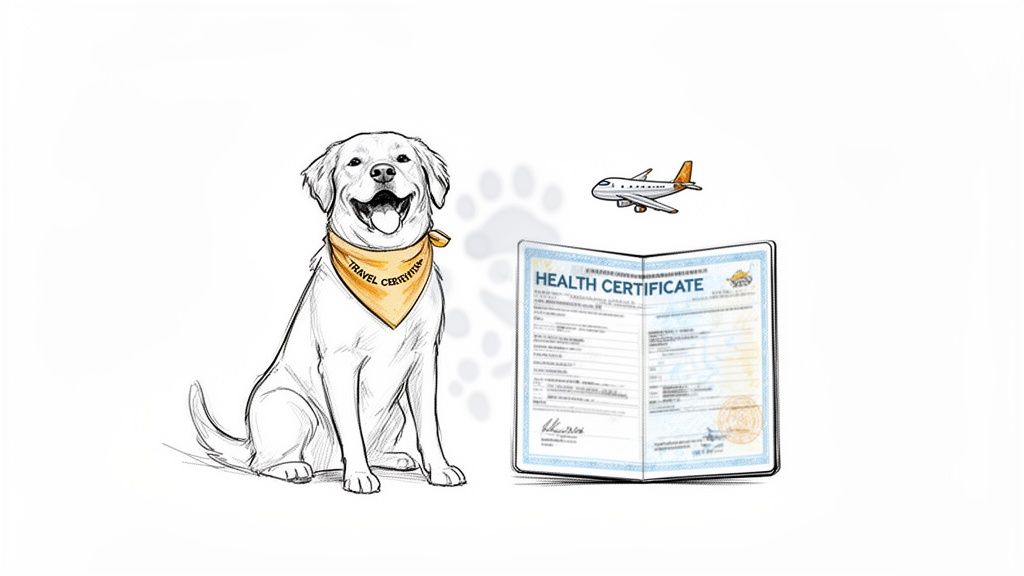
Hitting the road (or the skies) with a four-legged friend is one of life’s great joys. But before you start packing the tennis balls and treats, there’s some important prep work to do. This guide is your friendly map, designed to make the world of pet travel documents easier to understand for both veterinary teams and pet owners.
The reality is, more and more owners see their pets as family and want to bring them along. Market analysis backs this up, showing the global demand for these certificates is set to grow at a rate of 7.1% annually, hitting an estimated $2.13 billion by 2033.
Why Are These Documents So Important?
So, what’s the big deal? A health certificate is more than just a piece of paper; it’s a promise. It’s your official proof to airline staff and border agents that your pet isn't carrying any contagious diseases. This whole system helps protect animal populations—and public health—across the globe.
A properly completed certificate is your ticket to a smooth journey. Without it, you could face some serious headaches:
Unexpected, stressful travel delays
Costly and upsetting quarantine periods for your pet
In the worst-case scenario, being denied entry at your destination
The goal of a health certificate is simple: to help ensure a safe and smooth journey for your pet while respecting the health and safety rules of your destination. It's the key to a 'pawsitively' perfect trip.
By understanding the key players and the required steps, you can set the foundation for a stress-free adventure. For an even deeper dive, our comprehensive guide on pet travel can provide more insights to help you prepare.
Decoding Different Pet Travel Documents
Not all travel documents are the same, and figuring out which one your pet needs is the first step to a smooth trip. Getting the paperwork right isn't just a suggestion; it’s a key requirement that protects your pet and respects the laws of your destination. The whole process can feel like a maze, but once you know the main types of documents, you'll have a clear map to follow.
Think of these documents in two main categories: domestic and international. Each serves a different purpose, from a simple health check for a cross-country road trip to a detailed packet for entering another country. A mistake here could be a real cat-astrophe, leading to frustrating delays or even being denied entry at the border.
Domestic Travel Health Certificates
For trips within the same country, you'll likely need what’s called a Certificate of Veterinary Inspection (CVI), often just called a health certificate. This is one of the more straightforward types of health certificates you'll encounter.
A CVI simply confirms that a veterinarian has recently examined your pet and found them free of any obvious contagious diseases. It also lists key details like their vaccination status. Most airlines require a CVI for pets flying in cargo, and many states suggest having one for animals crossing state lines, even if you're just driving.
International Pet Travel Documents
The moment you plan to cross an international border, the complexity can go up quite a bit. International health certificates are often more detailed than their domestic cousins because they have to satisfy the specific import rules of the destination country.
These rules are all about protecting local animal populations from foreign diseases. For a deeper look, check out our detailed guide on the veterinary international health certificate. This is where every single detail matters.
For example, the USDA APHIS Form 7001 is a common form for pets leaving the U.S., serving as a vital document for military families, expats, and even competitors in international dog shows. Getting to know the different document types is key, from simple CVIs for domestic hops to the detailed import packages required by places like Australia and Japan.
A common mistake is thinking one form fits all. An international health certificate isn't a generic document; it's often tailored to the destination's unique biosecurity laws, which can be incredibly strict.
When you're looking into pet travel documents, always double-check for country-specific rules. Regulations can change, like the new requirements for flying pets out of Mexico.
Common Pet Travel Documents at a Glance
To help you visualize the differences, this table breaks down the most common types of pet travel documents you might see. Each has a specific job, and knowing which is which is half the battle.
Document Type | Primary Use | Key Considerations | Common Example |
|---|---|---|---|
Certificate of Veterinary Inspection (CVI) | Domestic travel between states (by air or car) | Straightforward; confirms general health and freedom from contagious disease. | State-specific CVI form |
USDA APHIS Form 7001 | Exporting pets from the U.S. to some countries | Often needs USDA endorsement; a "snapshot" of health valid for a short time (~10 days). | USDA Form 7001 |
Country-Specific Health Certificate | International travel to countries with unique, strict rules | Tailored to one specific destination; may need extensive tests and treatments. | Japan's Form AC, EU Health Certificate |
EU Pet Passport | Travel between EU member countries | A long-term record of health history; simplifies travel within the EU bloc. | Official blue EU Pet Passport booklet |
Understanding these differences is a big help for a stress-free journey.
A Tale of Two Documents: USDA Form vs. EU Passport
To make this crystal clear, let's compare two well-known examples: the USDA APHIS Form 7001 and the EU Pet Passport. They both help pets travel, but they work in completely different ways.
USDA APHIS Form 7001: Think of this as an exit form for pets leaving the United States. It's a snapshot of the pet's health at a specific moment, filled out by a USDA-accredited vet and usually valid for a very short window (often just 10 days).
EU Pet Passport: This document is for travel between countries inside the EU. It’s a long-term record, like a real passport, that tracks vaccinations and treatments, allowing for easy movement within the European Union.
A pet flying from the U.S. can't just land in France with a simple CVI; they usually need a specific international health certificate endorsed by the USDA. Likewise, a dog traveling from Spain to Germany would use their EU Pet Passport, not a one-time export form. Each document has its place, and choosing the right one is the foundation of a successful trip.
The Core Four Pet Travel Requirements
Getting a pet health certificate is all about showing your pet meets a certain set of health standards. While every country has its own unique twist on the rules, there are a handful of core requirements that show up on almost every checklist.
Think of them as the "Core Four"—the absolute must-haves for getting your pet ready for their big adventure. Getting these right is the foundation for a smooth, stress-free journey.
1. The Mighty Microchip
First things first: your pet needs a microchip. Before any shots are given or forms are filled out, this is step one. This tiny electronic chip, no bigger than a grain of rice, serves as your pet's permanent ID. It’s the most reliable way to reunite you with your pet if you get separated, which is why it's a key requirement for international travel.
But not just any old chip will do. Most countries now suggest a 15-digit ISO-compliant microchip. This is the global standard, which means scanners all over the world can read it. If your pet has an older, non-ISO chip, you might need to implant a new one or carry your own scanner.
Once the chip is in, the next step is just as critical: registration.
Update Your Info: Make sure your name, current phone number, and address are all correctly registered with the microchip company.
Confirm the Number: Double-check that the microchip number on your registration paperwork matches what your vet has on file. Most importantly, it must match the number on the final health certificate. A single wrong digit can bring your travel plans to a halt.
2. Vital Vaccinations
Vaccinations are the bedrock of any pet health certificate, and the rabies vaccine is the undisputed king. Because rabies is a serious global public health concern, nearly every country has strict rules about it. You can't just get the shot and head to the airport; the timing is crucial.
For instance, most destinations require the rabies vaccine to be given at least 21 to 30 days before travel, while still being valid. This waiting period gives the vaccine enough time to become effective. Some rabies-free places, like Japan or Australia, take it a step further and may require a blood test (a titer test) months in advance to prove the vaccine is working.
Beyond rabies, other common vaccination suggestions often include:
For dogs: Distemper, Hepatitis, Parvovirus, and Parainfluenza (DHPP).
For cats: Feline Viral Rhinotracheitis, Calicivirus, and Panleukopenia (FVRCP).
Always check your destination’s specific list, as some may also ask for vaccines for kennel cough or leptospirosis.
3. Pesky Parasite Treatments
No country wants to import uninvited creepy-crawlies. That’s why treatments for internal and external parasites are a standard part of the process. These treatments help protect local animal populations from pests that might not exist in that region.
The most common required treatments are for fleas, ticks, and tapeworms.
Many countries, especially island nations like the United Kingdom, Ireland, and Japan, are very strict about tapeworm. The treatment usually has to be given by a veterinarian within a very specific timeframe—typically 24 to 120 hours (1 to 5 days)—before you arrive.
Missing this tight window is one of the most common mistakes pet owners make, and it can result in your pet being denied entry. It’s a perfect example of why you have to read the fine print. For more on specific rules, you can read our complete guide on international pet travel requirements.
4. The Final Fitness-To-Fly Exam
The last piece of the puzzle is the final health exam. This is the appointment where your accredited veterinarian gives your pet a thorough check-up to confirm they are healthy and fit for the journey. The vet is looking for any signs of infectious disease and making sure your pet is strong enough to handle the stress of travel.
This exam is almost always needed within 10 days of your departure date. During this visit, the vet will complete and sign the official health certificate. This is the moment when all your preparation—the microchip, the vaccines, the treatments—comes together on one official document.
Failing to meet these core requirements can lead to headaches. Strict quarantines—like Australia's potential 10-30 days or Hong Kong's maximum of 120 days—sometimes await pets who don't meet the rules, but proper preparation can help avoid this. While your pet's health is the focus, it's also helpful to understand the broader context of a country's entry criteria, including their general health requirements for people, as it shows how seriously they take biosecurity.
A Step-By-Step Pet Travel Paperwork Plan
Knowing the core requirements is one thing, but actually putting them into action is the real journey. Tackling the paperwork for a health certificate for pet travel can feel like a huge task. The best way to handle it? Break it down into a clear, step-by-step plan that keeps you organized and helps ensure nothing falls through the cracks.
Think of this as your roadmap, turning a huge project into a series of smaller steps. This plan isn't just for pet owners, either—it’s a shared workflow that keeps veterinary teams and their clients on the same page. When it comes to pet travel, clear communication and good timing are everything. They’re the keys to preventing any last-minute scrambles or ruff surprises at the airport.
Step 1: Research Destination Rules Months in Advance
Long before you even think about booking flights, your first job is to become an expert on your destination's import rules. This is not an exaggeration. Some countries, especially those with strict biosecurity laws like Australia or Japan, have requirements that start six months or more before travel.
Don't rely on forums or old blog posts for this important information. Your most reliable sources will usually be official government websites.
For any pet leaving the U.S., the USDA APHIS Pet Travel Website is your best starting point. It has a great search tool that lays out the detailed, country-specific health requirements.
Always cross-reference this information with the destination country's own ministry of agriculture or similar government agency website. Things can change, and you want the latest rules.
During this phase, create a master checklist of every single requirement: microchip standards, specific vaccines, blood tests (like the rabies titer test), and any parasite treatments. Most importantly, note every single deadline.
Step 2: Consult Your Veterinarian Early
Once your research is done, schedule a consultation with your USDA-accredited veterinarian. This shouldn't be a quick phone call; book a dedicated planning session. Bring your checklist and travel dates to the appointment so the veterinary team can map out a timeline for all the necessary medical steps.
This early meeting is the perfect time for the vet to:
Scan and confirm the pet's microchip is ISO-compliant and working properly.
Review the pet's entire medical history against the destination's rules to spot any gaps.
Schedule all future appointments for vaccinations, tests, and treatments, making sure each one happens within the correct timeframe.
This forward-thinking approach helps you avoid that sinking feeling when you realize a required vaccine has expired or a blood test needed to be done months ago.
The visual below shows the typical flow for getting the core travel requirements in order.
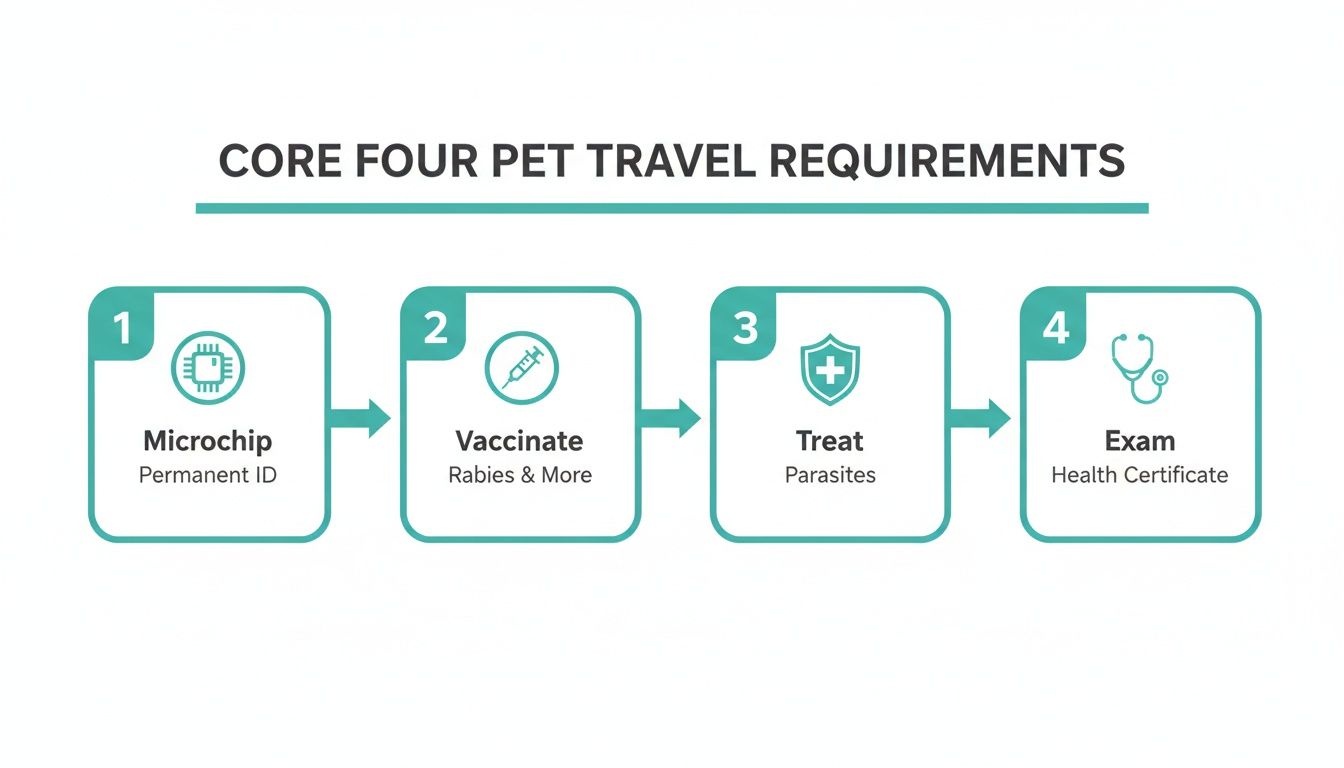
As you can see, the process is step-by-step. It all starts with the foundational microchip and ends with that final health exam.
Step 3: Complete All Medical Procedures
With a timeline in hand, the next few months are all about checking off each medical requirement. This is the "action phase," where your pet will get the necessary shots, have blood drawn for titer tests, and receive specific parasite treatments. Accuracy here is key.
For example, if a tapeworm treatment must be given between 24 and 120 hours before arrival, the veterinary team has to document the exact date, time, and product used. Every single detail—from the vaccine lot number to the lab that processed a blood test—should be recorded perfectly.
Think of this stage as building the foundation of your pet's travel eligibility. Each completed procedure is a building block that supports the final, signed health certificate. A single missing block can cause the entire structure to have a problem.
Getting a handle on the timeline is important for both pet owners and vet teams. Here’s a sample breakdown of how responsibilities are shared over time.
Pet Travel Preparation Timeline
Time Before Travel | Action for Pet Owner | Action for Veterinarian |
|---|---|---|
6-8 Months | Research destination rules, create a checklist, and book an initial consultation. | Confirm microchip, review medical history, and create a detailed medical timeline. |
4-6 Months | Ensure rabies and other core vaccinations are up-to-date. | Administer vaccinations as needed and draw blood for rabies titer test if required. |
1-3 Months | Book flights and confirm pet cargo arrangements with the airline. | Follow up on titer test results and schedule any required parasite treatments. |
10-14 Days | Reconfirm flight details and prepare travel crate and supplies. | Schedule the final health exam and prepare the international health certificate form. |
Within 10 Days | Bring pet for the final health exam. | Conduct final exam, complete and sign the health certificate, and provide instructions for USDA endorsement. |
This table shows the partnership needed to get everything done correctly and on schedule, minimizing stress for everyone involved.
Step 4: Schedule the Final Vet Visit
The final health examination is almost always extremely time-sensitive. Most countries want this exam to be conducted within 10 days of your departure. This is when the accredited veterinarian performs a final wellness check to confirm your pet is healthy and officially fit to fly.
During this important appointment, the vet will fill out and sign the official international health certificate. All the information gathered over the previous months—the microchip number, vaccination dates, test results—is carefully written on this final document. Careful attention to detail is vital to avoid any errors that could disrupt your trip.
Step 5: Obtain Official Endorsement
For many international destinations, the veterinarian's signature isn't the last step. The completed health certificate may then need to be sent to a government authority for an official endorsement, which is basically their stamp of approval. For pets departing from the United States, this often means sending the paperwork to the USDA Animal and Plant Health Inspection Service (APHIS).
This endorsement usually has to happen within that tight 10-day travel window. You might handle it by mail or by making an in-person appointment at a USDA APHIS office. Because this process is so time-sensitive and precise, it's often the most stressful part of the entire journey for both owners and vet teams.
To get a better handle on this final hurdle, you can learn more in our guide on how to get a USDA endorsed pet health certificate. This last step makes your pet's paperwork official and ready for travel.
Common Mistakes and How to Avoid Them
Even with the best checklist in hand, the path to getting a health certificate for pet travel can be a bumpy one. A tiny oversight can quickly snowball into a major headache, leading to delays, unexpected costs, or, in the worst-case scenario, putting your whole trip at risk. It can be a real paw-dicament.
But don't panic—knowing the common pitfalls is half the battle. We’ve seen firsthand where pet owners and even veterinary teams can get tripped up. By learning from these common mistakes, you can sidestep them like a pro and keep your travel plans moving smoothly.
The Case of the Early-Bird Exam
One of the most frequent and frustrating errors is getting the final health exam done too soon. Many countries are very strict about the timing, often requiring the final veterinary check-up and the signing of the health certificate within a narrow window, like no more than 10 days before you land.
Imagine you schedule the exam 12 days before your flight just to get it out of the way. When you arrive, officials may look at the date, see it’s outside their required window, and consider the document invalid on the spot. This one simple mistake could mean your pet is sent back on the next flight or placed into a long, expensive quarantine.
The Fix: Always, always confirm the specific travel window for your destination country on the official USDA APHIS website. It's best to schedule that final appointment as late as you comfortably can within the valid period. This gives you a little buffer in case of flight delays or other last-minute surprises.
Misadventures in Microchipping
Another common stumble involves your pet's microchip. This can go wrong in two main ways: using the wrong kind of chip or having outdated contact information tied to it.
First off, most countries now ask for a 15-digit ISO-compliant microchip. If your pet has an older, non-ISO chip, the scanners used by international authorities may not be able to read it. Secondly, a microchip is only as good as the information it holds. An old phone number or a previous address is useless if officials need to contact you.
A microchip is more than just a box to check; it's your pet's digital lifeline back to you. Making sure it’s the right type and the registration is current is a key step.
The Fix: At your very first travel consultation, ask your vet to scan the chip and confirm it’s an ISO-compliant model. Before you go anywhere, log into the microchip registry's website and make 100% sure all your contact details are up to date.
Getting Tangled in Timelines
The final exam isn't the only deadline waiting to trip you up. For instance, many rabies-free destinations like the UK or Japan have very precise rules for tapeworm treatments. They often want the treatment to be given by a veterinarian within a tight timeframe, like 24 to 120 hours before you arrive.
Missing that window by just a few hours could be grounds for denying your pet entry. The same goes for things like rabies titer tests, which often need to be done months in advance. Assuming all deadlines are the same is a recipe for disaster.
The Fix: Create a master calendar and mark down every single deadline. Start with your arrival date and work backward to plan out all the necessary treatments, tests, and vet visits. Don't be shy about double- and triple-checking the timing requirements for every single step of the process.
How Modern Tools Simplify Pet Travel Paperwork

After walking through the maze of requirements and common mistakes, it's pretty clear that managing a health certificate for pet travel is a high-stakes job. Instead of juggling binders, sticky notes, and endless email threads, veterinary practices are getting help from modern platforms designed to make this whole process less of a headache.
Think of this technology as a co-pilot for your vet team, guiding them through every single step. It’s like having a GPS for pet travel paperwork—it finds a safe, quick route to getting a document approved. By replacing manual tracking with smart automation, these platforms can reduce the chances of human error, which is a huge relief when you’re dealing with so many moving parts.
A Central Hub for All Things Travel
The biggest win here is having everything in one place. Information that used to be scattered across client files, email inboxes, and scribbled notes is now organized in one secure, central hub. This creates a single source of truth for the entire vet team and, just as importantly, for the pet owner.
For a busy practice, this is a game-changer. Cloud-based platforms can help validate documents in real-time, organize tasks by travel dates, and handle communication with clients. This doesn't just save a few minutes; it cuts down on errors and can save many hours. As we've explored at Passpaw, this approach turns compliance headaches into smooth sailing.
Smart automation is the key to offering a premium, stress-free service. It frees up veterinary teams to focus on what they do best: providing excellent care for their animal patients.
Below is an example of what this looks like in practice—a clean, simple dashboard designed to manage pet travel cases.
This screenshot shows how a platform can lay out upcoming trips by date, clearly showing the pet’s name and where they're headed. This kind of visual clarity helps teams see what needs their attention at a glance, helping make sure no deadline ever gets missed.
Key Benefits of Using a Travel Platform
These specialized tools do more than just store files—they actively prevent problems before they can disrupt a trip. They're built specifically to solve the most common and frustrating pain points in the pet travel paperwork process.
Key benefits often include:
Automated Task Reminders: The system sends out alerts for those important deadlines, like the 10-day final exam window or a 48-hour parasite treatment.
Real-Time Document Validation: Smart checks can instantly flag missing information or inconsistent data, catching mistakes before the forms are ever finalized.
Seamless Client Communication: Built-in messaging tools keep pet owners in the loop and engaged, cutting down on phone tag and answering their questions quickly.
By bringing these tools into their workflow, vet practices can elevate their service and give pet owners the peace of mind they need for a successful journey.
Common Questions About Pet Travel
Even with a detailed plan, a few questions might pop up. That's completely normal—the world of health certificates for pet travel is packed with specific rules and tight deadlines. To help clear up any lingering confusion, here are some straightforward answers to the questions we hear most often.
Think of this as your quick-reference guide. Getting these details right is the final step toward a smooth and stress-free adventure with your pet.
How Long Is a Health Certificate for Pet Travel Valid?
This is a very important question, and the answer changes depending on where you're going. For domestic trips within the U.S., a health certificate (often called a CVI) is usually good for 30 days. But for most international destinations, the window is much, much tighter.
A typical international health certificate is only valid for 10 days from the moment it's signed by your USDA-accredited veterinarian. Always, always confirm the specific rules for your destination, as this timeline can vary.
What Is a USDA Accredited Veterinarian?
While every veterinarian is trained to care for animals, not all of them can sign official international travel documents. A USDA-accredited veterinarian has gone through special training focused on federal rules for animal health and transport.
This extra accreditation gives them the authority to complete and sign the forms your pet needs to travel abroad. For any international journey, working with an accredited vet isn't just a good idea—it's often a requirement for your documents to be valid.
Can I Fill Out the Health Certificate Paperwork Myself?
Nope, this one is a clear no. You cannot fill out the official health certificate on your own. It's an official document that serves as a health record for your pet.
It must be completed and signed by a USDA-accredited veterinarian, and only after they've personally examined your pet. Your job as the owner is to supply accurate travel details and make sure all the prep work—like vaccinations and microchipping—is done on schedule. The vet handles the official forms.
What Happens If There Is a Mistake On My Pet's Health Certificate?
A mistake on a health certificate, even a small one, can turn into a serious problem. We're talking about everything from frustrating delays at the airport to your pet being denied entry at the border or, worst-case scenario, being put into a costly quarantine.
Common errors include wrong dates, missing information, messy handwriting, or using an outdated version of a country's form. This is exactly why careful planning and double-checking every single detail with your vet team is so important for a successful trip.
Ready to stop juggling paperwork and start simplifying pet travel for your clients? Passpaw gives veterinary practices the tools they need to manage health certificates with confidence and ease. Explore how Passpaw can transform your workflow today.
More articles
From regulatory changes to best practices for veterinarians and pet owners, our resources keep you ahead of the curve.