Are you a team member in a veterinary practice?
Are you a pet parent planning a trip with your furry pal?
What Vaccinations Do I Need for My Dog? A Complete Guide
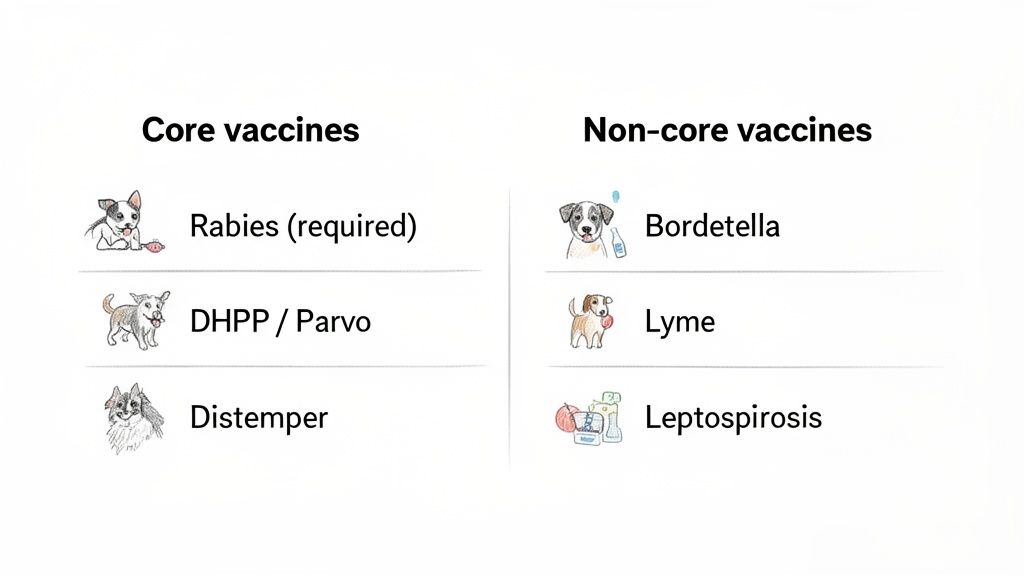
When you ask, "what vaccinations do I need for my dog?" you'll find the answer isn't a simple one-size-fits-all list. Vets generally break down vaccines into two key groups: core and non-core. Think of core vaccines, like rabies and parvovirus, as the non-negotiables every dog needs. Non-core vaccines, on the other hand, are tailored to your dog's specific lifestyle—things like whether they're a social butterfly at the dog park or a frequent traveler.
Your Guide to Dog Vaccinations
As a pet parent, keeping your dog healthy is priority number one. Vaccinations are easily one of the most powerful tools we have to protect them from serious, and sometimes deadly, diseases. They work like a training manual for your dog’s immune system, teaching it how to fight off dangerous infections before they can take hold.
But let's be honest, the world of vet-speak can get a little overwhelming. What shots are absolutely necessary? Which ones are just good ideas? It's not the same for every pup, and that’s why vets talk about "core" and "non-core" (or "lifestyle") vaccines. This guide breaks it all down so you can walk into your vet's office feeling prepared and confident.
Core vs. Non-Core Vaccines
Let's start with the basics. Dog vaccinations fall into two main categories, and understanding the difference is key.
Core Vaccines: These are the must-haves for all dogs, no matter their lifestyle or where they live. They protect against diseases that are widespread, highly contagious, and often serious. For example, the rabies vaccine isn't just a strong recommendation—in most places, it's suggested for public health reasons.
Non-Core (Lifestyle) Vaccines: These are recommended based on your dog's individual risk factors. Does your dog go to daycare? Do you live near wooded areas with ticks? Do you travel? A city dog who frequents dog parks has a very different risk profile than a quiet farm dog who sticks close to home.
Here’s a quick breakdown to help you see the difference:
Core vs. Lifestyle Dog Vaccines at a Glance
This table outlines the essential vaccines every dog should have versus those recommended based on their unique environment and activities. It's a great starting point for a conversation with your veterinarian.
Vaccine Category | Common Vaccine Name | Protects Against | Generally Recommended For |
|---|---|---|---|
Core | Rabies | Rabies virus (fatal) | All dogs (suggested for public health in most states/countries) |
Core | DHPP/DAPP | Distemper, Adenovirus, Parainfluenza, Parvovirus | All puppies and adult dogs |
Non-Core | Bordetella | Kennel cough | Dogs in social settings (daycare, boarding, dog parks) |
Non-Core | Leptospirosis | Bacterial infection from contaminated water/soil | Dogs who hike, swim, or live in areas with wildlife or livestock |
Non-Core | Lyme Disease | Tick-borne bacterial illness | Dogs in tick-prevalent regions, especially near woods or fields |
Non-Core | Canine Influenza | Dog flu (H3N8 and H3N2 strains) | Dogs who travel or are frequently exposed to other dogs |
By understanding these categories, you and your vet can build a vaccination plan that provides great protection without over-vaccinating. It's all about smart, personalized care.
If you’re planning to take your adventures global, keeping these records straight is very important. Having every document organized, from rabies certificates to titer test results, is a huge part of a stress-free journey. For a deeper dive into the paperwork, check out our guide on the veterinary international health certificate.
Navigating your dog's health can feel like a big responsibility, but you don't have to figure it out alone. Now that you have the basics down, we'll get into the specifics of what these vaccines do and when your dog needs them.
Understanding the Core Dog Vaccinations
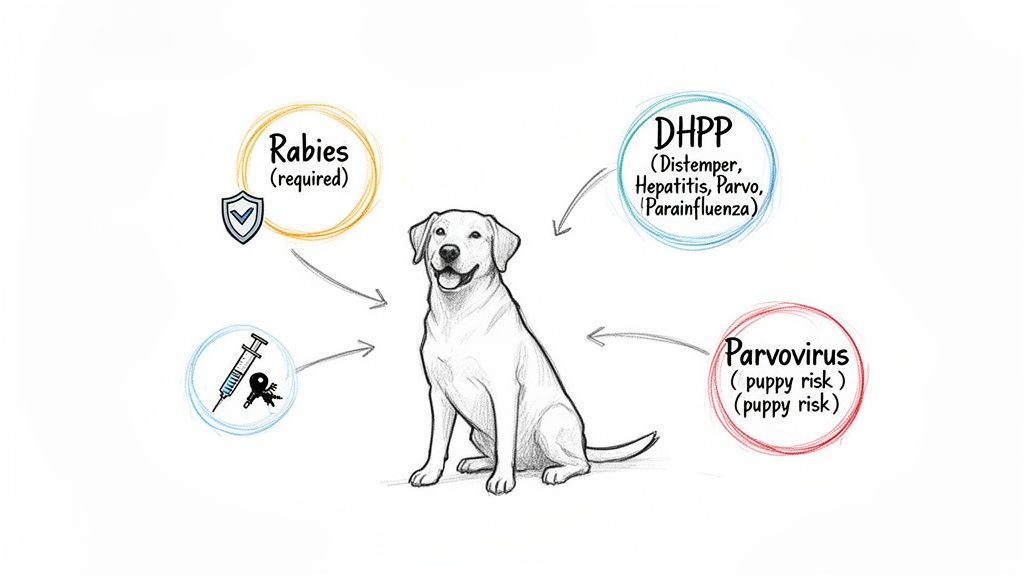
When your vet talks about core dog vaccinations, they're referring to the absolute must-haves. Think of these shots as your dog’s essential safety gear—the key protection every single pup needs to navigate life safely. These vaccines guard against severe, widespread, and often very serious diseases.
They aren't just a good idea; they're the foundation of preventive care. Let's break down exactly what these critical protections are and why they matter so much.
The Mighty DHPP Combo Shot
You'll often hear veterinarians mention the "DHPP" or "DAPP" shot. This isn't just one vaccine but a powerful combination shot that protects against several major diseases at once. It's an efficient way to keep your dog safe without needing a bunch of different pokes.
Each letter stands for a different virus it helps your dog's immune system fight off. Here’s a closer look at what this single shot is defending your companion against.
D is for Distemper: A serious virus that attacks a dog's respiratory, gastrointestinal, and nervous systems. It has no known cure, which makes vaccination the only real defense.
H is for Hepatitis: This refers to Infectious Canine Hepatitis, a viral disease targeting the liver and other organs. The vaccine actually uses a related virus (Adenovirus-2) to provide protection against both Hepatitis and a specific respiratory infection.
P is for Parvovirus: A highly contagious and incredibly tough virus that’s especially dangerous for puppies. It causes severe vomiting and diarrhea, quickly leading to life-threatening dehydration. The Parvo vaccine is one of the most important shots a young dog will ever get.
P is for Parainfluenza: This is one of the viruses that can cause "kennel cough." While it's generally less severe than the others in this combo, including it helps protect your dog from a common and very contagious respiratory illness.
Core vaccines are a cornerstone of canine health. By protecting against diseases like Distemper and Parvovirus, you are giving your dog a foundational shield that will serve them for their entire life.
Understanding what's packed into the DHPP shot makes it clear why it’s considered absolutely core to your dog's health.
Rabies: The Undisputed Must-Have
While the DHPP combo is a clinical essential, the Rabies vaccine is in a class of its own. This vaccine isn't just about protecting your dog; it's a matter of public health and safety, which is why it's suggested in most places.
Rabies is a viral disease that attacks the brain and spinal cord of all mammals, including humans. Once symptoms appear, it is almost always fatal. Because it can be transmitted from animals to people, local governments take it very, very seriously.
This is why a rabies vaccination isn't just a suggestion—it's often recommended for public health. Skipping these essential shots carries huge risks; parvovirus outbreaks still lead to thousands of dogs being hospitalized each year, showing just how vital this protection is. Investing in these core vaccines is one of the most impactful decisions you can make for your pet’s health. You can find more insights on the market trends for these lifesaving vaccines on gminsights.com.
Ultimately, core vaccines provide a baseline of immunity that keeps your dog and your community safe from harm. They are the first and most important step in answering the question, "what vaccinations do I need for my dog?"
Choosing the Right Lifestyle Vaccines
Beyond the core vaccines every dog needs, there's another layer of protection to consider based on your dog’s day-to-day life. These are the non-core, or "lifestyle," vaccines. Think of them as personalized armor—not every dog needs them, but for the right dog, they are absolutely crucial.
This is where your dog's unique personality and habits really matter. A quiet homebody who rarely meets other dogs faces a completely different set of health risks than the social butterfly holding court at the dog park. Your vet's job is to help you match the protection to the risk.
For the Social Butterfly
Is your dog a regular at the local dog park? A frequent guest at the groomer, or a boarder when you travel? If your pup loves to mix and mingle, they’re far more likely to encounter airborne germs from other dogs. This is where the Bordetella vaccine becomes a pawsitively smart idea.
Bordetella is a primary cause of what most people call "kennel cough," a highly contagious respiratory infection. Don't let the name fool you; it’s not just for dogs staying in kennels. Any place where dogs gather can be a hotspot. It’s like a flu shot for people who work in busy offices—it just makes sense.
When it comes to lifestyle vaccines, the goal is proactive protection. By considering your dog's daily activities, you and your vet can make informed choices that prevent illness before it ever has a chance to start.
This simple shot can save your dog from a miserable, hacking cough and you from the worry (and vet bills) that come with it.
For the Adventurous Explorer
Does your dog's perfect day involve a hike through wooded trails, a splash in a murky pond, or a gleeful run through tall grass? For these adventurous pups, a couple of other vaccines are worth a serious conversation with your vet. The two most common are for Lyme disease and Leptospirosis.
Lyme Disease Vaccine: This is a must-discuss for dogs living in or traveling to areas where ticks are common. A single tick bite can transmit bacteria leading to fever, joint pain, and even kidney problems. The Lyme vaccine adds a critical layer of defense for any trailblazing companion.
Leptospirosis Vaccine: This one protects against a bacterial disease found in soil and water contaminated by wildlife urine. Dogs can pick it up just by drinking from puddles, streams, or ponds. Leptospirosis can cause kidney and liver failure, making this vaccine especially important for dogs in wet climates or those who can't resist a swim.
These vaccines aren't just for extreme adventurers, either. Even a dog with a big backyard where wildlife might roam could be at risk.
Creating the Perfect Plan with Your Vet
Figuring out the right lifestyle vaccines isn't a decision you have to make alone. It’s all about having a real conversation with your veterinarian. They're your best partner in creating a vaccination plan that’s a perfect fit for your dog.
Come to your appointment ready to talk about your dog's daily life—the more your vet knows, the better they can tailor their recommendations. If you'd like to read up on how different activities can impact your dog's health, you can explore some great articles on dog lifestyle and health.
Ultimately, this team approach ensures your dog gets all the protection they need, and none that they don’t, so they can live a long, happy, and healthy life by your side.
Your Dog's Vaccination Timeline Explained
Just like us, a dog’s vaccination needs change as they get older. The shots a clumsy, curious puppy needs are quite different from what a confident adult or a sweet senior requires. Getting a handle on this timeline helps you protect their health at every single stage of life.
It's all about building their immunity at the start and then keeping it topped up as they mature. The journey begins with a flurry of vet visits in their first few months, but this soon settles into a much less frequent (but just as important) schedule. This approach ensures there are no gaps in their protection, keeping them safe and healthy for years.
The All-Important Puppy Series
A puppy’s first few months are a complete whirlwind of chewing, chasing, and napping. While all that is going on, their immune system is still figuring things out, which is why their initial vaccination series is so critical. This series typically kicks off when a puppy is between 6 and 8 weeks old and continues with boosters every few weeks until they hit about 16 weeks old.
So, why so many shots in such a short time? Puppies get a temporary dose of immunity from their mother's milk, but that protection starts to wear off pretty quickly. The series of shots is perfectly timed to build up the puppy's own, more permanent immunity as those maternal antibodies fade away.
Think of it like building an immunity fortress, one brick at a time. Each vaccine in the series strengthens their defenses, making sure they're fully protected from nasty diseases like Parvovirus and Distemper by the time they're ready to explore the big, wide world.
This infographic is a great visual for how a dog's vaccine needs can change based on their activities and age.
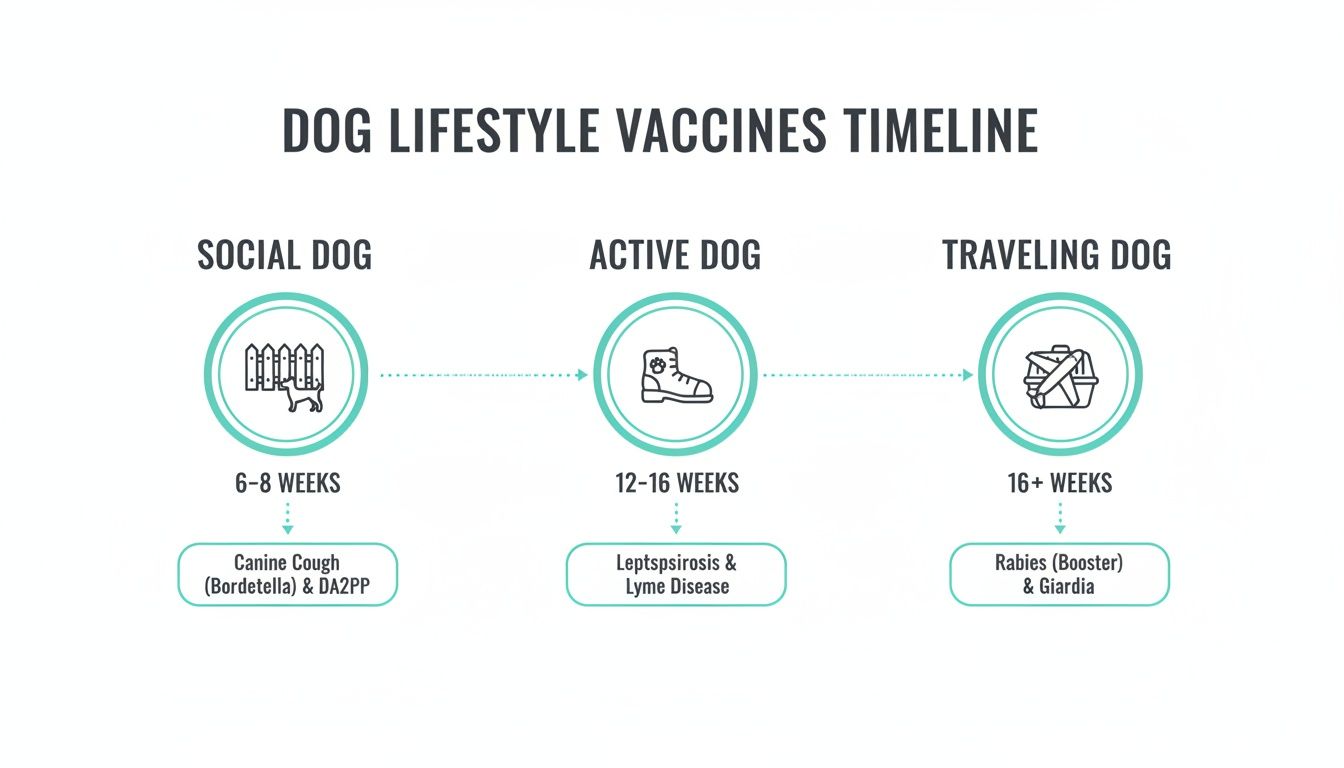
As you can see, the more social or adventurous your dog becomes, the more important some of those "lifestyle" vaccines become.
To make this even clearer, here's a general breakdown of what a typical vaccination schedule looks like.
Typical Dog Vaccination Schedule by Age
This table gives you a simplified look at when most dogs get their core shots and boosters. Of course, your vet will always create a plan that's perfect for your individual dog.
Dog's Age | Recommended Core Vaccines | Common Non-Core Considerations |
|---|---|---|
Puppies (6-16 weeks) | DHPP (Distemper, Hepatitis, Parainfluenza, Parvovirus) series. Rabies (one shot). | Bordetella, Leptospirosis, Canine Influenza, Lyme disease. |
Adult Dogs (1-7 years) | DHPP booster at one year, then every 3 years. Rabies booster (every 1-3 years). | Based on lifestyle: annual boosters for Bordetella, Lepto, or Lyme. |
Senior Dogs (7+ years) | Core boosters (DHPP, Rabies) based on vet's assessment and health status. | Continued lifestyle vaccines, but with careful consideration of health. |
Remember, this is just a guide. Your dog’s specific needs will always be the deciding factor.
Adult and Senior Dog Boosters
Once your dog graduates from their puppy series, the schedule shifts. They'll typically get another round of boosters about a year after their puppy shots are finished. After that, the timeline for core vaccines often stretches out.
Instead of yearly shots, many adult dogs move to a three-year protocol for core vaccines like the DHPP combo. This is based on solid research showing these vaccines provide protection for at least that long, which helps prevent over-vaccination while keeping their immunity strong.
The goal for adult dogs is maintenance. We're no longer building their immunity from scratch; we're just making sure the protection they already have stays reliable.
Rabies shots are a bit different, as they follow a schedule based on local guidelines. After their initial one-year shot, many dogs can get a rabies booster that lasts for three years. If you want to dive deeper into this, you can learn more about how often your dog needs a rabies vaccine in our dedicated guide.
As your dog enters their golden years, their immune system might not be as robust as it used to be. Your vet will keep a close eye on their health and lifestyle to recommend a booster schedule that protects them without putting any unnecessary strain on their body. For seniors, those regular check-ups become more important than ever.
Navigating Vaccine Rules for Dog Travel
Planning a trip with your four-legged co-pilot? Hitting the road with your dog is an incredible experience, but it definitely adds a few extra items to the to-do list. Once you start crossing state lines or, especially, international borders, vaccination rules get much more specific and strict.
Different regions have their own regulations to protect local animals from diseases that might be common elsewhere. Getting this part right is absolutely essential for a smooth, stress-free journey.
The Rabies Certificate: Your Pet's Passport
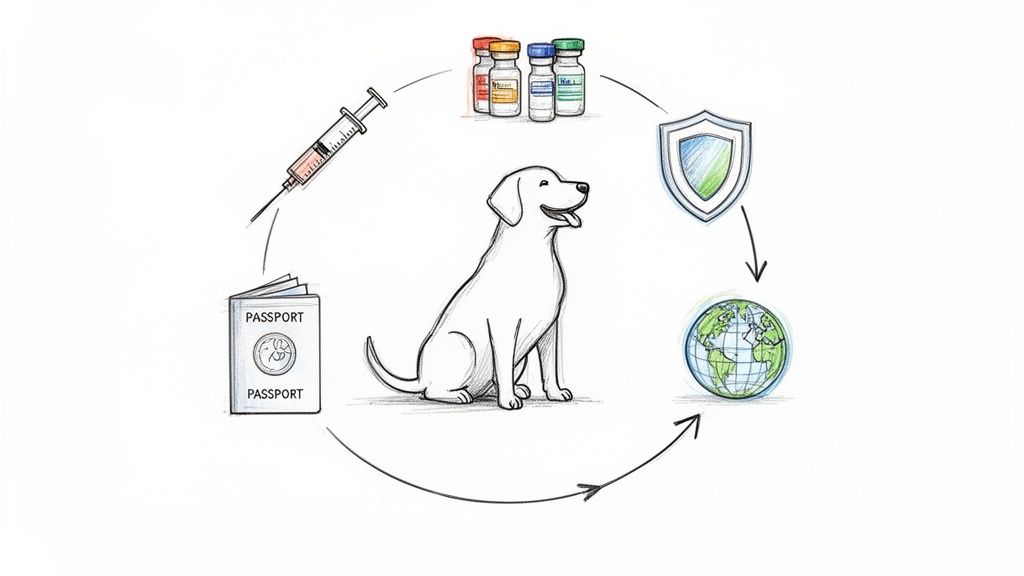
No matter where you're headed, one document is king: the rabies vaccination certificate. Honestly, you should just think of it as your dog’s passport. It’s the single most universally requested piece of health paperwork, and for most airlines and border crossings, its validity is non-negotiable.
This certificate isn't just a piece of paper; it's proof that your dog is protected against a major public health threat. You'll likely need it to board a plane, enter another country, and sometimes even for driving across state lines. The absolute first step in any travel plan is making sure you have an up-to-date, properly signed rabies certificate.
When traveling, careful record-keeping isn't just a good idea—it's often a requirement. A missing signature or an incorrect date on a health document can lead to stressful delays, unexpected costs, or even quarantine for your pet.
Proper prep means you can focus on the fun parts of the trip, not scrambling for paperwork at the last minute.
International Travel Requirements
This is where things can get really specific. Every country has its own set of import rules designed to keep diseases out. Some are pretty straightforward, but others can require months of planning.
Here are a few real-world examples to show you how much they can differ:
Traveling to the European Union: The EU has a clear process. A dog must be microchipped, get a rabies vaccine, and then wait 21 days before they can enter. That waiting period is critical—a vaccine given too close to your travel date won't count.
Traveling to Strict Countries (e.g., Australia, Japan): As rabies-free nations, these countries have some of the toughest rules on the planet. The process often involves a rabies titer test, which is a blood test to prove the vaccine is working effectively. This has to be done months in advance. If you don't follow their timeline exactly, your dog could face a long and very expensive quarantine.
This is why every single detail of your dog's vaccine history matters so much.
Platforms like Passpaw are built to help veterinarians and pet owners keep all these complex requirements straight, making sure every box is checked before you go.
Having a clear, organized system makes managing health certificates and vaccine records so much simpler. When all your documents are in one place, it cuts down on the confusion and ensures you’re meeting your destination's rules.
The Role of Digital Tools in Travel Prep
Trying to keep all the paperwork straight—from vaccine records to health certificates and titer test results—can feel completely overwhelming. For international travel to places like Europe or Asia, rabies titers and certificates are essential. These often require ISO-standard microchips and blood tests done at least 30 days after the rabies shot.
Thankfully, platforms like Passpaw are designed to manage this complexity. They help automate document preparation so vets and owners can avoid the nightmare of quarantine or being denied at the border. You can find more insights on the global importance of dog vaccines on gminsights.com.
Using a digital tool helps you and your vet work together seamlessly, organizing every requirement around your travel date. This makes sure nothing gets missed, from a simple booster shot to a time-sensitive blood test. Good preparation is the key to making sure your pet’s travel is a happy experience, free from stressful and completely avoidable headaches.
Common Questions About Dog Vaccinations
It's completely normal to have a ton of questions about your dog's health. When you start asking, "what vaccinations does my dog need," you're already on your way to being a fantastic, well-informed pet parent.
Vet visits can feel like a whirlwind of information, we get it. So, let's break down some of the most common questions to help you feel confident and prepared for your next appointment.
Are Dog Vaccinations Safe and What Are the Side Effects?
Yes, for the vast majority of dogs, vaccinations are very safe. They're one of the single most important things you can do for your dog's long-term health, and the protection they offer far outweighs the small risk of side effects.
Most reactions are mild and short-lived. You might notice your pup is a little sleepy, has some minor swelling at the injection site, or runs a slight fever for a day or so. These are actually good signs! It means their immune system is firing up and learning how to defend itself.
Serious reactions are very rare, but it's always smart to know what to watch for. Your vet will go over any specific risks for your dog and is the best person to call if you have any concerns after a visit.
Why Does My Puppy Need So Many Shots?
This is a great and super common question. Puppies are born with temporary immunity passed down from their mother's milk, known as maternal antibodies. Think of it like a temporary shield that gradually wears down over their first few months.
The series of booster shots is carefully timed to build up your puppy’s own immune system right as their mom's protection is fading. Since this timing varies from one puppy to the next, the series ensures there are no dangerous gaps where they're left unprotected.
It's not about giving them too much medicine. Instead, think of it as providing continuous, perfectly timed coverage during their most vulnerable stage, ensuring their new immune system is strong and ready.
Each shot in the series reinforces the last, creating a strong foundation of immunity that will protect them for years to come.
What Should I Do If My Dog Misses a Booster Shot?
First off, don't panic. Life happens! The right next step really depends on whether you have a puppy or an adult dog.
For a puppy, it's more critical to get back on schedule quickly to close any gaps in their still-developing immunity. Give your vet a call right away, and they'll get you back on track.
For an adult dog, it's usually less urgent, but you should still check in with your vet. Depending on which vaccine it is and how overdue the shot is, they might just give the booster as planned. In other cases, they may suggest restarting the initial series for that specific vaccine to ensure full protection.
How Can I Keep Track of My Dog's Vaccine Records?
Staying organized is everything, especially if you plan to travel, board your dog, or use a groomer. Always ask your vet for a printed or emailed copy of your dog's vaccination record after every visit.
A great pro tip is to snap a photo of the record with your phone so you always have a digital copy handy. You can also set calendar reminders for when the next shots are due so you never forget.
For those who travel, keeping paperwork straight is even more important. Some destinations require specific blood tests to confirm immunity, for instance. A digital pet health platform can be a lifesaver, keeping all your dog's records, health certificates, and travel deadlines in one secure spot. It's the easiest way to keep everything organized and unleash a great adventure.
Ready to make pet travel simpler? Passpaw provides a secure, easy-to-use platform that helps veterinarians and pet owners manage all the necessary health certificates and travel documents in one place. Ensure your next journey is smooth and stress-free by visiting https://passpaw.com.
More articles
From regulatory changes to best practices for veterinarians and pet owners, our resources keep you ahead of the curve.