Are you a team member in a veterinary practice?
Are you a pet parent planning a trip with your furry pal?
How Often Do Dogs Need Rabies Vaccination: A Complete Guide
When it comes to your dog's health, one question pops up all the time: how often do they really need a rabies shot? The short answer is that after their initial puppy vaccine and a one-year booster, most dogs are on a one to three-year schedule. The exact timing depends on the specific vaccine your veterinarian uses and, just as importantly, your local rules.
Your Quick Guide to Dog Rabies Vaccinations
Keeping your dog protected from rabies is one of the most fundamental parts of being a responsible pet owner. The schedule might seem a little confusing at first, but it follows a clear, logical pattern designed to build and maintain strong immunity. Think of it as building a solid foundation for your dog's health, starting in puppyhood and continuing for life.
The whole process kicks off with their very first vaccine as a puppy, usually given between 12 and 16 weeks old. This shot is the cornerstone of their defense. Then, a crucial booster is administered one year later to really lock in that protection.
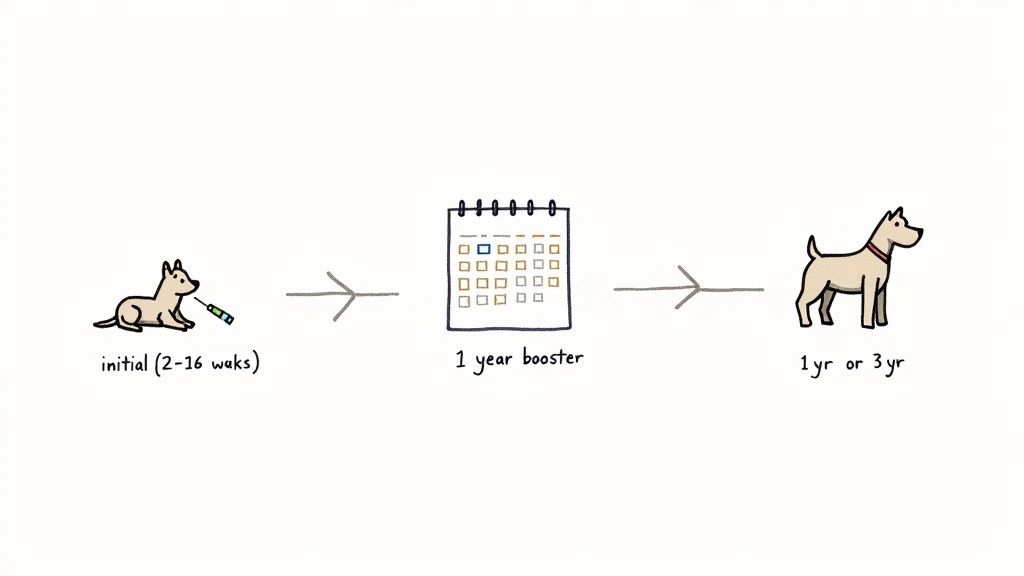
The Typical Rabies Vaccination Timeline
After that one-year booster, your dog settles into a regular cycle. Depending on the vaccine your vet uses, they'll need another booster every one or three years. This isn't just a friendly suggestion; it's a critical piece of a public health strategy to stop the spread of a deadly disease. Sticking to this schedule is essential for the safety of our entire community.
A consistent vaccination schedule does more than just protect your dog; it creates a community-wide shield against rabies, safeguarding other pets and people alike.
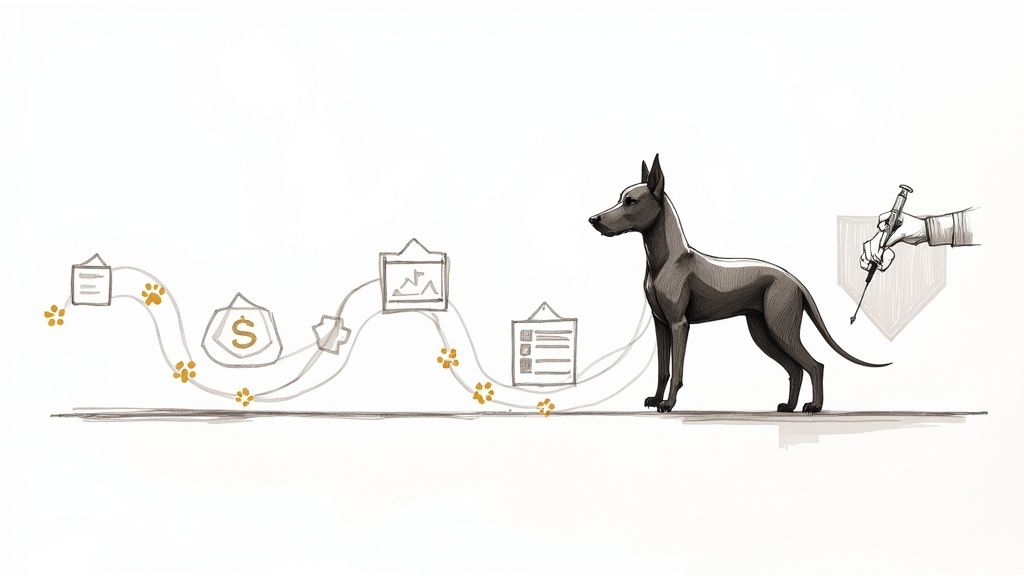
To make this crystal clear, here’s a simple breakdown of what a typical dog’s rabies vaccination journey looks like. This table gives you a quick snapshot of the key milestones in your dog's preventive care.
Typical Rabies Vaccination Timeline for Dogs
Vaccination Stage | Typical Age | Frequency |
|---|---|---|
Initial Puppy Vaccine | 12-16 Weeks Old | One-time shot to start immunity |
First Booster | One Year Later | Needed to strengthen initial protection |
Adult Boosters | Every 1-3 Years | Ongoing protection for adult dogs |
Getting familiar with this timeline helps you stay on track and ensures there are no dangerous gaps in your dog's protection. Your veterinarian is always your best guide for figuring out the precise schedule for your pet, factoring in their health, lifestyle, and the specific rules in your area. They'll help you navigate every step to keep your companion happy, healthy, and safe for years to come.
What Rabies Is and Why the Vaccine Is a Lifesaver
Before we get into the nitty-gritty of schedules and boosters, let's start with the "why." What exactly is rabies? Think of it as a relentless virus that attacks the central nervous system of mammals—including our dogs, wildlife, and even us.
The virus typically spreads through the saliva of an infected animal, usually from a bite. Once symptoms appear, rabies is almost always fatal. That stark reality is why prevention isn't just a good idea; it's a key part of responsible pet ownership. It’s no exaggeration to say the rabies vaccine is one of the greatest lifesavers in veterinary medicine.
The vaccine acts like a training manual for your dog's immune system, teaching it to recognize and fight off the rabies virus long before it can do any harm. It's an invisible shield, offering powerful protection against a very real threat.
The Unseen Threat of the Rabies Virus
The rabies virus is a slow but methodical attacker. After a bite, it quietly travels along the nerves toward the brain. This incubation period can vary, but once the virus reaches its destination, it triggers severe inflammation, leading to devastating symptoms.
Symptoms in dogs can be frightening and unpredictable. They often include:
Sudden Behavioral Shifts: A friendly dog might turn aggressive, or an outgoing pup could become shy and withdrawn.
Physical Signs: Watch for excessive drooling or difficulty swallowing, which creates that classic "foaming at the mouth" appearance. Weakness or paralysis, especially in the hind legs, is another key sign.
Disorientation: An infected animal may seem confused, wander aimlessly, or become overly sensitive to light and sound.
Knowing these signs isn't about scaring anyone—it’s about appreciating just how serious this disease is. The vaccine stops this entire horrifying process before it can even begin.
Protecting your dog with a rabies vaccination is one of the most loving and impactful actions you can take. It’s a simple shot that prevents a complex tragedy, safeguarding your pet, your family, and your community.
A Global Success Story with Ongoing Challenges
Vaccination isn't just about protecting one pet; it's a massive public health victory. Around the world, dedicated vaccination campaigns have made a staggering difference. Between 1990 and 2019, the number of human rabies cases dropped by over 43%, and deaths fell by more than 47%. This incredible progress shows how effective widespread animal vaccination is. You can read more about these global rabies trends to see the full impact.
But the fight isn't over. Rabies is still a serious threat in many parts of the world with low vaccination rates, which is a powerful reminder of why we can't get complacent.
How the Vaccine Works Its Magic
So, how does this single shot provide such powerful protection? The vaccine introduces a safe, inactive piece of the virus to your dog’s immune system. This gives their body a chance to build up protective antibodies without ever getting sick.
Think of these antibodies as a highly trained security team, ready to spring into action the moment the real virus shows up. This is the core principle behind how all vaccines work. If you want to dive deeper into the science and why boosters are so important, it helps to understand vaccine efficacy.
This preventative strategy is what makes the rabies vaccine such a brilliant tool. Instead of waiting for a disaster, we give our dogs the defenses they need from the start. This kind of proactive care is the foundation of a long, healthy, and happy life together.
Understanding the Standard Rabies Vaccination Schedule
Trying to figure out your dog’s rabies vaccination timeline can feel a little confusing at first. But the good news is, it's actually a pretty straightforward schedule designed to build a rock-solid, lasting defense for your best friend. Let's walk through it, step by step.
It all starts with that first puppy shot. Think of it as the foundation for their lifelong immunity against rabies. This is the first time their immune system learns how to recognize and fight off this devastating virus.
From there, the schedule is all about reinforcing that initial protection to keep your dog safe for years to come.
The First Puppy Shot Kickstarts Immunity
A puppy’s rabies protection journey kicks off with their first shot, usually given when they are between 12 and 16 weeks old. Vets wait until this age for a good reason: the natural immunity puppies get from their mother's milk can actually interfere with the vaccine if it's given too soon.
This first shot is absolutely critical. It introduces your puppy’s immune system to a killed version of the rabies virus, teaching it to build the right defenses without any risk. It's like their first day of self-defense training—essential for everything that follows.
After this visit, you'll get a rabies certificate and a tag for your dog's collar. Hang onto these; they're important.
The All-Important One-Year Booster
A year after that initial puppy vaccine, it's time for the first booster shot. This isn't just a suggestion; it's a necessary step that solidifies the foundation laid by the first vaccine. You could think of it as the final exam that locks in all the training.
This one-year booster dramatically ramps up your dog's immune response, ensuring they have robust, long-term protection. No matter if they switch to a three-year vaccine later, this one-year booster is a standard part of the protocol. It truly cements their immunity.
To really grasp why this timing is so vital, take a look at how rabies progresses after an animal is exposed. It's a stark reminder of why prevention is the only real option.
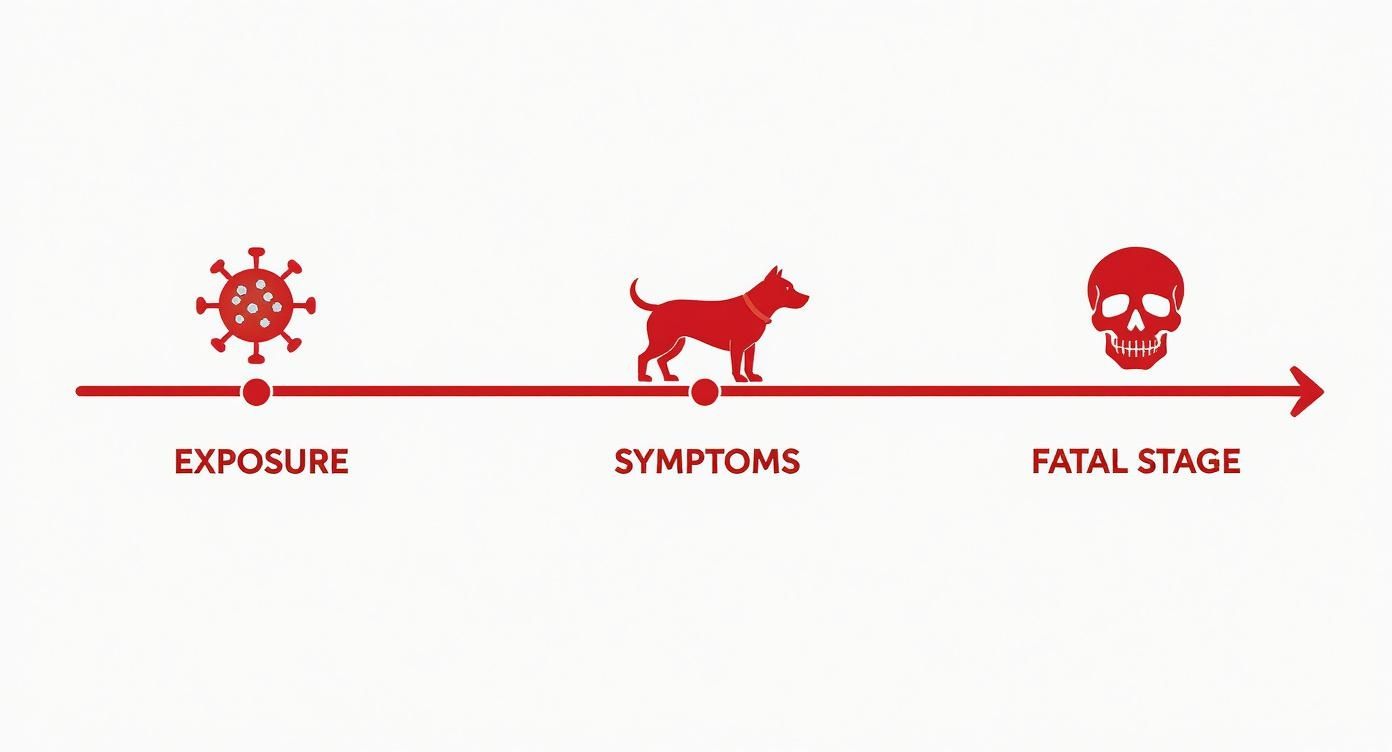
This visual really drives home the irreversible nature of the disease once symptoms appear, underscoring why a consistent vaccination schedule is a literal lifesaver.
Adult Boosters: One-Year vs. Three-Year Vaccines
Once your dog has had their initial puppy shot and that crucial one-year booster, they graduate to an adult booster schedule. This is where you’ll start hearing about one-year and three-year rabies vaccines. The most important thing to know is that these are different products, and the choice isn't just about convenience.
The specific vaccine your vet uses is what determines how often your dog needs a booster.
One-Year Vaccine: This vaccine is labeled for one year of protection and, you guessed it, needs a booster every year to keep your dog's immunity up to snuff.
Three-Year Vaccine: This vaccine has been proven to protect for a full three years. After getting the one-year booster, dogs on this vaccine will get their next shot in three years.
The decision between the two often comes down to your veterinarian’s recommendation and, critically, your local and state rules. Some areas may call for yearly vaccination no matter which type of vaccine is used.
It's a common misconception that a three-year vaccine is somehow "stronger." In reality, both vaccines are incredibly effective. They're just labeled for different durations of immunity based on the scientific studies behind them.
At the end of the day, your veterinarian is your best partner in all of this. They’ll help you map out a schedule that keeps your dog safe, healthy, and in line with all local rules. Sticking to that timeline ensures your dog's protective shield against rabies never wavers.
Why Rabies Vaccination Laws Vary by Location
If you’ve ever talked to a friend from another state about their pet, you might’ve noticed your dogs are on completely different rabies vaccination schedules. This isn't a mistake—it's a perfect example of how rabies prevention is fine-tuned for specific communities. The rules are rarely one-size-fits-all, and for good reason.
The simple truth is that rabies risk isn’t the same everywhere. Think of it like a local safety plan. A town with a big population of raccoons, bats, and foxes—all common carriers of the virus—is going to have different rules than a dense city with fewer wildlife encounters.
This localized approach helps public health officials build the most effective defense for their residents, both human and four-legged.
The Role of Local Wildlife
The biggest factor driving different rabies rules is the virus's presence in local wildlife. Rabies is a zoonotic disease, which means it can jump from animals to people. Because of this, state and county health departments keep a close watch on which animals are most likely to carry and spread the virus in their area.
For example:
In the Eastern United States, raccoons are a major source of rabies.
Out in the Southwest, skunks and bats are often the primary concern.
Other regions might be more focused on foxes as the main threat.
These regional differences are why local authorities set vaccination frequencies that match the actual level of risk. An area that just had a wildlife rabies outbreak might suggest annual vaccinations, even for a three-year vaccine, just to stay ahead of any potential spread.
State, County, and City Regulations
It's important to know that rabies vaccination rules are often made at the state, county, or even city level. That’s why you can cross a county line and suddenly find yourself under a different set of guidelines. There's no single federal law that dictates how often dogs need rabies vaccination for every American.
This system gives local governments the flexibility they need to respond to their own public health situations. They look at wildlife data, sure, but they also consider population density and the number of reported animal bites. This ensures the regulations in place are truly relevant to the people and pets living there.
The most important takeaway is this: your local regulations are the final word. Always follow the guidelines for your specific area to make sure your dog is both protected and following local rules.
How to Find Your Local Rabies Laws
Figuring out the specific rules for your area isn’t as ruff as it sounds. You’ve got a couple of excellent resources right at your fingertips to get the correct information and make sure you’re doing everything by the book.
Your go-to sources should always be:
Your Veterinarian: This is your number-one resource. Your vet is not only an expert in animal health but is also up-to-date on local and state vaccination rules. They’ll give you the most accurate and personalized advice.
Your Local Public Health Department: Your city or county public health website is another fantastic place to look. They usually post the requirements for pet vaccinations, licensing, and what to do in case of an animal bite.
Checking these sources will clear up any confusion and help you build the perfect vaccination plan for your furry family member.
International Travel and Rabies Rules
If you think navigating rules between states is tricky, international travel adds a whole new layer of complexity. Every country has its own strict import requirements to prevent diseases like rabies from crossing its borders. These rules are non-negotiable and often require months of planning.
Failing to meet a country's rabies vaccination requirements can get your pet denied entry or, worse, put into a long and expensive quarantine. It’s serious business. Getting every detail right is absolutely essential for a smooth journey, so always work closely with your vet to make sure every box is checked.
Your Veterinarian's Role in Keeping Your Dog Safe
Your veterinarian is so much more than the person who gives your dog their shots. Think of them as your partner—and your pet’s personal health manager—in navigating a lifetime of good health. When it comes to something as serious as rabies, their role goes way beyond simply giving a vaccine. They're your strategist and trusted advisor, making sure your dog's protection plan is a perfect fit.
Instead of just following a generic checklist, your vet creates a personalized vaccination plan. They look at your dog's unique story: their age, overall health, lifestyle, and even their personality. This tailored approach is what makes preventive care truly effective.
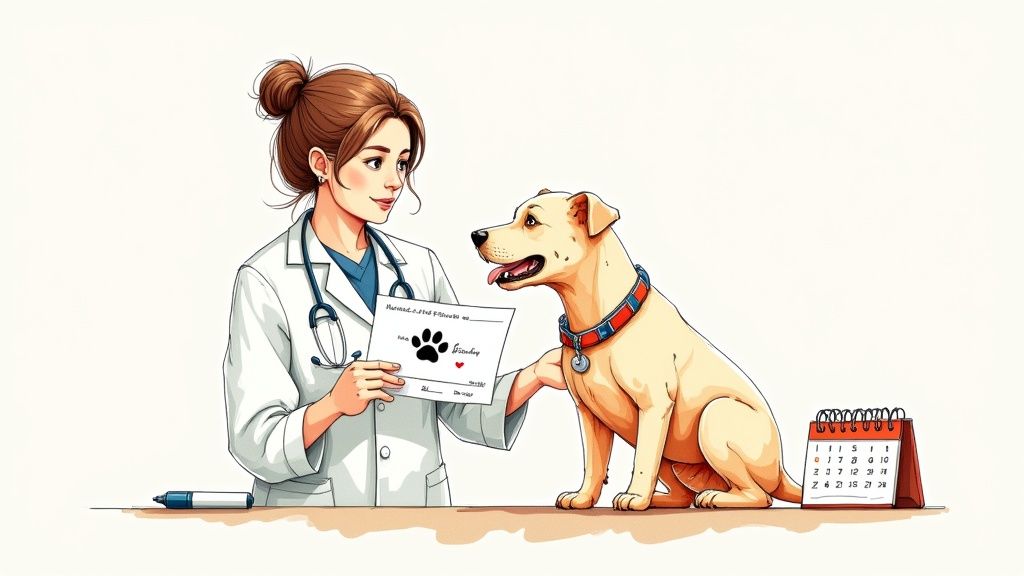
Crafting a Personalized Vaccination Plan
No two dogs are the same, so their healthcare shouldn't be either. Your vet carefully considers several key factors to build the right rabies vaccination schedule for your companion.
Age and Health Status: A bouncy, healthy puppy has very different needs than a senior dog managing a chronic condition. Your vet will always evaluate their overall wellness first to make sure the vaccine is both safe and effective.
Lifestyle Assessment: Is your dog an avid hiker who loves exploring areas with lots of wildlife? Or are they more of a city slicker who sticks to the local dog park? A higher risk of exposure might change your vet’s recommendations.
Local Requirements: Vets are experts on the specific rules in your town, county, and state. They ensure your dog's vaccination schedule keeps them both safe and in line with local guidelines, taking all the guesswork out of it for you.
This kind of expert guidance is invaluable. The data shows that advice from a veterinary professional makes a huge difference in vaccination rates, which is absolutely critical for community-wide safety.
Building a strong, trusting relationship with your veterinarian is one of the best investments you can make in your dog's health. It ensures you have a reliable expert to turn to for every question and concern, from puppyhood to their golden years.
More Than Just a Shot
Your vet’s job doesn’t end when the needle comes out. They also provide the official documentation that is essential for so many parts of your dog's life.
This includes the rabies certificate, a formal document that serves as official proof of vaccination. You'll need this for all sorts of things:
Licensing your dog with your city or county.
Enrolling in doggy daycare, boarding kennels, or training classes.
Traveling with your pet, especially across state or international borders.
The Importance of Expert Advice
The impact of professional veterinary guidance on public health is massive. The World Health Organization (WHO) has a goal of 70% vaccination coverage in dog populations to effectively stop rabies from spreading to humans. And here’s the kicker: studies show that when pet owners are advised by a veterinarian, they are 2.4 to 6.4 times more likely to vaccinate their dogs annually. You can discover more insights about these vaccination trends and see the numbers for yourself.
This direct link highlights just how critical vets are in preventing this deadly disease. They help you navigate the complexities of pet health, answer your questions, and make sure that knowing how often do dogs need rabies vaccination is a clear and simple part of your routine. This partnership is the key to a lifetime of happy, healthy, and safe companionship.
As a pet owner, staying on top of your dog’s health is priority one, and good organization is your secret weapon. After figuring out your dog's rabies shot schedule, the next step is managing the paperwork. Trust us, a little planning now saves a ton of stress later, ensuring you can always pull up the right documents right when you need them.
This isn't just about avoiding a messy junk drawer; it's about being prepared. You'll be surprised how many times you'll need to show official proof of their rabies vaccination. Having those records handy makes everything from a vet visit to a last-minute trip run a whole lot smoother.
The Importance of the Rabies Certificate
When your dog gets their rabies shot, your veterinarian gives you more than just a receipt. They’ll provide a rabies certificate, which is the official proof of vaccination. This document is a big deal.
Think of it as your dog's health passport. It contains crucial details that groomers, boarding facilities, and officials need to see, like:
Your Dog's Information: Their name, breed, age, and other identifiers.
Vaccine Details: This includes the vaccine manufacturer, serial number, and—most importantly—the expiration date.
Veterinarian's Signature: This confirms a licensed professional administered the shot.
This certificate is the gold standard you'll need for just about everything. Our guide on what counts as proof of a rabies vaccine dives deeper into why this specific document is so critical.
Simple Tips for Staying Organized
You don’t need a complex filing system to keep your dog’s records straight. A few simple habits can make all the difference, so you're never scrambling in a panic.
A great first step is to create a dedicated "pet file" or folder. Keep all health-related documents in one spot—the rabies certificate, vet visit summaries, and any other important papers. For a modern, digital backup, just snap a clear photo of the certificate with your phone and save it to a cloud service. That way, you’ve always got a copy on hand.
Keeping your dog's vaccination records organized is more than a chore—it’s an act of responsible pet ownership that ensures their safety and your peace of mind.
When You Will Need to Show Proof
Knowing your dog's vaccination schedule is only half the battle; proving it is the other. You’ll find yourself needing to present that little piece of paper more often than you think.
Common situations include:
Registering Your Dog: Most cities and counties require proof of rabies vaccination to issue a pet license.
Grooming and Boarding: Facilities that care for multiple pets have to ensure every animal is protected.
Doggy Daycare and Training: Proof of vaccination is standard for enrolling in group classes or play sessions.
Traveling: Crossing state or international borders almost always requires up-to-date rabies documentation.
The global impact of keeping dogs vaccinated is enormous. Dogs are the source of 99% of all human rabies cases worldwide, so keeping them vaccinated is the single most effective way to protect people. Each year, about 29 million people need post-bite treatment, which really highlights why organized vaccination is so vital. You can learn more about the WHO's global prevention strategies to see how your individual actions contribute to a worldwide health mission.
Common Questions About Rabies Vaccinations
Even with a clear vaccination schedule, it's totally normal to have questions pop up. When it comes to your dog's health, you want to have all the facts. We've pulled together some of the most common things people ask to give you quick, straightforward answers.
Do Older Dogs Still Need Rabies Shots?
Yes, absolutely. Rabies doesn't discriminate by age, and a dog's immunity can fade over time if they don't get regular boosters. Your veterinarian will always consider your senior dog's overall health to make sure the vaccine is safe for them, but because of safety and local rules, skipping it usually isn't an option.
What Are the Side Effects of the Rabies Vaccine?
The vast majority of dogs handle their rabies shot like a champ, with no issues at all. It is possible to see some mild, short-lived reactions, which is just a sign that their immune system is firing up and doing its job.
You might notice things like:
A little soreness or swelling right where the shot was given
Feeling a bit tired or sluggish for a day or so
Not being quite as interested in their food bowl temporarily
Serious reactions are incredibly rare, but you should always call your vet if you notice anything that worries you.
What if My Dog Is Overdue for a Booster?
First, don't panic if you've missed your dog's booster date. Life happens. The best course of action is to call your veterinarian right away and get them back on the schedule. Your vet will know exactly how to get their protection back on track without leaving any risky gaps in their immunity.
Can a Titer Test Replace a Rabies Booster?
This is a fantastic question and one that comes up a lot. A titer test can measure the level of rabies antibodies in your dog’s blood, showing their level of immunity. However, in most places, it is not accepted as a substitute for vaccination in the eyes of the law. We dive deeper into this in our detailed guide on rabies titer testing for dogs.
The bottom line is that local and state rules often require proof of a current vaccination, not just proof of immunity. Sticking to the booster schedule is the best way to stay in line with these rules.
Managing pet health records, especially when you're getting ready for travel, can feel like a puzzle. Passpaw simplifies the process for veterinary practices handling international health certificates, making sure every single requirement is met with confidence. Find out how Passpaw can help at https://passpaw.com.
More articles
From regulatory changes to best practices for veterinarians and pet owners, our resources keep you ahead of the curve.