Are you a team member in a veterinary practice?
Are you a pet parent planning a trip with your furry pal?
Your Guide to the Real DHPP Vaccine Cost in 2026
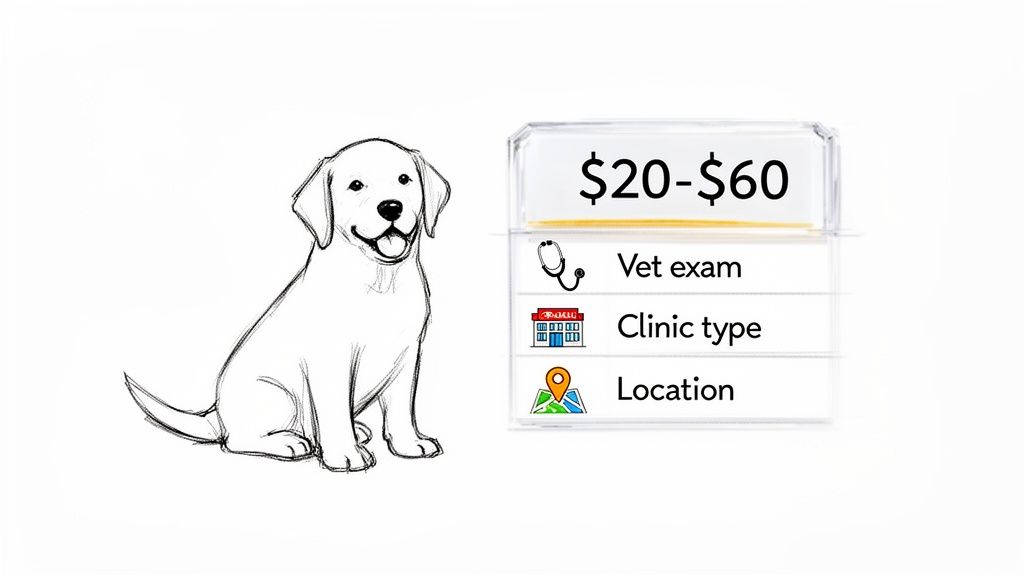
When you're budgeting for your dog's health, one of the first questions that comes up is the DHPP vaccine cost. It's a bit of a moving target, but a single shot usually lands somewhere between $20 and $60. For a full puppy series, you’re likely looking at a total cost of $75 to $150.
But that's just for the vaccine itself. The final number on your vet bill will almost always be higher, and it helps to know why.
What Really Goes Into the DHPP Vaccine Cost?
Getting a vaccine isn't like buying something off a shelf. You're not just paying for the liquid in the syringe; you're paying for a whole package of professional care that makes sure your dog gets that vaccine safely.
Thinking of it this way helps avoid any sticker shock. You're investing in a full health check, not just a quick jab.
To get a clearer idea of what makes up the final bill, let's look at the individual pieces. It's helpful to see an itemized breakdown so you know exactly where your money is going.
Estimated DHPP Vaccination Cost Breakdown
This table breaks down the typical costs associated with a vaccination visit.
Cost Component | Typical Price Range (USD) | What It Covers |
|---|---|---|
Veterinary Exam Fee | $50 - $90 | A complete nose-to-tail physical exam. The vet needs to confirm your dog is healthy enough to receive a vaccine. |
DHPP Vaccine Dose | $20 - $60 | The price of the actual vaccine medication itself. |
Clinic Type & Location | Varies | Overhead costs differ greatly between a high-end urban clinic, a rural practice, or a low-cost mobile unit. |
Biohazard Disposal | $2 - $10 | A small but necessary fee for the safe disposal of medical waste like used needles and syringes. |
As you can see, the exam fee is often the biggest part of the bill. It reflects the vet's time and expertise in making sure your pet is in good shape before their immune system is challenged with a vaccine. Everything else—from the clinic's rent to waste disposal—gets factored in, too.
What Exactly Is the DHPP Vaccine Anyway
Before we get into the cost, it’s important to understand what the DHPP vaccine is and why your vet recommends it. Think of it as a foundational shield for your dog. It's a “core” vaccine, which means it's recommended for every dog, no matter their breed, age, or lifestyle.
This isn’t just a box to check; it’s about giving your dog a strong defense against some incredibly nasty and widespread diseases. The best part is that it’s a combination shot, meaning your pup gets broad protection with fewer pokes.
What Does DHPP Stand For?
The name itself can feel a bit like alphabet soup, but each letter stands for a specific and dangerous virus this single vaccine helps prevent.
D is for Distemper: This is a severe, highly contagious virus that attacks a dog’s respiratory, digestive, and nervous systems. It can spread through the air and is often fatal.
H is for Hepatitis: Specifically, infectious canine hepatitis (which is different from the human kind). This virus targets a dog’s liver, kidneys, and other vital organs.
P is for Parainfluenza: This is one of the main culprits behind "kennel cough.” It's a respiratory virus that spreads like wildfire wherever dogs gather, from dog parks to boarding facilities.
P is for Parvovirus: A notoriously tough and aggressive virus, "parvo" is especially devastating for puppies. It attacks the gastrointestinal tract, causing severe illness that requires intensive, and very expensive, veterinary care to treat.
The DHPP vaccine is a cornerstone of your dog’s preventative health care. Getting this shot is one of the most effective ways to avoid the heartache—and the significant expense—that comes with treating these four preventable diseases.
The widespread use of core vaccines like DHPP is a huge factor in the global veterinary market. As more people bring pets into their homes, the focus on preventative care has grown. The veterinary vaccines market, valued at $10.8 billion in 2026, is projected to climb to $18.2 billion by 2036. This growth is a direct reflection of how vital these protections are for pets worldwide.
Understanding what this vaccine protects against really puts the DHPP vaccine cost into perspective. To see how DHPP fits into your dog’s overall health plan, check out our guide on what vaccinations your dog might need. It's all about proactive care, not reactive treatment.
Breaking Down the Bill: What Really Drives the Cost
Ever looked at a vet bill and felt like you were trying to read a different language? Let's peel back the layers and get to the bottom of what really goes into the final DHPP vaccine cost. The price of the shot itself is just one piece of a much larger puzzle.
When you take your dog in for a vaccine, you’re not just paying for the liquid in the vial. You're paying for a professional's time, a thorough health check, and the expertise needed to make sure the vaccine is given safely. It’s a package deal to ensure your pup is healthy enough for the shot in the first place.
The Core Components of Your Vet Bill
So, what are you actually paying for? A few key items make up the final bill, and knowing what they are helps you see the value behind the numbers.
Here are the main things you'll likely see itemized on your receipt:
The Vet Examination Fee: This is almost always the biggest part of the total. Before giving any vaccine, your vet needs to do a physical exam to confirm your dog is healthy. Giving a vaccine to a sick animal can be ineffective or, in some cases, even make things worse.
The Vaccine Itself: This is the cost for the actual DHPP dose. The price can depend on the manufacturer and whether it’s a standalone shot or part of a bigger combination vaccine.
Biohazard Disposal Fees: It might seem small, but there's a real cost to safely disposing of used needles and medical waste. This fee usually adds just $2 to $10 to the bill.
Combination Vaccines and Add-Ons
Sometimes, your vet might recommend a vaccine that protects against more than just the four core diseases in DHPP. This is where it gets a little more complex, but it’s all about tailoring protection to your dog’s lifestyle and risks.
A common example is adding protection for Leptospirosis, a bacterial disease that can be picked up from contaminated water or soil. This turns the DHPP vaccine into a DHLPP vaccine. Since it provides more coverage, adding this protection will naturally increase the price.
This diagram shows what each letter in the standard DHPP vaccine stands for.
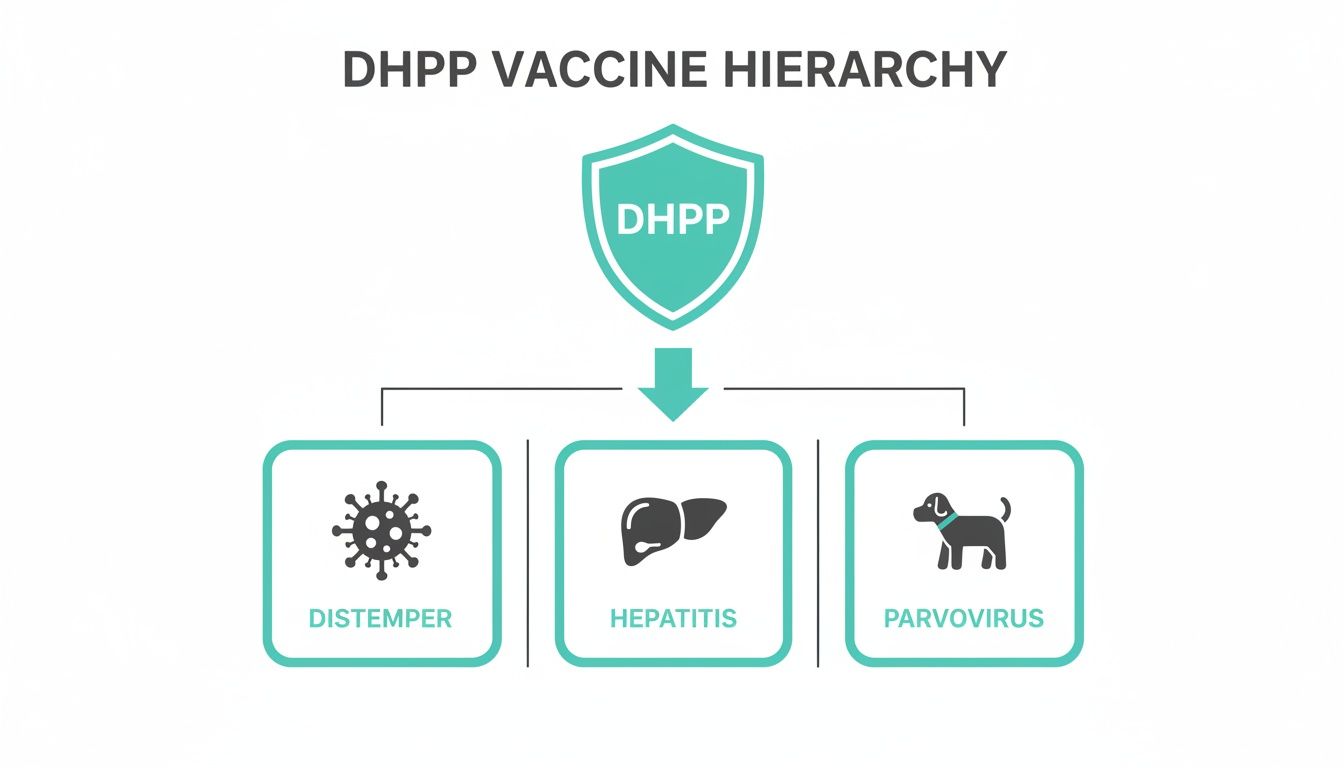
Think of it as a 4-in-1 shot that guards your dog against some very serious, and potentially fatal, illnesses.
Location, Location, Location
Just like with real estate, where your vet is located plays a huge role in pricing. A clinic in a busy city center has much higher overhead—think rent, utilities, and staff salaries—than a small practice in a rural town. That difference is directly reflected in their prices.
The type of clinic you choose matters, too. Your total bill will look very different depending on whether you visit a private practice, a corporate chain, or a low-cost mobile clinic.
Here's a quick comparison to give you an idea of what to expect.
How Clinic Type Affects Average DHPP Vaccination Costs
Clinic Type | Estimated Total Visit Cost (Exam + Vaccine) | Pros & Cons |
|---|---|---|
Private Veterinary Practice | $75 - $150 | Pros: Personalized care, long-term relationship with your vet. |
Corporate Vet Clinics (e.g., Banfield, VCA) | $70 - $120 | Pros: Standardized care, often have wellness plans. |
Mobile/Pop-Up Vaccine Clinics | $40 - $75 | Pros: Very affordable, convenient. |
Non-Profit/Shelter Clinics | $30 - $60 | Pros: Lowest cost, mission-driven. |
As you can see, shopping around can save you a significant amount of money. The most important thing is ensuring your dog gets the essential care they need from a qualified professional.
While the base DHPP vaccine cost for a single dose often falls between $20 to $40, that can easily jump to $45 to $75 for combination shots like DHLPP, especially in areas where certain diseases are more common.
We dive deeper into all these factors and how they compare in our complete guide on puppy vaccination prices.
Puppy Shots and Adult Boosters Explained
Vaccinations aren't a one-and-done deal. Getting a handle on the full timeline, from those early puppy appointments to their adult years, is crucial for planning your pet's healthcare and understanding the total DHPP vaccine cost over their lifetime.
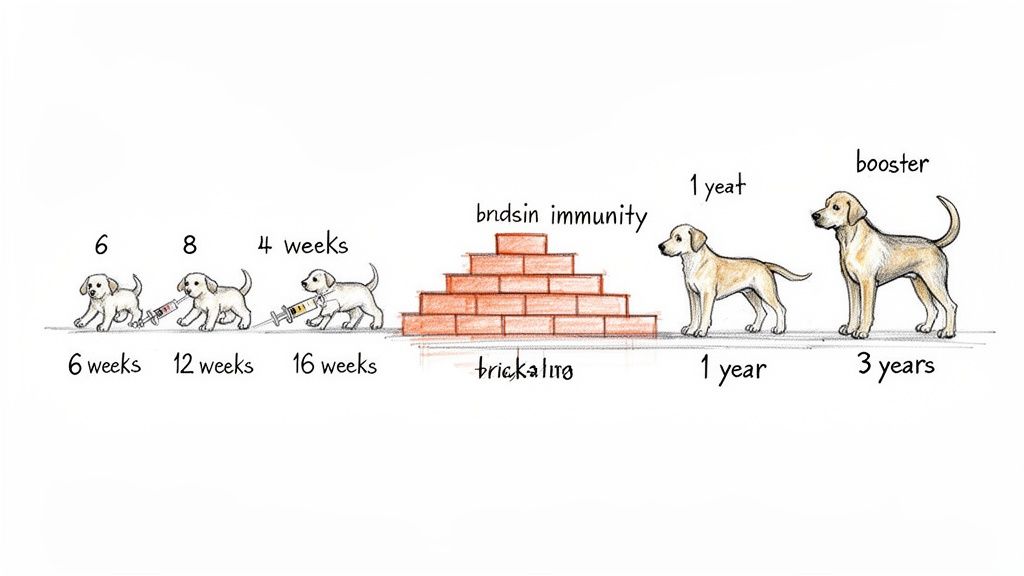
Think of building a puppy's immunity like building a strong brick wall. It’s not something you can do with a single brick; it takes a series of carefully placed layers to create a solid defense. This is exactly why puppies need a series of shots, not just one.
The Puppy Shot Series
When puppies are born, they get a temporary starter pack of immunity from their mother's milk. This is a great head start, but that natural protection begins to fade within their first few weeks, leaving them exposed and vulnerable.
The puppy shot series is timed to start building their own durable immunity right as their mother’s protection is wearing off.
Starting the Series: The first DHPP vaccine is typically given when a puppy is around 6 to 8 weeks old.
Building Protection: After that initial shot, your puppy will need boosters every 2 to 4 weeks until they are about 16 to 20 weeks old.
Why a Series? Each shot in the series acts like a training session, teaching their young immune system how to recognize and fight off the dangerous viruses covered by the DHPP vaccine.
This initial series is the most intensive part of their entire vaccination schedule. Following your vet's advice helps lay the foundation for a long, healthy life. If you're trying to keep track of all these dates, using a printable puppy shot record can be a real lifesaver.
Completing the full puppy series is key for lasting immunity. Missing some of these early shots can leave gaps in your dog's defensive shield, making them more open to serious illness.
Adult Dog Boosters
Once that foundational wall of immunity is built, the vaccination schedule thankfully gets a lot simpler. Your dog won't need to see the vet for a shot every few weeks anymore. Instead, they'll switch to a regular booster schedule to keep their immunity topped up.
After the puppy series is complete, a booster is usually given one year later. From there, most adult dogs need a DHPP booster every one to three years. Your veterinarian will help you figure out the best schedule based on your dog's specific health, lifestyle, and the disease risks in your area. This ongoing care is an important part of the long-term DHPP vaccine cost.
Smart Ways to Manage Your Pet's Vaccine Costs
Keeping your dog healthy is a top priority, but vet bills shouldn't create financial stress. Thankfully, you have several options for managing the DHPP vaccine cost without cutting corners on your dog’s care. A bit of forward planning can make all the difference in making preventative care affordable.
The best strategy is to be proactive. Instead of just reacting to vet bills as they come, you can look into options that bundle services or spread payments out over time, making your pet’s healthcare budget much more predictable.
Explore Wellness and Pet Insurance Plans
Many vet practices and insurance companies now offer plans specifically for routine preventative care. These can be excellent tools for managing your annual budget.
Veterinary Wellness Plans: Some clinics offer their own monthly subscription plans. These often bundle services like annual exams, vaccinations, and parasite prevention into a single, predictable fee, which helps you avoid a large one-time bill.
Pet Insurance: While many insurance plans are geared toward accidents and illnesses, some now offer wellness riders as an add-on. These riders can help cover the costs of core vaccines like DHPP, annual check-ups, and other routine care.
It's always worth asking your vet directly if they offer any wellness packages. You might be surprised by how much you can save.
Find Low-Cost Vaccine Clinics
If affordability is your main concern, seeking out low-cost clinics can make a big impact. These are often run by non-profits or local government agencies whose mission is to make essential pet care accessible to the community.
Look for clinics run by local animal shelters, humane societies, or even mobile "pop-up" events in your area. They frequently provide core vaccinations like DHPP at a fraction of the price you'd pay at a private practice, largely because their overhead is lower and their focus is on public health.
You might have a longer wait at these clinics, but the savings on your DHPP vaccine cost can be substantial.
Be a Proactive Pet Parent
Finally, one of the easiest ways to manage costs is to keep an open line of communication with your vet. Don’t hesitate to ask for an itemized estimate before any procedure or appointment. This gives you a clear breakdown of all the charges and lets you discuss different options.
This proactive approach is part of a larger, global trend toward making pet care more accessible. For instance, some government-led initiatives have successfully cut rural DHPP access costs by 15-20% through mass vaccination campaigns. On top of that, the technology behind the DHPP vaccine itself helps; its durability can reduce the need for revaccination by up to 25%, lowering costs over your dog's lifetime. You can find more details in this global canine vaccines market report.
By taking these steps, you can be a financially savvy pet owner while making sure your best friend gets the excellent care they need to live a long and healthy life.
Vaccines and Pet Travel: What You Need to Know
Planning a trip with your dog? One of the very first things you'll need to sort out is their vaccination status. Whether you're flying across the country or traveling internationally, proof of up-to-date core vaccinations like DHPP is almost always a requirement from airlines, destinations, and even pet-friendly hotels.
Think of these vaccination records as your dog’s health passport. Without them, your travel plans could be stopped in their tracks. This isn't just about paperwork; it's a critical measure to protect your dog from getting sick and to prevent the spread of illness across borders.
Organizing Your Dog’s Health Records for Travel
Managing health certificates, vaccination records, and country-specific import rules can feel like an incredibly complex puzzle. Every destination has its own set of guidelines, and timing is everything. A vaccine given even a day too late or recorded improperly on a form can derail your trip.
Staying organized is the key to a stress-free experience. Here’s what you typically need to have in order:
Proof of Core Vaccinations: This includes the DHPP vaccine. The records must be clear, readable, and signed by a licensed veterinarian.
Rabies Vaccination Certificate: This is a nearly universal requirement for travel and comes with very strict timing rules.
International Health Certificate (IHC): This is often a complex document that needs to be completed and endorsed by government authorities within a tight window before your departure.
Staying organized is critical. Modern tools can help pet owners and vets manage vaccination records, track important deadlines, and simplify the process of gathering all the necessary travel documents.
This is exactly where a platform like Passpaw can be a game-changer for both veterinarians and pet owners. By centralizing all the necessary documentation and sending automated reminders for key deadlines, these tools help eliminate the last-minute scramble and reduce the risk of costly mistakes.
If you’re wondering what other immunizations your dog might need for a specific trip, you can learn more about vaccines dogs need to fly in our detailed guide. Proper preparation is the best way to ensure a smooth and safe journey for both you and your pet.
Frequently Asked Questions About the DHPP Vaccine
It’s completely normal to have questions about your dog's vaccinations. The DHPP shot is one of the most important, so let's clear up some of the common questions pet owners ask to make sure you feel confident about your dog’s health.
Is the DHPP Shot the Same as a '5-in-1' Vaccine?
That's a great question, and the answer is: often, yes. The term "5-in-1" usually refers to the core DHPP vaccine with an added protection for Leptospirosis, making it a DHLPP vaccine. You might even hear vets talk about "7-in-1" shots.
Because the names can get confusing, it's always best to ask your vet exactly which diseases are covered in the shot they recommend. This helps you understand precisely what your dog is protected against and clarifies the DHPP vaccine cost versus any combination add-ons.
Are There Side Effects to the DHPP Vaccine?
For the vast majority of dogs, the DHPP vaccine is very safe. It's pretty common for a dog to be a little sleepy, have a mild fever, or show some soreness at the injection site for a day or two. Don't worry—this is just a sign their immune system is firing up and learning to fight off the viruses.
Serious reactions are very rare. However, you should call your vet right away if you see anything concerning like facial swelling, hives, or vomiting. Your veterinarian can give you a full rundown of what to watch for.
Why Does My Puppy Need So Many Shots?
Puppies are born with some temporary immunity passed down from their mother’s milk. This natural protection is fantastic, but it starts to fade after just a few weeks, leaving them vulnerable to serious illness.
The puppy shot series is timed to start building their own strong immunity just as their mother's is wearing off.
Think of it like building a brick wall—each shot is another layer of bricks. Once the wall is built in puppyhood, adult dogs just need occasional "maintenance" with booster shots to keep it strong.
Do Indoor Dogs Really Need the DHPP Vaccine?
Yes, they really do. This is a common point of confusion, but the viruses the DHPP vaccine protects against are tough and invisible. They can easily be tracked into your home on shoes, clothing, or even by guests. An indoor lifestyle unfortunately doesn't guarantee safety from these sneaky germs.
Because these diseases are so severe and can spread so easily, veterinarians consider the DHPP vaccine a core, essential shot for all dogs, regardless of their daily routine. It's a small step that provides critical peace of mind.
Planning a trip with your newly vaccinated pup? Don't let confusing paperwork ruin your adventure. Passpaw simplifies the entire process of getting international health certificates, making pet travel compliance easier for everyone involved. Check out Passpaw today and travel with confidence.
More articles
From regulatory changes to best practices for veterinarians and pet owners, our resources keep you ahead of the curve.