Are you a team member in a veterinary practice?
Are you a pet parent planning a trip with your furry pal?
How Do I Get a Pet Passport? Your Guide to Global Pet Travel
Getting a pet passport is all about completing a few key steps in the right order. It's not a single, magical booklet like a human passport, but rather a collection of official health documents that prove your pet is ready for travel.
In short, your pet will need an ISO-compliant microchip, a rabies vaccination, and an official Animal Health Certificate (AHC) or a similar document specific to your destination. This paperwork is issued by an accredited veterinarian within a very strict timeframe before you leave. Think of it as your pet's official 'pawsport' to a smooth trip.
Your Pet Travel Documentation Checklist
Planning an international trip with your furry family member should be exciting, but the paperwork can feel like a maze. My goal here is to give you a clear, step-by-step roadmap to follow.
And this isn't a niche activity anymore. In the U.S. alone, an estimated 2 million pets board commercial flights every year. That's a massive number of owners who have to navigate these exact rules. You can explore more pet travel statistics to see just how common this has become.
The Core Steps to Your Pet's Passport
At its heart, the process boils down to three main milestones: identification, vaccination, and certification. Each step builds on the last, and getting the order right is absolutely critical. You can’t get the vaccination certified without a microchip, and you can't get the final health certificate without proof of that vaccination.
This visual breaks down the essential flow for getting your pet's travel documents in order.
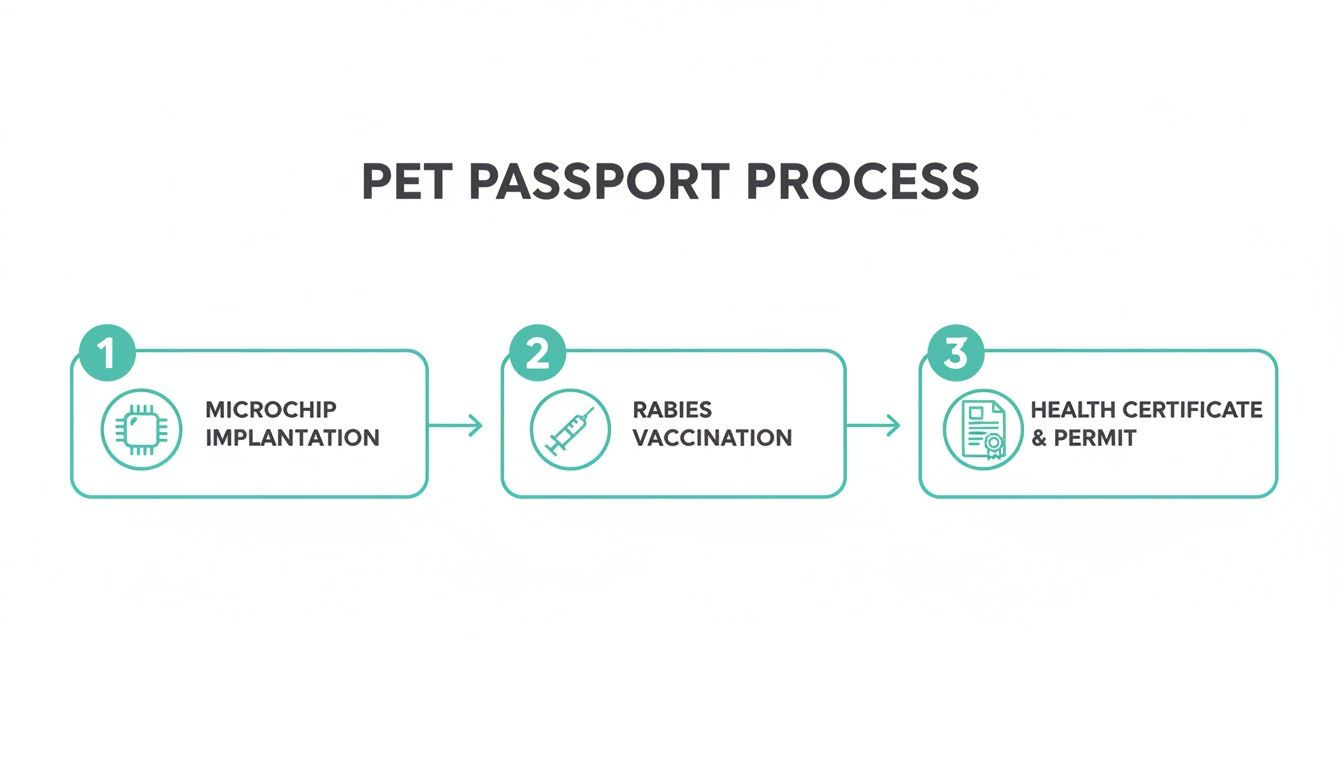
As you can see, the journey begins with that tiny microchip and ends with the final health certificate, with the rabies shot being the critical middle step.
Why a Checklist Is Your Best Friend
A simple checklist can be the difference between a smooth trip and a last-minute panic. While every country has its own specific quirks, the foundational requirements are nearly universal.
To get you started, here's a quick overview of the non-negotiables.
Pet Passport Quick Start Guide
This table summarizes the core requirements and what to expect in terms of timing for your pet's travel documents.
Requirement | Key Detail | Typical Timeline |
|---|---|---|
ISO-Compliant Microchip | Should be implanted before the rabies vaccine is given. | Can be done anytime, but should happen before all other steps. |
Rabies Vaccination | Given after the microchip is confirmed to be in place. | At least 21-30 days before travel, depending on destination. |
Animal Health Certificate | Issued by a USDA-accredited vet; shows fitness for travel. | Usually needs to be issued within 10 days of your departure. |
Think of these three items as the foundation of your pet's travel file. Getting them right, and in the right order, is everything.
Here’s a closer look at those non-negotiable items that will be on every pet traveler's list:
ISO-Compliant Microchip: This is your pet's permanent ID. It's a tiny chip, but it's the first official step. It should be implanted before the rabies vaccination is given. If the timing is off, you may have to start over.
Rabies Vaccination: This should be given after the microchip. There's also a waiting period—usually 21 days for travel to the EU, for example—after the primary vaccination before your pet can travel.
Animal Health Certificate (AHC): This is the final document issued by an accredited vet, typically within 10 days of your travel date. It’s the final stamp of approval.
The secret to a stress-free process is starting early and paying close attention to timelines. A simple mistake, like getting the rabies shot before the microchip is implanted, could invalidate everything and force you to restart the clock.
Understanding these milestones helps turn what feels like a complex ordeal into a series of manageable steps.
Building the Foundation: Microchip and Vaccinations
Think of preparing for pet travel like building a house. You can't put up the walls before you have a solid foundation. For a pet passport or health certificate, that foundation is made of two non-negotiable elements: a microchip and a rabies vaccination.
Getting these two steps right—and in the correct order—is the single most important thing you can do to ensure a smooth process.
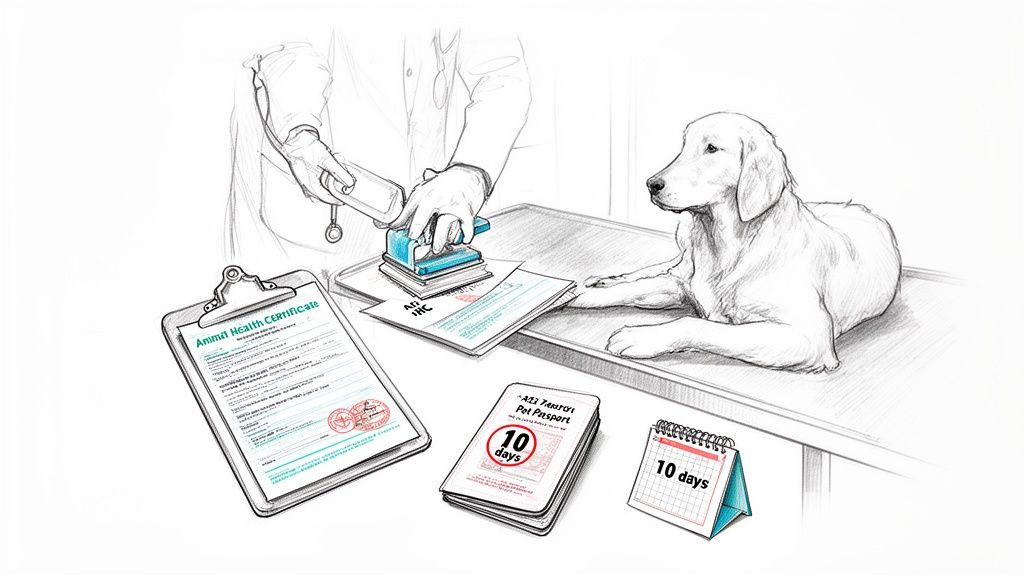
This isn’t just about ticking boxes on a form. It's about creating an official, internationally recognized identity for your pet. Let’s break down exactly what that involves.
Your Pet’s Digital ID Card: The Microchip
Before anything else, your pet needs a microchip. This tiny implant is their permanent identification, linking them directly to you and their health records. It’s a simple procedure your vet can do in minutes, but it's the official starting line for your pet’s travel adventure.
Not just any microchip will do, though. For international travel, the standard is a 15-digit ISO-compliant microchip. This is the format that can be read by universal scanners at border crossings all over the world. If your pet has an older, non-ISO chip, you might need to get a new one implanted or carry your own scanner—a hassle you definitely want to avoid.
Crucial Timing Tip: The microchip should be implanted before the rabies vaccine is given. A vet should scan and confirm the chip's presence right before giving the shot. If the vaccine is given first, it may be considered invalid for travel, and you may have to get it done again, restarting any waiting periods.
The All-Important Rabies Vaccination
With the microchip in place, the next step is the rabies vaccination. This is the cornerstone of international pet travel regulations, protecting both animals and people.
Even if your pet is technically up to date on their shots, you might need a new one for travel if the timing doesn't align with the microchip implantation. The microchip scan and vaccine administration should happen at the same appointment.
After the primary rabies vaccine, a mandatory waiting period begins. For travel to the EU and many other countries, this is typically 21 days. Your pet cannot travel until this period is complete. This is a common point of confusion that trips up many owners, so be sure to factor this wait time into your plans.
For a deeper dive into the documentation, our guide on securing proof of rabies vaccine has you covered.
A Real-World Example: Prepping Max for Spain
Let's imagine you're planning a move to Spain with your dog, Max. Here's how you'd tackle these first two critical steps:
Vet Visit 1 (The Foundation): Book an appointment and tell the vet you're preparing for international travel. The vet first implants and registers an ISO-compliant microchip for Max. Immediately after confirming the chip is readable, they give the rabies vaccine.
The Waiting Game: Mark your calendar. The 21-day waiting period starts the day after the vaccination. During this time, Max cannot enter Spain. You can use this time to research airline rules and other destination-specific requirements.
Beyond Rabies: You also discuss other health needs with your vet. While Spain might not require extra vaccines, other destinations could have recommendations for protection against diseases like distemper or leptospirosis. Your vet can advise on what’s recommended for your specific destination.
By following this exact sequence, you've successfully built the foundation for Max's travel certificate. You’ve avoided the most common and costly mistake in the entire process, setting yourself up for a stress-free journey.
With your pet's microchip and vaccinations squared away, you've reached the most time-sensitive part of the whole process: the official health exam and the mountain of paperwork that comes with it. This is where you’ll book a special appointment with a government-accredited veterinarian to get the final green light for your pet’s journey. All your careful planning is about to pay off.
This step is becoming a familiar routine for many. In fact, recent pet travel statistics show that 53% of travelers now take vacations with their pets, and a similar number will only book pet-friendly accommodations. This shift makes getting the final paperwork exactly right more important than ever.
The Official Vet Visit
First things first: not just any vet can sign off on international travel documents. You’ll need to find a USDA-Accredited Veterinarian (or the equivalent licensing body in your country). These are vets who have completed specific training to certify that an animal meets the requirements for international travel.
During this crucial appointment, the vet will give your pet a full health examination, confirming they appear fit to fly and show no signs of contagious disease. They will also carefully review and fill out the official travel document, which is often called an Animal Health Certificate (AHC).
We've put together a complete breakdown of what goes into this document and why every single detail matters. Check out our guide to the veterinary international health certificate for the full scoop.
Timing Is Everything: The 10-Day Window
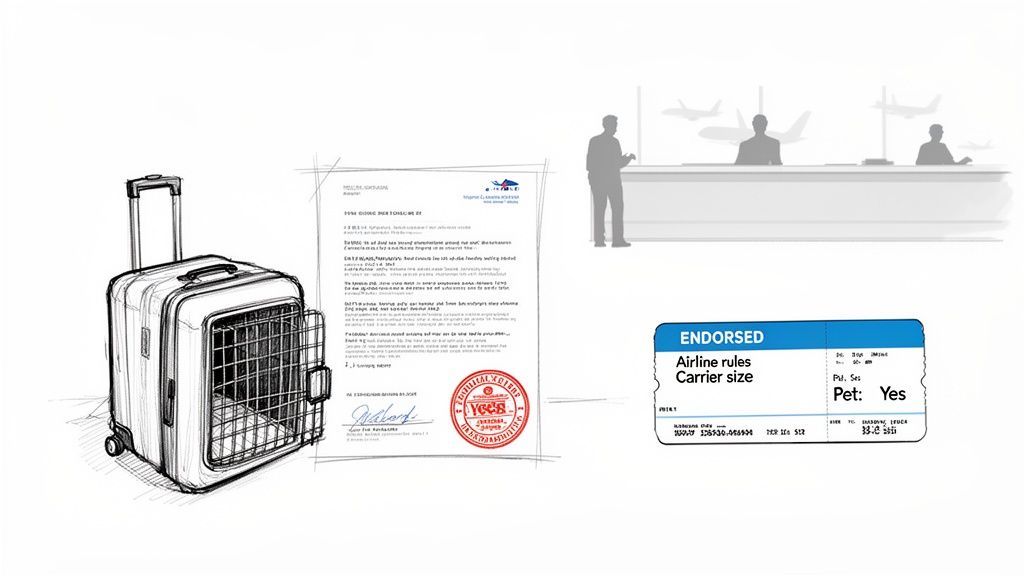
Now, here’s the part that catches so many pet owners by surprise. That health certificate has a very short shelf life. For travel to the European Union and many other popular destinations, the AHC may need to be issued and endorsed within 10 days of your pet's arrival. This incredibly tight timeline leaves zero room for error.
Scheduling this appointment is a delicate balancing act. Book it too early, and the certificate might expire before you even land. Book it too late, and you might not have enough time to get the required government endorsement before your flight takes off.
The best way to nail the timing is to count backward exactly 10 days from your arrival date. Try to book the vet visit for the very first day within that window. This simple trick builds in a buffer for any unexpected hiccups with paperwork or courier delays.
Dealing with More Complex Requirements
While most destinations follow the standard microchip-vaccine-certificate process, some countries have extra layers of security. One of the most common hurdles is the rabies titer test, also known as a Rabies Antibody Titer Test (RNATT).
What is it? This is a blood test that checks if the rabies vaccine has given your pet a sufficient level of immunity. It’s not checking for rabies, but for the antibodies that fight it.
Who requires it? Many rabies-free countries and territories, such as Japan, Australia, and Hawaii, may require this test.
When is it done? Here's the kicker: the blood sample often needs to be drawn at least 30 days after the rabies vaccination.
After the blood sample is sent to an approved laboratory, there's another waiting period—often three months or even longer—before your pet is eligible to enter the country. This single requirement can extend your preparation timeline by months, which is why researching your specific destination's rules from day one is so important. You don't want any 'ruff' surprises derailing your plans.
Finalizing Documents and Airline Rules
You've got the health certificate from your vet, and you're officially on the home stretch. But don't start packing the travel toys just yet. There are two final, critical hurdles: getting an official government endorsement and triple-checking every last detail with your airline.
Think of the health certificate from your vet as a draft. For most international trips, it needs an official stamp from a government body to become valid. This step is a key part of the process—it’s the final verification that a nationally recognized authority has signed off on your pet’s documents.
Getting the Official Government Stamp
For anyone traveling from the United States, this final validation comes from the U.S. Department of Agriculture's Animal and Plant Health Inspection Service (USDA-APHIS). Your accredited veterinarian will walk you through submitting the paperwork for endorsement. This is often handled electronically or by mail, but it generally must be done after your vet signs the health certificate and before you fly.
This endorsement is the official seal of approval that border agents in your destination country will be looking for. In the U.S., the fee for this service can range from $101 to $275 per pet, depending on how complex the requirements are. It's an important cost to build into your travel budget.
Decoding Airline-Specific Pet Policies
Now, for the airlines. Clearing customs is one thing; actually getting on the plane is a whole other challenge. Every single airline has its own unique rulebook for pet travel, and these rules are layered on top of the destination country's rules. Assuming that because you've satisfied one, you've satisfied the other is a recipe for a nightmare at the check-in counter.
Don't make the mistake of thinking your pet's official health certificate is the only document the airline will want to see. Airlines often have their own forms and requirements.
Airlines are ultimately responsible for the safety of everyone on board—including the furry passengers. Their rules are designed to ensure a safe flight, but they can be incredibly specific. You have to be proactive and contact your airline well ahead of your travel date to get absolute clarity on their policies.
For a deeper dive into this, check out our in-depth article on flying with pets internationally—it's a great resource.
Your Pre-Flight Airline Checklist
To avoid any last-minute surprises at the airport, get on the phone with your airline's pet travel desk armed with a list of questions. Here are the essentials you absolutely need to confirm:
Carrier Requirements: What are the exact dimensions and material requirements for my pet’s carrier? Ask for specifics for both in-cabin and cargo travel.
Breed Restrictions: Are there any restrictions on my pet's breed? This is especially common for brachycephalic ("snub-nosed") dogs and cats, and rules can change based on the destination or even the time of year.
Health Forms: Does the airline require its own specific health or acclimation form that my vet needs to fill out?
Check-In Process: Where is the dedicated check-in counter for pet travelers, and how early do I really need to be there?
Sedation Policy: What is the airline's official policy on sedating pets? (Hint: most airlines advise against it).
Getting crystal-clear answers to these questions will make all the difference. This final bit of diligence is what separates a smooth, seamless journey from a frantic, stressful travel day.
Common Pet Travel Mistakes to Avoid
Even the most organized pet owner can hit unexpected bumps on the road to getting a pet passport. Navigating the maze of international travel rules takes serious attention to detail, and a few common slip-ups can lead to major headaches, costly delays, or even a cancelled trip. Let's walk through some of the biggest pitfalls so you can sidestep them completely.
The goal here is to make your pet’s journey as smooth and stress-free as possible. After all, you’re not just moving an animal; you’re moving a member of your family. This is exactly why the global pet travel services market is booming, with industry forecasts projecting it to hit between USD 3.95 billion and USD 5.3 billion by 2034. This growth shows just how many people are facing these same challenges. You can find more details on the pet travel services market on coherentmarketinsights.com.
Knowing what can go wrong is the first step toward making sure everything goes right.
The Microchip Mix-Up
One of the easiest mistakes to make happens right at the very beginning. I’ve seen it countless times: a pet owner knows their dog, "Buddy," already has a microchip from the shelter. They move forward with the rabies shot, only to find out much later that the chip isn't the required 15-digit ISO-compliant version.
This throws a huge wrench in the works. If a border agent can't scan the chip, it's as if it isn't there at all.
Why It's a Problem: The microchip should be implanted before the rabies vaccine is given and needs to be readable at international borders. An incompatible or non-standard chip could invalidate the entire process.
How to Avoid It: Before you do anything else, have your vet scan your pet’s existing chip. Confirm it’s an ISO-compliant, 15-digit model. If it's not, you may need to get a new one implanted right away, before any other steps are taken.
The Case of the Early Vet Visit
Another common stumble is miscalculating the final health certificate appointment window. Imagine booking your vet visit 12 days before you land in France, thinking you’re being extra prepared. You get the certificate signed, only to realize at the airport that it’s invalid because you missed the strict 10-day validity period.
This is probably the most gut-wrenching mistake because it happens at the very end of a long, expensive process. A simple counting error can trigger a frantic, last-minute scramble for a new vet appointment and government endorsement right before your flight.
To prevent this nightmare, count backward exactly 10 days from your pet's arrival date in the destination country—not your departure date. Schedule the accredited vet visit for the very first day of that window. This builds in a buffer for any potential delays with the government endorsement and gives you some much-needed peace of mind.
A little bit of careful planning here can save you a world of stress and ensure your journey is purrfectly smooth.
We've seen firsthand how tiny oversights can derail a trip. To help you stay on track, we’ve put together a quick guide to the most common errors we see and, more importantly, how to prevent them from happening to you.
Top Pet Travel Mistakes and How to Prevent Them
Common Mistake | Why It's a Problem | How to Avoid It |
|---|---|---|
Outdated Rabies Vaccine | Many countries require the rabies shot to be given at least 21-30 days before travel. A vaccine given too recently may be considered invalid. | Check destination rules immediately. Vaccinate well in advance of the required waiting period. |
Incorrect Microchip | Using a non-ISO compliant or unreadable microchip may invalidate all following steps, including vaccinations and blood tests. | Have your vet scan and confirm the chip is a 15-digit ISO model before any other travel prep begins. |
Miscalculating the 10-Day Window | The final health certificate is often valid for only 10 days prior to arrival. Getting it done too early makes it useless. | Count back exactly 10 days from your arrival date (not departure) and book the vet visit for the start of that window. |
Using a Non-Accredited Vet | Only a USDA-accredited veterinarian can sign an international health certificate. A signature from a non-accredited vet may be rejected. | Verify your vet's accreditation status with the USDA before scheduling the final health certificate appointment. |
Incomplete Paperwork | Missing signatures, mismatched dates, or incomplete forms can lead to rejection by the USDA or border officials. | Use a checklist. Double-check every field, date, and signature on the forms before submitting them for endorsement. |
Ignoring Airline-Specific Rules | Airlines have their own rules for crate size, breed restrictions, and check-in times that are separate from country requirements. | Contact your airline directly and get their pet travel policy in writing. Confirm everything 72 hours before your flight. |
By being mindful of these common traps, you can approach the pet travel process with confidence. A successful journey is all about proactive planning and double-checking the details.
Answering Your Pet Passport Questions
Even with a step-by-step guide, the world of pet travel can feel a bit overwhelming. Questions always come up—it's a process with a lot of moving parts, and it’s completely natural to want some extra reassurance.
We’ve pulled together some of the most common questions we hear from pet owners to help you feel confident and ready for your trip. Let's get these final details sorted out.
How Long Does It Take to Get a Pet Passport?
This is the big one, and the honest answer is: it all depends on where you're going. The timeline can swing wildly from one country to another.
If you're traveling from the US to the EU, you might be able to get everything done in about a month, especially if your pet’s rabies vaccine is up to date. But for destinations with very strict biosecurity rules, like Australia or Japan, you need to think much, much further ahead. The process for these countries can easily take six months or more because of blood tests and long quarantine or waiting periods.
Our Top Tip: Start the process as early as you can. We always suggest beginning your research and vet consultations at least 6-7 months before you plan to travel. This builds in a comfortable buffer for any unexpected hiccups or complex requirements.
EU Pet Passport vs. Animal Health Certificate: What's the Difference?
You’ll hear these terms thrown around a lot, but they are not the same thing. Getting this right is critical.
An EU Pet Passport is a blue booklet that can only be issued by an authorized vet inside the European Union. It’s a reusable travel document for pets moving between different EU countries.
An Animal Health Certificate (AHC) is what a vet in the US will issue for a single trip into the EU or other countries. Think of it as a one-time entry pass that's only valid for that specific journey.
Can Any Vet Issue Travel Papers?
Absolutely not, and this is a make-or-break detail. For international travel documents like an AHC to be valid, they generally have to be filled out and signed by a USDA-Accredited Veterinarian.
While many vets have this special accreditation, it's not a given. Before you book any appointments, your first step should be to confirm that your clinic has an accredited vet on staff who is authorized to handle the paperwork for your specific destination. Don't be afraid to ask them directly—it's one of the most important questions you can ask.
What Happens If There's a Mistake on the Paperwork?
Even a tiny error can snowball into a massive problem. A simple typo in your pet’s name, one wrong digit in a microchip number, or an incorrect date can have serious consequences.
If an official spots a mistake, your pet could be denied boarding at the airport or, even worse, refused entry when you land. This could mean your pet is sent back home (at your expense) or placed into a long and costly quarantine. This is why we say accuracy is everything. Triple-checking every single detail before you leave isn't just a good idea—it's essential.
Navigating the maze of pet travel paperwork can be tricky, but you don’t have to go it alone. Passpaw gives veterinary practices the tools they need to manage every detail, from microchips to final endorsements, making sure nothing falls through the cracks. Ready to make your next trip a breeze? Discover how at https://passpaw.com.
More articles
From regulatory changes to best practices for veterinarians and pet owners, our resources keep you ahead of the curve.