Are you a team member in a veterinary practice?
Are you a pet parent planning a trip with your furry pal?
USDA APHIS vs Pet Travel Roles Explained
The Animal and Plant Health Inspection Service is an agency inside the U.S. Department of Agriculture, formed on April 2, 1972, not a rival office competing with the department that houses it. An APHIS endorsement authenticates a U.S. export certificate, and on its own it does not approve your pet's entry into another country.
That second half is where the internet's favorite advice falls apart. The popular line goes something like this: get the USDA stamp, and you're cleared to fly. Owners hear it from a friend, a breeder, or a forum, and they build a whole plan around one piece of paper. The stamp is real, and it matters. It just isn't the finish line.
Searches for USDA APHIS vs usually come from people trying to work out which office has authority over what. The honest answer is that authority is spread out. The destination country writes the entry rules, the veterinarian performs the medical work, APHIS authenticates the U.S. paperwork, the airline decides whether the crate goes in the cabin, a transit country may add conditions, and a border officer makes the final call on arrival. Each of those parties runs on its own clock, and they don't sync up for your convenience.
So the mix-up worth fixing isn't USDA versus APHIS. It's treating an endorsement as permission. Once you can tell those two apart, the rest of the paperwork starts to make sense, and you stop blaming the wrong office when a date slips.
USDA and APHIS Side by Side
Search for USDA APHIS vs and you'll find pages that read like two agencies in a standoff. There's no standoff. The U.S. Department of Agriculture is the department, and the Animal and Plant Health Inspection Service is the agency that sits inside it. One is the building, the other is the team on the floor.
The confusion is mostly a nickname problem. When a clinic says you need the USDA stamp, what it usually means is an APHIS endorsement of an export health certificate, a step that commonly runs through the Veterinary Export Health Certification System, or VEHCS. The nickname sticks because both names appear on the same piece of paper.
Here's the split, question by question.
Question | USDA the department | APHIS | Clinic or other party |
|---|---|---|---|
How the names relate | Parent department | Agency inside USDA since April 2, 1972 | Not applicable |
Who examines the pet | Does not examine the pet | Sets accreditation rules for veterinarians | USDA-accredited vet exams, vaccinates, and signs |
Who endorses an export certificate | Often used as a nickname for the stamp | Endorses through VEHCS | Vet signs first; destination sets entry rules |
Travel between U.S. states with the owner | No national pet passport | Does not regulate this owner-accompanied movement | Receiving state or territory sets the rules |
Permission to enter another country | Endorsement is not entry approval | U.S. authentication only | Destination country and border check decide |
What the listed fee covers | Published as USDA APHIS user fees | $101 with no lab tests; $160 for 1-2 animals and one lab test | Vet, lab, courier, and country fees are separate |
Walking the table in order
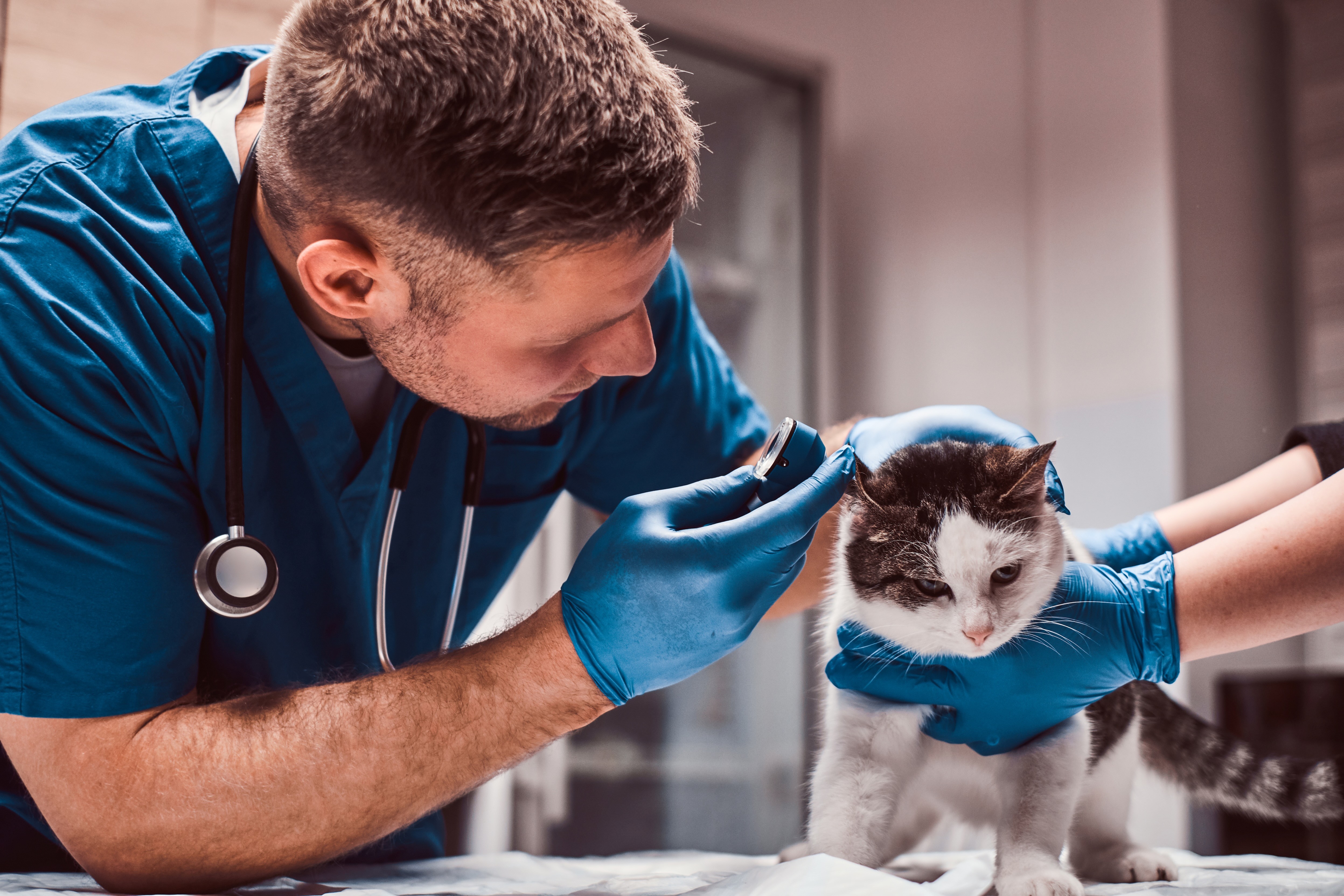
Start with the exam. USDA does not examine your pet, and neither does APHIS. A USDA-accredited veterinarian does the physical, checks the microchip, records the vaccines and tests, and signs the certificate. APHIS sets the rules for who counts as accredited, then reviews the finished document.
Next, the endorsement. APHIS confirms that a U.S. veterinarian signed the form and that the federal side is in order. What APHIS does not do is write another country's entry rules or issue a universal pet passport. There's no single document that opens every border, and no U.S. agency can promise one.
Then the trip itself. A drive from Texas to New Mexico with your dog in the back seat is a state matter, decided by the receiving state or territory. A flight to Lisbon is a different process with a different set of decision makers, and the destination still has the final word even after the U.S. paperwork is complete.
Get the names straight and they stop chasing their own tails. Match your trip to one row of that table before you book anything, because the booking is the part you can't undo cheaply. If two rows seem to apply, that's a sign you're crossing from domestic travel into export territory, and the heavier process wins.
Why One Agency Covers Pets Too
Keep the history short, because it explains a lot. The U.S. Department of Agriculture created the Animal and Plant Health Inspection Service on April 2, 1972, by consolidating two regulatory bureaus so that one agency could address both animal and plant health, as the USDA's retrospective on APHIS's first 40 years describes.
That merger is the whole idea in one line.

The same source lays out the mission in plain terms: protect the health, welfare, and value of U.S. agricultural and natural resources while supporting the safe movement of animals, plants, and agricultural products in trade. In its first year, APHIS responded to two major animal-disease emergencies, exotic Newcastle disease in California's poultry-producing San Bernardino Valley and hog cholera in the Midwest and Southeast. Over time, APHIS and its predecessor organizations contributed to the eradication of 14 serious animal diseases from the United States.
Why the certificate feels strict
That history is why a pet form can read like a customs declaration. A health certificate for a dog flying to Rome and a control program for a poultry disease are the same agency's work, connected by the same goal of keeping disease from moving across borders.
The practical split: APHIS sets federal animal-health requirements and endorses export certificates. Veterinarians and state authorities carry out the examination, testing, vaccination, and documentation a specific destination asks for.
Day to day, your local vet and your state's animal health office do most of the hands-on work. APHIS doesn't plan your itinerary, book your crate, or walk the dog through the terminal. It reviews and authenticates, then hands the decision back to the country you're flying to.
Who Controls Each Requirement
Here's the sentence that clears up more confusion than any other: the destination country, not the United States, sets entry requirements. APHIS says so directly in its frequently asked questions about traveling with your pet, and the same page confirms the U.S. does not issue a universal pet passport.
An endorsement, then, is a federal authentication step. The USDA's endorsement of a certificate is not a guarantee of entry into any destination. It confirms the U.S. side is properly signed and reviewed. The receiving country still decides whether your animal walks through.

That FAQ also lists the kinds of things a destination may demand on its own schedule: microchipping before rabies vaccination, laboratory tests, specific treatments, import permits, and arrival deadlines. The veterinarian must generally be USDA-accredited when endorsement is required, but accreditation doesn't satisfy a foreign rule. Only the foreign rule does.
Use this table to assign the next unfinished task.
Party | What they control | What they do not control |
|---|---|---|
Destination country | Entry rules, permits, vaccines, tests, treatments, and arrival deadlines | The U.S. endorsement itself |
Airline | Cabin, cargo, and crate acceptance | Replacing the health certificate |
Transit country | Extra rules if the pet leaves the secure airport area | The final destination's full rule set |
Border inspector | The arrival check | A promise that an endorsed certificate will be accepted |
The hard part isn't one stamp. It's lining up several offices that change their rules on different days.
Two examples that trip people up
Say a couple completes every U.S. form correctly for a dog flying to Frankfurt, but the microchip went in after the rabies vaccination. The U.S. paperwork is technically valid. The destination sequence is wrong, and that's the version the border sees.
Or take a cheaper itinerary with a long layover in a third country, where the owners plan to leave the airport with the dog for a night. A transit country can add its own conditions once the animal leaves the secure area, and nobody checked.
APHIS itself notes that clinics and owners can complete a technically valid U.S. certificate that still fails if the destination rule, transit rule, commodity classification, or timing window is wrong. It also separates non-commercial travel (a pet moving with its owner) from commercial movement, because the certificate class can differ. Before you assume your form is the right form, confirm which category your trip falls into.
What VEHCS changes and what it doesn't
Electronic submission speeds up the U.S. half of the job. Whether the destination wants a printout, an original ink signature, an embossed seal, or a physical endorsed document is a separate question, according to APHIS guidance for accredited veterinarians. Check the format rule for your destination, not just the submission route.
The names on the forms add their own fog, and this explanation of whether a CVI is the same as a health certificate is worth reading before you assume two labels mean two documents.
Then mark which party owns the next unfinished task. If it's a microchip, that's the clinic. If it's a permit, that's you and the destination authority. If it's the endorsement, that's the federal review. Naming the owner of the next step prevents the classic week of everyone assuming someone else handled it.
Timing Windows That Can Void a Form
A USDA endorsement and permission to enter a country run on different clocks. The exam date, certificate deadline, endorsement, and departure all need to fit the destination's rules. For more on planning the U.S. submission steps, see this guide to US application deadlines.
Here are examples of how those windows differ:
Route or case | Exam or issue limit | Endorsement limit | How long it stays usable |
|---|---|---|---|
Morocco | Issued after examination within 5 business days before travel | Within 3 calendar days of travel | 3 calendar days after endorsement |
Serbia, 5 or fewer dogs, cats, or ferrets | Issued within 10 days of travel | Endorsed within 10 days of travel | Tied to the travel date |
Serbia, more than 5 animals | Issued within 24 hours of travel | Endorsed within 24 hours of travel | Tied to the travel date |
Germany example | Within 48 hours of travel or the last working day before departure | Before travel, as the country requires | Very short pre-departure window |
EU non-commercial new forms | New certificates take effect October 1, 2026 | Older forms only through the prior September deadline | Use the form version in force for the date |
EU commercial new forms | New certificates take effect October 17, 2026 | Older forms only through the prior September deadline | Use the form version in force for the date |
Morocco's APHIS pet travel requirements specify a five-business-day examination window, an endorsement window within three calendar days of travel, and validity for three calendar days after endorsement. Read the limits together: a certificate can be correctly completed and still expire before the trip.

How to count backward from the travel date
Start with departure, then mark the certificate's permitted issue and endorsement windows. Serbia shows why the number of animals matters: the APHIS pet travel process overview says certificates for five or fewer dogs, cats, or ferrets must be issued and endorsed within 10 days of travel. For more than five, both steps must fall within 24 hours of travel. The same overview notes that an owner may have only a limited period, such as 30 days, after the accredited veterinarian signs to obtain endorsement and travel before the destination stops accepting the document.
The exam window sets the earliest date for the certificate. The endorsement window sets the latest. Each destination country determines when the pet may be examined, and the certificate cannot be submitted to USDA before that time. Submitting early does not bypass the country's timing rule.
Allow for physical delivery when the destination requires an original document. Shipping time can take up part of the same narrow window.
The rules have versions
EU certificate changes show why the form version matters as well as the dates on it. APHIS guidance on upcoming certificate versions states that new certificates for EU-bound non-commercial dogs, cats, ferrets, and birds take effect October 1, 2026. New commercial certificates take effect October 17, 2026. Older forms can be endorsed only through the preceding September deadlines. The guidance also gives Germany's requirement: a health certificate within 48 hours of travel or on the last working day before departure.
A dated task list tied to the flight helps keep each step in sequence. Passpaw tells the practice and client what information the destination requires and when the certificate must be submitted to USDA. Keep the exam, signature, endorsement, and departure dates together, and revisit the sequence if the travel date changes.
Endorsement Fees Versus the Rest of the Bill
A travel quote combines charges from different sources. The federal endorsement fee is one part; the veterinary exam, tests, and any shipping are separate. APHIS lists its fee schedule on its pet certificate endorsement fee page.
APHIS lists $101 as an example for a certificate with no laboratory tests. A certificate for one or two animals with one laboratory test is listed at $160. The total fee depends on the test count and animal count, as shown on the APHIS fee page.
Charge | Listed amount | What it depends on | Not included |
|---|---|---|---|
Certificate with zero lab tests | $101 | Test count and animal count | Vet exam, vaccines, labs, courier, destination fees |
One or two animals and one lab test | $160 | Animal count and one lab test | Vet exam, vaccines, other labs, courier, destination fees |
Other certificate combinations | Check the current APHIS fee page | Test count and animal count | Do not assume the $101 or $160 example applies |
Why the number moves
The fee varies with the number of animals and tests on the certificate. A different combination may have a different charge, so check the current APHIS schedule rather than relying on an old quote.
The fee covers an endorsement review. It does not guarantee a processing time or travel date.
What the fee doesn't cover: the veterinary exam, vaccines, parasite treatment, laboratory work, courier or shipping for a physical certificate, or any permit fee charged by the destination.
Two clinics can quote different totals for the same trip because their quotes may include different services. One might include only the federal fee and an exam; another might also include a titer test, a health check close to departure, and overnight shipping.
The two figures to ask for
Ask the clinic for two written amounts: the expected APHIS fee for the certificate, based on its animal and test counts, and the clinic's total for medical work and handling. If the quote gives only one lump sum, ask which charges are federal and which are not. This breakdown of international health certificate costs for dogs explains the costs that can make up the total.
Domestic Trips, Trips Abroad, and Your Next Step
The stamp that matters depends on where the pet is going. USDA APHIS and foreign authorities have different roles: APHIS may endorse U.S. export paperwork, while the destination decides whether the pet meets its entry rules.
A drive across state lines. For a pet traveling with its owner, APHIS does not regulate interstate movement, according to its state-to-state pet travel guidance. The receiving state or territory sets its own animal-health requirements. These may include a health certificate, vaccinations, tests, or treatments, with no USDA endorsement required.
A U.S. territory. Puerto Rico is not a foreign country, but it can set its own entry requirements. Check those rules directly rather than assuming that a trip within U.S. jurisdiction follows the same rules as travel between states.

The same pet, flying abroad. A USDA-accredited veterinarian may issue an export health certificate, and APHIS may endorse it. The destination country still makes the entry decision. Its document rules and timing windows must line up with the veterinarian's exam and the USDA submission.
For an India-specific owner checklist, see the pet passport checklist from Gather. For requirements across destinations, use this guide to international pet travel requirements.
The five steps that hold up in most cases
Confirm the destination rules and travel date first. Those details determine which documents are needed and when each step can happen. A change to either may require a new schedule.
Book a USDA-accredited veterinarian for the exam and any required microchip or vaccine checks. Ask whether the destination requires the microchip to be placed before rabies vaccination.
Have the veterinarian sign and submit the certificate through the practice's own VEHCS account or an equivalent system. The veterinarian remains the submitter and party of record.
Follow the destination's timing window. The certificate cannot be submitted to USDA before the permitted timing for the exam and travel.
Carry the endorsed paperwork in the format the destination accepts, and keep a copy accessible during travel. Endorsement does not guarantee entry; destination officials apply their own requirements.
Where Passpaw fits
Passpaw creates a submission packet with the documents needed for USDA endorsement. Its rules engine uses the destination, travel dates, and pet details to build requirements, sequencing, and due dates. The veterinarian reviews, signs, and submits the certificate through the practice's own VEHCS account or an equivalent system. Passpaw does not submit it on the veterinarian's behalf.
The veterinarian's submission, USDA's endorsement process, and the destination's entry decision are separate steps, each with its own requirements and timing. Passpaw helps practices and pet owners organize travel documents and deadlines around the trip. Visit Passpaw to learn about the platform.

More articles
From regulatory changes to best practices for veterinarians and pet owners, our resources keep you ahead of the curve.