Are you a team member in a veterinary practice?
Are you a pet parent planning a trip with your furry pal?
Guide: Signs a Dog Is Adjusting to a New Home - 7 Cues for 2026
Bringing a dog into a new home is a fur-ever kind of commitment, but the first few weeks can feel like a whirlwind of uncertainty. You might be wondering, "Is my new best friend happy? Stressed? Or just being a dog?" This feeling is completely normal. Every tail wag, every ignored command, and every empty food bowl tells a story about their journey.
This "adjustment period" is a key time for building a strong, trusting bond. Understanding the little clues your dog gives you is essential. For those welcoming a new companion, learning some dog rescue tips can make their move much easier. This guide will walk you through the most important positive signs a dog is adjusting to a new home, helping you track their progress from a timid newcomer to a cherished family member.
We'll help you understand their body language and behaviors so you can confidently support them. From eating habits and sleep patterns to their first playful pounce, you'll learn exactly what to look for. We will also cover helpful tips for a smooth transition and special notes for families moving internationally, because a successful move starts with a happy, healthy pup.
1. Eating and Drinking Normally
A dog’s appetite is a great window into their emotional state. One of the most reliable and telling signs a dog is adjusting to a new home is their return to steady eating and drinking. Stress from a new place often causes a dog to lose their appetite or avoid their water bowl. When they begin to eat their meals with excitement and drink water regularly, it’s a clear signal that their stress is fading and they’re starting to feel secure.
This return to routine is a huge milestone. It shows their basic survival instincts are no longer in overdrive, allowing them to relax and see their new surroundings as safe. Seeing them clean their bowl is more than just a sign of hunger; it’s a sign of comfort.
What Normal Appetite Looks Like
A healthy appetite can vary, but here are some positive signs to watch for:
Rescue Dog (1-2 Weeks): A newly adopted dog might go from shyly nibbling their food to finishing their entire meal within a couple of weeks.
Relocated Pet (3-5 Days): A dog who has moved with their family, especially internationally, might start eating at their usual mealtimes within the first week.
Traveling Dog (Consistent): A well-adjusted dog might keep a good appetite even when traveling, showing their resilience.
How to Encourage Healthy Habits
You can help your dog settle their stomach and their nerves with a few simple actions. Don't be surprised if it takes a little time; they're adjusting on their own schedule.
Stick to the Familiar: Keep your dog on the same food brand they ate before the move. Something familiar in their bowl provides a sense of stability.
Create a Routine: Feed your dog at the same times each day. A predictable schedule builds trust and helps them know what to expect.
Monitor Water Intake: Keep an eye on their water bowl and refill it often. Staying hydrated is very important for their health, especially when stressed.
Document Their Diet: For pets moving internationally, keeping a log of eating patterns is very helpful. This information can help your veterinarian complete the necessary health paperwork. If you need help with this, you can find details on what might be needed for a veterinary health certificate for travel.
2. Exploratory Behavior and Curiosity
A dog's journey from cautious to curious is a powerful sign of their comfort level. When a dog first arrives, it's normal for them to be reserved or even hide. As their stress goes down, you'll see their natural curiosity pop up. This shift from fear to investigation, where they start sniffing around new rooms and objects, is one of the key signs a dog is adjusting to a new home.
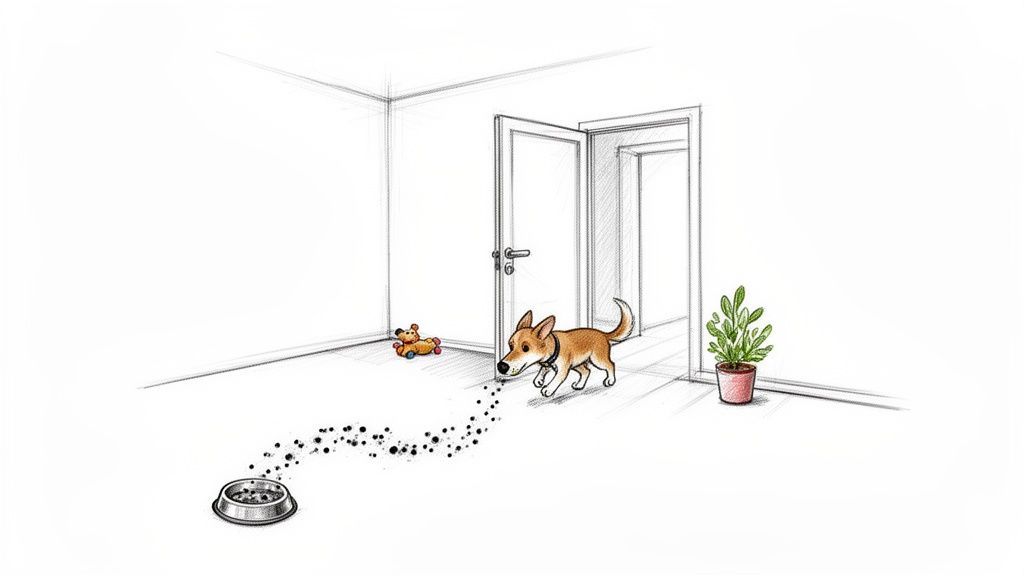
This change shows that their fight-or-flight feeling is calming down, letting them check out their surroundings. Seeing your dog investigate the home isn't just them being nosy; it’s a sign they are beginning to feel safe and secure in their new territory.
What Normal Exploration Looks Like
Curiosity-driven behavior is a fantastic milestone. Here are a few examples of what this positive progress can look like:
Rescue Dog (1-2 Weeks): A timid rescue who at first stayed in one corner might start going into other rooms, sniffing furniture and doorways, within the first couple of weeks.
Imported Pet (2-3 Days): A dog arriving from an international move may begin cautiously checking out their new backyard or patio space after just a few days of quiet time.
Relocated Pet (First Week): A dog who has moved to a new house with their family might start showing interest in toys or new sounds instead of reacting with fear.
How to Encourage Healthy Habits
You can help your dog feel confident enough to explore by creating a supportive environment. Remember to be patient and let them set the pace.
Provide Safe Spaces: Make sure the areas they can explore are puppy-proofed and safe. Watch them at first to build their confidence and prevent accidents.
Introduce New Areas Slowly: Don't overwhelm them with full access to the house at once. Open up one new room at a time so they can process the space without feeling anxious.
Use Enrichment: Encourage exploration with puzzle toys, snuffle mats, or a trail of treats. This makes investigating fun and rewarding, turning a scary new place into an adventure.
Document Behavioral Milestones: Keep a simple log of when your dog starts showing curiosity. This information is helpful for veterinarians, especially for confirming a pet is mentally ready for more travel or settling in after a move.
3. Seeking Attention and Affection
A dog’s choice to seek out human friendship is a powerful way to gauge their emotional state. When a dog starts asking for pets, following you around the house, or resting at your feet, it's one of the clearest signs your dog is adjusting to their new home. This shift away from nervous behavior shows they are beginning to trust you and feel safe enough to let their guard down.
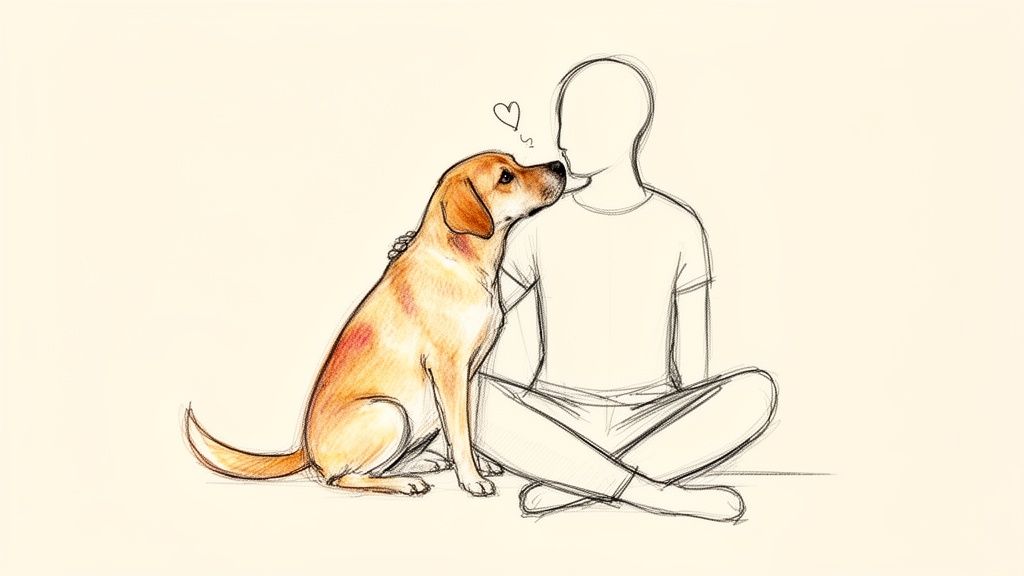
This progress from independent to interactive is a massive step forward. It means your dog sees you as a source of comfort and safety, not just a provider of food. Watching them choose to be near you is a heartwarming confirmation that a true bond is forming, which is pawsitively wonderful to see.
What Seeking Affection Looks Like
The journey from distant to affectionate happens at each dog's own pace. Here are some positive signs:
Rescue Dog (1-2 Weeks): A timid rescue might at first avoid contact but begin sleeping at the foot of your bed or nudging your hand for a scratch within a couple of weeks.
Relocated Pet (5-10 Days): An imported dog that spent its first few days watching from a distance may start initiating playtime or leaning against you while you watch TV.
Traveling Dog (Variable): A dog who trusts their owner may seek cuddles before a stressful event like a vet visit, showing they rely on you for emotional support.
How to Encourage Healthy Habits
Building this connection requires patience and positive reinforcement. You can help grow this budding trust with a few key actions.
Reciprocate on Their Terms: When your dog seeks affection, respond calmly and gently. Avoid overwhelming them with too much excitement, which could make them back away.
Establish Interaction Routines: Set aside specific times for one-on-one play or cuddle sessions. Predictable positive interactions build a strong, reliable bond.
Use Positive Reinforcement: Reward moments of connection—like when they come to you—with praise, a gentle pet, or a small treat to encourage the behavior.
Practice Gentle Handling: Prepare your dog for vet exams by making gentle handling a positive experience. Touch their paws, ears, and mouth calmly, followed by a reward. This builds trust for necessary procedures.
4. Regulated Sleep Patterns and Rest
Sleep is a powerful sign of a dog’s sense of security. One of the clearest signs a dog is adjusting to a new home is when their sleep becomes deep, regular, and restful. A stressed dog is often on high alert, leading to restless nights or sleeping too much as a way to cope. When they start to develop a consistent sleep-wake cycle and truly relax, it shows their nervous system is calming down and they feel safe enough to be vulnerable.
This change to peaceful rest is a big milestone. It means your dog no longer feels the need to be constantly on guard. Seeing them sprawled out and snoozing soundly is more than just a cute photo opportunity; it’s a sign of deep trust and comfort in their new home.
What Regulated Sleep Looks Like
A healthy sleep pattern can differ between dogs, but here are some positive signs that show your dog is settling in:
Recently Relocated Dog (1-2 Weeks): A dog that just moved with you may go from restless, light sleeping to enjoying 8+ hours of uninterrupted rest at night within the first couple of weeks.
Imported Dog (2-3 Weeks): A dog arriving from another country might begin to sync their sleep schedule with the household’s routine, getting over jet lag and environmental stress.
Anxious Rescues (Varies): A newly adopted dog may shift from sleeping in a tight, defensive ball to sprawling out with their belly exposed, a classic sign of relaxation and trust.
How to Encourage Healthy Habits
You can help your dog find their "paws-ition" for a good night's sleep and feel more secure. Creating a calm and predictable environment is key to helping them relax.
Establish a Routine: A consistent bedtime routine, like a final potty break followed by a treat in their bed, helps signal that it's time to wind down.
Create a Safe Space: Provide a comfortable, quiet sleeping area. A special bed or a properly introduced crate can become their personal sanctuary. For help on this, you can learn more about selecting the right pet crate for travel and home use.
Avoid Disruptions: During the first few weeks, try to keep their sleeping area quiet and free from disturbances to help them feel secure.
Document Sleep Patterns: If your dog has traveled internationally, noting when their sleep normalizes is a valuable piece of information for their health records. This can help show their successful adjustment for any follow-up veterinary paperwork.
5. Playful Behavior and Energy Level Increase
A dog’s desire to play is a wonderful sign of their mental and emotional state. A stressed or anxious dog often has no interest in toys or games, as their mind is focused on survival. One of the most joyful and clear signs a dog is adjusting to a new home is the return of their playful spirit and a boost in their overall energy. When they start nudging a ball your way, grabbing a squeaky toy, or doing a happy little bounce, it shows their anxiety is melting away.
This shift from withdrawn to engaged is a massive step forward. It means your dog is moving past basic survival mode and is starting to feel confident and secure enough to have fun. Seeing them start a game is more than just cute; it’s a clear signal that they are starting to feel truly at home.
What Playful Behavior Looks Like
A healthy level of playfulness can blossom at different speeds, but here are some positive milestones to look for:
Reserved Rescue (2-3 Weeks): A dog who at first ignored every toy might begin cautiously fetching or showing interest in a puzzle feeder after a few weeks.
Imported Pet (1-2 Weeks): A dog adjusting to a new country and home may go from being tired to starting short play sessions with their family.
Bonding Pet (Ongoing): As the bond with you strengthens, your dog may develop unique play routines, like bringing you a specific toy after dinner each night.
How to Encourage Healthy Habits
You can help your dog rediscover their fun side with a few simple, encouraging actions. Remember to be patient and let them set the pace; you can't force fun!
Provide Good Toys: Offer a variety of safe and appropriate toys like chew toys, fetch balls, and puzzle feeders to see what sparks their interest.
Initiate Gentle Play: Start with short, low-pressure games. Gently roll a ball or wiggle a rope toy on the floor. Let them come to the game on their own terms.
Establish a Routine: A predictable "playtime" after a walk or before bed can help your dog look forward to a positive, energetic outlet.
Use Play for Training: Include commands like "drop it" or practice gentle handling during play. This builds positive feelings and reinforces your bond.
Document Their Progress: Keeping a record of their increased activity is a great way to track their adjustment. It's also helpful information for your vet, especially if you need to show a timeline of their improving health for travel paperwork. Speaking of which, make sure they stay healthy for playtime by keeping their shots current; you can learn more about what vaccinations your dog needs to stay healthy and ready for fun.
6. Responsive to Commands and Training
A dog’s ability to listen and respond is directly tied to their mental state. When a dog starts becoming open to commands, training, and household rules, it’s one of the clearest signs they are adjusting to a new home. Stress and fear can create a kind of "brain fog," causing dogs to ignore cues or have "selective hearing" as they focus on things they think are threats. As they settle in, their mind clears, allowing them to focus and engage with you.
This growing responsiveness is a fantastic sign of progress. It shows that their mind is no longer hijacked by anxiety and, more importantly, that they are starting to trust you as their leader and guide. Seeing them sit when asked isn't just about obedience; it's a signal that they feel secure enough to listen.
What Responsiveness Looks Like
A dog's willingness to learn and obey will grow over time. Here are some positive signs:
Rescue Dog (3-4 Weeks): A newly adopted dog that at first ignored you might start to reliably respond to basic commands like "sit" or "come" within the first month.
Imported Dog (2-3 Weeks): A dog arriving from another country may quickly learn household rules, like where to potty or not to jump on furniture, after a short settling-in period.
Trust-Building (Ongoing): As trust deepens, a dog may become more cooperative during handling for grooming or nail trims, which they resisted before.
How to Encourage Healthy Habits
You can help your dog build focus and trust with positive, consistent actions. Remember to be patient; you're building a relationship, not just training a behavior.
Use Positive Reinforcement: Reward good behaviors with high-value treats and happy praise. This makes learning a fun and rewarding experience.
Keep Sessions Short: Hold brief, frequent training sessions (5-10 minutes) to keep your dog engaged and prevent them from feeling overwhelmed.
Practice Handling: Gently and regularly practice handling your dog’s paws, ears, and mouth. This prepares them for veterinary exams and builds their comfort with being touched.
Establish Clear Communication: Use consistent words and hand signals for commands. This clarity helps your dog understand what you expect from them.
Build Trust First: Focus on bonding before pushing for complex tricks. A dog who trusts you will be far more willing to learn from you.
7. Reduced Stress Signals and Relaxed Body Language
A dog’s body language speaks volumes about their state of mind. Perhaps the most telling of all the signs a dog is adjusting to a new home is the shift from anxious postures to a visibly relaxed and confident look. A new environment often triggers a "fight or flight" response, causing dogs to show clear stress signals like pinned-back ears, a tucked tail, whale eye (showing the whites of their eyes), excessive panting, and a tense body.
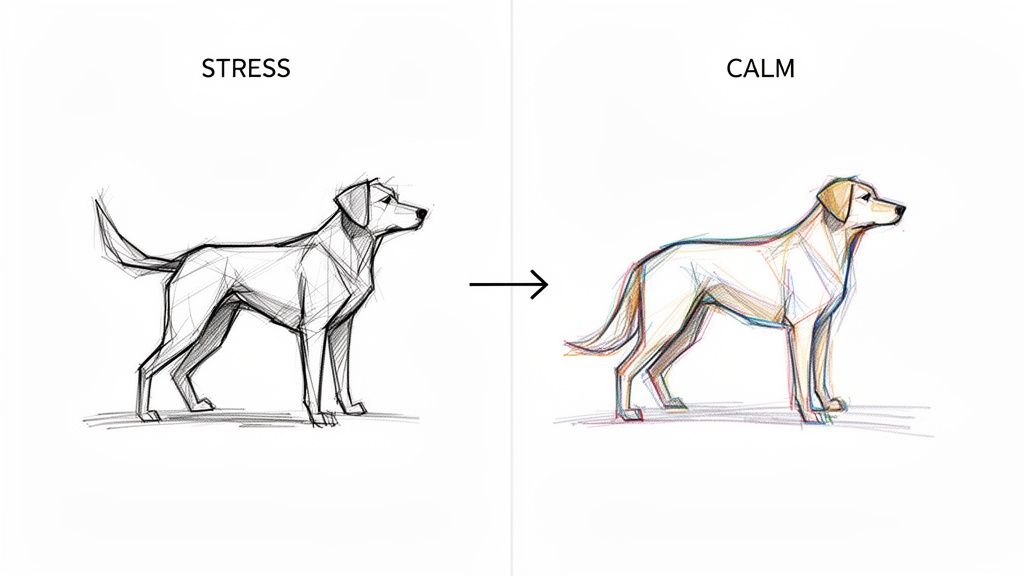
When these signals begin to fade, it’s a major breakthrough. Their nervous system is resetting, and they are starting to see their new home as a safe, predictable place. This change isn’t just about them feeling better; it’s a physical sign of them accepting their new reality and feeling secure within it. Watching them let go of that tension is a beautiful sign of progress.
What Relaxed Body Language Looks Like
A relaxed dog looks noticeably different from a stressed one. Here are some positive changes to look for as they settle in:
Fearful Rescue (2-4 Weeks): A dog that at first hid with pinned ears and a tucked tail might start to stand with an alert, confident posture and a neutral tail position.
Imported Dog (1-3 Weeks): A pet that arrived stiff and tense after a long journey may begin showing fluid, loose movements and a soft, gentle gaze instead of a hard stare.
Veterinary Visits (Over Time): During a check-up, a dog might go from showing a tucked tail and whale eye to allowing an exam with soft eye contact and a more natural tail carriage, signaling growing trust.
How to Encourage a Calm Demeanor
You can help your dog feel safe and sound by creating a reassuring environment. A little patience goes a long way in helping them find their paws.
Learn to "Speak Dog": Study dog body language to better recognize subtle stress signals. This allows you to remove your dog from situations before they become overwhelmed.
Create a Zen Den: Set aside a quiet, predictable space where your dog can retreat without being disturbed. A cozy crate or bed in a low-traffic area works wonders.
Don't Force It: Avoid forcing interactions, especially in the early days. Let your dog approach you and other family members on their own terms.
Document Their Journey: Use photos or videos to track changes in their body language over time. This visual log is great for seeing progress and is especially useful for owners who are relocating a dog internationally, as it can help veterinarians assess their fitness for travel.
7-Point Comparison: Dog Adjusting to New Home
Behavior / Indicator | 🔄 Implementation Complexity | ⚡ Resource Requirements | ⭐ Expected Outcomes | 📊 Ideal Use Cases | 💡 Key Tips |
|---|---|---|---|---|---|
Eating and Drinking Normally | Low — easily observed and tracked | Low — same food, clean water, basic logs | High ⭐ — indicates physiological stability and lowered stress | Pre-travel health checks; early post-relocation monitoring | Keep food consistent; maintain feeding schedule |
Exploratory Behavior and Curiosity | Medium — requires supervised opportunities to appear | Moderate — safe spaces, enrichment items | Moderate‑High ⭐ — signals confidence and cognitive engagement | Behavioral acclimation; assessing environmental comfort before travel | Introduce areas gradually; use puzzle toys to encourage exploration |
Seeking Attention and Affection | Medium — needs regular human interaction | Moderate — caregiver time and consistent responses | High ⭐ — shows attachment and emotional security | Bonding assessment; preparing for handling and travel stress | Reciprocate affection; set consistent interaction routines |
Regulated Sleep Patterns and Rest | Medium — harder to measure objectively over time | Moderate — quiet environment, bedding, optional trackers | High ⭐ — indicates nervous system regulation and recovery | Physiological stability checks prior to travel | Establish bedtime routines; monitor sleep quality |
Playful Behavior and Energy Increase | Low‑Medium — visible but needs outlets and observation | Moderate — toys, exercise opportunities, supervision | High ⭐ — demonstrates physical health and reduced anxiety | Evaluating activity tolerance for travel; socialization | Provide appropriate toys; monitor for overstimulation |
Responsive to Commands and Training | Medium‑High — requires consistent training effort | Moderate — time, rewards, short sessions | High ⭐ — indicates cooperation and cognitive recovery | Handling for vet exams, obedience for safe travel | Use positive reinforcement; practice handling exercises |
Reduced Stress Signals & Relaxed Body Language | High — requires skill to interpret accurately | Low‑Moderate — observation, occasional professional assessment | Very High ⭐ — most comprehensive indicator of true adjustment | Final travel readiness assessments; veterinary examinations | Learn body language cues; document changes with photos/video |
A Journey of Patience, Paws, and Paperwork
Bringing a dog into a new environment is a journey for both of you, one built on trust and mutual understanding. As we've explored, the signs your dog is adjusting to their new home are not always loud announcements; they are often quiet moments of progress. From the simple act of finishing their dinner to the joyful wiggle of a playful bow, each positive signal is a milestone worth celebrating. These are the building blocks of a strong, lasting bond.
Remembering the "Rule of Threes" (three days to decompress, three weeks to learn your routine, three months to feel at home) provides a helpful guideline. However, your dog operates on their own unique timeline. The most valuable tools you have are patience and consistency. By establishing a predictable routine for feeding, walks, and playtime, you create a sense of security that allows their true personality to shine through.
Creating a Secure Foundation
A key part of helping your dog settle in is making the physical space feel like their own. This involves more than just placing a dog bed in the corner. Setting up dedicated "safe zones" with their favorite toys and blankets gives them a personal retreat. As you set up your home, considering the durability and cleanability of your decor can also reduce your own stress. A helpful guide to pet friendly furniture can offer practical ideas for creating a space that is comfortable for your dog and easy for you to maintain, allowing you to focus on building your relationship rather than worrying about wear and tear.
International Moves: Adjustment and Administration
For those moving internationally, this adjustment period carries an additional layer of importance. A dog that feels secure and has a predictable routine is better equipped to handle the necessary vet visits for health certificates and other travel paperwork. A calm dog makes examinations, microchip scans, and any required treatments a much smoother process for everyone involved, especially your veterinarian. Watching for these positive adjustment signs confirms your dog is developing the resilience needed for the next leg of your adventure. It shows that your hard work in creating a stable environment is paying off, preparing them not just for a new home, but for a journey across borders.
Ultimately, recognizing the signs a dog is adjusting to a new home is about learning their language. By observing their body language, respecting their need for space, and celebrating their small victories, you're telling them they are safe, loved, and finally home. This patient approach doesn't just ease their transition; it solidifies a partnership that will last a lifetime, no matter where your paws and passports take you.
Planning an international move with your furry co-pilot? Let Passpaw handle the complex paperwork so you can focus on helping your dog adjust. Our platform simplifies the creation and management of pet health certificates, making your global adventure a walk in the park. Get started with Passpaw today and make your pet’s journey seamless.
More articles
From regulatory changes to best practices for veterinarians and pet owners, our resources keep you ahead of the curve.