Are you a team member in a veterinary practice?
Are you a pet parent planning a trip with your furry pal?
Relocating a Dog: A Paws-On Guide to a Smooth Move
Relocating a dog is a big step, but with a solid plan, you can turn stress into confidence. It's more than just booking a flight; it's a detailed process with vet visits, paperwork, and travel plans. You'll need to understand your destination country's import rules, which cover everything from microchips to vaccination schedules.
Your Guide to a Tail-Wagging Move
Moving to a new home is a huge milestone. Adding a dog to the mix brings a unique layer of planning that might feel like a lot at first. But the good news? It's completely doable.
With the right info and a bit of organization, you can make this exciting new chapter a smooth and positive experience for both you and your furry family member. Think of this guide as your co-pilot, here to break down the entire process into clear, simple steps so you can focus on the adventure ahead.
Why Early Planning is Non-Negotiable
When relocating a dog, especially to another country, you really can't start too early. I've seen it time and again—some steps, like rabies blood tests or getting import permits, can take several months. Starting well in advance is the best way to avoid last-minute scrambles and meet every deadline without the panic. A well-planned move is a calm move.
Here are a few key areas where getting a head start is a game-changer:
Veterinary Requirements: Every country has its own health rules. This can include specific microchips, a strict schedule of shots, and blood tests that often have a 30 to 90-day waiting period after the sample is taken.
Documentation: Gathering all the needed paperwork—from official health certificates to government endorsements—is a time-sensitive task where every detail matters.
Airline and Crate Logistics: Booking pet-friendly travel and, just as importantly, getting your dog comfortable with their travel crate are key steps that you can't rush.
The secret to a successful dog relocation isn’t just about checking boxes; it’s about giving yourself and your pet enough time to prepare calmly. Rushing adds unnecessary stress for everyone involved.
What This Guide Will Cover
We've put this guide together to be your ultimate checklist. We'll walk you through the entire journey, providing practical advice and real-world tips to ensure nothing gets missed. For instance, if you're looking for broader insights, our guide on pet travel offers additional helpful context. This approach helps turn a potentially confusing task into a series of simple, achievable goals.
And remember, your move is about more than just the flight; it's about preparing for your new life together. If your destination is set, it's smart to look at the bigger picture.
Now, let's get this adventure started.
The Pre-Travel Health and Veterinary Checklist
Before you even think about packing or scouting new dog parks, your first stop should be the vet. Moving a dog internationally isn't like a simple road trip; it's a series of carefully timed veterinary steps. Getting a head start is the single best thing you can do to make the whole process go smoothly.
Think of it as building a health portfolio for your pet. Every document is a crucial piece of that puzzle, and getting it right means you won't face any last-minute surprises from airlines or border officials. Let's walk through exactly what you need to do.
Start with the Microchip: An Absolute Must
First things first: the microchip. This tiny implant is your dog's universal ID and the very first thing officials will check. For almost any international move, your dog will need an ISO-compliant microchip.
What exactly does that mean? The International Organization for Standardization (ISO) has a specific global standard for pet microchips (standards 11784 and 11785). While most chips used in the U.S. and Europe these days meet this standard, you need to confirm this with your vet.
Check the Chip: Your vet can quickly scan the chip to verify its type and number.
Implant if Needed: If your dog has an older, non-standard chip (or no chip at all), your vet can implant a new one. It's a quick and safe procedure.
Timing is Everything: This is important—the microchip must be implanted before the rabies vaccination. If the vaccine is given first, many countries will consider it invalid, forcing you to start over.
The Vaccination Voyage: Rabies and Beyond
Vaccines are your next major hurdle, and nothing is more important than the rabies shot. Every country has strict rules about rabies, and the timing is key.
Your dog needs to be at least 12 weeks old for their first rabies vaccination. If they're already up to date, double-check that the vaccine won't expire during your travel and settling-in period. Many places also require or strongly suggest other core vaccines like DHPP (Distemper, Hepatitis, Parvovirus, and Parainfluenza), so be sure to discuss this with your vet.
Key Takeaway: As soon as you know you're moving, book a visit with a USDA-accredited veterinarian. They are your best partner for navigating the specific health requirements for your new home country.
Tackling the Rabies Titer Test
For many rabies-free countries and regions—think the EU, Japan, or Australia—a simple vaccine certificate isn't enough. You have to prove the vaccine is working with a rabies titer test, also known as a FAVN test.
This is a blood test that measures the level of rabies antibodies in your dog's system. The real challenge here isn't the test itself, but the waiting periods.
The blood sample can only be drawn at least 30 days after the most recent rabies vaccination.
Once the sample is sent to an approved lab, you then have to wait a set period—often three months—before your dog is allowed to enter the country.
This waiting period makes the titer test one of the very first things you need to handle. Getting caught by surprise here can single-handedly delay your entire move by months.
This timeline gives you a bird's-eye view of all the major phases involved in planning your dog's move.
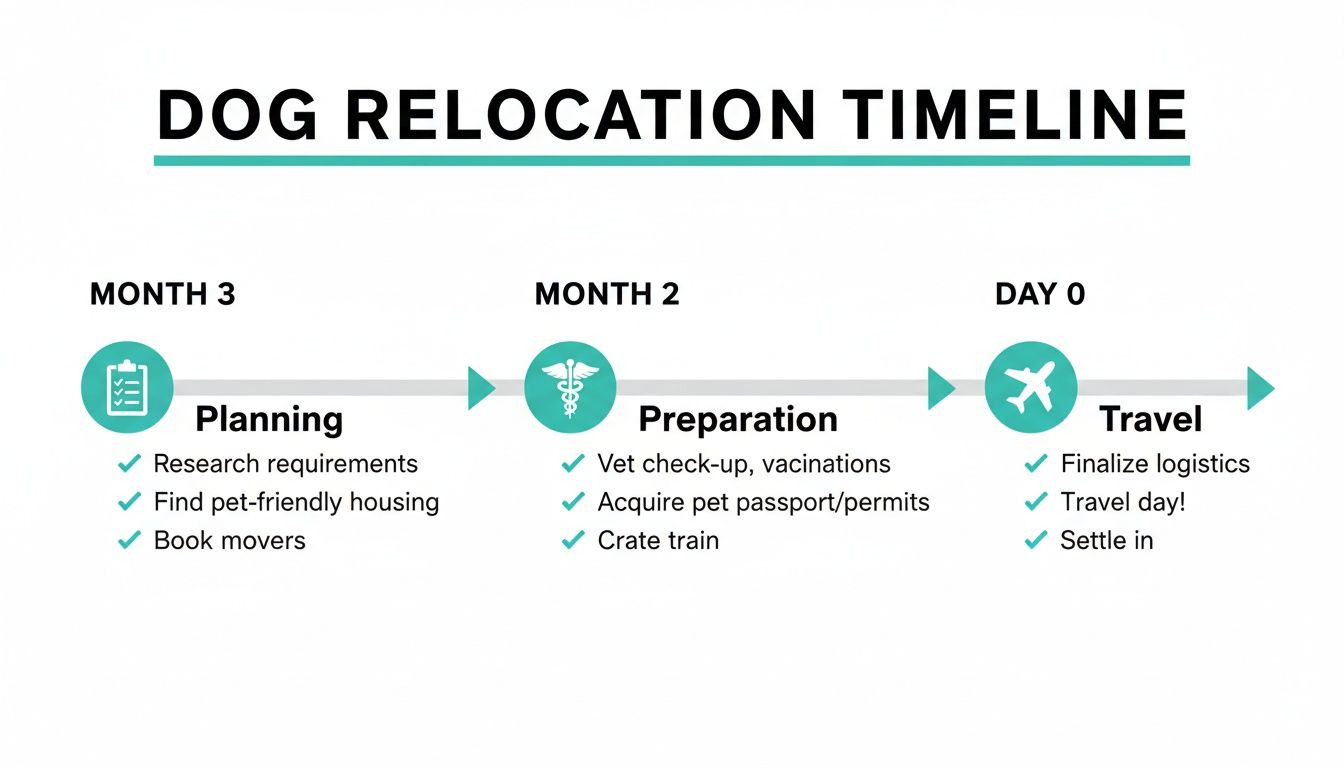
As you can see, the health and preparation phase is by far the most time-consuming part of the whole process.
Sample Veterinary Timeline for Your Dog's Move
To help you picture the process, here's a sample timeline of the key vet steps. Remember, this is a general guide—always confirm the specific requirements for your destination with your accredited vet.
Time Before Departure | Required Action | Key Consideration |
|---|---|---|
6-12 Months | Initial Vet Visit & Research | Discuss plans with a USDA-accredited vet. Research your destination's import rules. This is your planning phase. |
5-7 Months | Microchip & Rabies Vaccination | Confirm or implant an ISO-compliant microchip. Give the rabies vaccine after the chip is in place. |
4-6 Months | Rabies Titer Test (FAVN) | Draw blood for the titer test at least 30 days after the rabies shot. This starts the clock on the waiting period. |
1-3 Months | Other Vaccinations & Treatments | Give any other required vaccines (e.g., DHPP) or parasite treatments (e.g., tapeworm) based on destination rules. |
Within 10 Days | Final Health Exam & Certificate | Your vet performs the final health check and completes the international pet health certificate. |
Getting these steps done on schedule is the foundation for a smooth and successful move for your furry family member.
Organizing Your Dog's Health Records
As you work through these steps, you'll gather a pile of paperwork: microchip registration, vaccination certificates, lab results, and more. All of this leads to one final, super-important document—the official health certificate.
The growing complexity of these rules is a big reason why professional pet relocation has become so common. As countries have adopted stricter standards for microchips, titer tests, and health certificates, the room for error has shrunk. This paper trail often leads pet owners to seek expert help, making sure every detail is correct. It’s a team effort, and starting early with the right vet is the key to success.
Getting the Paperwork in Order
With the first health checks done, it’s time to face the mountain of paperwork that comes with relocating a dog. This part can feel like a lot, but a little organization goes a long way. Every country plays by its own set of rules, and your job is to figure out exactly what your destination requires.
The trick is to break it down. Instead of seeing one huge task, think of it as a series of smaller, doable steps. By making a clear checklist and giving yourself plenty of time, you can avoid that last-minute panic and make sure everything is in order before travel day.
First Things First: Understand Your Destination's Rules
Before you do anything else, you need to find the official import rules for your destination country. Don't waste time on forums or old blog posts—go straight to the source. The government agency in charge of agriculture or animal health will have the most accurate information.
If you’re moving a dog from the U.S., the USDA Animal and Plant Health Inspection Service (APHIS) website is your best friend. They have detailed pet travel guides for hundreds of countries, spelling out the exact forms and stamps you’ll need. Getting this right from the start is the key to avoiding sad and expensive problems at the border. You can also dive deeper with our guide on international pet travel requirements to get a feel for what's involved.
The All-Important International Health Certificate
The star of your dog’s travel paperwork is the International Health Certificate. This is the official document, filled out by your USDA-accredited vet, that gives your dog the green light to travel. It confirms everything from their microchip number and vaccine history to the results of required tests.
Timing on this document is super important. Most countries require the health certificate to be signed within a very short window before departure, often just 5 to 10 days. This is exactly why all the other vet work needs to be done months in advance.
A big mistake people make is thinking any vet can sign this form. Only a federally accredited vet is authorized to complete paperwork for international travel. Make sure your vet has this accreditation—it should be one of the first questions you ask.
Getting the Official Government Stamp of Approval
Once your vet signs the health certificate, there’s one more hoop to jump through: the government endorsement. If you're in the United States, this means sending the completed certificate to the USDA APHIS Veterinary Services office for their official stamp.
This stamp verifies that your accredited vet did everything correctly. You can handle this by mail or in person, but you're still working with that tight 10-day timeline. The endorsement has to happen after your vet signs but before you fly. It's often the most stressful part of the process, so plan your vet appointments and shipping methods carefully.
How Different Can Two Countries Be? A Tale of Two Moves
Import rules are not one-size-fits-all. They can be wildly different from one country to the next. Let's look at two real-world examples.
Moving to the UK: The United Kingdom has strict but clear rules. Your dog will need a microchip, an up-to-date rabies vaccine, and a specific tapeworm treatment given by a vet no less than 24 hours and no more than 120 hours (that’s 5 days) before you land. The health certificate has to be done within 10 days of travel.
Moving to Japan: Japan has some of the toughest import requirements in the world. On top of the microchip and rabies shots, your dog needs two separate rabies titer tests. You also have to notify the Japanese Animal Quarantine Service at least 40 days before you arrive and get a special import permit.
The difference is huge, right? This is exactly why you have to start your research early and build a checklist made just for your specific destination. It's not optional.
Preparing for a Potential Quarantine
The word "quarantine" can be scary, but it’s a standard step for moves to rabies-free places like Australia and New Zealand. It’s a required stay at a government facility upon arrival to make sure your dog isn’t carrying any diseases.
If quarantine is in your future, here’s how to prepare:
Book Way in Advance: These facilities can fill up months ahead of time. Make your reservation the moment you have your travel dates.
Budget for It: Quarantine isn't free. There are daily fees for boarding and care, so be sure to factor this cost into your moving budget.
Prep Your Pup: Keep up with positive crate training. The more comfortable your dog is in a kennel, the better they'll handle the change.
Being separated from your dog is tough, but these facilities are staffed by pros who care about animal welfare. With good planning, you can make the experience as low-stress as possible for your best friend.
Figuring Out the Best Way for Your Dog to Travel
Okay, you've got the health checks and paperwork moving along. Now it's time to plan the actual trip. This is a huge piece of the puzzle, and for most people, the big decision is about air travel. Getting this part right is all about making sure your dog is safe and comfortable from point A to point B.
It can feel a bit overwhelming, but once you understand the options, the choice becomes much clearer. You’re making a travel plan for your most precious cargo, so let's break down how it all works.
Flying High: Understanding Your Air Travel Options
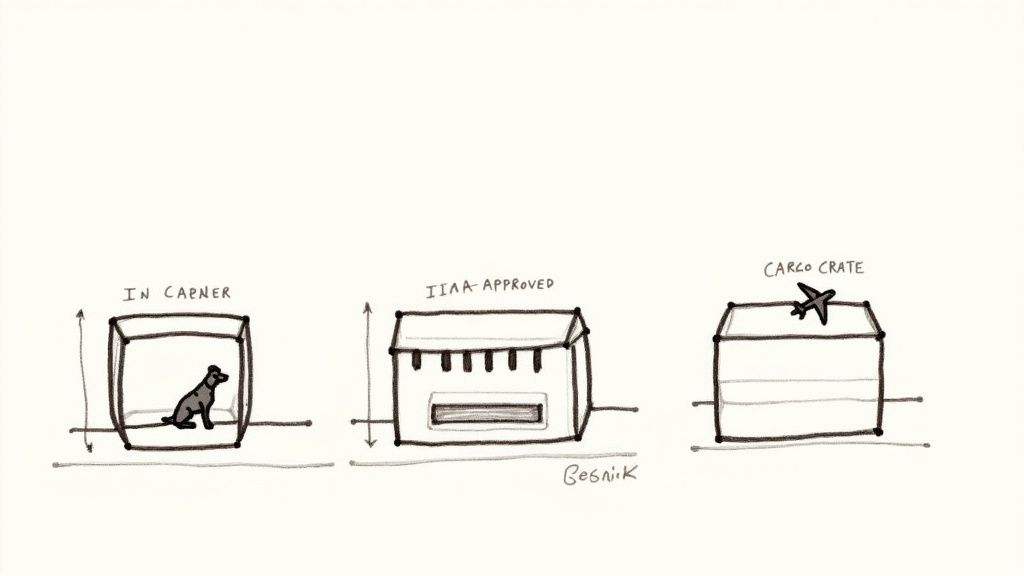
For most long-distance or international moves, flying is the only realistic choice. But not all airline pet travel is the same. Your dog can fly in one of three main ways, and each has its own set of rules and works best for different situations.
In-Cabin: This is the dream for tiny dogs. Your pup travels in a small carrier that fits under the seat in front of you. This is strictly limited by size and weight—usually for pets under 20 pounds, and that includes the weight of their carrier. Spots are very limited, so you have to book this far in advance.
Accompanied Baggage: For dogs too big to fly in the cabin, this option lets them travel in the cargo hold on the same flight as you. Don't worry, the cargo area is pressurized and climate-controlled. You'll check them in at the ticket counter and pick them up in the baggage claim area when you land.
Manifest Cargo: This is when your dog travels as official cargo, often on a separate flight. It might sound scary, but it's handled by a special team and is often the safest—and sometimes only—option for very large dogs, pets traveling alone, or for moves to certain countries.
Every airline has its own rules and policies, so you must call them to confirm their requirements before booking anything.
The Travel Crate: Your Dog’s First-Class Cabin
Your dog’s travel crate is more than just a box; it’s their safe space during the journey. Airlines are very strict about crate standards for safety reasons. The International Air Transport Association (IATA) sets the global guidelines that nearly every airline follows.
An IATA-compliant crate has to meet several key points to get the green light for travel.
Proper Sizing: This is a must. Your dog must be able to comfortably stand up, sit down, and turn around inside the crate without bumping their head. Measure your dog from the tip of their nose to the base of their tail, and from the floor to the top of their head, then add a few inches to find the right crate size.
Secure Construction: The crate must be made of hard plastic, wood, or metal. The door must be metal and have a secure lock. All the hardware, like the nuts and bolts holding it together, must be metal, not plastic.
Plenty of Ventilation: To make sure there is good airflow, the crate must have openings on at least three sides.
Pro Tip: Don't wait until the week before your flight to buy the crate. Get it months ahead of time and start positive crate training right away. The goal is to make the crate feel like a cozy den, not a scary cage. This will make a world of difference in reducing their stress on travel day.
Calling in the Pros: When to Hire a Pet Shipper
Trying to manage all these details can feel like a full-time job, especially if you're dealing with a complex international move. That’s where professional pet shippers come in. These experts handle every single detail, from booking the best flights to navigating customs and even arranging for ground transport.
Hiring a pro might be your best bet if:
Your move is international and has complicated import rules.
You aren't flying on the same flight as your dog.
Your dog is a brachycephalic (flat-faced) breed, since many airlines have special restrictions for them.
You simply want the peace of mind that comes with having an expert manage the whole process.
The demand for these services shows just how complex relocating a dog has become. Professional pet travel has grown into a major industry, with the global market estimated at around $2.3 billion in 2024 and projected to keep growing. This is largely driven by pet owners who need expert help to get through all the red tape. You can find more detailed insights on the pet travel services market on IMARC Group.
Ultimately, whether you do it yourself or hire a professional, the goal is a safe and smooth journey. If your move is within the same country, our specific advice on how to transport pets across the country might be especially useful for planning the ground travel part of your move.
Making the Final Trip and a Smooth Landing
The last few days before a big move with your dog can feel like a whirlwind of packing tape and excitement. After sorting out all the paperwork and travel plans, you can finally focus on what really matters: your dog's comfort and well-being. This final leg of the journey—from your old front door to settling into the new one—really sets the tone for your new life together.
The biggest goal here is to keep things as calm and normal as you can. Dogs are creatures of habit, so holding onto some routine among the chaos of boxes and suitcases will make a huge difference. Your calm energy is the best signal you can send them.
The 48-Hour Countdown to Takeoff
In the two days leading up to your flight, stick to your dog’s regular schedule as much as possible. This is not the time for stressful goodbyes with their favorite park pals or introducing any big changes.
Keep feeding times the same, but think ahead about their final meal. A light meal about four to six hours before you leave for the airport is perfect. It gives them plenty of time to digest and have one last potty break, which helps avoid an upset stomach mid-flight.
Travel Day Tip: Just before you head out, take your dog for a nice long, relaxed walk. It’s not just for a bathroom break—it helps them burn off nervous energy so they’re more likely to settle down and rest during the journey.
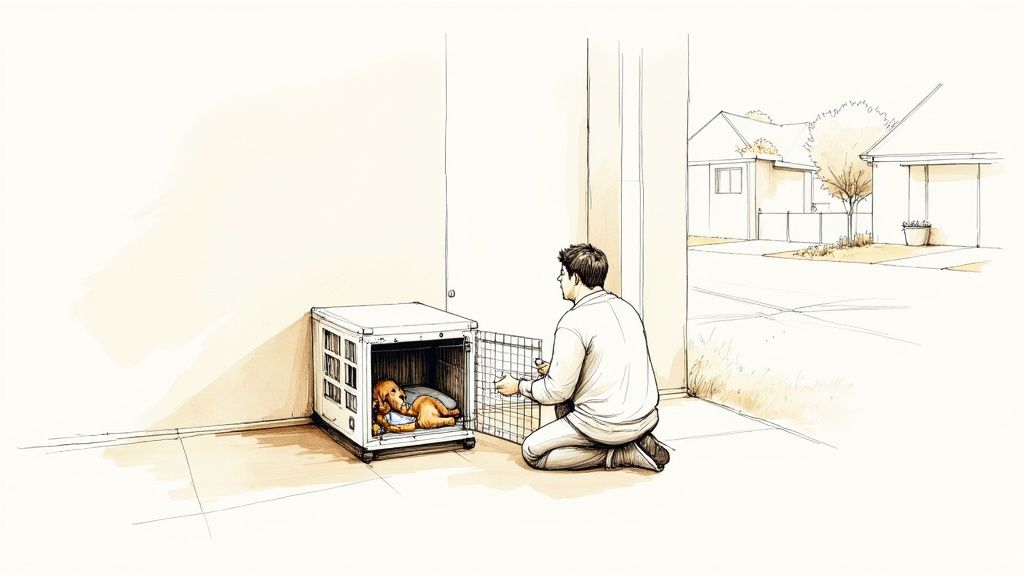
Get their travel crate ready to go. Line it with absorbent puppy pads and make sure a spill-proof water bowl is clipped securely to the door. I always suggest tossing in an old t-shirt that smells like you; that familiar scent can be a huge comfort.
Arriving and Picking Up Your Precious Cargo
Once you’ve landed, your first mission is getting back to your dog. The pickup process can be different depending on how they traveled and the specific airport's rules.
In-Cabin: This one's easy. If your dog flew with you, you'll just walk off the plane together.
Accompanied Baggage: For dogs who traveled as baggage, you’ll usually collect them from the oversized baggage claim area or a special airline office inside the terminal.
Manifest Cargo: If they flew as manifest cargo, you'll likely need to head to a separate cargo facility to clear them through customs and pick them up.
Have all your original paperwork—the health certificate, import permits, and your own ID—in hand and ready to show. As soon as you're reunited, offer them water and find a pet relief area for a much-needed bathroom break.
Making the New House a Home
The first few days in a new place are a big adjustment. Your dog is taking in new sights, smells, and sounds, and it can be a lot for them. Your job is to create a safe, familiar space for them right away.
Before you even think about unpacking your own stuff, set up your dog's corner. Put down their bed, fill their food and water bowls, and scatter a few favorite toys. This gives them an instant "home base" where they can feel safe. Something like a calming dog bed can be especially helpful here, giving them a cozy spot to de-stress.
Getting back into a routine is your next priority. Stick to the same schedule for meals, walks, and bedtime that you had before. That structure is very reassuring and shows them that even though the house has changed, the important parts of their life haven't.
Finally, introduce them to the new neighborhood slowly. Keep those first walks short, positive, and calm. Let them sniff and explore at their own pace, and don't push them into too many new things all at once. It’s not a race; it's about building good feelings with their new home. It may take a few days or even a few weeks, but with patience and consistency, your dog will be feeling right at home. You did it—now it's time to start your new adventure together.
Your Top Questions About Moving with a Dog
Even with the best plans, a few questions always seem to pop up when you're getting ready to move a dog. Let's tackle some of the most common ones we hear from pet owners.
Getting these final details sorted will give you the confidence you need for a smooth journey.
Should I Give My Dog Sedatives for the Flight?
This is a big one, and the short answer is almost always no. Both vets and airlines strongly advise against sedating your dog for air travel. At high altitudes, sedatives can affect a dog's ability to regulate their breathing and balance, which is a serious safety risk.
The best thing you can do is get your dog comfortable with their travel crate long before you fly. A dog who sees their crate as a safe space will handle the journey with far less stress. You can also tuck in a familiar blanket or an old t-shirt that smells like you—it's a much safer way to offer comfort.
It's a common myth that sedation makes travel easier on a dog. The truth is, a dog who is awake and alert can better adjust to the plane's movements and sounds. Crate training is the safest and most effective approach, paws down.
How Much Does Relocating a Dog Cost?
The cost of moving a dog can vary a lot; there's no single price tag. A simple domestic move might only cost a few hundred dollars for the flight and the health certificate.
An international move, however, is a whole different ballgame. You could be looking at costs anywhere from $2,000 to over $10,000. The final bill really depends on a few key things:
Your Destination: Every country has its own import fees and vet requirements, and some are much pricier than others.
Your Dog's Size: It costs more to fly a Great Dane than a Chihuahua. A bigger dog needs a larger, heavier crate, which drives up the airfare.
Hiring a Pro: Using a professional pet relocation service will add to the total, but they handle all the tricky logistics, which can be a lifesaver.
What Is a Pet Passport Versus a Health Certificate?
People often mix these two up, but they're completely different.
A "Pet Passport," like the kind used in the European Union, is a long-term document. Think of it as a record book that holds all of your pet's history—microchip info, rabies shots, and other health data. It’s designed for repeated travel between member countries.
An International Health Certificate is usually a one-time document for a single trip. Your vet will issue it right before you leave (typically within 10 days of your flight) to officially state your dog is healthy and fit for that specific journey. Almost every country requires its own unique health certificate that meets its specific import rules.
Moving a dog involves a ton of detail, but the right tools can make a world of difference. For veterinary practices juggling all this complex paperwork, Passpaw offers a clear, organized way to manage international health certificates. By keeping documents in order and client communication simple, Passpaw helps ensure every furry patient is ready for their adventure. Learn more about how we help at https://passpaw.com.
More articles
From regulatory changes to best practices for veterinarians and pet owners, our resources keep you ahead of the curve.