Are you a team member in a veterinary practice?
Are you a pet parent planning a trip with your furry pal?
Choosing a Pet Crate for Travel: A Complete Guide
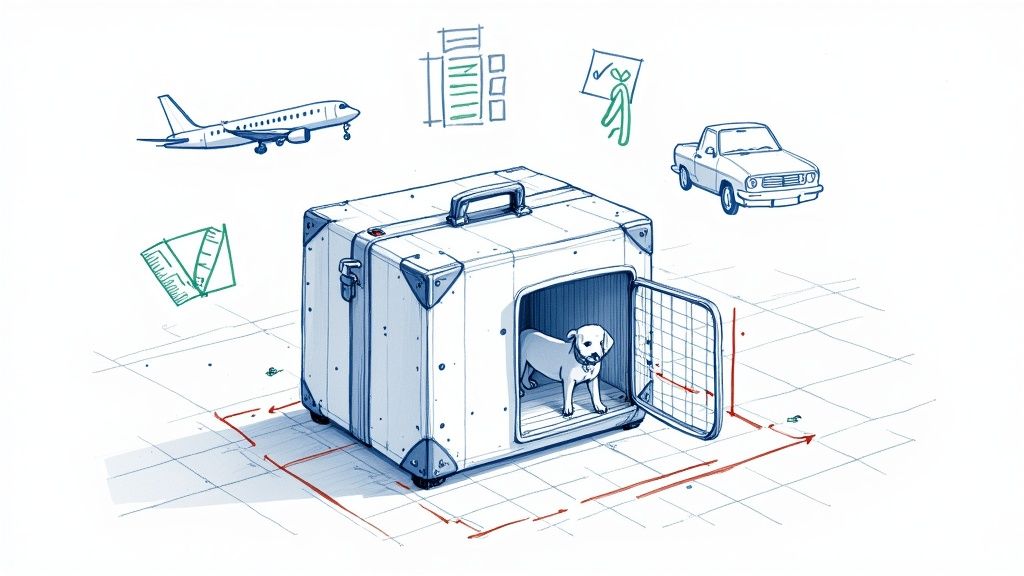
Picking the right pet crate for travel is easily the most important first step you'll take to ensure your furry co-pilot has a safe and happy journey. A proper travel crate is so much more than a box—it's your pet's personal, secure suite for the road or the sky.
Starting Your Journey with the Right Travel Crate
Kicking off an adventure with your pet is one of life’s great joys, but it all begins with giving them a safe and comfortable space of their own. A travel crate isn’t just a container; it's their mobile den, offering a sense of security when everything else is new and unfamiliar. Think of it as their home away from home, built tough enough for the bumps and shifts of travel.
This guide is here to make choosing that crate simple and stress-free. We’ll walk you through everything, from understanding airline rules to helping your pet actually love their new space. The real secret to a smooth, tail-wagging trip is creating a positive vibe around the crate from day one.
Why a Dedicated Travel Crate Matters
Using a purpose-built travel crate is a must for a few key reasons. First and foremost, it’s about safety. A sturdy, well-ventilated crate protects your pet from sudden movements and potential hazards during transit. It also provides a familiar sanctuary, which can dramatically reduce their anxiety and stress—especially during air travel, where the environment can be loud and strange.
Beyond safety, the right crate helps you meet all the travel rules. This is where many pet owners get worried, but it doesn't have to be a headache. We'll dive deep into those requirements later, but for now, just know that the right crate is your ticket to a hassle-free check-in. To get a bird's-eye view of everything involved, check out our complete guide to pet travel preparations.
You Are Not Alone on This Journey
Traveling with pets has become incredibly common. In the United States alone, 78% of pet owners travel with their pets each year, and airlines see nearly 2 million pets fly commercially on an annual basis. That means about 6% of all U.S. pets hop on a plane every year, proving just how much our furry friends have become part of our family adventures. You can find more pet travel stats and insights over at Hotelgio.com.
A well-chosen and properly prepared travel crate is the foundation of a successful trip. It transforms a potentially stressful experience into a comfortable and secure journey for your beloved companion.
The boom in globetrotting pets means more resources and better products are available to keep them safe and comfortable. From understanding airline rules to training your pet, this guide will set you up for success and make sure every trip is a pawsitive one.
How to Choose the Best Crate Material for Your Trip
Picking the right material for a pet travel crate is a lot like choosing your own luggage. You wouldn't pack fragile items in a soft duffel bag, right? The same thinking applies to keeping your pet safe. The crate's material directly affects its durability, your pet's security, and whether an airline will even let it on the plane.
Not all crates are made equal. The comfy one your dog uses at home might be a hard "no" for a flight or even a long road trip. Let's break down the common options so you can find the perfect fit for your pet and your travel plans.
Hard-Sided Plastic Crates: The Airline Favorite
When you picture a pet travel crate, you're probably thinking of a hard-sided plastic model. These are the gold standard for air travel—especially for pets flying in the cargo hold—and for good reason. They are built tough.
Their rigid shell offers serious protection against bumps and shifting luggage, making sure your pet stays secure throughout the journey. Most airlines recommend this type of crate because they are secure, escape-proof (when assembled correctly), and easy to clean up if accidents happen. They also provide excellent ventilation, which is vital for your pet’s comfort and safety.
This infographic shows the key features to look for, highlighting the balance between safety, comfort, and airline rules.
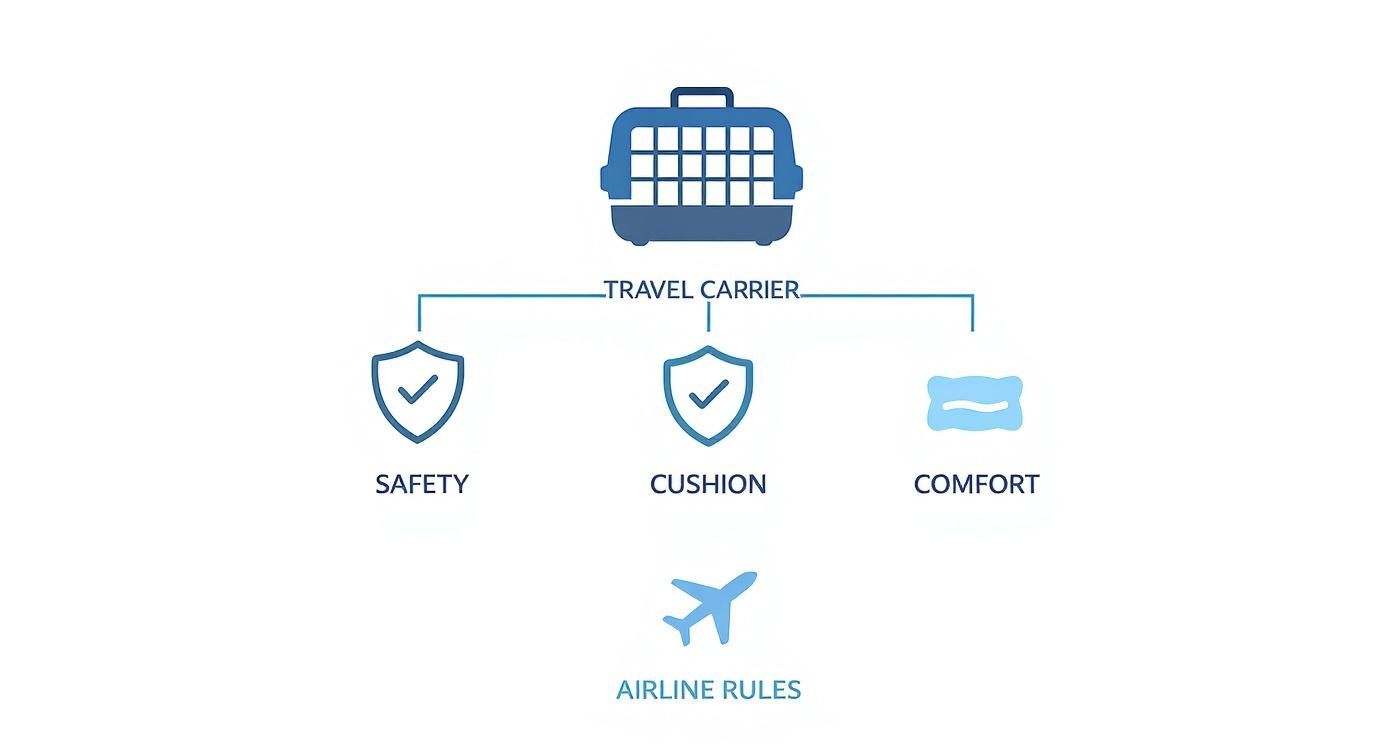
As you can see, a solid travel crate meets all these needs to ensure your pet has a safe trip that follows airline suggestions.
Soft-Sided Carriers for In-Cabin Comfort
For smaller pets lucky enough to fly in the cabin with you, a soft-sided carrier is usually the way to go. These carriers are light, flexible, and designed to slide under the seat in front of you. While they don’t offer the fortress-like protection of a hard crate, they’re perfect for the controlled environment inside the plane.
Their biggest pluses are comfort and portability. Many have padded interiors, mesh windows for airflow, and shoulder straps that make navigating the airport a breeze. Always—and I mean always—check your airline's specific size restrictions for in-cabin carriers before you buy one, because they can vary quite a bit. For a deeper dive, check out our complete guide to airline-approved pet carriers.
Why Wire Crates Are a Travel No-Go
Wire crates are great for home use and training, but they are almost always a no-go for air travel. Their open-wire design simply doesn't offer enough protection from the elements or other items in the cargo hold.
The main issue with wire crates is safety. The wires can bend, creating sharp edges or escape routes. They also do nothing to contain spills or accidents, which is a key consideration for air transit.
While they have their place at home, it's best to leave the wire crate behind and invest in a travel-specific model that puts your pet's safety first.
Comparing Your Crate Options
Making the right call can feel like a lot, so let's make it simple. This table gives you a quick side-by-side comparison to help you weigh the pros and cons of each crate type.
Comparison of Pet Travel Crate Types
Crate Type | Best For | Pros | Cons | Airline Approved (Cargo) |
|---|---|---|---|---|
Hard-Sided Plastic | Air travel (cargo), road trips, all pet sizes | Highly durable and protective, secure, easy to clean, excellent ventilation | Can be heavy and bulky, less portable for carrying | Yes (if meets standards) |
Soft-Sided Fabric | Air travel (in-cabin), short car rides, small pets | Lightweight, portable, comfortable, fits under airline seats | Less protective, not suitable for cargo, harder to clean thoroughly | No |
Wire Mesh | Home use, potty training, short car rides (with caution) | Excellent ventilation, good visibility for the pet | Not protective, potential for injury, not secure for air travel | No |
At the end of the day, the best pet crate for travel is one that meets airline suggestions, fits your pet comfortably, and gives you peace of mind. For most travel, a sturdy, hard-sided plastic crate is the most reliable and versatile choice, ensuring your pet travels safe and sound.
Understanding Airline and IATA Travel Regulations
Trying to figure out airline rules for your pet's travel crate can feel like you've been handed a manual in a foreign language. It's easy to get tangled in a web of individual airline policies and international standards. But trust me, getting this part right is your golden ticket to a smooth, stress-free check-in.
At the center of it all is one key organization: the International Air Transport Association (IATA). Think of IATA as the global rule-maker for safely transporting animals. While every airline has its own little quirks, the vast majority build their pet travel policies on IATA's foundation.
What Does IATA-Compliant Really Mean?
When you see a crate advertised as "IATA-compliant," it means it was built to meet a specific set of safety and construction standards. This goes way beyond just the crate's size—it's about making sure your pet is secure, comfortable, and safely contained for the entire trip. It’s the universal seal of approval that gate agents and cargo handlers are trained to look for.
A compliant crate is like a personal, armored travel pod for your pet. It has to be tough enough to handle the bumps of travel and cleverly designed to prevent any great escapes. For most flights, especially if your pet is traveling in cargo, these features are usually expected.
The guidelines are crystal clear: the container must be suitable for the animal inside, ensuring it's secure and has plenty of fresh air from start to finish.
The IATA-Compliant Crate Checklist
To make sure the crate you buy gets a thumbs-up at the airport, it needs to check some very specific boxes. Use this checklist to inspect any crate you're considering.
Solid Construction: The crate should be made of rigid plastic. Wire kennels or soft-sided carriers are a hard no for cargo. Make sure the shell is free of any cracks or damage.
Secure Hardware: All the nuts and bolts holding the top and bottom halves together should be metal. Plastic clips or twist-locks may not be accepted as the main fasteners.
A Single Metal Door: The crate door must be made of welded or cast metal. It needs to be strong, with a locking mechanism that secures it at both the top and the bottom.
No Wheels Allowed (Mostly): If the crate has wheels, you’ll have to pop them off or tape them up so they can’t roll. A crate sliding around the cargo hold is a major safety risk.
Good Ventilation: The crate needs ventilation on at least three sides (four is even better). The openings should be small enough that your pet can't stick a nose or paw through.
Proper Labeling: You'll need "Live Animal" stickers and arrows showing which way is up. Your name, address, and phone number should also be stuck on there, clear as day.
Key Takeaway: IATA standards aren't just red tape; they are designed from the ground up to protect your pet. A compliant crate is the single most important piece of gear for their journey.
Beyond the Crate: Paperwork and Health Checks
Getting the right crate is a huge step, but it's only one piece of the puzzle. Airlines and destination countries also have rules about your pet’s health and documentation. This is where things can get tricky, but a little planning goes a long way.
You will almost always need a recent health certificate from an accredited veterinarian. This official paper confirms your pet is healthy enough to fly and has all its required shots. For international travel, the requirements can get even more complex, often needing specific government forms and official endorsements. You can learn more by reading our guide on obtaining an international veterinary health certificate.
The growing demand for help with this process shows just how complicated it can be. The global pet travel services market is expected to balloon to USD 5.3 billion by 2034, driven by owners who want to ensure everything is perfect. People are investing in premium crates and document services to guarantee a safe and seamless trip. And when you’re flying with a cat, there are even more specific things to consider, as detailed in excellent guides on choosing the best cat carrier for air travel.
Finding the Purrfect Fit: How to Size Your Pet Crate
Getting the right size for a pet crate for travel is more than a matter of comfort—it's a critical safety requirement. If the crate is too small, your pet will be cramped and stressed. But if it's too big, it can be just as dangerous, acting like an echo chamber during turbulence and allowing them to be thrown around. You're looking for that "Goldilocks" fit: just right.
Think of it as finding the perfect little travel suite for your furry companion. They need enough room to feel secure and adjust their position, but not so much space that they slide from one end to the other with every bump. The goal is to create a snug, den-like space where they can easily stand up, turn completely around, and lie down in a natural position.
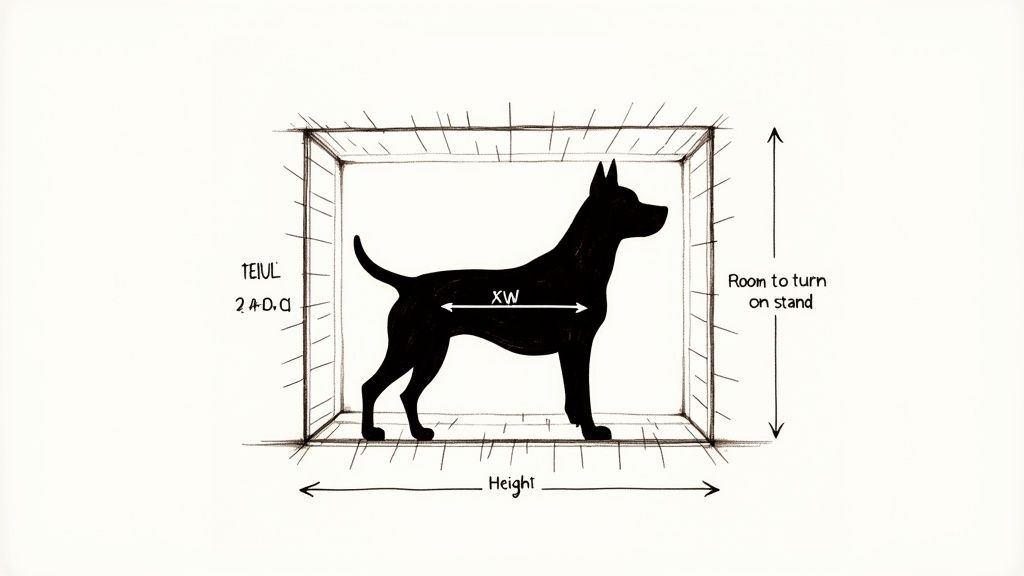
This simple sizing process is key to ensuring your pet has the freedom they need to be comfortable without being exposed to the risks of excess, unsafe space.
Taking Your Pet's Measurements
First things first: grab a soft measuring tape. Guessing your pet’s dimensions is a recipe for a bad fit and a frustrating last-minute return. Just follow these quick steps to get the only two measurements you'll need.
Measure Their Length (A): Have your pet stand up straight and comfortable. Measure from the tip of their nose straight back to where their tail begins. Be sure not to include the tail itself in this measurement.
Measure Their Height (B): While they're still standing, measure from the floor to the very top of their head. If they have erect ears (like a German Shepherd), measure to the tips of their ears—whichever point is higher.
These two numbers are your starting point. With them in hand, you can use a simple formula to find the ideal crate dimensions and make sure your pet travels in first-class comfort.
A properly sized crate should feel like a safe haven, not a tight squeeze. The ability to stand up and turn around isn’t just a nice-to-have feature; it’s a standard suggestion for your pet's well-being and is followed by nearly every airline.
Calculating the Ideal Crate Size
Now, let's turn those measurements into the perfect crate size. Airlines and animal transport experts agree on adding a few extra inches to your pet’s dimensions to give them adequate room to move.
Crate Length: Take your pet's length (A) and add 2-4 inches. This gives them just enough room to stretch out and lie down comfortably.
Crate Height: Take your pet's height (B) and add 2-4 inches. This ensures they can stand up fully without having to duck their head.
So, if your dog measures 20 inches long and 15 inches tall, you’ll want to look for a crate with internal dimensions of at least 22-24 inches long and 17-19 inches tall. The crate's width is usually proportional to its length and height, so it will naturally provide enough room for them to turn around.
Special Considerations for Certain Breeds
Not all pets are built the same, of course. Some breeds require a little extra thought when it comes to their travel quarters, especially brachycephalic, or "snub-nosed," breeds.
Snub-Nosed Breeds: Dogs like Pugs and French Bulldogs or cats like Persians can have a harder time breathing, particularly in new or stressful situations. For these pets, it's widely recommended to choose a crate that is one size larger than what their measurements might suggest.
Benefits of Extra Space: That extra room isn't just for comfort; it dramatically improves air circulation, which is vital for these breeds. Better airflow helps regulate their body temperature and lowers the risk of breathing problems during the journey.
Always make sure to double-check your airline's specific policies for snub-nosed breeds, as many have additional restrictions or kennel requirements. By taking accurate measurements and keeping your pet’s unique needs in mind, you can confidently pick a pet crate for travel that guarantees a safe and comfortable trip from start to finish.
How to Crate Train Your Pet for a Calm Journey
Your ultimate goal is to have your furry friend see their travel crate as a personal den—a safe space, not a scary box. Proper crate training is the secret sauce for a calm journey, and it needs to start long before your travel date. Think of it as turning the crate into a five-star retreat your pet actually wants to be in.
This whole process boils down to building a positive connection. You can't just unbox the crate the night before a flight and hope for the best. Instead, you need to introduce it slowly, making every interaction a good one. This is how you transform it from a strange object into a familiar comfort zone.
Start with a Positive Introduction
First things first, make the crate a normal part of the furniture. Set it up in a busy part of the house, like the living room, where your family hangs out. Prop the door open and just let it be. Let your pet sniff it, walk around it, and explore it on their own terms, with zero pressure.
To sweeten the deal, toss some high-value treats or a favorite toy inside. When your pet bravely ventures in to grab them, offer some quiet, gentle praise. You want them to think, "Hey, this place is where the good stuff happens!"
Here are a few tricks to make the crate irresistible:
Feed Meals Inside: Start by placing their food bowl just inside the door. As they get comfortable, gradually move it all the way to the back.
Use Special Toys: Keep one or two super exciting toys that they only get when they're in the crate. This makes crate time feel like a special event.
Add Comfy Bedding: A familiar blanket or even an old t-shirt that smells like you can make the space feel much more secure and homey.
Gradually Increase Crate Time
Once your pet is happily popping into the crate for treats, you can start closing the door. Begin with just a few seconds while they're distracted with a meal or a chew toy, then open it right back up before they even think about getting anxious. Your vibe should be calm and matter-of-fact.
From there, you just slowly add more time.
Close the door for 30 seconds, then open it.
Work your way up to a few minutes at a time.
Next, try leaving the room for a minute while they're crated.
Slowly extend the time you're out of sight, always returning without a big fuss.
The key to successful crate training is patience. Pushing your pet too fast can erase all your hard work. Let them set the pace, and celebrate every small win.
As more people travel with their pets, the market for quality crates and training resources has exploded. In fact, the global pet travel crate market is projected to hit around USD 1,500 million by 2025. This shows just how many owners are investing in their pet’s comfort and safety. You can find more insights on this trend at Market Report Analytics. It's a clear sign that a great journey doesn't start at the airport—it starts at home with great training.
Your Pre-Flight Checklist for Crate Preparation
The travel day is almost here. You’re in the home stretch, and the last big task is getting your pet's crate ready for takeoff. A properly prepared pet crate for travel is the final piece of the puzzle for a smooth, stress-free day at the airport and beyond.
Think of this as setting up a cozy, secure little room for your best friend. The small details are what matter most, ensuring they have everything they need for their solo adventure in the cargo hold. This is your go-to checklist for those final 24 hours.
Essential Crate Setup and Labeling
Getting the crate outfitted and clearly identified is a must. Airline staff need to know who's inside and how to care for them at a glance, especially during layovers. This is also your last chance to make the space as comfortable as possible.
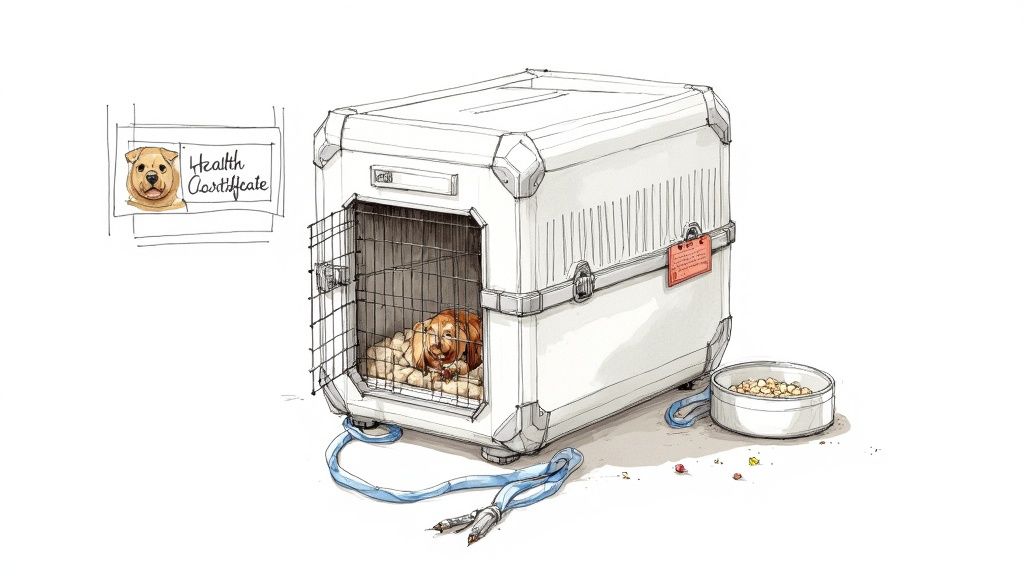
Label Everything Clearly: Stick "Live Animal" labels on the top and sides, along with arrows pointing up. You’ll also want to securely attach your contact information, your destination address, and a recent photo of your pet.
Attach Food and Water Dishes: The crate should have food and water bowls that are accessible from the outside. Fasten them securely to the inside of the door so airline staff can give your pet refreshments without opening it. The bowls should be empty for departure.
Add Absorbent Bedding: Line the crate floor with a puppy pad or similar absorbent material. You can put a thin, familiar blanket on top, but skip anything bulky that might crowd their space.
While you're dialing in your pet's setup, make sure your own plans are in order. It never hurts to use an ultimate checklist for traveling abroad to keep everything straight.
To Sedate or Not to Sedate
This is one of the most common questions we hear from concerned pet parents: "Should I give my pet something to keep them calm?" The overwhelming consensus from both veterinarians and airlines is a firm no. Sedatives can interfere with a pet's ability to regulate their body temperature and keep their balance, which is a real risk at high altitudes.
Most airlines simply will not accept a pet that appears to be sedated. Instead of medication, your best bet is to rely on thorough crate training. You can also use natural calming aids, like a pheromone spray or a familiar toy, to help ease their anxiety.
Final Crate Inspection
Right before you head to the airport, give the crate one last look-over to make sure it's structurally sound. A 2015 report found huge differences in build quality across brands, noting that many crates just don't meet high safety standards.
Give these key points a quick check:
Make sure all metal nuts and bolts are there and tightened securely.
Scan the plastic shell for any cracks or weak spots.
Confirm the door latches firmly at both the top and bottom.
This last check gives you peace of mind that your pet's environment is as safe as it can be for the journey. For more tips on getting ready, check out our guide on moving a pet overseas.
Common Questions About Pet Travel Crates
Even after doing all your homework, it’s natural to have a few last-minute questions pop up. Wanting every detail nailed down before you and your pet travel is a sign you're a great pet parent.
To give you that final boost of confidence, we’ve put together answers to some of the most common questions we hear. Think of it as a quick reference for those “what if” moments that can make a travel day feel a whole lot smoother.
Can I Use a Wire Crate for Air Travel?
For flights, the answer is almost always a hard no. Airlines typically don't allow wire crates, especially for pets flying in the cargo hold. They just don't offer the solid, protective shell needed to keep your pet safe from shifting bags, nor do they contain any spills or messes.
Your best and safest option is always an IATA-compliant, hard-sided plastic crate with a single metal door. It's the industry standard for a good reason—it provides the security and protection your pet needs.
What Should I Put Inside the Travel Crate?
When it comes to outfitting the crate, less is definitely more. The goal is to maximize safety and comfort, not create clutter.
Essential Bedding: Start with an absorbent layer, like a puppy pad, at the bottom. You can add a thin, familiar blanket on top, but skip the bulky beds that reduce the space your pet needs to stand up and turn around.
Safe Toys: If you include a toy, make it one small, familiar item that they absolutely cannot choke on. Simplicity is key.
Food and Water Bowls: These are key. The bowls must be securely attached to the inside of the door where airline staff can access them from the outside without opening the crate.
How Early Should I Start Crate Training My Pet?
The sooner, the better. Ideally, you should start crate training at least one month before your trip. This gives your pet plenty of time to build a positive, stress-free association with their crate.
Rushing the training process a week before your flight can backfire and create anxiety. A slow, steady approach built on positive reinforcement is far more effective and helps your pet see the crate as their own safe space.
Do I Need Different Crates for a Car and a Plane?
Not necessarily. A high-quality, airline-approved hard-sided crate is also a fantastic and safe option for car travel. The most important thing on the road is to make sure the crate is secured so it can't slide or tip over during a sudden stop.
While some people buy crash-tested carriers specifically for cars, a single, sturdy pet crate for travel can absolutely pull double duty. It's a great investment for all of your adventures together.
Planning a trip with your pet can feel overwhelming, but Passpaw is here to make getting your pet's travel documents simple. Our platform helps your vet prepare and validate international health certificates, making sure everything is correct for your destination. Learn more about how Passpaw can help.
More articles
From regulatory changes to best practices for veterinarians and pet owners, our resources keep you ahead of the curve.