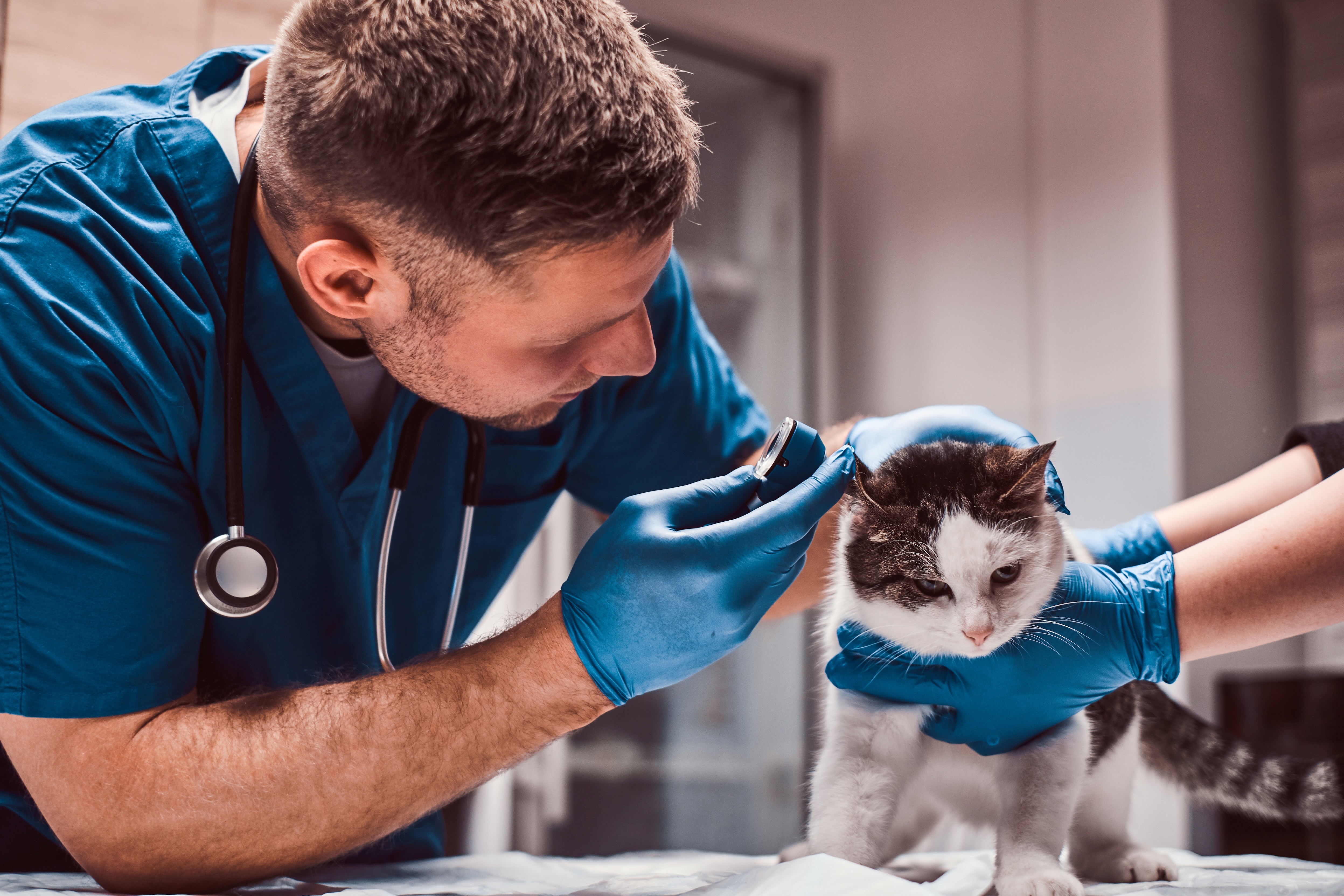
Are you a team member in a veterinary practice?
Are you a pet parent planning a trip with your furry pal?
Pet Courier Service: A Guide to Hassle-Free Pet Travel
Think of a pet courier service as a personal travel agent and logistics expert, all rolled into one, dedicated entirely to getting your pet safely from point A to point B. Whether you're moving across the country or relocating internationally, these specialists handle the complex, often stressful details of animal transport. They manage everything from flight bookings to the mountain of paperwork involved.
Your Pet's Next Big Adventure Awaits
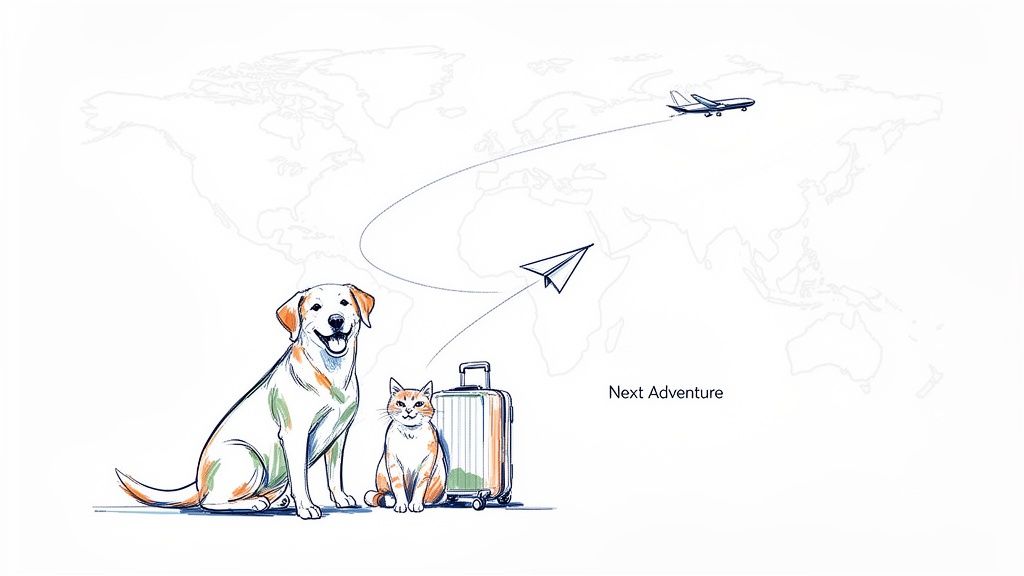
Moving with a pet can feel like a massive undertaking, but you don't have to figure it all out on your own. This guide is your co-pilot, designed to help you navigate the world of pet courier services, whether you're just moving a few states over or heading to a new continent. We'll walk you through every step, from picking the right company to prepping your pet for their big travel day.
Consider this your roadmap to a smooth, stress-free journey for everyone involved—especially your furry family member.
Why a Professional Pet Courier Service Is Essential
Let's be clear: hiring a professional pet courier is about much more than just convenience. It’s about safety, following the rules, and your own peace of mind. These pros are familiar with the tangled web of rules governing animal transport, which can change a lot from one state or country to the next.
They know the ins and outs of airline regulations, specific crate requirements, and the precise health documents needed to avoid frustrating delays or, worse, being turned away at the border. For instance, a good courier stays on top of airline breed restrictions and seasonal travel bans that could ground your pet's travel plans.
The need for this expertise is reflected in the industry's growth. The global pet transport market was valued at around USD 573.3 million and is expected to climb to USD 873.4 million within the next decade. This isn't just a niche service anymore; it's a clear sign that pet owners are prioritizing safe travel.
A professional courier's main job is to take the stress off both you and your pet. They wrestle with the logistics so you can focus on your move, confident that your companion is in capable, experienced hands.
What to Expect in This Guide
We’ve broken down the entire pet relocation process into simple, manageable pieces. You'll get helpful advice and real-world examples to help you feel confident every step of the way. We’re not just scratching the surface here; we're giving you the full scoop.
Here's a quick preview of what we’ll cover:
Finding a Trustworthy Partner: We’ll show you how to check out a pet courier, including the important questions to ask and the red flags to watch out for.
Decoding the Paperwork: From health certificates to import permits, we'll make the documentation clearer, especially for tricky international moves.
Preparing Your Pet: Get practical crate training tips and other simple methods to make sure your pet has a comfortable, low-stress trip. For a deeper dive, check out our comprehensive guide on pet travel preparation.
Coordinating Travel Day: We'll give you a checklist for a smooth hand-off and explain how to stay in the loop while your pet is on the move.
Pet Travel Preparation at a Glance
To give you a clearer picture, here's a quick look at the main stages of preparing your pet for travel with a professional courier.
Phase | Key Action Items | Who is Responsible |
|---|---|---|
Initial Planning & Research (3-6+ Months Out) | Research destination country rules. Get quotes from pet couriers. Review your pet's vaccination history. | Pet Owner, Pet Courier |
Veterinary & Documentation (1-3 Months Out) | Visit a USDA-accredited vet. Start any required tests (e.g., rabies titer). Gather all existing medical records. | Pet Owner, Veterinarian |
Booking & Logistics (4-6 Weeks Out) | Confirm booking with courier. Purchase an airline-compliant travel crate. Begin crate training with your pet. | Pet Owner, Pet Courier |
Final Preparations (1-2 Weeks Out) | Final vet visit for the health certificate. Confirm all travel details and timelines. Prepare a travel comfort kit for your pet. | Pet Owner, Veterinarian, Pet Courier |
This table is just a general timeline, but it shows how different responsibilities are shared between you, your vet, and your chosen courier service.
Modern tools are also making this process much easier. Platforms like Passpaw, for example, help veterinarians create accurate international health certificates, which greatly reduces the risk of human error that could derail your pet’s journey.
By the end of this guide, you’ll have a solid plan to get your best friend ready for takeoff.
Finding the Right Pet Courier Service
Choosing who will transport your pet is easily the biggest decision you'll make in this whole process. Think of it less like booking a package and more like hiring a travel partner for a beloved family member. Not all pet couriers are the same, and the best fit for you will depend on your destination, your pet's specific needs, their breed, and of course, your budget.
You're putting a huge amount of trust in this person or company. You need to know they're qualified, experienced, and genuinely care about the animals they handle. Let's walk through how to check out potential couriers so you can find one that gives you total peace of mind.
Check for Key Credentials and Affiliations
The fastest way to separate the pros from the newcomers is by checking for professional credentials. One of the most important affiliations to look for is with the International Pet and Animal Transportation Association (IPATA).
IPATA is a global network of professional pet shippers who follow strict ethical guidelines and stay up-to-date on animal transport regulations across the world. When you choose an IPATA-registered courier, you're working with a company recognized for its commitment to safety and professionalism.
Beyond that key affiliation, you should also look into:
USDA Registration: For travel within the United States, professional animal transporters are generally expected to be registered with the U.S. Department of Agriculture (USDA) and follow the Animal Welfare Act.
Experience with Your Destination: International moves are tricky. A courier who has moved pets to your specific country before will already be familiar with the import rules, quarantine protocols, and local customs quirks that can trip up less experienced shippers.
Read Recent Reviews and Ask for References
Online reviews are a great starting point, but you have to read them with a careful eye. Look for recent reviews—from the last 6 to 12 months—on independent sites like Google or Trustpilot. Pay attention to comments about communication, how they handled unexpected problems, and the condition of the pets when they arrived.
And don't hesitate to ask a potential courier for references from past clients who had a similar move—maybe the same destination or even the same breed of dog. A confident, professional company will have no problem connecting you with happy customers.
A great pet courier service understands they aren't just transporting cargo; they're caring for a family member. Their communication, transparency, and empathy should reflect that understanding from the very first conversation.
Ask the Right Questions During Your First Call
Once you've got a shortlist, it's time to actually talk to them. This first conversation is your chance to get a real feel for their expertise and customer service. How they answer your questions says a lot. If they seem rushed, vague, or annoyed, that's a huge red flag.
Here are a few essential questions to get you started:
How do you handle unexpected delays or emergencies? Ask for a specific example of what happens if a flight is canceled. A good courier will have contingency plans ready to go.
What kind of insurance coverage do you offer? You need to understand exactly what’s covered, from travel accidents to vet care during transit. Get clear on the policy limits and how to make a claim.
Can you provide a detailed, all-inclusive quote? The quote should break down every single cost: airline fees, the travel crate, vet document processing, and customs clearance. This is how you avoid nasty surprise charges later.
How will I receive updates during my pet's journey? Find out if they offer GPS tracking, send photo updates, or have a system for regular check-in calls. Consistent communication is everything for your peace of mind.
For those looking for the absolute highest level of care, understanding what's offered by luxury travel concierge services can give you a benchmark for premium options. You can also check out our guide to different pet transport services to help compare all your options. Making the right choice now will make the entire experience far less "ruff" on everyone.
Navigating Pet Travel Paperwork
If there’s one part of moving with a pet that gives owners pause, it’s the mountain of paperwork. The sheer volume of documents, especially for international travel, can feel like a full-time job. Every country—and sometimes even individual states—plays by its own unique rulebook, turning the process into a seriously complex puzzle.
This is where a professional pet courier service often becomes a lifesaver. They take that confusing stack of forms and turn it into a clear, manageable checklist. These folks are experts in the specific documents your destination requires, making sure nothing gets missed.
Understanding the Core Documents
While every trip is different, a few key documents are the foundation of nearly every pet move. Think of them as your pet’s passport and visa. Getting them right is absolutely non-negotiable.
Here are the usual suspects:
Vaccination Records: Proof of up-to-date vaccinations, especially for rabies, is a universal requirement.
Microchip Certificate: Most countries require an ISO-compliant microchip for identification, and you'll need the paperwork to prove it’s there.
Veterinary Health Certificate: This is an official document from an accredited vet confirming your pet is healthy and fit to travel.
That last one, the health certificate, is often the trickiest. For international travel, this isn’t just a simple note from your local vet. It’s an official government form that must be filled out perfectly and then endorsed by a government agency like the USDA's Animal and Plant Health Inspection Service (APHIS).
The timing on these documents is very strict. A health certificate is often only valid for 10 days. This tight window means your final vet visit, government endorsement, and travel date must be perfectly lined up.
The Challenge of Country-Specific Rules
This is where things get really complicated. The paperwork that gets a cat into the European Union is completely different from what a dog needs to enter Australia. A good pet courier service stays on top of these constantly changing regulations so you don't have to.
Let’s look at a real-world example. Moving a cat to France (an EU country) often requires a specific EU Health Certificate, a rabies shot given at least 21 days before travel, and an ISO microchip. Pretty straightforward.
Now, compare that to moving a dog to Australia, which has some of the strictest import rules in the world. That process often involves:
An import permit, which can take weeks or months to get.
A series of specific blood tests (like the Rabies Neutralising Antibody Titre test) that have to be done months in advance.
A mandatory quarantine period in a government facility after landing.
Missing a single step or a signature in either of these scenarios can lead to difficult consequences, from your pet being denied entry to extended, stressful quarantine periods. For a deeper dive into the necessary forms, you can learn more about travel documents for pets in our dedicated article.
This timeline shows how the early stages of the process fit together when you're hiring a pet courier to handle these complexities.

As you can see, coordinating with your vet is the critical link between your initial research and the final booking decision.
How Technology Is Making It Easier
The growing complexity of pet travel has fueled a major market boom. The pet travel services industry is projected to grow from USD 2.4 billion to USD 3.9 billion in the coming years, driven largely by people moving internationally with their animals. This growth makes it clear: people need better ways to handle the documentation nightmare.
This is where modern tools are becoming game-changers, especially for veterinarians. Instead of spending hours manually filling out confusing forms and risking expensive mistakes, vets can use platforms like Passpaw. This software helps automate the creation of accurate international health certificates.
By guiding vets through the specific requirements for each destination, it helps ensure every detail is correct. This automation cuts down on human error, saves the veterinary team a ton of time, and gives you, the pet owner, peace of mind that the paperwork will be accepted without a hitch. It turns a potential disaster into a clear, manageable workflow.
Preparing Your Pet for a Comfortable Trip
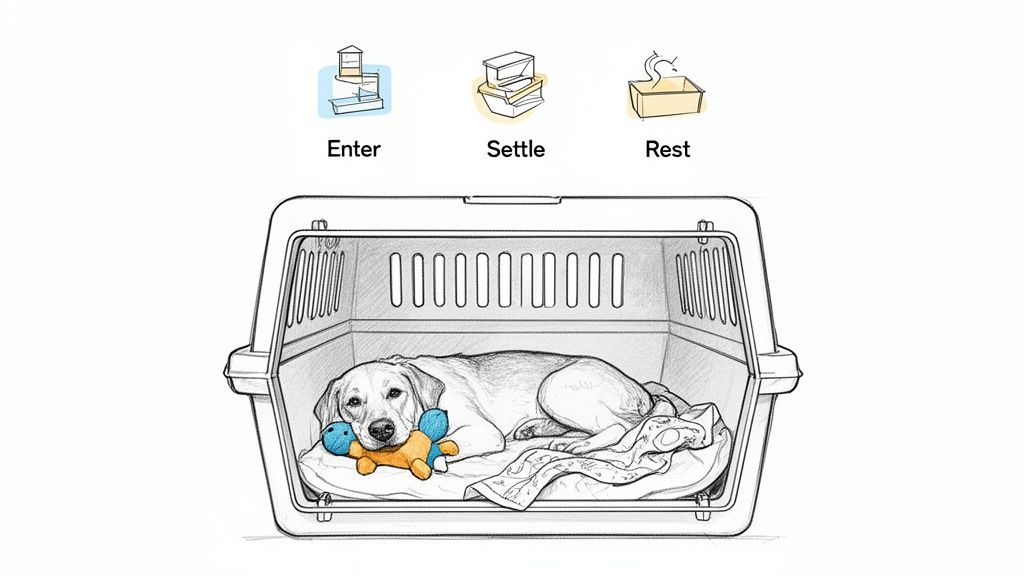
Once the logistics and paperwork are sorted, you can finally turn your attention to the most important traveler: your pet. A little preparation goes a long way in making their journey a positive one, turning an unfamiliar experience into something safe and manageable.
Your goal here is simple: make travel day as low-stress as possible. This is about more than just buying a carrier; it's about building a positive association with their travel space and getting them ready, both mentally and physically. A calm pet makes the hand-off to your pet courier service a much smoother event for everyone involved.
Crate Training for a Safe Haven
The single most important thing you can do is make your pet’s travel crate feel less like a cage and more like a personal den. With good crate training, the carrier becomes a familiar safe space, which is a huge comfort when they're surrounded by new sights and sounds. Don't rush this part—it's a common mistake that creates a ton of unnecessary anxiety.
Start the process weeks, if not months, before the travel date. Don't just shove them inside one day. Instead, introduce the crate with the door wide open and turn it into the best spot in the house.
Make it part of the furniture: Place the crate in a common area where your family hangs out.
Make it inviting: Fill it with their favorite blanket, a comfy bed, and a few high-value toys.
Feed them inside: Start by putting their food bowl just inside the door, then slowly move it further back with each meal.
Reward them for going in: Whenever they enter the crate on their own, offer plenty of praise and a tasty treat.
The goal is for your pet to walk into the crate willingly and feel relaxed. That sense of familiarity is their anchor during the journey.
Managing Travel Day Anxiety Naturally
Pets are sensitive to changes in routine, so it’s normal for them to feel a little on edge before a big move. Your calm demeanor is their biggest clue that everything is okay. Beyond that, there are a few practical things you can do to keep their nerves in check without medication.
In fact, many vets and airlines advise against sedating pets for air travel. Some medications can interfere with breathing and balance at high altitudes, increasing health risks for pets in cargo.
Your scent is one of your pet's greatest comforts. Placing a worn t-shirt or a small blanket that smells like you inside their crate can provide a continuous source of reassurance throughout their journey.
Instead of sedation, focus on natural ways to keep them calm. A long walk or an energetic play session right before they meet the pet courier can help burn off nervous energy, encouraging them to rest during the trip. You can also ask your vet about calming supplements or pheromone sprays that might help soothe them.
Food, Water, and Final Comforts
Figuring out the pre-travel meal plan can be tricky. A full stomach can easily lead to motion sickness, so a light meal four to six hours before pickup is the general rule. This gives them time to digest but ensures they aren’t traveling hungry.
Let them have access to water right up until they leave, but it's smart to empty the bowl just before the hand-off to avoid spills. Most airline-approved crates come with clip-on bowls that the courier can fill during layovers or comfort stops, ensuring your pet stays hydrated.
And if you're not moving a furry friend, other companions have their own unique needs. For instance, transporting aquatic pets requires special care, and this guide to moving a fish tank offers excellent advice. By taking these steps, you’re setting the stage for a successful and stress-free trip from start to finish.
Coordinating Logistics on Travel Day
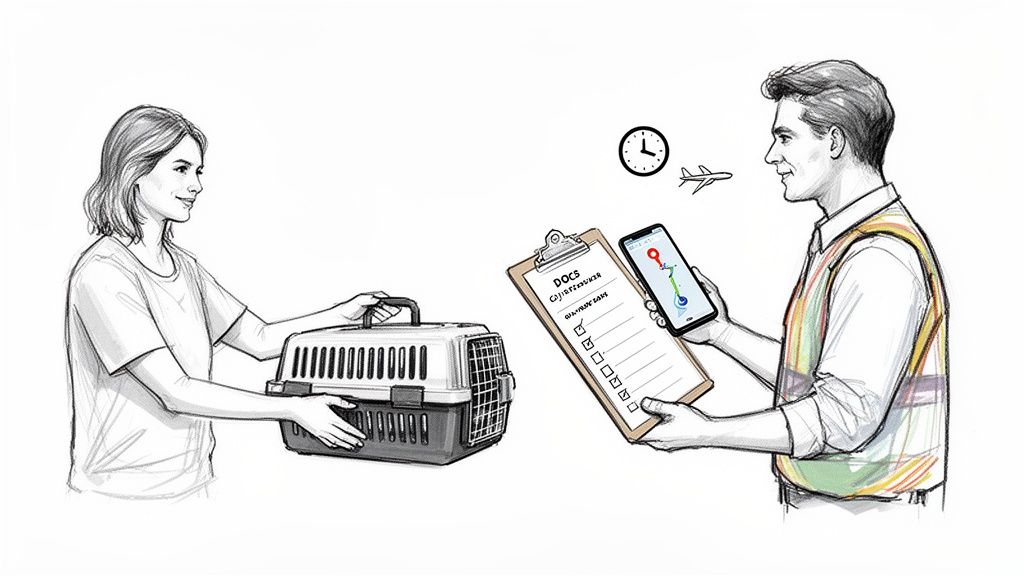
After what feels like an eternity of planning, the big day has finally arrived. This is where all your preparation pays off. Smooth coordination is everything now, and clear communication with your pet courier service will set the tone for your pet's entire journey.
Think of it as a well-rehearsed hand-off. The goal is to make the transition from your care to the courier's as calm and seamless as possible for your pet. A little last-minute prep makes a massive difference.
The Pre-Departure Checklist
Before the courier even knocks on your door, run through a final checklist. This one last pass prevents that awful feeling of last-minute scrambling and ensures nothing critical gets left behind.
Here’s what your final prep should look like:
Document Check: Grab all the original paperwork—health certificates, vaccination records, import permits—and put them in a clearly labeled, waterproof folder.
Crate Readiness: Is the crate clean, secure, and properly labeled with your contact info and your pet's details? Make sure the food and water bowls are attached.
Comfort Items: Tuck that familiar-smelling t-shirt or blanket inside the crate. Take out any toys that could become a choking hazard during transit.
Once you’ve checked all the boxes, give your pet one last potty break and a long, reassuring cuddle. Your calm energy will help them feel secure as they head off on their adventure.
The Hand-Off: What to Expect
When your pet courier arrives, they should come prepared with their own pre-flight checklist. This is the mark of a real pro. They will carefully verify your pet’s identity, review all the paperwork with you one more time, and confirm the travel crate meets every airline and safety standard.
This is also your final opportunity to share any last-minute details about your pet’s personality. Does she get nervous and bark? Is there a specific way he likes to be soothed? The more information your courier has, the better they can care for your furry family member.
This moment is all about trust. A good courier will take the time to answer any final questions and reassure you about the trip ahead. They get it—this is a big deal for both you and your pet.
Staying Updated During Transit
Waving goodbye is never easy, but modern technology can give you incredible peace of mind. Many top-tier pet courier services now provide tools that keep you connected while your pet is on the move.
Be sure to ask your courier about their specific communication and tracking methods. Typically, you can expect:
GPS Tracking: Some services offer a live GPS link, so you can see your pet's location in real-time, whether they’re on the road or in the air.
Photo and Text Updates: Couriers often send pictures at key moments, like during a comfort stop or after a safe check-in at the airport.
A Dedicated Contact: You should have a direct line to an actual person who can give you updates—not just a generic customer service number.
The pet transportation industry is growing, and competition is fierce. Excellent communication is what truly separates the best from the rest. The top services use technology to streamline client updates, which gives them a significant edge. You can find more insights on the pet shipping service market's growth on datainsightsmarket.com.
Arrival and the Final Reunion
The coordination doesn't end when the plane touches down. For international moves, the courier will manage the entire customs clearance process. This step can be complex, and having an expert who knows how to work with local officials is invaluable for ensuring a quick release.
Once your pet is cleared, the courier will either meet you at a designated spot at the airport or provide door-to-door delivery to your new home. They’ll confirm the final delivery time with you so you can be there to greet your well-traveled companion. That first happy reunion makes every bit of planning completely worth it.
Common Questions About Pet Courier Services
Even after doing your homework, it’s completely normal to have some questions when you’re thinking about hiring a pet courier service. This is a huge decision, and you want to be certain you’re making the best choice for your furry (or feathered) family member. Let's tackle some of the most common questions we hear from pet owners.
These usually boil down to three big things: cost, safety, and the actual logistics of getting your pet from point A to point B. Getting clear on these will help you move forward with confidence.
How Much Does a Pet Courier Service Cost?
This is usually the first question on everyone's mind, and the honest answer is: it really depends. There's no flat rate because the final price is shaped by a few key things, mainly the travel distance, your pet’s size, and whether they're traveling by ground or air.
For a domestic move, ground transport for a cat going a few states over might be a few hundred dollars, while a large dog heading cross-country could easily top a thousand. International air travel is a whole different ball game.
When you're looking at an international move, costs often start in the thousands. That price tag typically covers airline cargo fees, the travel crate, customs clearance, and handling all the complex vet paperwork—everything needed for a smooth trip.
Your best bet is to get detailed, itemized quotes from at least two or three reputable companies. This lets you compare not just the bottom line, but what's actually included in the service. It’s the best way to avoid any "fur-raising" surprise fees down the road.
Are Pet Courier Services Safe for My Pet?
Yes, absolutely. For any professional pet courier, safety is their number one priority. Good companies are experts in animal welfare and have strict procedures to keep your pet secure, comfortable, and well-cared-for during the entire journey.
They use climate-controlled vehicles for ground trips, protecting pets from extreme temperatures. When flying, they follow the IATA Live Animals Regulations, which is the global gold standard for transporting animals by air. A true professional knows how to minimize stress and handle your pet with the care they deserve.
To make sure you’re hiring a safe and reliable operator, here’s a quick checklist:
Check for IPATA membership: This is the hallmark of a quality international pet shipper.
Ask about their backup plans: What happens if a flight is delayed or a van has an issue? A pro will have a clear contingency plan.
Verify their USDA registration: This is often required for any transport within the U.S.
What Is the Difference Between Ground and Air Transport?
Choosing between ground and air really comes down to your specific situation. Both have their advantages, and the right choice usually depends on the distance and your pet’s individual needs.
Ground transport is a fantastic option for domestic or cross-country moves. For some animals, it’s a much less stressful experience because it avoids the noise and chaos of airports. It’s also the only option for snub-nosed breeds like French Bulldogs or Persian cats, which many airlines restrict from flying due to respiratory risks.
Air transport is pretty much the only practical choice for long-distance international relocations. While it might seem more intimidating, professional couriers are masters of airport logistics. They handle everything from the special check-in process to navigating customs on arrival, making it as seamless as possible for your pet.
How Can Passpaw Help My Veterinarian?
This is a fantastic question because it gets right to the trickiest part of pet travel: the international health certificate. That single document can be a massive headache for pet owners and a huge administrative drain on veterinary clinics.
Passpaw is a tool built specifically to solve this problem. Instead of your vet spending hours manually filling out complicated, country-specific forms—and risking one small mistake that could get your pet denied entry—they can use our platform.
Passpaw helps generate accurate health certificates tailored to your exact destination. This saves the vet clinic an incredible amount of time, slashes the risk of human error, and gives you incredible peace of mind. It helps ensure your pet’s most critical travel document is perfect, preventing costly and heartbreaking delays at the border.
Ready to take the complexity out of your pet's international travel paperwork? Passpaw gives your veterinary team the tools they need to create accurate health certificates with confidence. Learn how we make global pet travel simpler for everyone involved at https://passpaw.com.
More articles
From regulatory changes to best practices for veterinarians and pet owners, our resources keep you ahead of the curve.