Are you a team member in a veterinary practice?
Are you a pet parent planning a trip with your furry pal?
Health Certificate Dog Travel: A Paws-On Guide
Getting a health certificate for dog travel is often the official kick-off for your international adventure. This document, signed off by a special vet, is the proof your dog is healthy and meets the entry rules for your destination. Simply put, it's a super important piece of paper for your travel plans.
Your Guide to Dog Travel Documents: Starting the Adventure
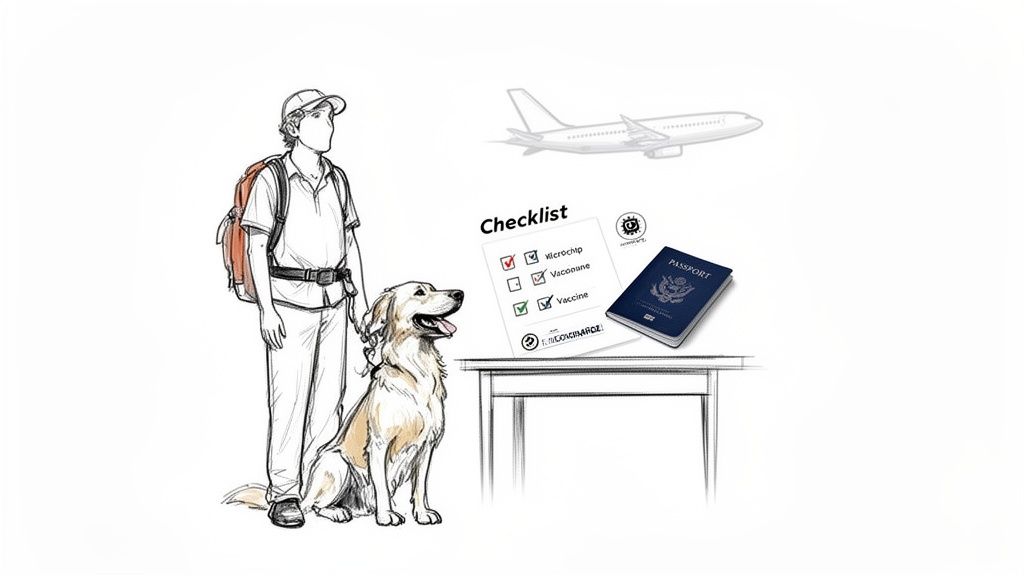
Traveling the world with your dog is an amazing experience, but the real work starts long before you ever pack a bag. The process can feel like a maze of paperwork and tight deadlines, but with a clear plan, it's completely manageable. Think of this guide as your co-pilot, here to walk you through every single step.
Before you even think about official forms, you need to get your dog's basic health records in order. This is your pre-flight check. Confirm their microchip is working and the registration details are current. Double-check that all their vaccinations are up to date. Nailing these fundamentals from the get-go saves you from last-minute headaches and travel-day disasters.
Who's On Your Team?
Getting this health certificate across the finish line is a team sport. It's a partnership between you, your veterinarian, and government agencies, where everyone has a specific role to play.
You, the Pet Owner: Your job is to be the project manager. You'll research your destination's rules, gather all the necessary records, and book appointments on schedule.
Your USDA-Accredited Veterinarian: This is your expert on the ground. They'll perform the health exam, verify all the medical details, and fill out the official health certificate.
Government Agencies (like the USDA APHIS): For international trips, this is the final checkpoint. They provide the official endorsement or "stamp of approval" that makes the certificate valid.
You're definitely not alone in this. The global pet travel services market was valued at USD 2.3 billion in 2023 and is expected to more than double by 2034. Dogs make up over half of that market! It just goes to show how many people are successfully navigating this process.
The Timing Is Everything
When it comes to the health certificate for dog travel, timing isn't just important—it's critical. Many countries have a very strict window for when the vet exam and final government endorsement must happen before you land, sometimes as short as 10 days.
I've seen it happen time and again: people underestimate the timeline. Certain requirements, like a rabies titer blood test, can take months to come back from the lab. Starting early isn't just a suggestion; it's essential for a stress-free trip.
Before we dive into the nitty-gritty, let’s get a quick overview of these foundational steps.
Initial Pet Travel Checklist At a Glance
Here’s a quick summary of the first things you need to tackle before you even schedule that health certificate appointment. Getting these right lays the groundwork for everything else.
Checklist Item | Why It Matters | Recommended Timeline |
|---|---|---|
Confirm Destination Requirements | Every country has unique rules. You should know them inside and out to avoid issues. | 3-6 months before travel |
ISO-Compliant Microchip | This is your dog's universal ID. It should be implanted before the rabies vaccine. | At least 30 days before travel |
Up-to-Date Rabies Vaccination | The cornerstone of all pet travel. Timing is crucial for validity. | At least 30 days before travel |
Other Required Vaccinations/Tests | Some countries require specific vaccines or tests, like rabies antibody titers. | 3-6 months before travel |
This table covers the absolute basics. Once these are sorted, you can move on to the certificate process itself with much more confidence.
For a broader look at pet travel safety, this comprehensive guide to traveling safely with your dog is a fantastic resource. If you want to dive deeper into the paperwork beyond the health certificate, check out our article on all the essential travel documents for pets.
Getting Your Dog's Pre-Travel Health Checklist in Order
Before you can even think about getting the final health certificate for dog travel, there's some critical prep work to tackle. I like to think of this as laying the foundation for a stress-free trip. Getting these initial steps right saves you from last-minute panic and gives your vet everything they need to sign off on the official paperwork.
This isn't just busywork. It's about ensuring your dog's identification, vaccinations, and any necessary lab tests are sorted out well ahead of your departure date. These items are very important and set the stage for everything that follows.
First Things First: The Microchip
A microchip is essentially your dog's passport to the world. For just about any international travel, countries require an ISO-compliant microchip. This specific type operates on a frequency that universal scanners can read, no matter where you land.
This is more than a formality—it’s the anchor for all your dog's travel documents. The chip number is listed on every form, linking your dog directly to their paperwork.
Check Your Chip: If your dog was microchipped recently, it's likely an ISO-compliant one. But if the chip is older, it’s smart to have your vet do a quick scan to confirm.
Implant Before Rabies Vaccination: This is a big one. Many places, especially in the EU, have a strict rule: the microchip should be implanted before the rabies vaccine is given. If it's done in the wrong order, the vaccine might be considered invalid for travel, forcing you to restart the clock.
Update Your Contact Info: It’s easy to forget, but make sure your phone number and address are current in the microchip registry. If your dog gets lost during your travels, this is your only link back to them.
Nailing the Vaccination Requirements
Vaccinations are the heart of the health certificate. While every country has its own list, the rabies vaccine is always the star of the show. The timing of this shot is absolutely crucial and, honestly, where most people get tripped up.
Proper vaccination is a huge deal for international animal health authorities. It’s useful to know that nearly 1 in 4 dogs miss their regular booster shots, which can cause major travel headaches. And with 85% of U.S. dog parks having at least one dog testing positive for intestinal parasites, it’s clear why a full vet screening is so important before you go.
A common mistake is thinking a rabies vaccine is good for travel the moment it's given. Most countries require a waiting period—often 21 to 30 days—after the primary shot before the dog can travel. You have to plan for this buffer.
Beyond rabies, your destination might require other shots. For a deeper dive, check out our guide on https://passpaw.com/blog/what-vaccinations-do-i-need-for-my-dog to get fully prepared for your vet visit.
When Blood Tests Are on the List
This is where planning months—not weeks—in advance becomes absolutely essential. Certain rabies-free or rabies-controlled destinations like Japan, Australia, and the EU (for pets arriving from certain countries) demand a rabies antibody titer test.
This isn't a simple blood test. A sample is drawn by your vet and sent to a government-approved lab to prove the rabies vaccine is working by measuring the antibody levels in your dog's blood.
The timeline for this is no joke:
The Blood Draw: This usually has to happen at least 30 days after the most recent rabies vaccination.
Lab Processing: The sample goes to a specific, approved lab. Results can take anywhere from a few weeks to a couple of months to come back.
The Waiting Period: Here's the kicker. After the successful blood draw, many of these countries enforce another waiting period, often three months, before your dog is even allowed to enter.
Miscalculating this long timeline is one of the top reasons people have to cancel or postpone their trips. As you get into the weeds of planning a trip with your pet, from health forms to pet-friendly lodging, getting these long-lead items handled first makes everything else fall into place.
The Vet Visit and Completing the Health Certificate
Alright, you’ve wrangled the microchip, vaccinations, and lab tests. Now it’s time for the main event: the official vet visit where the actual health certificate gets filled out. This is the moment all that prep work comes together.
But hold on—you can't just go to any vet. For this, you should seek out a USDA-accredited veterinarian. These are vets who have completed specific government training to issue and sign international travel documents. They’re the experts you need on your team.
Finding one is pretty straightforward. The USDA keeps a database on its website where you can search for accredited vets in your area. Pro tip: when you call to book, double-check that they’re comfortable with the process for your specific destination. Some countries have far more complex rules than others, and you want a team that’s confident.
What the Vet Looks for During the Exam
This appointment isn't just your average check-up. It's a full health assessment to officially declare your dog "fit to fly." Think of it as a final pre-flight inspection for your four-legged co-pilot.
Your vet will be conducting a nose-to-tail physical exam, specifically looking for any signs of infectious or contagious diseases.
Here’s what’s on their checklist:
Overall Health: A close look at your dog's eyes, ears, skin, and coat for anything out of the ordinary.
Parasite Check: The vet needs to confirm your dog is free of external parasites like fleas and ticks. Many countries even require specific treatments to be administered and recorded right on the certificate.
Mobility and Demeanor: They’ll watch how your dog moves to make sure there are no signs of pain and that they appear bright, alert, and generally healthy.
This exam is the last medical hurdle. Once your dog passes, the paperwork can officially begin.
Demystifying the Official Forms
For most international travel out of the U.S., you'll likely be dealing with the USDA APHIS Form 7001. This is a standard pet health certificate for a huge number of countries. This form is the key to everything, and getting it right is super important.
The form is designed to capture every critical detail about your dog in a standard way. Accuracy is everything. One tiny mistake or missing piece of info could cause issues with the whole document and put your entire trip at risk.
Honestly, the best advice I can give is to show up to the appointment with all your documents perfectly organized. Have the microchip number, rabies certificate, and lab results printed and ready to hand over. This helps the vet fill out the form correctly and saves everyone a ton of time.
Key sections on the form include:
Your name and address (you’re the "exporter").
Your dog's vitals: name, breed, age, and that all-important microchip number.
All vaccination dates and product details.
Results from any required tests or parasite treatments.
Filling these forms out by hand is a massive time-sink for veterinary staff and a recipe for human error. It’s why tools like Passpaw exist—to automate the tedious parts by pulling in client data and validating information, which cuts down on mistakes and gives the vet team back valuable time. If you want to dive deeper into this critical document, you can learn more about the APHIS 7001 health certificate in our article.
Avoiding Common Paperwork Pitfalls
Even with the most careful planning, mistakes happen. A slip of the pen can create a huge headache at the border. I’ve seen it all, but here are some of the most common errors to watch for:
Incorrect Dates: Mixing up the month and day is incredibly common, especially with international formats (e.g., writing 04/05/2024 instead of 05/04/2024). This can make it look like a vaccine expired or was given too late.
Incomplete Microchip Number: Missing even one digit from the 15-digit ISO microchip number could get the form rejected. Always, always double-check it against your records.
Using Different Ink Colors: The entire form should be completed and signed in the same color ink—usually blue. It might sound silly, but officials often prefer this.
Vague Breed Descriptions: Simply putting "mixed breed" might not cut it. Some countries want more detail. Be as specific as you can, like "Labrador Retriever Mix."
Being mindful of these little details can make all the difference. Take a moment to review the document with your vet before they sign it to make sure it's absolutely perfect.
Securing Final Approval From The USDA
Once your USDA-accredited vet gives your dog the all-clear and signs the health certificate, you’re on the home stretch! But hold on—there's one final, crucial step before you can celebrate: getting the official government endorsement.
This isn’t just a rubber stamp. It's the seal of approval that makes your dog's travel documents valid in the eyes of another country. This final check comes from the USDA's Animal and Plant Health Inspection Service (APHIS), which confirms everything is accurate and meets your destination's specific import rules.
Skipping this step could mean your health certificate is invalid, and your dog won't be going anywhere.
Choosing Your Endorsement Path
You have two main ways to get this final sign-off, each with its own timeline. Understanding the difference is key to a smooth process, especially when you're racing against the clock.
Traditional Mail-In: This is the old-school approach. You or your vet will need to overnight the original, signed paperwork to the APHIS Endorsement Office that serves your state. While reliable, it introduces variables like shipping delays and manual processing times.
Online Submission (VEHCS): The Veterinary Export Health Certification System (VEHCS) is the USDA's digital platform. Your vet can upload the signed certificate and all supporting documents directly. This is almost always the faster and more efficient option.
Honestly, the choice often comes down to your veterinarian's workflow and how tight your travel timeline is. If your departure date is looming, the online system is your best bet, paws down.
Navigating the Online VEHCS Process
VEHCS is a total game-changer for getting a health certificate for dog travel endorsed quickly. Your vet scans the completed and signed forms—along with rabies certificates, lab results, and any other required papers—and submits them electronically.
An APHIS officer then reviews the digital package. If everything checks out, they apply an electronic signature and seal. Your vet can then print this officially endorsed certificate right in their office. This process can slash the turnaround time from days to mere hours, eliminating the stress of waiting for a return package.
A key thing to remember: only your USDA-accredited vet can use the VEHCS system. As the pet owner, you can't create an account or submit documents yourself. Clear, consistent communication with your vet's office is essential to make sure they submit everything promptly.
For a more detailed look at the APHIS side of things, check out our complete guide on getting a USDA certificate for pet travel.
Why Timing Is The Final Boss
This last step is where the clock is ticking the loudest. The date the USDA endorses your paperwork is just as critical as the date your veterinarian signs it. Many countries have strict rules about how soon before arrival this endorsement must happen.
For example, a country might require the vet exam to be within 10 days of arrival, and the USDA endorsement must fall within that same window. If you mail the documents and they take a few days to arrive and a few more to be processed, you could easily miss your deadline. It's a nail-biting finish you absolutely want to avoid.
Here's a quick look at how these timelines can vary for some popular spots.
Endorsement Timing For Popular Destinations
Destination Country/Region | Veterinary Exam Window (Before Arrival) | USDA Endorsement Window (Before Arrival) |
|---|---|---|
European Union | Within 10 days | Within 10 days |
United Kingdom | Within 10 days | Within 10 days |
Japan | Within 10 days | Within 10 days |
Australia | Within 5 days | Within 5 days |
South Korea | Within 10 days | Within 10 days |
As you can see, those windows are tight. Planning this final step with care is very important. Missing this deadline isn't just a minor hiccup; it can lead to your dog being denied entry or facing a lengthy, expensive quarantine upon arrival. It’s the final puzzle piece that makes the entire journey possible.
You've done it. The USDA endorsement is secured, and that official health certificate is finally in your hands. This is the moment all that planning, prepping, and painstaking paperwork pays off. Now you can shift your focus from deadlines and documents to the actual logistics of a smooth travel day.
A little organization now will save you a world of stress at the airport check-in counter and during the arrival process. The goal is to have everything ready to go so you can focus on what matters most: keeping your dog comfortable and calm for the journey.
Create Your Dog’s Travel Portfolio
I always tell clients to think of their dog's documents as a personal travel portfolio. You need everything in one, easy-to-grab spot to avoid that heart-pounding panic of digging through your carry-on while a line of impatient travelers forms behind you. A simple, dedicated travel folder works wonders.
Here’s what I recommend putting inside this "pup-folio":
The Original Endorsed Health Certificate: This is your golden ticket. Keep it pristine—no folds, no coffee spills.
Rabies Vaccination Certificate: Yes, the info is on the health certificate, but trust me, airline staff and customs officials often want to see the original, standalone certificate.
Proof of Microchip: This can be the registration document or a printout from your vet showing the chip number and implantation date.
Import Permits: If your destination country required a separate permit, the original goes in here.
Lab Test Results: For things like a rabies titer test, you’ll want the original report from the lab.
A pro tip I've learned from years of helping families with this: make multiple copies of everything. Keep a full set of physical copies in a different bag from the originals. Better yet, scan every single page and save it to your phone and a cloud service like Google Drive. If the originals go missing, those backups are an absolute lifesaver.
This last official step, the USDA approval, is what gets you to this point.
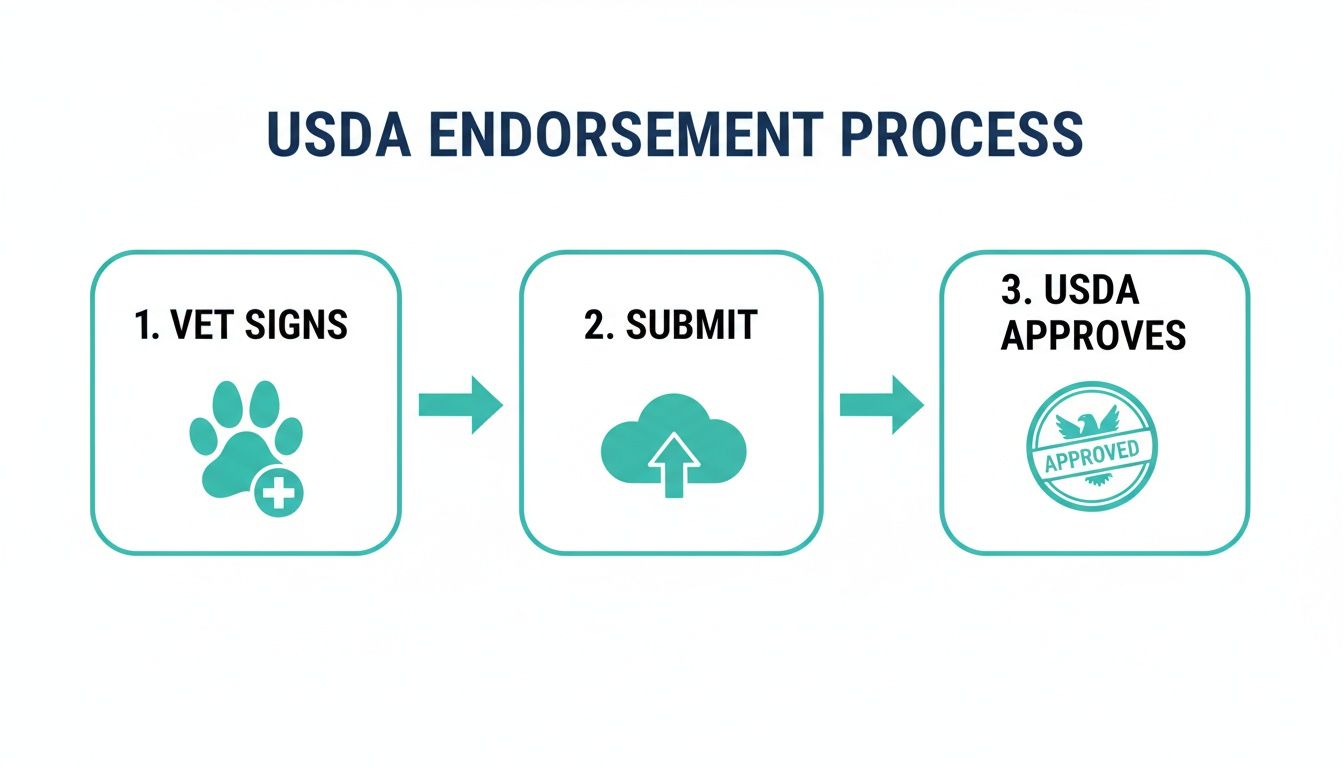
This simple flow shows the final handoffs—from your vet's signature to the USDA's official stamp—that clear the last major hurdle before you can start packing your bags.
Navigating the Airport and Airline Rules
With your documents perfectly organized, the next move is to double-check your airline's specific pet policies. These rules can and do change, so a quick final check on their website or a call a few days before you fly is a smart habit. You need to know their exact check-in procedure, including where to go and how early to arrive (it's often earlier for pets!).
At the airport, you'll present your health certificate for dog travel at a few key moments. The airline check-in agent will be the first to give your paperwork a thorough review. Then, once you land, the customs and immigration officials at your destination will inspect everything again to grant your dog entry.
Keeping Your Best Friend Calm
After all the paperwork headaches, the most important thing is making sure your dog has a positive, low-stress experience. A travel day is a whirlwind of new sights, sounds, and smells, and it can be overwhelming for them. A calm dog makes the entire process smoother for everyone involved.
Here are a few practical tips that really work:
Get Some Exercise In: A really long walk or a good game of fetch before you leave for the airport can work wonders. It helps burn off that nervous energy and encourages them to rest during the flight.
Pack a Comfort Item: A favorite small blanket or a toy that smells like home can provide a huge sense of security in an unfamiliar travel carrier or a busy airport.
Hydrate, Don't Feast: Offer small sips of water throughout the day, but it’s best to avoid a large meal right before traveling to prevent motion sickness or an upset stomach.
Check Your Own Energy: Dogs are incredibly good at picking up on our stress. If you stay relaxed and project confidence, you're sending them a clear signal that everything is going to be okay.
After successfully navigating the health certificate for dog travel process, a safe and happy journey is the real reward.
Common Questions About Dog Travel Health Certificates
Even the most organized travelers run into questions when getting a health certificate for dog travel. It’s a process with a lot of moving parts, and honestly, it's completely normal to feel a little lost. Getting the right answers ahead of time is the best way to ensure peace of mind.
To help out, we've pulled together a few of the most common queries we hear from pet owners and vets alike. Let's clear up the details that often cause the biggest headaches.
How Long Is a Dog Health Certificate Valid For?
This is easily the most critical question, and the answer isn't up to your vet—it’s dictated entirely by your destination country.
For many places, like countries in the European Union, the certificate is valid for just 10 days from the date your USDA-accredited veterinarian signs it. But that window can change dramatically depending on where you're going. Some countries might give you a generous 30-day window, while others have a very tight five-day timeline.
Don't ever assume. The only way to be sure is to check the official requirements on the USDA APHIS pet travel website. That information will tell you exactly when to schedule that final, all-important vet visit before you fly.
What Is the Difference Between International and Interstate Certificates?
It's easy to mix these two up, but they serve completely different functions. A good way to think about it is like the difference between your passport and your driver's license.
International Health Certificate: This is your dog's official travel document for entering another country. It's a detailed, often multi-page form that should be completed by a USDA-accredited vet and then officially endorsed (stamped) by the USDA itself. Without that federal endorsement, it's just a piece of paper.
Interstate Health Certificate (CVI): This document, also known as a Certificate of Veterinary Inspection (CVI), is for domestic travel between states inside the U.S. It’s a much simpler form that any licensed veterinarian can issue, and it doesn't need a USDA stamp.
Be crystal clear with your vet about your final destination. Grabbing the wrong document is a mistake you definitely don't want to make.
What Happens If My Dog's Health Certificate Has a Mistake?
Unfortunately, even a tiny mistake on a health certificate for dog travel can snowball into a huge problem. A simple typo—a wrong date, a transposed digit in the microchip number—could be enough for border officials to reject the entire document. At best, you're looking at delays. At worst, your dog could be denied entry or put into a costly quarantine at your expense.
If you or your vet catch a mistake before it's sent to the USDA, it's usually a simple fix. A new, corrected certificate can be issued. But if the error is discovered after the official endorsement stamp is on it, the entire process might have to start over from scratch. That's a true nail-biter if you're just days away from your flight.
This is exactly why you and your vet should double- and triple-check every single detail before that form gets submitted. A few extra minutes of review can save you from a "ruff" start to your trip.
Can I Get a Dog Health Certificate Online?
The short answer is no, not entirely. While technology has made parts of the process digital, the core of the certificate still requires a physical, hands-on examination of your dog.
A USDA-accredited veterinarian needs to physically see and examine your pet to confirm they are healthy and free from signs of communicable disease. There's no getting around this step.
What can be handled online is the endorsement process. Most vets now use the USDA's online portal, called VEHCS, to submit the signed certificate. This is a game-changer and is much faster than mailing documents back and forth. But that initial, in-person vet appointment is absolutely essential to get the ball rolling.
Navigating the world of pet travel documents is complex, but you don't have to figure it all out alone. Passpaw gives veterinary practices the tools to manage the entire process, from validating country requirements to ensuring every form is filled out perfectly. Ask your vet about using a system that saves time, cuts down on errors, and makes traveling with your best friend a whole lot simpler. Find out how we can help at https://passpaw.com.
More articles
From regulatory changes to best practices for veterinarians and pet owners, our resources keep you ahead of the curve.