Are you a team member in a veterinary practice?
Are you a pet parent planning a trip with your furry pal?
The Ultimate Guide to Choosing an Airline Pet Travel Carrier
Flying with your furry co-pilot all starts with one critical piece of gear: an airline pet travel carrier. This isn't just any old bag or crate. It's a purpose-built space that needs to meet specific airline guidelines for both safety and comfort.
Think of it as your pet’s personal first-class suite for the sky. It’s designed to give them a secure, familiar den during the whole journey, from takeoff to landing.
Your First Step to Stress-Free Pet Air Travel
Planning a trip with a pet can feel like a huge task, but it doesn't have to be a "ruff" experience. The journey really begins the moment you choose a carrier. This decision is the foundation for a smooth trip, directly impacting your pet’s well-being and, just as importantly, your own peace of mind.
An "airline-approved" carrier isn't just a marketing label. It suggests that the carrier has specific features that airlines look for to help keep every animal on board safe. These aren't just helpful suggestions; they are often firm requirements for travel. For a broader look at keeping your pet safe on the go, check out The Ultimate Guide to Traveling Safely With Your Dog.
Key Differences In Carrier Types
Your first big decision is figuring out where on the plane your pet will be. That single choice determines the type of carrier you'll need.
In-Cabin Carriers: These are designed for smaller pets who can fit comfortably under the seat in front of you. They're often soft-sided, giving them a little flex while still being secure.
Cargo Carriers: Built for larger animals that can't fly in the cabin, these are hard-sided crates. They are constructed to be very sturdy and protective for placement in the plane's climate-controlled cargo hold.
Getting this right is important, as the guidelines for each are completely different.
The fact that so many people are traveling with their pets just shows how important it is to get this right. The global pet travel services market hit a value of USD 2.4 billion in 2024, and it's projected to soar to USD 5.3 billion by 2034. In the U.S. alone, this segment brought in around USD 650.5 million in 2024, which shows just how many pets are taking to the skies.
An airline pet travel carrier does more than just transport your pet; it provides a familiar, secure den amidst the busy and unfamiliar environment of an airport and airplane.
Quick Checklist for an Airline-Friendly Carrier
To keep things simple, here's a quick rundown of the key features every airline-friendly carrier should have. Think of this table as your starting point when you begin shopping around.
Essential Feature | Why It's Important | What to Look For |
|---|---|---|
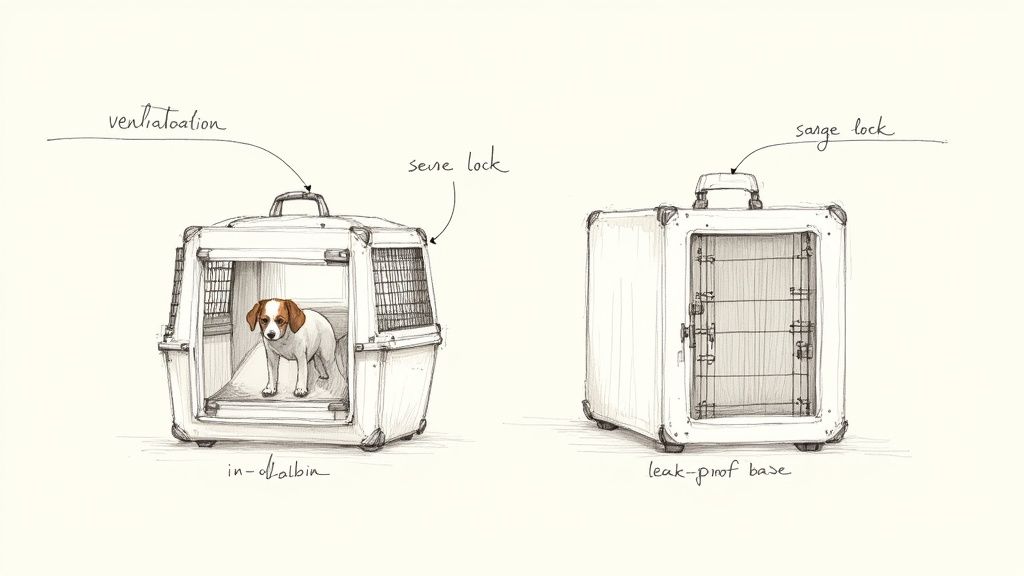
Excellent Ventilation | Helps ensure a constant flow of fresh air, which prevents your pet from overheating and feeling stressed. | Mesh panels on at least two or three sides of the carrier. |
Secure Locks/Zippers | Helps prevent any clever escape attempts in a bustling airport or mid-flight. | Look for locking zippers, security clips, or sturdy metal latches that a pet can't easily nudge open. |
Leak-Proof Bottom | Contains any accidents, keeping your pet—and the airplane cabin—clean and dry. | A waterproof lining paired with an absorbent, removable pad for simple cleanup. |
Having these three core features is a great starting point for any carrier you're considering for air travel.
So, you’re flying with your pet. The first big decision you’ll make is where they'll ride: in the cabin with you, or in the climate-controlled cargo hold? This choice changes everything, especially the kind of carrier you’ll need. The guidelines for each are completely different.
Think of it like this: an in-cabin carrier is like a cozy sleeping bag for a sleepover, while a cargo crate is like a protective helmet for a big game. Both are built for safety, but they’re designed for totally different environments and challenges. Let's dig into why.
The In-Cabin Carrier Experience
For your pet to fly in the cabin, their carrier has to slide neatly under the seat in front of you. This is where soft-sided carriers really shine. Their flexible walls can squish down just enough to fit into those tight, often oddly-shaped under-seat spaces.
This option, however, is almost always for smaller pets. With an estimated 2 million animals flying commercially in the U.S. each year, airlines have set strict limits. Most airlines cap the combined weight of your pet and their carrier at around 17 to 22 pounds. On top of that, you can expect to pay a fee, usually between $95 and $150 each way. This weight limit is often the deciding factor, so always check your specific airline's policy before you even start shopping.
The most important thing to remember for in-cabin travel is that "airline-approved" really just means "approved by your specific airline." The allowed dimensions and weight limits can vary, so confirming the rules for your flight is a must-do first step.
The Cargo Hold Carrier Requirements
If your pet is too big to fit under the seat, they’ll travel in the cargo hold, which is both temperature-controlled and pressurized. This environment requires a much tougher, more protective airline pet travel carrier. You can forget about soft-sided bags here; cargo travel needs a rigid, IATA-compliant crate.
These crates have very specific construction guidelines, and for good reason—it’s all about your pet’s safety. Here’s what airlines often require for a cargo crate:
Hard-Sided Shell: The crate has to be made of rigid plastic, wood, or metal.
Metal Hardware: The nuts and bolts holding the two halves of the crate together should be metal, not plastic. This prevents it from accidentally coming apart.
Solid Roof: The top of the carrier needs to be solid, with no doors or extra ventilation openings.
Single Metal Door: The door has to be made of welded or cast metal and must latch securely to prevent any chance of it being pushed open.
These features help the carrier handle the bumps and pressure changes during the flight, keeping your pet secure.
To help you visualize the differences, here’s a quick comparison of the two main types of airline pet carriers.
In-Cabin vs. Cargo Carrier at a Glance
Feature | In-Cabin Carrier (Soft-Sided) | Cargo Carrier (Hard-Sided) |
|---|---|---|
Primary Material | Flexible fabric (nylon, polyester) | Rigid plastic, metal, or wood |
Structure | Collapsible, flexible frame | Rigid, non-collapsible shell |
Hardware | Zippers, plastic clips | Metal nuts and bolts |
Ventilation | Mesh panels on multiple sides | Drilled holes or metal grates |
Security | Zipper locks (optional) | Solid, single-piece metal door |
Regulations | Sized to fit under the seat | Often follows IATA standards |
Best For | Small pets (under 22 lbs) | Medium to large pets |
This table should make it clear just how distinct the requirements are. Choosing the right one isn't just about following rules; it's about helping your pet have the safest and most comfortable journey possible.
Navigating the web of airline and FAA rules can feel a bit daunting. For a wider view on how the FAA approaches items allowed on planes, you can look into topics related to FAA-approved airline equipment regulations. Since every airline adds its own layer of rules, checking your specific airline's policy is always a good idea.
How to Get the Paw-fect Carrier Size
Choosing the right airline pet travel carrier is a bit like finding the perfect pair of shoes for a long hike. Too tight, and it's miserable. Too loose, and you're slipping around. A carrier that’s too small is cramped and unsafe, while one that’s too big can leave your pet feeling insecure, especially during turbulence.
Getting the size just right is one of the most important things you can do for a safe and happy flight. It’s a step you want to nail the first time to avoid any last-minute drama at the airport check-in counter. After all, a comfortable pet is a calm pet.
This simple visual flow shows how measuring your pet and knowing your travel type are the two foundational steps in selecting the right carrier.
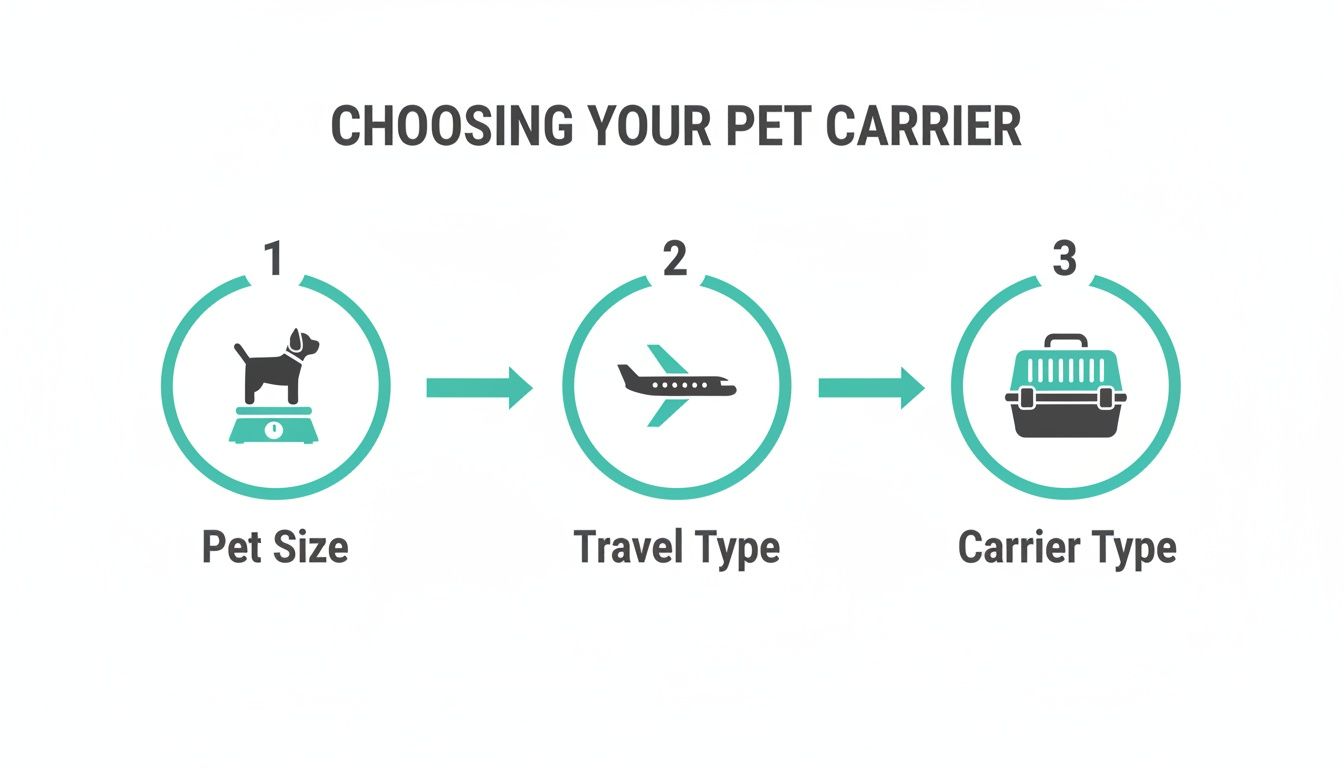
The takeaway here is simple: you can't pick the right carrier without first knowing your pet's exact dimensions and how you plan to travel.
Measuring Your Pet The Right Way
You don’t need any fancy equipment for this part. Just grab a flexible measuring tape and maybe a few treats to keep your pet happy and still. You're aiming to get two key measurements.
Length (Measurement A): With your pet standing comfortably, measure from the tip of their nose straight back to where their tail begins. It's really important not to include the tail itself in this measurement, or you'll end up with a carrier that's way too big.
Height (Measurement B): While they're still standing, measure from the floor up to the top of their head or the tips of their ears—whichever is higher. For floppy-eared dogs, just measure to the top of their head. For cats or dogs with perky ears, you need to get the full height right to the tip of the ear.
These two numbers are your starting point. Now, we just need to add a little wiggle room to find the perfect carrier dimensions.
Every airline generally follows a universal standard for carrier sizing: your pet must have enough room to stand up without crouching, turn around completely, and lie down in a natural, comfortable position. This isn't just a suggestion; it's a key requirement for their safety and well-being.
Calculating The Final Carrier Dimensions
Once you have your pet’s length and height, it's time for some simple math. This will give you the minimum internal dimensions for their carrier, ensuring they have that crucial "turn-around" space.
Carrier Length: Take your pet's length (Measurement A) and add 2-4 inches. This gives them enough room to stretch out a bit without their nose or tail touching the ends of the carrier.
Carrier Height: Take your pet's height (Measurement B) and add 2-3 inches. This ensures they can stand up fully without their head or ears hitting the ceiling.
For instance, if your dog is 16 inches long and 10 inches tall, you’ll need an airline pet travel carrier that is at least 18-20 inches long and 12-13 inches tall on the inside. Always prioritize these calculated dimensions over a carrier’s generic weight recommendation. Sizing correctly is what makes the difference between a stressful journey and a smooth one.
Once you’ve nailed down the right size, it's time to look at the features that turn a simple carrier into a safe, comfortable den for your pet. A truly great airline carrier does more than just meet the rules; it’s a cozy space that helps your pet feel secure, which can make all the difference for their comfort and your peace of mind.
These features aren't just little extras—they're essential for a smooth trip. Think of them as the safety and comfort systems of your pet’s own personal travel pod. From making sure they can breathe easy to preventing any surprise escapes in the terminal, every single detail matters.
Prioritizing Safety and Security
First things first, the carrier has to be a secure fortress. The absolute last thing you want is a "great escape" at 30,000 feet or during the chaos of boarding. Look for carriers with real security features, not just a basic zipper.
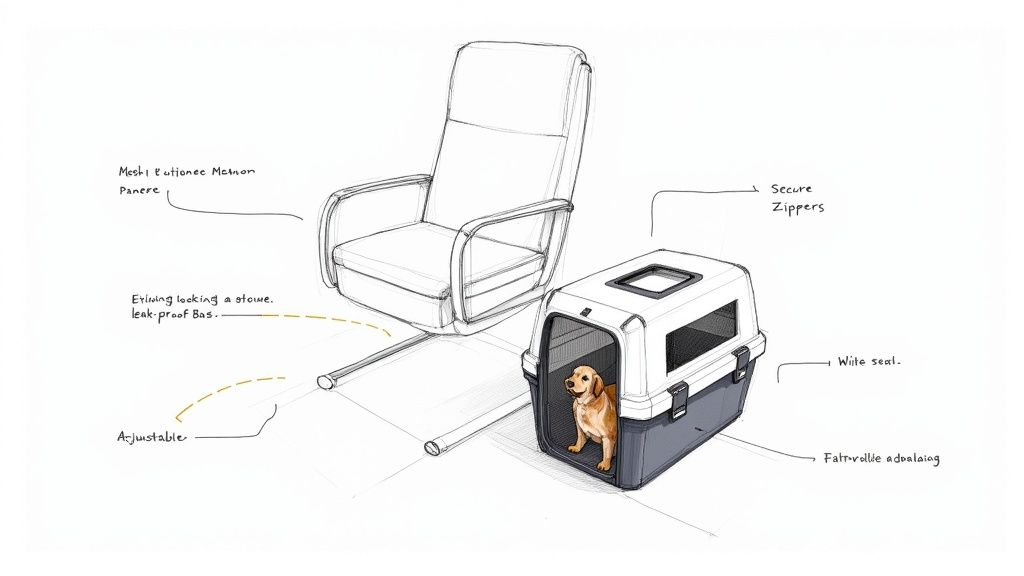
Secure Zippers and Locks: A persistent paw or nose can sometimes wiggle a standard zipper open. You’ll want a carrier with locking zippers or clips that fasten the zipper pulls together, making it genuinely escape-proof.
Strong Frame and Seams: A well-made carrier will have a sturdy internal frame and reinforced stitching. This structure keeps the carrier from collapsing on your pet and ensures it can handle the inevitable bumps and jostles of travel.
A waterproof or leak-proof bottom is another must-have. Accidents happen, especially on a long travel day, and this feature keeps any mess contained. This is critical for keeping your pet, and the plane cabin, clean. Most quality carriers come with a removable, absorbent pad that makes cleanup much easier.
Focusing on Pet Comfort
A comfortable pet is a calm pet. The right comfort features can dramatically reduce travel anxiety, making the whole experience far less stressful for everyone involved. The most important of these? Good airflow.
Excellent ventilation is a must-have for any airline pet travel carrier. Look for designs with durable mesh panels on at least two or three sides. This ensures constant airflow, preventing your pet from overheating and helping them feel less confined.
Another game-changing feature is having multiple ways to get in and out. A carrier with both top-loading and side-loading doors gives you so much flexibility. Some pets are very hesitant to walk into a carrier, so a top-loading door lets you gently place them inside from above. For an anxious animal, this can be a much calmer experience.
For extra coziness, a padded interior or a soft, removable fleece bed helps the carrier feel more like a familiar den. Little comforts go a long way in creating a positive vibe.
And hey, don't forget about your own comfort! Padded shoulder straps and handy external pockets for stashing treats, a leash, and paperwork will make your trek through the airport a whole lot easier.
Preparing Your Pet for Their Travel Carrier
Getting the right airline-friendly carrier is a fantastic start, but the real work begins now. From your pet's point of view, the most important part is helping them see this new carrier as a safe den, not some scary penalty box. The whole game is about building a positive association long before you ever step foot in an airport.
It all boils down to making the carrier so familiar and inviting that your pet chooses to go in on their own. A little bit of effort now will save you—and your pet—a mountain of stress on travel day. Think of it as transforming a strange object into their own personal, comforting space.
Making the Carrier a Happy Place
Your mission is to introduce the carrier slowly and casually, ideally weeks before your flight. You want your pet to see it as just another piece of furniture in the house, and a pretty great one at that. Don't make the classic mistake of pulling it out of the closet the day before your trip.
Start by placing the open carrier in a common area, like the living room where your family hangs out. Make it irresistible by lining it with a soft blanket or even an old t-shirt that smells like you. Then, casually toss in a few of their absolute favorite toys.
The key is to let your pet explore the carrier on their own terms. Never force them inside. Your patience during this stage sets the foundation for a stress-free experience later on.
Now, it’s time for the good stuff. Whenever you see your pet go near the carrier, give it a sniff, or bravely step inside, shower them with praise and high-value treats. You want them to think, "Hey, awesome things happen when I'm around this thing!" This simple act forges a powerful, positive connection.
Practicing for the Real Thing
Once your pet seems comfortable hanging out in the carrier with the door wide open, you’re ready for the next level. This is where you start simulating bits and pieces of the actual travel experience in short, easy-to-handle practice runs.
Begin by closing the door for just a few seconds while they're inside, then immediately open it and reward them with a treat. Slowly and gradually, increase the amount of time the door stays closed, always praising them for staying calm. The goal is to teach them that a closed door is no big deal—it just means a treat is coming soon.
Once they can handle the door being shut for several minutes without panic, try these practice drills:
Lift and Move: Gently pick up the carrier and walk it into another room. Set it down, open the door, and give them lots of praise.
Short Car Rides: Buckle up the carrier for a quick trip around the block. This helps your pet get used to the sounds and sensations of movement while inside.
Vary the Routine: Mix up the length and type of your practice sessions. This keeps your pet from getting anxious about a predictable, and potentially scary, routine.
This kind of proactive training is a game-changer for reducing stress on the day of your flight. In the same way, getting your pet's travel paperwork sorted out early prevents that last-minute panic. For international trips, there are very specific documents you'll need; you can learn more about the requirements for a veterinary international health certificate to make sure you’re fully prepared.
Your Top Questions About Airline Pet Travel Carriers
Let's be honest, figuring out the rules for pet travel can feel like learning a new language. To help you cut through the confusion, we've tackled some of the most common questions people have when picking out a carrier.
What Does "Airline Approved" Actually Mean?
This is easily one of the most misleading things you'll see when shopping. The term "airline approved" is almost entirely a marketing phrase used by carrier manufacturers. There isn't a single, official stamp of approval that works for every airline out there.
Real approval is only granted by the specific airline you're flying with. Your carrier is only good to go if it meets that airline's exact guidelines, which usually cover:
Dimensions: It absolutely has to fit under the seat in front of you for in-cabin travel.
Ventilation: Plenty of mesh is needed for good airflow.
Security: The zippers should be lockable so you don't have any surprise escape artists mid-flight.
Construction: The bottom must be leak-proof. No exceptions.
Do yourself a huge favor: check your airline's website for their pet carrier requirements before you buy anything. That one simple step can save you a mountain of stress at the airport.
Should I Sedate My Pet for the Flight?
It might seem like a kind thing to do, but this is a big "no." Most veterinarians and every airline strongly advise against sedating your pet for air travel. Sedatives can interfere with your pet's ability to regulate their body temperature and breathing, which is especially risky at high altitudes.
It also throws off their balance, making them more likely to get hurt if the carrier shifts around during turbulence. Instead of reaching for medication, your best bet is to focus on positive carrier training for a few weeks before your trip. If you're dealing with severe anxiety, have a chat with your vet about non-sedative calming options well ahead of time.
A well-trained pet who sees their carrier as a safe space is far more secure and comfortable than a sedated one. Acclimation beats medication for a safe flight.
Can I Use the Same Carrier for Both the Cabin and Cargo?
In almost all cases, you can't. The guidelines for in-cabin carriers versus cargo crates are worlds apart, and they are definitely not interchangeable.
In-cabin carriers are usually soft-sided, giving them just enough squish to fit under a seat. Cargo carriers, on the other hand, have to be rigid, hard-sided crates built from tough plastic and held together with metal bolts. An airline pet travel carrier designed for the cabin would almost certainly not be allowed for cargo—it just doesn't offer the protection needed. If you'll be doing both types of travel, you'll need to own both types of carriers.
What Should I Put Inside the Carrier?
Simplicity is key here. Your main goals are comfort and safety. Start by lining the bottom with an absorbent puppy pad. On top of that, add a familiar, soft blanket or even an old t-shirt that smells like you. That scent from home can be incredibly comforting in a new, loud environment.
Try to avoid stuffing the carrier full of bulky bedding or a bunch of toys. One or two small, safe toys that can't become a choking hazard are more than enough. When traveling internationally, some countries have specific rules about what can come in, so it's smart to look up the regulations for your destination. Our guide on pet international travel requirements is a great place to start. A little research will ensure you have everything your pet needs for a smooth arrival.
Planning a trip with your pet can feel like a lot, but Passpaw is here to make it easier. Our platform takes the headache out of getting international health certificates, simplifying the whole process for both vets and pet owners. Get started with Passpaw today and take the stress out of your pet's next adventure.
More articles
From regulatory changes to best practices for veterinarians and pet owners, our resources keep you ahead of the curve.