Are you a team member in a veterinary practice?
Are you a pet parent planning a trip with your furry pal?
Rules for Pets Abroad: The Traveler's Definitive Guide
Most pet owners fail because they treat international travel preparation as a last-minute task instead of a biological process that may require months of planning. For travel into the EU from a non-EU country, the rabies antibody test must be taken at least 30 days after primary vaccination and at least 90 days before the health certificate is issued, so a flight booked for next week may already be impossible.
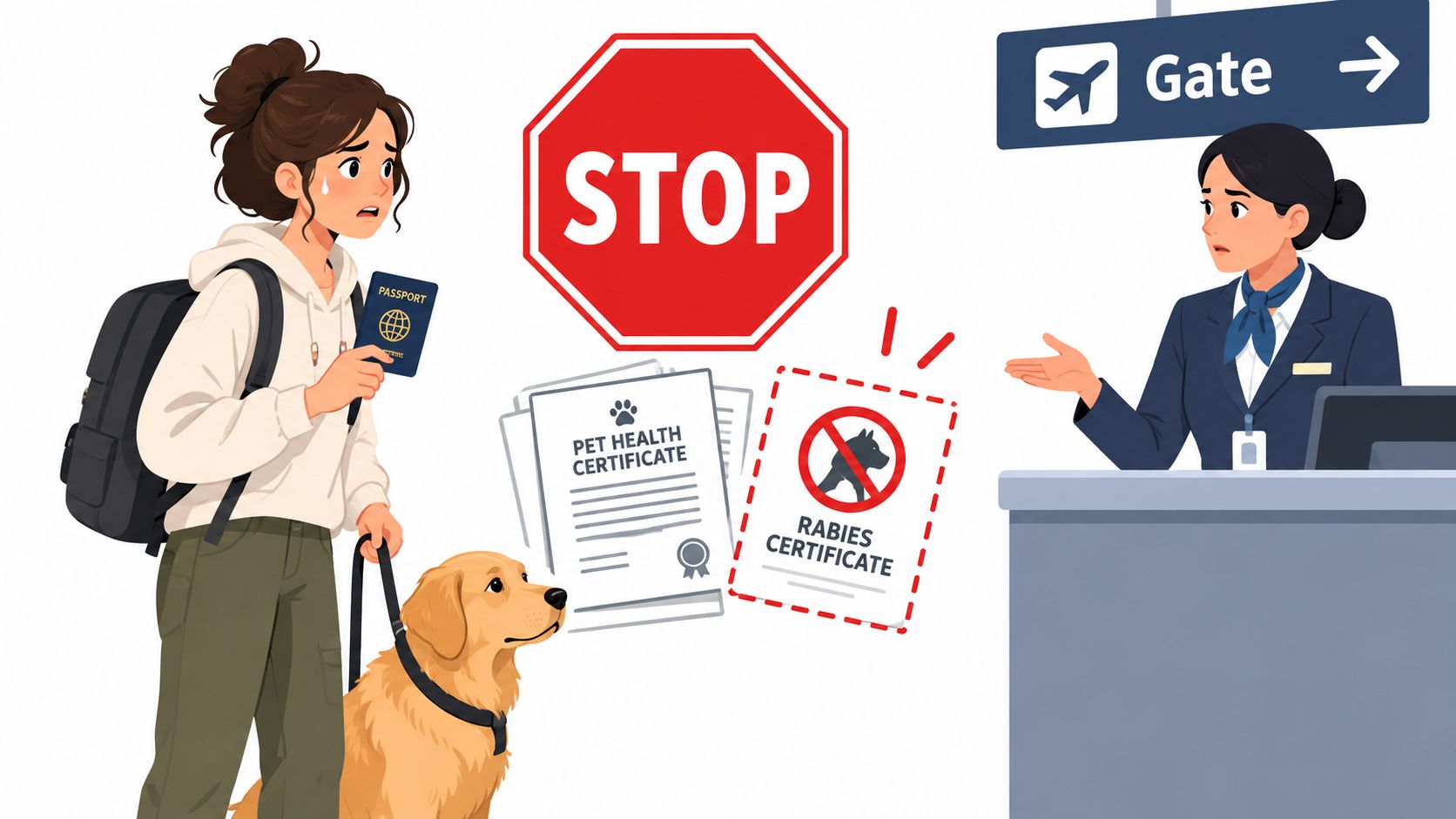
You may be holding your passport in one hand and your pet's leash in the other when an airline employee asks for a rabies record with the wrong date. Your pet is healthy, loved, and ready to travel, but the paperwork doesn't match the required timeline. That's the frightening part of international pet travel. A missed biological step can't always be fixed by paying for faster processing.
The rules for pets exist to protect animal and public health, but they're rarely presented as one clear sequence. You're managing destination laws, transit requirements, veterinary appointments, government endorsements, and airline policies at the same time. The safest approach is to treat the journey like a medical plan, with each step completed in the right order and at the right time.
Preparing for International Pet Travel
A departure hall is a poor place to discover that your pet's certificate is incomplete. A traveler may have checked the destination's document list, booked a flight, and visited a veterinarian, yet still face a denied boarding decision because the certificate was issued outside the permitted window or a required vaccination wasn't valid on the relevant date.
That happens because travel preparation isn't mainly a paperwork chore. It's a timeline management problem. Vaccines need time to become effective, laboratory tests need to be collected and processed, and health certificates often have short validity periods. Government offices and airlines add their own deadlines to the same calendar.
Start with the destination, not the flight
Before booking, identify the destination's official import requirements for your pet's species and country of origin. Requirements can include a microchip, rabies vaccination, antibody testing, parasite treatment, an official health certificate, translation, government endorsement, or an approved entry point. The EU's guidance for traveling with pets illustrates how several conditions can connect into one chain.
Write every requirement as a dated task:
Permanent identification: Confirm which microchip standard the destination accepts and when it must be recorded.
Vaccination history: Check whether the rabies vaccine is considered primary or valid as a continuing vaccination.
Laboratory work: Confirm whether a blood test is needed, which laboratory may perform it, and when the sample can be taken.
Certificate timing: Reserve a veterinary appointment close enough to departure for the certificate to remain valid, but early enough to correct an error.
Airline acceptance: Ask the carrier about cabin or cargo rules separately from government entry requirements.
A detailed international pet travel planning guide can help organize the process, but your veterinarian and the destination authority remain the appropriate sources for decisions about your individual trip.
Practical rule: If a requirement depends on a date, put that date on a calendar before you buy the ticket.
The Three Layers of Pet Travel Rules
A pet can have a valid health certificate and still be unable to board. Another pet may satisfy the airline's carrier rules but be refused at the border. The reason is that international travel follows three separate rulebooks, each with its own decision-maker and timeline.
Destination government requirements
The destination government controls the first layer: whether your animal may enter. Its rules may cover identification, vaccination, testing, certificates, translations, quarantine, and approved entry procedures. These requirements operate like a chain. If one link is missing, the airline cannot make the government accept the pet.
The European Union shows how dates affect that chain. For a pet arriving from outside the EU, an official veterinarian must issue the health certificate no more than 10 days before arrival. The certificate then supports document and identity checks at the entry point. The European Commission's rules for bringing a pet into the EU explain the validity period and related entry process.
That deadline is only one clock. Vaccination waiting periods, laboratory processing, certificate issuance, and travel dates may all run on different schedules. A plan can be legally correct on paper and still fail because the biological or administrative clock has not finished.
Transit rules
A stopover can create another layer of requirements. A transit country may apply rules even when the final destination accepts your pet's documents. The answer can depend on the route, whether the animal leaves the airport's controlled area, and the country's treatment of transit passengers.
Check every stop with the airline and the relevant authorities. Fewer connections often reduce the number of borders, airports, and staff who may apply different requirements, but the route still needs confirmation before booking.
Airline policy
The airline controls boarding and transport conditions. FAA guidance notes that a carry-on pet may need to stay in an approved carrier under the seat during taxi, takeoff, and landing. Individual carriers can set further limits for age, size, breed, weather, available space, and cabin or cargo transport. Their document list may also differ from the government's entry requirements.
Travelers routinely confuse the questions “Can my pet fly?” and “Can my pet enter?” The first concerns the carrier's operational policy. The second concerns the destination's law. Asking one does not answer the other.

Layer | Who controls it | What it can affect |
|---|---|---|
Import rules | Destination authorities | Entry, testing, certificates, quarantine |
Transit rules | Countries along the route | Stopover permissions and documents |
Airline rules | The carrier | Boarding, carrier size, cabin eligibility |
Understanding Vaccinations and Microchips
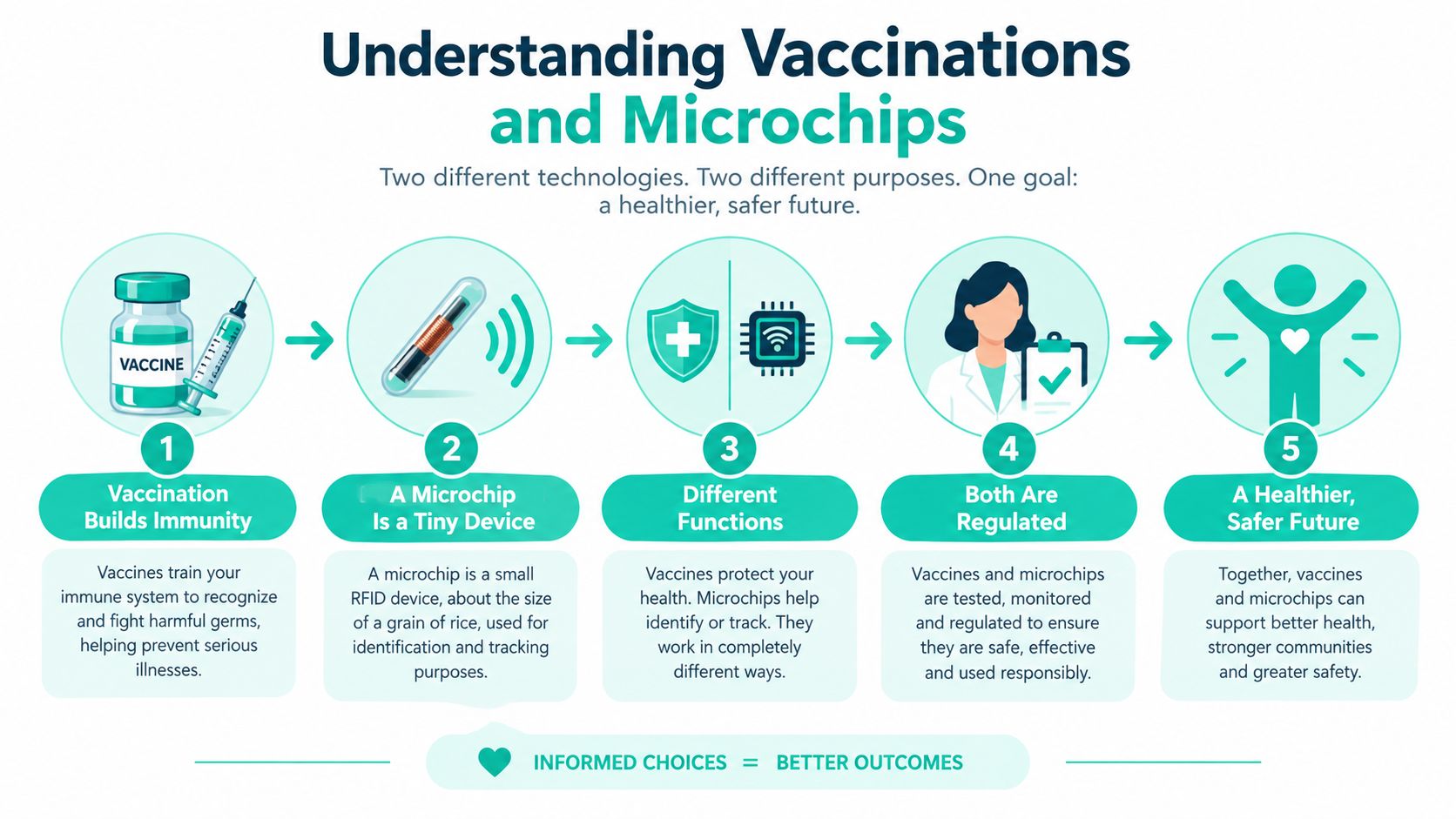
A pet may have a valid vaccine and still miss its travel date. The problem is often the order of the records and the time the animal's immune response needs. Rabies preparation works like a relay: each document depends on the handoff before it.
Put identification first
Have the microchip implanted and recorded before the rabies vaccination when the destination connects the vaccine record to that identifier. This lets officials confirm that the vaccination belongs to the animal presented for inspection.
Ask the veterinarian to scan the chip and enter its number in the medical file before giving the vaccine. You can also review guidance on ISO-compliant microchips for international pet travel to check whether the chip fits the destination's identification expectations.
Allow the biological clock to run
For dogs, cats, and ferrets entering the EU from a non-EU country, the rabies antibody titration result must reach at least 0.5 IU/ml at a designated laboratory. The sample must be taken at least 30 days after the primary rabies vaccination, and the certificate must be issued at least 90 days after the sample. These waiting periods are part of the entry rules, not administrative preferences.
The dated tasks listed earlier become a strict order here. The sample cannot be drawn until the 30-day post-vaccination interval has passed, and the certificate appointment must follow the 90-day pre-certificate interval. Confirm that the laboratory is designated for the destination's purposes before arranging the test.
Plan from the vaccination date, not only from the flight date. A late primary vaccine can leave too little time for the sample, laboratory result, and certificate. A complete certificate cannot replace a waiting period that has not finished.
Some EU countries allow narrow exceptions for younger pets. EU rules state that a dog, cat, or ferret must be at least 12 weeks old on the date of the primary rabies vaccination. Certain countries may allow movement for animals between 12 and 16 weeks old even when the usual post-vaccination period has not passed. Check the destination's specific position, because a general EU rule may not apply in every country.
Choosing the Right Veterinarian
The veterinarian who provides routine care may not be the person authorized to complete every international travel document. In the United States, USDA-accredited veterinarians can prepare export health certificates, while some destinations also require endorsement by an official government veterinarian.
The right choice depends on the destination and the document pathway. Ask these questions before the appointment:
Authorization: Is the veterinarian accredited to prepare the required export certificate?
Destination knowledge: Has the practice handled this country's current requirements?
Government step: Does the certificate need official endorsement after the veterinary examination?
Document format: Does the destination require a specific form, language, or supporting record?
Timing: Can the practice coordinate issuance with airline and government deadlines?
A simple decision matrix
Situation | Professional to confirm first | What to verify |
|---|---|---|
Routine preparation | Your regular veterinarian | Vaccination history, microchip, examination |
U.S. export certificate | USDA-accredited veterinarian | Correct certificate and endorsement pathway |
Destination requiring official endorsement | Accredited veterinarian plus official authority | Submission method, timing, and final approval |
Unclear destination process | Practice experienced in international travel | Current government instructions before booking |
A USDA-accredited veterinarian's signature may be only the beginning. USDA guidance says the endorsed export health certificate must travel with the original hard copy, and airlines commonly require a health certificate no older than 10 days, as described in the USDA pet travel process overview.
Ask before the visit: “Who signs this document, who endorses it, and which original papers must my pet carry?”
Don't assume that a clinic's ability to vaccinate your pet means it can complete the final travel paperwork. Confirm the roles early, preferably before you commit to a route or a nonrefundable booking.
Navigating Health Certificates and Endorsements
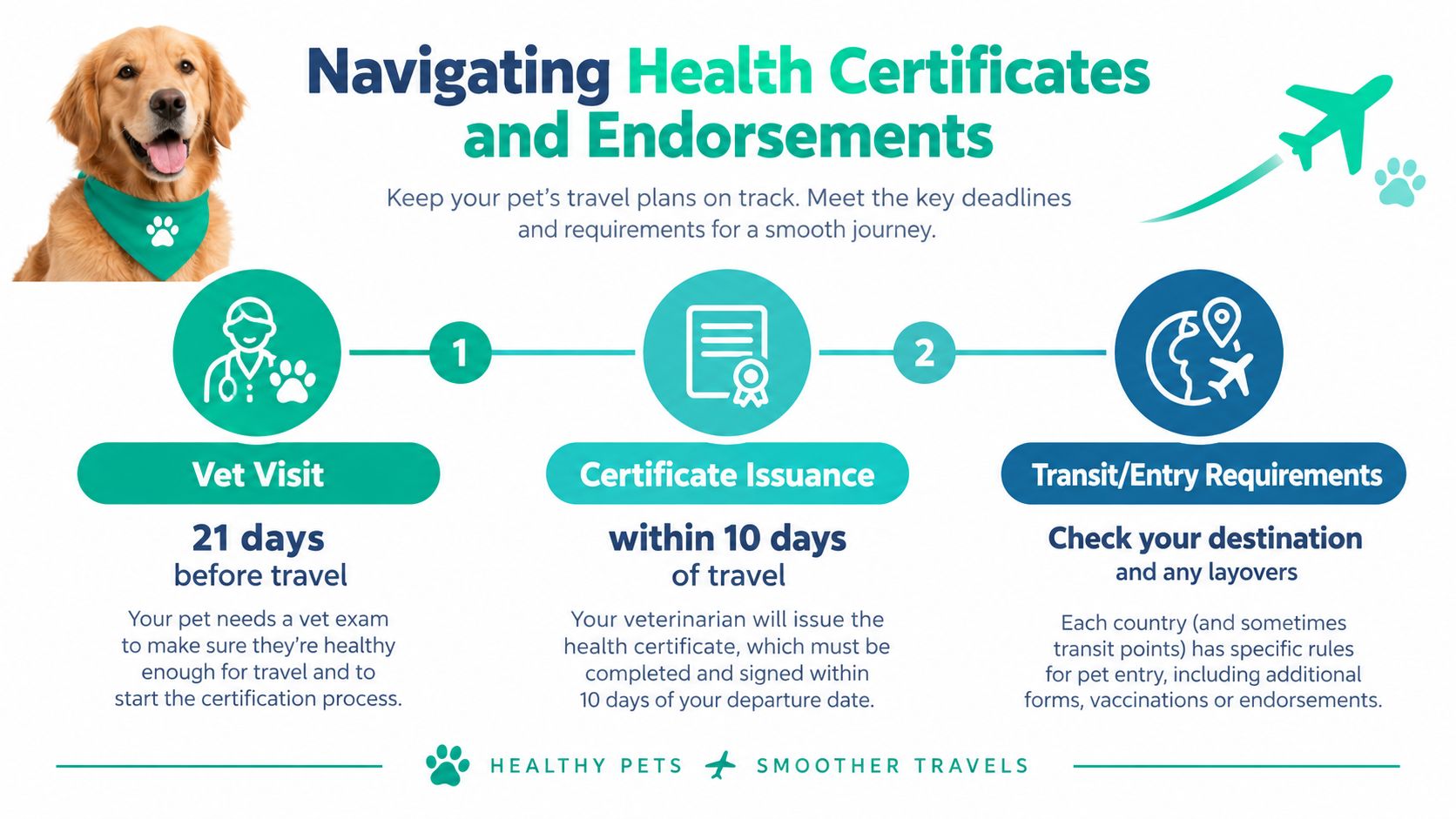
Your pet may have every vaccination in order and still miss the flight because the health certificate was issued too early. The document is a short-lived bridge between the veterinarian's examination and the border check. Its issue date, endorsement date, departure date, and entry date must line up.
Build the timeline from the entry date
For a pet entering the EU from a non-EU country, the certificate is valid for 10 days from the official veterinarian's issue date until the documentary and identity checks at entry. Sea travel extends that period by the length of the voyage. Confirm the destination's current timing rules before setting the examination appointment.
The medical deadlines should already be scheduled using the earlier vaccination and microchip checklist. At this stage, focus on the document handoff:
Confirm who signs: Establish whether your veterinarian can issue the certificate and whether an official authority must endorse it.
Arrange the handoff: Ask how the certificate reaches the government office, how long review may take, and how the endorsed document returns to you.
Protect the original: Keep the required original hard copy with your pet's travel papers. A scan can support your records, but it may not replace the document required at entry.
Check the airline separately: Confirm the carrier's certificate-age limit, pet reservation, and document format. Airline rules can create a tighter deadline than the destination authority.
Recheck the route: Transit countries and a changed entry point can alter which documents are needed, so review the complete itinerary before departure.
The USDA-endorsed pet health certificate process explains the roles and document transfers involved in USDA endorsement. The destination authority's instructions still determine which form, signature, validity period, and supporting records your pet needs.
A delayed review can affect the flight as well as the certificate. If a form returns for correction, the issue date may leave too little time before boarding. If the airline changes the departure date, the certificate may fall outside its accepted window. Contact your veterinarian promptly after any schedule change, and keep the original papers accessible rather than in checked luggage.
Using Technology to Simplify Compliance
A paper checklist can work for a simple domestic trip. International travel creates a more difficult workload, with changing destination rules, scanned records, laboratory results, appointment dates, endorsement status, and airline confirmations spread across email and folders.
A centralized workflow reduces the chance that one person is relying on an outdated note while another is using a newer instruction. It also gives the veterinary practice and pet owner a shared view of what has been completed and what still needs attention.
What a useful system should track
Pet identity: Store the pet's name, species, microchip number, owner details, and destination.
Date-dependent tasks: Link each task to the travel or entry date, including vaccination, testing, treatment, and certificate deadlines.
Document status: Show whether a form is missing, under review, returned for correction, endorsed, or ready for travel.
Human responsibility: Make clear whether the owner, veterinarian, laboratory, airline, or government office must act next.
Rule updates: Flag when a destination requirement has changed or needs confirmation.
Passpaw is one option for this workflow. Its tools are designed to organize international pet health certificate applications, create task lists based on destination requirements and travel dates, support document validation, and keep communication between practices and owners in one process. You can compare that approach with other pet travel documentation tools.
Technology won't replace a veterinarian's judgment or an authority's decision. It can, however, reduce the mental load created by scattered deadlines. A reminder that appears before a blood sample is due is more useful than a warning after the flight has been booked.
The goal isn't to make the rules disappear. It's to make the next correct action visible.
Final Checklist for a Stress-Free Journey
A prepared traveler doesn't just carry a thick folder. They know why each document exists, which authority issued it, and how long it remains usable.
Before leaving home, check the complete chain:
Confirm identity: Scan the microchip and compare its number with every relevant record.
Review rabies timing: Make sure the vaccination date and primary-vaccine status match the destination rules.
Verify testing: Check the laboratory result, required measurement, and sample date where a titer is required.
Inspect the certificate: Look for correct names, dates, identification numbers, signatures, language, and legibility.
Carry originals: Keep the original endorsed certificate and required supporting records with you.
Reconfirm the airline: Check carrier dimensions, cabin or cargo acceptance, reservations, and any age, breed, weather, or weight restrictions.
Review the route: Include transit stops and the entry airport, not only the final address.
Prepare for inspection: Keep documents easy to reach and your pet's carrier clearly identified.
For example, a traveler may have completed the medical steps correctly but still need to confirm that the certificate remains valid at entry and that the airline accepts its age at boarding. Another traveler may have a compliant government file but a carrier that won't accept the pet in the cabin because the carrier or animal exceeds the airline's limits. These are different failures, and the final check needs to catch both.
International travel with a pet can feel like a maze, but the path becomes calmer when you start early and respect the biological clock. Your reward isn't merely reaching the gate. It's knowing that your pet's records, health preparation, route, and carrier arrangements all tell the same story.
Passpaw helps veterinary practices and pet owners organize destination-specific tasks, track health certificate documents, and coordinate deadlines for international pet travel. Visit Passpaw to see how a shared compliance workflow can help you prepare your pet's journey with fewer last-minute surprises.

More articles
From regulatory changes to best practices for veterinarians and pet owners, our resources keep you ahead of the curve.