Are you a team member in a veterinary practice?
Are you a pet parent planning a trip with your furry pal?
Rabies Certificates for Dogs: What Every Owner Needs to Know
You're holding your dog's rabies certificate after a vet visit, checking the dates and vaccine details while trying to work out whether it's enough for an upcoming trip. The microchip number, lot number, and validity period may look like fussy paperwork, but each can matter when an airline or border official checks that the record belongs to your dog and meets the destination's rules.
The tricky part is that there isn't one certificate that works the same way everywhere. The route, vaccination history, timing, and return trip can all change what you need. A calm start is to treat the certificate as one piece in a chain of documents and dates, then check that chain against every country on your itinerary.
Why Rabies Certificates for Dogs Matter Beyond the Paperwork
You pick up the certificate and scan a page full of details. Your dog's name is there, along with the vaccine manufacturer and a lot number. It's natural to wonder whether anyone will care about those lines. They help connect a particular dog to a particular vaccination, which matters for public health as well as travel.
Dogs are responsible for up to 99% of human rabies transmissions worldwide, and the World Health Organization identifies mass vaccination of dogs, including puppies, as the most cost-effective way to prevent human rabies by interrupting transmission at its animal source (WHO rabies fact sheet). Rabies remains almost invariably fatal once clinical symptoms appear. A vaccination certificate documents the preventive step that helps keep the disease from spreading.
That's why the certificate is more than a routine vaccine receipt. For international movement, it helps border authorities assess whether the dog has been vaccinated and whether the record can be tied to that animal. Identification details, vaccination information, and veterinary authentication form the basic chain of evidence.
Why the details matter: A missing microchip number, unclear validity period, or incorrect date can make it harder to verify that a dog is protected.
The same public-health concern matters if a person is bitten or exposed to a potentially rabid animal. Anyone looking for an accessible overview of what may happen after exposure can consult this complete guide for bite victims.
Think of the certificate as a bridge between your veterinarian's record and a border official's decision. It doesn't automatically meet every country's entry rules, but it gives officials the information they need to check the vaccination and the dog's identity.
What a Valid Rabies Certificate Actually Contains
A rabies certificate needs to answer three basic questions: Which dog is this? What vaccination was given? Who authenticated the record? USDA guidance describes the identifying and vaccination details a certificate should include, along with the veterinarian's license number and signature (USDA guidance for dog imports).
Start with the dog's identity. The certificate may list breed, sex, age, color, and name, as well as a microchip or tattoo when available. If the dog has a microchip, check the number carefully against the chip record and any supporting travel documents. A transposed digit can create doubt about whether the paperwork belongs to the dog in front of the official.
Next, review the vaccine information. USDA guidance calls for the vaccine manufacturer, lot number, expiration date, and validity period. The lot number helps trace the specific vaccine product if a question arises about that batch. The dates show when the vaccine was given and how long the record says it remains current.
Finally, look for veterinary authentication. The certificate should include the veterinarian's license number and signature. Those details identify the professional responsible for documenting the vaccination.
Field Category | What It Includes | Why It Matters |
|---|---|---|
Dog identification | Breed, sex, age, color, name, microchip number or tattoo | Helps link the record to the correct dog |
Vaccination details | Vaccine manufacturer, lot number, administration date, expiration date, validity period | Shows what was given and whether the vaccination is current |
Veterinary authentication | Veterinarian's license number and signature | Identifies the professional who completed the record |
Before travel, compare the certificate with your dog's other records. Check that the name and microchip number match, the vaccine dates are legible, and the veterinarian has signed it. A complete-looking form still needs to match the destination's rules, so use it as the starting point rather than assuming it's the only document you'll need.
How Different Rabies Have Different Timeline Rules
A dog can have a current vaccination and still be too early to travel. The reason is that age minimums and waiting periods depend on the destination and the dog's circumstances. A primary vaccination, a booster, and a vaccine given abroad may each affect the schedule differently.
For travel to the European Union after a primary rabies vaccination, dogs normally must wait at least 21 days before traveling (EU pet travel guidance). For U.S. entry from a country classified as high risk for dog rabies, USDA guidance says a dog must be vaccinated by a licensed veterinarian at least 30 days before entry and be at least 84 days old when vaccinated. The vaccination must also remain current on arrival.
CDC instructions add another timing point for certain U.S.-vaccinated dogs returning from high-risk countries: a first rabies vaccine must be given at or after 12 weeks, or 84 days, of age, and the required certification must be completed at least 28 days after the first vaccination. That timing is not interchangeable with the U.S. entry rule for dogs vaccinated abroad. The correct path depends on where the dog was vaccinated and which document applies.

When a blood test changes the schedule
Some travel routes require a rabies antibody titration test, often called a titer test. For certain EU journeys from outside the EU, the sample generally can't be collected until 30 days after the primary vaccination. A designated laboratory must analyze it, and a successful result is followed by a three-month wait measured from the sample date. If the dog's existing vaccination remains valid, the test may be done immediately, so maintaining vaccination coverage can change the travel timeline.
The United States uses a different set of conditions for dogs entering from high-risk countries. To understand how boosters and coverage periods affect your dog's record, see this guide to how often dogs need rabies vaccination.
Don't use an infographic or a friend's past trip as the final word. Confirm the requirements for your dog's vaccination history and exact route before choosing a travel date.
Destination-Specific Requirements That Stack Up
A rabies certificate may be only one part of the travel file. What else you need depends on where the dog has been, where it's going, and whether the vaccine was given in the United States or abroad.
Entering the United States from a high-risk country
For a dog entering the United States from a high-risk country, the usual compliance picture can include documented microchip identification and a valid rabies vaccination record. When the dog was vaccinated abroad, it generally also needs a rabies serology report from a CDC-approved laboratory, with a passing titer of at least 0.5 IU/mL (CDC dog importation requirements).
The microchip number should match across the certificate and the laboratory report. Depending on the dog's records and travel pathway, owners may also need a reservation at a CDC-registered animal care facility and an itinerary showing arrival by air at the airport serving that facility. If the titer requirement isn't met, arrival arrangements can include a 28-day quarantine at a registered facility.

Traveling within the EU or leaving the United States
For EU travel, owners should check the dog's identification, vaccination record, and any destination-specific requirements for an EU pet passport or health certificate. If a titer test is needed, the laboratory and waiting-period rules add more documents and dates to the file.
A U.S.-vaccinated dog that travels to a high-risk country and returns may need a different document for re-entry. The CDC's Certification of U.S.-Issued Rabies Vaccination must be completed by a USDA-accredited veterinarian before departure from the United States and endorsed by USDA. Treat it as a return-trip document, not a copy of the routine clinic receipt.
Trips that require official verification or document legalization may involve steps beyond vaccination paperwork. For owners dealing with related paperwork for travel through the UAE, this resource explains Dubai certificate attestation guidance. For broader planning across countries and documents, review this guide to international pet travel requirements.
The Chain of Dates That Makes or Breaks Compliance
Travel paperwork works like a chain: the dates and identification details must agree from the first vaccination through arrival. A dog could have a valid vaccine record yet miss a required waiting period, or have a passing titer tied to a different microchip number.
Begin with the dog's age and identification. For the relevant U.S. pathways, the first vaccination must be given at or after 84 days of age. The microchip must be implanted before the vaccination being used for travel, so the vaccine record can be connected to the identified dog.
Then check the vaccination date and the travel date. CDC says the certification for a first U.S. vaccination must be completed at least 28 days after vaccination. For a dog entering the United States from a high-risk country, a blood sample for antibody testing must be collected at least 30 days after vaccination and at least 28 days before U.S. entry. The vaccine must also remain current on arrival.

Keep the records connected
A useful way to check the timeline is to lay the documents out in order:
Microchip record: Confirm the chip was implanted before the relevant vaccination.
Vaccination certificate: Match the dog's details, chip number, vaccine information, and validity period.
Laboratory report: If required, confirm the chip number matches and that sample collection meets the destination's timing rules.
Travel documents: Check endorsement and entry dates against the vaccination and test records.
A passing titer may remain valid for the dog's lifetime only if rabies vaccination coverage never lapses. If coverage does lapse, don't assume the earlier test will still satisfy the rules. Ask your veterinarian or the relevant authority how the dog's specific history affects the next steps.
For a plain-language overview of the testing process, see this explanation of the dog rabies titer test. The key is to work backward from the intended arrival date, then confirm that every earlier milestone fits.
Return-Leg Rules Most Pet Owners Never Hear About
It's easy to focus on getting your dog out of the country. The return trip can have its own document rules, and an outbound health certificate may not be the form U.S. officials require when the dog comes home.
For U.S.-vaccinated dogs returning after travel to a high-risk country, the CDC requires a Certification of U.S.-Issued Rabies Vaccination form in relevant cases. A USDA-accredited veterinarian must complete it before the dog leaves the United States, and USDA must endorse it. The form needs the dog's microchip number and current, unexpired U.S.-issued rabies vaccination information.
A key transition catches travelers off guard: export health certificates issued after July 31, 2025, aren't accepted as substitutes for this form for re-entry (CDC guidance for dogs entering the United States). A dog can leave with the paperwork needed for the destination and still be missing the document required to return.
Plan the return before departure: Check the dog's travel history and the re-entry document, not just the outbound country's requirements.
Some CDC vaccination certifications can support multiple re-entries while the vaccination remains valid. Certain foreign rabies and export documents, by contrast, are valid for only 30 days and one U.S. entry. The document type determines whether you can reuse it; don't infer that from the fact that the rabies vaccine itself is still current.
Before booking, list every country on the route, including transit countries, and check the dog's travel history against the applicable risk classification. This guide to returning to the USA with your dog can help you identify the return-leg questions to raise with your veterinarian.
Common Compliance Mistakes and How to Avoid Them
Many paperwork problems come from a small mismatch or a missed step. Check the details early, while there's still time to ask your veterinarian or the relevant authority what to correct.
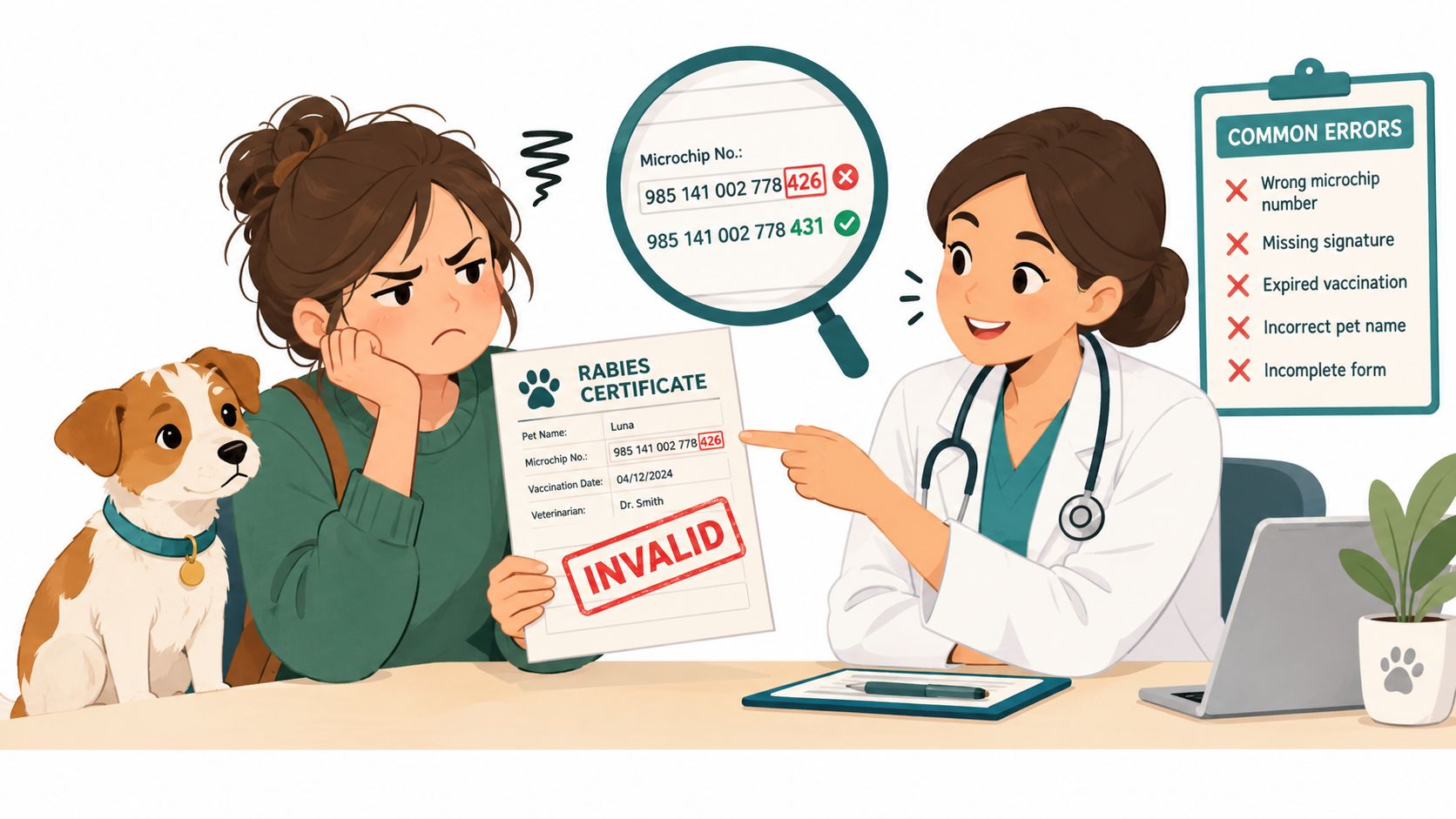
Microchip numbers differ: Compare the certificate, chip record, and any lab report character by character.
The vaccine came before the microchip: Check the implant date against the vaccination date. If the sequence doesn't meet the applicable rule, ask a USDA-accredited veterinarian or the relevant authority how to proceed.
The vaccination is expired: Confirm it will remain current on the day of entry, not only on the day you leave.
The wrong return form is prepared: Ask whether the trip requires a specific CDC certification rather than an ordinary export health certificate.
A waiting period is overlooked: For a first vaccination or a booster given after an earlier vaccination has expired, check whether a 28-day wait applies to the pathway you're using.
An endorsement is missing: Confirm whether the health certificate needs USDA endorsement and whether your veterinarian must submit it through the official process.
Before travel, make one final pass through the file: dog identity, microchip, vaccine status, lab result if required, completed forms, endorsements, and arrival date. Veterinary practices can also use document-management tools to organize records, track travel dates, and check forms against destination requirements. Passpaw is one platform that supports pet-travel document workflows, including collecting vaccination records and incorporating them into health-certificate preparation.
If you're planning a trip, ask your veterinarian to review your dog's microchip, vaccination history, route, and return documents together before you book around a travel date. Passpaw helps veterinary practices manage pet-travel documents and destination requirements, so your team can keep the paperwork organized while you prepare your dog for the journey.

More articles
From regulatory changes to best practices for veterinarians and pet owners, our resources keep you ahead of the curve.