Are you a team member in a veterinary practice?
Are you a pet parent planning a trip with your furry pal?
Your Guide to a Printable Puppy Shot Record
A printable puppy shot record is your new best friend’s first health passport. It’s a simple, organized document that keeps track of all your puppy’s vaccinations and health treatments, making sure you never miss a critical vet appointment. Think of it as the one piece of paper that’s vital for everything from groomers and boarding facilities to travel.
Why a Puppy Shot Record Is a Must-Have
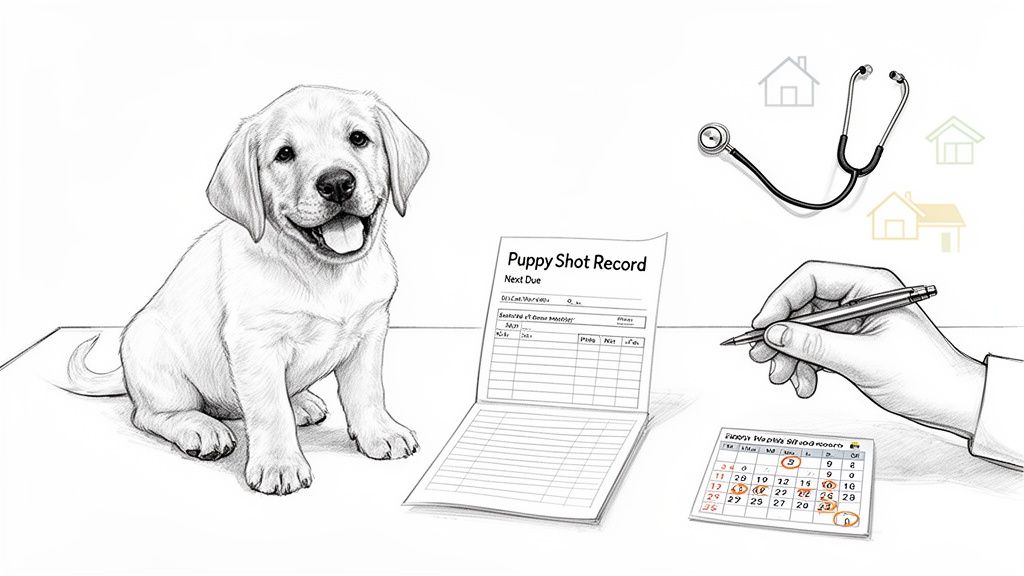
Bringing a puppy home is pure joy, but it also comes with a big responsibility: managing their health. A printable puppy shot record isn't just another piece of paper; it’s the cornerstone of responsible pet ownership. It gives you a clear, at-a-glance history of your pup’s medical care, and that’s a huge help for a few key reasons.
First off, a well-kept record ensures you stay on top of their vaccination schedule. Puppies need a series of shots at very specific times—usually starting around 6-8 weeks old—to build immunity against dangerous diseases like parvovirus and distemper. If you miss a booster, they’re left vulnerable. A simple chart is the easiest way to keep everything on track.
Peace of Mind for You and Your Pup
Beyond just keeping you organized, this document is your official proof of care. You’ll find that many services require up-to-date vaccination records before they’ll even let your dog in the door.
Groomers and Daycares: To keep all the animals safe, these places need proof that your puppy is protected from contagious illnesses like kennel cough.
Boarding Kennels: If you're heading out of town, a complete shot record is a must. It's for your dog's safety and the safety of every other pet there.
Training Classes: Group classes are fantastic for socializing your puppy, but they’ll always ask for vaccination proof to prevent any potential outbreaks.
A puppy shot record acts as a universal key, unlocking access to services that enrich your dog's life. It simplifies planning and eliminates those last-minute scrambles for paperwork.
When you're managing your puppy's health, having accurate vaccination records is a key part of pet care. These records are among the most essential pet care documents you'll handle as a new owner.
Keeping them organized from day one sets you and your furry friend up for a happy, healthy life together. It’s a simple habit that pays off every single time you need to verify your pup's health status, making every new experience a little less stressful and a lot more fun.
Making Sense of Your Puppy's Shot Record
Alright, so you've got a printable puppy shot record in your hands. At first glance, it might look a bit like a medical chart—and in a way, it is! But don't let the technical terms worry you. This piece of paper is the start of your pup's official health story, and learning to read it is way easier than teaching "roll over."
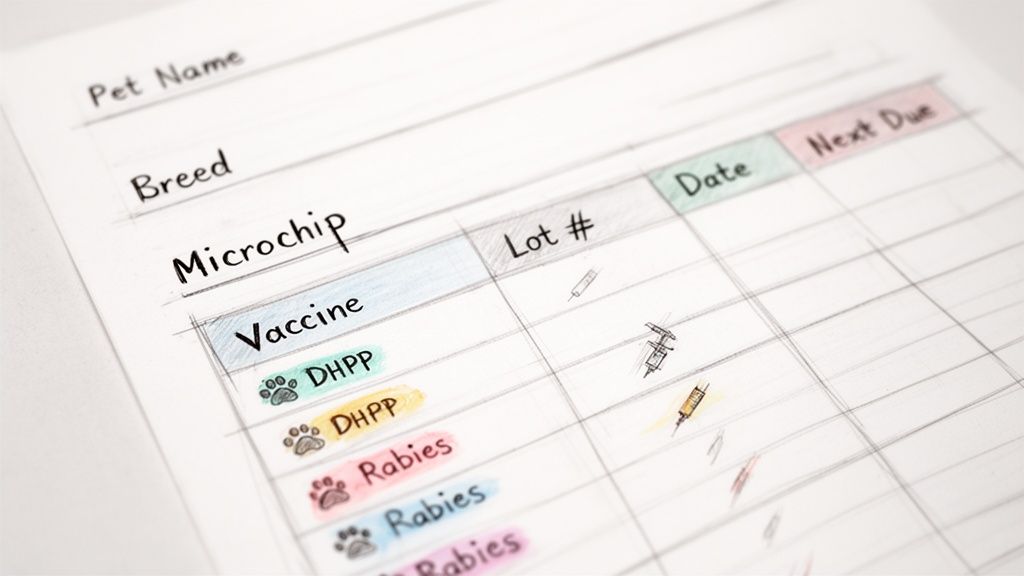
Let’s break it down. The top of the form is basically your puppy's ID card. You'll find spots for their name, breed, birthday, and a basic description like coat color or unique markings. There’s also a field for a microchip number—a very important piece of information that acts as a permanent identifier if your dog ever gets lost.
Think of this section as your dog's personal profile. It makes sure all the important health data that follows is unmistakably tied to your furry family member.
The Lowdown on Core vs. Non-Core Vaccines
Now for the main event: the vaccines themselves. You'll probably see terms like "core" and "non-core," which is just the vet's way of categorizing shots based on how important they are for every single dog.
Core vaccines are the absolute must-haves. Every puppy needs them, no matter where they live or what their daily routine looks like. These protect against nasty, widespread, and often serious diseases. The most common one you'll see is a combination shot called DHPP, which covers:
Distemper
Hepatitis (Adenovirus)
Parvovirus
Parainfluenza
This focus on vaccination is part of a bigger trend. People see their pets as part of the family, and that "pet humanization" is driving major growth in the industry. In fact, the global pet vaccine market is expected to jump from USD 11.7 billion to a whopping USD 23.1 billion by 2034. Your printable puppy shot record is a simple but powerful tool for tracking these essential shots.
Non-core vaccines, on the other hand, are considered optional. Your vet will recommend them based on your puppy's individual lifestyle and risk factors. A great example is the Bordetella vaccine (for kennel cough). If your pup is a social butterfly who frequents doggy daycare, boarding facilities, or the local dog park, this shot is a very good idea.
Getting the Details Right for Every Shot
To make this record truly useful, every vaccination needs to be logged with a few key pieces of information. This isn't just for your own records; it creates a verifiable history that groomers, boarding kennels, and other vets can rely on.
To give you a clear picture, here's a quick rundown of the important fields you'll want to see filled out for every single vaccine.
Essential Fields for Your Puppy Shot Record
Field Name | What to Include | Why It's Important |
|---|---|---|
Puppy's Information | Name, breed, date of birth, sex, coat color, microchip number. | Uniquely identifies your pet and links them to their medical history. |
Vaccine Name/Sticker | The specific vaccine name (e.g., DHPP), manufacturer, and lot number. | Provides exact details of the vaccine given; helpful for tracking in case of a product recall. |
Date Administered | The month, day, and year the vaccine was given. | Creates a precise timeline of your puppy's immunization schedule. |
Next Due Date | The date the next booster or re-vaccination is required. | Helps you stay on track and ensures your puppy's immunity doesn't lapse. |
Vet's Signature/Stamp | The signature, initials, or official stamp of the licensed veterinarian. | Verifies that a qualified medical professional administered the vaccine. |
Having this level of detail turns a simple log into a legitimate health document.
Rabies shots are a bit of a special case because they are required by law in most places. Keeping that part of the record perfectly accurate is very important. If you're curious about the specifics, we have a whole guide where you can learn more about how often your dog needs a rabies vaccine.
When filled out correctly, your puppy's shot record becomes more than just a piece of paper—it’s an indispensable tool for managing their health and well-being.
Making Your Puppy Shot Record Official
A filled-out shot record is a great start, but it's the veterinarian's signature that really makes it official. That simple stamp and scrawl turn your personal log into a trusted document that groomers, daycare centers, and boarding facilities will accept. Think of it as the final paw-print of approval.
Get into the habit of bringing your printed record to every single vet appointment. It makes life so much easier. When you check in, just give the front desk staff or vet tech a heads-up. Something simple like, "Hey, we're using this form to track all his shots. Would you mind filling in today's visit and signing it?" always works like a charm.
What About Records from a Breeder or Shelter?
It's common to get a stack of initial health records from the breeder or shelter. These are fantastic starting points, but you'll want to combine that info onto your main record and have your new vet give it a once-over. This creates a seamless health history right from day one.
When you go in for your puppy's first wellness check, bring all that initial paperwork with you.
Your vet will be able to:
Verify which vaccines were given and make sure the schedule looks right.
Transfer all the important details—dates, vaccine types, and lot numbers—onto your main printable record.
Map out the rest of the booster shots your puppy is going to need.
This smooth hand-off ensures there are no accidental gaps in your pup's immunization schedule, which is very important.
Pro Tip: Before you leave the vet's office, take 30 seconds to double-check the entries on your record. A quick glance to confirm the vaccine name, date, and next due date are correct can save you a lot of hassle down the road.
Getting your record signed and stamped is especially important if you have any travel plans. While a shot record is essential for most things, some trips—especially international ones—require more extensive paperwork, like an official health certificate. You can learn more about how to get a USDA-endorsed pet health certificate to see what's involved for more complex journeys.
Ultimately, that signature and clinic stamp are what transform a simple sheet of paper into a document with real authority. It’s your proof that your puppy is healthy, protected, and ready for every new adventure, from the local dog park to a cross-country move.
Turning Your Paper Record Into a Digital Lifeline
That vet-signed, printable puppy shot record is gold. But in a world of spilled coffee and mysteriously vanishing paperwork, relying only on that physical copy is a bit of a gamble. Creating a digital backup is a simple, smart move that buys you peace of mind and gives you instant access to your pup’s health history, no matter where you are.
Think about it: having a digital version on your phone means you can text it to a pet sitter, email it to an emergency vet, or show it to a new groomer in seconds. It’s all about being prepared.
How to Get a Crystal-Clear Digital Copy
You don't need a professional scanner or fancy equipment. Your smartphone is more than capable of doing the job, but a little bit of prep work makes all the difference. The goal here is to create a digital file that’s every bit as clear and readable as the original paper document.
For the best results, just follow these quick tips:
Find Good Light. Lay the record on a flat surface in a well-lit area. Natural light from a window is perfect. The key is to avoid harsh shadows or glare that could hide the details.
Use a Scanning App. Don't just take a regular photo. Apps like Adobe Scan or even the built-in Notes app on an iPhone will transform your picture into a clean, professional-looking PDF. They're designed to automatically crop the edges and boost the contrast, making the text really pop.
Double-Check the Details. Before you hit save, zoom in and make sure everything is sharp. The vet’s signature, those tiny vaccine lot numbers, and all the due dates need to be perfectly readable.
The journey from a blank template to an official, travel-ready document is a crucial one.

This process shows exactly how your simple form gets stamped and approved by your vet, making it ready for digitization.
Storing Your Digital Shot Record Securely
Okay, so you have a crisp digital copy. Now, where do you keep it? You need a spot that’s both secure and easy to get to in a hurry. My advice? Don't just pick one place. Storing it in a couple of different locations ensures you’ll always have a backup of your backup.
A digital backup of your puppy's shot record isn't just a nice-to-have; it's a modern necessity. It guarantees you have immediate access to vital health information for anything from a last-minute boarding request to an unexpected vet visit.
Here are a few solid storage options I always recommend:
Cloud Services: Think Google Drive, Dropbox, or iCloud. These are fantastic. You can create a dedicated "Pet Info" folder and pull up the records from your phone, tablet, or computer.
Email It to Yourself: This is the old-school, quick-and-dirty method, but it works. Just attach the file to an email and send it to yourself with a clear subject line like "Fido's Vaccination Record."
Use a Pet-Specific App: There are a bunch of great apps out there now designed to help you manage your pet’s health. They usually have a dedicated spot to upload and store important documents right alongside their appointment reminders.
The need for these records is only growing. With the dog vaccine market projected to hit USD 3.5 billion by 2035, it’s clear that proper documentation is becoming more important. This is partly driven by the 70% of pet owners who plan international travel and need solid proof of vaccination. A digital record makes it so much easier to manage these requirements, like the rabies shot needed 30 days before entry into many countries. Platforms like Passpaw are even helping vets validate these documents against constantly changing international regulations. You can check out more insights on the future of the dog vaccine market.
For those of you planning bigger adventures with your pup, the shot record is often just the first piece of the puzzle. You can learn more by reading our guide on how to get a pet health certificate online.
Putting Your Puppy's Shot Record to Work
That freshly printed and vet-signed shot record is more than just a piece of paper. Think of it as your puppy's passport to the world—from their first trip to the groomer to adventures across the country. It's the official proof that your little one is healthy, protected, and ready to safely join the fun.
Keeping this document handy means no more frantic last-minute searches when you're trying to drop your pup off at daycare. It’s your key to stress-free planning.
Accessing Local Services and Social Outings
Before your puppy can get a haircut or join a training class, you’ll almost always need to show their vaccination history. These businesses are responsible for keeping every animal in their care safe, so proof of up-to-date shots isn't just a suggestion—it's often a requirement.
Here's what they're typically looking for:
Proof of Core Vaccines: They'll want to see the DHPP combination vaccine on the record, which protects against common and highly contagious diseases.
Rabies Vaccination: This one is often a must-have. They’ll check the date it was given to confirm it's current.
Bordetella (Kennel Cough): If your pup is going to be in a social setting like daycare or a group class, proof of a Bordetella shot is almost always needed.
Having that shot record ready—either the physical copy or a clear photo on your phone—instantly shows you’re a prepared and responsible owner. It makes the check-in process a breeze for everyone.
When you need to email these records, it’s worth thinking about how you're sending them. For some helpful tips on keeping that information private, you can review this guide on secure document sharing practices.
Hitting the Road (or the Skies) With Your Pup
If travel is in your future, that shot record becomes even more important. Whether you're crossing state lines or flying internationally, airlines and border officials have strict health rules. They don't just glance at the record; they check every detail to make sure you're following the rules.
For instance, an airline or border agent will look very closely at the rabies vaccination date. Many destinations require the shot to have been administered at least 28-30 days before travel, while still being valid. A clean, readable record prevents any confusion that could stop your travel plans before they even start. It’s a small detail that makes a huge difference.
With millions of pet owners traveling internationally each year, these dates are taken very seriously. A simple printable record helps ensure you meet the specific rules of your destination, whether they demand a rabies shot within the last year or a parvovirus booster every three.
Of course, for bigger trips, the shot record is just one piece of the puzzle. You can dive deeper with our complete guide on international pet travel requirements to learn about health certificates and other necessary documents.
Common Questions About Puppy Shot Records
Bringing a new puppy home is an adventure, but it also comes with a lot of paperwork and questions. When it comes to your puppy's shot record, things can feel confusing. Let's clear up some of the most common queries from new pet parents.
What Should I Do If I Lose My Puppy's Shot Record?
First off, don't panic! It happens to the best of us. Your first call should be to the vet clinic that gave the shots. Vets are excellent record-keepers, and they'll have a digital or paper file with your puppy's entire vaccination history.
They can print a new copy for you on the spot or just email one over. If a breeder or shelter gave the initial vaccinations, they’re your next best contact. They keep records from the puppy's very first weeks and can help you fill in those early gaps.
How Can I Get a Copy of the Record from a Shelter or Breeder?
When you adopt or buy a puppy, those initial health records should be part of the package. If you didn't get them or can't find them now, don't hesitate to reach out. Reputable breeders and shelters are almost always happy to send you a copy of what they have on file.
Once you have those early records, bring them to your puppy's first appointment with their new vet. Your veterinarian will use that information to create a primary printable puppy shot record and map out the right schedule for their upcoming booster shots.
How Often Does the Record Need to be Updated?
Think of your puppy’s shot record as a living document, especially in that first year. It needs to be updated every single time they get a vaccine. Most puppies are on a booster schedule every 3-4 weeks until they hit about 16-20 weeks old.
A puppy's shot record is more than just a piece of paper for the groomer—it's their health passport. Keeping it up-to-date is how you track their developing immunity and safeguard their health for years to come.
After they've completed that initial series of puppy shots, the updates become less frequent. You'll typically update the record annually or every three years, based on the specific vaccine and what your vet recommends.
What Is the Difference Between a Shot Record and a Health Certificate?
This is a great question, and it's easy to get the two mixed up. They serve very different purposes.
A puppy shot record is simply a running history of all the vaccinations your puppy has ever received. It’s an internal document, usually signed by your vet, that proves they are up-to-date for things like daycare, boarding, or training classes.
A health certificate, often called a Certificate of Veterinary Inspection (CVI), is an official travel document. A licensed vet issues it after an exam to certify your pet is healthy enough to travel on a specific date.
Your shot record is an important piece of the puzzle for getting a health certificate, but it’s not the same thing. For most local needs, your shot record is all you'll need. For flying or crossing state and international lines, the health certificate is generally required.
Keeping your puppy’s health documents in order doesn't have to be a headache. Passpaw gives vets and pet owners a straightforward way to manage travel compliance paperwork, ensuring every trip you take with your furry co-pilot is smooth and worry-free. Take the guesswork out of pet travel by visiting https://passpaw.com.
More articles
From regulatory changes to best practices for veterinarians and pet owners, our resources keep you ahead of the curve.