Are you a team member in a veterinary practice?
Are you a pet parent planning a trip with your furry pal?
What Vaccines Do Dogs Need to Fly? A Complete Guide
Figuring out which vaccines your dog needs to fly can feel like a maze, but it really just boils down to one absolute must-have. While your dog should always have their "core" vaccines for good health, the rabies vaccine is the non-negotiable VIP for almost all air travel, whether you're flying across the country or around the world.
Your Pre-Flight Vaccination Checklist

Getting your furry co-pilot ready for takeoff can feel like a lot, but we're here to make it a walk in the park. Preparing for your journey is about more than just shots; it’s about understanding the whole picture. For a bird's-eye view of the entire process, check out our complete guide to pet travel.
Beyond the vet visit, making sure your dog has a suitable travel kennel is another huge piece of the puzzle. But for right now, let's focus on those medical must-haves.
Core Vaccines and the Rabies Rule
Every dog needs a set of "core" vaccines to protect them from serious, common diseases. Think of these as the foundation of your dog's good health. When it comes to flying, however, the rabies vaccine is in a league of its own. It's the one shot that is consistently requested by airlines and countries everywhere.
A current rabies vaccination is your dog's golden ticket for air travel. It's the very first thing officials will check, and since there are often strict timing rules around it, planning ahead is an absolute must.
To make things simple, here’s a quick look at the vaccines you’ll want to discuss with your vet before your trip.
Quick Guide to Essential Dog Vaccines for Air Travel
This table breaks down the most common vaccines your dog might need for air travel, separating the required from the recommended.
Vaccine | Required or Recommended? | Main Purpose |
|---|---|---|
Rabies | Required | Prevents a fatal viral disease; this is a top travel requirement nearly everywhere. |
DHLPP | Strongly Recommended | Protects against Distemper, Hepatitis, Leptospirosis, Parainfluenza, and Parvovirus. |
Bordetella | Often Recommended | Prevents kennel cough, especially if your dog might be around other dogs or boarded. |
While rabies is the only guaranteed requirement, having your dog fully up-to-date on all recommended vaccines is always the smartest and safest bet for a smooth journey.
The Unskippable Rabies Shot and Travel Rules
When you ask, "What vaccines do dogs need to fly?" one answer stands head and shoulders above the rest: rabies. Think of it less as a simple health shot and more as your dog's official passport to the skies. It is, without a doubt, the most critical and widely required vaccine for any pet traveling by air.
This isn't just a simple checkbox to tick off your list. Airlines and entire countries have strict rules around this one shot, and getting the timing wrong can ground your travel plans before they even get off the runway. It’s not enough that your dog has the vaccine; it must be given within a very specific timeframe.
Why Timing Is Everything
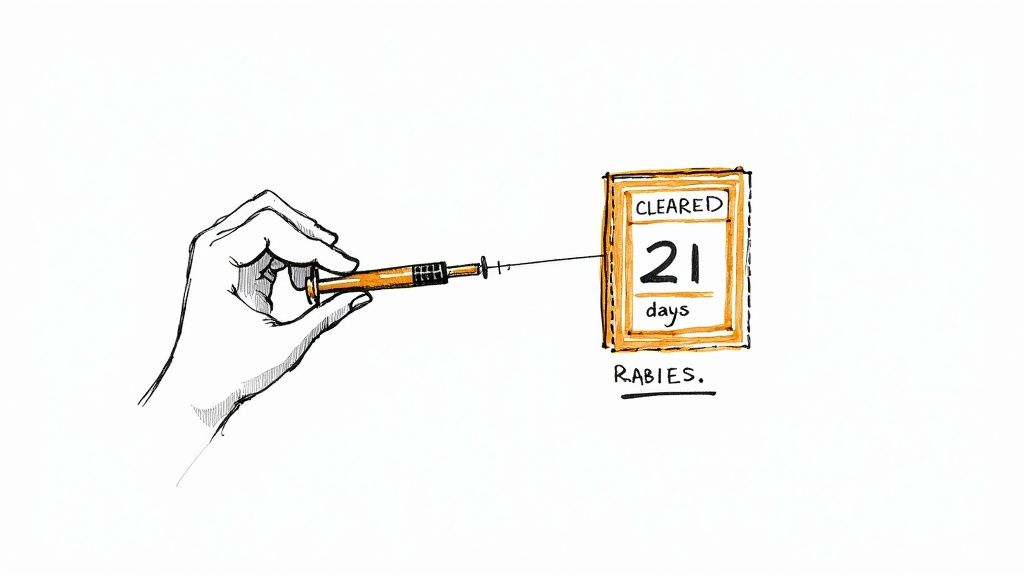
The biggest trip-up for most pet parents? The waiting period. After a primary (first-time) rabies vaccination, many countries and airlines enforce a wait of 21 to 30 days before your dog is even eligible to travel. This isn’t just red tape; it’s to make sure the vaccine has had enough time to build full immunity.
This waiting period isn't something you can negotiate, and it catches a lot of people by surprise, leading to rescheduled flights and a mountain of stress. For example, the European Union requires an up-to-date rabies vaccine documented on an official health certificate. The United States has its own specific age and vaccination rules for dogs entering the country.
The consequences of getting the rabies paperwork wrong can be serious. Depending on your destination, your dog could be facing a long, expensive quarantine—or even be denied entry entirely. And you'll be the one footing the bill.
Documentation Is Your Proof
Having the right paperwork is every bit as important as the shot itself. Your vet will provide a rabies certificate that details everything: the vaccine’s manufacturer, lot number, and the exact date it was given. This document is your golden ticket.
If you’re not sure what that involves, our guide on securing proof of a rabies vaccine breaks down exactly what officials look for. When it comes to pet travel, planning ahead is what makes for a smooth, stress-free journey.
Understanding Core Vaccines for Your Dog's Health
Beyond the mandatory rabies shot, a set of "core" vaccines forms the foundation of your dog's health. Think of them as the essential armor protecting your pup from common and serious illnesses, whether they're jet-setting across the globe or just chasing squirrels at the local park.
This isn't just about good health—it’s a key part of your travel prep. Many airlines and destination countries expect your dog to be current on these standard shots as a baseline. Proving your dog is healthy enough to fly often starts with the routine care you're already providing, making your pre-trip checklist a little bit shorter.
Breaking Down the DHLPP Vaccine
You’ve probably heard your vet mention the DHLPP vaccine, which sounds like a mouthful! It’s simply a combination shot that protects against five major diseases in one go. Let's break down this alphabet soup so it's less ruff to understand.
This single shot is a powerhouse for your dog's immune system, covering:
Distemper: A serious virus that attacks the breathing and nervous systems.
Hepatitis: A viral infection that targets the liver.
Leptospirosis: A bacterial disease that can harm the kidneys and liver.
Parainfluenza: A virus that contributes to kennel cough.
Parvovirus: A highly contagious and often severe stomach virus, especially dangerous for puppies.
Having your dog current on their core vaccines like DHLPP shows a commitment to their health that travel authorities appreciate. It signals that your dog is a well-cared-for, low-risk traveler, which can help make your entry process smoother.
Staying on top of these core vaccines is more than just a smart health move; it’s a proactive step in your travel planning. It ensures your furry friend is protected and ready for whatever adventure you have planned.
Navigating Destination-Specific Health Rules
While the rabies vaccine is the universal VIP pass for air travel, your prep work doesn't stop there. Think of it like packing for a vacation—what you need for a beach trip to Hawaii is totally different from what you'd pack for a ski trip in the Alps. The same logic applies to your dog's health requirements; the rules can change dramatically depending on where you're landing.
It's a common mistake to assume all destinations have the same health checklist. This kind of oversight can lead to some serious, tail-tucking trouble at the border. You have to research your specific destination's rules well in advance to make sure your pup's entry is a smooth one.
Country-Specific Requirements
Some countries have unique health concerns and enforce extra rules to protect their local animal populations. These aren't just friendly suggestions; they are entry conditions. Island nations or rabies-free regions, for example, are often extra cautious.
A perfect example is the specific tapeworm treatment required by countries like Ireland, Finland, and Malta. While rabies is a global concern, these nations also focus on preventing certain parasites. This means your dog will need a vet-administered tapeworm treatment within a very specific time window before you arrive. You can explore a list of various entry rules on our page covering supported countries to see just how much they can differ.
Beyond the Core Shots
On top of parasite treatments, some destinations may require or strongly recommend other "non-core" vaccines. The Bordetella vaccine, which protects against kennel cough, is a common example. Authorities might require it if they anticipate your dog will be in close contact with other animals upon arrival.
The key takeaway is that destination authorities set the rules, not a general vet handbook. What's considered an optional "lifestyle" vaccine at home might be a requirement for your trip.
The list of potential requirements can feel long, including vaccines for leptospirosis or canine influenza. This is exactly why you can't just guess; you must confirm the exact rules for your destination. A good starting point is to learn more about the European Union's specific pet travel regulations, which often serve as a benchmark for international travel standards. Getting this right is the secret to a paws-itively perfect trip.
Getting Your Timing and Paperwork Right
Having the right vaccines is only half the battle. The other half? Proving it with the correct paperwork at exactly the right time. This isn't just about what vaccines your dog needs to fly; it's about how you document them. This part of the journey demands care, as a simple timing mistake can cause major headaches at the airport.
Think of your dog’s travel documents as their passport. This folder will hold everything from their rabies certificate to a special document called an International Health Certificate (IHC). Your vet completes this official paper to confirm your dog is healthy and meets all of your destination's specific requirements. Whatever you do, don't leave this until the last minute!
Creating Your Travel Timeline
When it comes to the final vet visit, timing is everything. Most airlines and countries ask for the health certificate to be issued within a very narrow window before your flight—often just 10 days before travel. That tight deadline leaves no room for error or delays. Planning your timeline carefully is the best way to prevent last-minute panic.
This simple visual breaks down the key steps.
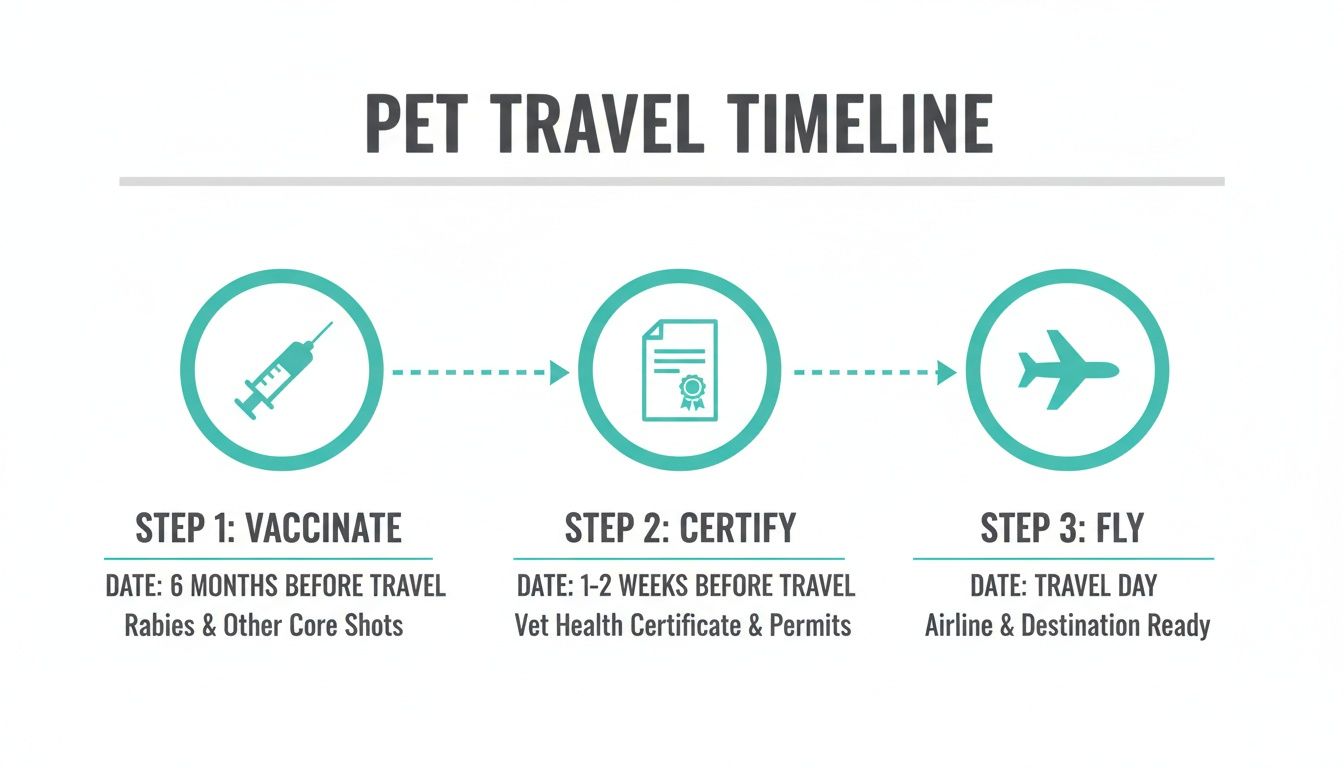
As you can see, vaccinations happen well before the health certificate is issued, and certification happens right before you fly. Following this sequence is key for a smooth trip.
To keep everything on track, follow these steps:
Start Early: Begin researching your destination's rules at least 3-6 months in advance. Seriously.
Vaccinate Accordingly: Schedule any necessary shots, paying close attention to required waiting periods after the shot. For a refresher on rabies schedules, check out our guide on how often a dog needs a rabies vaccine.
Book the Final Vet Visit: As soon as you have your flight details, schedule the health certificate appointment to fall squarely within that critical 10-day window.
Organize Your Documents: Gather every piece of paper—the rabies certificate, health certificate, and any other forms—into one travel-ready folder.
Treat your dog's paperwork with the same importance as your own passport. A little organization goes a long way, ensuring you and your furry co-pilot are cleared for takeoff without a hitch.
Common Questions About Travel Vaccinations
Feeling pretty good about the plan but still have a few questions? You're not alone. Let's tackle some of the most common things pet parents ask when getting their dogs ready to fly. A little clarity now can save a lot of stress later.
How Far in Advance Should I Plan for Vaccinations?
The short answer? Start early. I’m talking 3-6 months before your trip, especially if you're flying internationally.
Some countries have a 21- or 30-day waiting period after a new rabies shot. Others go a step further and require blood tests that have to be sent to a lab, a process that can take months. Getting a head start gives you breathing room and ensures you're not scrambling at the last minute.
Are the Rules Different for Puppies?
Absolutely. Puppies usually have stricter rules to follow. Most airlines and nearly all countries ask a dog to be old enough for their first rabies vaccine, which is typically given around 12-16 weeks.
Factor in the required waiting period after that shot, and you’ll find that most puppies can’t travel internationally until they are at least 4-6 months old.
A quick word of caution: getting the paperwork wrong can turn your dream trip into a nightmare. Depending on where you're headed, your dog could be denied boarding, put into quarantine (at your expense), or even sent back home on the next flight. This is one of those times where triple-checking everything is a must.
Ready to make your pet's travel prep simple and stress-free? Passpaw organizes all your dog's health requirements, timelines, and documents in one place, so you never miss a step. Learn more at https://passpaw.com.
More articles
From regulatory changes to best practices for veterinarians and pet owners, our resources keep you ahead of the curve.