Are you a team member in a veterinary practice?
Are you a pet parent planning a trip with your furry pal?
How Often Do Dogs Need Rabies Vaccinations?
When it comes to your dog's rabies shots, the timing is pretty straightforward. A puppy gets their first vaccination around 3-4 months old, followed by a booster one year later. After that, they'll need a new booster every 1 to 3 years, depending on the vaccine your vet uses and your local guidelines.
Your Dog's Rabies Shot Schedule at a Glance
Figuring out the rabies vaccination schedule can seem a bit confusing at first, but it follows a clear and simple path. The most important part is getting your puppy started on the right paw. Think of it like a kid's immunization schedule—it begins early and follows a predictable timeline to build lifelong protection.
This initial series of shots is all about building a strong immune foundation. The first vaccine introduces the puppy's body to what it needs to fight the virus, and the booster a year later really locks in that protection. From there, it's just a matter of maintenance, following your vet's guidance for either a 1-year or 3-year booster.
To help you see it, here's a timeline breaking down the key stages of a dog's rabies vaccination journey, from their very first shot as a puppy to their ongoing boosters as an adult.
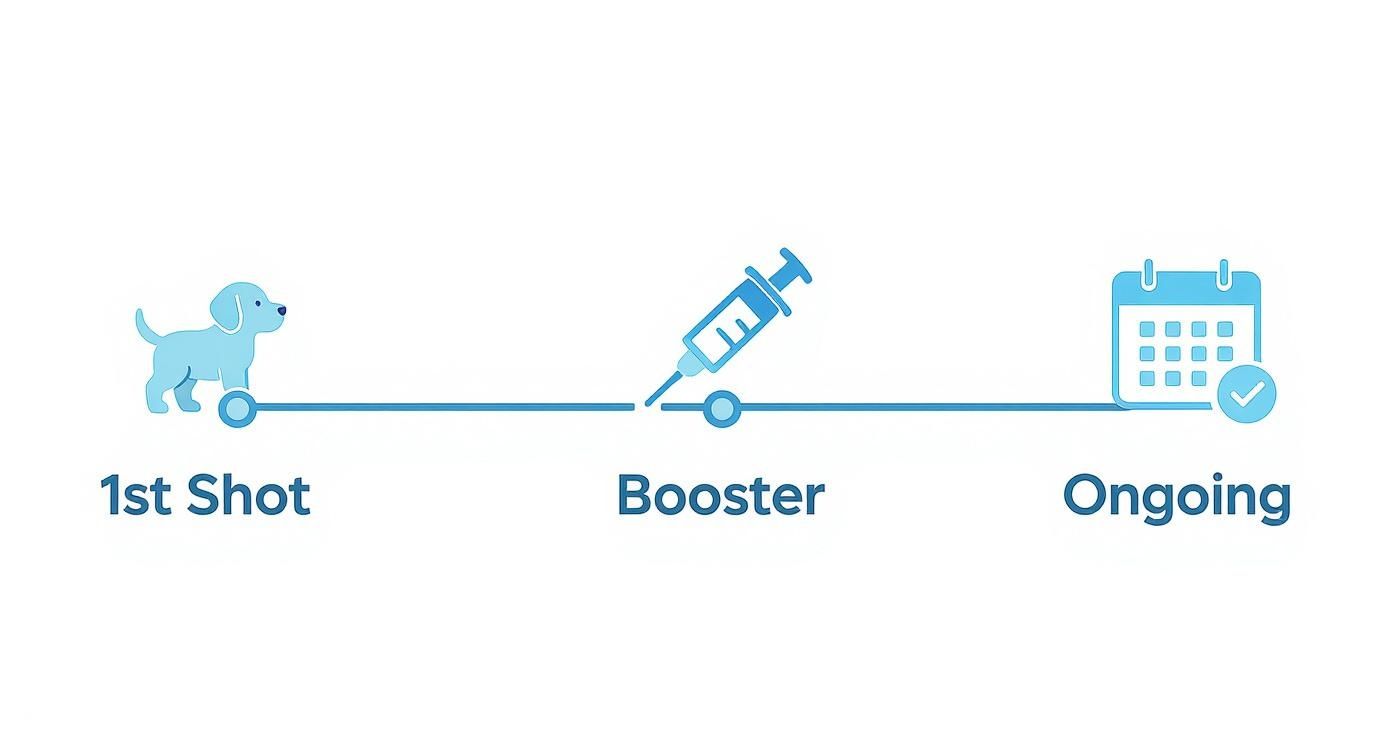
As you can see, the process is broken down into three simple phases. It’s designed this way to create a seamless shield against rabies that lasts a lifetime.
To make it even clearer, here's a simple table outlining the typical schedule.
Typical Rabies Vaccination Schedule for Dogs
Vaccination Stage | Typical Dog Age | Frequency Notes |
|---|---|---|
First Vaccination | 12-16 Weeks Old | This is the crucial first step. Local guidelines often suggest this by a certain age, usually around 4 months. |
First Booster | 1 Year After First Shot | This second shot is very important and "boosts" the initial immunity for long-term effectiveness. |
Ongoing Boosters | Every 1 or 3 Years | After the first booster, your vet will switch to either a 1-year or 3-year vaccine, based on the product and local rules. |
This schedule ensures your dog is protected from the start and stays that way.
The most important thing to remember is that every dog’s journey starts the same way: an initial vaccine followed by a one-year booster. Only then does the path split into the one-year or three-year schedule for adult dogs.
Why the Rabies Shot Is So Important for Your Dog
Let's get straight to it: why is this one vaccination such a big deal? The rabies shot isn't just about checking a box on a form; it’s a critical shield for your dog, your family, and everyone in your community. Before we even get into the "how often," we need to understand the "why."
Rabies is a very serious virus that attacks the brain and nervous system. Once an animal starts showing symptoms, it’s almost always fatal. The virus spreads through the saliva of an infected animal—usually a bite—so prevention is really our only line of defense.
It's a Community-Wide Shield
Vaccinating your dog does more than just protect them. It helps build a wall of immunity in the community, stopping the virus cold before it can spread to other pets or, worse, to people. It’s one of the most responsible things we can do as pet owners.
Think of the rabies vaccine as a superhero cape for your dog. It gives them the power to resist a deadly threat, turning them into a quiet hero for public health.
On a global scale, vaccinating dogs is our single most effective tool for controlling rabies. In fact, public health experts agree that at least 70% of the dog population in any given area needs to be vaccinated to effectively break the chain of transmission. This level of coverage is vital because dogs are the source of over 99% of all human rabies deaths worldwide. The CDC has some great info on rabies control efforts around the world if you want to dig deeper.
This community protection is exactly why so many countries have strict vaccination rules for pets coming in. If you're planning to travel, you’ll need to have your dog’s shots completely in order. Our guide on how to get a pet health certificate for international travel can walk you through what's needed. It’s a small step that makes a world of difference.
Choosing Between the 1-Year and 3-Year Vaccine
When you bring your dog in for their rabies shot, your vet will likely mention two options: the 1-year vaccine and the 3-year vaccine. This often leaves pet owners wondering if one is better or safer than the other. So, let's clear up this very common question.
The good news is that both vaccines are equally safe and effective at protecting your furry best friend. The only real difference is how long that protection lasts. You can think of it like a subscription—both get you full coverage, just for different lengths of time.
It's really important to know that a puppy’s very first rabies shot is only considered valid for one year, no matter which vaccine is used. That initial shot, plus the booster given a year later, is absolutely crucial for building a strong and lasting immune response. It’s only after that second vaccine that you and your vet can start thinking about switching to the three-year schedule.
Your dog's first-ever rabies vaccine and its one-year booster are the foundation of their protection. After that, you can discuss with your vet whether the 1-year or 3-year booster schedule is the best fit going forward.
So, Which One Is Right for Your Dog?
The decision isn't just a matter of personal preference; it’s usually guided by a few key factors. The big one is your local guidelines. Some cities, counties, or states suggest annual rabies boosters, regardless of the type of vaccine given. Your vet will know the specific rules for your area.
Other things to consider include:
Your Dog's Lifestyle: A dog who spends a ton of time outdoors in areas with wildlife might have different risk factors.
Travel Plans: If you travel with your pet, some destinations have very specific rules about how recently a rabies vaccine must be given.
Your Veterinarian's Recommendation: Your vet will always consider your dog's overall health, age, and medical history to recommend the best and safest schedule.
Ultimately, the choice comes down to a partnership between you, your vet, and your local regulations. Rabies control programs around the world recommend either annual or triennial boosters, depending on the vaccine used and regional laws. You can learn more about the global vaccination standards to see how these practices help keep pets safe worldwide.
How Local Laws Affect Your Dog's Shot Schedule
It's easy to think of a rabies shot as just another part of your dog's routine check-up, but it's much more than that. In most places, the rabies vaccination schedule isn't just a friendly suggestion from your vet—it's often a requirement.
These rules aren't the same everywhere. They can change quite a bit from one state to another, and sometimes even between neighboring cities or counties.
Think of it like local speed limits; a 35 mph zone in one town might be a 25 mph zone in the next, and you have to follow the rules of the road you’re on. Similarly, one county might require a rabies booster every year, while the one right next door is perfectly fine with a three-year schedule. This is a huge reason why the answer to "how often do dogs need rabies vaccinations?" can depend entirely on your zip code.
Staying current is a big deal. Falling behind could lead to fines or other headaches, especially if your dog ever nips someone, even by accident.
Finding Your Local Vaccination Rules
So, how do you figure out the exact rules for your area? Thankfully, it's usually pretty straightforward.
Ask Your Veterinarian: This is your best first move. Your vet's office deals with these regulations every day and will know exactly what’s needed to keep your dog protected and safe.
Check Official Websites: Your city or county's animal control or public health department website is another great resource. They almost always have a section that clearly lays out the vaccination requirements for pets.
It's worth remembering that these rules aren't there to make our lives difficult. They exist to build a community-wide shield against rabies, protecting our pets and our families from a very serious disease.
These rules get even more important when you travel. Crossing state lines or, especially, flying internationally comes with its own strict set of vaccination regulations. To avoid any last-minute surprises that could derail your trip, it’s smart to research your destination's rules well in advance. For a deeper dive, check out our guide on pet international travel requirements, which walks you through the details.
Special Cases for Your Dog's Rabies Shots

Life with a dog isn't always a straight line, and neither are their vaccination needs. While there's a standard schedule for rabies shots, certain situations can throw a wrench in the works, requiring a bit more planning on your part. Let's dig into a few of these special cases.
Traveling with your dog, especially internationally, is a big one. Many countries have strict rules about when a rabies vaccine must be given before your pet can cross their border. Some destinations even require blood tests to prove the vaccine did its job. Our guide on rabies titer testing for dogs breaks down exactly what that involves.
It's a ruff reality, but even with clear guidelines, people can fall behind. A survey in Japan, for example, found that only 56.1% of dogs had been vaccinated in the last 12 months. It's a good reminder of how easily life can get in the way of keeping up with booster schedules.
Health, Age, and Missed Boosters
Your dog’s individual health is another huge factor. For senior dogs or those with specific medical conditions, a vet might recommend an adjusted schedule. This isn't a one-size-fits-all decision; it's a careful choice made to ensure the vaccine is both safe and effective for your best friend.
So, what happens if you just... miss a booster's due date? Don't panic. It happens to the best of us. The most important thing is to get back on track quickly.
If you realize your dog's rabies shot is overdue, your very first step should be calling your vet. They’ll tell you exactly what to do to get your dog's protection re-established without delay.
Your vet will likely want to give the booster as soon as possible. Depending on how overdue the shot is and what your local rules say, the vaccine might be considered effective right away or after a short waiting period.
Common Questions About Dog Rabies Vaccinations
Even with the schedule sorted out, it's totally normal to have a few lingering questions. Let's tackle some of the most common concerns dog owners bring up, so you can feel confident you're doing the right thing for your pet's health.
Most dogs breeze through the rabies vaccine without a problem. It's not unusual for them to be a little tired, run a slight fever, or have some soreness at the injection site. These are mild, temporary reactions—usually gone in a day or two—and are just a sign that their immune system is kicking into gear.
In very rare cases, a dog might have a more serious allergic reaction. Be on the lookout for things like facial swelling, hives, or trouble breathing. If you see anything that worries you, don't wait—call your vet right away.
If a Wild Animal Bites My Vaccinated Dog
First off, take a deep breath. If your dog is up-to-date on their rabies shots and has a run-in with wildlife, you’ve already given them a huge head start in protection. The next step is to call your veterinarian and local animal control immediately to report what happened.
Even though your dog is vaccinated, your vet will likely recommend a booster shot to be extra safe. Think of it as putting their immune system on high alert. Local authorities might also require a short observation period to make sure your dog is okay, which is a far less intense process than it would be for an unvaccinated pet.
Can My Indoor Dog Skip the Rabies Vaccine?
It’s a tempting thought, especially for homebody pets, but the answer is a firm no. In most areas, the rabies vaccine is recommended for all dogs, whether they spend their days on the couch or in the yard. Accidents happen. A door gets left ajar, or a bat (a surprisingly common rabies carrier) finds its way inside.
Because rabies is such a serious public health risk, local rules don’t usually make a distinction between indoor and outdoor lifestyles. The only real exception is a rare medical exemption from a vet, and that's not something granted lightly.
Keeping proper proof of a rabies vaccine on hand is a critical part of being a responsible owner. And while you're focused on health, don't forget about their environment. Choosing safe cleaning products for pets helps keep their space clean without exposing them to harsh chemicals.
Navigating pet travel documents can be tricky, but Passpaw makes it simple. Our platform helps veterinarians and pet owners manage international health certificates, ensuring all travel requirements are met smoothly and efficiently. Learn more at Passpaw.

More articles
From regulatory changes to best practices for veterinarians and pet owners, our resources keep you ahead of the curve.