Are you a team member in a veterinary practice?
Are you a pet parent planning a trip with your furry pal?
8 Pet Travel Safety Tips for a Safer Trip
Travel day goes sideways faster than you might expect. The appointment was booked, but the certificate window was off. The carrier looked fine online, but your cat hates it in real life. The flight is delayed, the parking lot is hot, and suddenly "bring the pet along" feels less cute and more complicated.
That's why the best pet travel safety tips aren't random reminders. They work best as a sequence. Start with destination rules and veterinary timing. Then lock down identification, carrier fit, and practice runs. After that, think about supplies, airline handling, comfort during transit, and what you'll do if something goes wrong.
A lot of avoidable problems happen because people prepare in the wrong order. They buy gear before checking airline rules, or they book flights before confirming vaccine timing. A safer plan is less glamorous, but it works. Handle the paperwork first, test the setup early, and keep travel day simple enough that neither you nor your pet has to wing it.
If part of your trip includes car travel, practical setup matters there too. A washable dog-friendly utility wagon seat cover can help keep one part of the journey cleaner and more controlled.
1. Get Your Pet's Health Certificate Early
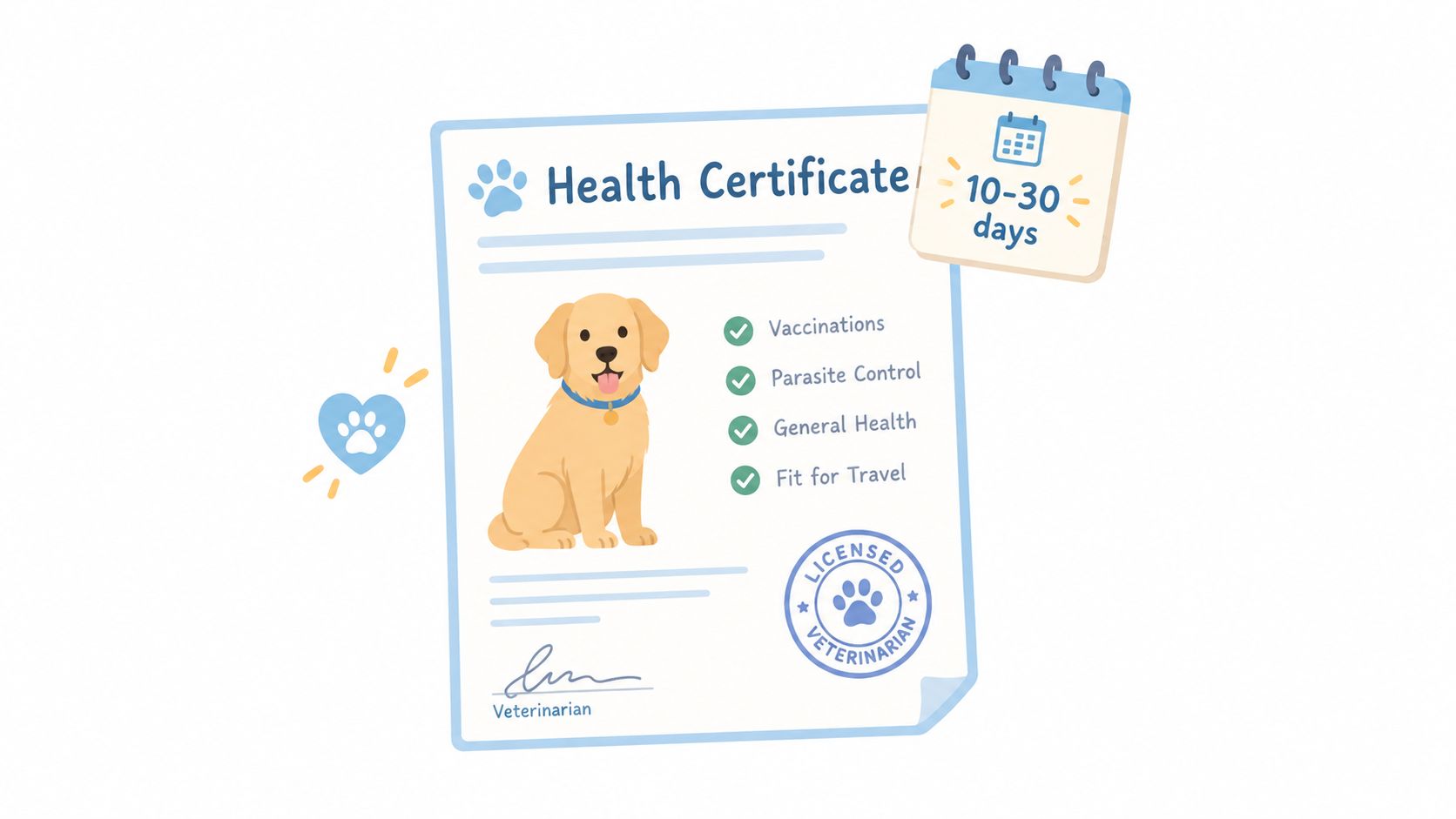
A health certificate becomes urgent only when it's missing. That's usually when an owner learns the airline wants one version, the destination wants another, and the vet schedule is already packed.
IATA says most airlines require a veterinary health certificate confirming the animal is healthy and fit to fly, and airlines can reject a dog or cat traveling in-cabin if the container doesn't meet IATA Container Requirement 1 at check-in, according to the IATA Live Animals Regulations. That means the certificate and the carrier need to be handled together, not as separate tasks.
Match timing to the trip
For a simple domestic route, this might feel manageable. For an international trip, it can get hairy fast. Some countries want a narrow issue window, some want supporting records attached, and some routes trigger endorsement steps that take coordination between the owner and the clinic.
A good working habit is to start with a document timeline before you buy nonrefundable tickets. If your practice or household uses digital workflows, tools such as Passpaw's guide to getting a pet health certificate online can help you organize the moving pieces.
Practical rule: If your certificate depends on vaccine timing, microchip timing, or destination approval, treat the vet appointment as the end of the process, not the start.
Keep one printed copy in your travel folder and one in your carry-on. Save digital copies on your phone and in email. If an airline agent, border official, or hotel desk asks for it, you don't want to scroll through a camera roll full of beach photos to find the right PDF.
2. Ensure Vaccinations Are Current and Documented
“Vaccinated” isn't the same as “ready for travel.” The dates, sequence, and paperwork all matter.
For travel to the European Union, USDA APHIS says the pet must have a working microchip before the rabies vaccination, the veterinarian must scan the microchip before vaccinating, and after a primary rabies vaccination the pet must wait at least 21 days, or the vaccine manufacturer's immunity period, before traveling, according to USDA APHIS guidance for EU pet travel. That order catches people all the time.
Don't rely on memory
Owners often say, “My dog had rabies done last year,” and that may be true, but travel staff need records that line up with destination rules. The safest move is to ask your vet for the full vaccination record, review the dates, and confirm the pet's identifying details match the rest of the travel file.
A practical example: if a family is flying to Europe with a recently microchipped dog, the clinic should verify that the chip record and the rabies certificate line up before anyone assumes the waiting period has been satisfied. If they don't, travel may need to move.
A few habits make this smoother:
Request complete records: Ask for the vaccine name, date given, expiration or validity period if listed, and the pet's identifying information.
Check rabies documents early: If you need help understanding what counts as acceptable paperwork, Passpaw's rabies vaccination documentation guide is a useful reference point.
Store backup copies: Keep records in print and on your phone so you're not stuck if airport Wi-Fi is unreliable.
This part isn't just red tape. It helps prevent rushed decisions, denied boarding, and stressful last-minute vet visits.
3. Use a Secure, Comfortable Travel Carrier
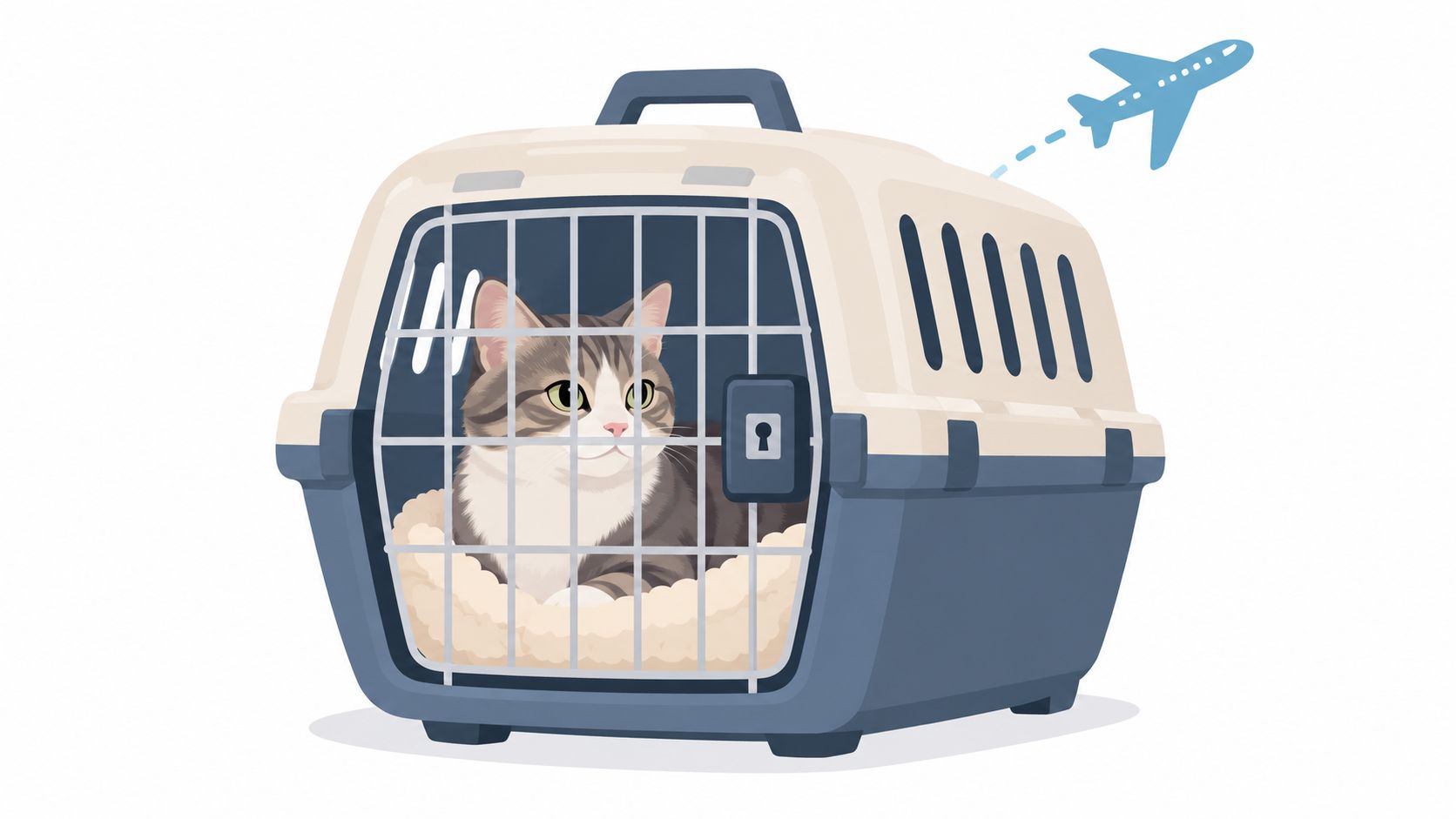
The carrier isn't packaging. It's your pet's seatbelt, waiting room, hiding place, and recovery zone for the whole trip.
That's especially important with flights. Independent reporting using U.S. Department of Transportation data showed that U.S. carriers logged 12 pet-related incidents in 2024, including 4 injuries and 8 deaths, while 2025 had 8 incidents, a 33% decline year over year, according to PetFlight's airline pet travel summary. Incidents are rare at scale, but they're serious enough that small setup mistakes aren't worth shrugging off.
Test the carrier in real conditions
A carrier that “should fit” is not the same as one your pet can ride in calmly. For a cat, I like to see a full trial at home with the door closed, then a short car ride, then a longer outing. For a small dog flying in-cabin, test whether the bag keeps its shape under light pressure and still vents well.
Look for these basics:
Secure closure: Zippers and latches should stay shut when nudged, tipped, or lifted.
Comfortable posture: Your pet should be able to stand, turn as appropriate for the carrier style, and settle without being folded like laundry.
Airline fit: Before buying, compare the airline's current rules with options reviewed in guides such as this Passpaw article on airline pet travel carriers.
A good carrier lowers stress because the pet already knows it. A bad one only appears on travel day and turns into a wrestling match.
Add an absorbent liner and one familiar-smelling item, not a pile of bedding that bunches up. Cozy is good. Loose and messy isn't.
4. Microchip Your Pet and Keep Registration Current
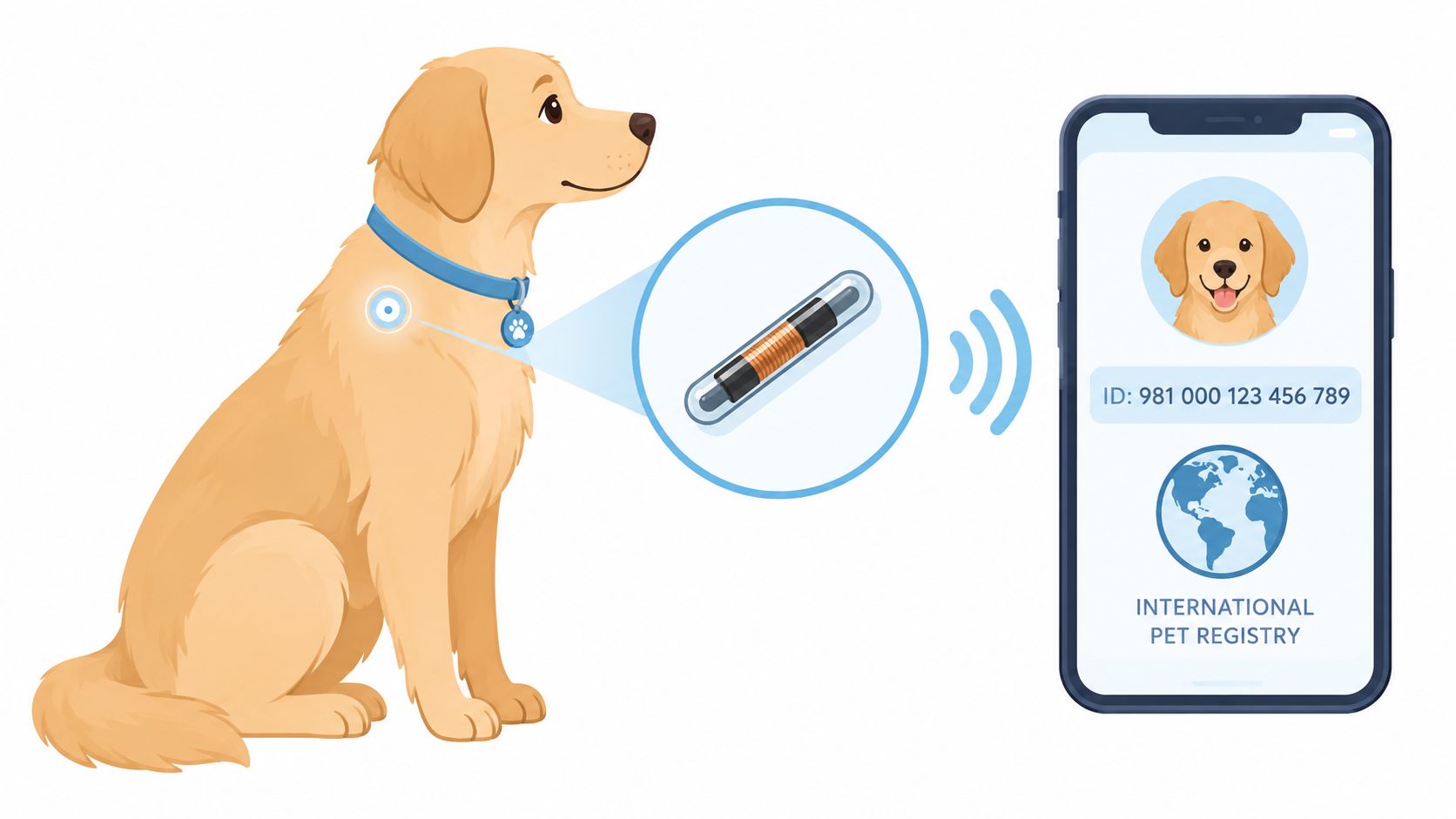
Collars fall off. Harnesses slip. Hotel doors open fast. A microchip gives you a backup that travels with the pet.
For EU travel, the rules are clear. Dogs, cats, and ferrets must be microchipped before rabies vaccination, and the rabies vaccine becomes valid no less than 21 days after the primary vaccination is completed. The EU also requires pets from most non-EU countries to undergo a rabies antibody titration test, according to the European Commission's pet travel rules.
Registration matters as much as implantation
A chip only helps if the registry points back to you. Before any trip, update the phone number you'll answer during travel, add an email address you monitor, and include a destination contact if you have one.
One common travel scenario is a dog bolting from a parking area after a long drive. Another is a cat slipping out when a hotel room door opens. In both cases, current chip registration can matter more than the brand of tag on the collar.
If you're traveling internationally, also confirm the chip format works for the destination route. Passpaw's overview of ISO-compliant microchips can help owners and clinics check whether the chip setup matches common travel expectations.
Use the microchip number everywhere it belongs: vaccine record, health certificate, travel folder, and emergency contact card. That keeps the paper trail from getting out of step with the pet.
5. Pack a Pet Travel Kit with Essential Supplies
The best travel kit is boring. It has the same food your pet already eats, the medication they already take, and the paperwork you hope nobody asks for but someone eventually will.
This matters even more when travel involves long ground segments, overnights, or places where your usual brand isn't easy to replace. People tend to remember toys and forget the measuring scoop, or they pack the prescription bottle and leave the instructions at home. That's how a minor delay turns into a bigger problem.
Pack for delay, not for the schedule
Build the kit around the idea that the trip will take longer than planned. If you're driving to a campsite or moving between hotels, the same logic used for camping with pets in an RV applies well here. Keep the pet's essentials easy to reach, not buried under luggage.
A practical kit usually includes:
Food and water basics: Regular food, a portable bowl, and a water setup you can use during breaks without making a mess.
Medication and records: Original labeled containers, dosing instructions, printed health and vaccine documents, and digital backups.
Cleanup and control: Waste bags, paper towels, wipes, an extra leash, and a spare absorbent liner for the carrier.
Identification support: Recent photos of your pet from multiple angles in case you need to prove ownership quickly.
Bring the version of care your pet already knows. Travel day isn't the time to test a new food, new chew, or a mystery calming treat from the checkout shelf.
One familiar item with your scent can help, especially in hotels or during layovers. Just keep it small enough that it doesn't crowd the carrier.
6. Acclimate Your Pet to Travel Before the Trip
Departure morning goes better when your pet has already practiced the hard parts. The carrier is familiar. The car is boring. The airport noise or hotel hallway is not their first surprise of the day.
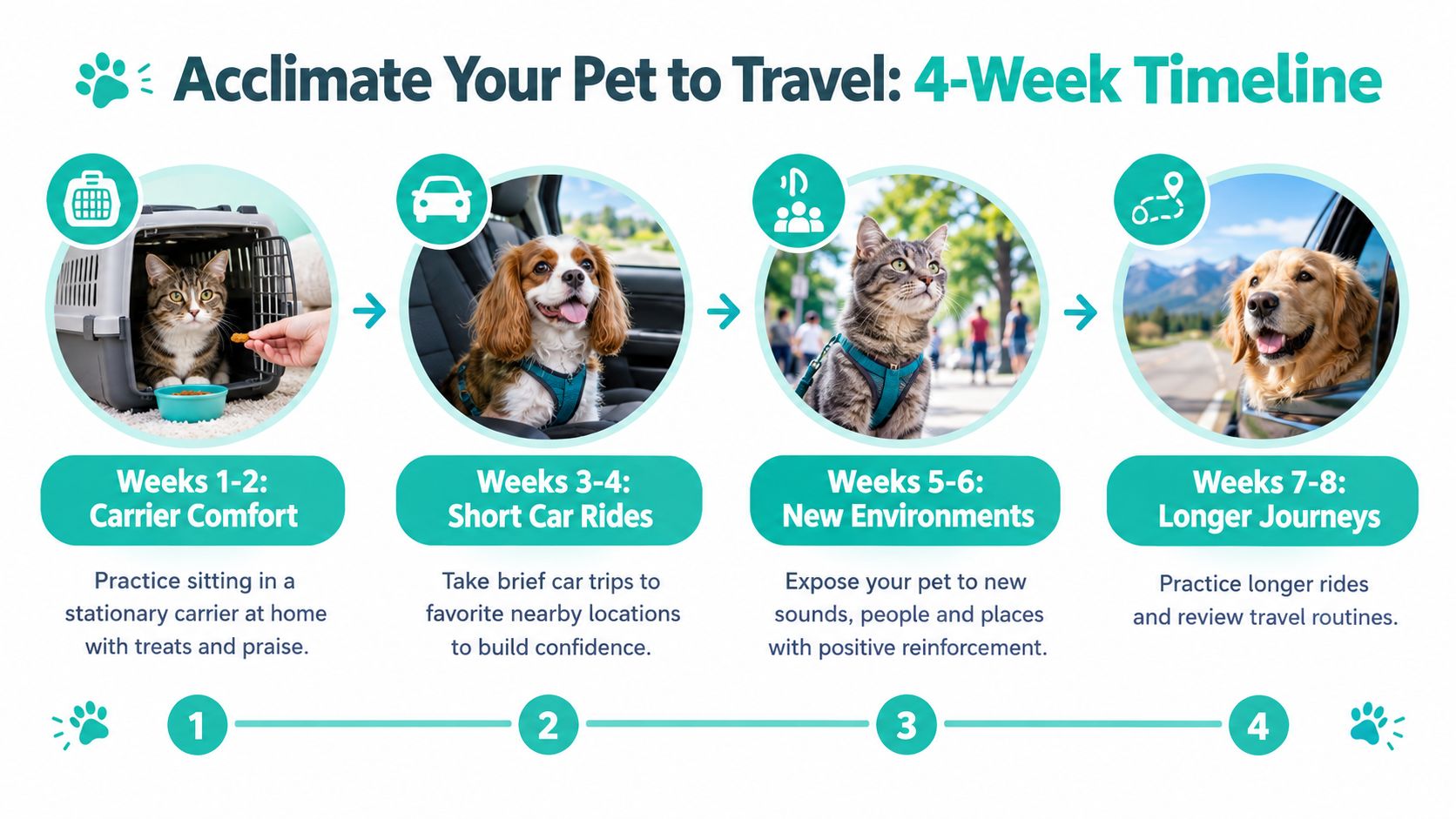
Pets usually struggle with one of three things: confinement, motion, or new sounds and smells. Figure out which part sets your pet off, then practice that piece first. A cat who panics when the carrier door closes needs different prep than a dog who is fine crated but gets carsick after ten minutes.
Start several days or weeks ahead, depending on your pet's baseline. Leave the carrier out at home. Drop treats inside, feed nearby, and let your pet enter and exit without pressure. Once that looks easy, close the door for a short stretch, then open it before your pet ramps up. The goal is calm repetition, not a test of patience.
After that, rehearse the trip in layers:
Put the carrier or restraint in the parked car and sit for a few quiet minutes.
Start the engine without going anywhere.
Take a short drive that ends somewhere low stress, then go home.
Add time only after your pet settles faster between steps.
That sequence sounds simple because it is. Simple works.
For nervous dogs, I've had better results with short, dull practice rides than with a long walk and a hope that exhaustion will fix anxiety. For cats, covering part of the carrier and keeping the ride steady often helps more than constantly talking to them. The trade-off is time. Practice takes planning now, but it can prevent a much louder problem later.
If your pet drools, vomits, pants hard, or cannot settle even on brief practice runs, call your veterinarian before travel day. That is the point to ask about motion sickness, anxiety, or whether the current travel plan is realistic. Sometimes the safest choice is more training. Sometimes it is a different route, a ground trip instead of a flight, or a delay while you sort out the squirrelly details.
7. Maintain Updated Contact Information and Emergency Protocols
Trouble rarely starts at a convenient moment. A cat can bolt when a hotel door opens. A dog can arrive shaky and refuse food. If that happens, the safest response is the one you prepared before leaving home.
Build one emergency sheet for the trip and make it usable in under a minute. Include your regular veterinarian, an emergency clinic near your first overnight stop, and a clinic near your destination. Add the address where your pet will stay, your microchip number, a recent photo, current medications, and copies of the records you would need if your pet is treated by someone who has never met them.
Keep that information in two formats. Save it on your phone. Print it and tuck it into the travel folder or tape a copy inside the carrier pocket. Dead batteries and weak signal have rotten timing.
I use a simple stress test here: if your travel companion had to take over while you parked the car, spoke with airline staff, or handled a check-in problem, could they answer three questions right away?
Who do we call first?
Where is the nearest after-hours clinic?
What does the pet take, and when was the last dose?
If the answer is no, the plan is still half packed.
One more practical call to make before departure: ask your destination clinic whether they accept walk-ins, require appointments, or refer emergencies elsewhere. That small step matters with senior pets, pets on heart or seizure medication, and any animal with a history of stress-related flare-ups. The trade-off is a few minutes of prep now versus scrambling in an unfamiliar town while your pet feels lousy.
Travel companions need the same briefing. One person should not be the only holder of the paperwork, the medication schedule, or the microchip details. Clear handoff beats a panicked scavenger hunt every time.
8. Know and Comply with Destination Country Requirements
International pet travel can fail before travel day even starts. I have seen well-prepared owners show up with the right carrier, the right meds, and the wrong paperwork window.
Start with the government source for the country where your pet will enter, then match that against your airline's pet desk requirements. The CDC's pet travel guidance points travelers to destination rules and notes that requirements can change, including documentation updates for places such as Northern Ireland. Forum threads and old blog posts are fine for questions. They are a poor place to build a deadline.
One decision point matters more than people expect: timing. Some countries require documents to be issued within a tight window before arrival, while others care more about vaccine dates, tapeworm treatment timing, or the country your pet is transiting through. If your certificate must be signed close to departure, book that veterinary appointment before you book any hard-to-change flight. The trade-off is less flexibility on your calendar now versus expensive rebooking later.
A simple real-world check helps here. If your route is Chicago to Dublin with a layover in London, do not assume the final destination sets all the rules. Transit points can trigger their own handling or document requirements, and airlines sometimes apply the stricter rule set at check-in because their staff have to clear the whole route, not just the last stop.
Instead of a general recheck, confirm three specific items 48 to 72 hours before departure:
the exact entry documents your pet needs for that route
whether your airline wants anything beyond the government requirement
whether a recent rule update changed timing, form versions, or port-of-entry procedures
Get names, dates, and confirmation emails when you can. That paper trail will not make border staff lenient, but it can solve an airline counter dispute fast.
Treat destination compliance as the first booking decision, not the last errand. It keeps the rest of the safety plan from turning into a kennel cough of avoidable problems.
9. Plan for Dehydration, Heat, Medication, and Airline Safety
Travel day is where all the earlier planning either holds together or starts shedding fur.
For air travel, historical incident reporting is a useful reality check. A 2024 summary reported 197 incidents across more than 2.7 million animals transported between 2015 and 2020, an average incident rate of roughly 0.007%. Within that period, Hawaiian Airlines had the highest incident rate at 2.03 among carriers. The same reporting also noted that in 2021, U.S. airline carriers reported 7 animal deaths and 14 injuries alongside over 256,000 pets transported, according to PetRelocation's review of federal animal transport reporting. The takeaway isn't panic. It's that airline choice, route details, handling, and conditions matter.
Travel-day decisions that reduce avoidable risk
Offer water at planned breaks during car travel and watch for overheating, drooling, weakness, frantic panting, or unusual quietness. Never leave your pet in a parked vehicle, even for a quick errand. Heat risk and delay risk stack quickly.
Medication needs its own rule. Keep prescribed drugs in their original labeled container and only use calming medication if a veterinarian has recommended a plan for that specific pet and trip. Recent guidance also emphasizes booking nonstop flights when possible and avoiding sedation without veterinary approval, while IATA released in-cabin operational guidance in July 2026 to improve predictability and safety, as noted in IATA's update on in-cabin pet travel guidance.
For road trips, secure the carrier or use a properly fitted harness. For flights, confirm pet acceptance, check-in timing, route restrictions, and current carrier rules directly with the airline before you leave for the airport.
If something feels improvised on travel day, stop and reset. Pets do better with one calm pause than with a rushed human trying to make up time.
9-Point Pet Travel Safety Comparison
Item | Implementation Complexity 🔄 | Resource Requirements ⚡ | Expected Outcomes ⭐📊 | Ideal Use Cases 💡 | Key Advantages 📊 |
|---|---|---|---|---|---|
Get Your Pet's Health Certificate Early | Moderate, vet appointment + timing windows | Vet exam, tests, fees, paperwork | High compliance, fewer border/airport delays ⭐⭐⭐⭐ | International flights, cross-border moves | Prevents entry denial/quarantine, official medical record |
Ensure Vaccinations Are Current and Documented | Moderate–High, timing, boosters, species-specific rules | Multiple vet visits, vaccine costs, records | Strong disease prevention, avoids quarantine ⭐⭐⭐⭐ | Any international travel, countries with strict vaccine rules | Legal entry requirement, protects pet and local animals |
Use a Secure, Comfortable Travel Carrier | Low–Moderate, purchase + training | Cost of carrier, bedding, training time | Safer transit, reduced anxiety ⭐⭐⭐⭐ | Air travel (cargo/under-seat), car trips, public transport | Meets airline specs, prevents escape/injury |
Microchip Your Pet and Keep Registration Current | Low, implantation + registry updates | One-time vet procedure, registry fees | Permanent ID, higher reunion chance if lost ⭐⭐⭐⭐ | International travel, high-risk or busy destinations | Reliable, tamper-proof identification, often required |
Pack a Pet Travel Kit with Essential Supplies | Low–Moderate, planning and packing | Food, meds, first aid, bowls, photos (space) | Handles delays/minor emergencies, keeps routine ⭐⭐⭐ | Long trips, remote destinations, car travel | Immediate access to essentials, reduces stress |
Acclimate Your Pet to Travel Before the Trip | High, multi-week gradual process | Time, treats, practice trips, possible trainer | Lower anxiety, better behavior during travel ⭐⭐⭐⭐ | Anxious pets, first-time travelers, long journeys | Improves welfare, may reduce medication need |
Maintain Updated Contact Info & Emergency Protocols | Moderate, research and documentation | Time, phone, saved contacts, printed docs | Faster emergency response, coordinated care ⭐⭐⭐ | International stays, multi-stop itineraries | Ensures quick vet access and clear action plan |
Know and Comply with Destination Country Requirements | High, complex, changing regulations | Research time, permits, possible service fees | Prevents quarantine/return, legal compliance ⭐⭐⭐⭐ | Countries with strict import rules (AU, NZ, JP) | Avoids last-minute denial, protects local populations |
Plan for Dehydration, Heat, Medication, and Airline Safety | Moderate, checklist + vet guidance | Water, meds in original containers, restraints | Reduces travel-day incidents and health risks ⭐⭐⭐ | Hot climates, long travel days, flights with layovers | Immediate risk mitigation, ensures medication access |
Turn Your Checklist into a Calm Travel Plan
Safer pet travel usually comes down to three checkpoints.
First, confirm destination and veterinary requirements early. That means checking entry rules before booking, reviewing vaccine timing before assuming the paperwork will work, and getting the health certificate process moving before the travel window gets tight. If the trip crosses borders, pay close attention to microchip order, rabies timing, and any destination-specific documents that can change without much warning.
Second, test the equipment and routine before departure. A carrier that fits airline rules still needs to work for your actual pet. A dog restraint still needs to be comfortable enough for a real drive. Practice rides, short carrier sessions, and boring repetition are worth more than last-minute “comfort” gadgets. Many pet travel safety tips become real here, because your pet gets to learn the routine before the stressful day arrives.
Third, keep the essentials accessible on travel day. Water, medication, certificates, vaccination records, contact information, and emergency supplies should all be easy to reach. Not somewhere in checked baggage, not at the bottom of a trunk under three suitcases, and not saved only on one phone with a dying battery. A simple folder and a small go-bag solve a lot of problems before they start.
It's also smart to verify changing details close to departure. Airline pet policies can shift, and destination requirements can change. A quick recheck can save you from an ugly surprise at check-in or at the border. If your pet has health concerns, travel anxiety, breed-specific breathing issues, or a history of motion sickness, ask your veterinarian for a specific travel plan rather than guessing your way through it.
For practices and owners juggling multiple deadlines, Passpaw can fit naturally into this process as one option for organizing travel documents, destination requirements, and certificate timing. That kind of structure helps when the trip involves more than a leash, a carrier, and crossed paws.
Passpaw helps veterinary teams and pet owners organize international pet travel documents, track requirement changes, and manage certificate-related deadlines in one place. If you're planning a trip and want a clearer handle on the paperwork side of pet travel safety tips, visit Passpaw to see how it supports the process.

More articles
From regulatory changes to best practices for veterinarians and pet owners, our resources keep you ahead of the curve.