Are you a team member in a veterinary practice?
Are you a pet parent planning a trip with your furry pal?
Hawaii Health Certificate: Pet Import Guide for 2026
The flight is booked. The housing is lined up. Then someone at the clinic says, “Have you started the Hawaii paperwork yet?” That’s usually the moment the mood changes.
For most families, the hawaii health certificate sounds like one document. In practice, it’s a full travel packet with timing rules, original records, and very little room for sloppy paperwork. That’s why owners feel anxious, and why veterinary teams often groan when a Hawaii request lands on the schedule.
The good news is that this process is manageable when you treat it like a project instead of a last-minute form. Families need a clean checklist. Clinics need a repeatable workflow. If both sides stay on the same page, pets can land in Hawaii without the paperwork chasing its tail. For a broader overview of the move itself, this pet travel to Hawaii guide is a useful starting point.
Your Pet's Golden Ticket to Paradise
A Hawaii trip with a dog or cat usually starts with a simple goal. Keep the family together. Nobody wants to settle into island life while a pet is stuck elsewhere because one date was wrong or one field was left blank.
That’s why I tell clients to stop thinking of the hawaii health certificate as “one last appointment.” It’s the final checkpoint in a chain. If the earlier steps were done in the wrong order, the final exam won’t save the semester.
What owners are usually feeling
Most owners come in with one of two problems. They’re either starting too late, or they’ve collected a stack of records that don’t quite match what Hawaii expects. Both situations are fixable, but only if someone reviews the whole file early.
A calm plan helps more than frantic Googling. Hawaii travel isn’t impossible. It just punishes shortcuts.
Pets don’t get delayed because owners don’t care. They get delayed because Hawaii expects precise records, and ordinary domestic travel usually doesn’t.
What clinics need to see early
When a client says “we’re moving in a few months,” the clinic shouldn’t book only a health certificate visit and hope for the best. Staff should ask for travel date, destination island, vaccine records, microchip details, and any past rabies lab work right away.
That early review changes everything. It tells you whether the pet is on track, whether records need cleanup, and whether the owner is heading toward a smooth arrival or a paperwork hairball.
Why Hawaii Is So Strict About Pet Travel
Hawaii’s rules make more sense when you understand the purpose behind them. The state protects its rabies-free status, so the paperwork isn’t just administrative fuss. Each document helps prove identity, vaccine history, and rabies compliance before the pet arrives.

If you’ve ever wondered why the process feels more detailed than ordinary interstate travel, that’s the answer. Hawaii isn’t treating this like a routine domestic flight. It’s screening for a preventable risk with a very structured process. This overview of the State of Hawaii animal quarantine system helps frame that bigger picture.
The health certificate is really a packet
Owners often ask, “What form do I need?” The better question is, “What complete file does Hawaii need to see?” In practice, the hawaii health certificate sits at the end of a package that supports it.
That package typically depends on four things being lined up correctly:
Identity proof: the pet’s microchip details have to match the records.
Rabies history: the vaccination certificates must be complete and readable.
Lab support: the rabies antibody testing has to fit Hawaii’s sequence rules.
Final veterinary review: the health certificate confirms the pet’s current status and ties the file together.
Why precision matters so much
Hawaii also has strong public health data systems. The state’s Hawaii Health Data Warehouse includes complete birth and death record data as of 2024 and reflects a broader culture of careful documentation and public recordkeeping. That same record-first mindset shows up in pet import review too.
For owners, the takeaway is simple. Close enough isn’t good enough.
For clinics, the takeaway is operational. A Hawaii file should be handled more like a compliance packet than a standard travel note. If one field is incomplete, the whole packet can wobble.
Practical rule: If a detail seems small enough to skip, it’s probably the exact detail that will hold the file up.
The Four Core Requirements for Hawaii Pet Imports
The cleanest way to understand Hawaii entry is to think in building blocks. Each block supports the next one. If the first block is crooked, the whole tower leans.
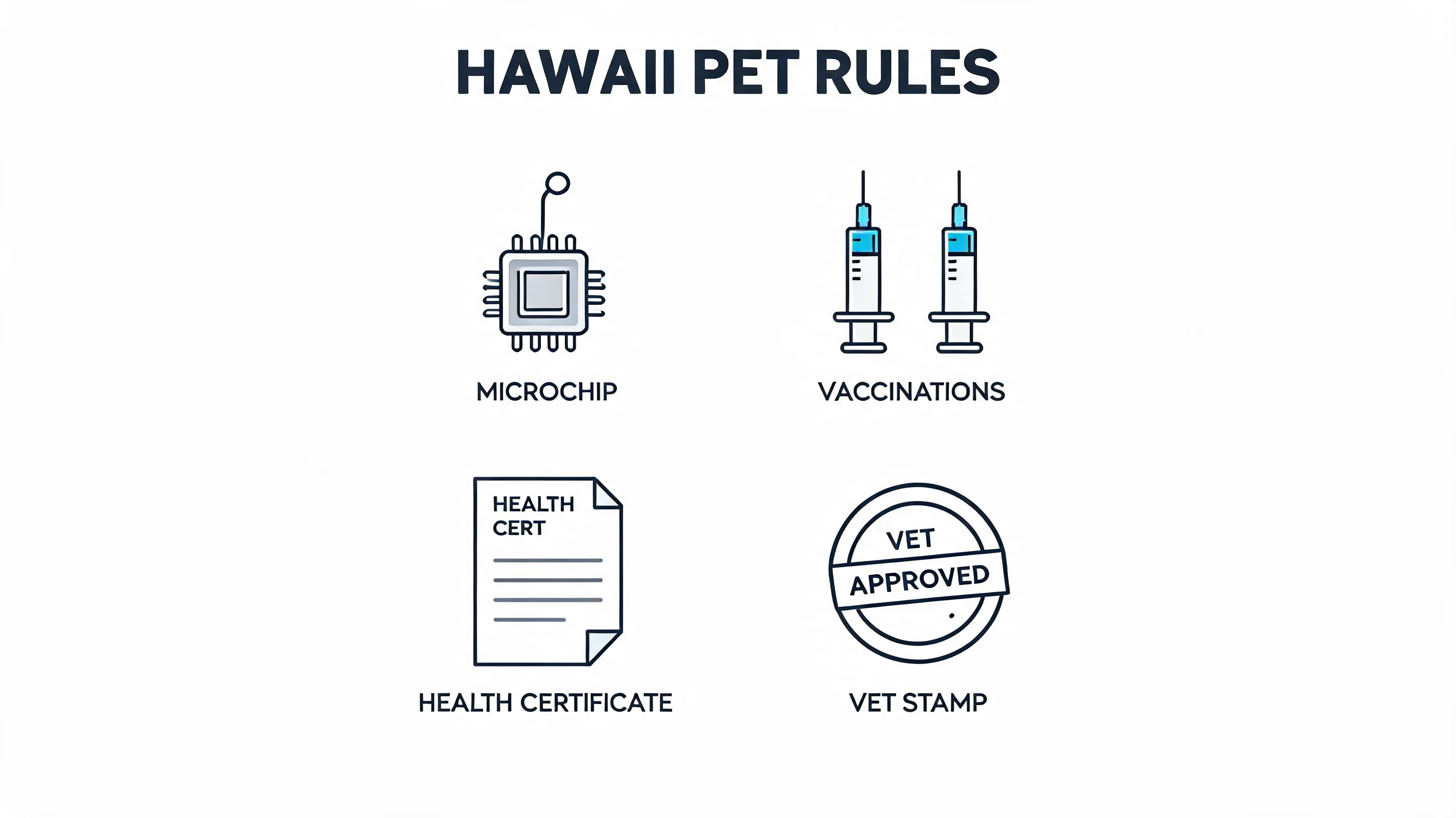
Under Hawaii’s Chapter 4-29 process, the pet must have a microchip implanted before the FAVN rabies antibody test, and all documents including Dog & Cat Import Form AQS-279 must be submitted at least 10 days before arrival for the 5-Day-or-Less program. If those requirements aren’t met, the result is a 120-day quarantine at the owner’s expense.
Microchip first
The microchip isn’t a side detail. It’s the anchor that ties the pet to every later record.
A clinic should confirm that the chip scans properly and that the number matches exactly across the file. If a pet gets a FAVN test before the correct chip is in place, the sequence problem can unravel later steps.
Some teams often get tripped up. They assume the chip is already on file and move ahead. Hawaii paperwork is not the time to assume.
Two original rabies certificates
Hawaii requires two original rabies vaccination certificates with detailed information, including vaccine name, lot or serial number, booster interval, vaccination date, and expiration date, as outlined in the same Hawaii health certificate package. This is one of those spots where ordinary vaccine summaries often fall short.
A rabies history may be medically valid but still administratively weak. If the certificate is missing required details, staff usually have to track down the issuing clinic and rebuild the record.
FAVN test with the right timing
The FAVN rabies antibody test is the step many owners have heard of, but they often don’t realize how dependent it is on the earlier records. Wrong chip sequence, missing vaccine support, or old documentation can turn the lab result into an expensive detour.
The test result also has to remain valid on arrival, and the results are sent directly to the Hawaii facility, with clinics receiving faxed copies, according to the same Hawaii package referenced above.
Final health certificate and supporting documents
The last block is the actual veterinary certificate and the associated travel paperwork. That’s when the file is reviewed as a whole, not in fragments.
A strong final review usually includes:
Record matching: names, dates, chip number, and vaccine details all line up.
Original document check: no substitutions with photocopies where originals are expected.
Owner instructions: the client knows what they must submit and when.
Airport plan: arrival details and release expectations are confirmed.
The health certificate matters, but it only works when the earlier building blocks were set properly. That’s the part many owners miss. It’s also the part strong clinics learn to control.
Your Step-by-Step Hawaii Pet Travel Timeline
A family calls in April with a June flight already booked. Their dog is healthy, vaccinated, and well loved. The problem is timing. Hawaii import files succeed or fail on sequence, deadlines, and document quality, and by the time that call comes in, the clinic is often trying to compress work that should have started months earlier.
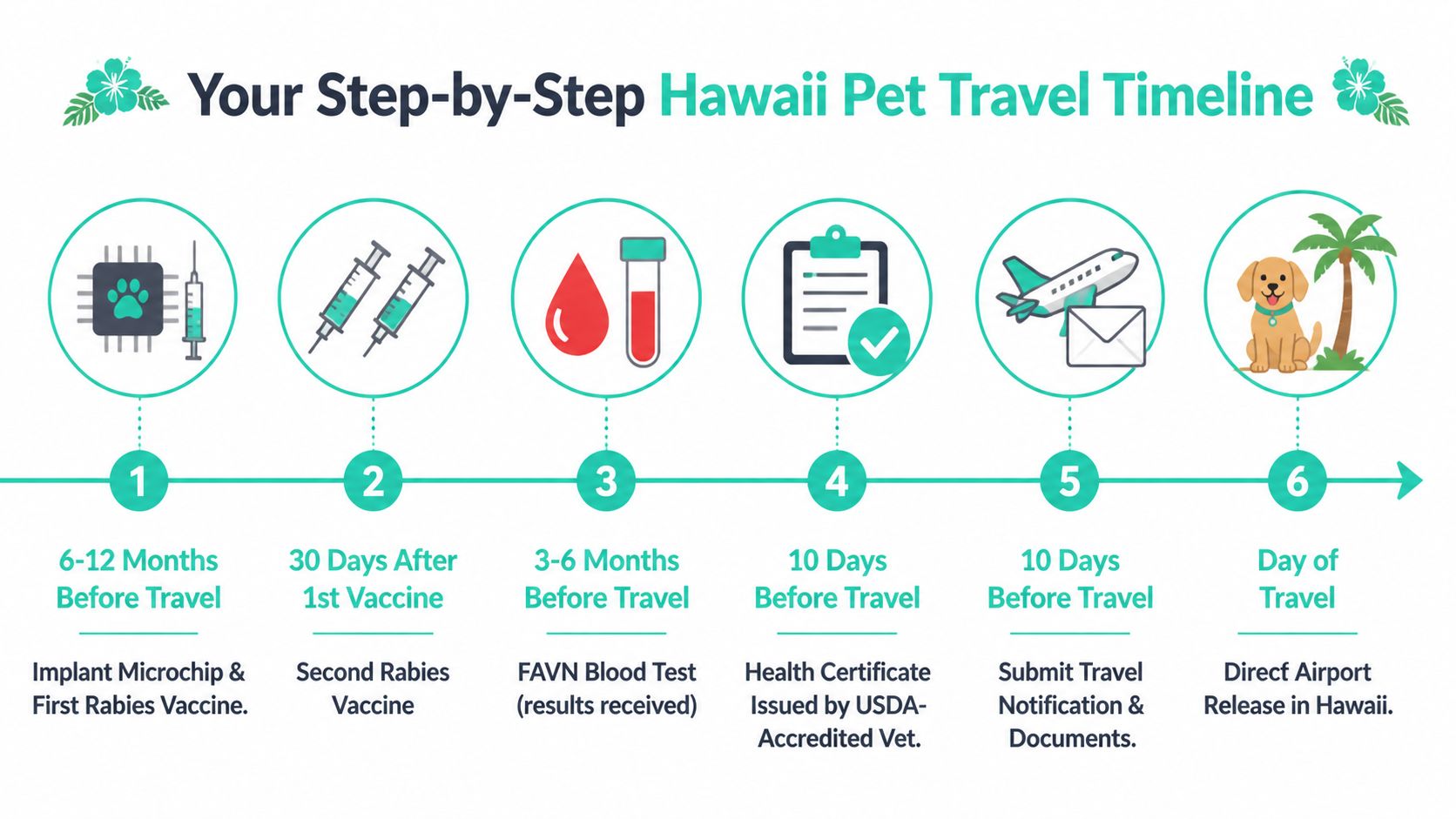
The cleanest way to plan Hawaii travel is to work backward from the arrival date. That helps owners see the lead time, and it helps clinic teams build the case in the right order instead of chasing missing records under pressure.
Six months or more before travel
Start with a record audit.
For clinic teams, this is the highest-value part of the whole process because it exposes problems while there is still time to fix them. For owners, it is the point where expectations need to get realistic. A pet can be medically current and still be administratively unready for Hawaii.
Young pets need especially careful planning because age, vaccine timing, and test sequencing affect how soon they can qualify.
At this stage, gather the full file.
Request complete rabies records: use the actual certificates, not invoice summaries or portal snapshots.
Verify the microchip in person: scan the chip and compare the number to every prior record.
Confirm the arrival plan: airport choice affects handling and release planning.
Set a working timeline: give the family target dates for each step, not just a general reminder to "start early."
For busy practices, this is also the right moment to assign ownership. One staff member should track missing records and owner follow-up so the file does not stall in a shared inbox.
After the first rabies checkpoint
Once the records are in hand, review whether the rabies history is usable for Hawaii.
Some cases are straightforward. Others involve vaccines given at different hospitals, partial records, old scans, and certificate fields that do not match. Those cases are still workable, but they take staff time and owner cooperation. I tell clients that early because it changes how they budget both time and appointment planning.
A Hawaii file usually breaks down at the record stage, not at the final exam.
Three to six months before travel
This is usually the period when the clinic confirms readiness for the FAVN step and checks that the earlier pieces support it. Sequence matters here. If the microchip, vaccine documentation, and test timing do not line up, the team can lose weeks correcting a preventable mistake.
For clinics, a short operational checklist works better than a long note. Staff can review it quickly, and doctors can see where the case stands without reading a full narrative.
Checkpoint | What the clinic verifies |
|---|---|
Microchip | Scans correctly and matches records |
Rabies records | Two usable certificates with the required details |
Lab readiness | File supports the FAVN step in the correct order |
Owner readiness | Travel date, arrival airport, and contact details confirmed |
This is also the stage where technology helps the most. Shared document folders, task reminders, and a standard intake form reduce rework for the clinic and reduce anxiety for the family because everyone can see what is still outstanding.
Within the final weeks
As travel gets closer, the workflow shifts from planning to execution. One team member should control the file. The doctor should be reviewing a prepared packet, not assembling one from scratch during the appointment.
The final health certificate has to be issued within Hawaii's required window before arrival. The Hawaii Department of Agriculture outlines those timing and document rules in its Animal Quarantine information page.
A practical final-weeks process usually includes:
Confirm the flight details so the exam date fits the arrival window.
Review original records before the visit and flag anything that still needs correction.
Prepare forms ahead of time so the veterinarian can verify details efficiently.
Send written instructions to the owner covering submission steps, travel copies, and arrival-day handling.
That structure protects clinic time. It also prevents the common last-week problem where the owner assumes the hospital is mailing or submitting something the owner still needs to handle.
At least ten days before arrival
This deadline deserves direct attention because many owners underestimate it. Hawaii requires advance submission for key documents, including AQS-279, and late mailing can push a pet out of the intended entry pathway.
Clinics should be plainspoken here. Staff can prepare the packet and explain the process, but the owner needs clear written instructions about what must be sent, where it goes, and when it has to arrive.
If your practice handles these cases often, a templated departure checklist saves time and reduces callback volume.
Day of travel
Travel day should feel routine.
The owner should have organized copies, the crate should be labeled correctly, and the arrival plan should already be confirmed. If the file was built carefully, airport staff are reviewing a complete case, not sorting through loose paperwork while the pet waits.
That is what a good Hawaii timeline does for both sides. Owners get a calmer trip. Clinic teams get a workflow that is predictable, easier to staff, and far less likely to turn into a same-day document emergency.
Common Mistakes That Can Lead to Quarantine
The cases that go sideways usually look ordinary at first. A family books a flight, the clinic squeezes in the certificate visit, and everyone assumes the hard part is done. Then Hawaii flags a missing original, a chip number mismatch, or a vaccine record that cannot be tied cleanly to the pet in front of the inspector.
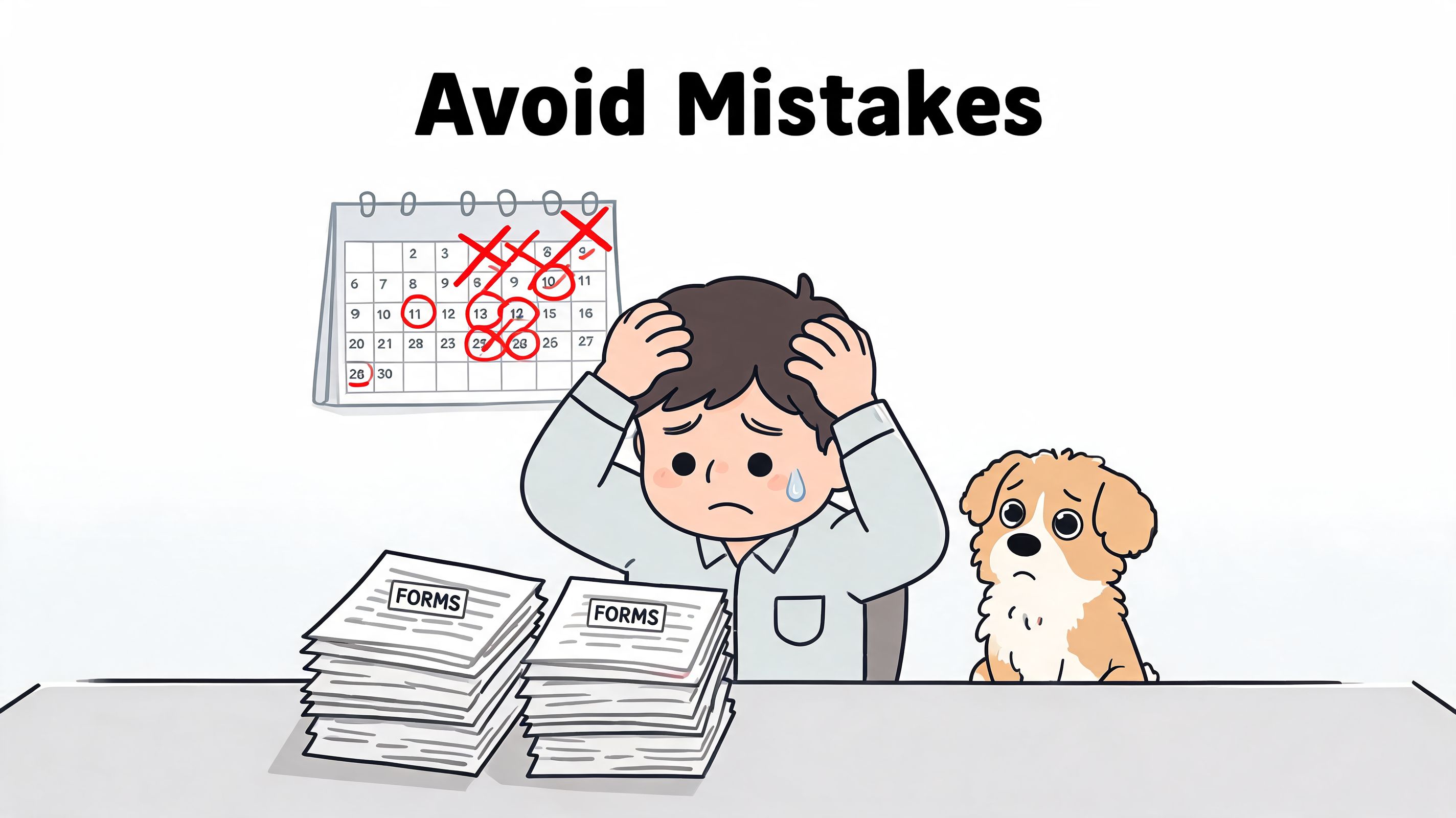
After managing these files repeatedly, I can say the same pattern shows up again and again. Quarantine risk usually comes from small administrative misses, not from a sick pet. That matters because clinics can build systems to catch those misses early, and owners can avoid paying for preventable delays.
The errors I see most often
Some failures start at home. Some start in the hospital. Hawaii does not care where the mistake began. The paperwork still has to hold up.
Copies where originals are expected: Owners often bring a neat stack of scans and assume that is enough. For Hawaii, document status matters.
Microchip numbers that do not match everywhere: One wrong digit between the record, lab result, vaccine certificate, or import form can create a credibility problem for the whole file.
Rabies records with missing identifiers: If the certificate does not clearly show the vaccine details, date, and pet identification, staff may have to chase records at the worst possible time.
Last-minute record drops: Clinics lose hours when records arrive just before the appointment and someone has to rebuild the timeline under pressure.
Unclear responsibility: Owners think the clinic is mailing everything. Clinic staff think the owner is handling submission. That gap causes missed deadlines.
The trade-off is simple. Strict intake rules can feel inconvenient up front, but they are far cheaper than quarantine, rebooking, or an airport hold.
What works better
Good prevention is boring on purpose. It relies on repeatable checks, not memory.
A strong file review process usually includes:
Pre-auditing the record before the final visit: confirm the rabies history, chip number, names, and dates before the doctor’s schedule is involved.
Scanning the microchip at the appointment: never rely on a typed number from an old record alone.
Checking fine-print details: signatures, dates, vaccine manufacturer information, and document status need a human review.
Using a hard intake cutoff: if records arrive too late for proper review, reschedule the certificate visit instead of guessing.
Keeping one controlled packet: clinics that follow basic document management best practices spend less time hunting attachments and fixing version errors.
One sentence belongs in every team protocol. The certificate appointment is for confirmation and signatures, not detective work.
For practices, that means building a workflow that protects doctor time and gives staff permission to stop a weak file before it becomes a same-day crisis. For owners, it means understanding that a clinic asking for records early is not being difficult. The clinic is trying to keep the pet out of quarantine.
Communication also matters after hours. Questions about missing records, mailing steps, and travel-day documents often hit the front desk when the team is already overloaded. Practices that use vet answering services can capture those questions, set expectations, and reduce the last-minute confusion that leads to preventable errors.
The expensive mistakes are usually the small ones. Experienced teams know that and check the small things first.
A Modern Workflow for Veterinary Practices
Hawaii certificates can chew up staff time when the process lives in scattered inboxes, sticky notes, and memory. They become much easier to manage when the clinic treats them as a service line with intake rules, handoffs, and document control.
The first improvement is role clarity. Reception shouldn’t be guessing whether a patient is “ready.” A technician shouldn’t be discovering missing rabies details while the veterinarian is already in the room. Somebody needs to own intake, somebody needs to audit records, and the doctor should review a near-complete packet.
Build a repeatable service
A practical workflow usually has four stages:
Front-desk intake collects travel date, destination, prior records, and owner contact details.
Technical review checks chip sequence, vaccine certificates, and document completeness.
Doctor review confirms clinical eligibility and signs the final paperwork.
Client handoff gives the owner a clean action list for submission and travel day.
Many practices also benefit from support outside business hours. If your team loses time fielding repetitive travel calls, specialized vet answering services can help capture owner questions and route urgent issues without burying the front desk.
Reduce chaos with document discipline
The clinics that handle Hawaii requests well usually do a few simple things consistently:
Use one checklist: not three versions saved in different folders.
Set an intake cutoff: records must arrive before the appointment, not during it.
Standardize file naming: owner name, pet name, travel date, and document type.
Track pending items visibly: staff should know what’s missing at a glance.
A clear internal process matters as much as medical knowledge here. Hawaii packets fail when the clinic is improvising.
For teams trying to tighten file control, these document management best practices are worth applying to travel certificates specifically. The less your team hunts for records, the more calmly they can handle complex cases.
Good Hawaii service doesn’t depend on one heroic staff member. It depends on a system the whole team can follow on a busy Tuesday.
Handled well, Hawaii travel work can be a high-value service. Clients remember the clinic that got their pet to the islands smoothly. They also remember the clinic that said, “Bring whatever you have,” and then scrambled.
Hawaii Pet Travel FAQs
How much does a hawaii health certificate usually cost
A family often calls after booking flights and asks one simple question: “What will this cost?” The honest answer is that Hawaii paperwork is rarely a single flat fee.
For many cases, owners should expect costs for the exam, document preparation, shipping, and any missing vaccine or lab work that still needs to be completed. The Hawaii Department of Agriculture pet import guidance explains the program fees that apply on the state side, but each clinic also sets its own pricing for record review, certificate preparation, and staff time. In practice, the final total usually reflects how organized the medical record is and how many corrections the clinic has to make before submission.
That is the trade-off. A lower exam fee can still turn into a higher total bill if the file arrives incomplete and staff spend extra time rebuilding the history.
Are there extra fees owners miss
Yes. The missed costs are usually not exotic. They are ordinary charges that show up late because no one discussed them early.
State fees can increase if paperwork reaches Hawaii too close to arrival, and owners may also pay for overnight shipping, repeat exams, duplicate lab submissions, or last-minute record retrieval from prior clinics. I warn clients about this on day one because late changes are what drive up cost, not just the certificate itself.
Do airport fees differ
Yes. Arrival location matters.
Honolulu and the neighbor island airports do not always follow the same release process, and fees can differ based on where the pet lands and whether the file is approved for direct airport release. If eligibility is not confirmed before arrival, additional holding charges may apply. Owners should verify the airport plan with both the airline and the clinic before the final certificate visit, because changing that detail late can affect both timing and fees.
What if my paperwork is almost right
“Almost right” is how pets end up delayed.
Hawaii import packets fail over small problems. A microchip number is off by one digit. A rabies certificate uses a different owner name than the lab submission. The original endorsement is missing. None of those errors look dramatic on their own, but they can stop release. Clinics should review the full packet before travel week, and owners should ask one direct question: what is still missing, incorrect, or unconfirmed today?
That review saves everyone time. It also protects the front desk from a flood of panic calls three days before departure.
What should a clinic tell owners on day one
Start early. Send every rabies record, every vaccine certificate, and the microchip information before booking the final paperwork appointment.
From the clinic side, I would add one more rule. Do not promise a certificate date until the record set has been checked against Hawaii’s requirements. That protects the medical team from rushed rework and gives the owner a clear list of what must be fixed first.
If you're a clinic or pet owner trying to make the Hawaii process less stressful, Passpaw helps organize pet travel compliance with cleaner workflows, real-time validation, and better communication from intake through final paperwork.
More articles
From regulatory changes to best practices for veterinarians and pet owners, our resources keep you ahead of the curve.